Author: John Brown

  • What Makes a Great Villain?

    GENUS & SPECIES
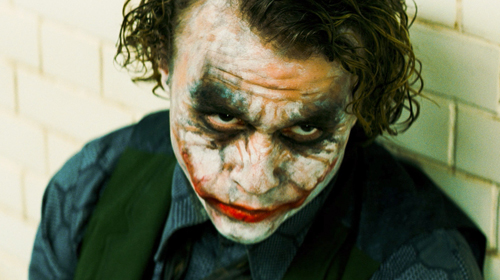
    I think there are a few facets to the question posed in the title. But before we get to that, I think we need to define what a villain is.

    A villain is a type of antagonist. Every story has an antagonist, someone or something that opposes the hero or heroine, even if it’s the setting as in Jack London’s “To Build A Fire” or the hero himself as in Jim Carrey’s Liar Liar. But usually the antagonist is another character in the story.

    Antagonists vary in many ways. One way that’s important to the story is how sympathetic they are. The spectrum runs all the way from those who generate fear and loathing to those who generate just a little less sympathy than the hero. Note: we can never feel more sympathy for the antagonist; the moment we do, they become the hero in our eyes. The definition of the antagonist is the person we’re rooting against, the person who is working against the person we’re rooting for.

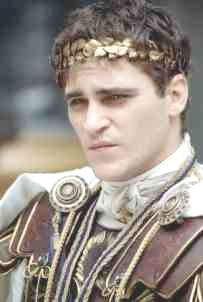
    So a villain is a species of antagonist that generates fear and loathing in the reader. It doesn’t matter if they think they have good reasons for their acts. We still feel they are evil and dangerous. Examples include: Darth Vader, Sauron, the kidnapper in Mel Gibson’s Ransom, Commodus in Gladiator, or the Joker in The Dark Knight.

    So here’s what I’ve noticed about effective villains.

    VILLAINS & STRUCTURE

    1) In a villain/hero story situation, the villain is key because the hero is reacting to the villain’s plan. It’s a total threat/danger plot.

    2) So the villain has to be active. He’s the one who WANTS something. He’s the one that starts the whole story. A weak villain isn’t going after this thing whole-hog or doesn’t have the power to do it or has no urgency and will.

    3) Strong villains are ruthless AND powerful. Villains also need to have some brains–we need to be worried for the hero, remember? We have to know that they’re they type of person  that will take you out if you get in their way. Even if they have a well-spun way of making themselves sound ethical. But villains go beyond other antagonists in that we fear and hate them. They are evil.

    4) The hero needs to be the underdog in the relationship, meaning less powerful, two steps behind, not as easily ruthless etc.  The bigger the plan the more high stakes and high concept the story becomes. But it’s the villain’s plan that drives it. And they will be taking steps to counter the hero, will probably be two steps ahead most of the story.

    5) As always, as with any character, the villain’s plan and motives have to be believable. Even if they are evil. The minute a villain becomes too far-fetched, they lose their power.

    CHARACTER INTEREST

    In addition to the role villains play in the story, there are a number of other things that make them interesting. However, these things are not anything new or different. They’re the same things that make any character (or person) interesting.

    – Larger-Than-Life Attributes (as in experience, power, skill, success, position, or behavior)
    – Eccentricities and Particularities
    – Outrageousness
    – Humor
    – Beauty
    – Surprise (as in against type details, reactions, motivations, or backstory)
    – Inner Conflicts (as in the “ethical” dilemmas they find themselves in)

    While danger and threat draws the attention, rouses interest, and can be sufficient to make a villain memorable, I think the factors mentioned above have a wonderful effect.
    THE CORE QUESTION

    The root question when considering villains is what pushes readers toward the fear and hate of others?

    Of course, it’s relative. But there are qualities that engender these feelings in us. Selfishness, brutality, sadism, madness, cruelty, a complete disregard for others AND the power to carry their wishes out. It’s someone who poses huge, immediate, specific threats to me or those I care about and does it without any concern or with relish. The more intense these factors, I think the more we move along the spectrum towards fear and hate.

    So people say the best villains are those who are the hero’s of their own story and with whom we can empathize. I don’t think this is accurate. The Joker in the Dark Knight was a great villain and may have been the hero of his own story, but never in a million years would I empathize with him. It’s true we can smpathize more with people who agonize and resist horrible acts. And some antagonists do show scruples. But not every story demands that type of antagonist. Sometimes what’s needed is someone who kills grandma horribly and says “so what” or “it was fun”–and engenders fear and hate.

    One last point. “Villain” is a reader attributed characteristic, i.e. the reader is the one who labels the character. This means the person has to be a villain in the READER’S eyes, not necessarily a villain in the eyes of the culture in the story. For example, In Not Without My Daughter the hero subverted and violated the dominant story culture, and I cheered for her. The guy who was sustaining the moral order of the story culture was the villain.

    ROOTING

    From what I can tell, all rooting response is based on some innate sense of justice, of what’s appropriate in a situation. For whatever reason, we feel discomfort when undesireable things happen to good or innocent people. We also feel discomfort when desireable things happen to bad people. The reason why we root for someone is because they have a lack of happiness or a threat to their happiness AND we belive they deserve better. I can’t see anything else we based that deservingness upon except some inner sense of justice.

    It doesn’t mean the deserving person is a goodie two-shoes. It just means that in the context of the story and what’s happening, we think the scales of justice tip, if only slightly, to the hero’s side.

    Some may argue this, but I don’t think it’s possible to root for someone or against someone without a moral judgment. It’s true that not every antagonist needs to or does act immorally. In fact, the antagonist might be doing the right thing, the moral thing, in his or her particular situation, and it just happens to oppose the hero’s desires. The key however, is that the story guides the reader to feel the hero should win at the antagonist’s expense. And that it’s right for the hero to do so. That “rightness” is based on a moral stance of what’s good and desireable in the given situation. The farther along the spectrum of antagonists we move towards villany, the more clear that moral stance becomes.
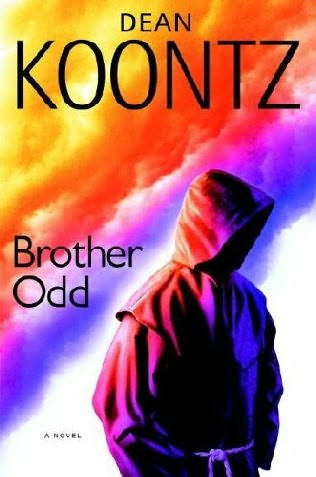
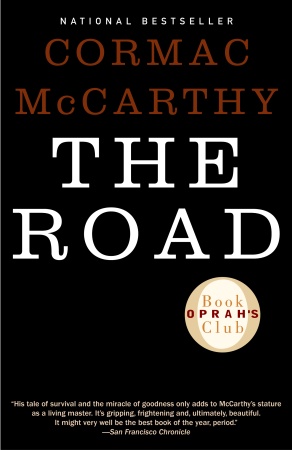
  • Brother Odd by Dean Koontz

    I eschewed Dean Koontz for many years because Dean Koontz was, in my mind, a horror writer. And I’d written horror off as a genre that was not to my taste when, in the early 1990’s, I read a story about a woman with metal teeth who lured men to her lonely house and bit off their penises.

    Yeah.

    Of course, a lot of people loved that book. But it was just one more in a line of such tales for me and I wasn’t in the metal teeth groove back then.

    So horror was out. But then one day I needed something for my walks and hiking sessions and I decided to try Koontz’s Odd Thomas because I HAD read his Watchers many years ago and enjoyed it. And the cover text on this one didn’t feel like something with rabid females in it. 

    I listened. And I fell in love with Odd Thomas.

    Just this year I listened to Odd Hours. It was good. Not as good as the first in the series, but good enough. Then I picked up Brother Odd, the third in the series, read by David Aaron Baker.

    Folks, it’s one of the best books I’ve read. Well, listened to. Koontz is a master of painting characters. I love how he does it. And he’s great with plot. And Odd Thomas, yes, is one of the most delightful characters I’ve come across. But in this book Koontz takes it all one step further. It’s a masterpiece.

    Odd has gone to a monastery, hoping to find some solace. Instead, he finds a horror stalking the monks and the children they care for. And I won’t reveal any more. It’s a story full of suspense, humor, dread, wonderful characters, and some theme.

    Don’t miss this book.

  • The Road by Cormac McCarthy

    If I’d known Cormac McCarthy’s The Road had won a Pulitzer Prize in 2007, I might not have picked it up. So many books that have won the award just bore my underpowered literary sensibilities to death. Luckily, I’d listened to McCarthy’s All The Pretty Horses a few years ago and enjoyed it. So when I saw the audio book, performed by Tom Stechschulte, in the library I checked it out. I’m so glad I did.

    The story is set in the Eastern US (although you don’t learn that into well into the book, and then only by one reference to them traveling through “the Piedmont”) years after a holocaust (meteor, nuclear, a caldera–it’s not ever really confirmed) and the resulting choas that turns America in a bleak place of ash and death. A father and son travel a mostly deserted road south to warmer weather, pushing a grocery cart with their few belongings. The father’s sick; he might be dying. And if he dies, we know the boy will die too because there’s nothing to eat but tins of what they can scavenge from houses that were ransacked and abandoned years before. And because others who survived have turned to hunting and eating people.

    This is an incredible story about the relationship between this father and son and the dangers they face. McCarthy tells the story in plain detail. In fact, his understatement and attention to detail in this terrible landscape make it all the more powerful. Stechschulte’s reading is perfect.

    The film is due out in 2009 and features Viggo Mortensen. But I wouldn’t wait for the movie if I were you. I’d get the book now. Or the recording. I couldn’t put this tale down. I’m betting you won’t be able to either.

  • Is 90% of everything really crap?

    Whenever you talk in speculative fiction circles about quality writing you will inevitably hear someone cite Sturgeon’s Law.

    Theodore Sturgeon, a science fiction writer, defended science fiction against critics of the genre who said that 90% of science fiction was crap by saying that 90% of everything–film, literature, consumer goods, etc.–was crap. Therefore, pointing out that 90% of science fiction is crap is ultimately uninformative because science fiction conforms to the same trends of quality as all other artforms do. So neener neener neener.

    The problem with this “law” is that it isn’t a law. It’s not something discovered through rigorous testing and careful evaluation of data. In fact, no testing was performed. It’s an opinion, but “Sturgeon’s Opinion” lacks the authoritative power needed to silence the critics. 

    Unfortunately, while citing the law may be a good way to give the literati what for, it’s a terrible way to think about books. I say this because we often mistake “poor quality” with “it wasn’t to my taste.” By doing so we mislabel diamonds as dirt.

    How can this be? The answer is in the true nature of quality.

    The business world has spent many years and much treasure trying to understand what quality is. I think writers and readers can benefit from the paths they’ve blazed. I found a great summary of quality on Wikipedia.

    Business has tried to define quality in a producer-consumer context, with the following variations:

    1. ISO 9000: “Degree to which a set of inherent characteristic fulfills requirements.”[2] The standard defines requirement as need or expectation.
    2. Six Sigma: “Number of defects per million opportunities.”[3] The metric is tied in with a methodology and a management system.
    3. Philip B. Crosby: “Conformance to requirements.”[4][5] The difficulty with this is that the requirements may not fully represent customer expectations; Crosby treats this as a separate problem.
    4. Joseph M. Juran: “Fitness for use.”[5] Fitness is defined by the customer.
    5. Noriaki Kano and others, presenting a two-dimensional model of quality: “must-be quality” and “attractive quality.”[6] The former is near to the “fitness for use” and the latter is what the customer would love, but has not yet thought about. Supporters characterize this model more succinctly as: “Products and services that meet or exceed customers’ expectations.”
    6. Robert Pirsig: “The result of care.”[7]
    7. Genichi Taguchi, with two definitions:
      a. “Uniformity around a target value.”[8] The idea is to lower the standard deviation in outcomes, and to keep the range of outcomes to a certain number of standard deviations, with rare exceptions.
      b. “The loss a product imposes on society after it is shipped.”[9] This definition of quality is based on a more comprehensive view of the production system.
    8. American Society for Quality: “a subjective term for which each person has his or her own definition. In technical usage, quality can have two meanings:
      a. the characteristics of a product or service that bear on its ability to satisfy stated or implied needs;
      b. a product or service free of deficiencies.”[5]
    9. Peter Drucker: “Quality in a product or service is not what the supplier puts in. It is what the customer gets out and is willing to pay for.”[10]

    The common element of the business definitions is that the quality of a product or service refers to the perception of the degree to which the product or service meets the customer’s expectations. Quality has no specific meaning unless related to a specific function and/or object. Quality is a perceptual, conditional and somewhat subjective attribute.

    What does this mean for writers and readers?

    It means that your audience defines quality. But your audience is never all of those that read. It’s only the narrow segment that reads for the type of experience you’re offering.

    It means that a story can be of the highest quality, but you still may not like it. You might even hate it.

    It means that Sturgeon’s Law is, no disrespect intended, crap.

    All writers should consider NY Times best-seller Tess Gerritsen’s experience writing for two different audiences.

    I’ve had too many smart and well-read friends like stories I do not. I’ve loved too many stories that others could not. I’ve seen too many stories I couldn’t read more than two pages of picked up by editors and find audiences. And the tales of editors passing up on stories that some other editor picked up and which became mega-sellers are legion. 

    Quality has never been an absolute. The truth is that while I enjoy many stories in a variety of genres, a lot of what’s published is not to my taste, but it’s still very good.  

    A more accurate statement of Sturgeon’s Law would be something like “90% of what’s out there isn’t to my taste.”

    For readers this means we need to be careful to distingush between something that doesn’t work for the audience it’s intended for and something that simply doesn’t work for us. For writers this means we need to write the best story we can and then avoid pressing it onto the wrong audience. And when we do get a bad review, we need to figure out if it’s the quality of the story or just a matter of taste.