Meghan Cox Gurdon wrote an opinion piece for the Wall Stree Journal called “Darkness Too Visible” in which she complained that it was hard to find young adult fiction these days that isn’t filled with coarse, dark material–profanity, pederasty, mutilation, etc. She claims that “contemporary fiction for teens is rife with explicit abuse, violence and depravity” and wonders “why is this considered a good idea?” She concludes by saying:
So it may be that the book industry’s ever-more-appalling offerings for adolescent readers spring from a desperate desire to keep books relevant for the young. Still, everyone does not share the same objectives. The book business exists to sell books; parents exist to rear children, and oughtn’t be daunted by cries of censorship. No family is obliged to acquiesce when publishers use the vehicle of fundamental free-expression principles to try to bulldoze coarseness or misery into their children’s lives.
This, of course, sent hordes of folks into a frenzy of posts sneering at Gurdon’s so-called prissy sensibilities, decrying censorship, and extolling the virtues of young adult literature and dark material in particular. For example, Mary Elizabeth Williams in a Salon piece called “Has young adult fiction become too dark?” rolls her eyes, then deigns to wade into what’s she thinks is an obviously juvenile argument to apparently show Gourdon how “stupid” she really is. Williams concludes:
One of the terrific side effects of an obviously click-baiting piece of editorial twaddle like Gurdon’s is that it reminds people how many fellow passionate readers there are in the world. That incendiary WSJ piece promptly sparked a tear-jerkingly beautiful twitter #YA saves trend full of heartfelt reactions and links to outstandingly reasoned, article responses from well-read adults and teens on the value within so much of YA literature and its downright lifesaving effects.
Williams suggests fiction doesn’t have the power to lead people into bad behaviors. After all, she assures us, “an entire generation of women managed to devour the ‘Flowers in the Attic’ series without having sex with their brothers.” No, according to Williams (and all the #YAsaves folks), YA fiction only saves lives. And she provides a link to prove it.
But Williams misses the mark. Completely. This isn’t about whether fiction has power to influence us in good and bad ways. There’s a huge body of research on media effects which clearly proves fiction’s power for both. Nor is it about the theraputic uses of dark material.
The heart of the matter revolves around a rather mundane thing–customer service and marketing.
Gurdon and those parents she describes in her article want a certain type of entertainment. For years, YA fiction has provided that type of entertainment. But things have changed, and the YA label isn’t reliable to them any more. It’s like someone who has purchased steel cut oatmeal for years is now suddenly bringing the bags home to find them filled with sardines or, horrors, Twinkies.
We can argue the merits of sardines and Twinkies. And a hundred other foods. We can argue the merits of certain types of stories for certain types of readers. And my metaphor above–maybe you think using Twinkies is unfair; maybe you would have wanted me to use something like Triscuts or Wheat Thins. But that’s all beside the point.
The real problem here is that the publishers have ignored a significant segment of the market who want to buy books but can’t find the types they’re interested in. Either the covers and blurb material don’t help them find what they’re looking for, sometimes misleading them, or the publishers have simply made the mistake of not thinking about this segment of the reading market.
The fix is easy. (1) Produce more books for these folks. (2) Label your books in a way that makes it easy for the consumer to find what they want. They’re not asking for censorship. They’re asking for a nutrition label that lets them know what they’re getting. Publishers can do what the movie and gaming industries have done with rating systems that prominently display on the cover. Or use some other method. This isn’t a moral issue, it’s simply a matter of helping the right customers find your good or service. It’s a matter of good marketing and branding.
And I would think, with the upheavals in the book industry today, that publishers and booksellers would want to do whatever they could to boost sales. Surely it doesn’t help to turn customers away because your package is confusing them.
In the meantime, the battle will rage and this simple practical core of the issue will be lost in the fires and clouds of smoke produced by the arguments extolling and excoriating the virtues and vices of fiction.
Not to be missed – the most useful speech on writing you will ever hear! Keynote speaker John D. Brown will present ‘Three things you MUST know to write killer stories.’ John Brown is a prize-winning short story writer and novelist. His epic fantasy novel, “Servant of a Dark God” will be released in North America in September 2009.
“Most useful” is nice. Let’s hope I can live up to that one. 🙂 I’m looking forward to this event. A lot of other great authors will be there as well as editors from Deseret Book, Covenant, and Cedar Fort. If you’re a regional writer, you won’t want to miss this. Full information here on the American Fork Arts Council council for writers.
After this year’s presidential election I emailed my sister, a smart, super-competent, true-blue, bleeding-heart, save the weeds and snails liberal, who volunteered to do campaign work for Hilary Clinton in Colorado during the 2008 Democratic primaries and, of course, voted loudly for Obama in this last election.
“Are you kidding me?” I asked. “How can anyone who doesn’t have a carrot for a brain want more of the same? I don’t get it. Obama? How can so many Americans be that gullible? I’m totally baffled.” And that puzzlement wasn’t rhetorical. I was seriously baffled.
“Are you kidding me?” she replied. “Mitt Romney? How could anyone vote for Mitt Romney? Talk about baffled.” She went on a rant listing all of Romney’s supposed deeds and positions of sooper evil and stupidity. Then she questioned how anyone could support that Hitler in his Mormon clothes.
Okay, she didn’t say “Hitler,” but she did claim he was “evil” and “despicable.” And when I think of evil, my first thought is always of folks like Mitt Romney.
Vicente Carrillo Fuentes, leader of the Juarez drug cartel, which is responsible for hundreds of gruesome murders each year and . . . Mitt Romney. Oh, yeah. They’re like brothers. In fact, wasn’t Romney’s dad born in Mexico? And, hey, one of Romney’s sons even knows Spanish. That boy wasn’t on a church mission there. No, he was making connections with the jefe!
Sonia Montoya-Cadena, the one who ran a human trafficking ring in Denver exploiting young girls for sex and . . . Mitt Romney. Yeah, Romney’s just like that. If he could run slave brothels, he’d do it in a minute to make a buck. In fact, doesn’t Bain Capital own a couple of slave brothels in Greenland?
I wanted to unload. I was prepared to destroy her with fiery analysis of the first order.
Thundering analysis.
Mountain crushing logic.
She was so freaking blind.
Except,
She had never actually considered what I had to say in any of my previous emails. It never mattered how powerfully vast my brilliant logic was. She’d demonstrated wax ear time and again. All of my intellectual might never made a dent in her liberal force field. I brought blood and thunder, and it always seemed to bounce off her like bullets made of styrofoam.
Nevertheless! Clinton? Obama? Save the gerbils?
I made a comment that sent Smart Sister into DEFCON 5. Foolish me. Eventually, her liberal ire cooled and she decided to order comrade Putin to stand down and not push the big red button.
Meanwhile, I started to think.
I noted that if things didn’t change, the Republicans wouldn’t be winning the presidency any time soon. If they couldn’t beat Obama when the economy was in the tank, then there really was no hope. Which meant we are going to end up like Greece, with continuing inflation (which is not only an intentional, government-led annual pay cut on the disgustingly rich, filthy rich, and annoyingly rich, but also on the middle class, poor, destitute, and various and sundry hoboes everywhere), huge debt, stupid taxes, ridiculous health care, Soviet-style redistribution, blah, blah, blah.
I asked myself, like all Republicans did, what could we conservatives do differently? Follow Obama’s example and improve our operations to get the vote out? Build up a conservative La Raza? Do the right thing with the children of illegals? Get someone willing to land more blows on the opposition (Romney could have decimated Obama in debates two and three, but he didn’t; he totally failed to define his opponent).
Maybe it was in the messaging. Maybe what we needed to do was develop something that actually changed minds.
At this point a faint ding sounded in the distance in my mind. A small light bulb suddenly flipped on and illuminated a dark cubby of my mind.
Hadn’t I just read about studies showing how a soap opera in Mexico, a radio play in Tanzania, and sitcoms in America actually changed viewer attitudes and behaviors about literacy, HIV, and abortion? Didn’t I already know about the power of concrete and vivid storytelling? Not sermon-telling, but storytelling.
Why, yes. Yes, I did.
Had I not witnessed the use of storytelling on U.S. television for, what, fifteen years by those wanting to build sympathy for homosexuals? (A good thing, even if I disagree with some of the gay agenda.) And the cheapening of sex by others? (A bad thing.) And the clearly conscious promotion of many other attitudes and beliefs via various media programs?
I determined there was something to this.
If people were going to vote for fiscal responsibility in Washington, something like this was going to have to be done. It wasn’t going to happen in flame wars.
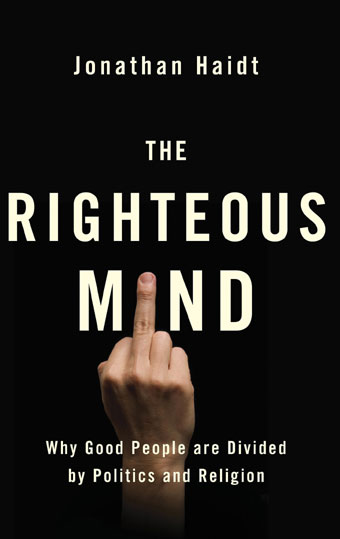
About this same time I was browsing through the recent Radio West programs. I saw one called “The Righteous Mind.” It was an interview of Jonathon Haidt about his new book The Righteous Mind: Why Good People Are Divided by Politics and Religion.
Hey, wasn’t that addressing my question?
The program blurb states: “Monday, our guest is the social psychologist Jonathan Haidt, whose latest book sets out to explain the root causes of the divisions in our society. At the heart of his argument is the idea that the human mind is designed to “do” morality. But when we separate into tribes – say political affiliations or religious denominations – we focus on different moral foundations. Haidt joins us to explain why he says we need the insights of liberals and conservatives to flourish as a nation.”
I listened. And loved the program.
Haidt shared a number of deliciously insightful things about how our mind works and how we choose our affiliations. He shared so many insights that I immediately requested his book at my library. The library ordered a copy for their collection. I, of course, was first in line to read it. I just finished the book.
It’s one of the best books I’ve read all year.
Haidt explains why my sister and I were both baffled by people who voted for the opposition candidate. He explains how human morality works. How our reason does not lead us to make the judgments we do, but instead more often acts like a lawyer to justify our positions to others.
As soon as he explained that I saw how I had done that time and time again. For example, in this election cycle I blamed Obama for the economy. In the Bill Clinton re-election I vigorously argued that the President doesn’t have any effect on the economy and is lying if he takes credit for it. I’m not saying that Obama didn’t do things that might have hampered the recovery, but how did I know his actions exacerbated our problems? What evidence did I really have?
Haidt explains that there are six basic moral bases then points out which ones drive liberals, conservatives, and libertarians, and how we can use that knowledge to disagree more constructively. He provides strong insights into how our reason and intuitions and judgments work, the evolutionary function of our morality, and how our wiring for group affiliation affects it.
I didn’t agree with some of his conclusions. He sometimes takes his points too far. For example, he seems to suggest that people in cities are pre-disposed to be liberal. And that’s why they live there. Um, no. That’s not why they live there. They live in cities because that’s where the jobs are. The agricultural revolution made sure of that, remember? In his effort to explain the smaller biological basis of our beliefs, he also downplays the larger effect our families and groups have. But despite these excesses, he shares so many fresh and exciting ideas that they don’t matter. And he shares them all in such a fun and clear way that I couldn’t help but stay up late a number of nights reading this book.
Do you know how much I wanted to trash Obama to my sister? That Soviet-style central planner. That drunken sailor spender. That choom wagon pot head.
And yet, you and I also know that will never work. I now know better why. Because of Haidt, I think I see a better way. I certainly see how I have done exactly what drives me mad about those who have drunk the opposition candidate’s Kool-aide. I see that I have my own conservative force field that deflects liberal bullets (and perhaps even blinds me to the truth sometimes). And why I need to watch my reason, that cunning lawyer part of my brain, as well as my intuition.
Haidt, a liberal, has given me, a conservative, a great gift. I intend to use it. If you are interested in the two taboo topics of politics or religion, if you enjoyed Malcolm Gladwell’s book Blink or the Heath brother’s Made to Stick, if you want to find a better way to influence than flame wars (as fun as they can sometimes be), then I think you will enjoy the wonders Haidt shares in his fine book.
I love finding little, non-chain restaurants with excellent, reasonably priced food. And I just found another one this week. It’s called Savory Thai, and it’s on 182 W Center Street in Orem, UT.
Oh, baby. If you decide to go, you are in for a treat. We ate there in celebration of my third daughter’s call to do missionary work in the middle and western Pennsylvania area (go Steelers, Amish, and “yous all”).
I learned to love Thai food because it’s so close to Indonesian food. And I learned to love that because I lived in the city of Nijmegen in the Netherlands for five months and in Amersfoort, which is maybe an hour away, for seven. In Nijmegen, I lived in the attic of a row house with a series of missionary companions. In Amersfoort, I lived in a spare bedroom with another series of companions. Both homes were owned by Indonesian grandmothers who cooked one or two Indonesian meals a day for us. Think about that—home cooked Indonesian food every day. It was marvelous. When I came back to the States, Indonesian restaurants were few and far between, but to my delight I found that the Thai cuisine is very close, and so that became my stand in.
If you’ve never had Thai food, it’s kind of like Chinese, but it’s got curries, so it’s a little like Indian as well, but that doesn’t describe it either because it has its own separate taste that’s entirely wonderful.
This place is in a little strip of stores. It’s small enough that you could drive right past and never know it existed. But when you walk in, you’ll see that they know how to make a good first impression. It’s clean, smells good, and the host is friendly, but these guys go farther than that. You’ll notice, of all things, the menu cover. Instead of handing out some flimsy paper or laminated thing, they hand out these thick menus covered in what looks like some kind of leather. It gives a feel of permanence, of solidity, as if the restaurant has been there for years (it’s two months old). But of course we weren’t there for menus or friendly servers. We were there for the food. And we were not disappointed.
I can happily report that their green curry (spicy), pineapple curry, massaman curry (a lovely peanuty sauce), orange chicken, chicken cashew, fried rice, and pad Thai were all excellent. They use no MSG, cook it fresh, and keep it reasonably priced, $8-$10 per dish. I can promise you that we’ll be back.
If you’re in the area and want some great food, stop at Savory Thai.
*
I love almonds and have been for many years a big fan of the W?nderful brand bags of roasted and salted almonds you can find in Sam’s Club. However, this last week, I came across something new from Planters called their Almond Lover’s Medley, which is a blend of four different varieties of almonds, dry roasted and unsalted. It includes the Marcona, Nonpareil, Fritz, and Butte-padres, which is the variety used in the W?nderful bags. I can report that this mix from Planters is delicious. The differences in taste and texture between the varieties is subtle, but real. And I was surprised at how much I enjoyed them unsalted. If you love nuts, you’ll want to give this blend a try.
*
I did not want to watch a movie about climbing Mt. Everest. Everest? Were you kidding me? I couldn’t think of anything more boring, but this is what my daughters wanted, and it was Thanksgiving weekend, and so we watched Everest, the 2015 movie.
I am happy to report that it ended up being a great, disaster thriller, based on a true story, which was captured in the book Into Thin Air by Jon Krakauer. I cared about the characters, was on pins and needles during great portions, and exclaimed out loud during a number of tense parts. And after all that sweating, the story made me think about the things we do and how to prioritize when life is on the line.
If you like stories about survival, you’ll love this. If you don’t, I still think there’s a good shot you’ll really enjoy it.
*
My wife is a sport. We were in the big city to watch a movie with our youngest daughter who is in high school. Our daughter, with her teenage brain, had the wild idea of a double-feature. My original man brain thought that sounded capital—how long had it been since we’d squandered five or six hours watching movies! The wise man brain didn’t think it was a very practical idea, and suggested it would be much better to do a double-feature next week we we could start at three in the afternoon. But the wise man brain was outnumbered and soon succumbed. And then all of the crazy brains ganged up on my wife, who graciously relented, and so we watch The Arrival and Fantastic Beasts and Where to Find Them and got home at like 1:30 am.
As for Fantastic Beasts, if you like Harry Potter stuff, you’ll love it. If you’re not mad for Harry Potter, it’s not going to rock your world (although you still might have a good time). Enough said.
What about The Arrival?
This is a movie about the arrival of aliens, but it’s not a shoot-em-up like Independence Day or War of the Worlds. It’s more like Contact, the one with Jodie Foster. It’s a film that makes you think and is for those who are willing to be a little patient. If you can slow down and just enjoy the film, I think you’ll end up loving it because it’s about far more than meeting mysterious creatures. It ends up being about the choices a woman makes about her family. If you go and give it the space it needs, I guarantee you’ll chat about it and savor it afterwards.
I won’t tell you anything more because you’ll only understand what’s going on in the woman’s life when you get to the last fourth of the movie, and I don’t want to spoil the delicious revelation for you. So just know that the alien tech and the alien themselves are strange and mysterious and cool, but that this movie is about so much more.
If you liked Contact or even Inception (sans the frustrating non-ending), you’ll love this.
Almost everyone reading this knows what they like in a car. We know what we want a car to do. We can talk about acceleration, voom-voom styling, and handling. Some of us could talk about how engines and transmissions and tires all work together to create those things. We could get really technical.
But how many of us could then go manufacture a tire? Or the paint we’re going to put on the car? How about a windshield?
No?
Well, what about one little bolt? Just a little bolt. Can you do it?
There’s a difference between knowing what a thing is supposed to do, how it works, and actually building it. A lot of people can talk about the first two topics and have no idea at all about the third.
It’s the same with stories.
There are three things we have to learn to write killer stories.
What a story is supposed to do.
How the 5 parts of story—character, setting, problem, plot, and text–do that
How to come up with and develop a story idea in the first place
We authors talk a lot about the second thing. You have books and blogs galore on dialogue, plot, characters, structure, grammar, world-building, setting—you name it. Heck, the big series I wrote last year about the key conditions for reader suspense was all about how story works.
Some of us talk about the first thing. And really there’s no point in blathering on about the how-to’s if we don’t know the what-for’s, which is why I tried to highlight one of the core what-for’s in my series on suspense.
But as important as those two things are, none of it matters if we don’t know how to put it to use. We’re not reviewers or editors. We’re creators. We’re writers—the ones that invent the story in the first place. And let me tell you, knowing how a story works and how to invent one are two very different things.
I didn’t know the principles of invention when I was first starting out. And that gap in my knowledge was one of the things that held me back for years. In fact, I almost gave up my dream of writing stories because of it.
Very early in my attempts to start a career I wrote a story that won an award and $2,000. I was flown out to Cocoa Beach, Florida for a week-long workshop with amazing pros. Was published. And then I went home, finished another story (yea!), and proceeded not be able to finish another thing for five years.
Five years.
FIVE. YEARS!
And I tried.
After five years of failure you begin to wonder if maybe you didn’t get the wrong memo (what am I doing at this empty warehouse?). Your family begins to wonder that as well. You realize life is short and there are a lot of other things you could be spending your time on. You begin to think that only an idiot would spend more time on this. And you’d probably be right.
Unless, of course, you realize that what’s keeping you back isn’t a manifestation of cosmic will. Rather, it’s just a lack of understanding.
That’s what happened in my case. Just a few days before I gave up on all my dreams, the light was turned on for me. I learned some key, but simple, principles of invention that I hadn’t known. You can read the whole story here. After I learned these principles, my production took off like a rocket.
And so what I want to do in this series is share those principles with you. Hopefully, this will unleash your abilities. You might find a huge audience for your stories. You might find only the family dog will stick around to listen to them. The popularity of your stories is a separate matter. But you can’t even find out how big your audience will be if you don’t know how to finish.
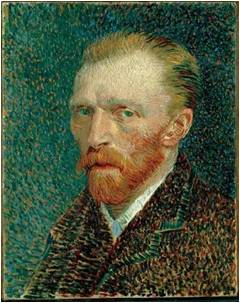
So let’s start. A lot of people think that creativity is about passion. When they think of creativity, they think of someone like this.
Look at him. Brushed velvet jacket. Beard. Rakish devil-may-care hair. And that gaze. Look at that gaze! It’s full of passion. It’s coming off him in waves. In fact, we all know his inner world is a vast tempestuous sea of passion that sends ideas crashing in great surges onto the rocky beaches of his soul. And those earthly forces cannot be contained. No, he must write them, write them, write them. That’s the face of a man who will channel fire onto the written page because if he didn’t, he would surely burn.
Or maybe not.
Maybe creativity is about being like this guy.
Hello, Malcolm Gladwell. Look at him. There are so many ideas in that great blaze of brains they trip over themselves trying to get out. There are so many they kinked his hair with their electric heat. Oh, fecund mind!
Or maybe not.
Maybe creativity is all a function of being blessed.
Or maybe it’s about alcohol (or some other chemical). After all, isn’t that how Ernest Hemmingway did it?
Booze Makes Ernie Reel Smart
Or it’s about being mentally unstable.
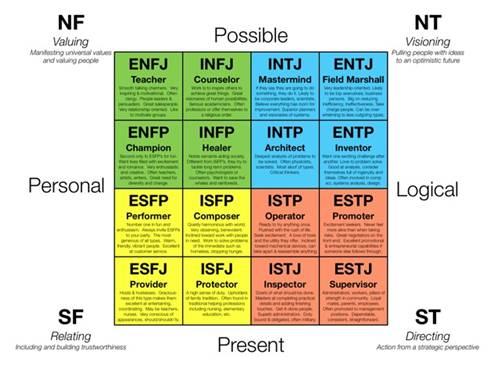
Or it’s about having the right personality type. I remember the day of woe when I learned that I was an ENFJ but that the “natural” writers were all ISFPs!
Alas, me being a blockhead was all scientific
Or it’s about being eccentric.
Patrick Rothfuss shows us the key is crazy beardage and an Alice in Wonderland chair
Or it’s none of that. It’s about being born to it.
I wrote my first novel when I was six
Right? All of those things are what creativity is about. And if, as so clearly demonstrated by those pictures, you don’t have passionate hair, well then, forget about it. Except here’s Larry Correia, a New York Times bestseller, who has no passionate hair whatsoever.
I keep guns in my basement
Huh?!
How could that be?
Here’s how. All those ideas above about creativity–they’re rubbish. Creativity has nothing to do with passion or hair or whether you wear Argyle socks.
Nothing.
Let me show you the face of creativity.
That is Warren Ellis. Warren is my brother-in-law, except when he’s not (do not ask me to explain this). One day our fridge started to drip. The freezer would cycle through its normal thawing, and all the water would drip down into the fridge and soak up our egg cartons and pool in the vegetable crispers. It was a mess.
We defrosted the freezer we weren’t supposed to ever have to defrost, but the problem persisted. So we called Warren because he fixes things.
Warren came to our house, looked the fridge over. He declared that the freezer’s drain tube was plugged. We thought up a few ideas for cleaning it out, none of which were any good, then Warren asked if we had an air compressor. We did and hauled it in.
Warren plugged it in, let it build up the pressure, and then held the compressor nozzle to the bottom end of the tube. The compressed air went in. The obstruction flew up and out and landed on the counter. The obstruction was a fat fly that had crawled in there, gotten stuck, and died.
We poured a quart of water into that freezer, and it all flowed down into the catch pan at the bottom. Warren fixed our freezer with an air compressor.
Folks, that is creativity.
What did Warren have? He didn’t have passionate hair; I can tell you that. No. He had an objective. He knew basically how fridges worked. And he came up with a couple of options to fix the issue.
Let’s look at another example. Here’s Ed Smylie.
Ed was like Warren. He ran into some problems. Actually, the astronauts in Apollo 13 ran into some problems. Ed was tasked to help solve them. One of those problems was the fact that the astronauts were running out of air.
Ed and the others designed the solution in two days. The ground crew relayed the instructions to the flight crew. The lunar module’s CO2 scrubbers started working again, saving the lives of the three astronauts on board. Of the experience, Ed said that he knew the problem was solvable when it was confirmed that duct tape was on the spacecraft. “I felt like we were home free”, he said. “One thing a Southern boy will never say is: I don’t think duct tape will fix it.”
Ed and his crew saved the day. The made a round peg fit into a square hole. How did he come up with such a creative solution?
Ed had an objective. He knew how the CO2 scrubbers and the shuttle worked. He knew about duct tape. He came up with options.
Let’s look at a few more examples of this. I know you’ve seen some of these.
That is creativity. So is this.
And this . . .
And this . . .
Or this, if you don’t need to go so fast . . .
Smaller size, for trolling
And this . . .
And this, which is officially called a Bumper Dumper . . .
Do you really want to dig?
These fine folks had a goal. They knew the basics of how things worked. They came up with some solutions.
That’s all there is to creativity. Three things. You need to have an idea of what you’re trying to do. You need to have a basic knowledge of how things work. And you have to know how to come up with some solutions to meet your objective.
Not so mystical, is it?
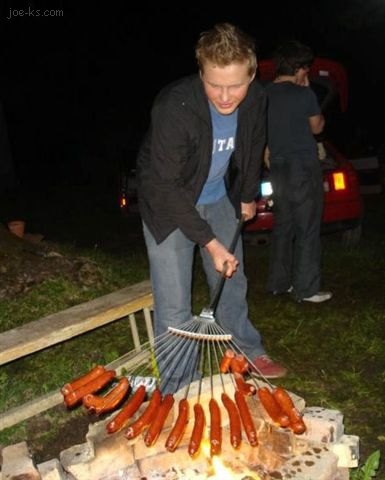
But I can hear some of you complaining. Writing is different. It’s a whole other world. It’s Fiction, which is so significant we must capitalize it. It’s passion. It IS mystical. This is a matter of the heart. It’s not a fridge or space ship or some dumb hotdog roast. You cannot compare these things.
Except I can because they’re the same. It doesn’t matter if you’re trying to invent a different recipe like the folks at Cook’s Illustrated, or decorate your house, or come up with a way to keep the squirrels out of your bird feeders, or make people weep in a movie theater.
What I’ve found is that when we have troubles coming up with ideas, we probably don’t know what our objectives are. Or we probably lack some understanding of how fiction works. Or we don’t know the principles of generating options.
And so we conclude it’s a mystery. It’s arcane lore.
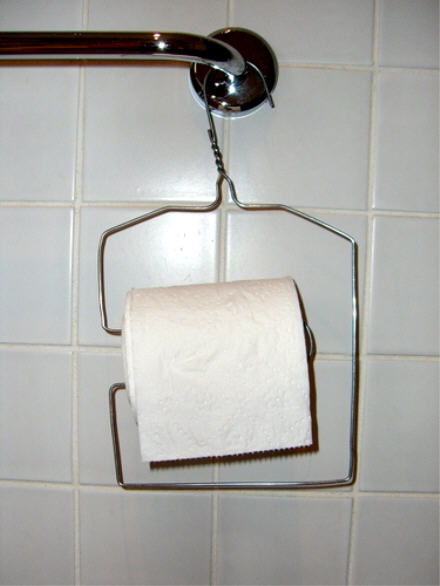
But it just ain’t so. Can you create a redneck toilet? Then you can write a story.
Now, it’s true that a lot of people feel their way through this. They don’t know what they’re doing, but they do it. I did that. Remember: I won an award. But then I couldn’t repeat it. Couldn’t find that groove I’d stumbled into.
I don’t want to stumble around hoping to get lucky. I want to make a living at this. And if I’m going to make a living, I need to produce. Regularly. I can’t be bumbling around, hoping to create something by accident.
The good news is that we don’t have to create by accident. We can create on purpose. There are principles to invention. When we learn them, our productivity will shoot through the roof.
Finding a solution to Apollo 13’s issues might seem impossible to us. But they weren’t impossible to Ed Smylie because Ed had an objective; he knew how things worked up there; and knew how to come up with options.
My intent is that when you finish this series, you’ll know what Ed Smylie knew, except for stories.
If you have loans outstanding and the payment is due, you owe the creditors a payment. Payables for Idiots 101.
If you have received goods and services, then you owe your vendors a payment. Payables for Idiots 102.
You pay your bills. End of story. That’s what grown ups do. If you have to float some debt for a few months, you do it. And you staple a note to your head to stop spending like a slot machine junkie. Payables for Idiots 103.
The debts we have are for goods and services we’ve already received. So increase the debt limit and pay your damn bills. What about spending?
You do not spend more than you take in year after year. If you do, that’s called running your business into the ground. In the case of the Congress (primarily Harry Reid’s Senate at this point, although many, but not all, of the Republicans were happy to go along with dumb spending earlier) and the President, it’s the country they’re running into the ground. Spending for Idiots 101.
If you’ve got all sorts of cool things planned like Acorn subsidies for pimps and Antarctica Jell-O wrestling grants for scientists, but you can’t afford them—i.e. you have to go into debt to get them–you cancel those plans. Spending for Idiots 102.
The problem is that Congress and the President buy all sorts of crap and expect to put it on a credit card when it comes due. And there’s nothing to prevent them from doing it.
They’re like irresponsible teenagers. They need controls that won’t allow them to overspend. Kind of like putting limits on a teenager’s cell phone minutes. Or forcing them to use a debit card. When they’re out of cash, they get a card denied response from their vendors.
So you set spending limits, debt limits, and force them to balance the budget each year, except in extreme emergencies like when space aliens try to wipe out humanity. Spending for Idiots 103.
This means you pass Cut, Cap, and Balance and quit spending money you don’t have. Really difficult stuff. What about getting out of debt?
You eat rice and beans until you’re debt is gone or down to a manageable level. That means you cancel crap you can’t pay for. Sorry earmarks, you’re gone. Sorry grants for nude artists in trees, you’re gone. Sorry subsidies for PBS, you’re gone. Finances 200: How to Not Be A Money Moron.
You figure out how to reduce your current cost structure. This means you figure out a way to reduce the costs of Medicare, Medicaid, Social Security, and every other service or product you provide, cutting those that aren’t essential. You hire someone like Mitt Romney who knows how to go through every line in a budget and turn a bloated ship around. Finances 300: No, You Can’t Pay For Your Sister’s Hair Implants with My Money.
You remind people this is the freaking U S of A. A place where a man or woman can make themselves. Not where the government changes your diapers and feeds you mush three times a day. Communism and socialism have failed. They were badly conceived utopias, much like multi-level soap and vitamin marketing schemes that are supposed to usher in the Second Coming. Finances 400: The USA Buried the USSR for a Reason.
You increase your revenues.
However, if you raise taxes, you’re actually going to depress your revenues. Think about this. Which car company has bigger revenues–Lamborgini or Honda? Who is going to put out, if they’ve got Louie the Fingers and his buddy Jockstrap taking increasing amounts of their money in a protection racket? Don’t be a thug. Be an enabler. Do what Wal-Mart does and go for volume. Do what Ebay does–create the environment that entices tons of commerce, entices people to dramatically increase their transactions. Transactions go through the roof; you take only a tiny cut, and, shazam, you increase your revenues. Finances 500: Um, Do You Want People to Work to Become Rich or Do You Want Them To Pick Up Torches and Burn the Houses of the Rich Down?
Cut spending, reduce cost structure, and increase your revenues. That’s getting out of debt.
Perfect point and solution. Although I agree with the sentiments behind the other points of view and even feel less control over “Young Adults” reading material is best; You’re still completely correct Nice post
-Rehcra
Yours is a REFRESHING viewpoint — I’d like to add one more comment: teens/YA will read whatever they WANT to read. This argument appears to be between adults, editors, writers, librarians. While all of them are certainly important, in the end, it’s the KIDS who choose. I’ve seen librarians throw things in their path, noting, “This is GOOD!”
And if it’s not what a kid is looking for, then it doesn’t matter how much the publisher dumped into the ad campaign or the sincerity of the author or the authority of columnists and commentators.
Absolutely excellent, John. Bravo!
All the best,
G
I also agree with your post. I think the closest thing I ever read to YA was the Hardy Boys books. I was reading Jurassic Park in 6th grade and others by Chrichton. It was ultimately my mom who would “allow” me to read certain books after she’d deemed them ok for me to read after looking through them to see if there were lots of swears or sex. The thing is you can censor stuff but kids will read whatever they can get their hands on and you have to hope they know what is still acceptable. I mean I read some truly disgusting and offensive horror books but i’m not gonna turn into a mass murderer, and it’s only a small part of what I read. I never read Harry Potter and HATE the Twilight books but if thats what it takes to get kids interested in books, great!
This begs the question: What do you do as an author to appropriately market your book?
Do you give each book/story a numerical rating on sex/violence/language on your website? Do you make sure to mention what people might find offensive when you pitch your book?
As an author, you can’t control much of what a publisher does. Cover, cover copy, and blurbs are often out of your control, and these are the things that give the first signals.
You can do any number of things on your site, depending on what you’re comfortable with. And whether you’re really worried about this. Some authors are, some aren’t. I WOULDN’T make it the headline. Notice when Hollywood releases a film, it’s on the poster, but it’s not the biggest element. But even an asteriks can be helpful if you think it will be important to your audience and the publishers package and your website might cause confusion.
I’ve been at author signings with a buddy of mine whose books have a lot of profanity. Parents will ask, is this appropriate for children? And he’ll say, it does have a lot of profanity. Or he’ll head them off and let them know it up front when they tell them they’re looking for a book for their kids. He’ll say, a lot of teens like it, but it does have profanity if that’s an issue for you.















Perfect point and solution. Although I agree with the sentiments behind the other points of view and even feel less control over “Young Adults” reading material is best; You’re still completely correct Nice post
-Rehcra
Yours is a REFRESHING viewpoint — I’d like to add one more comment: teens/YA will read whatever they WANT to read. This argument appears to be between adults, editors, writers, librarians. While all of them are certainly important, in the end, it’s the KIDS who choose. I’ve seen librarians throw things in their path, noting, “This is GOOD!”
And if it’s not what a kid is looking for, then it doesn’t matter how much the publisher dumped into the ad campaign or the sincerity of the author or the authority of columnists and commentators.
Absolutely excellent, John. Bravo!
All the best,
G
I also agree with your post. I think the closest thing I ever read to YA was the Hardy Boys books. I was reading Jurassic Park in 6th grade and others by Chrichton. It was ultimately my mom who would “allow” me to read certain books after she’d deemed them ok for me to read after looking through them to see if there were lots of swears or sex. The thing is you can censor stuff but kids will read whatever they can get their hands on and you have to hope they know what is still acceptable. I mean I read some truly disgusting and offensive horror books but i’m not gonna turn into a mass murderer, and it’s only a small part of what I read. I never read Harry Potter and HATE the Twilight books but if thats what it takes to get kids interested in books, great!
This begs the question: What do you do as an author to appropriately market your book?
Do you give each book/story a numerical rating on sex/violence/language on your website? Do you make sure to mention what people might find offensive when you pitch your book?
As an author, you can’t control much of what a publisher does. Cover, cover copy, and blurbs are often out of your control, and these are the things that give the first signals.
You can do any number of things on your site, depending on what you’re comfortable with. And whether you’re really worried about this. Some authors are, some aren’t. I WOULDN’T make it the headline. Notice when Hollywood releases a film, it’s on the poster, but it’s not the biggest element. But even an asteriks can be helpful if you think it will be important to your audience and the publishers package and your website might cause confusion.
I’ve been at author signings with a buddy of mine whose books have a lot of profanity. Parents will ask, is this appropriate for children? And he’ll say, it does have a lot of profanity. Or he’ll head them off and let them know it up front when they tell them they’re looking for a book for their kids. He’ll say, a lot of teens like it, but it does have profanity if that’s an issue for you.