Ramsey’s Total Money Makeover & Brown Cow Yogurt

Wear some financial underpants

I graduated from BYU with a Master’s degree in accounting. BYU’s accounting program is regularly ranked as one of the top three schools in the nation.

Whoa. Go, John. I ought to be some kind of financial superstar, right? You’d think I would have come out of that program with all my crap put together, living within my means, investing wisely, making a bundle of moo-lah. I’d have a tidy stash.

Yeah, nope.

That program taught me how to account for money, but not how to use it. Or maybe I was just too dumb to get it. We came rolling out of school with thousands of dollars of debt. So instead of graduating and building our wealth, we worked to pay off the man.

Dumb, dumb, dumb.

I can tell you right now my daughters aren’t going to do the same. They will pay as they go. I’m not co-signing any loans. They’re not going to use credit cards. If it takes them a few years longer to graduate, then it takes them a few years longer.

But they’ll be free when they finish. No shackles for my girls.

I always thought it was a good idea not to send them out into the world without underpants. Or knowing how to brush their teeth. It’s equally important I don’t send them out there not knowing how to build wealth and reap all the security and peace that comes with it.

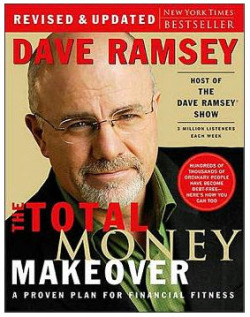
This is why every child of mine is going to get a copy of Dave Ramsey’s The Total Money Makeover. It’s a goofy title, but the principles in it are sound. I can’t tell you how much I wished I’d known and followed the steps he outlines there on how to build wealth when I was just starting out.

  1. Save $1,000 in an emergency fund
  2. Pay off all your debt except the mortgage using the debt snowball (and don’t go into debt)
  3. Complete your emergency fund by saving three to six months’ expenses
  4. Maximize retirement investing
  5. Save for your kids’ college
  6. Pay off the home mortgage early
  7. Build wealth and give like crazy
  8. Live like no one else

The book starts out by talking about the debt myth, i.e. debt is a great tool and should be used to create prosperity. Sometimes a little debt can be helpful. But in the vast majority of cases “debt adds considerable risk, most often doesn’t bring prosperity, and isn’t used by wealthy people nearly as much as we are led to believe.” Ramsey goes on to say, “Your largest wealth-building asset is your income. When you tie up your income, you lose. When you invest your income, you become wealthy and can do anything you want.  How much could you give every month, save every month, and spend every month if you had no payments? Your income is your greatest wealth-building tool, not debt. Your Total Money Makeover begins with a permanently changed view of the Debt Myths.”

After tackling debt, Ramsey outlines other money myths and wealth-destroying attitudes and then explains each of the principles of the steps outlined above.

I love this book so much it’s part of my gift package to every couple that invites me to their wedding reception. I hope those new couples follow his recommendations. It will bring them peace. If you want to give your children the gift of financial peace, if you want that peace yourself, I recommend you buy this book today and start following those baby steps. You can get the book for a mere $10 bucks at his website http://www.daveramsey.com.

While you’re waiting for it to come, you might want to go over to Larry Correia’s site (another accountant and fiction author), and read his hilarious comments on some real folks who actually were sent out without any financial underwear: http://tinyurl.com/3zx9tbo.

Thick and Creamy

I love thick, creamy yogurt.

Mix it with some raisins or fresh fruit, and I’m in heaven.

The problem is that most of the yogurt on the shelves today is weird Splenda- or NutraSweet-filled crap. Or it’s full of sugar. And none of it has that thick mouth feel.

I had some great yogurt up in Oregon a few years ago, but could never find anything like it here. Then a little while ago I hit the jackpot.

Hello, Brown Cow Greek Yogurt.

Thick. Oh, baby is it thick. Creamy. And full of goodness: 23 grams of protein, 9 grams of sugar, 0 grams of fat, and active cultures of more of our belly friends than any other yogurt I’ve found—give a big welcome to S. Thermophilus, L. Bulgaricus, L. Acidophilus, Bifidus, and L. Casei.

I get the plain style. This allows me to mix it to my taste with fruit, granola, or a little bit of sugar or honey.

If you’ve been looking for some good yogurt, let me recommend Brown Cow.

Share

Similar Posts

  • |

    Buffett’s Letter to Berkshire Hathaway Shareholders on 2008

    I got my masters degree in accounting and information systems. While going to school I started an investment club and learned about a man named Warren Buffett.

    Warren Buffett is humble, full of folksy humor, and trades places with Bill Gates as the richest man in the world, depending on the year you’re counting. His annual letters to his shareholders are a delight to read. This year’s is full of wisdom about the current financial crisis. Moreover, within a few minutes of reading you will be able to get some key insights that can help as you evaluate the plans being hatched in Washington and how to prevent this particular type of crisis from happening again. 

    If you’re not that into finance, I recommend reading:


    1. The introduction starting on page 2 and ending on page 3
    2. The “Finance and Financial Products” section starting on page 10 and running through page 12

    Once you’ve read those, if you want to laugh and see Buffet’s humor, skip to page 21 where Buffett talks about the annual meeting of shareholders. Tell me you wouldn’t want to attend.

    The Berkshire Hathaway homepage

    This year’s letter to shareholders (you will click on 2008 because he’s discussing the results of that year)

    Share
  • The Sing-Off, Sam’s Salmon, The Englishman Who Went Up A Hill

    One of the best TV programs this fall

    American Idol was good until the judges became irrelevant and annoying. Or maybe I was just tired of the format. I didn’t think I’d watch another singing show. But I tuned into the opener for The Sing-Off on NBC last week, and holy harmonies, Batman–it was wonderful.

    Ten of the best a’capella groups in the country compete for a $100,000 prize and a recording contract with Sony Music. Unlike American Idol, the groups represent a wide range of ages—from kids in high school to older adults—and backgrounds. They don’t use any instruments, just their voices, to sing incredible arrangements of modern songs with percussion, bass, and lovely vocals. This ain’t no choir music. And unlike American Idol, the judges actually have interesting and useful things to say. Also unlike American Idol, the judges eliminate the groups until three are left. Only then do the rest of get to call in and vote.

    We were glued to the TV watching each episode. The programs are all two hours long, but move like lightening. Our favorite groups at this point are Committed and The Backbeats.

    This whole show runs a total of three weeks, one episode each on Monday and Wednesday. It started last week, continues this, and finishes next week. Some of you might be depressed, feeling you’ve already missed it.

    Not so! You can watch all of the full episodes online at www.nbc.com/sing-off/ (with fewer commercials). Then tune in for the grand finale. I can’t wait. 

    Are you kidding? From a can?

    Canned tuna fish is one of those un-meats. It doesn’t taste like fish. It doesn’t taste like chicken. I guess the all-white albacore is okay. But tuna’s not one of those spectacular foods I crave.

    So you’d think, as I strolled the isles of Sam’s Club, that I would have passed up the canned Member’s Mark Atlantic Salmon. But one of my wild culinary urges, the ones that rarely pan out, overtook me.

    I purchased a pack of five, seven-ounce cans for $11.88. I brought the pack home put it on the shelf and didn’t dare open it. What was I thinking?

    Canned salmon? Canned meat?! When was the last time you had a steak out of a can?

    It couldn’t be good.

    Of course, my sensible hesitations only last so long. I broke down one afternoon when the cupboards were bare. I saw the salmon and thought that it might go well with a salad and baked potato.

    I opened the can. It was pink, like the trout I used to catch and immediately fry when I went camping as a boy. I tasted it. And it tasted like .  .  . fish. Real fish. The light delicious taste of those trout I caught so many years ago.

    I enjoyed a wonderful meal that day and have had several repeats since. Boneless, skinless filets in water, packed with omega-3 fats, all grown on fish farms in Chile. 

    Great movie set in Wales

    I enjoy Hugh Grant as an actor. I loved him in Sense & Sensibility with Emma Thompson, one of my most favorite movies ever. And so I was curious about another movie with Grant that received two thumbs up from Siskel and Ebert. It’s called The Englishman Who Went Up A Hill And Came Down A Mountain.

    The setup is unusual. In 1917, with the war still raging in Europe, two English cartographers visit the small South Wales village to measure what is claimed to be the “first mountain inside of Wales.” The villagers are proud of their “mountain,” but become alarmed when the Englishmen measure it and find it’s not a mountain but a hill. The villagers are determined not to lose their status. Especially not to two Englishmen. What follows is good humor, drama, and a bit of romantic comedy. I think you’ll fall in love with the characters. It’s a wonderful tale. And it’s on DVD.

    As a little bonus, here are the opening lines, given to us by two narrators.

    “Narrator: For some odd reason, lost in the mists of time, there’s an extraordinary shortage of last names in Wales. Almost everyone seems to be a Williams, a Jones, or an Evans. To avoid widespread confusion, Welsh people often add an occupation to a name. For example, there was Williams the Petroleum, and Williams the Death. There was Jones the Bottle, and Jones the Prize Cabbage… which described his hobby and his personality. Evans the Bacon, and Evans the End of the World. But one man’s name was a puzzle, and it wasn’t until I was 10 years old that I asked my grandfather about the man with the longest and most enigmatic name of all.

    “Grandfather: The Englishman Who Went Up a Hill but Came Down a Mountain? Now there’s a long name for you. And a long story. You are not going to fidget, are you? For this is a story… an epic story. Yes, epic.”

    Share
  • The Road by Cormac McCarthy

    If I’d known Cormac McCarthy’s The Road had won a Pulitzer Prize in 2007, I might not have picked it up. So many books that have won the award just bore my underpowered literary sensibilities to death. Luckily, I’d listened to McCarthy’s All The Pretty Horses a few years ago and enjoyed it. So when I saw the audio book, performed by Tom Stechschulte, in the library I checked it out. I’m so glad I did.

    The story is set in the Eastern US (although you don’t learn that into well into the book, and then only by one reference to them traveling through “the Piedmont”) years after a holocaust (meteor, nuclear, a caldera–it’s not ever really confirmed) and the resulting choas that turns America in a bleak place of ash and death. A father and son travel a mostly deserted road south to warmer weather, pushing a grocery cart with their few belongings. The father’s sick; he might be dying. And if he dies, we know the boy will die too because there’s nothing to eat but tins of what they can scavenge from houses that were ransacked and abandoned years before. And because others who survived have turned to hunting and eating people.

    This is an incredible story about the relationship between this father and son and the dangers they face. McCarthy tells the story in plain detail. In fact, his understatement and attention to detail in this terrible landscape make it all the more powerful. Stechschulte’s reading is perfect.

    The film is due out in 2009 and features Viggo Mortensen. But I wouldn’t wait for the movie if I were you. I’d get the book now. Or the recording. I couldn’t put this tale down. I’m betting you won’t be able to either.

    Share
  • Bartimaeus & The Time Traveler’s Guide to Medieval England

    Pure Delight

    One of the most delightful literary characters to appear in the last decade is the cheeky Bartimaeus–a five-thousand-year-old djinni (“genie”) who plays the lead role in Jonathan Stroud’s trilogy The Amulet of Samarkand, The Golem’s Eye, and Ptolemy’s Gate.

    In Stroud’s world, magicians have no magic in themselves, but they do have the lore to summon and enslave demons, who can work magic. There are demons of various levels and powers. The lowest regularly summoned and enslaved are Imps, who can be crude and like to tell outright whoppers, but are good for standing watch and carrying messages. Next come Foliots, which Bartimaeus describes as “cut price djinn.” In the middle of the great chain of beings are the Djinn themselves, whose clever intelligence Bartimaeus extols, followed by Afrits, and finally Marids, who are rarely summoned because they are too strong for any but the most powerful magicians to control. Of Marids, Bartimaeus insightfully reveals that they are “dreadfully full of themselves.”

    In the trilogy, Bartimaeus is summoned and enslaved to do the bidding of a sometimes jerkish young magician who learns to be a better person, despite himself. Of course, along the way the magician sends Bartimaeus in great peril, which he eludes with cunning, sardonic wit, and many good one-liners. I read the first book, loved it, then listened to all three read by Simon Jones, who makes these stories even better. The sad news is that I finished them. I simply wasn’t ready to let Bartimaeus go.

    Which is why I was so happy to find that Stroud recently released a fourth book: The Ring of Solomon, which is a stand-alone prequel to the trilogy. The family and I just finished listening to it, and it is every bit as good, if not better, than the first three.

    This story is set in biblical times where King Solomon has risen to uncontested power because of his possession of an all-powerful ring which allows him to summon hordes of powerful demons in a blink. Bartimaeus is enslaved to one of Solomon’s magicians.  A mean man, who Bartimaeus catches in a mistake and escapes, principally by devouring him. But Solomon doesn’t take kindly to that, and orders Khaba, a sinister and cruel magician, to summon him back to make an example for the other demons.

    Meanwhile, the Queen of Sheba, having denied Solomon’s marriage proposal three times, is sent an extortion threat.  Angry and frightened, she sends Asmira, a young woman and loyal captain of the guard, to Jerusalem to assassinate Solomon.

    Bartimaeus and Asmira hook up and find themselves in quite a pickle as they attempt to solve their problems. The story provides lots of humor, adventure, peril for both Bartimaeus and Asmira, and a number of surprising turnarounds. It also, in its own way, makes a comment on leadership, loyalty, and zealotry.

    You’ll find it in the middle-grade section of your bookstore, but don’t let the placement fool you into thinking it’s not for adults. Like the best stories, it offers something for everyone. It’s a perfect blend of insight and entertainment and had my whole family, oldest to youngest, spellbound for the duration as we listened to it riding in the car. This is one of my favorite books this year. And if you want to really indulge yourself, listen to the audio book read by Simon Jones.

    Travel to Medieval England

    I love learning new things about places and peoples, even if it’s a place I’ve “been” to before, which is why Ian Mortimer’s The Time Traveler’s Guide to Medieval England intrigued me. The first page convinced me to buy to book. And I’m so happy I did.

    I’ve read my fair share of interesting and well-written texts on this subject, including, among others, Life in a Medieval City and Life in a Medieval Village by Frances and Joseph Gies, Standards of Living in the later Middle Ages by Christopher Dyer, The Medieval Castle by Philip Warner, Daily Life in the Middle Ages by Paul B. Newman, and Power and Profit: The Merchant In Medieval Europe by Peter Spufford. All engrossing reads. What sets Mortimer’s book apart is that he not only approaches the topic as a travel guide that leads to you interesting sights and shares fascinating tidbits about the place, but he also helps you imagine how it would be, as a 21st century person, to actually travel there.

    For example, where would you go if you got sick? What happens if you’re robbed, where do you report the crime, and should you? Where might you get food and would it be something you’d find palatable? How will you get from place to place? Why kind of entertainment can you expect? And what can you wear without offending your hosts?

    Mortimer focuses on the fourteenth century England, since this period comes closest to the popular idea of the medieval times. He tackles the topics of the landscape, people, the Medieval character, basic essentials, what to wear, traveling, where to stay, what to eat and drink, health and hygiene, the law, and what to do. And he does it all in a chatty, clear, and informative manner, with a bit of humor thrown in for spice.

    Each page was a delight, and I found myself feeling like I was there. Furthermore, I learned a number of things that I hadn’t picked up in my previous readings. I’m tempted to quote all sorts of interesting tidbits he shares about the age, but I’ll refrain. If you are at all interested in the Middle Ages, I think you’ll love this book.

    Share
  • Top 200 YA Authors of 2010, Part 2

    Okay, I’ve really got to get some writing done. But since I posted the idea of seeing which authors have the highest average checkouts per book, I now feel obligated to share it because some of those on the top 200 authors list drop off while others appear. So this one shows the authors getting the most readers per book. For more information on the lists and source of the data, please see the previous two posts.

    BTW, a number of Utahans made this list that we hadn’t seen on the others.

    1. Stephenie Meyer (3)
    2. Shannon Hale (4)
    3. Lisa Mangum (8)
    4. Jessica Day George (10)
    5. Aprilynne Pike (13)
    6. James Dashner (21)
    7. Bree Despain (32)
    8. Mette Ivie Harrison (40)
    9. M.L. Forman (52)
    10. Brandon Sanderson (64)
    11. Chris Heimerdinger (112)
    12. Julie Wright (145)
    13. Ally Condie (146)
    14. Kiersten White (151)
    15. Jack Weyland (188)

    If I’ve missed any Utah (or former Utah) authors, please let me know. Holy schnitzel, look at them all.

    EDIT: 1/16/2011 9:32 AM: Informed that Bree Despain is also a Utah author.

    EDIT: 1/18/2011 6:21 PM: Turns out Kiersten White grew up in Utah, but moved to San Diego after she married. I’m still claiming her, although I often wish I could trade subzero land for beaches and 70 degrees

    EDIT: 1/18/2011 10:20 PM: just informed that M.L. Forman is a Utah author.

    The List

    Author Times Checked Out Number of Titles Avg Check Outs per Title % Rank
    Suzanne Collins 888 3 296 2.68% 1
    Rick Riordan 989 8 124 2.98% 2
    Stephenie Meyer 529 5 106 1.60% 3
    Shannon Hale 517 6 86 1.56% 4
    J.K. Rowling 318 4 80 0.96% 5
    Cassandra Clare 309 4 77 0.93% 6
    Christopher Paolini 191 3 64 0.58% 7
    Lisa Mangum 124 2 62 0.37% 8
    P.C. Cast and Kristin Cast 393 7 56 1.19% 9
    Jessica Day George 328 6 55 0.99% 10
    Kristin Cashore 105 2 53 0.32% 11
    Cornelia Funke  51 1 51 0.15% 12
    Aprilynne Pike 101 2 51 0.30% 13
    Judy Blundell 48 1 48 0.14% 14
    John Flanagan 413 9 46 1.25% 15
    Kelley Armstrong 131 3 44 0.40% 16
    John Grisham  43 1 43 0.13% 17
    Michael Scott 165 4 41 0.50% 18
    Angie Sage 246 6 41 0.74% 19
    Maggie Stiefvater 153 4 38 0.46% 20
    James Dashner 75 2 38 0.23% 21
    Kimberly Derting 37 1 37 0.11% 22
    Frank Beddor 110 3 37 0.33% 23
    Carrie Ryan 69 2 35 0.21% 24
    Gail Carson Levine 34 1 34 0.10% 25
    Jay Asher 34 1 34 0.10% 26
    Becca Fitzpatrick 68 2 34 0.21% 27
    Libba Bray 136 4 34 0.41% 28
    Julie Berry 34 1 34 0.10% 29
    Richelle Mead 202 6 34 0.61% 30
    Elizabeth Knox 67 2 34 0.20% 31
    Bree Despain 66 2 33 0.20% 32
    James Patterson 257 8 32 0.78% 33
    Cornelia Funke 63 2 32 0.19% 34
    Lisa McMann 94 3 31 0.28% 35
    Carolyn MacCullough 31 1 31 0.09% 36
    Markus Zusak 124 4 31 0.37% 37
    Lauren Oliver 31 1 31 0.09% 38
    Emily Whitman 31 1 31 0.09% 39
    Mette Ivie Harrison 123 4 31 0.37% 40
    Ally Carter 152 5 30 0.46% 41
    Cameron Dokey 271 9 30 0.82% 42
    Jason Henderson 30 1 30 0.09% 43
    Caragh M. O’Brien 30 1 30 0.09% 44
    Scott Westerfeld 354 12 30 1.07% 45
    Carrie Jones 88 3 29 0.27% 46
    Lindsey Leavitt 29 1 29 0.09% 47
    Lois Lowry 86 3 29 0.26% 48
    Philip Pullman  57 2 29 0.17% 49
    Lauren Kate 57 2 29 0.17% 50
    Lili St. Crow 56 2 28 0.17% 51
    M.L. Forman 28 1 28 0.08% 52
    Alison Goodman 28 1 28 0.08% 53
    Marissa Doyle 55 2 28 0.17% 54
    Eoin Colfer 302 11 27 0.91% 55
    Rachel Hawkins 27 1 27 0.08% 56
    Joseph Delaney 240 9 27 0.72% 57
    Cyn Balog 26 1 26 0.08% 58
    Christine Johnson 26 1 26 0.08% 59
    Anna Godbersen 127 5 25 0.38% 60
    Shauna Cross 25 1 25 0.08% 61
    Veronica Bennett 25 1 25 0.08% 62
    Betty Smith 25 1 25 0.08% 63
    Brandon Sanderson 100 4 25 0.30% 64
    Melissa Marr 99 4 25 0.30% 65
    Tamora Pierce 634 26 24 1.91% 66
    Aubrey Mace 24 1 24 0.07% 67
    N.D. Wilson 70 3 23 0.21% 68
    Kami Garcia & Margaret Stohl 46 2 23 0.14% 69
    Lesley Livingston 68 3 23 0.21% 70
    Alex Flinn 68 3 23 0.21% 71
    Sara Shepard 181 8 23 0.55% 72
    Cinda Williams Chima 113 5 23 0.34% 73
    Melissa de la Cruz 154 7 22 0.46% 74
    Kay Cassidy 22 1 22 0.07% 75
    Louis Sachar 44 2 22 0.13% 76
    D.J. MacHale 328 15 22 0.99% 77
    Heather Brewer 108 5 22 0.33% 78
    Beth Fantaskey 43 2 22 0.13% 79
    Kimberly Pauley 43 2 22 0.13% 80
    Diana Wynne Jones 128 6 21 0.39% 81
    Herbie Brennan 106 5 21 0.32% 82
    Dia Reeves 21 1 21 0.06% 83
    Heather Hepler 21 1 21 0.06% 84
    Susanne Dunlap 21 1 21 0.06% 85
    Erica S. Perl 21 1 21 0.06% 86
    Linda Buckley-Archer 63 3 21 0.19% 87
    Lise Haines 21 1 21 0.06% 88
    Alyson Noel 188 9 21 0.57% 89
    Eva Ibbotson 41 2 21 0.12% 90
    Anne Osterlund 41 2 21 0.12% 91
    Sherrilyn Kenyon 20 1 20 0.06% 92
    Kenneth Oppel 80 4 20 0.24% 93
    story by Tohru Kai  20 1 20 0.06% 94
    M.R. Bunderson 20 1 20 0.06% 95
    Robin Palmer 59 3 20 0.18% 96
    Claudia Gray 59 3 20 0.18% 97
    Frewin Jones 155 8 19 0.47% 98
    Carl Hiaasen 58 3 19 0.17% 99
    Lisa Greenwald 19 1 19 0.06% 100
    Catherine Gilbert Murdock 76 4 19 0.23% 101
    Suzanne Harper 19 1 19 0.06% 102
    Suzanne Weyn 150 8 19 0.45% 103
    Rosalind Wiseman 18 1 18 0.05% 104
    Jen Nadol 18 1 18 0.05% 105
    Thomas W harton 18 1 18 0.05% 106
    Margaret Peterson Haddix 144 8 18 0.43% 107
    Ellen Schreiber 160 9 18 0.48% 108
    Patricia C. Wrede 158 9 18 0.48% 109
    Robin McKinley 105 6 18 0.32% 110
    Zoèe Marriott 35 2 18 0.11% 111
    Chris Heimerdinger 280 16 18 0.84% 112
    Amy Huntley 17 1 17 0.05% 113
    Rachel Ward 17 1 17 0.05% 114
    Sarwat Chadda 17 1 17 0.05% 115
    Nina Malkin 17 1 17 0.05% 116
    Chris Heimerd 17 1 17 0.05% 117
    Elizabeth Eulberg 17 1 17 0.05% 118
    Kathi Oram Peterson 17 1 17 0.05% 119
    Megan Whalen Turner 68 4 17 0.21% 120
    Chelsea M. Campbell 17 1 17 0.05% 121
    Rachel Vail 51 3 17 0.15% 122
    Becca Wilhite 34 2 17 0.10% 123
    Sarah Dessen 150 9 17 0.45% 124
    Debbie Viguie 100 6 17 0.30% 125
    Garth Nix 182 11 17 0.55% 126
    Michael Grant 49 3 16 0.15% 127
    Rachel Vincent 49 3 16 0.15% 128
    Jonathan Stroud 97 6 16 0.29% 129
    Lucy Christopher 16 1 16 0.05% 130
    Kay Lynn Mangum 48 3 16 0.14% 131
    Anna Jarzab 16 1 16 0.05% 132
    Sarah MacLean 16 1 16 0.05% 133
    Josh Berk 16 1 16 0.05% 134
    Lisa Klein 16 1 16 0.05% 135
    Jackson Pearce 16 1 16 0.05% 136
    Jacqueline Kelly 16 1 16 0.05% 137
    Caroline Goode 16 1 16 0.05% 138
    Kirby Larson 16 1 16 0.05% 139
    Lisa Shanahan 16 1 16 0.05% 140
    Katherine Applegate 16 1 16 0.05% 141
    Marthe Jocelyn 16 1 16 0.05% 142
    Ann Brashares 64 4 16 0.19% 143
    Holly Black 78 5 16 0.24% 144
    Julie Wright 31 2 16 0.09% 145
    Ally Condie 93 6 16 0.28% 146
    Juliet Marillier 31 2 16 0.09% 147
    Janet Lee Carey 46 3 15 0.14% 148
    Donita K. Paul 90 6 15 0.27% 149
    Tera Lynn Childs 45 3 15 0.14% 150
    Kiersten White 15 1 15 0.05% 151
    Jane Eagland 15 1 15 0.05% 152
    Sophie Jordan 15 1 15 0.05% 153
    Maureen Daly 15 1 15 0.05% 154
    Debbie Vguie 15 1 15 0.05% 155
    Leah Cypess 15 1 15 0.05% 156
    Jessica Brody 15 1 15 0.05% 157
    Rosie Rushton 15 1 15 0.05% 158
    Rachel Caine 134 9 15 0.40% 159
    R.D. Henham 104 7 15 0.31% 160
    Hilari Bell 178 12 15 0.54% 161
    L.J. Smith 326 22 15 0.98% 162
    Carol Lynch Williams 44 3 15 0.13% 163
    Laini Taylor 44 3 15 0.13% 164
    John Boyne 29 2 15 0.09% 165
    Victoria Hanley 58 4 15 0.17% 166
    Guillaume Prevost 43 3 14 0.13% 167
    Michelle Zink 28 2 14 0.08% 168
    Andrea R. Cremer 14 1 14 0.04% 169
    Lynn Weingarten 14 1 14 0.04% 170
    Kristopher Reisz 14 1 14 0.04% 171
    Andrew Klavan 28 2 14 0.08% 172
    Jessica Verday 14 1 14 0.04% 173
    Kim Harrison 14 1 14 0.04% 174
    L.K. Madigan 14 1 14 0.04% 175
    Heather Davis 14 1 14 0.04% 176
    Lauren Conrad 42 3 14 0.13% 177
    Sherman Ale 14 1 14 0.04% 178
    Alexandra Adornetto 14 1 14 0.04% 179
    Martine Leavitt 14 1 14 0.04% 180
    Morris Gleitzman 14 1 14 0.04% 181
    Charmian Hussey  14 1 14 0.04% 182
    Douglas Rees 14 1 14 0.04% 183
    Stephanie Hem 14 1 14 0.04% 184
    C.J. Omololu 14 1 14 0.04% 185
    Aimee Friedman 42 3 14 0.13% 186
    Kate Coombs 28 2 14 0.08% 187
    Jack Weyland 151 11 14 0.46% 188
    Michael Carroll 41 3 14 0.12% 189
    Philip Caveney 41 3 14 0.12% 190
    Pamela Wells 27 2 14 0.08% 191
    Grace Cavendish 27 2 14 0.08% 192
    Elizabeth Scott 54 4 14 0.16% 193
    Ridley Pearson 54 4 14 0.16% 194
    Laurie Halse Anderson 108 8 14 0.33% 195
    Gillian Shields 40 3 13 0.12% 196
    Simone Elkeles 93 7 13 0.28% 197
    Lisi Harrison 304 23 13 0.92% 198
    Patrick Carman 66 5 13 0.20% 199
    Darren Shan 313 24 13 0.94% 200
    Gary D. Schmidt 26 2 13 0.08% 201
    Gena Showalter 26 2 13 0.08% 202
    Michael Young 13 1 13 0.04% 203
    Miyuki Miyabe  13 1 13 0.04% 204
    J.V. Hart  13 1 13 0.04% 205
    Dandi Daley Mackall 13 1 13 0.04% 206
    Beatrice Gormley 13 1 13 0.04% 207
    Dodie Smith 13 1 13 0.04% 208
    Jaclyn Moriarty 52 4 13 0.16% 209
    Angela Morrison 26 2 13 0.08% 210
    James A. Owen 52 4 13 0.16% 211
    Nick Lake 13 1 13 0.04% 212
    E.E. Richardson 13 1 13 0.04% 213
    Fern Schumer Chapman 13 1 13 0.04% 214
    Priscilla Cummings 13 1 13 0.04% 215
    Stuart Hill 39 3 13 0.12% 216
    Jen Calonita 78 6 13 0.24% 217
    Valerie O. Patterson 13 1 13 0.04% 218
    Julie Kagawa 26 2 13 0.08% 219
    William golding 13 1 13 0.04% 220
    Lisa M. Klein 13 1 13 0.04% 221
    Lisa Mantchev 26 2 13 0.08% 222
    Gerald Morris 129 10 13 0.39% 223
    Cory Doctorow 25 2 13 0.08% 224
    Janette Rallison 125 10 13 0.38% 225
    Share
  • Interview with Author Bradley Beaulieu

    Bradley P. Beaulieu just had his first novel released on April 1st. It’s called The Winds of Khalakovo and is the first of three planned books in The Lays of Anuskaya series publishehd by Night Shade Books. In addition to being an L. Ron Hubbard Writers of the Future Award winner, Brad’s stories have appeared in various other publications, including Realms of Fantasy Magazine, Orson Scott Card’s Intergalactic Medicine Show, Writers of the Future 20, and several anthologies from DAW Books. His story, “In the Eyes of the Empress’s Cat,” was voted a Notable Story of 2006 in the Million Writers Award. His agent is Russell Galen.

    Brad is a software engineer by day, wrangling code into something resembling usefulness. He is also an amateur cook. He loves to cook spicy dishes, particularly Mexican and southwestern. He lives in Racine, Wisconsin with his wife and two children. As time goes on, however, Brad finds that his hobbies are slowly being whittled down to these two things: family and writing. In that order . . .

    I recently had the opportunity to interview Bradley. Among other things, we talked about how he broke in and how he comes up with his ideas. He also convinced me to use his picture method, which I’m finding very handy on my current thriller project.

    ***

    JOHN: In your novel an elemental spirit attacks an incoming windship, murdering the heir to a kingdom. The person believed to be behind this is a child, an autistic savant. This sounds like Orson Card tale (grin). Did you come up with this character first, the magic, or something else. Tell us the genesis of the tale and this character in particular.

    BRADLEY: The genesis of the book is actually from a series of postcards of fine art that I picked up in Edinburgh, Scotland. (I posted about it on my website if you’re curious to learn more.) I used that artwork to first generate and then crystallize my thoughts about the book. Initially, I tried not to let any one thing rule the brainstorming I would do from time to time. I didn’t even know who the main characters were at first. I was quite taken by the picture of the three sisters, though, and I knew right away, the moment I laid eyes on the original in the National Gallery, that they would play a major part in the novel.

    But in the end it was the picture of the boy with the flaming brand that kept leaping out at me, calling for attention. The artist is Godfried Schalcken, and the piece is called A Boy Blowing on a Firebrand to Light a Candle. This character eventually became Nasim, the autistic savant. As I was studying the characters, I began to realize that this boy was not going to be a point-of-view character, but he was going to be a prime mover. In the end, he embodies much of what Winds is about. The story truly does revolve around him and his unique powers.

    The brand that he holds in the painting also came into play. I didn’t know what the magic was going to be about. I hardly had a single preconception about the book going in. I just wanted the artwork to speak to me, to advise me as to what the story was going to be–from the characters to the world to the magic. The boy blowing on the brand got me to thinking about elemental magic, and I realized that Nasim was one who could do this without even thinking. It came as naturally to him as did breathing. That’s a difficult place to put a character, however. As a writer, you have to be careful of all-powerful things, and so I needed something to balance Nasim’s abilities. And this, of course, is where his disconnection from the world came from. Nasim, as written in the book, is often lost. He has difficulty relating to others in even the smallest of ways. This both limited his power and made him in some ways more dangerous and more scary than a calculating villain, simply because of the unpredictability.

    I’d be remiss if I didn’t also mention Rehada, who started out as a somewhat minor character but grew into the most complex and perhaps the most compelling of my three main characters. Rehada came from Andrew Geddes’ Hagar. It’s another beautiful painting, filled with emotion. I was drawn to the fact that she was crying. I wondered why. I spent a lot of time answering that one question. After knowing that her people were essentially pacifists, I realized that Rehada was not. She felt she had betrayed her people and their ways because she had taken to the path of violence. It was from this, from that one single tear, that the entirety of the Maharraht–the fanatical splinter group that came to embrace violence as a means to an end–was born.

    By this point, I understood that I wanted there to be an aristocracy of some kind, and I fairly quickly landed on a culture that was modeled loosely after Muscovite Russia. I don’t remember why, exactly. It might have been that the other artwork reminded me of Russian Czars a bit, but I think the biggest driver here was that I definitely didn’t want something that was centered around western Europe, because frankly that’s been done to death. I wanted something more unique, and I’d always sort of like the mystique and darkness that seemed to hover around that time period in Russia. They’ve always seemed like a hard people, a people that would do whatever it took to survive, but in the same light, they took time to live life fully when they could.

    Given that I had the loose guidelines of the aristocracy, the peace-loving, indigenous Aramahn, and finally the will of the Maharraht to do whatever it took to regain the islands as their own, it created a crucible from which the story flowed fairly easily. I spend a lot of time building my worlds so that the conflicts within them come naturally, and that was definitely the case here.

    JOHN: The description of the world and your process for getting into the story is fascinating. From the article on your site it sounds like using images was a new technique for you. Is that correct? And if it is, was your process previously to have some other physical object of which you’d ask questions?

    BRADLEY: Yes, using artwork as a starting point was a new technique for me. I had no idea if it was going to work or not. An interesting thing came up when I was doing it, though. One of the things I learned at a few of the workshops I’ve been to (Writers of the Future and Orson Scott Card’s Literary Bootcamp) was to create stories in very little time using a few unrelated things as starting points. One unanticipated result of having restrictions in some areas (such as the elements involved in the story) is that it opens your mind in other areas. You’re forced to become more creative in some ways because certain avenues have been closed to you. I think it was the same with the portraits I used to represent the characters.

    Before that, in the previous three novels I’d written, I didn’t really have any specific brainstorming techniques. I would start with a premise and perhaps a loose idea of the characters and a mood, and I would go from there, trying to stay true to those things as the story evolved and grew. Although part of the problem with those early stories was that I was young in my craft, I also think my brainstorming wasn’t very efficient. I think, as I alluded to above, that there were too many possibilities. I had trouble narrowing the story down, and it led to stories that were ok, but nothing great. Too often they became a bit generic. Nothing really stood out.

    So while the artwork I used is one of a great many possible brainstorming techniques, I like the idea of challenging yourself with restrictions in order to force the story to stretch and bend in unpredictable ways.

    JOHN: Wow. That’s a striking insight. I think I’ve found the same thing occurs when I run workshops or do my own brainstorming, but I don’t know that I’ve ever crystallized it the way you have. (See folks, this is why I love these interviews.) So I see _The Winds of Khalakovo_ will be published by Night Shade books. You’ve had quite a few short stories published, but this is your first novel. How did you make the sale? Did you have an agent? Was the editor someone you knew? Gives us a bit of the story behind this.

    BRADLEY: As you said, I’d been making steady progress throughout the years in short story sales. I had attended a number of workshops, and I think my name had at least some recognition by editors, either from short stories I’d published or personal connections I’d made at conventions. As an aside, some people will say that you shouldn’t go and sell yourself at conventions. If an opportunity comes up, they say, and an editor or agent asks you what you’re working on, go ahead and take advantage of it. I don’t doubt that that’s good advice for some. Just not for me. I believe that editors and agents are at cons not just to meet with their authors and speak with agents, but to see who’s coming up in the field. They’ll get to know a certain percentage of the newcomers from their short sales, or even novel sales, but they can’t read everything. They can’t even read a small percentage of the fiction that comes out each year. So, frankly, it’s up to me to make them aware of who I am.

    Now, that doesn’t mean you should be pushy. You should be friendly and businesslike. Keep things short and sweet and as casual as you possibly can. And that’s exactly what I tried to do. I approached Jeremy at World Fantasy in San Jose (2009) and told him I had an epic fantasy that he might like. I pitched it as “The Song of Ice and Fire meets Earthsea.” He asked me if I had an agent. I said no. Night Shade doesn’t normally take unagented mss (and I should probably ask Jeremy some day if he gets annoyed that I tell this story), but he said he liked the cool pitch and said to send it his way. Roughly five months later, I got an email from Jeremy, offering to publish the book. 

    At that point, I moved quickly to find an agent, and believe me, agents will move quickly as well if you tell them you have an offer on the table. That doesn’t mean they’ll be clamoring to sign you up. It just means you have their attention. I was lucky enough to be picked up by Russell Galen of the Scovil Galen Ghosh Literary Agency. Russ and I are simpatico on a number of levels, and to be frank, as an agent he kicks serious ass, so I feel honored and blessed to be under his wing.

    JOHN: What a great breaking in story. And you’re right, Galen is tops. So to give my readers perspective, did you approach a lot of editors this way? Or was Jeremy at Night Shade one of a select few? And did you encounter any annoyance? I know my editor, David Hartwell at Tor, doesn’t much like to be approached at cons. But obviously, that’s not the case with all editors.

    BRADLEY: Well, I had not approached anyone else for Winds. However, I had previous novels, and I’d approached a variety of agents and editors over the years. Not scads of them, mind you, but a number of them, and there were more agents I spoke to than editors because the general rule of thumb is that you can approach and/or query multiple agents at the same time, whereas editors you typically ask for exclusives, even at the partial stage. I was also careful about who I approached, and when. I went to the Pikes Peak Writers Conference for several years. They had pitch sessions there, where you can sit down with an acquiring agent or editor and talk to them about your novel. I certainly took advantage of this, but I also wasn’t afraid to approach them outside of those sessions. At conferences in particular, I think the invited guests are open to being approached at the bar, at the dinners, and at the parties. Again, though, I tried to keep things as casual as I could, and I kept the pitch short and sweet so that they could determine quickly whether it was a project that interested them. Most often I got a “Sure, send me 50 pages” type of answer, but I got a few requests for fulls by doing this as well.

    Conventions are another beast. It’s a looser environment than a conference, so I was much more choosy about when I approached agents and editors. I’ve never encountered annoyance, but I’ve certainly felt stiffness from those who perhaps would rather not be approached. I learned from this early on and adjusted my approach. I would try to meet them first and strike up a conversation and see where it went. Often, if you can just be humans with one another, the subject of what you write and what projects you might have ready will come up. Try to take that approach, because there’s nothing to put off an editor that already keeps unknown writers at arm’s length than the smell of desperation. In the words of Monica Geller, keep it breezy.

    JOHN: Well, I’m excited for you. Night Shade is a great publisher. So I have one more question: what’s next?

    BRADLEY: I’m contracted for two more books, so that’ll occupying my time for a little while yet. But I’ve started brainstorming the next project. (I like to let things germinate for quite a while, so it’s important for me to get my hindbrain working on these as early as possible.) I have two possibilities that I’m mulling over. The first is a science-fantasy called The Days of Dust and Ash. Think Nausicaä of the Valley of the Wind meets The Coldfire Trilogy. I’m excited about this story, because it’s a departure from what I’ve written in the past, though it will still be fantastic and wide in scope. The story focuses on a young girl who is summoned from the dust, a global consciousness that was created as the last great age of technology fell under a nanite plague.

    The other is called From the Spices of Sanandira. I sold a novella with the same title to Beneath Ceaseless Skies last year, and it will be appearing sometime this spring. It’s a story that springs from Sanandira, a large desert oasis known for its caravan trade and spice bazaars. It’s got a strong Thousand and One Nights feel to it. The novel is not so much an expansion of the novella as it is a re-imagining of it. It will probably focus on a pair of twins: one boy, one girl. The sister is sold to one of Sanandira’s famed assassin rings at a young age. The boy (the protagonist) finds his sister by happenstance years later, and because of this chance meeting is drawn into the world of intrigue his sister walks every day.

    ***

     JOHN SEZ: I just love hearing how other authors work. As I said before, after this interview I decided to use the image technique myself on my current thriller project. Images of people and places and thing. I’m finding it helpful to help the story come to life. I also think Bradley’s breaking in story illustrates one key thing: work. And that’s exactly what I need to do right now 🙂

    Share

4 Comments

  1. Yeah, Brown Bow is the only yogurt in America worth eating. How I miss European yogurt. Americans are obsessed with low fat now sugar crap, but are we getting any skinnier?

    Also, I just read Dave Ramsay’s book. We already got rid of credit cards years ago, when we paid off enormous debt. But working on other stuff.

    Great minds think alike, eh?

  2. I think I mentioned on here a while back that I’m working on the Dave Ramsey plan. My wife and I didn’t have any credit card debt, but it was sobering to look at our car loan and student loans and realize what a huge wad of debt we had, and what would happen if we couldn’t pay for some reason. It’s a long road.

    And I just bought some Brown Cow yogurt on your recommendation. It better be good! Haha. I’m sure it is. I was in Europe for a while myself, but my true love wasn’t the solid yogurt. It was the yogurt drinks. Oh, how I miss Yoki. The yogurt drinks here in the states don’t even compare.

Comments are closed.