Maya, a character for a thriller?

mayalassiterbeachphotoMaya lives in a yurt.

She has glorious garbage floors.

And chickens that run around and lay pastel eggs in odd places like buckets–Easter every day.

Here’s a list of her most popular blogs.

So, folks. Maya has a fascinating life (as do most people when you start to get the details). So fascinating that you can’t help but want to write about someone like her to see where the story goes. Go read her blog and tell me you don’t agree.  It doesn’t get any better than this.

In fact, what would happen if I took a Maya and put her in that thriller I’ve got incubating? 

Oh, baby. Zing.

Share

Similar Posts

  • NPR’s Intelligence Squared

    Sometimes I love NPR, and sometimes those folks drive me nuts. But with Intelligence Squared they’ve come up with wonderful programming. I accidentally tuned in one night and found I couldn’t turn the radio off.

    What they do is bring together articulate experts, half who argue for a motion such as “Guns reduce crime?” or “Is the government responsible for health care?” and half who argue against it. The nice thing is that they make enough TIME to allow full statements. These aren’t roundtables of knucklehead pundits spouting sound bites. These are long discussions.

    Of course, so much depends on the presentation skills of the various experts. But being able to listen to both sides of an issue, at the very least, gives much to think about.

    In this debate they argue for and against the motion “The US is winning the war in Iraq”.

    They convinced me (I won’t say which side, however). Take some time and listen to this while you do monkey work for the day job.

    Share
  • |

    “The Fringe Benefits of Failure, and the Importance of Imagination” by J.K. Rowling

    This is J. K. Rowling’s 2008 Harvard commencement speech, “The Fringe Benefits of Failure, and the Importance of Imagination.” It’s one of the best speeches I’ve ever heard. Watch and then watch again. Read the full text here.

    Two quotes that in no way can do justice to the whole thing.

    And so rock bottom became the solid foundation on which I rebuilt my life.

    You might never fail on the scale I did, but some failure in life is inevitable. It is impossible to live without failing at something, unless you live so cautiously that you might as well not have lived at all – in which case, you fail by default.

    . . . 

    Though I personally will defend the value of bedtime stories to my last gasp, I have learned to value imagination in a much broader sense. Imagination is not only the uniquely human capacity to envision that which is not, and therefore the fount of all invention and innovation. In its arguably most transformative and revelatory capacity, it is the power that enables us to empathise with humans whose experiences we have never shared.

    One of the greatest formative experiences of my life preceded Harry Potter, though it informed much of what I subsequently wrote in those books.

    Share
  • Ugandan Monkey Boy

    Ugandan Monkey Boy - John Ssebunya

    I thought all such things were hoaxes.  Above is a picture of John after having been found and saved.

    John Ssebunya, the Ugandan Monkey Boy
    Date found: 1991
    Age when found: 6
    Location: Uganda
    Years in the wild: 3
    Animals: monkeys

    John ran and hid in a forest, about 2-3 km from his house after witnessing the murder of his mother by his father. His father was known to be an alcoholic and violent.

    John says he was so frightened of his father that he stayed in the forest. It is possible that he had some degree of mental handicap at that time and this may have contributed to the fact that he did not understand that he should have sought help from other adults.

    He was aged roughly 4 or 5 at the time that he was found in 1989 according to witnesses like Mrs Milly Sseba who found him in the forest. There is no birth certificate…

    John identified the mokes as Cercopithicus Aethiops (the common African Grey or Green Vervet Monkey). This is very significant as this is one of the very few species of mammal that lives in social groups and will accept and tolerate a lone individual of another species of monkey living alongside their group. Other monkeys and apes will not do this — chimpanzees for example would simply eat a human child.

    Read more here.

    Indeed zing, but heart wrenching.

    Share
  • Bees Sniff Out Land Mines

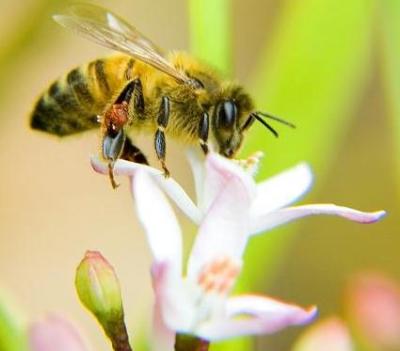
    The bee. We slather its delicious vomit on bread and muffins. We send colonies out to pollinate our crops. Now Colin Henderson and his University of Montana colleagues have partnered up with bees to “locate buried land mines” and do it more quickly and thorougly than any dog.

    “We can survey in one day what takes more than a week with dogs,” he says, “and humans stand 300 yards away.”

    Bees can find not only land mines, but also drugs and decomposing bodies. Oh, and they are smart enough to recognize a sugar daddy when they see one.

    Here’s the full article. Read it. Enjoy. Things like this are part of the wonderfulness of life.

    Share
  • |

    Story zing method: fiddling with knobs

    One of the most basic way of coming up with story ideas is to take a familiar story or thing, list out what’s commonly associated with it, then start changing some of those elements.

    For example, you list out all the normal things for vampires–the coffins, black, bats, sucking blood, etc.–then you begin to twist. What if the vampire wears, instead of black, some styling plaid? What if it isn’t a person but a rabbit (whoops, that one’s been done)? What if instead of gothic places like catherals you find him in a trailer park? What if instead of being dangerously suave, he’s a drunk?

    Do you see? You can do this with anything.

    In this interview, Matthew Sturges talks about how he did just that with the movie The Dirty Dozen and ended up with with Midwinter, a novel about prisoners given another chance. According to Sturges, “In the case of Midwinter, the beginning of the story was, ‘What is prison like in Faery?'”

    Read the whole interview. I think you’ll find it enlightening.

    Share
  • Crow Journal, day 1


    I decided to put my money where my mouth is. Or at least some peanuts and cheese. I want to make some friends with a couple of crows or ravens.

    I’m a little hesitant. One or two buddies, okay. A freaking tribe swirling around the house, pooping on man and beast, or, horrors, tormenting the cats and demanding food–well, that’s something to write about, isn’t it?

    Zing.

    Besides, I’ve only ever seen a pair. How many friends can they have?

    So I braved my fears and gathered six raven and crow calls from the internet. Then I put them in a play list, stuck my speakers in my office window, and began broadcasting crow. The mixture probably said something like, “Hey, there sweet momma, get off my branch you hawk turd!, can somebody pass me a napkin?” It’s got to pique their curiosity at least.

    With the calls running I set out some cheese and peanuts at the edge of the lawn out our basement door. It appears these folks eat anything and tend to like fatty food. When I go to Logan next I’ll get some potato chips.

    Results: 

    1. Three buzzards swooped up the slope and passed by.

    2. The herd of cattle down the hill and across the street all stood and stared up at the house.

    3. One of the cats came around to see what the commotion was all about.  Stuck its head through the deck railings to get a look down where the sounds were coming from.  

    I played the calls all during lunch. Nothin. So I turned them off.

    At about 3:40 PM I set out for my hike. Put out the speakers again and departed. On my way back down the hill at about 4:40 PM I saw the crow pair (or maybe they’re ravens) flying up the hill about 200 yards south of the house. They were dinking around in the air not trying to get anywhere fast.

    Hustled down and checked out the peanuts and cheese. Nothin. No sign of any visitors coming to investigate. Will try again tomorrow.

    Share