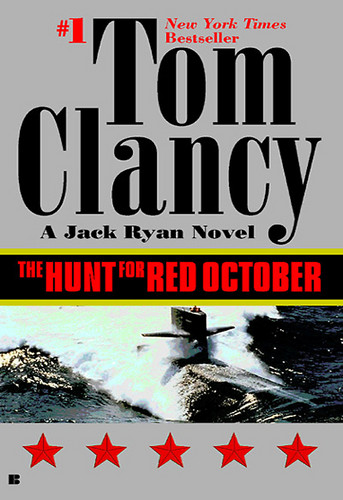
Some lessons from Tom Clancy’s first novel

tom-clancy-the-hunt-for-red-octoberTom Clancy is one of the biggest authors of our time. How did he break in? It’s an interesting story that Deborah Grosvenor, the editor who acquired The Hunt for Red October (Clancy’s first book), tells here.

And this early interview provides more insights.

So what conclusions can you draw from this? Here’s what I picked up.

1. Writing a good book is one thing. That book finding success is quite another.

2. Endorsements from the right people make a huge difference. More here in my blog Is Product Popularity Random?

3. Know what you write. And if you don’t know it, do the research. And then invent what you have to.

4. It’s not always a bad thing to start with a small press, especially if they’re going to put as much $$ into marketing and PR as this one did.

5. To finish your novel, you’re going to have to set aside time and get it done.

6. Finally, follow the zing. Clancy loved this stuff. Notice how his book was fed by the stories he heard and read.

Share

Similar Posts

  • Wise reader instructions

    I value accurate reports from readers who are (a) in the audience for my books and (b) approach the book as honest readers, not critics, nigglers, axe grinders, toadies, or flatterers. I just want accuracy. In How to Write Science Fiction & Fantasy, Orson Card calls these types of folks “wise readers.” When I find one, I cheer because not every reader has time, ability, or interest. And their reports are usually very helpful.

    I know a lot of aspiring authors ask friends and family to read their work. And I know that many people can easily become wise readers with a little direction. So I thought I’d share with you what I ask of my wise readers. Maybe you’ll find it useful with yours. Here’s a revised version of a letter I just sent to one who has agreed to read draft 3 of CURSE. Every author’s a bit different in how they approach readers. Some just say, read it and tell me what you like and what you don’t. But I like to provide a bit more guidance. And I wanted to make sure this reader understood exactly what I was looking for. It might be a bit much for some, but I wanted to make sure it was clear since this was his first time reading a full book for me.

    Thanks so much for agreeing to read this draft! What I want at this point is to see how I’m managing the reader experience in 3 areas: (a) the characters, (b) each chapter and scene, and (c) with the book as a whole. So  I’m hoping you just read, and as you go along make quick marks or comments when you’re delighted or bumped. I’ve listed the types of delights and bumps I’m talking about below. Please know I’m not providing them for you to use as a checklist, i.e. it’s not my intent to have you actively search for these things like a Where’s Waldo. You may feel some of these things. You may not. I just want you to be aware of them in the back of your mind as you read and to note when you experience them. In the end, I simply want an accurate report of YOUR experience. Accuracy is key to me.

    I find with my own reading that it’s often hard to respond to the story as a regular reader if I’m always stopping to write lots of detailed comments. It seems to knock me out of the reader’s trance. So don’t feel like you must stop at the end of each chapter to assess your experience or be exhaustive in detailing your every reaction. Just make your quick marks and comments as you go, then review and write up your report when you’re done. If you feel the book’s too big to do it all at the end and actually remember what your marks and comments meant, then break it up into chunks of 100 pages or every few chapters. Whatever works for you. 

    Sometimes, despite our best wishes, we are just not in the audience for a specific book. If the book just isn’t working for you, do not read past the point where you would normally put it down. Pushing yourself beyond that point will only drive you nuts, and it won’t provide me with anything useful. So just stop there, be happy, and write your report. Remember: the most useful thing to me is accuracy. 

    As for the report, give me a summary of your general and specific reactions. For comments on specific parts or lines, it’s critical for me to know page numbers so I can go back and see exactly which part you’re talking about. Write your explanations on the specific page of the manuscript. They don’t need to be long. For example, if a page introduces too many names and you couldn’t keep track of the people and started to get confused, you might underline all their names and write “huh? too many names, can’t keep track.” If a character does something that makes you cheer, you could circle the paragraph and write “yes! yes! yes! Go Talen.” Just so that it’s clear to me what your reaction is and what your reacting to.  

    Please know whatever your reactions are, they are just as valid as anyone else’s. It’s my job to review all the reports and decide what they mean and whether they indicate I need to make any changes. Whatever I decide, know that it means a lot to me that you took the time to read and report with accuracy. 

    So, any of the following types of things count as bumps and delights. You might have others you experience as you read. Feel free to mark and comment for them as well.

    DELIGHTS
    I want to know what IS working with the characters, scenes, chapters, and plot as a whole. So any parts–story, people, or things–that elicit a strong reaction of the type you see below.

    Characters

    • You really like or enjoy them
    • Intrigued or fascinated by them, want to know more
    • Great lines
    • Envy them or think, oh man, that would be so cool to be able to do that or be there or have that skill/ability
    • Sympathize with, root for
    • Dislike, hate, root against

    Story

    • Suspense, anxiety, stress, dilemma
    • Curiosity
    • Mystery
    • Surprise
    • Cool!
    • Wonder or awe
    • Insight, poignancy
    • Sadness
    • Triumph, stand up and cheer moments
    • Laffs or grins
    • Dread, horror
    • Great action, stunts, adventure
    • Romance
    • Compelling “Dude!” chapter or scene beginnings, ends, and story turns

    Text

    • Vivid descriptions
    • Poetic beauty in the prose

    Overall

    • Did the story build well for you, bang bang in the climax, and then leave you wanting to linger and enjoy the rolling credits? Did it leave you feeling “wow” or “that was great?” If it didn’t quite make it, then give me an indication of how much on a scale of 1 – 10
    • What were the most interesting parts of the story for you?
    • Did you feel resolution and a strong tug to read more, come back to the world?

    BUMPS

    “Huh?”

    • It’s not clear what’s going on, who’s doing it, or why.
    • You really don’t understand something and you think you’re supposed to.
    • Too many terms, names, etc. and you’re getting lost or feel like you need a diagram.
    • The text itself doesn’t make sense, or it clunks badly.
    • The book contradicts itself.

    “Come on!”

    • Something just doesn’t ring true.
    • It’s just not how things work, e.g. John, there was no FBI in 1638 in China.
    • The character’s actions don’t feel logical given the situation, e.g. um, why would she do that? I’d just X and, boom, it would be over. She was stupid.
    • You just don’t buy some plot turn. It doesn’t make sense. Was too easy. Seems to ignore all sorts of things in the story.
    • A character is irritating or annoying you.

    “Yawn” or “What, that’s it?!”

    • Things are starting to get boring.
    • You start to skim the blah blah blah to get to the good stuff.
    • You were built up to expect something and instead got a fizzle. This could be some mystery, a character, an insight, conflict, the ending, etc.

    Please note that this list might change depending on the type of story I write. And the reader. For example, if I wanted a content or technical expert to report, then I’d be asking him or her:

    • Anything not ring true
    • Anything too cool or intriguing that I’ve left out.

    If the book was focused more on a romance, then I’d probably provide a slightly different list of delights. Horror would require yet a different version. Not too different. But the emphasis would probably be elsewhere. The key is in me knowing the type of experience (entertainment & drama) I’m trying to provide, what I’m trying to test, and giving the wise reader enough examples that they know what I mean by “delights” and “bumps.”

    EDIT: 11/27/12

    And here are the Beta Reader Instructions I gave to the latest batch of noble souls who offered to beta read BAD PENNY.

    Let me explain what I need you to do as a beta reader. This is basically a test screening. All I’m looking for is to have you give the novel a test ride, and then report back your experience. I’m not talking about giving feedback on small stuff like grammar and spelling. I’m talking about reporting your experience with the big story things like characters and plot.

    For plot, you simply report chapter by chapter if you were still interested and wanted to keep reading or if the story started to become a bit long (yawn). Were there any parts that stood out to you as particularly interesting, funny, heart-pounding, or suspenseful? Any that stood out as a bit dull or didn’t ring true?  Was the ending satisfying?  Did the beginning grab your interest? Anything you were uncomfortable with? There’s no wrong answer. It’s just a report of your experience. And an ACCURATE report is what I’m after.

    For characters, you report what you felt towards the main characters and any bit characters that stood out to you. Who was funny?  Who was likeable?  Who were you rooting for?  Who did you hate or fear or mistrust?  Were there any characters who are just so dumb or annoying you wanted to smack them? Where there any character moments that didn’t ring true or stood out to you as particularly entertaining? 

    Please remember: I want you to read only what you have time for AND interest in reading. If that’s one chapter, bully. Five, excellent. The whole thing, awesome. If you get a few chapters in and find it’s just not your type of story, that’s not a problem. Don’t read another word. Knowing that is helpful information as well. YOU determine the length of your test ride. I value whatever input you have to give. 

    I’m hoping to get all responses back by November 1. So send whatever you have by then.  Also because I will be shopping this to publishers, I must ask that you not copy, share, or distribute the manuscript in any way without my written permission.

    If I was looking for expert fact checking from one of the individuals, as opposed to a general story report, I’d add somethhing like this on the front.

    Let me explain what I need you to do. This is basically a test screening. All I’m looking for is to have you give the novel a test ride, and then tell me where it doesn’t ring true with your experience with [enter expertise] or where I’ve missed a detail that might be cool. Chapters 9-10 and probably 22-24 are the ones where your expertise with [enter expertise] would come in.

    If you think you’d like to provide input as a reader on the story as well, I would welcome that. I’m not talking about giving feedback on small stuff like grammar and spelling. I’m talking about reporting your experience with big story things like characters and plot . . .

    I’m hugely grateful to my beta readers. Some are shy about giving their report. Some aren’t. Either way I usually ask some clarification questions and then save all the gold they just gave me to use in my final draft.

    Share
  • Generating Story 6: The Story Development Framework

    Folks, it’s been almost six months since I added anything to my series on how to get and develop killer story ideas.  There’s a reason it’s been so long—I’ve been heads-down trying to develop my own stories. 

    I have allotted myself only so much time for writing each day, and when things have to give, unfortunately, it’s my blog that goes first.  Actually, the social media goes first, which is why I have such a lame Facebook and Twitter presence. Of course, if anyone contacts me directly using the link in the sidebar or comments on a post, I always respond promptly.

    Anyway, I wish I had more time, but I do have a day job.  I also have wonderful wife and four daughters, and I simply can’t miss my opportunity to enjoy them while they’re here.  For example, we just did an eight-hour roundtrip trek out to Roosevelt, Utah to attend the commencement ceremonies of my daughter who is graduating with her Associates degree from one of the state universities one month before she receives her High School diploma.  Yes, you read that correctly.  It’s all part of the concurrent enrollment program we have that’s a godsend for those of us who live in rural areas.  That was also the day of my 23rd wedding anniversary to a most excellent and wonderful wife and mom, who would like to think of herself as a large cat, something like a jaguar, but who is more like a horse—sleek, beautiful, and good for something.  Nellie’s a rock. 

    So all that blather to say I haven’t had much time, but I am happy to announce I’ve got something for you today.  I think you will find quite helpful. 

    The Framework

    One of the problems new writers run into is that they don’t know where to start or how to proceed.  This is the same with any complex endeavor.  In my day job, I’ve been teaching some fairly complex things for a number of years, and I’ve found that when you give students a framework for learning, it makes everything SO MUCH EASIER.  Show them the forest first, then the trees.  When you give people a structure, a mental schema, it frees up their working memory so they don’t get overloaded. 

    But it’s useful for more than learning about something.  When we try to do something complex, it’s so much easier when we break the task down into its parts and outline clear objectives, guidelines, and tools for each part.

    I realized that I haven’t really done that here.  I’ve given the general framework for the three things you need to learn to write stories—(1) what stories do, (2) how they do it, and (3) how to develop them.  But I haven’t given one for development. So here it is.

    There are three parts to the framework:

    1. The development OBJECTIVES.
    2. The development PRINCIPLES for each objective.
    3. The development TOOLS you use to help you with each objective.

    Each post I’ve made about writing stories and each post I will make in the future will explain some part of the framework.  For example, the 27-part series Key Conditions for Suspense that I wrote for SFWA explains key principles and concepts for character, problem, and plot.  The post in this series on the Story Setup explains a tool that can be used to help you develop your story’s problem. And so on. What the framework should give you is a map, a guide to help you know what to do and how to do it.

    The Development Objectives

    Let’s start with the objectives. A story is made up of just a few main parts.  I’ve found I’m most productive when I keep the objectives for those parts foremost in my mind and when I keep the list of objectives simple.  Having too many objectives makes it almost impossible to move forward. Here are the objectives I have when I’m developing a story.


    Area Development Objectives
    GENERAL Make the story come alive in my own mind
    GENRE Define the overall type of story I want to write
    CHARACTER Develop characters who move and delight me
    SETTING Develop a setting that interests me and feels real
    PROBLEM Develop a story problem that I find compelling
    PLOT Help the reader hope and fear for my character
    TEXT Evoke the story in the reader’s mind


    Your job is to develop the story, making it come alive in your mind, then write it in a way that will evoke it in the reader’s mind. You do that by focusing on the objectives you see above.

    Note that I do NOT develop these areas in any special order because ideas for any of the six parts could come at any time. And because I’m focused on the objectives, I don’t get trapped into activity for activity’s sake.  I don’t do character histories because a big name author said that’s what I should do.  I don’t do outlines because everyone I know does them.  I don’t do any activity just because it’s on some list.  I work to accomplish something.  And the things I want to accomplish are listed above.

    Development Principles & Concepts

    Once we know what we’re after, we need to understand the principles and concepts that will help us develop those things.  For example, what kinds of characters “move” and “delight”?  What makes a story problem “compelling”?  What makes readers hope and fear for a character?

    If I don’t understand the principles and concepts that underlie each of the objectives, I’m going to have a difficult time meeting that objective.  So let’s add in the key principles and concepts I’ve found that help me meet those objectives.   

    Area Development Objectives Development Principles & Concepts
    GENERAL     Make the story come alive in my own mind       Focus on developing the 6 core parts of story (genre, character, setting, problem, plot, text) in no special sequence
    Gather zing: use a drag net and hunt with a purpose
    Generate my own zing
    Develop in iterations
    Practice farmer’s faith
    Write what you care about and believe in: listen to your personal Spidey-sense
    Make enough time
    Relax and have fun
    GENRE Define the overall type of story I want to write Reader expectations
    Tropes and patterns
    CHARACTER Develop characters who move and delight me Sympathy
    Deservingness
    Interest
    Types and roles
    Cast sizing
    SETTING Develop a setting that interests me and feels real   How things work
    Telling details
    What’s necessary
    PROBLEM Develop a story problem that I find compelling Hope and fear
    The 3 main types of problems
    Character goals
    Opposition
    Problems that speak to the reader (theme)
    PLOT    Help the reader hope and fear for my character     Suspense
    Surprise
    Curiosity
    The 3 phases of a story’s problem structure
    The story cycle
    Patterns
    TEXT               Evoke the story in the reader’s mind           Telling to evoke
    Clarity
    Working memory limitations
    Stimulus-response order
    The story cycle
    Scenes and summary
    Point of view
    Beginnings & endings
    Poetic devices, Sound and rhythm
    Mechanics


    Now let’s see how I’d use the framework.  Let’s say I want to work on developing character.  Sometimes my drag net pulls in great character ideas without much effort on my part at all.  But sometimes what I drag in needs some development.  And sometimes I don’t have anything in my net at all and need to generate something from scratch. 

    When it’s time to develop character, I’ve found that if I focus on the key things that trigger my sympathy for someone, my feeling that they deserve reward or punishment, and my interest in them, it’s much easier to develop a character that rocks, one that moves and delights and thrills me.  It also helps me to think about the roles my characters play.  So I’ll apply the principles one way when developing a sidekick and another when developing a villain.  Finally, there are only so many words in a novel. I need to manage my stage time.  If I have too many characters, I might not have enough stage time to develop any story in a satisfactory way.  If I have too few, I might run into problems with structure and plot.

    Let’s say I want to work on my story problem.  Well, I’d focus on the things that make readers hope and fear for my character.  I’d brainstorm options for the three main story problem types.  I’d make sure my I knew what the goals were for my protagonist and antagonist.

    Do you see how this works?

    Once you get enough material developed in each of the story categories (character, setting, problem, plot, and text), the story will come alive in your mind.  And then it’s just a matter of finishing the text so that it evokes the story in the reader’s mind. 

    Some may wonder why I included text as part of development.  Don’t you develop the story first and then translate it to the text?  No.  A lot of development happens as you write the text.  For example, it’s hard for me to get my character’s voice and attitude without putting him or her on the page.  

    If you go back and look at the list again, you’ll see that the principles and concepts supporting the objectives for genre, character, setting, problem, plot, and text have a lot to do with how story works.  On the other hand, the principles supporting the general objective of having the story come to life in my own mind focus on how we develop stories.

    In this series, I’ve been focusing on the principles of how we develop stories.  But you’ll also want to continue to enlarge your understanding of how stories work.  For more on the principles for character, problem, and plot, see my 27-part series I wrote for SFWA on the Key Conditions for Suspense.

    Development Tools

    Now that we’ve identified what we’re supposed to develop and the principles that support those objectives, it’s helpful to see the different types of tools we can use to help us meet our objectives.

    A tool is just that—something we use to accomplish some objective.  Chimps use sticks to help them fish termites out of holes. Bakers use beaters to help them mix batters. Mechanics have tools to help them turn screws and nuts. Writers have tools to help them do what they need to do.

    I’ve listed the tools I’ve found useful. I know you may not know what a number of them are. That’s okay. In the series I’ll explain what each is and how to use it.  For now just look over the list.  And because I can’t figure out how to make my blankety-blank tables look snazzy with the WPress template and controls I have, I’ve provided a PDF of the framework here instead. Click on the link below to download it.

    John Brown’s Story Development Framework v2012-05-12

    Did you notice that for each set of tools I also list “Other . . .” That’s because there are many tools that authors find useful.  Try them.  Keep the ones you find productive and toss the rest.  This isn’t an exhaustive or mandatory list.

    And remember that the key thing isn’t the tool.  The objective is.  The tool is simply a means to help you meet the objective.  And so you don’t have to use all the tools.  You don’t have to use any of them.  Because the goal is NOT to use a tool.  The goal is to develop the story.

    For example, if you already have a rocking problem, there’s no need to use a tool to get one.  If you’re doing a character history and suddenly hit gold, you don’t have to finish all the prompts in your history document.  You don’t have to because this is NOT about filling out forms.  It’s about making the story come alive in your mind.  Sometimes you need only a little development to get the ideas, sometimes you need a lot.

    Bottom line: focus on the objectives.  Keep developing material until you have enough in each of area that the story is bucking and kicking in your hands.

    And, again, don’t worry about developing the objectives in a certain sequence because there isn’t a best sequence.  With one story you might start with a little character, then a bit of setting, then some text, then more character, then problem, then plot, the back to character, then setting again, then something else, a bit here, an idea there.  On another story you might start with a scrap of text or something somebody said and go to plot then character then genre and then back to each one again and again, building up line by line in some other way.

    There is no golden development sequence!  Just keep the objectives in mind, and keep your eyes open for ideas that you can use to meet each objective.

    Where to start

    Having laid the framework out, I know some might be wondering where to start, especially after I told you it didn’t matter where you started.  You’re wondering this because the fact is that it IS nice to have some guidance.

    And because it really doesn’t matter how you meet the objectives, and because most ideas come when you’re on the move, then there’s a great benefit in simply starting with any method you have at hand.  So let’s not fall prey to an attack of dithering brought on by option overload.  If you don’t know where to start, try this.

    1.    Take Stock

    First, identify a number of slots this week and next when you can work on your story. Try to get at least ten hours each week. You may find your slots in the morning, during breaks, at lunch, late at night.  Just find some times that work for you.

    When that first time slot comes, take stock of the ideas you have right now, the zing you’ve gathered or generated to this point, and make a rough summary.  Do you have any bits of character, problem, or plot?  Have you delved into your setting?  Do you have an idea of the story genre?  Do you have any inkling about the type of story this will be, e.g. is this going to be a story about cyber security, love, friendship, vampires, spies, World War 2, two old fisherman and the mafia?

    Summarize what you have in just one or two pages. Or maybe you only have one line. That’s okay too.  Write it down.

    2.    200 Words

    When you’ve finished step one, ask yourself what genre of story you’d like to write.  Maybe you have two or three genres you’re interested in.  Maybe you want to write some mix—a cowboy science fiction, an epic fantasy comedy, a romantic thriller.  Think about what kind of story you would like to read.  Think about the kind of characters, plots, and settings you enjoy.  The kind of experience you would love to have when reading.  Write two paragraphs summarizing your thoughts. 200 words or less.

    3.    ID Some Patterns

    Third, identify two or three other stories that are kind of like the one you think you might want to write.  Write the titles of these stories down even if they’re only vaguely in the ball park. Now answer these questions about them:

    1. Size

    • How many words or pages was in each book?
    • How many chapters?

    2. Characters

    • How many main characters did each have?
    • How many points of view?
    • What did you like about the characters?
    • What would you do different with the characters?

    3. Problem & Plot

    • What was the protagonist’s main problem?
    • What did the antagonist want?
    • What were the cool plot points or surprises?

    4. What else was cool about the story?

    Now go the extra mile and outline the plot in two pages or less.  Just do little bullet points.

    Did you get any ideas for your story from this?  Anything you want to copy or twist?  If so, write it down.

    4.    Go Zing Hunting

    Fourth, identify the main character, setting, problem, or plot ideas that are drawing your interest.  Decide to go hunt some zing with a purpose.  Pick one of the ideas you think will be a big part of the story, go to the library, and get some books on that thing.  Start with books for juveniles if they have them, then work into more hefty tomes.  Identify some documentaries or films on the subject.  Check them out.  Or get them on Netflix.  Read and watch, keeping your eye out for ideas that might work for your six core story objectives.

    Is there someone you can talk to who has first-hand experience with this thing?  If so, call or visit them and ask them some questions.

    Can you go experience it first hand?  If so, do it.

    Did you get any ideas for your story from this?  If so, big or small, write them down.

    5.    Review

    Fifth, review the zing you’ve captured to this point.  Note anything that pops out to you.  Can you write your story concept down yet (the character, the setting, the goal, and the main opposition and obstacle he or she will face)?  Give it a try.

    If not, no biggie.  Review the seven development objectives to fix them in your mind.

    6.    Generate Some Character and Problem

    Sixth, flip a coin.  Heads you’ll start generating character.  Tails you’ll start generating story problems.  Review the principles for the part of story the coin toss determined you’d work on, then begin generating as many options as possible for that part of story.

    If you’re generating character ideas, list all the types of characters commonly associated with the big idea you’ve been researching.  Try to get at least ten on the list.  Maybe you’ll include some specific people you ran across in your research.  Then list a bunch of types of characters not commonly associated.  Maybe throw in a few people you know who might be fun to base a character on.  Identify characters from each list you think might enjoy writing.  Generate a few more.  Let’s say three.  Don’t be afraid to be wacky.  If you have to, include Chuck Norris as the last one.

    If you’re generating problem, list the threats, opportunities, and mysteries commonly associated with the topic you’ve been researching.  Get at least ten.  Make sure you include some big, significant ones that really speak to you.  If you’re going for comedy, add in some smaller ones.  Think of your favorite comedy show, e.g. Jerry Seinfeld, and ask the types of problems those characters might run into here.  Now list problems that are not commonly associated with this idea.  Try for at least ten.  Identify problems from both lists you think might be fun.  Generate three more.  Don’t afraid to be a bit wacky.

    Now switch.  If you did characters first, do problems and vice versa.

    Did you get any ideas for your story from this?  If so, write them down.

    7.    Generate Some Plot

    Finally, think about the type of problem your character is facing.  If you have a couple of problems you’re deciding between, or perhaps a story where a character has a couple of story lines (maybe an inner one and an external one), choose one to work with.  You can develop the others later.  

    Write up the character’s goal in 50 words or less.  Now list out the steps people like your character would usually take to solve the type of problem you are working with.  Try to avoid having your character do dumb things.  Let them be smart.  If you have no idea how anyone would go about solving that type of problem, go do some research.  Talk to someone who might know.

    Once you’ve sketched out those general steps, generate a list of at least 12 disadvantages, obstacles, conflicts, or surprises your character could run into that would make it really hard to solve the problem and reach his or her goal.  Some of the items on your list can be small; others might throw the character for a major loop.  Again, if you can’t think of any obstacles or quickly run out of ideas, go do some research.  Talk to someone who might know.

    Now look at this from the antagonist’s point of view.  What’s his goal?  Write up the antagonist’s goal in 50 words or less.  What are some common steps a smart and determined (maybe ruthless) person like your antagonist would take to go about removing the problem the hero is causing? 

    Did you get any ideas for your story from this?  If so, write them down.

    And Now?

    At this point, you should be well into the development of your story.  It’s up to you how to proceed.  Maybe you want to write an exploratory draft of a few chapters to get the character’s voice and start defining the setting.  Maybe you’ve discovered you need to research a bit about something specific like sharks or Cessna airplanes or the tactics of Napoleonic armies.  Or maybe you feel it’s time to sketch out a general outline of the plot.  Or maybe you want to review the principles and concepts of one of the story parts.  Or maybe it’s not that at all.  Maybe you want to watch or read some stories in your genre to see how they did it.  There are a lot of things you could do.

    Pick something and do it.  There’s great power in simply getting to work.  Continue to develop the various parts of your story.  And if you feel ready to start writing a draft, then start writing the draft, even if you peter out after only one scene. 

    Remember the objectives.  Keep working on them.  Sooner or later, I guarantee you, the story will open its eyes and look up at you.  It will not come to you fully fleshed out.  But you’ll have enough to switch your focus to drafting.

    When I get to that point and my mind is juiced with some interesting characters in an interesting and compelling situation, I usually capture the essence of the story by writing some form of the Story Setup.  Then I write a simple working outline, which is nothing more than a bullet point sketch of how my character runs into his problem, his response, some of the obstacles he faces, and the results of that action, which leads to trouble, which leads to more action, etc.  It also includes the same for my antagonist.  This is story cycle stuff.  I might include a few key details I need for the scenes I’m listing out.  Or not.  Furthermore, I might be able to envision the whole thing at this point and write an outline that reflects that.  Or I might see only the first few scenes clearly and have to be satisfied with a general sketch of what happens later.  That’s not a big deal because development continues as you’re drafting.  The key is that the story is alive in my mind, and I know in general what it’s about and where I’m going.  It’s enough to begin.  And so I begin to write chapter one (if I haven’t written it already).

    Good luck!

    In the next post I’m going to explain how to generate your own zing using Creative Q&A.  Hopefully, I’ll get to it before another six months has passed :O

    For more in this series, see How to Get and Develop Story Ideas

    Share
  • |

    Audio for my presentations

    Folks. I have 2 mp3 files. One for Story Turns. One for Vivid & Clear. They are each about 48mb in size. But I don’t have the time to figure out how to make them available to you.

    But I know someone out there does have the skillz to mash the slides with the audio in a short period of time and make it available. Maybe create something to upload to YouTube.

    So if you have been waiting for this and would like to offer your services, I’d be happy to throw in a free copy of the ebook edition of Bad Penny and Servant for your efforts. It would in no way cover your time, but it’s better than a poke in the eye with a sharp stick. And the project will also give you all sorts of glowy goodness inside knowing that you’ve served a whole bunch of writers.

    That’s my offer: glowy goodness and ebooks.

    If you’re interested, click my picture in the left sidebar and and let me know 🙂

    Share
  • |

    Writing Update: 5/21/11 – visualize first, scene goals, the power of research

    I finished two chpaters this week. I’m quite a bit behind my stretch schedule which has me finishing the beginning of August although not too far behind my my conservative schedule which has me finishing the end of September.  A few more weeks and we’ll see if I’m giong to meet the stretch schedule.

    A lot of these first seven chapters are the same scenes as from before. Well, the same idea. But because enough has changed in the situations and because I’m writing some of the scenes from different points of view I have to rewrite them. So while I hope to catch up with some copy and paste from the last draft, I just am unable to do that here. 

    Visualize –> Report

    I thought I’d share one of my key methods for writing scenes. Here’s what I’ve found: when I can visualize the scene, it’s fairly easy to tell the reader what’s going on and to structure it in a way that achieves my purposes. When I can’t visualize it, I have nothing to tell. So for me the first thing I have to do is to see what’s going on. Then I can report as if I were there. Or if it’s from a more deep point of view penetration, I can report from my character’s eyes.

    So the sequence is to visualize (do the things that help me get that visual, feel, sound, etc.) then report in a way that will transport the reader and present the things I feel I need to present because they’re cool or because I want to generate a specific effect. 

    This is why I use the sketch/draft method. I sketch things out to get an idea of what’s going on first. Sure, I’ll discover details as I write. I’ll sometimes realize my first idea was off or wrong or won’t work. But if I don’t have an idea in the first place, I simply can’t write. It’s all a blank screen. One of the biggest causes of writer’s block is simply a lack of invention–of not having anything to write about because nothing’s in the mind of the writer.

    First have something to say. Then say it.

    Of course, you have to come up with the scenes in your mind before you have something to say. That takes some exploratory drafting, sketching, creative Q&A. You can see Orson Card doing some takes here in his writing lesson “Beginnings“, trying to help flesh it out in his mind. 

    The main tool I use to sketch is the summary–a bullet point or chapter outline like a posted about last week. However, sometimes it’s not enough. Sometimes I need an actual map to block out who does what and where. This week, for example, I was writing about Sugar coming into a village. She needed to enter then encounter some dead bodies.  I spent something like 45 minutes typing hardly anything and then realized-duh!-I don’t know what’s going on, where she’s going, why. I can’t see this place at all. I needed helping visualizing it first, not in super detail, but enough so I could report.

    So I took five minutes to sketch a simple map of the village, where she was when she entered, and where she was going, what was likely in the yards, the fences, etc. Once I saw it, I could then report, just tell what I saw as plainly as I could to the reader. I know these scenes fairly well, this being the FOURTH FREAKING DRAFT of this novel. And yet I’ve had to do some drawing for two scenes so far (the other drawing was for an ambush that wasn’t in the last draft). Because again, things had changed. And I had to see it before I could report it.

    Other tools that help me visualize and hear are actual photographs of things or people. Or audio of people’s voices. I was struggling getting a character in my mind for my short story LOOSE IN THE WIRES. I was listening at the time to Susan Grafton’s O IS FOR OUTLAW and when the actor performed this one character, suddenly I HEARD it. Boom, the guy came alive in my mind. Once alive there it was relatively easy to put him down on paper. Again, I was just relaying it to the reader.

    So I believe that what a writer must do is bring the situation to life in his or her mind first. It won’t be everything in exact detail. There’s a lot to be discovered in the writing. But it will be enough that it will feel like you’re simply telling something you saw or experienced.

    Scene Goals

    While writing, of course, I have objectives for my scenes. Sometimes I’ll do exploratory drafts, not having any goal except to see what happens and invent something cool. But that’s usually in my pre-draft stage. At this point I have a rough idea of where the story is going to go. I’ve already done a lot of the inventing. Now I have to translate it to scenes. And so I find having a quick list of objectives for the scene, along with my brief summary of what I’m expecting to happen, helps me visualize as well.

    Here are two examples of what a list of scene goals might look like for me.  These were for two scenes in draft 3 of CURSE.

    Example 1:

    • This is the time for her to make her HEROIC CHOICE. I want a heroic moment.
    • Terror of Legs being lost
    • Legs seeing her for the first time the next morning—he IS going to experiment because Urban is gone. Does he give something to her, his weave, twisted—Flax helped me.
    • Some tenderness
    • Last time with Mistress until the final battle

    Example 2:

    • Skir battle coolness. Need some surprises
      • Ayten dragging off souls
        • Sees it below on the ship
      • Seafire
      • What cool skir thing could there be?
        • Whirlwind
        • What would happen if a skir dived?
        • Some missiles, stones in the wind
        • First sight of that. She ship has slingers etc.
    • Sugar having to choose to leave people, see the beginnings of harvest
    • Oh Crap moment at end—this is going to be bad
    • This is the setup for the next scene where She and  Urban are spying and after the assessment, he says, we need to go. And she’s in indecision, and he says I will wait until, and then I will leave.

    They’re fairly simple.  Of course, I have other goals in mind that I don’t need to write down–“start and end with a hook,” or a rest, depending. “Transport the reader might be another,” meaning make sure I use what I know about presenting details. Another might be “bring the character on in an interesting way.” And because I generally know the big picture of what’s going to happen, I can focus on these other details as I write.

    Research: Monster Zing & Visualize Method

    Research is also a monster method for visualizing and for zing. I can’t tell you how much it has helped me in the past and on my current projects. In the thriller I’m working on where the main character is ex Special Forces, I could barely visualize anything. Some I’m reading books about it and talking to people who are in Special Forces and watching films about it. There’s no way I could build a story I cared about and believed in without research. I’m going to be doing a ride along with a cop, visit our state prison, and maybe talk to some ex-cons for this as well.

    Tim Powers came to the Writer’s of the Future workshop I attended many years ago. He talked about many things. But research was one of them. In fact, one of the idea generating methods discussed in the workshop, one on which Hubbard himself had written a fine article that we read called “Search for Research” (click the Next or Continued link at the bottom to continue through all the pages of the essay), was about the power of research. So Powers recently did an interview about the latest Johnny Depp Pirates release , which is inspired by his book of the same title (which I read and loved), and restated what he did so many years ago:

    Q: What inspired you to write On Stranger Tides?
    A: I was already hooked into using real historical places for settings. And so I thought, you know you loved Treasure Island…And I thought I bet you can set a nice fantasy story in among the pirates, Black Beard, that crowd. So I read a million books (that is probably fifteen books) about that particular crowd of pirates that were in the Caribbean in 1718 like Stede Bonnet, Black Beard, and Anne Bonny.

    What I always do when I’m writing a book is first I read all the history and biographies and things like that that I can find. And I look for stuff that’s too cool not to use. ‘Ooh that’s neat. Look at that. I like that.’ And I’ll write it down. And then I’ll find something else and say, ‘Oh wow this is great. You got to have a scene happening in this place. Oh you gotta use this guy.’ Eventually, I’ll have twenty or thirty things that are too cool not to use. And it’s kind of fun then because you say, ‘Well okay, here’s twenty or thirty parts of your book. You just have to connect the dots.’ And so I thought, ‘Ok, what was Black Beard really up to?’

    So to sum up.

    1. Visualize, then report.  That’s what I’ve found I have to do. It makes it so much easier to write when I have a picture in my mind.
    2. Scene goals help me visualize the scene and what needs to happen.
    3. Research is a huge tool for helping me find zing and to visualize and invent something I can visualize. 
    4. The Sketch/Draft process (I explained it in last week’s post and in the interview with Maya Lassiter) is another work horse of a tool for helping me visualize and invent by degrees.
    Share
  • Advice to new writers

    Recently a fellow writer brought up this post by author Kameron Hurley. He has a lot of interesting things to say (and some cool covers in his sidebar). A Steve Martin quote features prominently: “Be so good they can’t ignore you.”

    That sounds like excellent advice, doesn’t it?

    Until you start to think about it.

    Are there authors out there who strive to be just okay? That set goals to be mediocre?

    “Marge, keep the kids away! Bring me no lunch. Because today, do or die, I am determined to write a middling tale about lukewarm characters with a so-so plot!”

    !?

    I believe our writer of measley aspirations just might just be a strawman.

    Be good enough they can’t ignore you, Martin says.

    Wow, sounds good. Except let’s test it out. Let’s take some of the least-ignored authors of our day.

    For millions of readers J. K. Rowling is NOT a great writer. And neither is Harper Lee. Or Steven King. Or Orson Card. Or Brandon Sanderson. Or Lee Child. Or Nora Roberts. Or whomever. Insert whom you will–the vast majority of the reading public ignores or eschews them.

    The vast majority of the reading public is not moved by them in the least.

    Stephenie Meyer is a great writer for some. She gave them such a moving experience they dress up and relive it all at balls. She’s a horrible writer for others. Most people haven’t read her or gone to see her movies.

    The Bible is THE most life-changing, most moving book that millions have read. For others it’s a piece of trash.

    It seems that following Martin’s advice is a really good way to lose a lot of time galavanting after shrubberies only to then have your throat ripped out by the Rabbit of Caerbannog.

    Woe is me, for I should have stayed home with my lovely wench and lovely children and eaten more peas and read about sparrows. Zounds, but the blood my mother gavest me, at nine-month cost, now flows silently onto the sterile rocks. . .

    You can create great product, stuff made with extraordinary skill, and still not be Great because you’re earth-shattering stuff speaks to and shatters only a small portion of readers.

    I say forget greatness!

    Just sing. And revel in the singing. And the new songs your voice can carry as your skill grows. And share that reveling with all who enjoy such singing.

    Because it’s not about greatness. It’s about the song.

    And then go home and enjoy the laughter and coversation of the woman/man at your hearth, the children/cats at your feet, and the lovely taste of the fresh green peas.

    (Dear me, I believe I just equated children with cats. And yet, does it not sound just right?)

    John, you ask, what about goals? What about being all you can be? Are you saying it’s okay to schlub your way through life and writing?

    You must choose your own path. But I would never say don’t have goals. Nor would I say don’t try to write the best book possible . . . for the particular type of story you’re trying to tell.

    I think we all benefit by singing our types of songs to the very best of our ability and then trying to enlarge that ability as much as we can.

    That generates more joy in the giver and the receiver.

    But the quest to be Great so some amorphous “they” (who is they?) can’t ignore you seems foolish. It disregards the idea that it’s impossible to write great books for all audiences. But that’s not its only problem. It also seems to be all about the writer, and not the sharing. Me-me-me is, ultimately, such a hollow prize.

    It seems to me that it’s so much better to quest after singing, not to be noticed, but to deliver a service that I and the reciever can both rejoice in together. And then to increase that joy.

    Share
  • The Secret to Getting Great Story Ideas

    The Secret To Getting Great Story Ideas Passion GuyLast week I spent a lovely day with the League of Utah Writers at their annual writing conference. I presented “The Secret to Getting Great Story Ideas” which was about how to stop generating great story ideas by accident and start generating them on purpose, whenever you need them. I promised the folks I’d post my PowerPoint and notes. You’ll find them below.

    The Secret To Getting Great Story Ideas 2015 LUW – Presenter Notes

    The Secret To Getting Story Ideas 2015 LUW – Slides

    For those wanting more details, you’ll find the same idea in my series on getting ideas. Here’s the first post: “Can You Create a Redneck Crapper”.

    Share