Generating Story 6: The Story Development Framework

Folks, it’s been almost six months since I added anything to my series on how to get and develop killer story ideas.  There’s a reason it’s been so long—I’ve been heads-down trying to develop my own stories. 

I have allotted myself only so much time for writing each day, and when things have to give, unfortunately, it’s my blog that goes first.  Actually, the social media goes first, which is why I have such a lame Facebook and Twitter presence. Of course, if anyone contacts me directly using the link in the sidebar or comments on a post, I always respond promptly.

Anyway, I wish I had more time, but I do have a day job.  I also have wonderful wife and four daughters, and I simply can’t miss my opportunity to enjoy them while they’re here.  For example, we just did an eight-hour roundtrip trek out to Roosevelt, Utah to attend the commencement ceremonies of my daughter who is graduating with her Associates degree from one of the state universities one month before she receives her High School diploma.  Yes, you read that correctly.  It’s all part of the concurrent enrollment program we have that’s a godsend for those of us who live in rural areas.  That was also the day of my 23rd wedding anniversary to a most excellent and wonderful wife and mom, who would like to think of herself as a large cat, something like a jaguar, but who is more like a horse—sleek, beautiful, and good for something.  Nellie’s a rock. 

So all that blather to say I haven’t had much time, but I am happy to announce I’ve got something for you today.  I think you will find quite helpful. 

The Framework

One of the problems new writers run into is that they don’t know where to start or how to proceed.  This is the same with any complex endeavor.  In my day job, I’ve been teaching some fairly complex things for a number of years, and I’ve found that when you give students a framework for learning, it makes everything SO MUCH EASIER.  Show them the forest first, then the trees.  When you give people a structure, a mental schema, it frees up their working memory so they don’t get overloaded. 

But it’s useful for more than learning about something.  When we try to do something complex, it’s so much easier when we break the task down into its parts and outline clear objectives, guidelines, and tools for each part.

I realized that I haven’t really done that here.  I’ve given the general framework for the three things you need to learn to write stories—(1) what stories do, (2) how they do it, and (3) how to develop them.  But I haven’t given one for development. So here it is.

There are three parts to the framework:

  1. The development OBJECTIVES.
  2. The development PRINCIPLES for each objective.
  3. The development TOOLS you use to help you with each objective.

Each post I’ve made about writing stories and each post I will make in the future will explain some part of the framework.  For example, the 27-part series Key Conditions for Suspense that I wrote for SFWA explains key principles and concepts for character, problem, and plot.  The post in this series on the Story Setup explains a tool that can be used to help you develop your story’s problem. And so on. What the framework should give you is a map, a guide to help you know what to do and how to do it.

The Development Objectives

Let’s start with the objectives. A story is made up of just a few main parts.  I’ve found I’m most productive when I keep the objectives for those parts foremost in my mind and when I keep the list of objectives simple.  Having too many objectives makes it almost impossible to move forward. Here are the objectives I have when I’m developing a story.


Area Development Objectives
GENERAL Make the story come alive in my own mind
GENRE Define the overall type of story I want to write
CHARACTER Develop characters who move and delight me
SETTING Develop a setting that interests me and feels real
PROBLEM Develop a story problem that I find compelling
PLOT Help the reader hope and fear for my character
TEXT Evoke the story in the reader’s mind


Your job is to develop the story, making it come alive in your mind, then write it in a way that will evoke it in the reader’s mind. You do that by focusing on the objectives you see above.

Note that I do NOT develop these areas in any special order because ideas for any of the six parts could come at any time. And because I’m focused on the objectives, I don’t get trapped into activity for activity’s sake.  I don’t do character histories because a big name author said that’s what I should do.  I don’t do outlines because everyone I know does them.  I don’t do any activity just because it’s on some list.  I work to accomplish something.  And the things I want to accomplish are listed above.

Development Principles & Concepts

Once we know what we’re after, we need to understand the principles and concepts that will help us develop those things.  For example, what kinds of characters “move” and “delight”?  What makes a story problem “compelling”?  What makes readers hope and fear for a character?

If I don’t understand the principles and concepts that underlie each of the objectives, I’m going to have a difficult time meeting that objective.  So let’s add in the key principles and concepts I’ve found that help me meet those objectives.   

Area Development Objectives Development Principles & Concepts
GENERAL     Make the story come alive in my own mind       Focus on developing the 6 core parts of story (genre, character, setting, problem, plot, text) in no special sequence
Gather zing: use a drag net and hunt with a purpose
Generate my own zing
Develop in iterations
Practice farmer’s faith
Write what you care about and believe in: listen to your personal Spidey-sense
Make enough time
Relax and have fun
GENRE Define the overall type of story I want to write Reader expectations
Tropes and patterns
CHARACTER Develop characters who move and delight me Sympathy
Deservingness
Interest
Types and roles
Cast sizing
SETTING Develop a setting that interests me and feels real   How things work
Telling details
What’s necessary
PROBLEM Develop a story problem that I find compelling Hope and fear
The 3 main types of problems
Character goals
Opposition
Problems that speak to the reader (theme)
PLOT    Help the reader hope and fear for my character     Suspense
Surprise
Curiosity
The 3 phases of a story’s problem structure
The story cycle
Patterns
TEXT               Evoke the story in the reader’s mind           Telling to evoke
Clarity
Working memory limitations
Stimulus-response order
The story cycle
Scenes and summary
Point of view
Beginnings & endings
Poetic devices, Sound and rhythm
Mechanics


Now let’s see how I’d use the framework.  Let’s say I want to work on developing character.  Sometimes my drag net pulls in great character ideas without much effort on my part at all.  But sometimes what I drag in needs some development.  And sometimes I don’t have anything in my net at all and need to generate something from scratch. 

When it’s time to develop character, I’ve found that if I focus on the key things that trigger my sympathy for someone, my feeling that they deserve reward or punishment, and my interest in them, it’s much easier to develop a character that rocks, one that moves and delights and thrills me.  It also helps me to think about the roles my characters play.  So I’ll apply the principles one way when developing a sidekick and another when developing a villain.  Finally, there are only so many words in a novel. I need to manage my stage time.  If I have too many characters, I might not have enough stage time to develop any story in a satisfactory way.  If I have too few, I might run into problems with structure and plot.

Let’s say I want to work on my story problem.  Well, I’d focus on the things that make readers hope and fear for my character.  I’d brainstorm options for the three main story problem types.  I’d make sure my I knew what the goals were for my protagonist and antagonist.

Do you see how this works?

Once you get enough material developed in each of the story categories (character, setting, problem, plot, and text), the story will come alive in your mind.  And then it’s just a matter of finishing the text so that it evokes the story in the reader’s mind. 

Some may wonder why I included text as part of development.  Don’t you develop the story first and then translate it to the text?  No.  A lot of development happens as you write the text.  For example, it’s hard for me to get my character’s voice and attitude without putting him or her on the page.  

If you go back and look at the list again, you’ll see that the principles and concepts supporting the objectives for genre, character, setting, problem, plot, and text have a lot to do with how story works.  On the other hand, the principles supporting the general objective of having the story come to life in my own mind focus on how we develop stories.

In this series, I’ve been focusing on the principles of how we develop stories.  But you’ll also want to continue to enlarge your understanding of how stories work.  For more on the principles for character, problem, and plot, see my 27-part series I wrote for SFWA on the Key Conditions for Suspense.

Development Tools

Now that we’ve identified what we’re supposed to develop and the principles that support those objectives, it’s helpful to see the different types of tools we can use to help us meet our objectives.

A tool is just that—something we use to accomplish some objective.  Chimps use sticks to help them fish termites out of holes. Bakers use beaters to help them mix batters. Mechanics have tools to help them turn screws and nuts. Writers have tools to help them do what they need to do.

I’ve listed the tools I’ve found useful. I know you may not know what a number of them are. That’s okay. In the series I’ll explain what each is and how to use it.  For now just look over the list.  And because I can’t figure out how to make my blankety-blank tables look snazzy with the WPress template and controls I have, I’ve provided a PDF of the framework here instead. Click on the link below to download it.

John Brown’s Story Development Framework v2012-05-12

Did you notice that for each set of tools I also list “Other . . .” That’s because there are many tools that authors find useful.  Try them.  Keep the ones you find productive and toss the rest.  This isn’t an exhaustive or mandatory list.

And remember that the key thing isn’t the tool.  The objective is.  The tool is simply a means to help you meet the objective.  And so you don’t have to use all the tools.  You don’t have to use any of them.  Because the goal is NOT to use a tool.  The goal is to develop the story.

For example, if you already have a rocking problem, there’s no need to use a tool to get one.  If you’re doing a character history and suddenly hit gold, you don’t have to finish all the prompts in your history document.  You don’t have to because this is NOT about filling out forms.  It’s about making the story come alive in your mind.  Sometimes you need only a little development to get the ideas, sometimes you need a lot.

Bottom line: focus on the objectives.  Keep developing material until you have enough in each of area that the story is bucking and kicking in your hands.

And, again, don’t worry about developing the objectives in a certain sequence because there isn’t a best sequence.  With one story you might start with a little character, then a bit of setting, then some text, then more character, then problem, then plot, the back to character, then setting again, then something else, a bit here, an idea there.  On another story you might start with a scrap of text or something somebody said and go to plot then character then genre and then back to each one again and again, building up line by line in some other way.

There is no golden development sequence!  Just keep the objectives in mind, and keep your eyes open for ideas that you can use to meet each objective.

Where to start

Having laid the framework out, I know some might be wondering where to start, especially after I told you it didn’t matter where you started.  You’re wondering this because the fact is that it IS nice to have some guidance.

And because it really doesn’t matter how you meet the objectives, and because most ideas come when you’re on the move, then there’s a great benefit in simply starting with any method you have at hand.  So let’s not fall prey to an attack of dithering brought on by option overload.  If you don’t know where to start, try this.

1.    Take Stock

First, identify a number of slots this week and next when you can work on your story. Try to get at least ten hours each week. You may find your slots in the morning, during breaks, at lunch, late at night.  Just find some times that work for you.

When that first time slot comes, take stock of the ideas you have right now, the zing you’ve gathered or generated to this point, and make a rough summary.  Do you have any bits of character, problem, or plot?  Have you delved into your setting?  Do you have an idea of the story genre?  Do you have any inkling about the type of story this will be, e.g. is this going to be a story about cyber security, love, friendship, vampires, spies, World War 2, two old fisherman and the mafia?

Summarize what you have in just one or two pages. Or maybe you only have one line. That’s okay too.  Write it down.

2.    200 Words

When you’ve finished step one, ask yourself what genre of story you’d like to write.  Maybe you have two or three genres you’re interested in.  Maybe you want to write some mix—a cowboy science fiction, an epic fantasy comedy, a romantic thriller.  Think about what kind of story you would like to read.  Think about the kind of characters, plots, and settings you enjoy.  The kind of experience you would love to have when reading.  Write two paragraphs summarizing your thoughts. 200 words or less.

3.    ID Some Patterns

Third, identify two or three other stories that are kind of like the one you think you might want to write.  Write the titles of these stories down even if they’re only vaguely in the ball park. Now answer these questions about them:

1. Size

  • How many words or pages was in each book?
  • How many chapters?

2. Characters

  • How many main characters did each have?
  • How many points of view?
  • What did you like about the characters?
  • What would you do different with the characters?

3. Problem & Plot

  • What was the protagonist’s main problem?
  • What did the antagonist want?
  • What were the cool plot points or surprises?

4. What else was cool about the story?

Now go the extra mile and outline the plot in two pages or less.  Just do little bullet points.

Did you get any ideas for your story from this?  Anything you want to copy or twist?  If so, write it down.

4.    Go Zing Hunting

Fourth, identify the main character, setting, problem, or plot ideas that are drawing your interest.  Decide to go hunt some zing with a purpose.  Pick one of the ideas you think will be a big part of the story, go to the library, and get some books on that thing.  Start with books for juveniles if they have them, then work into more hefty tomes.  Identify some documentaries or films on the subject.  Check them out.  Or get them on Netflix.  Read and watch, keeping your eye out for ideas that might work for your six core story objectives.

Is there someone you can talk to who has first-hand experience with this thing?  If so, call or visit them and ask them some questions.

Can you go experience it first hand?  If so, do it.

Did you get any ideas for your story from this?  If so, big or small, write them down.

5.    Review

Fifth, review the zing you’ve captured to this point.  Note anything that pops out to you.  Can you write your story concept down yet (the character, the setting, the goal, and the main opposition and obstacle he or she will face)?  Give it a try.

If not, no biggie.  Review the seven development objectives to fix them in your mind.

6.    Generate Some Character and Problem

Sixth, flip a coin.  Heads you’ll start generating character.  Tails you’ll start generating story problems.  Review the principles for the part of story the coin toss determined you’d work on, then begin generating as many options as possible for that part of story.

If you’re generating character ideas, list all the types of characters commonly associated with the big idea you’ve been researching.  Try to get at least ten on the list.  Maybe you’ll include some specific people you ran across in your research.  Then list a bunch of types of characters not commonly associated.  Maybe throw in a few people you know who might be fun to base a character on.  Identify characters from each list you think might enjoy writing.  Generate a few more.  Let’s say three.  Don’t be afraid to be wacky.  If you have to, include Chuck Norris as the last one.

If you’re generating problem, list the threats, opportunities, and mysteries commonly associated with the topic you’ve been researching.  Get at least ten.  Make sure you include some big, significant ones that really speak to you.  If you’re going for comedy, add in some smaller ones.  Think of your favorite comedy show, e.g. Jerry Seinfeld, and ask the types of problems those characters might run into here.  Now list problems that are not commonly associated with this idea.  Try for at least ten.  Identify problems from both lists you think might be fun.  Generate three more.  Don’t afraid to be a bit wacky.

Now switch.  If you did characters first, do problems and vice versa.

Did you get any ideas for your story from this?  If so, write them down.

7.    Generate Some Plot

Finally, think about the type of problem your character is facing.  If you have a couple of problems you’re deciding between, or perhaps a story where a character has a couple of story lines (maybe an inner one and an external one), choose one to work with.  You can develop the others later.  

Write up the character’s goal in 50 words or less.  Now list out the steps people like your character would usually take to solve the type of problem you are working with.  Try to avoid having your character do dumb things.  Let them be smart.  If you have no idea how anyone would go about solving that type of problem, go do some research.  Talk to someone who might know.

Once you’ve sketched out those general steps, generate a list of at least 12 disadvantages, obstacles, conflicts, or surprises your character could run into that would make it really hard to solve the problem and reach his or her goal.  Some of the items on your list can be small; others might throw the character for a major loop.  Again, if you can’t think of any obstacles or quickly run out of ideas, go do some research.  Talk to someone who might know.

Now look at this from the antagonist’s point of view.  What’s his goal?  Write up the antagonist’s goal in 50 words or less.  What are some common steps a smart and determined (maybe ruthless) person like your antagonist would take to go about removing the problem the hero is causing? 

Did you get any ideas for your story from this?  If so, write them down.

And Now?

At this point, you should be well into the development of your story.  It’s up to you how to proceed.  Maybe you want to write an exploratory draft of a few chapters to get the character’s voice and start defining the setting.  Maybe you’ve discovered you need to research a bit about something specific like sharks or Cessna airplanes or the tactics of Napoleonic armies.  Or maybe you feel it’s time to sketch out a general outline of the plot.  Or maybe you want to review the principles and concepts of one of the story parts.  Or maybe it’s not that at all.  Maybe you want to watch or read some stories in your genre to see how they did it.  There are a lot of things you could do.

Pick something and do it.  There’s great power in simply getting to work.  Continue to develop the various parts of your story.  And if you feel ready to start writing a draft, then start writing the draft, even if you peter out after only one scene. 

Remember the objectives.  Keep working on them.  Sooner or later, I guarantee you, the story will open its eyes and look up at you.  It will not come to you fully fleshed out.  But you’ll have enough to switch your focus to drafting.

When I get to that point and my mind is juiced with some interesting characters in an interesting and compelling situation, I usually capture the essence of the story by writing some form of the Story Setup.  Then I write a simple working outline, which is nothing more than a bullet point sketch of how my character runs into his problem, his response, some of the obstacles he faces, and the results of that action, which leads to trouble, which leads to more action, etc.  It also includes the same for my antagonist.  This is story cycle stuff.  I might include a few key details I need for the scenes I’m listing out.  Or not.  Furthermore, I might be able to envision the whole thing at this point and write an outline that reflects that.  Or I might see only the first few scenes clearly and have to be satisfied with a general sketch of what happens later.  That’s not a big deal because development continues as you’re drafting.  The key is that the story is alive in my mind, and I know in general what it’s about and where I’m going.  It’s enough to begin.  And so I begin to write chapter one (if I haven’t written it already).

Good luck!

In the next post I’m going to explain how to generate your own zing using Creative Q&A.  Hopefully, I’ll get to it before another six months has passed :O

For more in this series, see How to Get and Develop Story Ideas

Share

Similar Posts

  • New presentation materials

    Super Author Kristan Higgins
    Super Author Kristan Higgins

    The RWA conference was a blast. It was a wonderful time to hook up with writing friends, to make new ones, and to listen to insights and advice from folks who are selling tons of books.

    Brenda Novak, whose latest book hit #48 on the USA Today list,  gave a great presentation on generating emotion in the reader.

    RaeAnne Thayne, whose book is currently the #5 best selling book in the USA this week, shared lots of helpful tips on ways to make this your most productive year ever.

    Kristan Higgins, whose latest book hit #20 on the USA Today list, gave a presentation on the role and delights of secondary characters and how to use them. She also gave a humorous and insightful keynote speech about one of the most satisfying reasons to tell stories–to help others.

    Lynn Kurland’s presentation on world building was short, but sometimes short is more powerful. I came away remembering that one key to great world building is remembering that nobody will care much about the world if they don’t care for the characters!

    There were others presenting, but I wasn’t able to attend. I’m sure they were equally good. I had a great time.

    I promised those that attended my presentations that I would post the PDFs here. Enjoy!

    Make Them Beg for More — Triggers and Delay

    The Story Setup

    Share
  • | |

    30 books you should read before you die

    An avid reader friend of mine began reading through the books in a list called “100 books you must read before you die.”

    She got to Jack Kerouac’s On The Road and went to Facebook and posted the following: “I don’t get the appeal. It’s about a group of boys/men who are irresponsible, drunks, whoring around taking advantage of others and being enabled by their women. Why is this a classic and why should I have wasted my time on it? Can some of my literary friends explain? I hated a brave new world and the handmaid’s tale too.”

    Is the book a classic?

    Should she read it before she dies?

    Is it really that important?

    Let me share an edited version of my response and then provide my list of 30 books you should read before you die.

    *

    Annette, the unfortunate truth is that these lists of “classics” are a sham because there is no objective criteria for determining literary excellence.

    Or maybe I should say that measuring quality in the arts isn’t like measuring the unambiguous, objective score of a baseball game. After books exhibit a certain level of proficiency, it becomes increasingly difficult to distinguish the quality of one book from another, especially because much of this depends on a reader’s interests and subjective experience of the story.

    When it becomes hard to rank performances, people rely on other measures. One of the most powerful is social networks.

    So if two readers find two different books that blow them away, one of the books might get all the attention because the one book gets picked up by a news service (The New York Times) or a platform (the Oprah Book Club effect) or some other social network of influence. A lot of the so-called literary classics only appear on various lists because they tapped into the academic network, which kept them alive far longer than they would have lasted otherwise.

    On The Road is simply a book that made a stir among some circles in the 1950s. That’s it.

    Was it more important or of higher quality than Exodus? The Chronicles of Narnia? Lord of the Rings? A Town Like Alice? All published in the 1950s as well.

    It depends.

    If you’re wanting to understand the 1950s beat culture, it would be an important book.

    But if you’re wanting to understand fantasy writing of the time, it wouldn’t.

    If you’re wanting to read a book that’s had a huge impact on popular culture, well, LOTR beats On The Road like a dog.

    Some people have the feeling that the so-called classics have some inherent medicinal value because someone put them on a list and called them classics.

    Nope. They’re just stories. Some of which can shed light on the issues and interests of a part of the culture in a given period. But if you’re not interested in that specific sub-culture, who cares?

    And if you’re reading to be entertained, moved, uplifted, or educated—which ones do that best for Annette is for you to decide.

    So all that to say I wouldn’t devalue your reaction to the book ?

    *

    I’m now going to give you my list.

    But it’s not going to be a list of titles. Nor will it focus on a book’s impact on some sub-culture of a given period.

    It’s going to be a real list. One that focuses on what so many of us go to stories for.

    1. The one that makes you weep.
    2. The one that makes you giggle and snort.
    3. The one that reminds you of what it’s like to fall in love.
    4. The one that gives you hope.
    5. The one that you begin to read more and more slowly because you don’t want it to end.
    6. The one that scares the soup out of you.
    7. The one that you can’t put down, even though you need to wake up early in the morning.
    8. The one that makes you wish you lived there.
    9. The one that’s so good that when you close it, you immediately start to read it a second time.
    10. The one that gives you and your child hours of pleasure together.
    11. The one that gives you a sacred, spiritual experience.
    12. The one that makes you reread some of the lines because the turns of phrase are just so delicious.
    13. The one that gives you courage.
    14. The one that takes you on an awesome adventure.
    15. The one that makes you want to be a better person.
    16. The one that bores you to tears (just so know you how good the others are).
    17. The one that introduces you to a different culture that delights you.
    18. The one that makes you think.
    19. The one that lingers with you for days.
    20. The one that gives you lovely insights.
    21. The one that inspires you to love your spouse more.
    22. The one that introduces you to the sorts of people you normally don’t like and makes you actually like them.
    23. The one that delights you with its characters.
    24. The one that whisks you away to a different historical period.
    25. The one that inspires you to give your children a hug.
    26. The one that gets your adrenaline pumping.
    27. The one that sparks all sorts of ideas in your head.
    28. The one that makes you wonder and start imagining what it would be like to be there.
    29. The one that blows your freaking mind.
    30. The one that makes you stand up in your living room and cheer.

    We could do more than 30, couldn’t we?

    Like the one that makes you think people from a different time period are just like us. And the one that makes you think people from that same period are completely alien.

    But I think we’ll stop. That there above is a list.

    Those are 30 books I think everyone will want to read before they die.

    Share
  • Generating Story 5: Hunt Zing

    Even after you choose a genre, you still need to develop ideas for character, setting, problem, plot, and text.

    What do you do? How do you develop those ideas?

    The first thing you do is hunt zing.

    Feeding the beast

    Zing is any idea that turns you on, sparks your imagination, or stokes your desire. Zing tingles your cool meter. Dude, yes, ah, oh baby, man-o-man, great oogily boogily–these are all common responses when you come across these types of ideas.

    Most zings are small tingles. Sometimes they’re zaps. Rarer still are the freaking gigawatt monsters that shake you about and leave you breathless. But I’ve found I can’t wait for those. Or maybe I should say that they often come only after I’ve caught smaller prey.

    Your imagination is a beast. Feed it and it will get up and terrorize the neighborhood on its own accord. Starve it and it will lie there like a gigantic dust mop and gather flies.

    Nothing in, nothing out.

    YOU MUST FEED YOUR IMAGINATION!

    Some of us might feel we don’t have much to feed our imagination. Most of us are not Ann Franks or CIA agents or little old ladies caught in terrorist plots. But we don’t have to be.

    I once taught teen writers workshop where we met one day each week for three weeks. During the first class I introduced zing and told the students they were to hunt for 10 zings each day.

    They were dismayed. They groaned. Ten? Was that possible?

    The next week all of the students came back bubbling about all the things they’d found. One of them said it had changed things for her: her world which had been relatively hum-drum was suddenly filled with the cool. The other students agreed.

    We all are limited by what we can perceive and focus on. Our working memories are so small. And so it’s easy to focus on so many mundane business-of-life things and miss the wonderful show of lights that goes on around us.

    This is what hunting for zing does for you. It quite literally changes your world.

    Be a hunter.

    Capture the zing.

    This is the first step. You have to gather interesting material. Lots of it. Which means you must turn your zing sensors on.

    What do I mean by this?

    Open your eyes and ears and heart. Be on the look out. When something cool comes along, capture it. Use scratch paper, the back of a receipt, get a notebook, a folder file, a camera, a sketchbook. Just capture it when it comes. And it will come.

    Most of the ideas are never used, but unless you capture them, i.e. notice them, you won’t get the ones that do develop into something special. For many of us writing them down is the way to really give them the attention they need. I promise you: these little scraps and snippets have a way of combining at the oddest moments, and suddenly you have more than an itty-bitty old zing, you have a freaking power plant!

    The Drag Net

    Having your sensors on is like deploying a drag net—it catches whatever swims into it. One of the benefits of this is that you get ideas you’d never in a million years come up with on your own. Here are some random things I caught in my drag net.

    Some people actually raise chickens in their apartment (from a book I happened to pick up while browsing a section of the library).

    Hum, what if my character’s neighbor does that? What if it’s his kooky sister? Maybe his wife decides they need to be more self-sufficient. Or maybe she’s told a neighbor she’d take care of her chickens.

    A girl was sold to cover her father’s debts (while reading an article about ancient history)

    Could that happen today? How would that work? What if it was someone else kidnapping a girl to pay off debts?

    “The monkey, which costs $15,000, is what Truelove envisions as the ultimate SWAT reconnaissance tool. Since 1979, capuchin monkeys have been trained to be companions for people who are quadriplegics by performing daily tasks, such as serving food, opening and closing doors, turning lights on and off, retrieving objects and brushing hair. Truelove hopes the same training could prepare a monkey for special-ops intelligence.” (From an online newspaper that’s sent to me each week)

    A SWAT monkey? Come on! Could this primate be put to nefarious purposes? What if he stole something incredibly valuable? What if a major thief uses them? What if it’s a boy in the neighborhood?

    There’s a guy who lets his toenails grow to horrible lengths; they look like claws. It’s incredibly disgusting (Something a friend said about one of his friends in an email)

    Does your main character have a partner? Someone they work with in the office? A mate in their medieval army squad?

    GARDEN GROVE (CBS) — An Albertson’s supermarket on Harbor Boulevard was evacuated Monday after a burglary suspect fell through the ceiling to the ground near a cash register.

    What if that’s your main character? What was he doing stealing copper? Maybe he was forced to?

    Headline in Daily Mail Reporter: Ghurka kills 30 Taliban. ‘I thought I was going to die… so I tried to kill as many as I could’: Hero Gurkha receives bravery medal from the Queen. Corporal Dipprasad Pun defeated more than 30 Taliban fighters single-handedly.  Used the tripod of his machine gun to beat away a militant after running out of ammunition.

    Could this be used as a scene in the story? What about the tripod business?

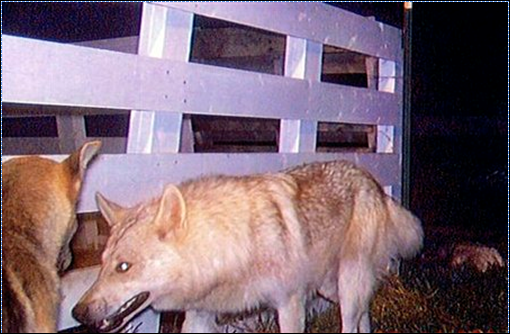
    In this May 2011 security camera frame grab provided by the Stevens County Sheriff’s Office, dogs are seen at the home of a resident near Deer Park, Wash. A pack of dogs has killed about 100 animals in the past three months while eluding law enforcement and volunteers in northeastern Washington state. The killings are happening in a wide area of mountains and valleys west of Deer Park, a small town about 40 miles north of Spokane, authorities said. (AP Photo/Courtesy of the Stevens County Sheriff’s Office)

    What if these guys are roaming the neighborhood where your character lives? What if it’s a fantasy story and these are not just dogs? Are they bewitched? Trolls? Something come in from the woods?

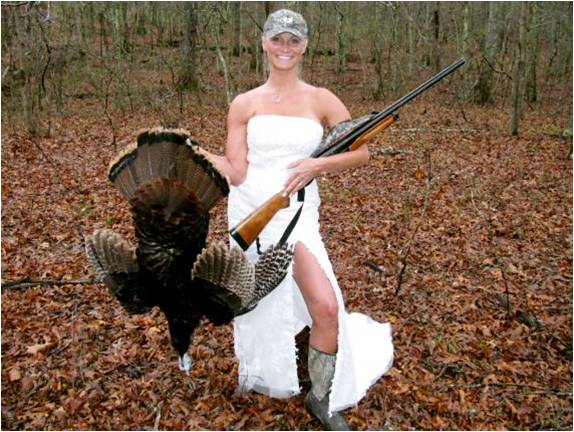
    As far as pictures go. How about this gal? Would she fit in a romantic comedy? A murder mystery? What if she went missing? What if someone kidnapped her son?

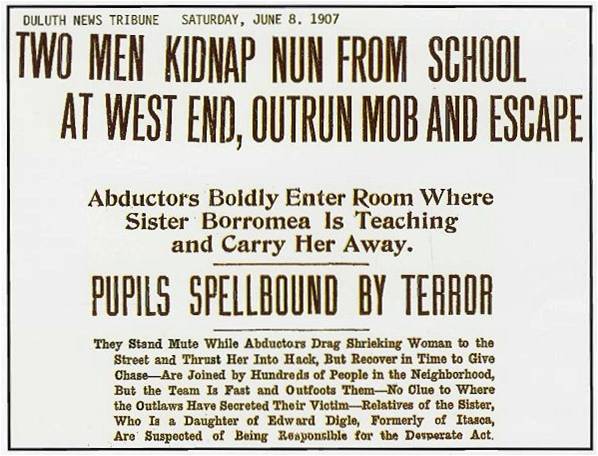
    What about this newspaper clipping? Click on the image and read the fine print.

    All you have to do is start asking questions of these zings and they can’t help but produce character, setting, problem, and plot.

    Deploy your drag net.

    Do it now.

    Hunting With A Purpose

    Even though your drag net is out, you cannot rely on it to deliver all the ideas you need. Very often you need to go hunting with a purpose. In fact, whenever you have development objectives, you’ll be on the lookout for that thing you need to develop.

    Let’s say you want a funny and new fight scene in your story. Look at the stuff above.

    • A fight including that gal in the wedding dress?
    • One in the space the copper thief fell from?
    • How about one in a chicken apartment?

    Maybe you need a new love interest.

    • What if she’s the copper thief?
    • What if she’s out hunting the wild dogs?
    • Maybe he’s the guy who kidnapped the nun?

    Do you see? When you have a purpose, you look at the things you come across with a different lens.

    But you might need to be a bit more active in your hunt. You might need to do some things to find what you’re looking for. I’m talking about directed research.

    An Example

    I attended Orson Card’s literary boot camp. He had us take a day and develop five story ideas (or seeds) which we were to write down on ONE side of a 3×5 card (hum, sounds a bit like the story setup we talked about in the previous blog).

    2 of the cards were for story ideas we developed from research conducted at Barnes & Noble or in a library

    2 were for ideas developed from a drag net of events or curious things I saw that day

    1 card was for an idea developed from an interview with someone.

    The assignment was to look at things as a writer, to exploit what I see as a writer. On the card we were to tell a story. The fundamental idea–what happens and why. Just the idea and some events. The space limint on a 3×5 card forces you to think of story and NOT the writing.

    Oh, and the research was supposed to be for something we didn’t find interesting, which meant we didn’t know squat about it.

    I researched Iroquois Indians, women who did crazy things like going over Niagra Falls in a barrel, and some other crap I can’t remember. I also read a bit about an American Indian in 1614 who was stolen as a slave, taken to Spain, got his freedom, went to England and then back home.

    I interviewed two women in a music box shop and worker in a Thomas Kindcade art gallery. The gallery gal was blonde and rode Harleys. Had tattoos. What in the world was she doing in a THOMAS KINCADE gallery?

    I used the Elizabeth Smart poster (abducted girl) and an empty music box as my curious things.

    I worked from 5PM until 9PM on the ideas and never really got anything. Went up on a hike up Rock Canyon still thinking about it. Saw a cave; evening came; the canyon was beautiful. Marvelous. Almost stepped in a snake. Worked and worked on the music box idea and the kidnapping idea. More on the music box.

    No ideas really pulled me.

    Next morning I woke at 6 AM and started thinking. Decided I had no time AND I WOULD HAVE TO FOLLOW NELLIE’S [my wife] ADVICE and simply go with what I had. I made a decision and go with it even though I didn’t really feel it inside.

    During class, someone else talked about bone magic. It was cool! I stole the bone magic idea and crossed it with the Iroquois stuff I’d looked at and suddenly started liking my story a whole lot more. Decided the tribe that lost their only bone breaker (that’s how the magic was obtained) in a raid (he was sold to the French as a slave) and sent out a woman who knew French and a warrior to retrieve him.

    The next day I was supposed to write the story. I found I didn’t really want to write that one. Spent all day at the library reading juveniles and encyclopedias on Iroquois and Eastern Indians. Read for 5 hours then began to try to write.

    Now, let me stop here.

    Through my directed research I had collected gobs of zing. There were Indian names like “Handsome Lake” and “He Who Keeps Them Awake,” the fact that the Iroquois had a peace sachem (leader) and a war leader. The peace leader was a woman and chose the male war leader. I had stories about abducted Whites and Indians being sold into slavery and escaping. I read about men purchasing Indian wives. I added tidbits I knew from the Netherlands and Bible. It went on and on and on.

    I had TONS of cool material to work with because I’d actively gone on the hunt for it.

    If you look back as the example I shared about the golem story in the previous post, you’ll see I researched golems and Croatia and found TONS of cool material. I added to that other tidbits I already had. And the result was massive zing.

    So what happened with that Iroquois story?

    Well, I finished it, and it went on to sell multiple times. It’s called “Bright Waters”. Here’s how it starts. But the thing to remember is that it all started with the directed hunting for zing.

    Bright Waters

    In the spring of 1718 Jan van Doorn returned to his log house with a load of molasses, flour, and a fine green dress for his new wife. He found she had run out on him and taken half of his goods with her.

    She was the second wife he’d bought. And the second one to run away before a season was out.

    Her name was Woman With Turtle Eyes, an older Huron of 23 years. He had thought an older woman would be more stable than the girl he purchased the first time. Besides, she said she wanted him to buy her.

    Jan didn’t understand how the men in the settlements courted and kept their women. And it couldn’t be because he was ugly. He’d seen plenty of ugly men marry. The only ones that seemed to have any interest in him were the whores at Fort Montreal, and when he’d given in to his urges that one cursed time, they took far more from him than his money.

    There was nothing to do about Woman With Turtle Eyes. If he hunted her down, she’d just run away again. He could beat her, but she’d run nevertheless. Besides, her theft meant he’d have to start working his old claim, and there were precious few weeks before the beavers began to shed their winter coats. No, there was nothing to do but fold up the dress and put it in the cedar chest.

    He looked down upon the dress for a few moments admiring the fine, shimmering cloth. Then he closed the lid.

    That night Jan cooked himself a meal of kale and old potatoes. When he finished, he rubbed deer urine onto his traps to prepare them for the morrow. Then he went to bed.

    Remember: zings are almost always small. Don’t be looking for the ONE killer idea. Usually the killer story is made up of a bunch of smaller zings.

    “What generally happens is that I’ll be reading up on some topic just for entertainment — spies, pirates, the Romantic poets, mountain-climbing — and I’ll notice a few indications that the situation might do as the basis for a novel. At that point I declare that this isn’t recreation anymore, it’s research. So I start reading lots of books and articles on the subject, even if they’re not entertaining. And I follow any side-paths that show up — for one book, Tarot led to Poker which led to Las Vegas which led to famous gangsters. And while I’m reading all this, I’m looking for bits that are “too cool not to use.” When I’ve got a dozen or so things that are too cool not to use, then I’ve got — obviously — a dozen elements of the eventual novel.” ~ Tim Powers

    Your Zing, Not Mine

    Again, you don’t want any old idea. You want good ones. So how do you recognize a good idea?

    YOU FEEL IT!

    Good ideas carry current, they spark your interest, they tug your heart strings, they turn you on. This is what I’ve learned: a good idea is like an electric jolt. Sometimes it’s very small, sometimes it’s overpowering. It’s the feeling of “cool,” “whoa,” or “oh, boy, this has possibilities.”

    But notice I said they spark your interest.

    You’re not looking for what turns me on. For you to write a story, you have to follow your zing, not mine or your friend’s or your mentor’s.

    The trick is finding your zing and then sharing your zing with people who have similar tastes.

    Where to find zing

    There are a few places where I seem to find TONS of zing. Maybe they’ll be productive for you.

    Source 1: Other stories

    I get an unlimited supply of ideas from other stories. Here are a number of sources.

    • The news
    • History
    • Friends and acquaintances
    • My past
    • Strangers
    • Scripture
    • Gossip
    • Fairy tales
    • Poems
    • Movies
    • TV programs (fiction and non-fiction)
    • Summaries of actual court cases
    • Novels
    • Magazines
    • Biography
    • Interviewing a relative or friend for their life story

    Source 2: Snippets of life

    Every week I run across interesting conversations, lines, facts, events, images, and people. These things aren’t stories but they can be used to enhance or generate one. In fact, part of the joy of writing is finding ways to incorporate the cool things I encounter into the current story. There are many places where I find these snippets of life:

    • People I know or talk to
    • Science
    • History
    • Poetry
    • The Discovery Channel and its many cousins
    • How-to books, videos, tapes
    • Current or historical issues
    • Books on how people used to live
    • Photographs of other lands and cultures
    • People I see (The hero of my Writer’s of the Future story was based on a transient I picked up one night who lived in a storage space at the town’s used bicycle shop)
    • Learning about other people’s professions
    • Trying new things

    Source 3: Research

    This is just another way of coming across stories, facts, events, people, and trying new things, but it’s more directed.

    • Do it
    • Visit it
    • Talk to those who have done it or been there
    • Watch movies about it
    • Read about it, starting with Juveniles & Encyclopedias and then moving to thicker texts

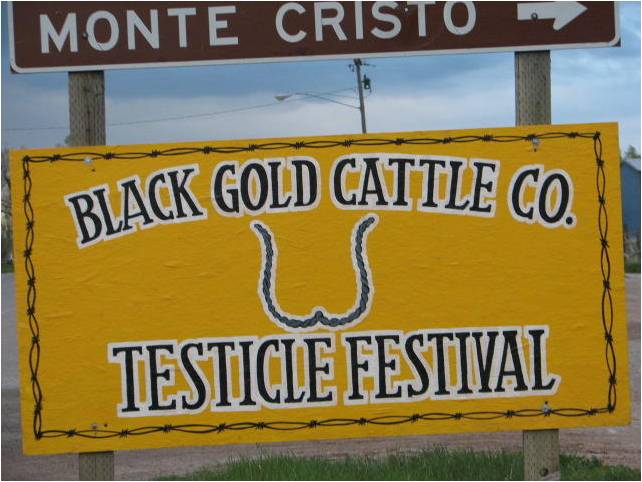
    When I moved up into the hinterlands of Utah, I found out they had an annual local testical festival. As a regular joe I might have gagged and moved on. As a zing hunter, I couldn’t afford to do that.

    No, they do not taste like chicken.

    They do taste like something many people find delicious. But I’ll let you identify what that is with a little research of your own.

    When you get a chance to try something new–try it. You get marvelous details, wonderful ideas. And you just might find you enjoy life a little bit more. Or at least be grateful you’re not trapped in a coffin.

    I was writing a scene for one of my books, where a secondary character accidentally locks himself in a casket. Not having experienced such a tragedy, I began winging that thread on imagination alone. But the scene simply wouldn’t jell. When I finally finished the first draft and read it, it felt two-dimensional. So I wrote it again. It still stank. By the third draft my frustration level had peaked, and I shoved my chair away from the computer, knowing there was only one solution to this two-dimensional problem. I would have to experience it. Now you would think a logical person would take into consideration that the number of readers who’d actually been trapped in a casket was minimal enough to make the whole issue moot. Then again, we’re talking about a rational person…I’ll tell you, I’ve pulled some crazy stunts before, all in the name of research, but this one ranks in the top three.  ~Deborah LeBlanc

    Nobody can copyright an idea or technique

    Don’t worry about stealing ideas from someone else or using a technique you find in another story. Don’t worry that something’s already been done. What you want to avoid is copying the writing. But take any idea or technique and run with it–in your own direction. Remember: The Terminator & Back to the Future have the same premise but are two totally different stories. So go wild.

    Be a hunter.

    Capture the zing.

    Start gathering your writing material today.

    For more in this series, see How to Get and Develop Story Ideas

    Share
  • Advice from one of the biggest writers of our time

    How would you like to sit down and get writing tips from someone who created or co-created nearly 40 television series? Someone who wrote more than 450 episodes for those and other series and then went on to produce around 1,500 more.  Oh, yeah, and then after his thirty or so years in television, he published 18 novels. Whoa–eighteen. Like I’m shaking, right?

    It’s not like the guy knows much about telling stories. I mean, millions of viewers entertained–big deal. Still, do you think you might be interested in seeing if he hasn’t maybe one piece of advice that’s useful?

    If so, the guy’s name is Stephen J. Cannell.  He wrote about 9,000 words on developing stories and called it his Writing Seminar. I thought it was pretty good. Well, for a piker.

    Share
  • Jennifer Nielsen and “The Rules of Personality”

    Jennifer Nielsen is the author of Elliot and the Goblin War, the forthcoming Elliot and the Pixie Plot (Sourcebooks, August 2011), and The False Prince (Scholastic, April 2012).  She’s also worked for many years with a troubled youth program. I recently sat in on one of her presentations on characters and personality at a writers conference and quickly found myself scribbling down insights. Later I convinced her to share some of that here. Enjoy. You can learn more about her at www.jennielsen.com.

    The Rules of Personality

    In the Mockingjay series by Suzanne Collins, 16-year-old Katniss Everdeen is selected as one of the contestants for the brutal Hunger Games held by the Capitol each year. Katniss is resourceful, fierce, intelligent, and compassionate. It is these traits she uses in her attempt to survive the Hunger Games. She is joined in the games arena by Peeta Mellark, who is clever, protective, and likable. Like Katniss, Peeta’s traits help him in his fight to survive.

    These characters are excellent illustrations of the importance of character in a story. What if Suzanne Collins had not given Katniss her compassion? For those who have read the story, they know changing that single trait would have dramatically changed the plot.

    It’s for this reason that character is so important in the creation of a story. If you change the plot, the character will remain the same. But if you change a character, the plot will inevitably change with it.

    In order to create a believable human sketch, a visual artist would have to understand the physical body, muscle structure, proportions, etc. In a similar way, for a writer to create a believable character, he must understand the basic rules of personality.

    But to create a believable characterization, there are some important things for the writer to understand about personality. Personality is the traits of a person’s core self. For example, there are many different types of people who value and practice honesty (the “trait”). But personality will determine how that trait is exhibited. An extrovert is far more likely to state the blunt truth while an introvert might create an opportunity for the people to discover the truth on their own. So although the trait is the same, there is no single way in which it might be expressed.

    In other words, while the presence of a trait is important in developing character, the way it is expressed is equally important. A person’s stubbornness might be demonstrated as passive-aggressiveness or outward defiance. A person’s jealousy might be expressed in withdrawal or by vicious repercussions. It’s personality that determines the way character traits are expressed.

    There are four important things to understand about personality. The better writers understand this, the better they can understand the characters they created.

    #1 Personality is Stable.  The core of who a person is remains about the same throughout a lifetime. The way a trait is expressed may evolve or adapt as the events of life unfold, but the core self doesn’t change much.

    For example, a shy child may hide behind her mother’s legs and refuse to talk. As she grows into adulthood, she will probably learn to manage her shyness and interact in the world. But she will likely never be the outspoken, bold, center stage person.

    #2 The Intensity of the Trait Matters.  When creating character, most writers stop at listing the presence of a trait. However, that is rarely good enough because it’s really the intensity that matters. Someone who has a hard time forgiving others and holds grudges is probably fairly normal. But increase the intensity of the trait and you may create a villain who’ll go to extreme lengths for revenge.

    #3 People Rarely Behave Out of Character.  Occasionally, writers finds themselves in a position where in order to make the plot unfold the way they want it to, they must force their character into behaviors outside of anything they’d normally do. This almost always fails the believability test because in real life, people rarely act out of character.

    Consider the example of the shy woman. Is it possible that she would willingly get up in front of a crowd and speak with boldness? Of course. But is it likely? No. It’s far more likely that she would find someone else to deliver the message for her, or find another way to communicate the message.

    When I’m speaking about this issue to groups, a common response from writers who are facing writer’s block is that this is the root of their problem. They are trying to force a character into a behavior not consistent with their personality. The entire scene becomes forced as the character literally balks at the writer’s attempts.

    #4 People Tend to Rework the Same Issues Throughout Life.  Everyone has “issues.” Some are more major than others, of course, but we all have them. And whatever it is that we battle, we likely battle it throughout life, even if the way we experience that issue evolves.

    For example, the teenager who becomes explosively angry is later the man who may take out his anger on his wife or children. In later life that trait may evolve so that he turns his anger inward and develops a drinking problem. Or perhaps the man matures and mellows. Perhaps he’s learned to manage it, or perhaps he’s too tired to create the same fuss as when he was younger.

    In April 2012, I’ll release a series with Scholastic that begins with Book 1: The False Prince. The protagonist in this story is a defiant boy named Sage who must use his own cleverness, determination, and strength to survive a contest that will name the winner as the false heir to the throne.

    As the writer of this series, it was important for me to understand Sage’s personality if I was going to create a believable character. One of his core traits is his instinct to rebel. It’s a more intense than would generally be found in his peers, so I needed to respect the fact that he would rarely back down from a fight, regardless of the consequences. There is one scene in the book where Sage steals an item from his master that Sage believes was stolen from him. He refuses to tell anyone where he hid it, even though he knows the consequences will be serious. I didn’t want those consequences to happen to Sage, but he would not have had things any other way. To attempt to create a story where he gave in to the master would have cheated the character, the story, and the reader.

    Likewise, writers must understand that creating great characters begins with understanding the rules of personality. And when it’s done right, whether it’s Katniss Everdeen, or any of your favorite characters, the reader will always remember them.

    *

    JOHN SEZ: I particularly like #2 because homo-ficti need to be a little bit larger than life.  A litter more courageous. A little more finicky. A little more skilled. A little more outrageous. Exaggeration is one of the key tools for developing characters.

    The statements about the core part of personality being stable and long-lasting, and folks dealing with issues for a long time, are interesting to me as well. It seems like this is where deep motives lie. 

    Of course, I know I don’t start with personality grids when developing characters. But I do eventually try to peg my characters.  I’ve found that having a dominant impression, a type, helps a great deal when working with them, even if my characters mix or bend the types.  If I know that this one is a wise-cracking farmer, that one a quick-tempered tailor, and that one a no-nonsense baker, it makes them easier to work with.  It makes it easier to envision how they might react in a given situation.

    In fact, I think I’ve created my most enjoyable characters when I didn’t try to make them super complex. They might have had things that occured in their past that affected them greatly. They might be dealing with terrible dilemmas now.  They might have a number of interesting details about them.  But if I can peg them in my mind as this or that type of person, it seems the scenes flow more easily.  I can improvise the dialogue and their reactions much better in my mind as I write.

    Sometimes I can capture that type with a description, e.g. “scary smart farmer.” Sometimes it’s enough to get a voice or a photograph or link them to someone I know.  Sometimes I’ve linked them to animals and that gave me the center.  Very often they form as I write them. They often have to come on stage first and have me start writing them for everything to coalesce.

    Check out Nielsen’s site. I love the first line of Goblin War. I mean not only does she get all these fab illustrations for her book, but then she opens it with this: “When he was 8 years old, Elliot Penster started an inter-species war.  Don’t blame him.  As anyone who has ever started an inter-species war will tell you, it’s not that difficult to do.” Elliot is trick-or-treating at the moment, everyone thinking he is dressed up as a hobo, when in reality he’s just wearning his normal day clothes. Hum. A little homo-fictus anyone?

    Share
  • The Key Conditions for Reader Suspense Part 4: Structure

    People go to movies, watch TV, and read novels because they enjoy having a certain type of experience. They enjoy it so much that they are willing to pay for it, again and again and again.

    Our job as writers is to create a narrative that evokes this desired experience in the reader. Yes, we have to be passionate about our story. Yes, it’s an art. Yes, it’s complex and sometimes feels a bit mystical. But we can’t let that make us forget the fact that the ultimate purpose of the story is to guide the reader through an experience.

    Now maybe that approach is too businesslike for you. Maybe it removes the artist too much from the production. If you feel that way, then think of it as the writer finding and inventing crazalicious things that he or she just can’t help but want to share. In this view, the author goes out into the world and brings back delights and wonders for others to enjoy.

    There are many different delights to share. So some people love humor. Others delight in being spooked. Others want to relive the feeling of falling in love. Still others want to feel adventure and thrills. Or they enjoy the feeling of insight, wonder, curiosity, and wish-fulfillment. Others want a mix.

    One of the core elements in a majority of the experiences readers love is being in suspense about the outcome of a character’s fate. Readers love to HOPE and FEAR for a character for 90% of the story. They love their worry and/or curiosity to build. And they love a good release.

    Presenting an interesting and sympathetic character with a significant happiness problem initiates the reader’s hope and fear and curiosity (btw, presenting a mystery initiates the reader curiosity). But we can’t stop there.

    Remember: readers want their worry to build to a sharp point. Then they want a good release. We do that by having the character solve his problem in a certain way. Solving those problems is what plot is all about. In the last part of the series, I talked about the details of plot. (And if you haven’t read the first post in this series on problem and the third one on plot, I suggest you go read both right now so the rest of what I’m going to talk about will make sense.) In this part of the series, I’m going to talk about the big picture of plot, about the structure of the story as a whole, and what key elements that structure needs in order to help readers feel a building of tension and a release.

    Think about problem solving, not voodoo

    In order to do this, we first need to demystify what’s going on and get to the heart of plot. Story and plot are NOT about a character going on a mythic Jungian heroic journey. Nor are they about characters following a rigid Hollywood structure grimoire. Nor is there one secret plot pattern that all awesome stories use.

    In the types of stories we’re talking about, the plot is about a character solving a problem. That’s it. That’s the grand whoop-tee-doo mystery. Not very exciting, but that’s what the writer needs to keep in mind. Well, and the fact that the manner in which the problem is resolved has to build reader tension—form follows function.

    I know some people will argue that many successful artists swear by things like Joseph Campbell’s heroic journey. But if you read Campbell’s book, you’ll find something interesting. What Campbell did was survey traditional tales from many cultures across the globe. He listed common features of those tales and found that certain types of things kept popping up in the stories. He concluded these were signs of unconscious Jungian archetypes. There was no purpose to the form except to express the archetype. And so he listed the common elements, gave them mystical names, and explained their source in pseudo-psychological terms.

    Do you see where he went wrong?

    Let me do a Campbell with eating utensils. Let’s imagine I go around to all the various cultures of the world and look at what utensils they use to eat. Gadzooks, but I’d find a startling number of similarities. Who would have thought? For example, the super rich living in their million-dollar New York high rises drink from crystal glasses while the mud-poor hut folk in Bangladeshi backwaters use gourds and sometimes even cup water with their bare hands, but it’s all the same basic form—The Hollow.

    Instead of seeing that a hollow form is a great way to hold liquids and solids, I would conclude it must be a sign of some deep-seated subconscious archetype. That’s why we have cups and spoons. Therefore, because The Hollow resonates with our human unconscious, maybe from our time hanging out in the womb, a powerful dinner will include The Hollow in some form precisely because it interacts with the archetype, putting us back into the womb, to the time we were being fed directly by our mothers and felt inexplicably comforted and satisfied.

    Dang. That’s good. Somebody out to get me one of them PhD’s. I can see it now: The Mythic Meal . . .

    Too bad it’s a bunch of hooey.

    Campbell’s documenting all those traditional tales was a great thing. Identifying the similarities was cool. But instead of looking for the simple function the form was created to fill, Campbell ignored the function and turned the form into a magical totem.

    People who study modern-day stories sometimes do the same thing. Except instead of using labels like “Threshold Guardian,” “Shape Shifter,” and “Ordeal,” they use terms like “Act,” “Plot Point,” and “Confrontation.”

    I’m not arguing against labels or patterns. What I’m arguing against is divorcing form and function. It’s true that people can sometimes use Campbell’s list of common elements to develop a story that builds and releases reader tension. But when we talk about form outside of the context of its function in the reader’s experience, we prevent ourselves from seeing how things work. The form becomes a mystical black box. And because we don’t know the whys behind the form we can’t see when the form should and should not be used. We sometimes find ourselves falling into the trap of prescribing Procrustean plot beds that are exactly wrong for our purposes or into rebelling against form altogether.

    So let’s not do that.

    There is no voodoo here. There is only a character trying to solve a problem.

    People solve problems every day. It’s not very mystical. But because it’s the core of story, thinking about how your character will try to solve her problem is one of the most powerful ways to help you figure out your plot structure and detail. And that’s what we’re going to do in the rest of this post.

    Key suspense structure elements

    So how do people solve problems? What’s the process?

    Well, wait a minute. We have to add a little to that. We’re not just having characters solve problems. We’re showing characters struggle with problems in ways that engender and build suspense in a reader. Then we’re showing them resolve the problem in ways that provide the reader a wash of cathartic relief. So maybe the better question is: what elements are necessary for readers to feel tension about a characters struggle to solve a problem?

    Here’s what I’ve been able to identify. I believe all the elements below are critical for a reader to see or understand. By that I meant that if you take any one of these away, it will prevent the reader from feeling tension, feeling it build, or feeling it release.

    1. PRESENT the problem. In this phase, a reader must:

    1. Understand what the problem is
    2. See a sympathetic and interesting character
    3. Understand and buy into why the character can’t or won’t walk away from the problem
    4. Be surprised by some of the particularities of the character and problem

    2. Main character STRUGGLES to solve the problem. In this phase, a reader must:

    1. Understand the actions the character is going to take and why the character is taking them
    2. See actions unexpectedly thwarted and troubles increase
    3. See some actions succeed
    4. See the character locked into an attempt to solve the problem that will be final
    5. Be surprised by some of the particularities of the motives, decisions, actions, and results

    3. Main character RESOLVES the problem. In this phase, a reader must:

    1. See whether the character succeeds or fails. For suspense the character usually snatches victory from the jaws of defeat.
    2. Understand what the success or failure means for the character’s life going forward
    3. Be surprised by some of the particularities of the resolution

    We present the problem and why the character must face it. This raises possibilities in the reader’s mind, good and bad, for the character. Because the reader finds the character sympathetic and interesting, the reader will automatically root for the character to win.

    We share with the reader how the character plans to solve the issue. Then we show how those plans keep getting thwarted. This raises reader fears. We show other actions succeed. This raises reader hopes that the character still might win. At some point the character gets locked into a final attempt.

    As the main character struggles this last time, it looks like she is going to lose. Then we show her snatch victory from the jaws of defeat. This produces a wonderful wash of relief in the reader.

    Along every step of the way, readers need to be surprised, not about everything, but about enough of the particularities of the problem, character, actions, reactions, and resolution that it prevents the reader from knowing what WILL happen. Instead, these unexpected things allow the reader to know what MIGHT happen and worry about the possibilities.

    Not the three-act structure

    I know some of you are thinking—hey, that’s the three act structure. It’s true some people describe the three acts in a similar way. But I have tried very hard to avoid the word “act.”

    First, an act is simply a major division of a story. A part. And it’s somewhat arbitrary how those divisions are made. Because of this, the structure above might describe stories with one, three, five, seven, or more acts.

    Second, “act” doesn’t tell you what you as the writer are trying to accomplish. It’s a form term that carries little useful information, and in fact, sometimes obfuscates what you’re actually trying to do.

    Third, “three-act structure” is too often used in rigid forms, a lot of them originating in Hollywood, that prescribe certain proportions, obstacle types, and event sequences. It’s all focused on form outside of the context of any function, and that’s precisely what I’m trying to avoid.

    So I prefer not to talk about acts, but phases of problem solving. This helps me keep clear what my goals are and reminds me of my many options.

    Of course, the three phases constitute a very broad structure. They still need a bit more detail in order to be translated into the events and scenes of a specific story. But before we move into that topic, I want to take a moment to talk about what I think is the exact wrong approach to our topic.

    Think about patterns & options, not rigid formulas

    The three phases of problem solving form the basic structure of a story that builds suspense in readers. A number of events will occur in each phase. But there are simply too many variables for there to be one best sequence of events for giving the reader the type of experience we hope to deliver.

    Think about this mathematically. If we have three phases to solving a problem, and there are three sequence options for the events in each phase, then we have 27 different possible combinations. 27 different possible event sequences or plot patterns!

    But there are more than three options in each phase. Furthermore, there are dozens, maybe hundreds, of possibilities for each of the story elements listed below:

    • Type of problem
    • Number of sub-problems (sub-plots) included in the story
    • Types of characters
    • Character personalities & traits
    • Numbers of characters in the story
    • Places where the problem takes place
    • Character motives for solving the problem or opposing its resolution
    • Reasons why the character must face the problem
    • Actions that may work to solve the problem
    • The skills and resources the character can bring to bear on the problem
    • The skills and resources the opposition can bring to bear on the problem
    • Obstacles to solving the problem

    Each choice for the elements above will affect the sequence of events in your story as well. There are just too many variables to say there’s one sequence of events that’s best, even though you will run across folks who propose just that.

    Building stories is like building houses. Yes, you need a foundation, walls, and a roof, but holy cow, look at all the variations that are possible and successful given those basic requirements.

    So instead of thinking there’s ONE ultimate magical structure, I’ve found it’s more productive to identify many event sequence patterns that work.

    This is one reason why reading other stories is such a powerful way to increase your skills—you get to see so many patterns that do and don’t work. This gives you a whole catalog of options that you can use or tweak into new variations for your own stories.

    For example, if you’re writing about a heist, then look at how real and fictional characters have solved that problem. If you’re writing about a chase, do the same. Stories about romance and friendship problems have certain patterns as do stories about catching spies and solving mysteries. Look at your story problem, think about how you’d solve it, then go and see how others have solved it. You can use what you find or change it to suit your purposes, always keeping in mind the type of experience you hope to deliver to the reader.

    How a plot pattern saved my writing

    This idea of plot patterns is actually one of the things that helped me learn to how to finish stories. I once reached a point where I was going to give up my dream of writing. I was in a week-long workshop and couldn’t finish the story that we were supposed to write. I’d worked on it for at least fourteen hours and didn’t even have the opening scene. This was five years after I had won the Writers of the Future prize. Five years in which I couldn’t finish a story of any kind.

    It’s not that I didn’t have ideas. I had bucket loads of cool problem, character, and setting. But there was something I lacked. I didn’t know it at the time, but I lacked an understanding of the key fourth story element—I lacked plot. So with this particular story, I didn’t know how to proceed. I didn’t quite understand how characters went about solving the type of problem I wanted to write about.

    But again, I didn’t know that. Instead, I concluded that I just didn’t have what it took. My one success had been a fluke.

    So I sat in a restaurant on that Thursday night contemplating the fact that my dream was going to be put away for good, because I was determined not to waste another minute or dollar on something in which I had no chance of being successful. Luckily (or Divinely) about an hour before I gave it all up, I stumbled into thinking maybe I could try applying to my story an event sequence pattern I’d seen used elsewhere.

    I applied the one little pattern I knew for that type of story problem. Suddenly, the lights went on, the music began to play, and the story came to life. The scenes rolled out in front of me. And I wrote a story that went on to sell multiple times. More importantly, I was able to continue to finish stories afterwards.

    This lack of understanding about plot wasn’t the only thing that was keeping me back at the time, but it was one of the main ones. Looking for patterns and variations has been useful to me ever since.

    So let me recommend you think about and look–not for some formula or grand master sequence of acts, plot points, or events–but for effective event sequence patterns (plural) for the types of story problems you write about. When you do, you’ll find your stories come easier.

    To get you started, I’m going to describe some of the patterns and variations I’ve seen in each of the three story problem-solving phases. Each is a tool I think you’ll want in your story workshop. None of them are the golden key to success. However, each of them is an option that can work, depending on the story and your objectives.

    1. Patterns for Presenting the Problem

    The story begins when we present to the reader (a) the main character, (b) the problem she’ll face, and (c) a good reason why the character can’t or won’t walk away from the problem. If the main character is sympathetic and interesting, the reader will root for her and want to see what happens. If some of the particularities of the character and problem are surprising or novel to the readers, it will generate more interest than if it’s something they’ve seen many times before.

    Here are some options to think about when you structure the event sequence of the presentation phase.

    • Number of scenes to present the problem
    • Straight or twist presentation
    • Central problem or a subplot problem start
    • The reason why the hero can’t or won’t walk away
    • Size of the presentation phase (proportion)

    We’ll briefly discuss each in this section.

    Number of scenes to present the problem

    We can present the problem in one scene or over the course of a couple of scenes.

    For example, in Suzanne Collins’ Hunger Games, the problem is presented in one scene. Katniss goes to reaping day event, witnesses her little sister’s name drawn, volunteers to take her place, and then sees the boy she’s going to have to kill.

    In Dean Koontz’s The Good Guy the problem is presented in two scenes. In the first scene a guy shows up and mistakes our hero for a contract killer. He passes the hero an envelope with $10,000 and a picture of the woman he wants killed with the address on the back. In the next scene, just a few minutes later, the killer shows up and mistakes our hero for the guy putting out the hit. We know very quickly what the whole story is going to be about.

    Sometimes it takes quite a number of scenes to present the central problem. For example, in Kathryn Stockett’s The Help the problem takes nine chapters to fully reveal itself. We start off immediately with three interesting women in different hardship situations. That alone builds our sympathy and invests us in them. But it’s not until the end of chapter nine that we finally know the specific issue that will form the central question of the story.

    Sometimes it takes so long because we’re presenting a string of events that lead in a causal manner to the main problem. For example, in Larry Correia’s Monster Hunter International, we start with a scene where a fat boss turns into a werewolf and tries to kill the main hero. This attack sends the hero to the hospital. But it also prompts the hero being offered a job to join a monster hunting organization. The offer leads to his acceptance, which leads to some training scenes, which leads, at last, to the central story problem being introduced in chapter six.

    Straight or twist presentation

    How we reveal the nature of the problem is another option in the presentation phase. We can present the problem clearly up front. Or we can start with one understanding of the problem, then, as the character gets to work on it, we present another scene that opens our eyes to the real nature of the issue.

    The problems in Hunger Games and The Good Guy are straight presentations. We start knowing exactly what’s up.

    On the other hand, we could start with two murders. The detective thinks it’s the work of some crime organization. Then he discovers they both have a peculiar tattoo. One that was found on another dead man who was a soldier that worked on some super-secret Army biological weapon project. He comes to find out that all three men were on that project and the murders were made to look like something they weren’t. Twist!

    Central problem or a subplot problem start

    Another option is to lead with the central problem, or to lead with something else, maybe the introduction of a subplot or something about the character that will engender interest and sympathy.

    In Lee Child’s Gone Tomorrow, the first page starts with the presentation of the central problem of the story. The same thing happens in Brandon Sanderson’s Elantris.

    However, in The Good Guy, we start the book with banter back and forth between the hero and a bartender friend about the hero’s lack of a love life. It’s funny and interesting and actually sets up the subplot of the book, which is a love story. But it isn’t the central plot issue. That comes in the next scene.

    Likewise, in Spiderman 2 we start with Peter Parker having issues trying to keep a job, do well in school, and win the love of his life. This subplot directly impacts the central story problem. But the central story problem of Doctor Octopus doesn’t show up until a few scenes later.

    In Hunger Games we open with a short introductory scene that presents the character and builds interest in her. It also introduces a love element. After that brief presentation, we move directly into the presentation of the central story problem.

    The reason why the hero can’t or won’t walk away

    Of course, if our character could just walk away, then we as readers would expect them to. So there must be a good reason to face the problem. Our fourth set of options center on this.

    There are usually three reasons why someone would be locked into dealing with a problem:

    • Physical
    • Moral and value
    • Professional

    Physical reasons are simply those that physically force people into facing the problem. You’re stuck on a runaway train. You’re not going to jump at 80 mph. You are on an airplane flight with terrorists. You are on the Titanic when it hits the iceberg. The villain wants you dead and seems to have no problem finding you. In these stories, something physical is preventing the character from avoiding the problem. It doesn’t matter whether they want to solve the problem or not, they’re going to have to deal with it.

    On the other hand, there are situations where our characters have a choice.

    The character might have strong moral reasons that compel him to face the problem. Maybe a child is in danger. In this situation, the hero does something bad by not acting. In another sense, a character might lose something of great value of he doesn’t act. Maybe someone he loves will be hurt or die if he fails to deal with the issue.

    A character might also have professional reasons. These characters try to solve problems because it’s their job. Cops track down killers. Soldiers go into war. Bounty hunters chase folks that jump bail.

    These motivations can be presented in the same scene as the problem, or they can be presented in a separate scene. For example, sometimes the hero is willing to charge forward. Sometimes the hero is unwilling and needs a shove. So in The Good Guy our hero takes about one paragraph to decide he’s going to take the problem head on. But in another story you might have a hero who doesn’t want to engage. This may require a scene or two that gives him the motivation.

    Size of the presentation phase (proportion)

    How long should the presentation phase be?

    You’ll often read some story structure models that claim the story should have a 25-50-25 structure. The first part should be about 25% of the story. The resolution should be 25%. And the struggle should take roughly 50%.

    The problem is that the rigid 25-50-25 proportion doesn’t hold up very well when tested against actual stories. Look at the stories below:

    • Hunger Games finishes the presentation phase 8% of the way into the novel.
    • The Good Guy finishes the presentation phase 4% of the way in.
    • TV episodes of The Mentalist routinely finish the presentation phase less than 2% of the way in, but in one episode they threw in an extra case and took 30% of the time.
    • The Help finishes its 27% of the way in.
    • Monster Hunter International finishes its presentation phase 28% of the way in.

    Quite a range. And there are a lot of stories finishing the presentation phase at all points in between.

    What this says to me is that the 25-50-25 rule is something that someone cooked up without checking reality. Or, at least, the reality of today’s fiction market.

    It might be that a presentation phase of 35% to 50% of the whole might make it difficult to guide the reader into the pitch of emotion that’s necessary for a climax. Maybe not. I haven’t analyzed any stories that have such big presentation phases yet.

    What I can conclude is that some stories get right into the central problem while others present subplots or multiple scenes that build to the central problem first. Until I find stories with different proportions that work for me, I’m going to try to keep my presentation phases under 30%. And if I’m not doing anything complex, I’m going to try to keep them below 10%.

    No one right option

    As you can see, there are a lot of variations to the presentation phase. The key thing to remember is than any of these variations can work. None is intrinsically better than another. So don’t fall into any rigid plot formula trap.

    Instead, keep in mind what you’re trying to accomplish in the present phase. Then choose the options that work best for this phase for your story and make it is as interesting as possible.

    2. Patterns for the Struggle

    In the presentation phase, readers are introduced to the problem. But they want more than a moment of sympathy or worry. They want their tension (their hopes and fears) to build to a pitch.

    How do we do that?

    We don’t let the characters solve the problem. Not yet, at least. Instead, we do just the reverse—we make the problem bigger and harder to solve than it was before. We make the hero struggle. We make the situation more intense. We raise the stakes. All of this increases the reader’s tension.

    So the character forms a goal—solve the problem—identifies the first step to do just that, and takes action. Of course, she won’t solve it with that one action. We talked about that in the last part of the series. If she solves it right out of the gate, the story is over. We want reader tension to build, not dissipate. And so she’s going to go around the story cycle a few times trying to solve the problem.

    How many times?

    There’s NO set number. There are many variations that work. However, I will say that with the central problem you probably need at least three revolutions (some subplots might only require one revolution). First, you need that many to create a story long enough to make it a novel. In fact, you’ll probably need many more. Second, there’s something about three that makes it feel significant, that the character has achieved something. Finally, three seems to be the number that sets a pattern. If someone fails the first two times, we’re likely to think they’ll fail the third. I believe this helps build tension surrounding that third attempt.

    So while our hero makes some headway, she also runs into troubles that seem to threaten complete failure. The reader feels the hero has a chance of winning, but the troubles and failures make the odds of her losing seem to grow. Furthermore, the hero begins to run out of time, the stakes (what might be lost) are raised, vague threats become very specific. These are all the problem intensifiers we talked about in the first post in the series, and all of them make the reader’s worry grow.

    So what does this phase look like? Do you have to follow a strict pattern of “pinch points” and “mid act reversals”?

    No.

    Again, there are just too many options and variables for there to be one best sequence of events.

    What you need to do is keep throwing troubles, conflicts, surprises, and obstacles at the reader. You also need to let the hero have some successes. This allows the reader to have cause to fear and hope and not know for sure how it’s all going to turn out.

    At some point the hero finds himself with one last chance to resolve the problem. When the hero heads, by decision or by force, into that final showdown, that last possible attempt to solve the problem, the struggle phase ends.

    Here are some of the options to consider when you sequence the events of this phase:

    • The type of problem your character is solving
    • Trouble progression
    • Actions the antagonist takes to oppose the hero
    • Number of stories and plot turns
    • What leads the hero into the final showdown
    • Proportion

    I’ll briefly discuss each.

    The type of problem your character is solving

    Each type of problem requires different actions to solve it. If gang-bangers are threatening your son, you will take one set of actions to solve that problem. If you’ve just met the love of your life, you will take a different set of actions. If you’re caught at sea in a massive hurricane, you’ll take a third set of actions.

    If you’re working with a murder mystery, a critical first step is identifying any clues that might lead to information about who did it and why. So your character will examine the crime scene. Next, he’ll go talk to people associated with the victim. Next, he’ll run down leads he finds from those initial investigations. He’ll find more clues and more leads. He’ll form a hypothesis, test it, and find it’s wrong. So he’ll track down more clues. Finally, he’ll figure it out. Now, he has to figure out how to capture the perpetrator.

    However, if you’re working with a problem where a team of soldiers needs to go behind enemy lines to sabotage a military installation, you might start with the selection of the soldiers, then their training, then their deployment to the theater of action, then them going behind the lines, then their arrival at the target, then their escape.

    If you’re working with a love story, the characters need to meet. The reader needs to see romantic possibilities, but something must prevent them from getting together. This obstacle is the problem. However, if the obstacle is that they work for diametrically opposed organizations (she’s a gun-toting Minuteman, he’s a coyote) then the resolution will proceed differently than if the obstacle is that she’s already engaged to be married.

    So look at your problem and identify the main steps to how it might be resolved.

    Sometimes it’s helpful to work backwards. If you know what the resolution is, then describe the situation the character is in at the end of the story and reverse it. That’s what you present at the beginning.

    For example, if Spiderman is confident and single-minded at the end, present him conflicted and doubting at the beginning. Then think about the types of things or steps that would help the hero get from point A to point B. What kinds of experiences would force him to look at things in a new way or make a decision or come to realize what’s really important?

    However you work, forwards or backwards or both, it often helps to map out all the main steps you see to someone resolving the issue. And don’t feel your story must have the same number of steps as another story.

    For example, The Hunger Games has seven parts to its structure:

    1. Present problem – 8%
    2. Preparation for the games – 31%
    3. First round of fights – 12%
    4. Rue – 11%
    5. Peeta – 22%
    6. Climax – 12%
    7. Aftermath – 8%

    The exact wrong thing to do would be to conclude that all awesome stories (which I thought Hunger Games was) must have seven parts with the proportions shown above, including the hero going on the offensive around the 53% mark.

    Why do I say this? Because a lot of awesome stories don’t.

    Let’s look at the idea that the hero should go on the offensive at the 50% mark. In Dean Koontz’s The Good Guy, the hero goes after the villain at the 19% mark. Then he flees, even as he’s working to solve the problem. Only at the 85% mark, does he actively go after the killer again. In Lee Child’s The Enemy, the hero is actively trying to solve the murder mystery from the start. In Louis L’Amour’s Ride the River, the heroine is being chased for the whole novel. Not until the very end does she turn the tables.

    I could list many more examples. The point is that having the hero go from reacting to acting at the 50% mark is only ONE pattern. Maybe it fits your story, maybe it doesn’t. The same applies to the seven parts.

    Instead of trying to fit your story to one pattern, put yourself in your character’s shoes and think about the main steps that would be required to solve the type of problem your character faces. This should give you a general sequence of events.

    Once you have that sequence, you have a general idea of how the story will progress, but that’s not enough because this phase is not about solving a problem. It’s about making the problem harder to solve. It’s about throwing increasing troubles at the main character and making them struggle. So while you think of the general steps to solving the type of problem your character faces, you alo need to think about the types of troubles you’ll throw at the character and how those troubles progress.

    Trouble Progression

    Each story will feature different types of conflicts and obstacles (as well as different types of help and aid along the way). I can’t find any pattern in the stories I’ve looked at to suggest you must include certain types of conflicts and obstacles. What I can see is that the troubles need to get worse the further the character goes.

    Form follows function. We’re trying to build reader tension to a high point and then release it.

    One way to approach this is to think about some of the key things that can go wrong–our hero’s car breaks down, he gets shot, someone informs the villain about the hero’s plan, a key member of the team turns traitor, the hero’s sidekick is killed, etc.–then sequence them from least to most dire.

    Another approach is to think about a point where the character must face his worst fears, the dark moment when everything seems to be lost. Then work toward that moment.

    If one of your obstacles is a dilemma (and I’m not saying all awesome stories must feature this), then one approach is to think about the major dilemma the hero must face, the point where he has to choose between two terrible options, e.g. break his moral code and win or keep his code and lose horribly, save his mother or save his son, etc. Then think about how the hero will get into that position.

    Another option is to think about how the hero’s options begin to disappear.

    A common pattern of trouble progression is to give the character a huge set back. Over the next few scenes the character works to get back on top. Except when he does, he is thrown for another bigger loop. He reacts to that and works to get back on top, but just as he does, he’s encounters another killer setback. So you have a big disaster and some scenes to recover and catch up, and we think the hero’s rolling, and wham, another disaster. How many of these big setbacks/reversals you have and how far apart they are spaced depends on your taste and the type of story you’re writing.

    Another common pattern in the trouble progression is for the hero to encounter a dark moment just before the victory. Of if you’re writing a tragedy, he experiences a bright moment just before he loses. Why alternate the ultimate and penultimate plot turns this way?

    Remember the analogy I made in the post on plot about being thirsty, and that the time the water tastes best is when we’re bone thirsty dry? This is what we’re talking about. Snatching victory from the jaws of defeat is so much more powerful than snatching victory from the jaws of victory.

    Taking the readers to the point where it seems their worst fears will be realized and then turning it around only makes the victory sweeter. Giving the reader great hope, just before everything falls apart, makes the loss feel so much more terrible.

    Another common pattern is the alternating of positive and negative plot turns. One turn gives us hope. The next raises our fears. I do not mean that every plot turn must be the opposite of the one that precedes it. Only that the hero makes progress, and then runs into troubles, gets some aid, and then runs into more troubles, etc. To create this type of pattern you will use all four types of troubles (no, no-furthermore, yes-but, no-but) discussed in the last post.

    To see what I mean, we can look at Hunger Games. I counted 30 major situation changes in that story. The average size of each of those 30 sections was 17 pages or about 5,000 words. In the list below I mark turns that introduce something that makes it seem more likely she’ll win with a + (positive) and those that set her back or make it seem more likely she’ll lose with a – (negative). I’ve tried to keep it as general as possible so I don’t spoil the book for those who haven’t read it yet.

    1. –
    2. –
    3. +
    4. +
    5. –
    6. +
    7. –
    8. –
    9. –
    10. +
    11. +
    12. +
    13. +
    14. –
    15. +
    16. –
    17. +
    18. –
    19. +
    20. +
    21. –
    22. –
    23. ?
    24. –
    25. +
    26. –
    27. +
    28. –
    29. +
    30. –

    Notice there were a lot of times when the – and + alternated. But there were quite a few where the main character faced a few +’s or –’s in a row. Again, the point isn’t to follow this exact pattern or the sizes of story sections. It’s simply to see the variability in the back and forth.

    One last thought. Some people find the middles of stories the hardest part to write. I suppose they can be. But I’ve found that when I think about troubles, the scenes roll out in front of me. I think this is so because trouble begs for reaction and action.

    For example, I was recently outlining Dark God’s Glory. I had parts of the story, but there was a large section of the middle where I could envision only about two scenes. That was not nearly enough. And those two scenes weren’t very interesting anyway. I realized I needed some kind of disaster, so I asked myself “What’s the worst that could happen at this point? What would totally screw my hero over? What could go terribly wrong?” I generated a few options and very quickly ran into one carrying a few hundred watts of zing.  Boom! Scenes galore, all the way up to the climax and beyond.

    So if you find yourself stuck, check to see if your main character is actually having to deal with any immediate troubles. If not, think up some gnarly setback or twist and see if that doesn’t shake something out of the plot tree.

    Actions the antagonist takes to oppose the hero

    Directly related to the progression of trouble are the actions the villain or opposition takes to thwart the hero.  I made this its own topic because I’ve found it’s incredibly useful in coming up with great troubles to play the story cycle from both points of view, like a one-man chess game.

    Just as I need to know my hero’s goal, motives, and plan, I also need to know the same things about my antagonist. In fact, in some stories the antagonist’s plans are what drive the story.

    So my hero takes an action. I switch in my mind to the antagonist’s point of view and ask myself what I would do. How would I react given his goal, motives, and resources? This suggests a course or three of action. I select the one that sparks my interest the most. This action, of course, causes trouble for the hero. So I switch back to the hero’s point of view and ask myself how I would react as the hero. This causes trouble for the villain. So I switch back to the villain’s point of view, and back and forth I go.

    In coming up with troubles, it’s sometimes helpful to think of how the antagonist’s actions might escalate. So when the hero pops up, maybe he sends a henchman to give him a stern warning. When that doesn’t work, maybe a smart villain might send the henchman back to quietly remove him. When that doesn’t work, maybe I call in some favors from the chief of police who I have dirt on. When that doesn’t work, maybe I decide to go take the hero’s family hostage. When he comes to save them, I’ll get him then.

    Thinking about the situation from the antagonist’s point of view always helps me come up with lots of troubles for my hero. Again, as with all troubles, the one thing you want to keep in mind is that you want the antagonist to gradually escalate the measures used to remove his problem, which translates to a trouble progression for the hero.

    Number of stories and plot turns

    There are, on average, 40 to 70 or scenes in a novel. Some of these will be reaction scenes, others will be action scenes. Each will usually move the plot forward with a decision, revelation, help, or a troubling result—a plot turn.

    Some subset of those scenes will contain major plot turns, huge setbacks or revelations that dramatically change the situation. For example, someone close to the hero may betray him. Or some significant part of the hero’s plan fails. Or the hero learns that he’s totally misunderstood the problem. Or the hero finally decides to overcome his flaw. Etc.

    How many major and minor plot turns you have is up to you. However, the scenes and plot turns don’t all have to focus on one problem. Many stories are actually made up of a group of stories—a central story and a bunch of other smaller stories that relate in some way.

    One of these subplots might require two scenes to tell, another might require ten, while another might be told by inserting a few paragraphs worth of interaction into scenes that are focused on another problem (think of a love story that progresses as the two characters work on the central problem).

    You can start a subplot before, during, or after the presentation of the central problem. So in one story you might start the love story subplot before the villain shows up with the central problem. Or you might insert the love subplot after the villain shows up and let it be the thing that locks the hero into dealing with the problem. Or you might raise the subplot in the same scene as the one where the villain shows up—the hero falls in love with the villain’s henchman.

    You can also start subplots during the first half of the central problem’s struggle phase. I don’t know of any stories that insert them in the latter part of that phase, but I don’t know there’s any reason not to.

    Some of these subplots will be resolved before the resolution of the central problem. Some of them will be resolved after. Some, if you’re writing a series, will resolved in a book later in the series. All three options can be satisfying.

    The key thing to remember here is that the sequence of events in your struggle phase also depends on the number of stories you’re telling, the number of plot turns each of those stories has, and where you weave in each of the three problem-solving phases for the subplots.

    Do you see now why it’s impossible to prescribe ONE sequence of events for every story?

    What leads the hero into the final showdown

    The next thing you want to think about is what locks the hero into the final showdown and moves the story from struggle to resolution. I see three things that will do this:

    • An insight & decision
    • Some piece of information or a tool
    • An external pressure

    Which it will be often depends on the main obstacle the character faces.

    The stories that use insight and decision are usually those where the main obstacle is the character’s internal problem. For example, in stories where love and friendship is on the line and the obstacle is the main character’s values, it may be that the hero has to make a decision to place love above something else. So the hero, as in Sabrina with Harrison Ford, finally comes to the insight that no amount of business success can compensate for a lack of love. Of course, his actions before this point have made a mess of the relationship. He’s betrayed and humiliated her. Struck her to the core. Will she have him back? We don’t know. But he decides to make one last attempt to win her love and heads to the resolution.

    In another type of story, the chief obstacle may be a lack of information. So maybe the hero has the power to deal with the problem, but doesn’t know who the villain really is. A lot of murder mysteries are structured this way. At the point when the hero finally learns the identity of the villain, he immediately heads to the climax to expose or capture the criminal. Or maybe what the hero lacks is knowledge about the location of the villain. Now that the hero knows it, he can go in to take him out. In another story of this type, the main obstacle might be finding a cure for a virus. Once the hero obtains the lacking information, she can head to the resolution.

    Sometimes it’s not information the hero lacks, but some object–a weapon or tool. Until he gets it, he can’t possibly beat the opposition. For example, in John Grisham’s The Firm the hero needs to get documentation he can use as blackmail to make the partners of the firm back off. Once he has this, he can go face them and resolve the problem for good.

    Finally, in some stories the thing that thrusts the hero into the final confrontation is some external force. For example, in Hunger Games the hero is holed up and surviving just fine. But because the gamers want the last battle, they force all the remaining contestants together. Likewise, in Star Wars, the empire finds out the location of the rebel base. Our heroes probably would have stayed hidden or on the run if they could have, but the empire forces them to act.

    Please note: some folks maintain that all awesome stories feature the hero facing a certain type of ultimate obstacle, which affects what locks the hero into the final showdown. For example, some say the only way to write an awesome story is for the hero’s internal flaw to be the real obstacle to his solving of the external problem. And so the lock is him overcoming the inner obstacle so he can solve the external problem. Spiderman 2 is an excellent example of this type of story. And this type of problem can be very delicious.

    But there are so many other awesome stories where a character’s flaw isn’t the main obstacle or even an obstacle at all. The Good Guy, Ride the River, episodes of The Mentalist and hundreds of other stories fall into this category. Don’t feel forced to use one type of obstacle. Use whatever makes the story most interesting to you.

    Once your character is locked into the final showdown, the struggle phase ends.

    Proportion

    We already know the 25-50-25 proportion is bogus for the presentation phase. So how big are the struggle phases of the books you love? They might be different from the ones I love. Still, I think it’s useful to see the variety that’s out there. Here are a few from books that work for me:

    • Hunger Games: 79%
    • The Good Guy: 74%
    • Servant of a Dark God: 68%
    • Monster Hunter International: 66%
    • A random episode of The Mentalist: 51%

    Clearly, there is a wide range of proportions that work. Your job is to look at the stories that you love, the ones that have an struggle phase that works for you (and the ones that don’t work at all), and see how long it takes to build reader tension to the levels you want before you head into the resolution. Don’t follow it slavishly. Use it simply to give you a general idea of proportion.

    3. Patterns for the Resolution

    Readers want their tension to build to a pitch. Then they want to feel a release. The resolution phase is where you deliver that delicious release.

    The resolution isn’t something completely different from what you’ve done before. It’s just another trip around the story cycle. As such, you have:

    • Reaction
    • Action
      • Preparation
      • Approach
      • Climax
    • Aftermath

    At the end of the struggle phase something locks the hero into the final showdown. The hero reacts to that thing. The reaction might be short or long, and includes what any reaction would—emotion, thought, discussion, motive, and decision. In Star Wars, this is the sequence where the rebels react to the fact that the empire knows where their base is and is going to obliterate it. It includes the scene where they discuss how they’re going to blow up the death star.

    Because it’s just another trip around the story cycle, once the hero decides what he’s going to do, he begins to act on his decision. This may include some preparation. In action movies, he straps on his guns, says farewell, etc. In a crime drama, he may get his team organized. Then he approaches the villain. In Star Wars, the preparation was when Luke and the others were getting into their fighters. The approach, obviously, was them flying to the death star.

    At some point, the hero engages. He fights the villain, chases after the girl, executes his plan. This is the climax. It should be hard. There should be a struggle.

    At the moment when all seems to be lost, the hero resolves the problem. As with any action, it’s important to know what the ultimate obstacle to victory at this point is. Is it cowardice, knowledge, power? Once I know this, it’s easier to write the resolution. So the hero removes that last obstacle and vanquishes the opposition. The lovers remove the last obstacle to their everlasting commitment and ability to be with one another.

    At that point readers want to see the consequences. They want to bask in the triumph and tragedy for a while. Let the feeling slowly mellow. And so we show what this means to the character’s future life. We show the rewards or the punishments of having solved the problem. Maybe we resolve an outstanding subplot or two.

    So the resolution phase is just another trip around the story cycle, but one where the result is final. Here are some patterns I’ve seen that work in the resolution phase.

    Twists

    As with any scene or sequence, there will be back and forth, stimulus and response—the hero will go around the story cycle a couple of times and run into troubles until the odds for winning look pretty slim.

    The hero can go in and try to win with his original plan. This is like Luke flying in to blast the death star’s garbage chute. That’s the plan and the question is whether that plan will work or not.  Or the hero can go in with his big plan and, twist, it completely fails! I won’t ruin Hunger Games for anyone, but there’s just such a twist there. There’s another in The Good Guy. The same in Servant of a Dark God.

    Sometimes, at a moment when all seems lost, logical but unexpected help comes to the hero’s aid. This is what happened in Avatar when the animals stampede the opposition forces. And what happened in Star Wars when Han Solo comes roaring back. It doesn’t resolve the problem for the hero, but it sure helps. And it makes the readers cheer!

    Tests

    In stories where the hero has an insight and makes a decision to change, the showdown will test his resolve. It will often present a situation similar to one shown in the beginning that established the character’s flaw. So if the hero was a coward then and sacrificed his buddies to save his own skin, it will present a similar situation at the end. But this time the hero damns his own self-interest and charges in to save his friends.

    Aftermath

    As for the aftermath, I’ve seen some that are quite abrupt others that are longer. I personally favor a slow curtain.

    I’ve seen aftermaths that show the reward and end. Cormac McCarthy’s The Road does this. We see the fish in a living stream and know things will be alright. There are no remaining lines of tension. My short story “Bright Waters” does this. You can read it in the fiction area of my site.

    On the other hand, other stories show the reward and then take it a step farther and not only show life moving on, but also raise another line of tension. For example, in The Incredibles, the story ends with the Underminer (another villain) rising up from below, presenting future story possibilities. My short story “Loose in the Wires” does this. You can read it in the fiction area of my site. Even though I wanted to make sure Servant of a Dark God ended with a satisfying finality, it also projects the reader’s mind forward.

    Proportion

    Stories often spend a bit more time in the preparation, approach, and climax phase of this trip around the story cycle than they might in other revolutions. They do this so that the reader’s suspense and anticipation can build. Again, it’s like drinking water when you’re bone dry. You can drink it all in one gulp. Or you can savor the quenching of your thirst. Readers want to enjoy it. So we don’t want to rush this phase. However, how much time you spend all depends on your tastes and the type of story you’re writing. The stories below show the variety.

    • The Good Guy: 22%
    • A random episode of The Mentalist: 15%
    • Servant of a Dark God: 15%
    • Hunger Games: 12%
    • Monster Hunter International: 6%

    Let’s look at those stories again with their proportions side by side.

    • The Good Guy: 4-74-22
    • A random episode of The Mentalist: 2-83-15
    • Servant of a Dark God: 17-68-15
    • Hunger Games: 8-79-12
    • Monster Hunter International: 28-66-6

    Clearly, there’s a wide variety of sizes that work. You might find other stories with resolutions that last much longer. The key is to look at the patterns in the stories you like.

    Putting it all together

    Let’s pull back for just a moment and review the key points of this post.

    1. Structure is all about problem solving, not a mystical journey or form.

    2. There are three phases to solving a problem in a way that will raise reader tension. These three phases form the structure of our story.

    1. Present the problem
    2. Main character struggles to solve the problem
    3. Main character resolves the problem

    3. There are a number of options for what happens in each phase and so a whole range of event sequences can be successful.

    4. Choices that affect the presentation phase include:

    • Number of scenes required to present the problem
    • Whether you present the problem with a twist
    • Whether you start with the central story or a subplot
    • The reason the hero can’t walk away

    5. Choices that affect the struggle phase include:

    • The type of problem your character has to solve
    • Trouble progression
    • Actions the villain takes to oppose the hero
    • Number of stories you’re trying to tell
    • Number of plot turns in each story
    • What locks the hero into the final showdown

    6. Choices that affect the resolution phase include:

    • Twists
    • Character tests
    • Subplots resolve in the aftermath
    • How the ending raises possibilities about how the future

    My challenge to you is to start looking at the stories you read and watch through the lens of the model above. Start to notice patterns.

    Other patterns

    I’ve shared a number of plot patterns and options above. But they are by no means all that are out there. The best place to see these are in the stories you love. Break them down into problem resolution phases and story cycle revolutions. I promise that you’ll begin to see patterns that you can use in your own writing.

    In the meantime, other authors explain their models of story structure. Don’t read them as scripture. They are just patterns. Each is one author’s model of how story works. I suggest you look at their models then test them against the stories you love. Some of the models will be helpful to you, some of them won’t be.

    And if one of us maintains that all great stories follow a specific event sequence or feature a certain type of problem, make doubly sure you test it. My experience is that such statements rarely hold up. Here are some resources to get you started, but remember—the best place to look is in the stories you love.

    Again, don’t look for the one magical plot. There isn’t one. Think instead of objectives, problem-solving, patterns, and options. And, always, always, always about what effect the form has on the reader.

    What’s Next?

    Up to this point in the series we’ve examined principles of problem, character, plot, and structure that lead to reader suspense. These are all big concepts. How do they translate to the actual text on the page? That’s the topic of the next post in the series where I discuss scenes.

    Until then I challenge you to test the thoughts I’ve expressed above. Test them. And come back and let me know your results.

    Also, if any point in any of these essays is not immediately clear to you, that means I haven’t done my job. Please let me know if you have any questions.

    Parts in the The Key Conditions for Reader Suspense Series

    1. Scene  (coming soon)
    2. Development Tips
    Share

2 Comments

  1. Thank you for this extremely helpful post. I loved the 27-part series on writing, and I think what you’ve put together here does a great job of synthesizing and expanding that. Again, thank you so much! I’m looking forward to the next Dark God book to see how all this stuff shows up in practice.

  2. Wow. Thank you for putting so much work into this post. I will definitely come back when I have more time to study it in detail.

    — david j.

Comments are closed.