Author: John Brown

  • Ack! It’s English class

    Lorrie McNeill gives her middle school students a wide choice of reading in Jonesboro, Ga.

    Junior High and High School English = grammar, spelling, and reading Cliff Notes.

    Wrong.

    It all depends on the goal. The NY Times recently published an article about a whole other approach to language arts. Nellie is one of those who is trying this new approach with her 7th and 8th graders.

    She’s had experienced similar fears, similar results, and similar comments from parents as the teacher featured in the article. Most importantly Nellie has kids reading more than they’ve ever read in their lives, writing more than they ever imagined they could. And it all derives from a change in the goal—make lifelong joyous readers and writers versus teaching the students to be able to recite facts about a given set of works.

    Of course, the students still learn literary concepts and grammar, but only as it supports and relates to their writing for publication, whatever form that publication may take (family newsletter, review in local or school paper, letter to favorite author, pro, etc.)

    She’s loving this program and has been amazed at some of the stuff these kids produce and the progress they make when natural motivation kicks in.

    NEW YORK TIMES
    BOOKS | August 30, 2009
    The Future of Reading: A New Assignment: Pick Books You Like
    By MOTOKO RICH
    The experimental approach is part of a movement to revolutionize the way literature is taught in U.S. schools.

    http://www.nytimes.com/2009/08/30/books/30reading.html?emc=eta1

    And for you who might think society might fall if we let them choose their books, consider this…

    WALL STREET JOURNAL
    LIFE & STYLE, AUGUST 29, 2009, 5:04 A.M. ET
    Good Books Don’t Have to Be Hard: A novelist on the pleasure of reading stories that don’t bore; rising up from the supermarket racks
    By Lev Grossman

    http://online.wsj.com/article/SB10001424052970203706604574377163804387216.html
  • How many copies do average authors sell?

    I posted earlier about the sales number for best-selling authors. What about the average author?

    Here’s Patrick Nielsen Hayden, an editor at Tor Books, in an interview on io9.com about the future effects of e-text on publishing:

    io9: Does it make a difference to you if an author has an online reputation? Does that go into your decisions to acquire books?

    PNH: Obviously it makes a difference if an author has a public online profile of some sort, even just down to the level of having a moderately popular blog. Most books sell 5, 10, or 15 thousand copies. Most are midlist books. With those people, even a modest online presence can make a difference in sales.

    The whole interview is interesting. In fact, he says something that I think is important to note about what today’s novelists and, to a lesser degree, short story writers are actually providing:

    One thing I’m sure of is that we’re [Tor Books] going to be in linear immersive narratives that produce the reading trance. We won’t be moving towards a “choose your own adventure” thing. People will do those things, but those are different art forms. There’s something about immersive text that you can read in order – it’s persisted through many technological changes. This fiction stuff works pretty well. It’s been around a long time

    I think he’s right. The EXPERIENCE you get in the reader’s trance, similar to the one you get in a movie, is a strong experience. The media used to convey that experience doesn’t really matter as long as it makes it easy to get into the trance.

    Check out the whole interview.

  • In writing, profanity is a tool, but not the only tool

    In this week’s Writing Excuses comments, a poster named Sam asked:

    How do you, as writers, get past your own inhibitions concerning the use of profanity in order to write a character who does use it?

    Why get past them?

    Any given audience has values (as do you as a writer). Stomp on the values too much and you will make the readers so uncomfortable or angry that their discomfort will outweigh the draw of the story. They will put you down and never read you again. For one audience it’s gore. Another it’s explicit sex or vulgarity. For another it’s the bashing of a political stance or a particular demographic.

    If you or your audience is uncomfortable with profanity then say “he swore” OR find another way to convey the information the profanity does.

    Writing works by evoking types in the reader’s mind (as well as type resistors for surprise, curiosity, humor, etc.). Trigger a type and all the data associated with that type comes with it. Profanity is one way to trigger a type (or work against type) in the reader’s mind. But there are many other ways to evoke that same type, many ways to produce the same effect. Language, especially profanity, is a powerful and efficient method, but it’s not the only one.

    You want a mean cruel man? You can have him call his wife a “cu**” all the time. OR you can just show him doing something cruel to her or slapping her, e.g. he grabs her by the neck and makes her look at the food on his plate up close like some pet owners do to dogs when they crap where they shouldn’t–”Does that look like beef stroganoff to you? Stupid whore.”

    Look at Prison Break. Teddy needed to be scary. Profanity could have helped trigger his character. After all, cons use a lot of profanity. But Prison Break was prime time so the writers used other things to evoke the types they needed. Teddy worked for the purposes of that story. All of the cons did. They were believable. And all that without a deluge of profanity.

    Stay away from replacement profanity that evokes a different type. For example, if you had Teddy using “darn it” all the time, unless it was part of some particular character attribute, it would have not been believable because it evokes the wrong type, e.g. Ned Flanders.

    So if you don’t want to use profanity, don’t. Think about your objective and find another type trigger.

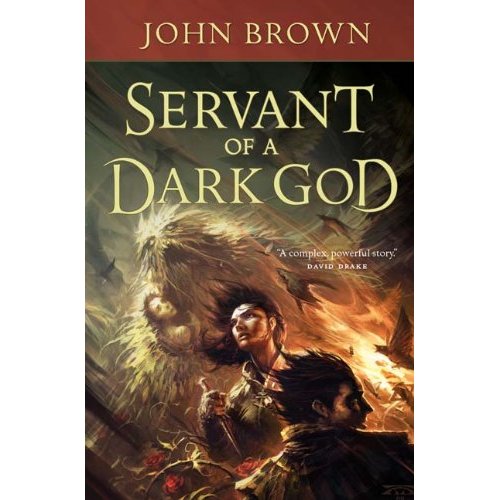
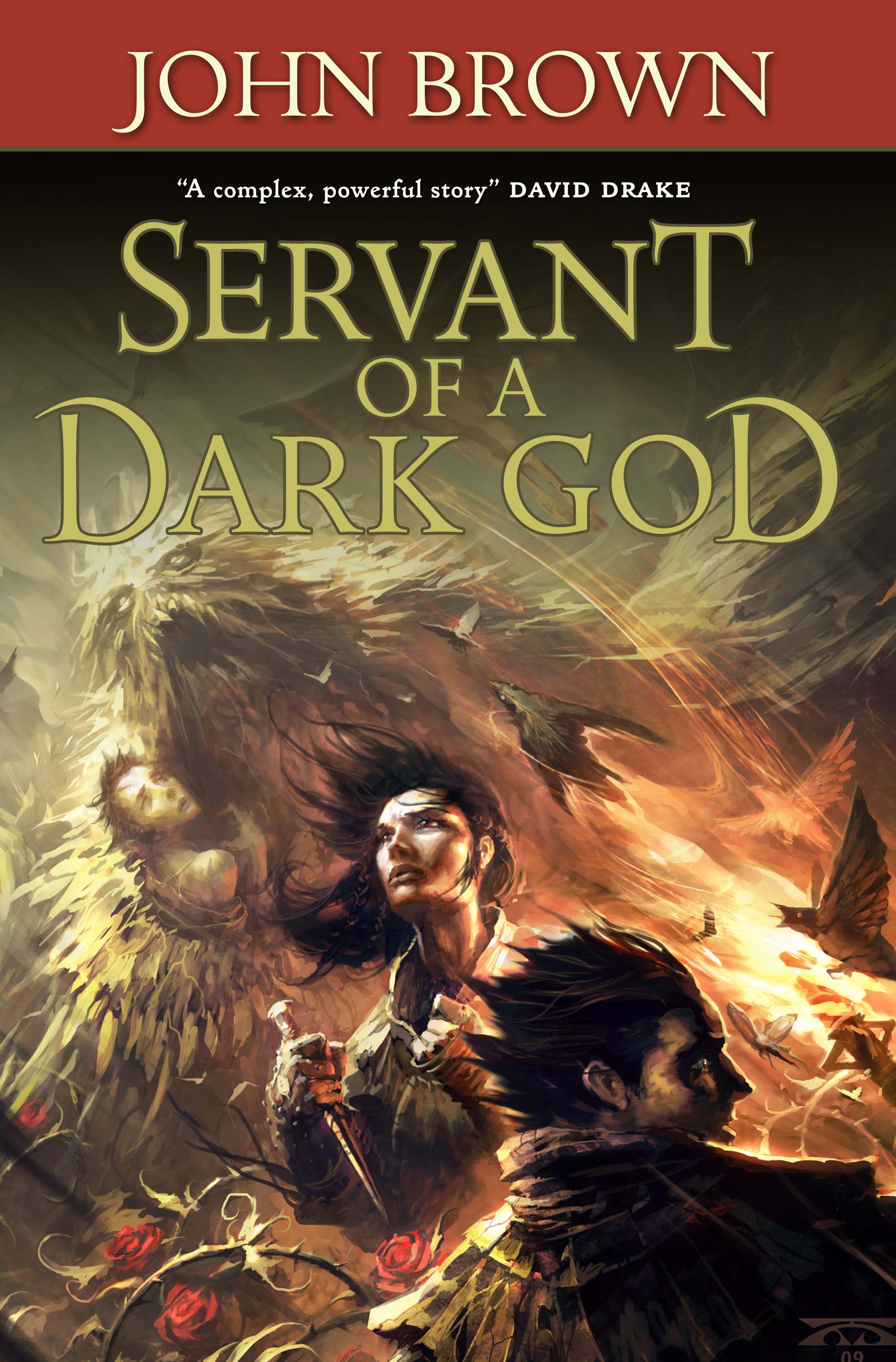
  • Final Cover for Servant of a Dark God

    Shiny.

    They moved the David Drake blurb to the side, lightened the lettering and moved things so the title wasn’t covering the top of Hunger’s head. At first I thought they moved the lettering, but they didn’t. It appears the shrunk Hunger a bit so we could see more of him. Small changes, but I think they make a significant effect. I think the overall effect is better. I like how Hunger looks more menacing in this one. Sugar is different. Don’t know which version of her I like better. I’m leaning to the original. Your thoughts? Either way, we luvs Tor’s art and production department. Here’s the before and after.

    ServantDarkGod_compSODG_hb_final_cover

  • Epigenetics

    Our genes aren’t in charge.

    Yes, you say, of course. There’s environment and choice; both of these affect what we become. 

    But I’m not talking about being in charge at that level. I’m saying that our genes aren’t even in charge of themselves.

    What?

    We all know that computer hardware (processor, RAM, motherboard, etc.) is important, but that the software that runs the show. Well it appears that our genes are like the hardware. Something else runs the show.

    That something else is our epigenome, our epigentic tags (“epi” meaning just above as in “epidermis” or “epicenter”). The tags are chemicals that turn particular genes on and off, telling cells what they’re supposed to be–liver, skin, brain.

    Furthermore, researchers think they the tags can change through a number of means, including what we eat. For example, you can take two identical set of genes for hair and, with tags, change hair color.

    Research has also shown the epigenome can be passed down to posterity. So what you eat and its effect on you can be passed down to your posterity. Likewise, what you are is what your parents and maybe grandparents ate.

    Genes are only a part of the story.

    Holy heck, this is so cool. Watch the 12 minute video now.