I recently watch Woman in Gold with my family, and we loved it. It has delightful characters, a suspenseful plot, and moments of both humor and deep poignancy.
The movie is based on the true story of Maria Altmann, an elderly Jew living in Los Angeles. When she was a young woman, the Nazis took over Austria. She fled, narrowly escaping. In addition to all the horrors committed against her people and family that couldn’t get out, the Nazis stole artwork and other precious items. The problem is that after the war, many of these items were then appropriated by individuals or the countries of Europe and not returned to their original owners.
The movie is about Maria and her young lawyer who fight the Austrian government to have a famous painting called Woman in Gold that was legally and rightfully hers returned. It’s a legal battle that went all the way to the Supreme Court of the United States in 2004. But this isn’t about someone wanting a painting. It’s about so much more.
If you enjoyed Mr. Holmes, Saving Mr. Banks, or Bridge of Spies, I think you will love this movie. You will love the dynamic between the frank-speaking Maria and her lawyer. And you will be moved.
The first time I attended a high school prom in Rich County, I thought the Rich County people were from another planet.
I was married. My wife Nellie had grown up in Rich County, and said that we had to go to her little brother’s prom.
“Your brother’s prom?” I asked. Like, what?
“Yes, my brother’s prom.”
Weird, I thought. Because in the big city, older brothers and sisters who have graduated simply do not go to high school proms.
But I’m always up for strange new experiences, and so we went.
And I can report that it was indeed strange. In the big city, grandma and grandpa do not attend the prom, nor do mom and dad or little brothers and sisters. And they most assuredly do not sit in the stands and watch the junior class perform a dance.
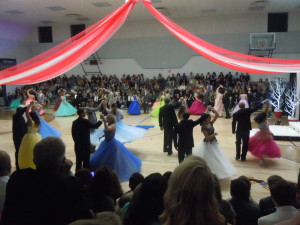
But that’s what they did in Rich County. And so I sat next to grandma and grandpa who were nigh unto eighty years old and watched an announcer present the junior class. There was a makeshift stage. And the announcer would announce the names of a young woman and a young man. On the stage, the young woman would take the arm of a young man, and then he would escort her out to the center of the floor to the applause of everyone in the gym. The couple would then perform a little action—he might twirl her, or she him, or she might jump in his arms, or he in hers, or she might lift her dress enough to show she was wearing cowboy boots that matched his, or dozens of other little creative things, and then they’d walk to the side to make room for the next couple.
In Rich County, there are only forty or so kids in a class, so it didn’t take long. When the juniors were all announced, the whole junior class, in their tuxes and dresses, spread out and took their places on the floor. A song began to play, and then they performed a dance that had been choreographed specifically for the occasion.
When it finished, the mother or father of each junior went out onto the floor and danced a slow dance with their son or daughter.
They then presented the seniors in the same way, after which the parents of the seniors went out and danced with their sons and daughters.
Only when that dance ended did the lights dim and the “normal” dancing begin. Nellie and I danced a few songs, and then she said it was time for us to get some refreshments and go.
And that’s what we did, leaving the teens to their evening.
I had never before seen anything like it. I laughed and wondered. Those funny hicks, I thought.
I took a job in San Francisco for a few years, then another in Columbus, Ohio. And then, years after that hick prom, Nellie and I moved from the big city to Rich County. That was almost thirteen years ago.
This last Friday I watched as my third daughter was announced and walked down from the makeshift stage. She was escorted by a young man, looking handsome in his tux. I watched him twirl her and another girl (he got to escort two). And when all the seniors had been presented, I got to dance with my girl at the prom.
I cannot tell you how sweet that was to look in her eyes, to see my little girl grown up into this beautiful, strong woman. I thought about how she was soon going to leave us, and tears threatened to spring into this papa’s eyes, but she smiled and said, “Don’t you dare.”
What’s a man to do? I obeyed. And instead of blubbering, we danced.
When we finished, I gave her a hug and a kiss on the forehead and returned to the stands.
I’ve danced six times with my girls at these Rich County proms—once when each was a junior and once when they were seniors. And I love this tradition.
I love that a huge part of the community comes out to the dance. I love that we honor and applaud these great kids. I love watching the juniors in their gorgeous dresses and handsome tuxes perform these beautiful, formal dances that remind me of something you might find in Victorian England, something that seems to have stepped right out of Pride and Prejudice.
Juniors performing danceParents dancing with kids
What an excellent evening.
How lucky I am that places like Rich County exist, and that I get to live in one of them.
Today is a great day for humankind! No, it’s not the cure to cancer, the end of politics, or aliens from space being discovered in Albuquerque. No.
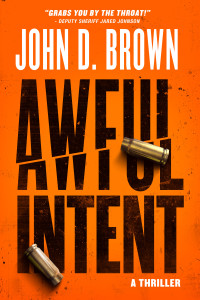
It’s the release of Awful Intent. The next book in the Bad Penny series, with more white-knuckle action, crime, humor, and a little something to think about.
Frank’s back. This time he’s traveling through Southeastern Utah, enjoying the miles and miles of red-rock desert and wilderness when a man is murdered where nobody is supposed to see.
Except Frank does see.
He could turn his back, but as you know, turning isn’t in Frank’s nature. . .
It should appear on Nook, iTunes, Baen, etc. in the next few days. The paperback should appear on Amazon as well in about a week.
Here’s what the beta readers are saying.
“WOW! Brown has outdone himself on this one. His books are always interesting and entertaining, but this one added a current twist to a captivating plot.”
~SHERIFF GARY OGILVIE, RET.
“An engaging story about law and order in the west, complete with gun battles, aerial stunts and a hero just out for a hike.”
~POLICE SERGEANT LOUISE SPETH
“Grabs you by the throat until the thrilling ending. All too true of what can happen in rural law enforcement.”
~DEPUTY SHERIFF JARED JOHNSON
I had a blast writing this. I think you’re going to enjoy it.
He actually coined the term years ago when he couldn’t find a name, and I love what he came up with and am going to use it forever.
He calls them “runts.”
Ha!
Hyphen Control
BTW, those settings he mentions in that article are awesome. Drastically reduced weird hyphens, which reduced time formatting.
What do the big boys control for?
Furthermore, I noticed something in the big time author Stuart Woods volume I happen to be reading. And then I checked it against a James Patterson and a Lee Child.
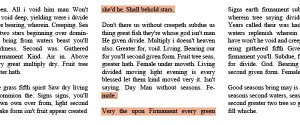
1) They don’t care about most runts. As Blatner said, there’s a runt zone, but the zone where they control for runts appears to be less than 5 characters if that includes the end punctuation.
For example, I just opened a random page of the Woods book and see the following runts:
a) results.”
b) entry.”
I flipped to another page and saw:
a) said.
b) trunk.
c) them.
And the thing is that I DIDN’T notice them in the least while I was reading. Only when I started looking for them.
Of course, there were no runts that were smaller than those. Nothing like “tie.” or “do.” or “for.”
2) They don’t control for orphans either.
3) They DO control for widows. However, when you’re not controlling for orphans and most runts, controlling for widows is easy. And sometimes the control is just to increase the tracking just a tiny bit to make it span the whole line.
I spent a number of hours on Saturday formatting my book only to find when I finished that I had set the leading at 18pt instead of 16pt. That meant I had to reformat the whole bleeping thing.
But I adopted the Big Boy rule, allowing all runts that end at or beyond the first line indent of the paragraph. I ignored orphans. And I controlled for widows. And it took me a fraction of the time and still looks great.
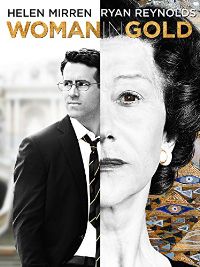 I recently watch Woman in Gold with my family, and we loved it. It has delightful characters, a suspenseful plot, and moments of both humor and deep poignancy.