On Writing

  • Generating Story 2: No Clue, No Solution

    I want you to think about Ed Smylie, who helped save the Apollo 13 astronauts with his duct tape contraption. What if the authorities had come to Ed, but instead of saying, “Look, we need to fit the round CO2 scrubbers into the holes for the square ones,” they’d said, “We want you to do something; it involves thinking.”

    Ed would have blinked. Waited.  “Yeah?”

    “That’s it. Something. A lot is riding on this.” And then maybe they urged him on with a significant wave of their hands.

    Can you see Ed at this point?

    “Sure.” He’d say. “I’ll get right on that.” Then he’d wonder who put these guys up to this practical joke.

    Do you see how impossible it is when you frame things that way?

    To come up with solutions, you have to have a clue about what it is you’re trying to do. Even if it’s just a rough idea. It doesn’t matter if you’re trying to fix a space ship, roast hotdogs, or write a story.

    Once we have a rough idea of what we want to accomplish, the mind automatically kicks into gear to perform its wonders. Until we do that, we’re going to be like Ed in the example above—staring at a blank wall, wondering if our superiors aren’t a bit cuckoo.

    So what are we trying to do?

    Think about your reader. Is it a woman? A teen? A crazy dude? Do you remember my book tour with Larry Correia in 2009 and the guy who, during a booksigning / doughnut party at a Phoenix Barnes & Noble, proclaimed my book to be true?  Aliens really were eating our souls and enslaving humanity. They were lizards living in the hollow portion of the earth.

    The point is: what are your readers hoping your story provides them? In fact, since you’re the first audience, what do YOU want from your stories? Why do you read?

    I want you to write down five stories you really like. Movies, TV shows, novels, short stories, plays—I don’t care the genre or type. Just write down five. Do it now. Here are five random stories I like.

    • The Incredibles
    • The Good Guy by Dean Koontz
    • Hunger Games by Suzanne Collins
    • The Sound of Music
    • Runelords by David Farland

    This is going to be a powerful exercise for you. It was for me the first time I did it in a class on interior design.

    A few years ago, Lovely Wife and I were building a house. We wanted to make our living space sing. We wanted our surroundings to make us happy, but we didn’t quite know how to go about doing that. So we took a class on interior design, hoping to learn the principles involved.

    Except when we showed up in the first session and saw the many different design styles, it overwhelmed us. Some styles were ethnic (Southwestern, Asian, French, Gothic, Pygmy), some philosophical or religious (Zen, Feng Shui), many were artistic (Modern, Arts & Craft, Minimalist, Art Deco, College Room Mate ), a lot were mixtures. Some were about making statements and creating moods, some about practicality (here’s a taste of those styles).  How in the world were we going to learn this?

    Luckily, we had a very perceptive teacher. She knew that most of us were there, not to learn all the styles, but to decorate our own houses. So in our second session, she brought dozens of home magazines. She spread them out on the tables we were sitting at and told us we would go through the magazines. When we found a picture or image we liked, we were to rip that page out and put it in our personal stack. So for about 45 minutes we looked and ripped and looked and ripped. Lovely Wife and I each ended up with a pile of a few dozen pictures.

    Then the teacher told us to spread our pictures out in front of us and look for things that the images had in common. Colors, features, design elements.

    I spread my pictures out. Lovely Wife spread out hers. And it was like magic. Boom! Right there in front of us. I loved arches and eyebrow windows. Loved dark blues and purples mixed with creams and whites. Loved the color of blond wheat and a navy blue sky. I loved wood. Loved Arts & Craft with a few tweaks.

    Lovely Wife’s pile was equally revealing.

    The teacher then said, “This is your personal style. This is what’s going to make you happy.” She told us that when designing the rooms in our house, that we should think about their function and merge them with these elements. And if any of us were to work with clients, we’d do something similar with them and find out their wants and likes.

    With our styles now beginning to be fleshed out, Lovely Wife and I went to work. Some of her elements and colors overlapped mine. Some didn’t, like her idea of sleeping bliss: a bed with sheer red drapes hanging from some lamp shade contraption in the middle.

    I told her I didn’t know if I could keep my man card and sleep in that bed. She decided I should keep my man card, but said she couldn’t sleep in a plain-walled zen room. We compromised. She got textured red on the walls. I got a bed without too many frills. We came up with designs for our spaces that did what we wanted them to do.

    But we couldn’t have done this if we hadn’t identified what we were after.

    So I’ve adapted that visual art technique used in the design class for our purposes. It’s just as powerful with literary arts. Which is why I want you to write down five stories.

    I want you to take a moment and identify what you’re after, in a big picture general way.

    I can’t do this for you.

    You and I are different. Just like Lovely Wife and I are different. While our tastes may overlap in some places, they’re going to diverge. You don’t want to write my stories. You want to write YOURS.

    So write down five stories. Then write down what you really enjoyed, over all, about each of those five stories. You might do this on five pieces of paper. What did you enjoy with each of the main story elements—character, setting, problem, plot, and text? What kind of an experience did they give you? What drew you to them in the first place?

    You don’t need to go all crazy detailed on me with this and do a twenty page report. Just hit the highlights. The stuff that will fit on one page without writing in four point font.

    When you finish that, step back and look at all five pieces of paper side by side. What common elements do you see? Circle them.

    This is your style. This is what, in general, you’re going for.

    If you found the exercise insightful, do five more stories. Ten is such a nice number.

    I’m going to predict that 99% of the things you identify have to do with what the story did to you. The stories made you laugh, smile, scream, want to fall in love again. They made you curious or jealous or feel some type of desire (be a Ninja king, strong, beautiful). Maybe they gave you insight. Maybe they affected you so profoundly that it changed, if even in a small way, how you decided to live your life.

    Stories–the ones people pay money for; the ones people stay up until four a.m. reading with a flashlight; the ones people tell their friends about–make people feel things.

    A while back I wrote about this in three parts. I believe the things you’ll read in those short posts, if you don’t know them already, will change how you think about stories. They did for me. And it all begins with lipstick.

    1. Lipstick
    2. Getting specific
    3. My big draws

    Okay, I hope at this point you are getting a general idea of why readers pay money to read the stories we create. Why YOU pay money and spend countless hours reading what others write.

    This is the first step in being able to produce on purpose, not on accident. This is the first step to becoming the Ed Smylie of fiction—understanding what you, as a writer, are trying to do.

    This week, keep your eyes open. Notice what stories do to you. Notice how you feel about different characters and plots. If you feel like taking it farther, notice the effect of different beginnings and ends of novels, chapters, or scenes. Notice the effect of different ways authors describe characters, places, and actions.

    Of course, while knowing these general objectives is critical, it’s not enough. You need to know what you’re reaching for with the current story, the current characters, the current plot. How do you translate all this general stuff to the specifics of the story in front of you? Do you have to define everything up front? And what if you don’t know what you want in the current project anyway? What if you are clueless and have nothing but a handful of random ideas that for some reason are generating electrical sparks? What do you do then?

    In the next post, I’ll talk more about those questions and where the how-to’s fit into all of this, and then we’ll get into the principles of invention.

    For more in this series, see How to Get and Develop Story Ideas

  • |

    Generating Story 1: Can You Create a Redneck Crapper?

    Bugatti Veyron Super Sports $2,400,000

    Almost everyone reading this knows what they like in a car. We know what we want a car to do. We can talk about acceleration, voom-voom styling, and handling. Some of us could talk about how engines and transmissions and tires all work together to create those things. We could get really technical.

    But how many of us could then go manufacture a tire? Or the paint we’re going to put on the car? How about a windshield?

    No?

    Well, what about one little bolt? Just a little bolt. Can you do it?

    There’s a difference between knowing what a thing is supposed to do, how it works, and actually building it. A lot of people can talk about the first two topics and have no idea at all about the third.

    It’s the same with stories.

    There are three things we have to learn to write killer stories.

    1. What a story is supposed to do.
    2. How the 5 parts of story—character, setting, problem, plot, and text–do that
    3. How to come up with and develop a story idea in the first place

    We authors talk a lot about the second thing. You have books and blogs galore on dialogue, plot, characters, structure, grammar, world-building, setting—you name it. Heck, the big series I wrote last year about the key conditions for reader suspense was all about how story works.

    Some of us talk about the first thing. And really there’s no point in blathering on about the how-to’s if we don’t know the what-for’s, which is why I tried to highlight one of the core what-for’s in my series on suspense.

    But as important as those two things are, none of it matters if we don’t know how to put it to use. We’re not reviewers or editors. We’re creators. We’re writers—the ones that invent the story in the first place. And let me tell you, knowing how a story works and how to invent one are two very different things.  

    I didn’t know the principles of invention when I was first starting out. And that gap in my knowledge was one of the things that held me back for years. In fact, I almost gave up my dream of writing stories because of it.

    Very early in my attempts to start a career I wrote a story that won an award and $2,000. I was flown out to Cocoa Beach, Florida for a week-long workshop with amazing pros. Was published. And then I went home, finished another story (yea!), and proceeded not be able to finish another thing for five years.

    Five years.

    FIVE. YEARS!

    And I tried.

    After five years of failure you begin to wonder if maybe you didn’t get the wrong memo (what am I doing at this empty warehouse?). Your family begins to wonder that as well. You realize life is short and there are a lot of other things you could be spending your time on. You begin to think that only an idiot would spend more time on this. And you’d probably be right.

    Unless, of course, you realize that what’s keeping you back isn’t a manifestation of cosmic will. Rather, it’s just a lack of understanding.

    That’s what happened in my case. Just a few days before I gave up on all my dreams, the light was turned on for me. I learned some key, but simple, principles of invention that I hadn’t known. You can read the whole story here. After I learned these principles, my production took off like a rocket.

    And so what I want to do in this series is share those principles with you. Hopefully, this will unleash your abilities. You might find a huge audience for your stories. You might find only the family dog will stick around to listen to them. The popularity of your stories is a separate matter. But you can’t even find out how big your audience will be if you don’t know how to finish.

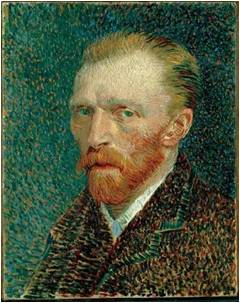
    So let’s start. A lot of people think that creativity is about passion. When they think of creativity, they think of someone like this.

    Look at him. Brushed velvet jacket. Beard. Rakish devil-may-care hair. And that gaze. Look at that gaze! It’s full of passion. It’s coming off him in waves. In fact, we all know his inner world is a vast tempestuous sea of passion that sends ideas crashing in great surges onto the rocky beaches of his soul. And those earthly forces cannot be contained. No, he must write them, write them, write them. That’s the face of a man who will channel fire onto the written page because if he didn’t, he would surely burn.

    Or maybe not.

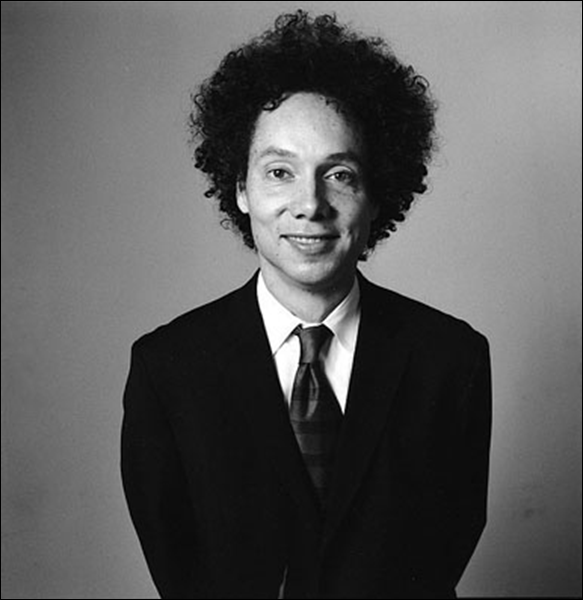
    Maybe creativity is about being like this guy.


    Hello, Malcolm Gladwell. Look at him. There are so many ideas in that great blaze of brains they trip over themselves trying to get out. There are so many they kinked his hair with their electric heat. Oh, fecund mind!

    Or maybe not.

    Maybe creativity is all a function of being blessed.


    Or maybe it’s about alcohol (or some other chemical). After all, isn’t that how Ernest Hemmingway did it?

    Booze Makes Ernie Reel Smart

    Or it’s about being mentally unstable.

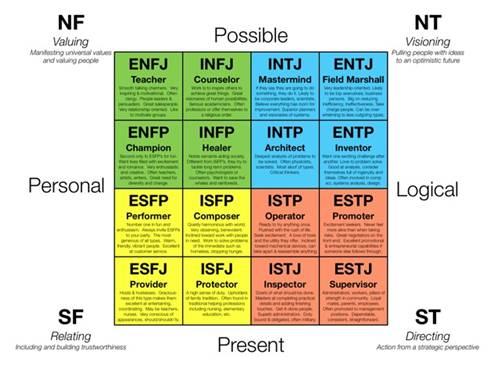
    Or it’s about having the right personality type. I remember the day of woe when I learned that I was an ENFJ but that the “natural” writers were all ISFPs!

    Alas, me being a blockhead was all scientific

    Or it’s about being eccentric.

    Patrick Rothfuss shows us the key is crazy beardage and an Alice in Wonderland chair

    Or it’s none of that. It’s about being born to it.

    I wrote my first novel when I was six

    Right? All of those things are what creativity is about. And if, as so clearly demonstrated by those pictures, you don’t have passionate hair, well then, forget about it. Except here’s Larry Correia, a New York Times bestseller, who has no passionate hair whatsoever.

    I keep guns in my basement

    Huh?!

    How could that be?

    Here’s how. All those ideas above about creativity–they’re rubbish. Creativity has nothing to do with passion or hair or whether you wear Argyle socks.

    Nothing.

    Let me show you the face of creativity.

    That is Warren Ellis. Warren is my brother-in-law, except when he’s not (do not ask me to explain this). One day our fridge started to drip. The freezer would cycle through its normal thawing, and all the water would drip down into the fridge and soak up our egg cartons and pool in the vegetable crispers. It was a mess.

    We defrosted the freezer we weren’t supposed to ever have to defrost, but the problem persisted. So we called Warren because he fixes things.

    Warren came to our house, looked the fridge over. He declared that the freezer’s drain tube was plugged. We thought up a few ideas for cleaning it out, none of which were any good, then Warren asked if we had an air compressor. We did and hauled it in.

    Warren plugged it in, let it build up the pressure, and then held the compressor nozzle to the bottom end of the tube. The compressed air went in. The obstruction flew up and out and landed on the counter. The obstruction was a fat fly that had crawled in there, gotten stuck, and died.

    We poured a quart of water into that freezer, and it all flowed down into the catch pan at the bottom. Warren fixed our freezer with an air compressor.

    Folks, that is creativity.

    What did Warren have? He didn’t have passionate hair; I can tell you that. No. He had an objective. He knew basically how fridges worked. And he came up with a couple of options to fix the issue.

    Let’s look at another example. Here’s Ed Smylie.

    Ed was like Warren. He ran into some problems. Actually, the astronauts in Apollo 13 ran into some problems. Ed was tasked to help solve them.  One of those problems was the fact that the astronauts were running out of air.

    Ed and the others designed the solution in two days. The ground crew relayed the instructions to the flight crew. The lunar module’s CO2 scrubbers started working again, saving the lives of the three astronauts on board.  Of the experience, Ed said that he knew the problem was solvable when it was confirmed that duct tape was on the spacecraft. “I felt like we were home free”, he said. “One thing a Southern boy will never say is: I don’t think duct tape will fix it.”

    Ed and his crew saved the day. The made a round peg fit into a square hole. How did he come up with such a creative solution?  

    Ed had an objective. He knew how the CO2 scrubbers and the shuttle worked. He knew about duct tape. He came up with options.

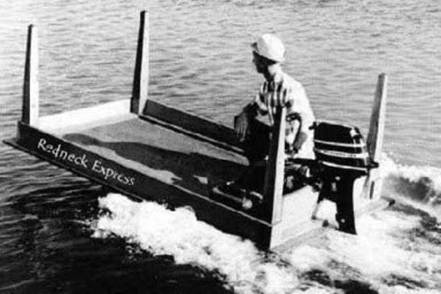
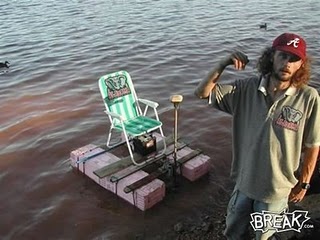
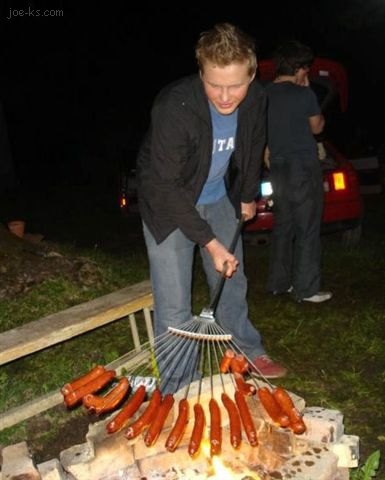
    Let’s look at a few more examples of this. I know you’ve seen some of these.


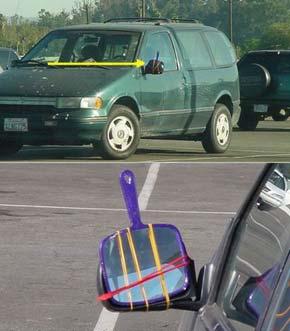
    That is creativity. So is this.


    And this . . .


    And this . . .

    Or this, if you don’t need to go so fast . . .

    Smaller size, for trolling

    And this . . .

    And this, which is officially called a Bumper Dumper . . .

    Do you really want to dig?

     These fine folks had a goal. They knew the basics of how things worked. They came up with some solutions.

    That’s all there is to creativity. Three things. You need to have an idea of what you’re trying to do. You need to have a basic knowledge of how things work. And you have to know how to come up with some solutions to meet your objective. 

    Not so mystical, is it?

    But I can hear some of you complaining. Writing is different. It’s a whole other world. It’s Fiction, which is so significant we must capitalize it. It’s passion. It IS mystical. This is a matter of the heart. It’s not a fridge or space ship or some dumb hotdog roast. You cannot compare these things.

    Except I can because they’re the same. It doesn’t matter if you’re trying to invent a different recipe like the folks at Cook’s Illustrated, or decorate your house, or come up with a way to keep the squirrels out of your bird feeders, or make people weep in a movie theater.

    What I’ve found is that when we have troubles coming up with ideas, we probably don’t know what our objectives are. Or we probably lack some understanding of how fiction works. Or we don’t know the principles of generating options.

    And so we conclude it’s a mystery. It’s arcane lore.

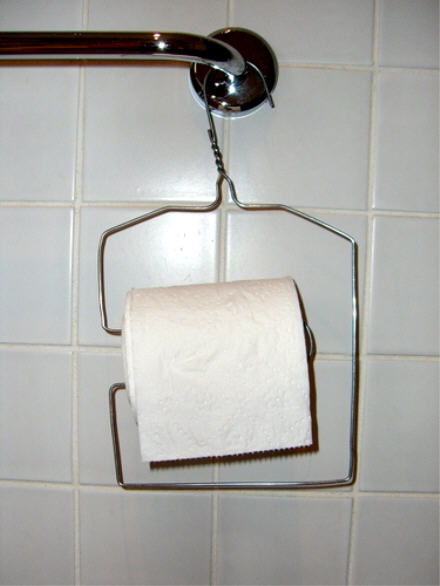
    But it just ain’t so. Can you create a redneck toilet? Then you can write a story.

    Now, it’s true that a lot of people feel their way through this. They don’t know what they’re doing, but they do it. I did that. Remember: I won an award. But then I couldn’t repeat it. Couldn’t find that groove I’d stumbled into.

    I don’t want to stumble around hoping to get lucky. I want to make a living at this. And if I’m going to make a living, I need to produce. Regularly. I can’t be bumbling around, hoping to create something by accident.

    The good news is that we don’t have to create by accident.  We can create on purpose. There are principles to invention. When we learn them, our productivity will shoot through the roof.

    Finding a solution to Apollo 13’s issues might seem impossible to us. But they weren’t impossible to Ed Smylie because Ed had an objective; he knew how things worked up there; and knew how to come up with options.

    My intent is that when you finish this series, you’ll know what Ed Smylie knew, except for stories.

    For more in this series, see How to Get and Develop Story Ideas

  • Jennifer Nielsen and “The Rules of Personality”

    Jennifer Nielsen is the author of Elliot and the Goblin War, the forthcoming Elliot and the Pixie Plot (Sourcebooks, August 2011), and The False Prince (Scholastic, April 2012).  She’s also worked for many years with a troubled youth program. I recently sat in on one of her presentations on characters and personality at a writers conference and quickly found myself scribbling down insights. Later I convinced her to share some of that here. Enjoy. You can learn more about her at www.jennielsen.com.

    The Rules of Personality

    In the Mockingjay series by Suzanne Collins, 16-year-old Katniss Everdeen is selected as one of the contestants for the brutal Hunger Games held by the Capitol each year. Katniss is resourceful, fierce, intelligent, and compassionate. It is these traits she uses in her attempt to survive the Hunger Games. She is joined in the games arena by Peeta Mellark, who is clever, protective, and likable. Like Katniss, Peeta’s traits help him in his fight to survive.

    These characters are excellent illustrations of the importance of character in a story. What if Suzanne Collins had not given Katniss her compassion? For those who have read the story, they know changing that single trait would have dramatically changed the plot.

    It’s for this reason that character is so important in the creation of a story. If you change the plot, the character will remain the same. But if you change a character, the plot will inevitably change with it.

    In order to create a believable human sketch, a visual artist would have to understand the physical body, muscle structure, proportions, etc. In a similar way, for a writer to create a believable character, he must understand the basic rules of personality.

    But to create a believable characterization, there are some important things for the writer to understand about personality. Personality is the traits of a person’s core self. For example, there are many different types of people who value and practice honesty (the “trait”). But personality will determine how that trait is exhibited. An extrovert is far more likely to state the blunt truth while an introvert might create an opportunity for the people to discover the truth on their own. So although the trait is the same, there is no single way in which it might be expressed.

    In other words, while the presence of a trait is important in developing character, the way it is expressed is equally important. A person’s stubbornness might be demonstrated as passive-aggressiveness or outward defiance. A person’s jealousy might be expressed in withdrawal or by vicious repercussions. It’s personality that determines the way character traits are expressed.

    There are four important things to understand about personality. The better writers understand this, the better they can understand the characters they created.

    #1 Personality is Stable.  The core of who a person is remains about the same throughout a lifetime. The way a trait is expressed may evolve or adapt as the events of life unfold, but the core self doesn’t change much.

    For example, a shy child may hide behind her mother’s legs and refuse to talk. As she grows into adulthood, she will probably learn to manage her shyness and interact in the world. But she will likely never be the outspoken, bold, center stage person.

    #2 The Intensity of the Trait Matters.  When creating character, most writers stop at listing the presence of a trait. However, that is rarely good enough because it’s really the intensity that matters. Someone who has a hard time forgiving others and holds grudges is probably fairly normal. But increase the intensity of the trait and you may create a villain who’ll go to extreme lengths for revenge.

    #3 People Rarely Behave Out of Character.  Occasionally, writers finds themselves in a position where in order to make the plot unfold the way they want it to, they must force their character into behaviors outside of anything they’d normally do. This almost always fails the believability test because in real life, people rarely act out of character.

    Consider the example of the shy woman. Is it possible that she would willingly get up in front of a crowd and speak with boldness? Of course. But is it likely? No. It’s far more likely that she would find someone else to deliver the message for her, or find another way to communicate the message.

    When I’m speaking about this issue to groups, a common response from writers who are facing writer’s block is that this is the root of their problem. They are trying to force a character into a behavior not consistent with their personality. The entire scene becomes forced as the character literally balks at the writer’s attempts.

    #4 People Tend to Rework the Same Issues Throughout Life.  Everyone has “issues.” Some are more major than others, of course, but we all have them. And whatever it is that we battle, we likely battle it throughout life, even if the way we experience that issue evolves.

    For example, the teenager who becomes explosively angry is later the man who may take out his anger on his wife or children. In later life that trait may evolve so that he turns his anger inward and develops a drinking problem. Or perhaps the man matures and mellows. Perhaps he’s learned to manage it, or perhaps he’s too tired to create the same fuss as when he was younger.

    In April 2012, I’ll release a series with Scholastic that begins with Book 1: The False Prince. The protagonist in this story is a defiant boy named Sage who must use his own cleverness, determination, and strength to survive a contest that will name the winner as the false heir to the throne.

    As the writer of this series, it was important for me to understand Sage’s personality if I was going to create a believable character. One of his core traits is his instinct to rebel. It’s a more intense than would generally be found in his peers, so I needed to respect the fact that he would rarely back down from a fight, regardless of the consequences. There is one scene in the book where Sage steals an item from his master that Sage believes was stolen from him. He refuses to tell anyone where he hid it, even though he knows the consequences will be serious. I didn’t want those consequences to happen to Sage, but he would not have had things any other way. To attempt to create a story where he gave in to the master would have cheated the character, the story, and the reader.

    Likewise, writers must understand that creating great characters begins with understanding the rules of personality. And when it’s done right, whether it’s Katniss Everdeen, or any of your favorite characters, the reader will always remember them.

    *

    JOHN SEZ: I particularly like #2 because homo-ficti need to be a little bit larger than life.  A litter more courageous. A little more finicky. A little more skilled. A little more outrageous. Exaggeration is one of the key tools for developing characters.

    The statements about the core part of personality being stable and long-lasting, and folks dealing with issues for a long time, are interesting to me as well. It seems like this is where deep motives lie. 

    Of course, I know I don’t start with personality grids when developing characters. But I do eventually try to peg my characters.  I’ve found that having a dominant impression, a type, helps a great deal when working with them, even if my characters mix or bend the types.  If I know that this one is a wise-cracking farmer, that one a quick-tempered tailor, and that one a no-nonsense baker, it makes them easier to work with.  It makes it easier to envision how they might react in a given situation.

    In fact, I think I’ve created my most enjoyable characters when I didn’t try to make them super complex. They might have had things that occured in their past that affected them greatly. They might be dealing with terrible dilemmas now.  They might have a number of interesting details about them.  But if I can peg them in my mind as this or that type of person, it seems the scenes flow more easily.  I can improvise the dialogue and their reactions much better in my mind as I write.

    Sometimes I can capture that type with a description, e.g. “scary smart farmer.” Sometimes it’s enough to get a voice or a photograph or link them to someone I know.  Sometimes I’ve linked them to animals and that gave me the center.  Very often they form as I write them. They often have to come on stage first and have me start writing them for everything to coalesce.

    Check out Nielsen’s site. I love the first line of Goblin War. I mean not only does she get all these fab illustrations for her book, but then she opens it with this: “When he was 8 years old, Elliot Penster started an inter-species war.  Don’t blame him.  As anyone who has ever started an inter-species war will tell you, it’s not that difficult to do.” Elliot is trick-or-treating at the moment, everyone thinking he is dressed up as a hobo, when in reality he’s just wearning his normal day clothes. Hum. A little homo-fictus anyone?

  • The eBook Tsunami of Crap is Crap

    Some folks say ebooks will foist a terrible problem upon readers–they’ll soon have to wade through mountains of crap to find a book to read. It will be a terrible chore. J.A. Konrath gives his answer to this lament. Kris Rusch gives hers.

    Here’s mine: there will NEVER be a tsunami of crap facing a reader looking to buy ebooks or any other kind of book. Ever.

    Why?

    REASON 1

    Buyers REFUSE to look at seas of choices–crap or otherwise. Shoppers always seek to limit choices (too costly to look at everything) and use a number of methods to immediately narrow those choices down: recommendations, reviews, what’s on the shelf, etc. (For a fascinating look into a few facets of how we make choices, listen to this Radio Lab espisode.)

    For example, when shopping for vanilla you don’t go searching through the 500 brands available online and in various stores–Mexican, Vodka, American, Rum, organic, generic, brand, etc. It’s just not worth the time. Something on the shelf is usually GOOD ENOUGH.

    Likewise, nobody cares to look at 150,000 titles to find the best. They don’t have the time. In fact, they don’t need to. They can usually find a number of books that are intriguing enough in the “smaller” selection any given vendor sets before them.

    In the case of Amazon ebooks, that selection is the best-sellers, the ads, and the this person bought that.

    Nobody ever sees the 4 gazillion books. Ever. They don’t want to.

    REASON 2

    Vendors can’t display a gazillion choices, even if they wanted to, which they don’t (studies have actually shown that providing shoppers too big a selection leads to FEWER sales).

    And no, just because Amazon says it have 2 quintillion titles for sale that does not mean they’ve been displayed. You only see a handful of titles at a time.

    Even if you scroll through the various lists, you are rarely looking at more than a dozen choices at a time. You’ll probably see less than 200 titles total any given time you go shopping.

    Vendors NEVER display a tsunami. EVER.

    REASON 3

    Readers have MORE THAN ENOUGH leads to fill their capacity for reading.  Even if they wanted a sea of options, they wouldn’t wade through them because they don’t have to–it’s too easy to find something to read.

    Leads are everywhere. There are recommendations from friends, family, reviewers, celebrites, and Amazon’s this person bought that.  There are leads from best-seller lists (another type of tacit recommendation). Leads from browsing.

    Readers have leads coming out their ears.

    This is important because the number of leads any given reader has far excees that reader’s capacity for reading.

    How long does it take you to find one book that looks interesting? From browsing or recommendations or whatever?

    Minutes.

    Maybe if you’re having a really bad day, it takes an hour. But it takes so much longer to read one story than it does to find one you want to read.  That’s why we all have two year’s worth of books to read in our queues.

    So. There is no sea of crap. There NEVER was or ever will be one for any given reader.

    Buyers avoid selection seas like the plague. Vendors don’t provide such seas anyway. And readers don’t need them–they have more than enough leads which turn out to be exciting enough to fill up all their reading slots and more.

  • Who Will Play in The eBook Supply Chain?

    I was reading this Konrath post by Barry Eisler on the “Attack of the self-publishing memes” in which he argues that there isn’t an inherent conflict of interest for agents to also help authors epub their books. This got me thinking about the steps (tasks) in the current supply chain, who was going to provide them, and where the biggest value lay.

    Here’s the process right now as I understand it from manuscript to reader. The numbers are only task identifiers and don’t represent sequential order in every case, although I did try to sort them that way.

    PAPER CHANNEL TASKS THROUGH BRICK & MORTAR OUTLETS

    SELL MANUSCRIPT TO PUBLISHER
    1. Promote manuscript to editor at publisher
    2. Negotiate contract with publisher

    EDIT MANUSCRIPT
    3. Story edit manuscript
    4. Revise for story edits
    5. Copy edit manuscript
    6. Revise for copy edits

    PREPARE BOOK
    7. Create cover design and art (a marketing/advertising function)
    8. Obtain ISBN
    9. Typeset book
    10. Print book

    MARKET BOOK TO WHOLESALERS, RETAILERS, AND LIBRARIES
    11. Establish book selling hierarchy (lead book, second lead, etc.)
    12. Obtain reviews from trade publications, newspapers, websites, authors, etc.
    13. Create sales catalog and other sales documents
    14. Contact book buyers and promote books (calls, visits, conferences, etc.)
    15. Take orders

    DISTRIBUTE BOOK
    16. Ship to retail outlets and wholesalers
    17. Warehouse book
    18. Process reader purchases & returns

    PROMOTE BOOK TO TARGET AUDIENCE
    19. Publicity, including free copies
    20. Advertising
    21. Co-op display purchases

    SELF-PUB EBOOK AND POD PAPER CHANNEL TASKS

    EDIT MANUSCRIPT
    1. Story edit manuscript
    2. Revise for story edits
    3. Copy edit manuscript
    4. Revise for copy edits

    PREPARE BOOK
    5. Create cover design and art (which you could lump under marketing)
    6. Obtain ISBN
    7. Format book for ereaders and POD services (CreateSpace etc.)

    DISTRIBUTE BOOK
    8. Upload book to retail and library outlets
    9. Warehouse the bytes
    10. Process reader purchases & returns

    MARKET BOOK TO LIBRARIES AND TARGET AUDIENCE
    11. Obtaining reviews from trade publications, newspapers, websites, authors, etc.
    12. Publicity, including free copies
    13. Advertising, including website display etc.

    AUDIO BOOK CHANNEL TASKS
    There are actually two channels here–physical audio books (CDs) and downloads (Audible, etc.).

    I would assume the physical audio would follow the marketing, distributing, and promoting aspects of the paper channel tasks and add in the audio production tasks. Downloadable audio would follow the marketing of the ebooks and add in the audio production tasks.

    THOUGHTS
    I’m sure I’m missing some key steps somewhere. Somebody please supply them if you see gaps.

    As for the future, here’s what I see. The paper channel tasks aren’t going to change much. Nor do I think the people performing the various tasks will either. For example, I just don’t think POD machines are going to catch on in stores and wipe out distributors. They may take out printers (#10) of trade and mass market paperbacks. But I haven’t seen a POD machine that can do hardbacks. Maybe the PODs will move to the retail outlets. But I don’t think so. Somebody disabuse me of the notion.

    However, I do think there will be some interesting developments in the ebook/POD channel.

    Right now a lot of authors are spending time performing tasks 6, 7, and 8. Some literary agencies are wanting to charge 15% forever for those steps with maybe a little cover design. But tasks 6-8 are the tasks that require the least amount of skill and will soon be automated.

    Formatting for ebooks now is like coding html was for webpages 10 years ago–people in the code spending hours tweaking crap. Right now it takes you about a day to learn how to format a novel for the various ebook readers. Once you know how to do it, you’ll spend a day, maybe two, formatting your novel and uploading it. Or you can pay someone else to do it–any responsible teenager will do.

    But within the next year I predict an application coming (if it’s not already here) that will hook into Word and other programs that will make the labor obsolete. Creating a Kindle document will be like creating a PDF document in Word today—you just click Save.

    Uploading could be automated as well across various sites with some application. But it’s fairly easy now.

    So for which tasks are these ebook distributors wanting to charge 15% forever? Obtaining an ISBN?

    I don’t even think they even do that.

    Amazon and the other ebook retailers have a lock on 9 & 10. It would be incredibly hard to dislodge those gorillas. So I think the place where literary agencies and others who want to play in the indie ebook/POD supply chain are going to flourish is in the other tasks that require the most skills–editing, cover art, and marketing, which I’ve marked in blue.

    Authors interested in the indie ebook/POD channel are going to want service providers who can deliver great editing, cover art, and marketing. They’re going to want folks who can help them sell into traditional domestic and foreign paper distribution channels. They’re going to want folks who can help them sell rights to other buyers–audio, film, etc.  And they’re going to want help with their contracts.

    If I were an agency, graphic artist, editor, intellectual rights lawyer, or some other entrepreneur trying to serve indie ebook/POD authors, that’s where I’d spend my time.

    Dystel & Goodrich literary agency recently announced they would do something like this . . . almost.

    Over the past months and years we’ve come to the realization that e-publishing is yet another area in which we can be of service to our clients as literary agents. From authors who want to have their work available once the physical edition has gone out of print and the rights have reverted, to those whose books we believe in and feel passionately about but couldn’t sell—oftentimes, after approaching 20 or more houses—we realized that part of our job as agents in this new publishing milieu is to facilitate these works being made available as e-books and through POD and other editions.

    Right now, you’re thinking, oh, DGLM is going to be another of those agencies that has decided to become an e-publisher and charge clients whose books they can’t sell 50% of their income for the privilege of uploading their work. Some of you may be mumbling, “Uh…that’s a conflict of interest.” We get it and we understand how that can be the perception. However, we have no intention of becoming e-publishers. As we said above, we have too much respect for the work that publishers do and too much respect for the work we ourselves do to muddy the waters in such a way.

    Again, what we are going to do is to facilitate e-publishing for those of our clients who decide that they want to go this route, after consultation and strategizing about whether they should try traditional publishing first or perhaps simply set aside the current book and move on to the next. We will charge a 15% commission for our services in helping them project manage everything from choosing a cover artist to working with a copyeditor to uploading their work. We will continue to negotiate all agreements that may ensue as a result of e-publishing, try to place subsidiary rights where applicable, collect monies and review statements to make sure the author is being paid. In short, we will continue to be agents and do the myriad things that agents do.

    Our intention is to keep on trying to find books we think we can sell to traditional publishing houses, to negotiate the best deal (always), and to give our authors as many options as we can. Because we will continue to be commission-based, we will not be automatically pushing authors into e-publishing. Again, we want to give our authors options and empower them to do what they set out to do all along: have their work read by the largest possible audience

    However, from what I understand they’re not offering to perform the necessary tasks for 15% forever, only the project management of the tasks. Which means the author will still be paying for the editing and cover art and marketing.

    15% forever for project management (a list of to-do’s in this case) and a service provider contact list? Where the author still pays for the editing, cover design and art, and marketing?

    Ummmmm, no.

    Others like D&G will pop up. But the ones that indie authors will eventually go to will be those that deliver on the high-skill tasks for reasonable rates.  Those will be the ones playing in the ebook supply chain of the future.

    Many authors will contract the tasks separately themselves.  But a lot of authors won’t want to do that. They’ll want a one-stop-shop. Or one that does most of it. Some of those one-stop-shops will charge an upfront fee and will probably accept anyone who can pay. Others will make most of their money on a % of the sales to readers and libraries, footing the initial costs of the tasks, and will only work with clients they think will pay out, which if you think about it isn’t really an idie (self-pub) model at all. That’s the space traditional publishers play in right now.

    But in the ebook/POD world distribution is no longer a key barrier to entry for new competitors. And so I expect to see a whole bunch of new publishers coming to play in that space. Those that select, edit, and market well will flourish.

    Meanwhile, I don’t think most of us authors care which road we take and who we play with. Well, as long as they play nice and don’t poop in the sandbox. We just want to get our stories in to the hands of massive numbers of delighted readers.