Faithful Readers, Nominate Awful Intent for the Whitneys before Dec 31st!

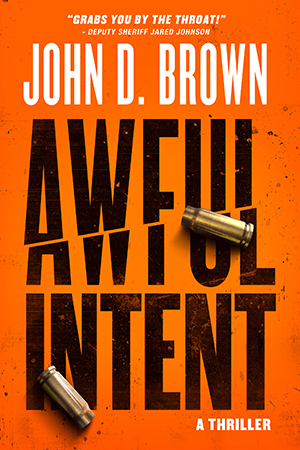
Awful-Intent-originalSend Frank, Sheriff Hood, and the Knitters of Death club to kick some award patootie!

Here’s how: go to: http://whitneyawards.com/ and click “Nominate” at the top.

Enter a bit of info and boom! But this needs to happen before December 31st.

The Whitney Awards are open for the public to nominate books they think are great and which are written by LDS authors (this is where your voice is heard, Faithful Reader). Those books that get at least 5 nominations are read and rated by a panel of judges. The judges then send on the finalists in each category to the Academy for voting.

Servant won an award in 2009. Awful Intent is doing well, and if the reviews piling up are any indication, it could win another.

Please take a few moments to send Frank to kick some award patootie.

It’s time for Frank to bring home a trophy.

Share

Similar Posts

  • NEWS: LDStorymakers Conference

    I have finished the final drafts of my two presentations for the LDStorymakers conference which will be held next Friday and Saturday, May 10-11, 2013 in Provo, UT (usually a glorious time along the Wasatch Front in Utah).

    “Vivid and Clear” – Despite the often repeated 11th commandment for writers—show, don’t tell—writers NEVER show. They can’t. It’s all tell, tell, tell. The trick is to tell in a way that helps your readers imagine the situation (action, thought, dialogue, description, etc.) with such vividness and clarity it can trigger an emotional response.  In this hour we’ll explore a number of simple but powerful prose techniques that help you do just that. That includes:

    • The three main types of telling
    • What “showing” really means
    • 5 key techniques for making that telling vivid and clear
    • Lots of examples so it’s all clear

    “Story Turns” (they’ve got me scheduled to do this one twice) – Story turns, cliffhangers, rugpulls, plot twists, reversals, surprises, revelations (and more)–are a core part of an exciting plot, pacing control, and making a reader want to turn the page. In this workshop we’ll explore the main types of story turns and how they work so you can use them in your writing.  This includes:

    • A clear definition of what turns are and do in general
    • The 5 main types of turns
    • A whole bunch of examples to make it all clear
    • 3 tools I find helpful when developing turns
    • A session where we actually will use the tools to develop turns for a scenario I’ll bring

    I’ve got to run through both presentations to make sure they have the zing I look for in these things and that I don’t have too much content for the time allotted. I’m very excited about both. And, as always, I learned a lot bringing all my ideas together on these topics.

    I’m planning on having a great time giving these AND listening to the other presenters AND chatting with folks I know AND meeting others. Last year was fabulous! This year looks to be even better.

    For those of you who haven’t heard about the conference, it features 2 days of excellent programming focuses on helping writers who are serious about writing but who also want to have fun doing it–let’s call them hard-working, laffy bees.  Special guests include goddess of mystery Anne Perry plus a bunch of great agents and an editor from Harlequin’s new line focusing on “wholesome contemporary romances that celebrate traditional values, strong communities, family connections and true love.”

    Although I have to say that if I were thinking of submitting to Harlequin, Kris Rusch’s posts would give me pause:

    I think registration is still open. For those of you already planning to go, please come up and say hello.

    BTW, I’ll post a PDF of both the presentations and my notes here afterwards.

    Share
  • Press Release – SF/Fantasy Key to Teen Literacy

    FOR IMMEDIATE RELEASE

    IS SF/FANTASY KEY TO TEEN LITERACY?

    Findings presented at national American Library Association conference reveal science fiction & fantasy literal gateway drugs to youth literacy

    CHICAGO, ILLINOIS |  July 11, 2009 | Utah’s newest author, John Brown, summarized statistics and research at the 2009 national American Library Association (ALA) conference held in Chicago which suggest that science fiction and fantasy are two of the main gateway drugs to literacy for youth. Data provided by Nielsen BookScan, public libraries, and recent studies published by the National Endowment for the Arts (NEA), suggest that at least 1 in 3 youths read for the effect produced by Science Fiction and Fantasy. “However,” says Brown, “given library circulation statistics, that number may well be 2 out of 3. These are incredible numbers, and have important implications for youth reading programs.”

    According to Brown, “the latest research in emotion shows that reading fiction produces a physical response, as real and physical a response as when we take aspirin, alcohol, or crack. The good thing is that while stimulating pleasure centers, it doesn’t change the brain the way hard drugs do. Furthermore, it also carries the powerful and desirable side-effect of improving reading skills. The key is in finding the type of fiction which appeals to the given age group. And for youth it appears that drug of choice is science fiction and fantasy.”

    John Brown’s epic fantasy for teens and adults, Servant of a Dark God, will be released in October 2009 by Tor Books, the largest publisher of science fiction and fantasy in the world. For more information see the links below.

    Share
  • Curse of a Dark God is Finished!

    I finished the 10% edit, going from 205,000 words to 185,000, this morning and emailed the finished manuscript to Super Agent Caitlin who will perform various incantations before sending it off to ye Editors for review. 

    While that’s happening, I will be switching gears and starting the thriller. I’m looking forward to this.  Not only am I having fun developing the ideas, but unlike these epic fantasies I’m writing with a gajillion story lines, this is going to have one story line (okay, with maybe, maybe two subplots), one point of view (instead of three or four), and a limited cast of characters like six (as opposed to close to twenty). I’m preparing to reach  escape velocity. I’ll tell you what jupiter looks like when I get back.

    Share
  • |

    You’re invited to join the novel writing workshop pilot

    I am developing an online novel writing course and am looking for folks to pilot it with me and give me feedback. I’m thinking I want to limit it to 10-12 folks.

    It’s free and will probably take two or three months to complete. If you join, your job will be to do the work. And there will be work. I’m thinking 10-15 hours of work per week. Please don’t ask to join if you don’t want to make this commitment. I only want folks who are serious and ready to give this a shot. In addition to the work, you’ll need to report your experience with the course as we go, sharing with me where you get stuck, what’s confusing, what’s helpful, what does and doesn’t advance your skill. In fact, if at some point the course just isn’t providing you any value, you are welcome to drop. That’s good feedback too.

    It’s going to be a blended format that includes self-paced work and some type of weekly online meeting. I will be guiding the class. At the very least, we’ll meet and chat at my site. I don’t know if we’ll do a live meeting or not. Still working that out.

    I struggled for many years, trying to figure this stuff out, then had a number of epiphanies during Orson Card’s boot camp and continued from there. Of course I still have lots to learn. But I want to share what I have.

    I love teaching and have been teaching in one form or another for the last 20 years. I’m currently an education program manager at a large software firm. What this is all means is that I’m trying to build a course that guides folks through a process that will help them learn to WRITE novels. Not just talk about them.

    So this is not a series of lectures with quizzes that test your ability to recall, although I will quiz you.

    It’s not a course with an end goal of teaching you what I’ve learned about the concepts and principles of plot, character, and setting, although you will need to learn that.

    This is about increasing your ability to get ideas, develop them, and then write.

    It’s about doing the work. It’s about production. It’s about finishing product. And having a good time doing it.

    If you already feel comfortable with your ability to finish novels, this is NOT the course for you.

    You can learn more about the course here by clicking The Path in the On Writing menu.

    Probably the only other thing you need to know is that the class is a PG-13’ish class. While the stories can deal with intense and adult themes, as the teacher, I’m not interested in working with stories with explicit or detailed sex or lots of language of the sort that would earn a movie rating more restrictive than PG-13.

    Remember, this is a pilot. Even though I’ve taught about writing for a number of years to various audiences, there might be some rough spots. We might find we need to change the work requirements or activities or any number of things.

    If you’re interested, click on the Contact link on the menu of my site, and shoot me an email.

    Edit 1/30/15: I’m getting a number of excellent questions about the time commitment and schedule. Let me answer them here.

    The gap I’m trying to fill

    First, you have to understand that I am not interested in talking about novels and writing novels. I’m interested in helping folks finish novels. That’s a big gap I see in most writing instruction. It’s the gap I had. There was nobody to help me move from the theory to the writing, and writing all the way to the end. So this isn’t a class about novels. It’s a class where I hope to help you learn a number of techniques for developing and finishing one. And to learn those techniques, you have to actually use them. Which means you have to develop and finish a novel 🙂

    So why 10 hours as a minimum?

    If you’re a slower writer, it’s going to take you around 50 hours to develop and write a novel of 25,000 words. That’s the size of one of Louis L’Amour’s smaller novels (which we call sometimes call “novellas” today). It’s the size of some smaller romances. A lot of indies are writing serials around this size. If you want to write a 50k book, it’s probably 100 hours, maybe more. A 75k novel? 150-200 hours. The development and first draft of a 100k novel? 200-300 hours.

    These are not exact times. Some writers are faster. But you get the picture. Writing a novel is a big project. And I’ve found that it’s just too hard to get any traction on less than 10 hours per week. When you spend much less time than that, you spend most of your time just trying to remember what the story is about. I’ve found it’s best to keep your writing engine hot, or at least warm.

    So will these 10 hours be in meetings?

    No. I don’t want to have a lot of meetings. That’s the beauty of online. We will have deadlines. But you should be able to complete you work during the times that suit you best.

    What’s the course schedule?

    I can’t give you an exact schedule. I haven’t timed everything. Figuring that out is part of what we’re doing in this course. But I do know what I want you to learn and how I hope to help you learn it. We’ll just have to see how far we get with each weekly 10-hour chunk.
    Share
  • |

    Testicles and the Zing Life

    Diana Rowland of MagicDistrict.wordpress.com invited me to guest blog. I was happy to provide “Testicles and the Zing Life.”

    Testicles do not taste like chicken.

    I know this thing. At least the ones taken from cattle don’t. But this Nobel prize-winning discovery is not what’s important. What’s important is why I know this. Read more.

    Enjoy!

    Share