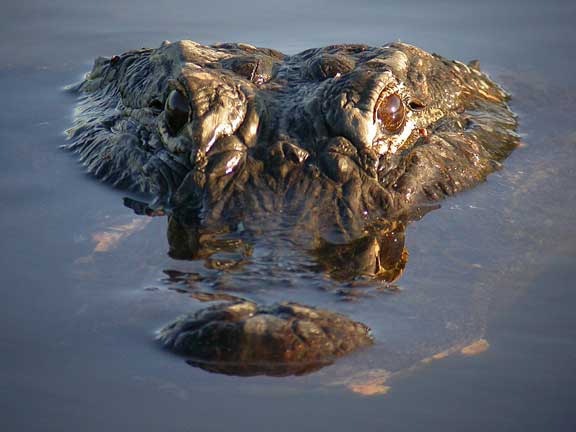
Crocodiles scare the crap out of me. In fact, I think they’re the scariest things on the planet. Gators make a close second. But they aren’t just monsters to humans. It appears gators have got blood that’s an infection’s worst nightmare.
So I predict right here that in the not too distant future we’re going to have a product called “Gator Cream” and it will rival the wonderful Neosporin.
I heat my house with radiant heating. When we built this place, Nellie, I, and the girls laid down yards and yards of tubing. Then the mudmen came in and covered it all up with concrete. We run hot water through that tubing. That water it heated by a boiler, which also heats the water for sinks and showers.
About two and a half weeks ago our boiler quit working. We called the guy who sold it to us. It worked again for one week and went out again. Then again. And again. Now if we lived in the valley and it was summer it wouldn’t be an issue. But we live at 6,000 feet, in the mountains, and it’s winter. We just got four inches of snow two days ago. Needless to say, heat is important.
Well, four technician visits, $600, and many hours later, we still have problems. The blasted boiler conked out again tonight just as Nellie and I were about to take showers to go to a dance for adults our church was putting on.
So we brought in the big guns. We called Warren. Now Warren fixes cars. He fixed our fridge. He’s worked on everything from computers to furnaces. So Warren arrives. In less than 10 minutes the @#!$ boiler was working again. And we now know exactly what the problem is so the Lochinvar boiler rep can’t tell us to look for something else and that it’s an installation error (yes it’s a Lochinvar Knight boiler–remember that boiler buyers). Genius. Absolute genius.
I offered to give Warren a big old kiss–hey, hot water’s important, almost as important as a wife who doesn’t have to take a cold shower in the morning. Warren refused.
So here’s a wet one for ya, Warren. You’ve done your work to further world peace.
Here is Abdul Hassan, 39. A Somali pirate nicknamed “the one who never sleeps.” Hassan is part of a pirate group called the Central Regional Coast Guard. It was formed three years ago, has 350 men in its ranks and about 100 speedboats.
Zing, zing, zing, zing, zing!
There are some wonderful stories waiting to be told about this. Sure, there is the terrorist angle. But what about the angle of someone of value they stumble across on the ship? What about the kid who knows these pirates and decides to make a buck turning them in? What about the guys sent in to find out who the heck is backing these guys?
What about Hassan himself? Somali is so poor. With one job he made $350,000. Here are some great articles.
Hello, my name’s John. I’m a TEDaholic. To any of you who still aren’t hooked on TED–there’s more out there than fascinating presentations by interesting people. And now I’m off to Amazon to buy some music by Natalie MacMaster.
Almost everyone reading this knows what they like in a car. We know what we want a car to do. We can talk about acceleration, voom-voom styling, and handling. Some of us could talk about how engines and transmissions and tires all work together to create those things. We could get really technical.
But how many of us could then go manufacture a tire? Or the paint we’re going to put on the car? How about a windshield?
No?
Well, what about one little bolt? Just a little bolt. Can you do it?
There’s a difference between knowing what a thing is supposed to do, how it works, and actually building it. A lot of people can talk about the first two topics and have no idea at all about the third.
It’s the same with stories.
There are three things we have to learn to write killer stories.
What a story is supposed to do.
How the 5 parts of story—character, setting, problem, plot, and text–do that
How to come up with and develop a story idea in the first place
We authors talk a lot about the second thing. You have books and blogs galore on dialogue, plot, characters, structure, grammar, world-building, setting—you name it. Heck, the big series I wrote last year about the key conditions for reader suspense was all about how story works.
Some of us talk about the first thing. And really there’s no point in blathering on about the how-to’s if we don’t know the what-for’s, which is why I tried to highlight one of the core what-for’s in my series on suspense.
But as important as those two things are, none of it matters if we don’t know how to put it to use. We’re not reviewers or editors. We’re creators. We’re writers—the ones that invent the story in the first place. And let me tell you, knowing how a story works and how to invent one are two very different things.
I didn’t know the principles of invention when I was first starting out. And that gap in my knowledge was one of the things that held me back for years. In fact, I almost gave up my dream of writing stories because of it.
Very early in my attempts to start a career I wrote a story that won an award and $2,000. I was flown out to Cocoa Beach, Florida for a week-long workshop with amazing pros. Was published. And then I went home, finished another story (yea!), and proceeded not be able to finish another thing for five years.
Five years.
FIVE. YEARS!
And I tried.
After five years of failure you begin to wonder if maybe you didn’t get the wrong memo (what am I doing at this empty warehouse?). Your family begins to wonder that as well. You realize life is short and there are a lot of other things you could be spending your time on. You begin to think that only an idiot would spend more time on this. And you’d probably be right.
Unless, of course, you realize that what’s keeping you back isn’t a manifestation of cosmic will. Rather, it’s just a lack of understanding.
That’s what happened in my case. Just a few days before I gave up on all my dreams, the light was turned on for me. I learned some key, but simple, principles of invention that I hadn’t known. You can read the whole story here. After I learned these principles, my production took off like a rocket.
And so what I want to do in this series is share those principles with you. Hopefully, this will unleash your abilities. You might find a huge audience for your stories. You might find only the family dog will stick around to listen to them. The popularity of your stories is a separate matter. But you can’t even find out how big your audience will be if you don’t know how to finish.
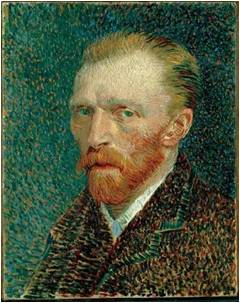
So let’s start. A lot of people think that creativity is about passion. When they think of creativity, they think of someone like this.
Look at him. Brushed velvet jacket. Beard. Rakish devil-may-care hair. And that gaze. Look at that gaze! It’s full of passion. It’s coming off him in waves. In fact, we all know his inner world is a vast tempestuous sea of passion that sends ideas crashing in great surges onto the rocky beaches of his soul. And those earthly forces cannot be contained. No, he must write them, write them, write them. That’s the face of a man who will channel fire onto the written page because if he didn’t, he would surely burn.
Or maybe not.
Maybe creativity is about being like this guy.
Hello, Malcolm Gladwell. Look at him. There are so many ideas in that great blaze of brains they trip over themselves trying to get out. There are so many they kinked his hair with their electric heat. Oh, fecund mind!
Or maybe not.
Maybe creativity is all a function of being blessed.
Or maybe it’s about alcohol (or some other chemical). After all, isn’t that how Ernest Hemmingway did it?
Booze Makes Ernie Reel Smart
Or it’s about being mentally unstable.
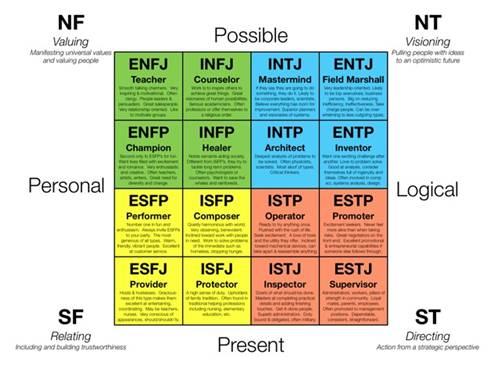
Or it’s about having the right personality type. I remember the day of woe when I learned that I was an ENFJ but that the “natural” writers were all ISFPs!
Alas, me being a blockhead was all scientific
Or it’s about being eccentric.
Patrick Rothfuss shows us the key is crazy beardage and an Alice in Wonderland chair
Or it’s none of that. It’s about being born to it.
I wrote my first novel when I was six
Right? All of those things are what creativity is about. And if, as so clearly demonstrated by those pictures, you don’t have passionate hair, well then, forget about it. Except here’s Larry Correia, a New York Times bestseller, who has no passionate hair whatsoever.
I keep guns in my basement
Huh?!
How could that be?
Here’s how. All those ideas above about creativity–they’re rubbish. Creativity has nothing to do with passion or hair or whether you wear Argyle socks.
Nothing.
Let me show you the face of creativity.
That is Warren Ellis. Warren is my brother-in-law, except when he’s not (do not ask me to explain this). One day our fridge started to drip. The freezer would cycle through its normal thawing, and all the water would drip down into the fridge and soak up our egg cartons and pool in the vegetable crispers. It was a mess.
We defrosted the freezer we weren’t supposed to ever have to defrost, but the problem persisted. So we called Warren because he fixes things.
Warren came to our house, looked the fridge over. He declared that the freezer’s drain tube was plugged. We thought up a few ideas for cleaning it out, none of which were any good, then Warren asked if we had an air compressor. We did and hauled it in.
Warren plugged it in, let it build up the pressure, and then held the compressor nozzle to the bottom end of the tube. The compressed air went in. The obstruction flew up and out and landed on the counter. The obstruction was a fat fly that had crawled in there, gotten stuck, and died.
We poured a quart of water into that freezer, and it all flowed down into the catch pan at the bottom. Warren fixed our freezer with an air compressor.
Folks, that is creativity.
What did Warren have? He didn’t have passionate hair; I can tell you that. No. He had an objective. He knew basically how fridges worked. And he came up with a couple of options to fix the issue.
Let’s look at another example. Here’s Ed Smylie.
Ed was like Warren. He ran into some problems. Actually, the astronauts in Apollo 13 ran into some problems. Ed was tasked to help solve them. One of those problems was the fact that the astronauts were running out of air.
Ed and the others designed the solution in two days. The ground crew relayed the instructions to the flight crew. The lunar module’s CO2 scrubbers started working again, saving the lives of the three astronauts on board. Of the experience, Ed said that he knew the problem was solvable when it was confirmed that duct tape was on the spacecraft. “I felt like we were home free”, he said. “One thing a Southern boy will never say is: I don’t think duct tape will fix it.”
Ed and his crew saved the day. The made a round peg fit into a square hole. How did he come up with such a creative solution?
Ed had an objective. He knew how the CO2 scrubbers and the shuttle worked. He knew about duct tape. He came up with options.
Let’s look at a few more examples of this. I know you’ve seen some of these.
That is creativity. So is this.
And this . . .
And this . . .
Or this, if you don’t need to go so fast . . .
Smaller size, for trolling
And this . . .
And this, which is officially called a Bumper Dumper . . .
Do you really want to dig?
These fine folks had a goal. They knew the basics of how things worked. They came up with some solutions.
That’s all there is to creativity. Three things. You need to have an idea of what you’re trying to do. You need to have a basic knowledge of how things work. And you have to know how to come up with some solutions to meet your objective.
Not so mystical, is it?
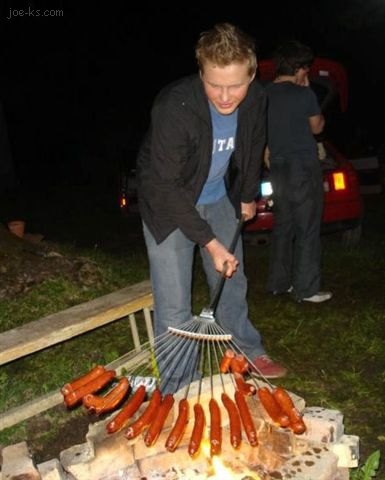
But I can hear some of you complaining. Writing is different. It’s a whole other world. It’s Fiction, which is so significant we must capitalize it. It’s passion. It IS mystical. This is a matter of the heart. It’s not a fridge or space ship or some dumb hotdog roast. You cannot compare these things.
Except I can because they’re the same. It doesn’t matter if you’re trying to invent a different recipe like the folks at Cook’s Illustrated, or decorate your house, or come up with a way to keep the squirrels out of your bird feeders, or make people weep in a movie theater.
What I’ve found is that when we have troubles coming up with ideas, we probably don’t know what our objectives are. Or we probably lack some understanding of how fiction works. Or we don’t know the principles of generating options.
And so we conclude it’s a mystery. It’s arcane lore.
But it just ain’t so. Can you create a redneck toilet? Then you can write a story.
Now, it’s true that a lot of people feel their way through this. They don’t know what they’re doing, but they do it. I did that. Remember: I won an award. But then I couldn’t repeat it. Couldn’t find that groove I’d stumbled into.
I don’t want to stumble around hoping to get lucky. I want to make a living at this. And if I’m going to make a living, I need to produce. Regularly. I can’t be bumbling around, hoping to create something by accident.
The good news is that we don’t have to create by accident. We can create on purpose. There are principles to invention. When we learn them, our productivity will shoot through the roof.
Finding a solution to Apollo 13’s issues might seem impossible to us. But they weren’t impossible to Ed Smylie because Ed had an objective; he knew how things worked up there; and knew how to come up with options.
My intent is that when you finish this series, you’ll know what Ed Smylie knew, except for stories.
National Geographic ran an article in the March issue titled “Wolf Wars.” It has a great interactive map. You’ll want to read the whole article, but I want you to look at something.
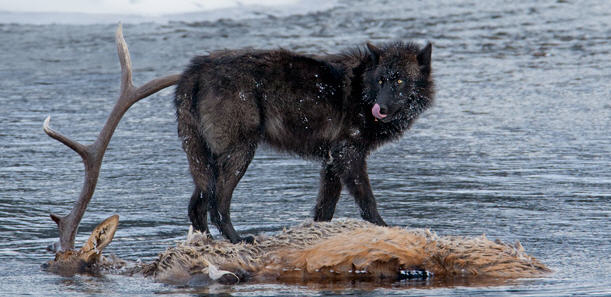
First, here’s a picture of a wolf in Yellowstone licking his or her chops over a recent elk kill. Looks real friendly, doesn’t it. Here, poochie, poochie, poochie.
A few facts. Wolves can grow up to six feet long (tip of nose to tip of tail) and three feet tall. They weigh on average about 80 pounds but can be as heavy as 150-190 pounds. Wolves can reach 40 mph when chasing, but the use their stamina more than speed. Regardless of how they catch you, their jaws are strong enough to crush bones. You want more facts? Go to this wiki article on canis lupis. The point is that they are large, smart predators. At the top of the food chain. These aren’t little doggies. They’re killers. And they are mighty hard to socialize with humans (read the wiki article).
Of course, it can be done. Not far away in Heber City, Utah lives Doug and Lynne Seus (yes, that’s the name–gotta love it!) who train wild animals for movies. The company is called Rocky Mountain Wasatch Wildlife. I know you’ve seen one of their animal “actors,” Bart the bear, in many movies. The Seuses also happen to train wolves. A friend of mine grew up in Heber with the daughter of Doug and Lynne. She visits from time to time. Last summer she went down and saw the wolves. My friend was told that she had to carry any children she might bring.
Why?
Because the children are food. That’s why. And when she went out there, the wolves were tracking those children every minute with their eyes. Freaked her out. In fact, another friend got so freaked she took her kid back to the main house and didn’t come out again. Folks, these are wolves that work with humans ALL THE TIME.
I know the nature programs often make it seem like wolves are harmless, but they’re predators. Just like grizzlies, tigers, or crocodiles. Wolves are dangerous. A pack kills up to two elk a week. That’s a lot of eating. But they’re all up in Yellowstone, right?
Um, no.
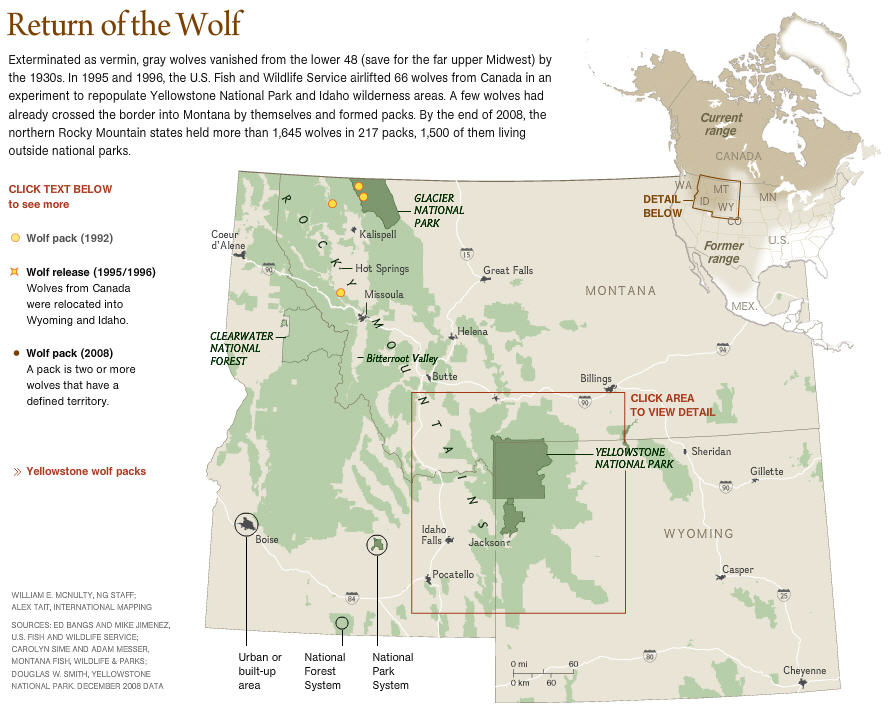
Exhibit 1: Documented wolf packs, i.e. two or more wolves, in 1992 (click on image to see it full size)
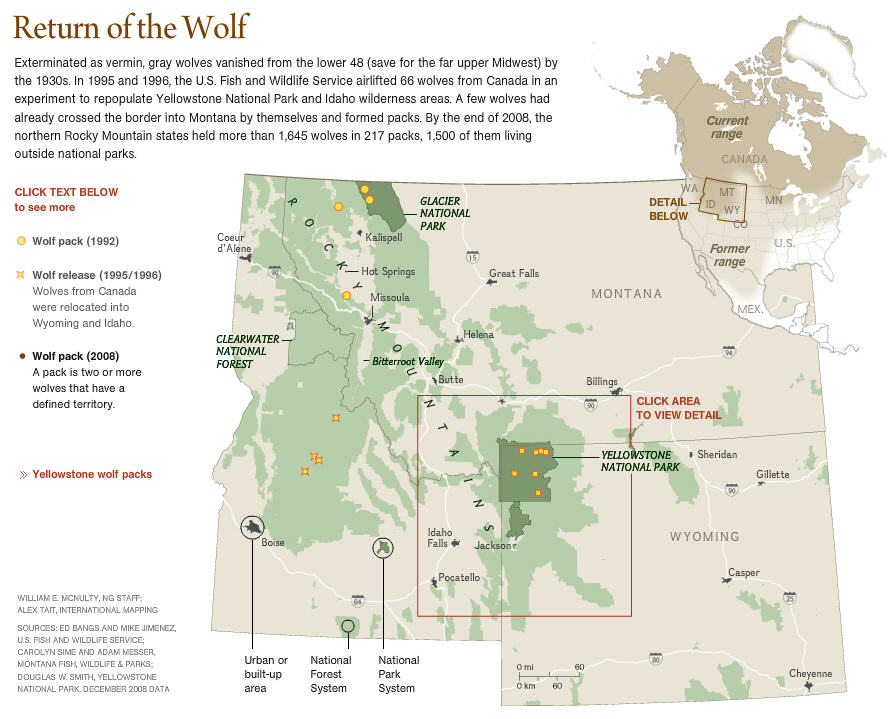
Exhibit 2: packs released in 1995
Exhibit 3: wolf packs as of 2008 (2 years ago)
Holy schnitzel!
If you didn’t read it above, they’re estimating about 1,645 wolves in 217 packs. And that’s just the ones that have been officially documented. You know there are more out there that haven’t been seen. Look at the one all the way out by Casper, WY. Those bad boys can travel. In fact, the NG article says that wolves stake out a territory of about 200 to 500 square miles (a circle of that size has a radius of 8 to 13 miles). They travel on average (AVERAGE!) 60 miles from their pack when seeking a mate or new pack. Although one was recorded traveling 500 miles.
Okay, so given the maps and sightings above, how is the John Brown family doing down in Laketown?
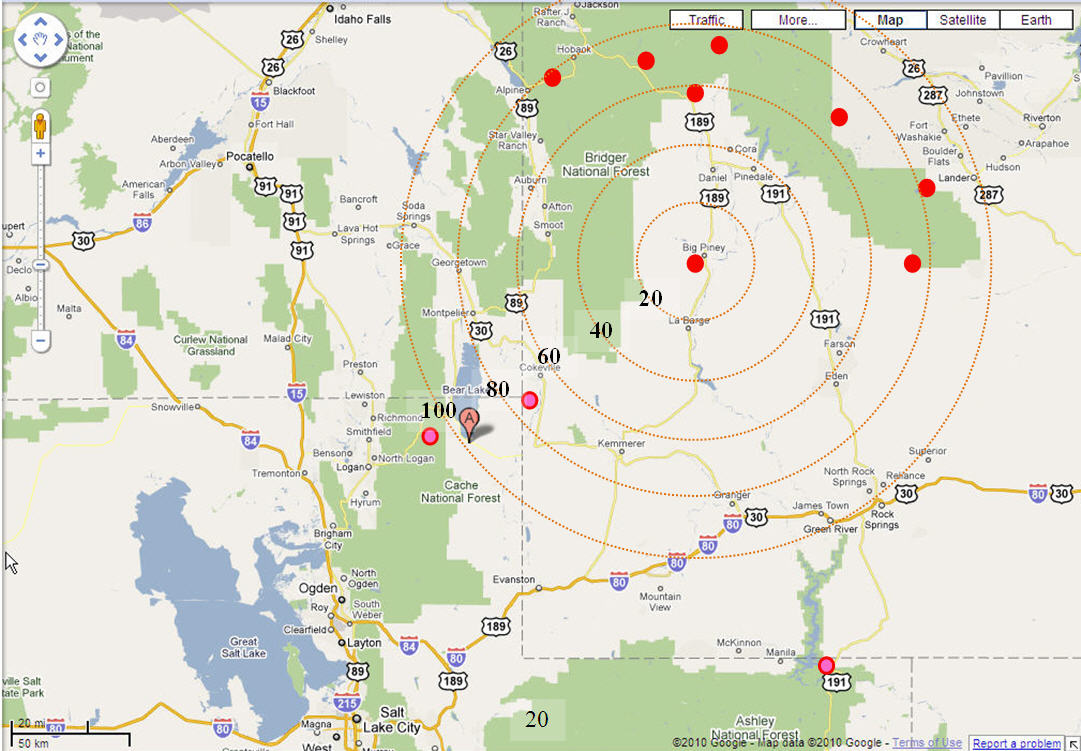
Exhibit 4: I need a gun!
The map below marks Laketown, UT with an A. I marked over that the packs shown in NG in red and others reported in pink. I also show orange rings 20 miles apart.
The “unofficial” sighting just inside the 80 mile ring was by my brother-in-law. The wolves were killing a bunch of his neighbor’s ewes he was taking care of. I didn’t say “eating” because they were killing far too many to eat. Wolves looked up at brother-in-law on four-wheeler. Assessed him. No whimpering, no cowering, no doggie wagging of tails. Just a frank assessment–human, danger or lunch? Said wolves sent a herd of the willies galloping up brother-in-law’s back. Freaked him out. He high-tailed it out of there and called the Feds who found that pack and killed them about fifteen miles away. But that sighting was before 2003. The sighting just outside the 100 mile mark was by some neighbors around 2007. The sighting down by Manila, UT was reported in a news report by KSL news in 2008, just two years ago.
Okay, so I think it’s pretty safe to say that we probably have wolves in our backyard. And if we don’t, they’ll be here in a year or three.
Go read “Wolf Wars” in the the National Geographic. It’s free. Then tell me how you’d feel with a few packs in your backyard. Are you all warm and comfy? Here, little doggie . . .
So I’m thinking that when the girls or I go hiking, which we do all the time, we need to carry more than a walking stick. More than a paintball gun used to scare the deer out of our garden. I know that even with all the packs shown above, I haven’t heard about wolves attacking humans, but is it wise to assume they just freak out when they see humans and all run away–“that’s a eight-year-old human girl, she will make me wear the cone of shame. I do not like the cone of shame.”
Or will it be, “Hum, possible lunch over there, let’s check it out. Ooh, look at the fat one. I bet he’s tasty.”