 How do writers juggle writing and family?
One of my heroes is Mary Higgins Clark who, as a single mom, started a career. She got up very early, wrote for 1-2 hours in the morning, and became a mega-seller.
I have four girls. And a full-time job. When the first two were little my wife was working and I was Mr. Mom going to school. Then we switched.
Here’s my experience. While I love writing, my stories do not run to me and give me wonderful strangling hugs after school like my youngest. While I laugh at the humor I come up with in my stories and enjoy it, it cannot replace the uncontrollable giggling I experience when I go on dates with my second. While writing lifts me, it does not fill my office with notes and wallpapers of love like my oldest. And writing never drags me out to play ghosts in the graveyard or hide and seek–daughter #3. Nor will my stories and novels be there for me when I’m old.
While writing is incredibly fulfilling, my wife, kids, and other relationships are a joy it cannot replace.
What all this means is that I try to recognize that I can’t let family and writing compete. They can’t be equal priorities. Family comes first. But this doesn’t mean I don’t write. I block out times to write. These are my writing times. I get up early to make time for this. I don’t watch a lot of TV. I don’t read a million blogs, nor, alas, can I read fiction at the level I used to. I make time. But I also make blocks when I just forget writing (even though it can be hard).
Specifically, here’s my average work week.
5:00 AM rise, wake and get centered for the day
6:00 AM work (“work” is my day job and writing)
6:30 AM family and breakfast
7:30 AM go to work (at home). Try to get in 7-8 hours at day job and 2 hours writing. When I did commute I wrote for 1 hour during lunch and 1 hour in the morning before I went to work. Then I’d take a 2 hour block on Thursdays.
5:30 PM family etc.
9:30 PM bed
On Saturdays I get a few more hours writing. Sunday I forget everything but family.
With the new book contract I have to become a bit more creative. But if it ever comes down to sacrifice the last 2 years of my oldest being at home and writing, well, the books will go.
When my writing plans meet reality, I try to adjust and find other slots for writing. It wasn’t easy in the beginning, but it’s become much easier. And I don’t worry about what I might have accomplished in writing if I’d just had the extra time. Such what-if’s, I’ve found, are almost always poisonous. And who the heck cares? Because while I want to write wonderful stories, I think the greatest loss I think I might experience at the end of my life (believing in an after life or not) is looking back and seeing that I traded the opportunity for wonderful relationships for a rapidly mouldering spot on the shelves.
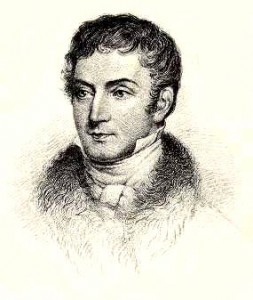
Washington Irving wrote a funny and wonderful piece on this mouldering in his “The Mutability of Literature” in THE SKETCHBOOK OF GEOFFERY CRAYON. I recommend every writer read this to put life and writing into perspective.

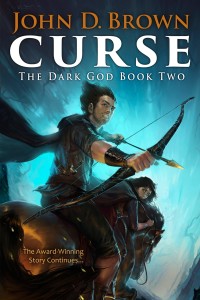 Curse’s long and crooked path to publication is now over!
John, thank you so much for posting this. This handout is (as usual) really spectacular.
I’d love to know how you bring all these insights into a workflow. I feel like the prototypical “can’t remember more than three things at a time” reader. As an aspiring writer, should I be able to tap these strategies off the top of my head? Or should the approach be more one of polishing ideas perpetually throughout the creation process, using these strategies as a touchstone?
Dave
I loved this presentation and am thrilled to have the handout. I have struggled with building good stories, mulling over different forms (3 act, 7 act, Campbell’s monomyth, etc.) and this approach is fantastic. This alone made my trip to LTUE worth it.
It was an awesome two-hour workshop, John. I think everyone — aspirants and people who have published — got something out of it.
BTW, you should know that “Servant of a Dark God” is on the shelves at the Smith’s up on Bengal Boulevard in the Sandy benches.
Meanwhile, the West Valley Smith’s on 5600 West didn’t have any copies that I could find.
Thanks, Brad. Glad you were able to be there and add your insights. 🙂
Diamondb, so happy it helped. I think the issue, at least for me, with talking about forms (3 acts, 5, 7, hero’s journey, etc.) is that form means nothing outside the context of function. And so those form discussions never proved helpful to me. Yeah, I understood them. But once I figured out it was all about the problem and making it harder, it seemed to make everything so much easier. Hope it does for you.
Davemaarten, use them as prompts, tools. Your goal is to get a problem, plot, and character that jazz you. You can use all of these, some, or none. They are means to an end. We’ll be posting the video of the presentation next week or the week after.
John,
It went great! I was really glad that you were able to cover so much ground. I know that it really helped me with a few steps, and gave me one of the craziest ideas for a book that I’ve ever had.
Excellent, you’ll have to tell me the concept.
This workshop was the highlight of the week (I was at LTUE all 3 days). It was so insightful. I can’t wait for John to post the video.
Thanks again for all your help John! I’ll be looking for your book.
Justin
Justin,
Good to hear it was so helpful!
John,
My friend and I missed that particular workshop and I am glad that you posted the handout. I eagerly await the video.
I was the guy that walked with you down to the bookstore on Sat and couldnt get a copy of the book because I had to catch my plane to Boise. Hopefully I can get my hands on a copy soon.
Thanks for pearls of wisdom that you share with us “hopefuls”.
Mike
Mike,
Yeah, that was a bit frustrating to encounter that book ordering screwup. But I’m glad you found the conference helpful! Keep writing!
John,
This handout is fantastic. I look forward to seeing the video!
I’m glad it’s helpful. However, I included many things as memory joggers. For example, “Kumbaya”–what does that mean? So you really need the video to understand it. Keep you eyes peeled.