How much does author Jim C. Hines make?

Dear But-All-Writers-Are-Rich,

Jim C. Hines is a hard working midlist author with a couple of fun series out. Hines reveals what he makes in his post 2011 Writing Income. More importantly he reveals what he’s been making for a few years. For more information on advances etc., please peruse my page on Writing Business Facts & Figures.

Sincerely,

The Man

Share

Similar Posts

  • Stephenie Meyer, Envy, & Zing

    If were smart and didn’t compare myself to other writers, then I wouldn’t care that Meyer is a true overnight success, I wouldn’t be green with envy, I certainly wouldn’t be thinking that I should write YA romance.

    His eyes were smoldering…

    She couldn’t look away from his smoldering eyes…

    His yellow smoldering eyes were upon her…

    Alas, imperfect man that I am.

    Time has written an interesting article about the Meyer phenom. Of the many fine tidbits, I wanted to highlight one comparing Meyer with Rowling.

    But as artists, they couldn’t be more different. Rowling pieces her books together meticulously, detail by detail. Meyer floods the page like a severed artery. She never uses a sentence when she can use a whole paragraph. Her books are big (500-plus pages) but not dense–they have a pillowy quality distinctly reminiscent of Internet fan fiction. (Which she’ll readily grant: “I don’t think I’m a writer; I think I’m a storyteller,” Meyer says. “The words aren’t always perfect.”)

    I’m not a writer, she says.

    I’m a storyteller.

    There are volumes in that one paragraph. Meyer knows exactly why the vast majority of us fiction readers read. And it ain’t for style.

    Here’s an even more interesting video clip of Meyer talking about how she came up with her novel. Notice how this woman follows the zing. Notice how she makes time (novel completed in three months). And look at her success. A lesson to all of us wanting to tell great stories.

    …His red eyes were smoldering, and her brown eyes were smoldering, and together they were all smoldering…

    Share
  • New creatures & mystery in wonder fiction

    I love listening to writing excuses because I get to hear three smart and funny authors discuss interesting topics that get me thinking. This week’s writing excuse was on building non-humans in SF&F.

    Here’s my take.

    An alien race, if done right, can be a huge draw to a story. For example, Brandon Sanderson’s Kandra point of view in HERO OF AGES is one of the most enjoyable parts of that book.

    However, I want to suggest that aliens (in fantasy or sf) create that draw only IF they’re kept sufficiently strange or mysterious. The minute they become common or too human, they lose their power to enchant.

    That’s one thing I like about how Tolkien did the elves and orcs–we never got the National Geographic on them. They never became common. And so I always wanted to know more. Easterlings, ents, balrogs, the orders of wizards, dragons, etc. were the same. There were tons of tales Tolkien hinted at, curioisties raised, but those desires were never sated. This is part of what drove me to other fantasy books.

    It’s the same thing that made me love mammoths and dinosaurs, bats and giant squid, and far-off places. However, once these things became common and explained, their magic departed. The curiosity generated by the wonder of things new is one of the key things science fiction and fantasy offer its readers. But I think authors can only keep it alive if they approach it in the same way a fan dancer approaches her work.

    This leads me to another point. It’s true that focusing our world building on the conflicts and story touch points can keep us on track. And we do need to produce. However, I think if we strictly limit our alien development to the central story conflicts, we might miss many opportunities for that wonder. Some of what we develop might end up complicating the plot while other parts might only enrich the experience. And I don’t think that’s bad.

    For example, one of the most poignant parts of the LOTR, of which there were many, was the tale of the ents and the entwives and Treebeard’s poem. Tolkien could have eliminated that and the story never would have been affected. But, O, how much richer the story was for that little side trail that still beckons. Or you might think of the ring Bilbo found. When Tolkien first wrote THE HOBBIT, it wasn’t THE ring of power. It was merely a ring that Gollum used. Only later, when he began to work on LOTR and was trying to figure out the main problem of the story did he work that detail into it becoming THE ring of power.

    Share
  • How to tell an author you don’t like their book

    Mette Harrison wrote a blog about how various authors respond when they read a book, don’t like it, and then the book’s author asks them directly what they thought of the book. 

    Here’s my response.

    As an author when I ask someone, especially another author, about their experience with my story, I’m looking for a data point to see how the book’s working or to get some insight. I realize others might be looking for validation. And, of course, I hope that everyone who reads my stuff finds nirvana even if I know that is not going to be the case. But I don’t ask unless I want data. And so I would hope they would report their experience accurately. I also hope they do it in friendly and helpful manner.

    So because that’s what I want, that’s what I try to do for others.  And the sandwich+ method has been one good way for me to do that.

    1. State something specific that works for me, e.g. “I love your character Bill because he’s so outrageous.”
     
    2. State the key thing that’s giving me trouble. For example, I might say, “I am having a hard time with the pacing.” But then I ALWAYS want to give the context of me as reader when it applies to my reaction, e.g. I’m a terribly impatient reader, I like to feel hope in what I read and know I don’t like as much despair as many other readers do, I can’t stand clowns (this is true: clowns are some of the scariest creatures out there, second only to crocodiles). The author should know these readerly things when they apply so the author can understand where the comments are coming from.

    If the book’s in pro shape and I think the issue is mostly my tastes, then it’s also useful to compare their work to another successful piece or author that had the same issue for me, e.g. “This reminds me of Twilight; I know people love it, but I just couldn’t get into that book either for the same reason.”

    I don’t think this is fluff. I think it’s part of being accurate. Our reality is what we focus on. And if I make a statement that leaves an author thinking I think the work is bad, then that’s not accurate because the truth is I think I’m not in the audience.

    If I think it’s a craft issue, then I highlight the main thing I think is causing the problem. A laundry list is usually useless. But thoughtful focus on the key issue can be very helpful. If I can’t tell whether it’s a taste issue or a craft issue, I admit it.

    3. State something else that’s working for me, e.g. “While I just couldn’t get past all those clowns freaking me out, I did think your chapter openers were compelling. I always wanted to read more, but then, alas, clowns.”

    4. The + is not just leaving statements hanging. Asking some sincere questions after demonstrates my genuine interest. And I am interested. If the book is unpublished, I might ask about their plans for the book, are they going to be doing another draft or shopping it, or if my reaction is common. If it’s published I might ask how it’s being received, what others are liking about it, and what’s next.  Maybe they tell me about another project they’re working on that sounds fascinating.

    This is what I’d want an author to do for me–be accurate, interested, and friendly. In such a context, someone having issues with a story is not such a big deal. It really isn’t.

    Share
  • |

    Brain Nazis and Feeling Good by David D. Burns, M.D.

    Have You Got a Brain Nazi?

    If you’re conscious, you’re monitoring your environment. You have to. It’s how you survive. This is not something you can turn off. It’s just one of those systems that runs automatically, like your liver. You’re always appraising the situation.

    And as soon as you encounter something that’s likely to be of importance to you or yours, your monitor kicks off a physical response to prepare you to deal with or take advantage of it.

    The problem is that sometimes a Nazi propagandist worms his way into the monitoring station. And like any good Nazi, he distorts reality.

    Sometimes those distortions lead to burning resentment, sometimes to unwarranted shame or anxiety, sometimes to eating disorders, sometimes to grave depression. When I heard of the tragic suicide that occurred in our community a few months ago, my heart went out in sympathy to the girl, her family, and friends.  I’m not a doctor. I don’t know the situation. But I’m positive she was dealing with one of these villains.

    I wished I’d been able to share something that’s been a literal life saver to me. Now, it might not have changed anything. But hopefully it can change things in the future for you and others you know who may have to deal with a Nazi in the brain.

    And you will have to deal with a brain Nazi at some time.

    This is not something that affects a miniscule portion of the population. In any given year you can expect more than 15% of a population to experience some form of this [1]. That’s roughly 238 of the estimated 1,592 people 18 years and older in the little county where I live [2]. Rates for teens are similar [3]. Besides, you don’t have to have a full-blown case of a depression for distortions to affect you. How many of us haven’t made faulty comparisons with others? “Oh, she’s so thin and has such great hair; I’m so dumpy.” “Oh, he’s doing so well, and I’m not. I’ll never be a success.”

    The question is not whether you or someone important to you will have to deal with it. The question is how prepared you’ll be when you do. Everyone deals with distortions now and again.  Which means everyone can find a little more enjoyment in life by showing their brain Nazis the door.

    So how does it all work? How do you show the villain out?

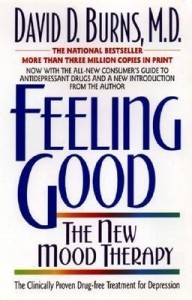
    I’m going to summarize it below, but I’ll tell you right now that the book that saved my life was Feeling Good by David D. Burns, MD. This isn’t positive mental attitude. It’s not neuro-linguistic programming. It’s not the mumbo jumbo of Freud and Jung. This is practical and proven. It is the most prescribed intervention for dealing with these issues in the current medical community. It’s prescribed because it works.

    Your Brilliant Appraisal-Emotion System

    To understand this, you have to understand how emotions work. As I said before, you’re always monitoring your situation. You hear a buzz and see a rattlesnake on the path two feet away. Your monitor immediately responds. Alarm, adrenaline, increased blood flow–all of that to get you ready to deal with the situation. Your monitor writes “alarm” on your face to communicate it to those around you–to warn and ask for help. This happens in less than a blink of an eye.

    But this doesn’t just happen with danger. It happens when we encounter unfamiliar things. When we encounter positive things. You see a great friend who makes you laugh all the time. Boom, your monitor responds. You smile. Feel. Focus. You do so because you not only want to avoid dangers, you also want to seek out the things that make you happy.

    Our emotions prepare us to fight, flee, seek, and pitch woo. Our little monitoring and physical response system is brilliant.

    But there’s more. We don’t rely on just the automatic subconscious monitoring. We also have a cognitive (conscious thinking) part. Let’s go back to the rattlesnake. You walk out into the garden, step on a slither, and immediately go into alarm mode. Then you look, consciously see the slithery thing is not a snake, but the garden hose. You relax. Laugh.

    The quick subconscious appraisals keep us alive, because with snakes and other things, if you’re slow, you’re dead. We don’t have time for thought. If you touch a hot stove, you want an immediate reflex. You don’t want to ponder it for a second or two. On the other hand, the cognitive appraisals help us further appraise a situation. They bring more of our resources to bear on the situation.

    How Does the Nazi Get In?

    So there are three parts of the appraisal-emotion system: the subconscious appraisal of the situation, the physical response, and the cognitive appraisal. Each of the three parts affects the other two. And when things are running smoothly, we don’t have problems. But sometimes we get a distortion mucking up the works. We make a faulty appraisal of the situation. And therefore have a faulty physical response.

    For example, you’re a mother. You’ve had a hard day. The kids make a huge mess with flour in the kitchen. You yell, freak out. When they’re cowering in their rooms and you’re cleaning up the flour, you think, “There I go again. I’m a total failure. I can’t stand it! I never do anything right! I’m a terrible mother.” These thoughts make you even sadder.

    And that’s the propaganda. That’s your brain Nazi with his all-or-nothing thinking, telling you that you either perform perfectly or you’re a failure.

    But is that true? No, it’s not. You might be a B+ mother, filling the lives of your kids with all sorts of goodness. You might have just had a great time reading with the kids not thirty minutes before. But the brain Nazi tells you to forget that. “Vatch dis film,” he says, “und see de horrors of vut you are!”    
    And the all-or-nothing thinking gambit is just one of ten common weapons he uses. Furthermore, this happens so quick that we often don’t notice it. In fact, we’ve often repeated some of these distortions so often than they’ve become almost automatic.

    Mr. Nazi, Meet Mr. Bazooka

    The good news is that you can pull the lid off the lies. You can open the door, spot the brain Nazi that slipped in, and take him out. You can do this because one of the three parts of the system is our cognitive appraisal. This means you can consciously stop the movie, pin the distortion on the wall, and uncover the truth. Once you do that, it’s like the rattlesnake scenario above—oh, it’s a hose, we realize, not a snake, and the appropriate emotions immediately follow.

    But you need to know how to stop the movie. You need to know how to spot the lies. David D. Burns, MD tells you exactly how to do this in his book Feeling Good. (By the way, DON’T get this book confused with his Feeling Good Handbook–you DON’T want the handbook; you want Feeling Good, the book.)  In the book, Burns talks about the theory, the results, and then gets right down to the practical techniques used to blow the brain Nazi to kingdom come.

    A few years ago I hit a bad patch with a brain Nazi that had taken up residence. A very bad patch. He’d been there for quite some time. This book and a good counselor saved me. I thank the Lord for that. By the time I went to see a medical doctor to assess whether chemical issues might be playing a role, I was stable. I wasn’t out of the woods yet, but I had opened the lid and found the villain at the controls. I used the techniques Burns gave me, and I’m happy to say that while the brain Nazi still comes round every once in a while, I can spot him. And I can take that sucker out.

    Go to the library and check out the book and take the assessment test. If you, or someone you know, scores in the mild range, maybe you’ve just experienced a very sad event. But maybe you’ve also got a villain in residence. Get the book. Read it. Be happy. Nobody needs to live with a Nazi at the controls.

    For Authors

    By the way, fiction authors should pay special attention to this stuff. Not because we’re more susceptible to brain Nazis than others, although we do have to deal with our fair share as we develop and share our stories. No, we should because the emotion process is exactly what we’re trying to tap into. Knowing the principles can be very useful indeed. Let me recommend you read the books on emotion listed on the Learning With Pros page.

    Sources

    1. 1. http://www.nimh.nih.gov/health/publications/the-numbers-count-mental-disorders-in-america/index.shtml
    2. 2. http://quickfacts.census.gov/qfd/states/49/49033.html (find your state and county and see how many folks are likely dealing with a brain Nazi in your area)
    3. 3. http://www.oas.samhsa.gov/2k5/youthDepression/youthDepression.htm
    Share
  • |

    I want to be Scott Westerfield

    Laura Miller at Salon.com has it all wrong when she says promoting books with movie-style trailers is a silly idea.

    Here, watch this book trailer for Scott Westerfield’s Leviathan.

    Yeah, I know you want to–go ahead, watch it again.

    Miller looks at book trailers, sees that the vast majority of them are lame, lame, lame (actually, this is the FIRST I’ve seen that’s any good). Sees that they reach no markets and then concludes that all trailers are silly. It’s true: lame trailers ARE a waste of time and money. But ANY advertisement (print, video, audio, whatever) that’s lame is a waste of time and money. Making killer trailers that nobody sees is an even bigger waste of time and money. But that’s true of ANY killer advertisement that nobody sees.  

    Look. I’ve never read Westerfield. Don’t know much about him or his books. But I saw that clip and now want to read that book. Hum, trailer worked for me. I AM a reptoid mutant, but I suspect there are others out there like me. I mean, come on. Good gravy, woman–“Do you oil your war machines? Or do you feed them?” Killer!

    Movie trailers, book trailers–any advertisement–isn’t about delivering what the person is going to experience on the spot. If that were the case, then you’d never show a print ad of a meal at Olive Garden because it doesn’t deliver the goods right there on page 10 of Woman’s Day. Nope, all you’d do is go around giving out samples in places with Italian mood.

    Miller’s error is not understanding the difference between making an offer and delivering on one. What an ad is supposed to do is make the offer. Let you know this thing is available. Because you’re not delivering the actual experience,  you can make the offer via all sorts of media. Now, if you can give them a taste, that’s great. But you don’t need to deliver the full deal right there.

    So what do you need in an offer? You need the offer to say, “Hey, I’ll deliver this type of experience.” It needs to call to some action, either directly or by implication–“buy this” or “be here.” You also need it to say, “You can trust this will be worth it” and make the consumer believe that’s likely to be true. It communicates this last bit by being a quality piece of work.

    Making an offer is exactly what book covers do–they make the offer and give the consumer a little taste. And book covers matter. This has been proven over and over. Just like most people, when I see a cool cover, I pick up the book and check it out. When I see a lame one, or one that offers something I’m not interested in, you’re going to have to threaten me to pick that book up. Or it better dang well have some righteous word of mouth. It’s that simple. We all judge books by their covers because the cover is making an offer. And lame offers don’t get very many takers.

    Book trailers are nothing more than deluxe book covers. The cool thing about them is the cool thing about movie trailers–you can make the offer by providing a little taste. You do that by giving the audience the story situation, the pitch. You do it by communicating the feel of the experience and raising curiosity. You do it by making it a pro job. The good  ones make you laugh, say cool!, or raise curiosity and expectation.

    And that Westerfield trailer does that.

    Dang, “Do you oil your machines? Or do you feed them?”

    Run that on TV. Run it on the radio. Put it up on sites where people are likely to see and click. Confirm it in print. Make the offer to real people. Get it infront of young readers. I’ll stake my eyebrows that ad can sell as many books as a good movie trailer can sell movie tickets.

    Crimeny, now I want to be Scott Westerfield.

    Edit, I lied

    I have seen another book trailer that’s as good as Westerfield’s. Do you remember this: http://thesecret.tv/movie/trailer.html ?

    Very effective advertising for the book. I think the content of the book is crap, but that trailer made me pick it up just to see what it was all about.

    Do you notice that this one and the Westerfield one combine extreme professionalism AND they make the pitch in a clear and grabbing way? The pitch for both was what the book was about. For fiction it’s the concept. For non-fiction how to it’s the promise.

    So many of the book trailers lack one or more of those things. For example, look at the book award finalist for THE FALLEN: http://www.youtube.com/watch?v=vsLE6bNaIrk. I don’t know what the heck the book is even about after a long 2 minutes. They’re trying to make a movie.

    Something else. On both of these you have a voice over PITCHING the book to you just as someone might do it in person or to an editor. It’s a powerful method, I think.

    Notice also how short the Westerfield one is. Just over a minute. Westerfield’s really is like a query pitch or cover copy–in just a few lines tell me what your story is about. We get genre, setting, character, and the story problem or concept.

    Share
  • |

    Orson Card’s Literary Boot Camp

    Just apply already!

    Orson Card has just announced the dates and location for this year’s literary boot camp. This one is in North Carolina. Card usually usually holds a session in the west every other year. But here’s the deal: east or west, if you are a new writer, this is THE workshop to attend. It is hands-down THE best workshop I have ever attended.

    If you want to learn how to write fiction from one of the masters, you will apply (the boot camp is limited to 12 people) and then do whatever it takes to attend if you’re selected.  The two day writing class is also great. I don’t know that I would spend hundreds of dollars to fly in for that, but I would and did spend hundreds to attend the boot camp (way back in ye year 2002).

    For more information, go here: http://www.hatrack.com/misc/bootcamp2014/

    Share