Indie Thoughts: Lessons from Marie Force

Some promo tips from mega-seller Marie Force.

I just changed the cover of a book (Maid for Love, book 1 in my McCarthys of Gansett Island Series) that’s been on sale for three years and free for two as a loss leader for a series that has 11.5 books (as of today–release day for book 11). I changed the cover (of books 2 and 3 as well) just ahead of a BookBub ad for Maid for Love. This book has been on BookBub quite a few times since it’s been free and lately, I could expect about 25,000 or so downloads across the platforms after a BookBub ad. This time, the number was closer to 70,000 downloads with a huge conversion to books 2 and beyond. Another thing we did before the BookBub ad was drop the prices on books 2-3 from $4.99 to $2.99 and books 4-6 from $4.99 to $3.99, leaving the front list at $4.99. I realized with 11 books and a novella in the series, it would cost a new reader more than $50 to buy the full series, thus the price break on the earlier books. Both the new cover for Maid for Love and the new pricing for books 2-6 yielded very impressive results. The series has sold more than 1.3 million ebooks since it debuted in 2011 and the last three have been top 10 NYT bestsellers. I was hoping to gain many more new readers from these strategies, and so far, it seems to be working just as I’d hoped it would. I love being able to try these things as an indie author!

Another poster congratulated her and said he’d gone and purchased the book. It was free; why not give it a shot?

Thanks, Bill. Hope you enjoy Maid for Love, and thanks for the congrats. The 1.3 million sales is especially thrilling when you consider that Maid for Love was rejected all over the place. Except by the readers. 🙂

Find more at The Passive Voice.

What’s Marie using? A series with a number of titles in it, competitive pricing, loss-leader sampling that sometimes includes a free book, and BookBub.

More about Marie and her books on her website.

Share

Similar Posts

  • |

    Become A Story Idea Machine

    Now’s your chance

    Apply to take the next Novel Writers Academy course: How to Create Story Ideas That Beg To Be Written.

    • Six-weeks
    • Starts: Jan 2, 2022
    • Ends: Feb 21, 2022
    • Gobs of hands on practice
    • One-on-one guidance from me

    At the end of the six weeks you will be a story idea machine.

    I will be working with only a small set of people. And so you need to apply to get in.

    The deadline for applications is midnight, December 11th. So contact me now to get the application instructions.


    A cracking good story idea requires five critical elements.

    Until you have all five, you’ll struggle to plot. You’ll write a few scenes and run out of gas. You’ll feel like the story just isn’t going anywhere.

    And that’s because it isn’t. It can’t. A story isn’t a story without all five elements.

    However, once you develop these five things, your story will suddenly roar to life. There are a few other elements that are important as well, but these five things form the core of the story setup. 

    In this course you’re not going to merely learn about all of those story elements. You’re going to go deep and learn what can only be learned by actually doing the work and developing story idea after story idea with personal one-on-one feedback from someone who knows what they’re doing.   

    When you finish, you won’t just know story theory. You will be a story idea machine. And you will be that because you have put in the work. The right work.  

    Again, this is not a course full of lectures and videos. This is a course where you’re going to work. And develop the insights and skills that only come from doing the work.

    You’re actually going to:

    • Come up with story setup after story setup after story setup
    • And improve them with one-on-one feedback. 

    It’s going to:

    • Eliminate years of you wandering about in the story wilderness trying to figure things out on your own. 
    • Put you miles ahead of other writers who have no idea what’s really at the core of story. 

    You are going to learn how to develop killer story ideas on purpose instead of on accident. Which means you’ll be able to do again and again. Reliably. Like clockwork. 

    Course details

    The focus of the class is not on learning about story, although you will do that. The majority of your time will be spent on developing stories. 

    You can’t become a carpenter by watching videos and reading books about it.

    You have to get out on the work site, cut wood, and pound nails. You have to make the mistakes all beginning carpenters make, get feedback, and improve.

    The same goes for writing.

    And you’re going to work in this class. You develop 21 story setups. In fact, you develop more because the 21 are just the ones you turn into me. And with each one your skills, insights, and abilities grow.  

    In the beginning, your setups will be bare bones. By the end, they’ll be fully developed setups that beg to be written. Setups you can use to immediately write the first draft  of your novel, whether that’s in outline or chapter form. 

    Here’s what you do each week. 

    Week 1.

    • Uncover the secrets of what’s really at the heart of story and how to generate ideas. 
    • Define your genre requirements
    • Create story setups 1-3

    Week 2.

    • Uncover the secrets to compelling characters 
    • Create character sketches
    • Create story setups 4-7 

    Week 3.

    • Uncover the secrets to formidable obstacles
    • Create story setups 8-11 

    Week 4.

    • Uncover the secrets to interesting casts
    • Create story setups 12-15

    Week 5.

    • Uncover the secrets to managing multiple storylines and series
    • Create story setups 16-19 

    Week 6.

    • Create story setups 20-21. These are your capstone projects where you apply everything you’ve learned and take it to the next level

    In this class you develop story idea after story idea after story idea. You are going to be marinated in the work of developing characters, THOMs, goals, obstacles, settings, casts, and more. And because of that, each week will not only bring an explosion of insights, but new skills and abilities.

    Every week you get two private, one-on-one, live sessions with me where you get encouragement and feedback on what you’ve developed. And you’ll have access to a private Facebook group where you can apply the principles to brainstorm even MORE ideas for each other’s stories. 

    At first you might feel a bit shy and worried about your ideas and abilities. But you’ll soon get over that. By the end of the course you’ll be one of those people that can generate terrific ideas easily. And you’ll be able to do that because you will have put in the work to become a different writer.  

    What’s the price?

    Hours of one-on-one instruction from a professional editor or author costs thousands of dollars. An MFA program can cost $25,000 to $30,000 or more!

    But this course won’t cost anywhere close to that.

    Plus you’re going to learn things here you’ll never get in an MFA program (I know. I was accepted into a top-ranked program).

    The cost of this course is $799. And I personally guarantee your results. You’ll be totally oh-my-gosh-I’m-so-happy-I-took-that-class satisfied, or I’ll give you your money back. No questions asked.

    Now’s your chance to stop spinning your wheels. I can’t tell you how much I wish I’d had something like this when I’d started:

    • The secrets about the true core of story.
    • The secrets about how to come up with ideas. 
    • Actual work with personal one-on-one feedback. 
    • Laser focused on what actually matters, not a bunch of ridiculous writing rules. 

    When you finish, you will be a story idea machine. 

    You won’t know plotting. That’s a different course and set of skills. You won’t know how to write chapters. But you’ll know how to create the engine that powers all the rest of that. You’ll know how to create the core that makes awesome plots and chapters possible. 

    If you want to take this course, click the button below and contact me. I will tell you exactly how to apply.

    I’m not going to be able to accept everyone who wants to take the class. I have a very strict limit on the number of students I can work with. So you need to get your application in before the deadline of midnight, December 11th.

    Don’t wait!

    Contact me now to get application instructions.

    Share
  • Villainous Heroes

    If we root against villains based on moral judgments, then how is it possible to root for heroes who are not just bad boys but down right criminal, e.g. hitmen, mobsters, thieves?

    It’s a wonderful question that has a simple and revealing explanation.  We root for these bad guys because they’re really good.

    What?!

    When talking about bad heroes, what we often do is:

    1. Take them out of their context.
    2. Focus on one or two negative traits, not the person as a whole.
    3. Abstract them and miss what’s happening in real time as we process the story. We only have so much working memory and usually can only think about what’s being presented versus what we think about when we’re out of the story. What’s being presented in the story is mostly the threats to these heroes, not the consequences of their evil deeds. And if the consequences are show, it’s always modified by context (#1 and #2 above).
    4. Confuse fascination with rooting.

    When we actually look at what’s happening with the hero in the context of the story, what we find is that rooting is still based on moral judgments of who is good/right and who is not. We root for people we think are in the right (given their context) or are getting, undeservedly, the short end of the stick; we root against people who we think are in the wrong.

    Here are some examples.

    DISNEY’S ALADDIN

    Thief. This one’s easy, I grant it. But it’s illustrative. I never once didn’t root for the boy. But I also never saw him as a true bad boy. He was nice. He shared the bread he stole with kids less fortunate. The guards were mean brutes. Jaffar was wicked and threatened the sultan and Jasmine who were good and innocent. was in a situation that provided some leeway for his behavior (alone, penniless).

    1. Context. He’s fighting a much greater evil, someone we are rooting against.
    2. Whole Person. He is a thief, but he’s also kind. Given his whole person, he falls on the side of good.
    3. Processing. As we process the story we’re never shown awful consequnces of his theiving. Mostly just the good and courageous things he does. And the threats to his welfare.

    THE ITALIAN JOB

    Thieves.

    1. Context. The movie starts with a heist and then a betrayal and murders by a traitor. Yes they’re theives, but we wittness a greater evil. The people they fight against are worse than they are.
    2. Whole person. Except for the thieving, he’s a likeable guy.
    3. Processing. We see few negative consequences of their actions to others, but we are constantly being presented with threats to them by guys who are committing greater crimes.
    4. Fascination. I was incredibly interested in the scam–the plans, tech, everything.

    THE PROFESSIONAL

    Mob Hit Man

    1. Context. He’s protecting a girl from other hit men. He’s fighting a bigger evil. He’s also taken advantage of by his boss.
    2. Whole Person. He’s a hitman, but more time is spent on his kindness.
    3. Processing. We see very little of the effect his hits have on others. Instead we are presented with threats to the girl and him.

    DIRTY HARRY

    Murdering vigilante

    1. Context. He’s stopping guys who are doing terrible things.
    3. Processing. We don’t focus on negative consequences of his vigilantism, but the threats from these really bad guys.

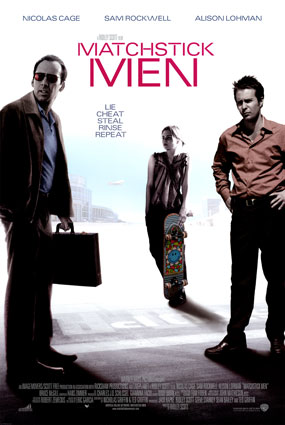
    MATCHSTICK MEN

    Scammers of the elderly

    From IMDB “Roy’s private life, however, is not so successful. An obsessive-compulsive agoraphobe with no personal relationships to call his own, Roy is barely hanging on to his wits, and when his idiosyncrasies begin to threaten his criminal productivity he’s forced to seek the help of a psychoanalyst just to keep him in working order. While Roy is looking for a quick fix, his therapy begets more than he bargained for: the revelation that he has a teenage daughter–a child whose existence he suspected but never dared confirm. What’s more troubling, 14-year-old Angela wants to meet the father she never knew. At first, Angela’s appearance disrupts her neurotic father’s carefully ordered routine. Soon, however, with his own unique spin on parenthood, Roy begins to enjoy a relationship he never dreamed of having with his daughter.”

    1. Context. Much of the time is spent his on his loneliness and issues with his estranged daughter.
    2. Whole person. He steals, but we never see huge suffering from it. We see all the other issues he deals and have sympathy for him.
    3. Processing. We’re focused on the threats to him, not the consequences of his one negative trait.
    4. Fascination. I was fascinated by the scam and this pulled me along through the first.

    CONCLUSION

    What happened in all these stories as I experienced them was that the story carefully managed my view of the hero. He was always on the better side of the antagonists. He was always more good than bad, even if only by a little. And the story focused my attention most of the time on the bad/threats/consequences flowing from the antagonists, not the bad from the hero’s deeds.

    What this shows is that you could write a story about a villain and make him the hero. In some instances it might be exceedingly difficult. For example, I think Hitler would be a hard sell as a hero, someone we’d root for. But the Neo-Nazis prove it’s not too hard a sell for some people. 

    I don’t think recognizing the fact that we can make “bad” people sympathetic means authors are “simply being clever” or “pushing buttons.” After all, to write well you must believe and care about what you’re writing about. YOU have to believe it. Nor do I think it undercuts the notion that we root for people based on a moral stance. It just recognizes the fact that moral judgments, in fact, the vast majority of appraisals of situations, happen quickly with the facts at hand, which are the ones in our working memories. The ones the authors are controlling.

    Share
  • Which cons should an aspiring author attend?

    You want to meet editors and agents. But how? Where?

    Writing Excuses recently held a great podcast listing the types of events aspiring authors might want to attend–conventions, conferences, workshops, expos, etc. But knowing the types still doesn’t tell you which events to go to.

    If you’re looking to meet editors and agents, here’s a way to figure out precisely which events you should attend.

    1. Instead of taking a random scatter-shot approach, get some laser precision. Do this by first identifying the specific editors and agents you’re interested in. Then find out which events they’re going to attend. Forget all the other events–these are the ones you want to go to.

    These folks will often post their schedule on their websites. The workshops, conferences, and conventions will also often post guest lists. You can also query the agency or publisher itself and ask which cons so-and-so will attend (just contact the receptionist, you don’t need or want to contact the editor or agent specifically).

    Now even if you don’t know exactly who you’re interested in, you can still narrow down your focus. Event X might at least have some agents or editors attending (even if they’re not in your genre) while event Y does not. So go and see if you can’t get tips from those agents or editors

    2. Research each of the events. Some provide meetings with editors, some provide pitch sessions, some will require you to track the person down. Select the events that look the most promising to you.

    3. If you feel a bit nervous or shy, develop a short script for what you’ll say and how you’ll approach these folks. Or make a list of potential talking points. Run it by some friends and other writers to  make sure you don’t sound robotic, dweebish, pushy, or pleading.

    You have to remember that agents and editors are looking for new talent constantly. If they don’t find new talent, their income stream soon dies. They want and expect people to find them. They WANT to talk to YOU. They just want to be approached in a friendly and business like way. 

    So you have your script, talking points, and plans and will probably end up deviating from them. However, just having that in your head when you go to the con and approach the person you want to talk to (even if it’s only two sentences) can go a long way to calming your nerves.

    4. Attend the con and make adjustments to your plan as necessary.

    5. Don’t miss unplanned opportunities. Writing is sometimes a lonely business. When I go to cons I have folks I want to meet and catch up on. But I also make sure I engage other con goers. I smile, I say hello, I ask things like “so are you here as a writer or a fanboy?” or “what did you think about panel?” or “Your Klingon ridge is looking mighty today.” We chat.

    I do it because I learn a lot from others and its just plain interesting. And sometimes you make an acquaintance that can develop into a working relationship. For example, I met Larry Correia (new author with Baen) at a local con I just attended. He had a fascinating  story about his breaking in. We chatted for a while. There was no ulterior business/network motive. Just a great conversation. A month or so later a business opportunity arose and I thought of Larry. He’s now going on tour with me and Dave Farland this fall.

    Be flexible. I’ve been invited and have invited others to go do lunch or dinner. And those have always been great chats. And sometimes business ops have arisen later because of them. But even if they hadn’t, it just makes the experience so much better. Good conversation is its own reward.

    6. If all of this is too scary, bring back up. Get a friend or family member to go with you. 🙂

    And if you stumble a bit, maybe stutter, maybe even feel like you’ve made a fool of yourself, do not stress. It’s to be expected the first few times. No big deal. Most poeple are shy and will either give you a break or be so worried themselves they won’t notice. With a few tries you’ll learn. If yo do make a fool of yourself, the good thing is that editors and agents meet so many people that your face will soon be forgotten, and you’ll be able to reboot and approach them next year with a clean slate (just remember to not wear the same belly dancing costume).

    Of course, this doesn’t tell you what to do and not to do when approaching these folks. But as far as deciding where to go, this is one method that works.

    —

    Added 7/31/09

    SFWA has some great articles on conventions and networking by Diana Rowland.

    How to Network at a Convention

    Networking 201: How to Work a Room

    Share
  • |

    Writers of the Future, the Church of Scientology, and Killing Puppies

    Author Jim C. Hines recently posted a thoughtful blog about connections between Writers of the Future and Scientology. There are a number of folks who have issues with Hubbard’s metaphysical claims and the church he started. Some folks claim that supporting Writers of the Future (WOTF) in any way supports the Church of Scientology (CoS) and the abuse of the young, the innocent, those who are vulnerable, and the stupid.

    I won a first prize in the Writers of the Future. I received $2,000 cash for the prize and subsequent publication. I also recieved a paid trip to Cocoa Beach, Florida to workshop with the other winners and pro writers. I tell new writers to submit to the contest all the time. I do not feel I’m supporting any wickedness. Let me walk you through this. You tell me if I’m killing any puppies.

    A. What underlies the continued operation of WOTF?

    1. Hubbard wanted it (I don’t know why, although he states it was to help new sff authors and illustrators).
    2. The folks who run it have a very HIGH esteem of Hubbard and so have huge motivation to make it successful.
    3. A trust was set aside, although without looking at the books we can’t know exactly if it’s an independent thing or if money is being funneled from other CoS holdings.  You do not pay many to enter the contest, so all of the money to run the contest and pay prizes etc. comes from this trust, sales of the WOTF anthologies, and perhaps other CoS holdings.
    4. It’s used for positsive PR for Hubbard’s brand name.
    5. The judges, who don’t give a fig about CoS, want to help new writers.

    B. What are the effects of the contest?

    1. No documented writer conversions to CoS.
    2. No documented WOTF anthology conversions of young skulls full of mush to CoS. Someone please show me some evidence of the WOTF antho being a gateway to anything, despite the rumored statements of some Scientologists someone’s uncle overheard.
    3. No documented donations to CoS that I know of.
    4. New writers get paid a whole bunch of money, get to network, and receive instruction from pros for a week.
    5. The winners, on average, think better of Hubbard, as do their friends and family.
    6. Most winners report it was a great experience and encourage other new writers to submit.
    7. WOTF sells some anthologies and makes a little bit of cash to offset expenses. I can’t imagine they’re ever in the black, are they?
    8. WOTF tracks winners and uses those who have done well as PR shiny for . . . WOTF and the Hubbard brand name.

    I was a first place winner. I had a marvelous time. This was the one held in Cocoa Beach, Florida. One night I needed to go to a convenience store to get something (tooth paste?). One of the WOTF folks drove me there. A nice woman. It was raining. It was just the two of us in the SUV.

    I’m a VERY CURIOUS guy. I’ve read most of DIANETICS. I stopped by a Scientology place in Seattle to chat. I like hearing people talk about their faiths, about their lives, about whatever. If you spend any amount of time with me, you will tell me your life story. You will. It just happens.

    I tried my dangest to get something out of that woman, but she was as tight as a clam sealed in four feet of concrete.

    Nobody talked Scientology. Everyone involved went out of their way to avoid it. End of story. I’ve talked to many other winners. They report the same.

    On the other hand, they did have a PR guy there.

    Mr. PR intereviewed us about the contest and Hubbard’s works and took footage. Our one-on-one interviews were on camera. We took still photos. He asked us in our acceptance speeches to thank Hubbard by name.

    He was a PR guy.

    It was very clear his job was to generate PR content for WOTF and Hubbard. How do I KNOW this? Because his questions all centered around WOTF and/or Hubbard. But never CoS.

    Some of the winners did not like his solicitation for a mention of Hubbard’s name. There was some reality show behind the scenes grumbling and scheming, and they did not mention Hubbard in their thanks at the awards event.

    That’s fine, although it didn’t make much sense to me. Maybe they felt gratitude needs to be spontaneous, not asked for. And I can agree with them on that. At the same time, why would I take $2,000 cash for the prize and publication, and the paid hotel, and workshop, and airfare and then slap the folks who gave it to me? I was indeed grateful. So I mentioned Hubbard in my thanks (oh, look at how noble I am; somebody should saint me).

    What did the contest do for me?

    1. Gave me some cash.
    2. Validated that maybe I had some chops. No, I wasn’t competing against pros. But I was competing against all those wanting to break in. I talked to Wolverton, who was a coordinating judge for many years and was the first reader, about the numbers of submissions they received. Hundreds upon hundreds each quarter. Huge boxes full. Were some drek? Of course. Who cares? Others weren’t. I won.
    3. Planted an idea in me that maybe I could do this.
    4. Gave me great connections with some pros and other authors.
    5. Allowed me to tell people I won a big international award for my writing. A little PR for my own brand. Who doesn’t want to engage in a bit of puffery now and then (and so you see, Fred, I am a little fabulous, aren’t I . . . )?

    So the contest, as far as I’m concerned, is a GREAT contest for new writers.

    But am I supporting CoS? And is that a bad thing?

    Every time I purchase a Kraft Foods or Nabisco product, I directly fund Phillip Morris tobacco company and their efforts to hook children on smoking abroad. Some of the tomatoes I purchase in Walmart and other grocery stores are tainted by slavery that occurs today in Florida and California’s central valley with migrant workers. Some of those tomatoes end up in various restaurants like Pizza Hut or Papa Murphy’s. Every bite of chocolate you eat funds slavery in the Ivory Coast, where the vast majority of cocoa beans come from. Not a few slavers here and there, but widespread slavery and abuse. There are many situations like this.

    What do you do when you like a product or service, but don’t necessarily want to lend aid to an affiliated cause?

    In many situations, I don’t do much.

    Alas, there goes my sainthood.

    I admit that I should and should probably think more about this.  At the same time, with regards to CoS, I don’t know that it is a wicked and exploitative organization.

    I’ve seen nothing that suggests they’re into crime. Or systemic abuse. Or fraud. Or that they have a vendetta against dumb people. I don’t share one iota of their faith in Hubbard or his metaphysical teachings. But I do share other values and beliefs with them. Just as I do with Catholics, Muslims, Pagans, Athiests, Communists, and Realtors.

    Besides, I never did PR for them. I’ve always said I DISAGREED with their theology, which is negative PR, if you think about it. Furthermore, I’m fairly confident the contest DOES NOT funnel large amounts of money to CoS.

    What can they be making after taking out the expenses of the award week for all those authors, illustrators, judges, “luminaries,” etc. that they fly in and house, all in addition to the prize and publication monies? I’m confident they make nothing at all, but actually lose money each year.

    So the net net is that they get some PR for WOTF in the SFF community and some for Hubbard’s name. That’s it. That’s what I’m giving them.

    But I don’t see any documented stories of that leading to any donations or conversions to CoS. Or positive PR for CoS. Which, again, I’m still not convinced is a systemically exploitative and wicked organization.

    But even if it were, am I really supporting CoS when I promote WOTF?

    I don’t think so. I’m not giving them cash. I’m not giving them any positive PR. It seems to me purchasing one bag of Oreos or a Lindt chocolate bar does more harm than this ever could.

    I feel so much better now. I am saving the puppies.

    Of course, if you disagree, please post a comment. If you have reliable documentation, not hearsay and tabloid clamor, that can add to the discussion, feel free to share it. I’m all for good data. And if you see issues with my logic, share that as well. But no wild-eyed, Chicken Little, my mother was eaten by CoS aliens rants please.

    As for that Twix I just ate. . .

    (sigh)

    EDIT 1: I just learned the Phillip Morris spun Nabisco and Kraft off in 2007.  So that frees up my Oreo conscience, but the principle remains.

    EDIT 2: Okay, so I just learned that the CoS planned and authorized crimes in Operation Snow White. What to make of that? Comments? Talk about your corporate espionage. I know there are governments and organizations around the world and in the US that engage in that all the time. But this is the first I’ve seen from a “church.”

    EDIT 3: Read through the links on this post by Deirdre Saoirse Moen where she explains why she no longer supports the WOTF contest. Primarily, she just can’t stand some of the CoS practices.

    Of note is the link to the court report by the Village Voice at the Debbie Cook hearing. One question I have is why all those leaders were in the Hole to begin with? Was it some routine church program? Yeah, it sounds awful, but the military puts the SEALs and Special Forces through awful things. So I’m not clear on all of that.  And why haven’t more come out to complain? The unlawful detainment aspect of these allegations is disturbing. But are they really doing this? Are these isolated experiences, or SOP? I don’t know.

    There’s another one farther down that lists alleged harassment of folks posting some CoS theology documents on the internet.  I sampled the documents linked to there. Most of those are just copyright violation letters. SOP for anyone trying to protect copyright.

    Looking at Operation Snow White, the Debbie Cook hearing, and the copyright violation stuff, it’s becoming fairly clear that the CoS has taken an extremely aggressive approach against some of those who speak out against them (maybe it’s over the top) and a similar approach with protecting their materials. Although I think they’ve lost the battle about their materials on the internet. 

    Instead of trying to win public opinion with the truth, it seems in some cases they’ve instead attempted through various methods to try to silence detractors.

    Anyone have any more links to substantive material?

    EDIT 4: Here’s a letter from Joni Labaqui, a Scientologist and the person who runs the whole WOTF shooting match, to Frank Wu, who was an illustrator winner, and had posted some stuff about WOTF and CoS here: http://www.frankwu.com/illo.html (I found the letter at the bottom).

    Dear Frank,

    Hi! It’s Joni Labaqui here. Haven’t seen you since you blew me off at LA Con a few years ago and now I know why. I didn’t understand why you didn’t want to talk to me for very long. I loved your write-up on your site about the contest until you got into talking about Scientology. I know what you mean about feeling hurt when people put down your church. I happen to think you are NOT stupid because you are a Christian. I have many Christian friends and I respect their beliefs and even fight for them. But then you get into my religion on your site and putting out falsehoods, then I realized you didn’t have all of the info. We don’t sue people for bad mouthing our religion. The Church sues when there is slander and liable of considerable magnitude involved. Lets use an analogy here – lets say someone accused you of raping the girl next door, but you didn’t do it. Would you be upset? Lets say the parents then sued you or had you put in jail or both. Would you be upset? Would you hire an attorney? Gee, you’d be involved in a legal suit wouldn’t you? What if the father of the girl made sure you were lied about in the newspapers and on TV and he tried or succeeded in ruining your reputation? How would you feel? On top of that, lets say what really happened is you simply talked to the girl and were trying to help her and she turned around and accused you. How would you feel? And how about all those people who love to gossip? (I personally hate people who gossip as all they are doing is hurting others and they are basically low-life losers – lots of people fit into this category, I’m afraid). How would you feel?

    You were actually wrong in that Scientology pays for the writers and illustrators awards. The Hubbard estate (which is not the church) makes so much money on royalties from his hundreds of published fiction it would make your head spin. You were right about the fact that every one of us who works at Author Services is a Scientologist, but the judges of the contest are not. They share the same goal that Mr. Hubbard did in starting and paying for this contest – to help the new guy, just like yourself back then when you won. So I don’t understand, a nice person like you has to even bring up the subject in your write-up. You think we are interested in “converting” any of you winners just because we have you tour the Life Exhibition? The answer from the horses mouth is NO. We are simply showing you more about his life and works so that you have the facts about the other part of his life, not the bullshit and lies that has been put out by vested interests of multi-billion dollar drug companies and the psychs that can’t stand us. Have you received tons of unwanted, unsolicited mail? The answer is no. Trust me, if we wanted to convert you, you would sure know it. Believe it or not, Mr. Hubbard in founding this contest just wanted you guys to be seen and heard because he knew how hard it is to get started. Period. Its not about Scientology. That is the simplicity of this contest. Anyone reading anything else into it has their own issues and I feel sorry for them. I guess maybe you ran into someone bad mouthing us and you listened to them. If someone badmouthed you – to this day – I wouldn’t buy it. I’d tell them to take a hike. Do you know why? Because I know you are a good person. I met you, I shared some of that joy you experienced when you won, and I was truely happy for you because I like people being happy, winning in life and doing well and winning this contest. I still like you, but I’m a bit disappointed that you felt compeled to write what you did. I don’t get it. I personally put in hundreds of hours of work to help give you the event that you won your award at, so how do you think I feel?

    I hope to hear from you. Best, Joni

    Share
  • Indie Thoughts: Resources for Indie Writers

    About this time last year I got the last of my rights back to the Dark God properties. I thought it would take twenty or thirty hours to figure out the whole indie publishing thing. And then the awesome John Brown story machine would kick in gear.

    Reality promptly woke me up and slapped me around a bit. This last year has been quite the learning curve. Here’s what I’ve had to pick up:

    • Designing book covers
    • Finding artists
    • Working with artists in a way that actually works
    • Copy editing
    • Formatting book interiors
    • Fonts, fonts, fonts
    • Using ISBNs
    • Using InDesign to create files for both POD books and epubs
    • eBook structure
    • Editing ebooks (okay, just get Calibre ebook editor right now. We luvs it, Precious)
    • Validating ebooks (http://validator.idpf.org/)
    • Converting epubs to Amazon’s mobi format
    • Uploading ebooks to the various ebook retailers: Amazon, NookPress, Kobo, iTunes (I upload via Draft2Digital), Smashwords
    • The pros and cons of CreateSpace vs Lightning Source
    • Using CreateSpace to publish POD books
    • Registering books with the US Copyright Office
    • Writing better book descriptions
    • Using keywords and categories on Amazon
    • Setting prices in the indie market
    • Creating an email list (I love MailChimp. They make me happy every time I go to their site)
    • Advertising and promoting as an indie

    One of the things I love about this business is that there is always more to learn. But I’m happy to be over that curve. For folks just starting out, let me share some of the resources I found super helpful with a number of the things listed above.

    Posts by a mega indie-seller Russell Blake to give you the right perspective about indie publishing. I’ve read a lot of posts the last few years about being an indie author. These are the best I’ve come across.

    Online courses to help you on the publishing side.

    • Designing Book Covers and Designing Book Interiors with Dean Wesley Smith (look for “Online Workshops”). I don’t agree with Dean on all his ideas about pricing and promotion, but these two courses helped a great deal.
    • InDesign CS6 to EPUB, Kindle, and iPad with Anne-Marie Concepción at Lynda.com. Awesome.

    The most practical and clear-headed books about indie promotion I’ve read. For other clear-headed advice, see the Russell Blake posts above.

    The most helpful book on copyright.

    The most helpful book on copy editing as well as info to put into front and back matter.

    Helpful threads on Kindle boards

    Other great resources

    Good luck!

    Share
  • |

    Audio for my presentations

    Folks. I have 2 mp3 files. One for Story Turns. One for Vivid & Clear. They are each about 48mb in size. But I don’t have the time to figure out how to make them available to you.

    But I know someone out there does have the skillz to mash the slides with the audio in a short period of time and make it available. Maybe create something to upload to YouTube.

    So if you have been waiting for this and would like to offer your services, I’d be happy to throw in a free copy of the ebook edition of Bad Penny and Servant for your efforts. It would in no way cover your time, but it’s better than a poke in the eye with a sharp stick. And the project will also give you all sorts of glowy goodness inside knowing that you’ve served a whole bunch of writers.

    That’s my offer: glowy goodness and ebooks.

    If you’re interested, click my picture in the left sidebar and and let me know 🙂

    Share