LA/Book 2, in which the novel kicks my butt

I’ll make this short. I have a deadline for my next revision of CURSE OF A DARK GOD. It’s November 20th. But the book is kicking me around like a tin can. I sat down Saturday to work on my current revisions and as I unpicked the chapter I was working on the whole story unraveled in my hands. I worked for 8 hours trying to put it back together, but it resisted all efforts.

I’m not one to take this lying down. I’m going to San Diego this week, but will fly back early to work on the book, which means I will not be visiting Los Angeles. Alas. This wild beast will come under control. And that should please all those who have read SERVANT and are waiting for the next installment.

Share

Similar Posts

  • Believe In Me, Cyber War

    A Man and a Team of Girls

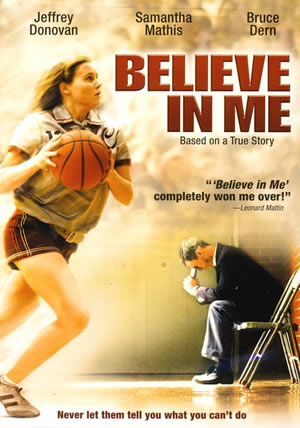
    Back in 1964, Jim Keith took a job at an Oklahoma high school to coach boy’s basketball.  But when he arrived, the administrators changed their minds and gave his job to someone else.  Keith’s contract didn’t specify which gender he’d coach, just that he’d coach.  So they switched him to the girls.  Keith was extremely disappointed.  Who wanted to coach girls when it was the boys who played real ball?  Especially when Keith was supposed to be head coach.  Keith tried to get the promised position back, except the girls he coached had other things in store for him.  Harold Keith, Jim’s brother, wrote a novel based on what happened.  That novel was made into a movie in 2006 called Believe In Me.  

    Now, we all know the plot line of sports movies: a losing underdog of a team rises up to win.  It’s predictable, right?  But we could say that of all crime shows as well—in this episode investigators discover a crime and figure out who did it!  Wow, what a shocker.  We could say it of all romantic comedies as well—in this movie a couple at odds gets together.  No way!  We could say it of lots of stories.  And yet we love these stories anyway.  Why?  

    Because the characters suck us in.  Because the story tellers do such a good job with the particular details we forget we’re watching a movie or reading a book.  We forget to think about the ending.  Furthermore, the stories are often about more than just winning games.  And so we worry about these people who have become real to us and focus on their immediate situation.  At least, that’s what happens when the story tellers do a good job.

    And Robert Collector, who both wrote and directed the film, did a great job with Believe In Me.  Now, I don’t know how accurate the film’s depiction of five-on-five play is; I believe the girl basketball teams of that era played six-on-six.  But that’s a niggling technical detail.  Besides, the movie isn’t about technique anyway.  It’s about a man and a group of country girls who have to face difficult obstacles, not so much on the court, but off it.  If you have girls or like sports at all, I think you’ll love this movie. 

    Cyber War

    I recently reviewed America The Vulnerable which explained how exposed we are as individuals, corporations, and a country to cyber crime, cyber espionage (both state and corporate), and cyber attacks.  Of all the cyber threats we face as individuals and a nation, the least likely is an all out cyber war.  But just because it’s less likely that doesn’t mean the threat isn’t real.  Especially since cyber warfare has been in use since the 1990’s.  We used cyber weapons openly in the gulf war in 2003, knocking out Iraqi air defenses.  Israel used them to own Syria’s air defenses when bombing their clandestine nuclear site in 2007.  Russia used them against Estonia in 2008 and Georgia in 2009 on a variety of targets, bringing many critical systems to a halt.  In 2010, somebody, most likely the US or Israel, developed the Stuxnet worm to sabotage the uranium enrichment facility at Natanz in Iran.  China has already conducted trial runs of cyber attacks on the US and has planted logic bombs and trap doors to activate in the future.

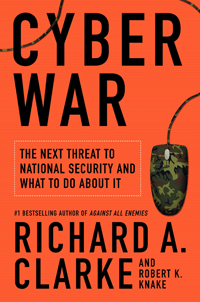
    In Cyber War, Richard Clarke shares his insights into what cyber war is, how cyber weapons work, and how vulnerable we are as a nation.  He discusses the cyber warriors (hackers) we now employ in the US military, and how a cyber war is like and unlike other wars.  In the second half of the book, he discusses the factors that have created our current vulnerability, how to set up a defense, and what we need to think about when conducting a cyber war. 

    And Clarke knows his stuff.  He worked for the State Department during the presidency of Ronald Reagan.  In 1992, President George H.W. Bush appointed him to chair the Counter-terrorism Security Group and to a seat on the United States National Security Council.  President Bill Clinton retained Clarke and in 1998 promoted him to be the national coordinator for security, infrastructure protection, and counterterrorism, the chief counterterrorism adviser on the National Security Council.  President George W. Bush kept him in the same position and later made him special adviser to the president on cyber security.    

    The thing I liked most about the book is that in addition to describing cool cyber war weapons, threats, and incidents, Clarke examines answers to many critical questions.  For example, how can we set up a defense without the government becoming a 1984 nightmare?  Would arms agreements work in cyber space?  (No.)  How do you prevent a cyber war from turning into a kinetic (guns and troops) war?  How do you attack your enemy when it’s sometimes hard to know who launched the attack in the first place?  He discusses these and many more questions.

    The book does have one fault.  Clarke has an obvious axe to grind with the Bush administration, and can’t help but make snide and irritating comments whenever he brings them up.  The good news is that those spots are few and far between.  If you want an excellent introduction into how cyber weapons are used and will likely be used in the future, you’ll want to read this book.

    Share
  • NEWS: LDStorymakers Conference

    I have finished the final drafts of my two presentations for the LDStorymakers conference which will be held next Friday and Saturday, May 10-11, 2013 in Provo, UT (usually a glorious time along the Wasatch Front in Utah).

    “Vivid and Clear” – Despite the often repeated 11th commandment for writers—show, don’t tell—writers NEVER show. They can’t. It’s all tell, tell, tell. The trick is to tell in a way that helps your readers imagine the situation (action, thought, dialogue, description, etc.) with such vividness and clarity it can trigger an emotional response.  In this hour we’ll explore a number of simple but powerful prose techniques that help you do just that. That includes:

    • The three main types of telling
    • What “showing” really means
    • 5 key techniques for making that telling vivid and clear
    • Lots of examples so it’s all clear

    “Story Turns” (they’ve got me scheduled to do this one twice) – Story turns, cliffhangers, rugpulls, plot twists, reversals, surprises, revelations (and more)–are a core part of an exciting plot, pacing control, and making a reader want to turn the page. In this workshop we’ll explore the main types of story turns and how they work so you can use them in your writing.  This includes:

    • A clear definition of what turns are and do in general
    • The 5 main types of turns
    • A whole bunch of examples to make it all clear
    • 3 tools I find helpful when developing turns
    • A session where we actually will use the tools to develop turns for a scenario I’ll bring

    I’ve got to run through both presentations to make sure they have the zing I look for in these things and that I don’t have too much content for the time allotted. I’m very excited about both. And, as always, I learned a lot bringing all my ideas together on these topics.

    I’m planning on having a great time giving these AND listening to the other presenters AND chatting with folks I know AND meeting others. Last year was fabulous! This year looks to be even better.

    For those of you who haven’t heard about the conference, it features 2 days of excellent programming focuses on helping writers who are serious about writing but who also want to have fun doing it–let’s call them hard-working, laffy bees.  Special guests include goddess of mystery Anne Perry plus a bunch of great agents and an editor from Harlequin’s new line focusing on “wholesome contemporary romances that celebrate traditional values, strong communities, family connections and true love.”

    Although I have to say that if I were thinking of submitting to Harlequin, Kris Rusch’s posts would give me pause:

    I think registration is still open. For those of you already planning to go, please come up and say hello.

    BTW, I’ll post a PDF of both the presentations and my notes here afterwards.

    Share
  • Final Cover for Servant of a Dark God

    Shiny.

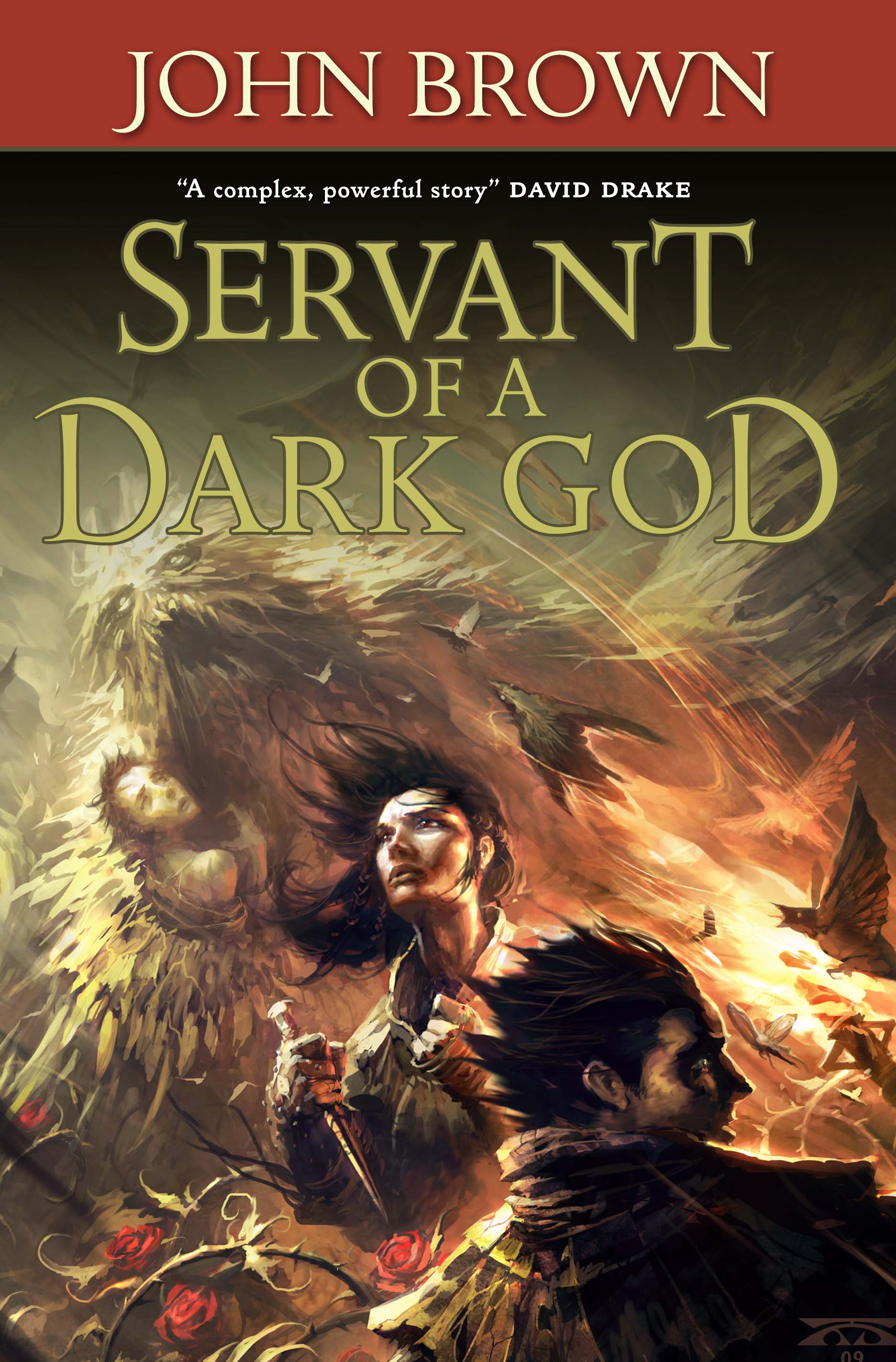
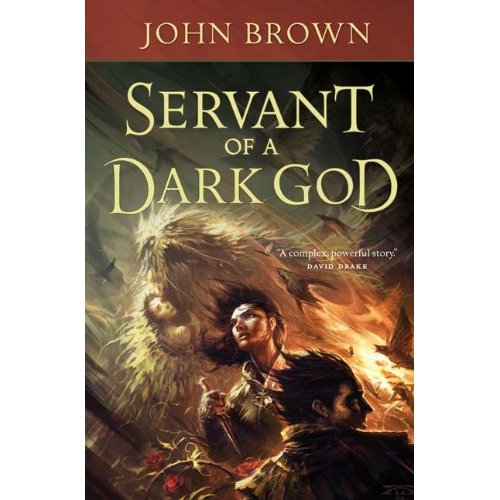
    They moved the David Drake blurb to the side, lightened the lettering and moved things so the title wasn’t covering the top of Hunger’s head. At first I thought they moved the lettering, but they didn’t. It appears the shrunk Hunger a bit so we could see more of him. Small changes, but I think they make a significant effect. I think the overall effect is better. I like how Hunger looks more menacing in this one. Sugar is different. Don’t know which version of her I like better. I’m leaning to the original. Your thoughts? Either way, we luvs Tor’s art and production department. Here’s the before and after.

    ServantDarkGod_compSODG_hb_final_cover

    Share
  • |

    Presentation for Brandon Sanderson’s writing course

    PDF of the slides

    Brandon asked me to substitute for him on March 1st and teach the students about indie publishing. For those of you who were there, here are the slides.

    2018 Sanderson Class – Indie Publishing Final PDF

    “If I Were Published”

    To start the presentation, I regaled the students with a surprise: my epic-fantasy-BYU-newbie-author version of the classic Fiddler on the Roof song which I called “If I Were Published.” Dylan Rowe, a student in the class with some serious violin chops, practiced with me in secret, then accompanied me during the performance. He was great. And the performance went well. We all had a great time. There’s a recording. Once I get it, I’ll post it here.

    Here’s how it went.

    Isaac introduced me. I said how happy I was to be there. I then asked for a show of hands: who was hoping to be published. Not all did, BTW. Some were taking the course for other reasons. I then said that the sight of such a vast assemblage of unpublished writers made me think of someone else. I displayed the slide of Tevye dancing. They all laughed, and I knew this was going to be a good crowd.

    And then Dylan, who was hiding off to the side, played the phrase for “If I were a rich man” and I put on my own black Tevye hat. There was more laughter and surprise, and I began.

    Dear Lord, you made many, many unpublished writers.
    I realize, of course, that it’s no shame to be unpublished
    But it’s no great honor, either.
    So what would have been so terrible if I had one small best-selling series?

    [Dylan began to play and I began to sing]

    If I were published,
    Yaba dibba dibba dibba digguh deedle daidle dum.
    All day long I’d biddy-biddy-bum
    If I were a published man

    Wouldn’t have to work hard,
    Yaba dibba dibba dibba digguh deedle daidle dum.
    If I were a biddy biddy pub
    digguh deedle daidle published man

    I’d write a big long epic–hundreds of characters!
    Swords and dragons and a lot of gore
    A snot-nosed lad who was prophesied for the fight

    There’d be a quest to one far side of the map
    And one to find a lovely ancient lore
    And one more leading out into the blight

    [I paused here, to think, then sang the tune to the last line again with the first four of these]

    To meet a sprite,
    and a dark knight,
    with an old birth right,
    read by moon light,
    that … cures snake bite.

    [Dylan produced a big scratch. I covered my eyes in shame.]

    Oy! Bad story development.

    I’d see my wife, my Nellie,
    Looking like a rich man’s wife,
    with a proper golden skin,
    rolling out the yoga mats to her heart’s delight.

    I’d see her driving the kids
    in something other than a minivan
    Oy! What a happy mood she’s in!
    Posting perfect selfies to day and night.

    Hordes of bright-eyed zoobie writers will come to fawn on me.
    They will ask me to advise them,
    like Sanderson the Wise.
    “If you please, Mister Brown?”
    “Pardon me, Mister Brown?”
    Posing problems that would cross a Shakespeare’s eyes
    Ya da dee da dum, ya dah da dum

    And it won’t make one bit of difference
    if I answer right or wrong.
    When you’re published they think you really know.

    If I were published, I’d have the time that I lack
    to go to the temple and to pray,
    seated in a corner of the celestial room.
    And I would serve on projects building Enoch’s Zion
    from here to Africa and beyond.
    And that would be the sweetest thing of all

    Oy!

    If I were pub-lished.
    Yaba dibba dibba dibba digguh deedle daidle dum.
    All day long I’d biddy-biddy-bum
    if I were a published man.

    Wouldn’t have to work hard.
    Yaba dibba dibba dibba digguh deedle daidle dum.
    Lord who made the lion and the lamb,
    You decreed I should be what I am.
    Would it spoil some vast, eternal plan,
    if I were a pub-lished man?

    Limericks

    I took a bunch of copies as my books as gifts to support the good cause of entertaining hard-working students. But there was a twist. To get a book, they had to pay me one limerick. It could be about anything and of any quality. But it needed to be a limerick. They had, like, 5 minutes to write one at the end. Thirty-three souls came up with the payment. Here they are for your enjoyment.

    1.
    A writer, a publisher, and a poet,
    And now, wouldn’t you know it,
    They’re debating a comma,
    and imagine the drama,
    When they’re divided on just how to cull it

    2.
    There once was a class of fiction
    Which had a stranger take up his position
    He was quite amusing
    He kept them from snoozing
    For he had quite a talent for diction.

    3.
    John Brown’s book could be greatness
    I hope it’ll be a hit, not a miss
    Your lecture was great,
    It did not stagnate
    I hope you will great me my wish! (to get your book)

    4.
    I want to write a book that is fun
    where an evil something kills someone
    And the people will fail
    ‘Til the heroes prevail
    But I fear I will never be done.

    5.
    I’m trying to write my own book.
    But, if you now went to look
    I fear you will find
    It’s all in my mind
    But, oh – all the effort it took!

    6.
    There once was a poodle named Paddle
    whose fur was cut into a saddle
    until in the park
    he ate too much bark
    And now his tight fur is a battle.

    7.
    There was a young woman whose head
    Had eyes that looked dead
    As boys approached her,
    Her sharp tongue they started to stir
    Filling others with dread

    8.
    A poet sat twiddling his thumbs
    He felt his ideas were dumb.
    He was lacking in time
    But just couldn’t rhyme
    So he loosened his thoughts with some rum.

    9.
    “In honor of your song”
    “You know I’d really love to be published
    Oh, the glam and the glory I would relish
    The hordes of fans my mind’s eye can see-
    Sanderson with John Brown bowing to me –
    And don’t (?) tell me my dreams are embellished”

    10.
    Homework I do not much like, you see
    But for your book a lim’rick it be
    and so i must do,
    with great thanks to you,
    this my small bit of lame poetry

    11.
    There once was a boy named John
    Who needed to mow the lawn.
    He pulled on the rope
    But oh, what a dope!
    Alas, the gas was all gone!

    12.
    Guardian Angel Limerick
    I’ve struggled to write since the phone call,
    when the maybe’s, the what-if’s turned actual
    and the grieving stretched on
    till the morn she was gone
    and the world lost, but I gained, an angel.

    The note with that one: “I was the girl who asked if the limericks had to be funny. Thank you for coming to class and giving us the books. I’ve included my limerick below. My mother passed away a couple weeks ago. This is my tribute to my loudest cheerleader and my harshest critic.” Boy, I’m definitely honored to have this one.

    13.
    There was a young man from Pocatello
    Who thought that he was a brave fellow
    But one dark, dark night
    He took quite a fright,
    And found that he was quite, quite yellow.

    14.
    There once was a sorcerer bloke
    Who traveled outside for a smoke
    He yawned, “curse this day”
    And that is to say
    The incantation now was spoke

    15.
    There once was a ship fresh-moored
    With my favorite couple on board
    But despite the large fanon
    It was destroyed by the canon
    And my ship, sunk quick, sailed no more

    16.
    There once was a sad unicorn
    Who had tragically lost his gold horn
    And thus ran away
    and still to this day,
    He stands but a horse all forlorn

    17.
    There once was a grandma so old
    on her birthday she had a bad cold
    as she blew out her candles
    her kids yelled, “Mad scandal!”
    as her dentures flew into the mould

    18.
    There once was a cat named caterer
    who keeps running into the mirror
    we got her some glasses
    form the shopping masses
    and now she sees everything clearer

    19.
    There once was a dust speck named Mike
    Who lived on the edge of a spike.
    He was bumped off that edge,
    then snagged on some sedge,
    ending up on the wheel of a bike

    20.
    I am a cat who is hip.
    Who likes to shoot from the lip.
    My songs are all crude.
    My stories are lewd.
    I like to make reality flip.

    21.
    There once was a bunny named Mopey
    Who had friends that were silly and dopey.
    They hopped on a train
    That took them to Maine
    Where someone threw them in a bath that was soapy

    22.
    I want something to teach me to cook
    but this sure and that kind of a book
    but bore shadiz tes (yeah, couldn’t read it, dang it)
    and this sure seems fair
    So now I guess I should take a look

    23.
    There once was a man named John
    Who put his books out to pawn
    Some students one day,
    Wrote limericks to say,
    “We love your free books–give us one.”

    24.
    My mother wanted to get a book,
    And she gave me that terrible look.
    A limerick the price,
    I wrote one down twice,
    So please give me that sought after book.

    25.
    There once was a man named Lam
    Who like to eat lots of Spam.
    When the aliens came
    He cooked them a meal
    And so his soul they did not steal

    26.
    There once was a tiger named Ted
    He went to town in a bed.
    Jeep in the rustle
    He spotted a tussle
    And now he has bumps on his head.

    27.
    Once I tried writing haiku;
    it seemed like a fun thing to do.
    But I fumbled the timing,
    and couldn’t stop rhyming,
    and now this haiku is just poo.

    28.
    Once I was writing a sonnet
    But my paper hand not a word on it.
    I sat there confused,
    My talents unused,
    Because nothing else rhymes except “bonnet”.

    29.
    I love me a good paper book
    But the digital have a nice look
    Shopped for a kindle all day,
    Tried to buy on eBay,
    But, somehow I just have a Nook.

    30.
    There once was a man with pink hair
    And all he ever got were rude stares.
    He said, “I know that I’m hot.
    There’s no need to gawk.
    Goodbye.” And left with great flair.

    31.
    There once was a lobster named Clyde
    Who was inexplicably snide.
    But he had some bad luck,
    from the sea he was plucked
    and now he’s been battered and fried.

    32.
    I was once walking home on the street
    When a woman, I happened to meet
    I said to her, “Hey.”
    She said to me, “Nay.”
    So I went out and bought me a treat.

    33.
    Tetris is the very best game
    My playing will put you to shame
    See… I am the best
    Put it to the test
    One day it may lead me to fame.

    Share
  • |

    John guests on Writing Excuses season 3 episode 19

    writing-excuses-the-guys2-300x139

    Here’s the third episode I recorded with the Writing Excuses guys.

    In the first podcast we talked about putting and not putting ourselves in our writing and making characters who don’t all sound like the author. In the second, we talked about how to not repeat yourself as an author. In this one, I shared some basics about generating emotion in readers and dealing with negative emotions writers face when they encounter rejection, compare their career with others, hit writer’s block, or hear someone didn’t like their story.

    As usual, the guys had some great insights. Check it out: Emotion in Fiction.

    Share
  • NEWS: Finished line edit of Servant

    It took me 33 hours, but I just finished reading through SERVANT and marking the manuscript up with the line edits I need to make.

    Holy smokes, folks, but it’s going to be a bigger edit than I originally thought. I knew I wanted to resequence chapters 1-8 back to the way I originally intended them. I knew there were some typos. And I knew I needed to add some content surrounding Purity’s story. But as I read I found that I was making line edits on almost every page.  For those unfamiliar with the term, you have basically four edits.

    • Content or story edit
    • Line edit
    • Copy edit
    • Proof edit

    The story edit is just what it says: you’re looking at plot and character. In this edit, you might add or cut whole chapters or story lines.

    Once the story is good, you do a line edit. In this edit you’re looking for how well the actual words on the page flow. You’re looking for parts where what you’re trying to say isn’t clear, where sentences or paragraphs are awkward, or where you haven’t been consistent. In this edit, you rewrite sentences and paragraphs. 

    Next, there’s the copy edit. Back in the old days, you had essentially three versions of the work. You had the original manuscript, which might go through many edits for the story and flow. Once it was good, the manuscript would be given to an editor who created a “copy” that could be used by the typesetters.  Of course, before you handed that over to the folks setting the type, you wanted to make sure it was clean because making changes in type is a pain in the butt. So in this edit, you’d go over it one more time, looking for typos and grammar issues. At this level, you fix words within sentences, although many times this edit will be combined with a line edit.

    Finally, there’s the proof edit. A proof was a copy of the work that had been set into type and printed. The typesetters would look at the their typesetters copy and then physically take metal sorts and mount them in a press to match it. To print it, they would ink the sorts and make an impression onto blank paper. That’s how stuff was printed. 

    Nowadays, you don’t need to manually set the type–you just print directly from document on your computer.  So you don’t have to worry about errors introduced into the text because of the typesetting. However, as many writers will attest, you simply do not see things on the computer screen that are obvious on the printed page. And so you always want to print out a proof and then edit it one last time for any errors in formatting or for small copy or line edits.

    So this last read was more or less a line edit. I did make some content-sized changes. And I did mark it up for typos and grammar stuff. But the bulk of the changes were line-level stuff, and I have to say I’m amazed at how many there are. I guess this simply means I’ve grown as a writer. But it is going to take some time to finish. I’ll then give the manuscript to my wife who is great with copy editing. And do another revision.

    I have to say I enjoyed reading the stories of Talen, Sugar, Argoth, and Hunger again. Some of the events had dimmed with time, and I was delighted to read them again. Parts of this book just make me so happy. With a couple of them I was all, dang, this story is awesome!

    ***

    Still working on the cover design for the Dark God books. Hope to finalize the basic structure this week and commission an artist. I’ll post the process and get your feedback as we go.

    Share

5 Comments

  1. John, I am finally reading Servant of a Dark god. This is the best book I have read in years. It excels on so many levels it’s unbelievable.

  2. I am glad you got things turned around for the sake of all of us waiting for Book 2. 🙂 And for Nellie’s nerves! lol

  3. Ugh, nothing worse than when your book rises up against you. I’ve been struggling to get motivated to even WORK on mine right now. Any suggestions?

  4. BIC

    Butt in chair. Then just write anything at all. Then ask yourself what’s bugging you about your story story so much. Or go through the symptoms in the lesson I wrote on writers block.

  5. I managed to get some BIC time, and things went pretty well. I’m putting in about 6 hours a week right now, which is really all I can do and still have one fun activity in my life (currently a videogame). I’m happy to report that things are moving along much more smoothly now, though. I just had to get in there and do it, and you were right, I did find things that were bothering me and started to make a few corrections that I think will go a long way.

Comments are closed.