Washington Irving, Family, & Writing

How do writers juggle writing and family?
One of my heroes is Mary Higgins Clark who, as a single mom, started a career. She got up very early, wrote for 1-2 hours in the morning, and became a mega-seller.

I have four girls. And a full-time job. When the first two were little my wife was working and I was Mr. Mom going to school. Then we switched.

Here’s my experience. While I love writing, my stories do not run to me and give me wonderful strangling hugs after school like my youngest. While I laugh at the humor I come up with in my stories and enjoy it, it cannot replace the uncontrollable giggling I experience when I go on dates with my second. While writing lifts me, it does not fill my office with notes and wallpapers of love like my oldest. And writing never drags me out to play ghosts in the graveyard or hide and seek–daughter #3. Nor will my stories and novels be there for me when I’m old.

While writing is incredibly fulfilling, my wife, kids, and other relationships are a joy it cannot replace.

What all this means is that I try to recognize that I can’t let family and writing compete. They can’t be equal priorities. Family comes first. But this doesn’t mean I don’t write. I block out times to write. These are my writing times. I get up early to make time for this. I don’t watch a lot of TV. I don’t read a million blogs, nor, alas, can I read fiction at the level I used to. I make time. But I also make blocks when I just forget writing (even though it can be hard).

Specifically, here’s my average work week.

5:00 AM rise, wake and get centered for the day
6:00 AM work (“work” is my day job and writing)
6:30 AM family and breakfast
7:30 AM go to work (at home). Try to get in 7-8 hours at day job and 2 hours writing. When I did commute I wrote for 1 hour during lunch and 1 hour in the morning before I went to work. Then I’d take a 2 hour block on Thursdays.
5:30 PM family etc.
9:30 PM bed

On Saturdays I get a few more hours writing. Sunday I forget everything but family.

With the new book contract I have to become a bit more creative. But if it ever comes down to sacrifice the last 2 years of my oldest being at home and writing, well, the books will go.

When my writing plans meet reality, I try to adjust and find other slots for writing. It wasn’t easy in the beginning, but it’s become much easier. And I don’t worry about what I might have accomplished in writing if I’d just had the extra time. Such what-if’s, I’ve found, are almost always poisonous. And who the heck cares? Because while I want to write wonderful stories, I think the greatest loss I think I might experience at the end of my life (believing in an after life or not) is looking back and seeing that I traded the opportunity for wonderful relationships for a rapidly mouldering spot on the shelves.

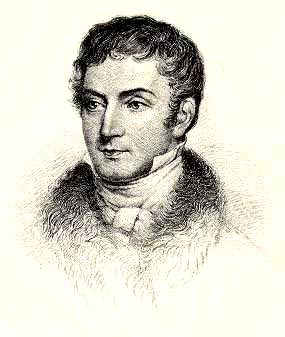
Washington Irving wrote a funny and wonderful piece on this mouldering in his “The Mutability of Literature” in THE SKETCHBOOK OF GEOFFERY CRAYON. I recommend every writer read this to put life and writing into perspective.

Share

Similar Posts

  • Indie Thoughts: 10 Things I Wish I’d Been Told

    From Russell Blake.

    I get a lot of emails from authors who are just starting out, or who are on the road but frustrated at the level of success they’ve seen thus far. I wish I had more time to correspond with everyone, but the truth is I’m usually slammed with writing/publishing related tasks, and don’t have a lot of opportunity to do more than offer a brief sentence or two.

    But the last few missives I received got me thinking about what I wish someone had explained to me before I started self-publishing in June, 2011. So here’s my top 10 list, such as it is:

    1) There are lots of talented writers out there. Lots. And it seems like everyone’s now got a book, or books, on Amazon. Being good isn’t enough to guarantee you anything but satisfaction for a job well done. It should, but it doesn’t. Don’t take it personally.

    2) There are lots of crap writers out there. Lots. And while many sink to the bottom of the swamp with nary a whimper, some sell well, and some even become bestsellers. This is because the world’s unfair and, depending upon the genre, oftentimes readers don’t care much whether they suck or not, as long as the story entertains or reaffirms some conviction or bias the readers have. These authors succeed in spite of their abilities, rather than because of them. Don’t take it personally.

    3) The internet is filled with gurus who know nothing. It’s hard to turn around without bumping into a writing or self-publishing expert. Most of them are completely full of shit, and don’t sell many books – but that doesn’t stop them from trying to get you to part with your money to hear them tell you what you need to do to sell well. Whenever you hear advice, consider the source. If it’s a million selling author, that means more than from someone whose work ranks slightly lower on Amazon than the collected love poems of Adolf Hitler in original German. Seems like everybody but me is selling seminars, courses, or how to books that promise much and deliver nothing. Must be a good business there, but I prefer labeling my fiction as such and putting in a car chase or gunfight rather than trying to trick the dim or desperate out of a few bucks.

    4) You need to be able to put out books at a decent clip. Sure, you might hit huge off one, but probably not. You’ll be building your readership the hard way, which means one reader at a time, and the more quality books you have on your virtual bookshelf the more likely one will catch someone’s eye. This doesn’t appeal to a lot of authors’ wish that they could write a book every year or two and have a nice living. Sorry. I have yet to see that happen. But it’s a seductive siren song, so lots of newbies listen to it like it’s still a viable way to go. In self-publishing, not so much.

    More at “10 Things I Wish I’d Been Told”.

    I know, I know. Stop making blog posts, John, and finish CURSE.

    Share
  • LTUE 2016 presentation materials

    I promised you I’d post my materials. Here they are.

    Succeeding as a Storyteller 2016-02-13 HANDOUT

    Vivid and Clear 2016-02-11

    What Comes Next 2016-02-12 PRINT

    Also, at the end of my and LL Muir’s presentation of Succeeding as a Writer, I offered some of my books, the ones I authored, for free in the back. I would like to ask whoever accidentally got caught up in the mad rush (it was like Black Friday) and took my copy of Cheree Alsop’s Daybreak: Girl from the Stars Book 1 to please mail it to me. It looks like this:

    Daybreak-Amazon-Kindle-196x300

    It is dedicated to “Mrs. Brown’s Class” and was a present for her. You may mail it to John D. Brown, PO Box 157, Laketown, UT 84038.

    Share
  • Can authors make a living?

    A lot of folks hear I’m going to be published and automatically classify me with J.K. Rowling, James Patterson, or Dan Brown. Heck, I at least ought to be categorized with Joe Schmo who was featured on Oprah.

    And why shouldn’t they think that? Those are the authors they see. That’s what it means to them to be published.

    For those of us who have actually gotten a peek behind the curtain, we realize it just ain’t so. Those are best-selling authors. See my post on best sellers to understand the quantities that have to move to make a best seller. Those are huge numbers, but very few authors sell that many books.

    So what do you need to sell to make a living?  Let’s do some math.

    Let’s say you want to make $50,000, the median household income in the US at this time. I know, I know, that’s nothing in some places, but if you’re a writer you don’t have to live in San Francisco. So you want to take home $50k after taxes. That means you’ll probably need to make $62,000 before taxes. That’s our goal.  

    So here are some numbers with conservative royalties.

    What authors make on a paperback
    8% royalty (authors usually make 8 – 12 % on paperbacks)
    15% agent fee
    6.8% net royalty rate

    To net $50k with only PAPERBACK sales would you need:
    $911,765 in sales required in the year
    $7.99 per book
    114,113 books sold

    What authors make on a hardback
    10% royalty (it’s common to make 10-15%)
    15% agent fee
    8.5% net royalty rate

    To net $50k with only HARDBACK sales would you need:
    $729,412 in sales in the year
    $25.00 per book
    29,176 books sold

    If you have previous books that are still selling, they all count. Make foreign sales, they count. Can produce two books per year, maybe one in a different genre, they count. Of course, this doesn’t factor in discounts and the corresponding reduced royalty rates. Nor does it factor in costs of being in business for yourself, including taxes, insurance, etc. But this is enough to get a rough idea of numbers.

    100,000 paperbacks is a BIG number. However, you usually mix and match.

    Let’s say you sell 5,000 hardbacks. 5,000 x $25.00 = $125,000. $125,000 x .085 net royalty = $10,625. $62,000 – $10,625 = $51,375 to be made by the paperbacks when they come out the next year. At a 6.8% net royalty rate you have to make $755,515 or sell about 94,558 paperback copies.

    Here it is in an easy to read list. Given the hardback sales shown below, you’d have to make up the rest of the $62,000 with the paperback sales on the right.

    5,000 HB: 94,558 PB
    10,000 HB: 75,002 PB
    15,000 HB: 55,446 PB
    20,000 HB: 35,890 PB

    I know those seem like small numbers compared to the Publisher’s Weekly 2007 numbers I link to above. But most authors don’t sell that many books. Most authors are happy to sell 5,000 hardbacks.

    But it’s not all bad news. I looked at a few authors on the PW list comparing hardback and paperback numbers. It seems any given author will sell twice the number of paperbacks that they do hardbacks.  So perhaps selling somewhere between 15,000 to 20,000 hardbacks is the magic number.

    20,000 hardbacks is a lot. But it seems doable for a writer who has been publishing for a few years. It’s not the 700,000 of  a James Patterson. But it just might be enough to make, hold your breath, what the average household in America makes in a year.

    Share
  • What Makes a Great Villain?

    GENUS & SPECIES

    I think there are a few facets to the question posed in the title. But before we get to that, I think we need to define what a villain is.

    A villain is a type of antagonist. Every story has an antagonist, someone or something that opposes the hero or heroine, even if it’s the setting as in Jack London’s “To Build A Fire” or the hero himself as in Jim Carrey’s Liar Liar. But usually the antagonist is another character in the story.

    Antagonists vary in many ways. One way that’s important to the story is how sympathetic they are. The spectrum runs all the way from those who generate fear and loathing to those who generate just a little less sympathy than the hero. Note: we can never feel more sympathy for the antagonist; the moment we do, they become the hero in our eyes. The definition of the antagonist is the person we’re rooting against, the person who is working against the person we’re rooting for.

    So a villain is a species of antagonist that generates fear and loathing in the reader. It doesn’t matter if they think they have good reasons for their acts. We still feel they are evil and dangerous. Examples include: Darth Vader, Sauron, the kidnapper in Mel Gibson’s Ransom, Commodus in Gladiator, or the Joker in The Dark Knight.

    So here’s what I’ve noticed about effective villains.

    VILLAINS & STRUCTURE

    1) In a villain/hero story situation, the villain is key because the hero is reacting to the villain’s plan. It’s a total threat/danger plot.

    2) So the villain has to be active. He’s the one who WANTS something. He’s the one that starts the whole story. A weak villain isn’t going after this thing whole-hog or doesn’t have the power to do it or has no urgency and will.

    3) Strong villains are ruthless AND powerful. Villains also need to have some brains–we need to be worried for the hero, remember? We have to know that they’re they type of person  that will take you out if you get in their way. Even if they have a well-spun way of making themselves sound ethical. But villains go beyond other antagonists in that we fear and hate them. They are evil.

    4) The hero needs to be the underdog in the relationship, meaning less powerful, two steps behind, not as easily ruthless etc.  The bigger the plan the more high stakes and high concept the story becomes. But it’s the villain’s plan that drives it. And they will be taking steps to counter the hero, will probably be two steps ahead most of the story.

    5) As always, as with any character, the villain’s plan and motives have to be believable. Even if they are evil. The minute a villain becomes too far-fetched, they lose their power.

    CHARACTER INTEREST

    In addition to the role villains play in the story, there are a number of other things that make them interesting. However, these things are not anything new or different. They’re the same things that make any character (or person) interesting.

    – Larger-Than-Life Attributes (as in experience, power, skill, success, position, or behavior)
    – Eccentricities and Particularities
    – Outrageousness
    – Humor
    – Beauty
    – Surprise (as in against type details, reactions, motivations, or backstory)
    – Inner Conflicts (as in the “ethical” dilemmas they find themselves in)

    While danger and threat draws the attention, rouses interest, and can be sufficient to make a villain memorable, I think the factors mentioned above have a wonderful effect.

    THE CORE QUESTION

    The root question when considering villains is what pushes readers toward the fear and hate of others?

    Of course, it’s relative. But there are qualities that engender these feelings in us. Selfishness, brutality, sadism, madness, cruelty, a complete disregard for others AND the power to carry their wishes out. It’s someone who poses huge, immediate, specific threats to me or those I care about and does it without any concern or with relish. The more intense these factors, I think the more we move along the spectrum towards fear and hate.

    So people say the best villains are those who are the hero’s of their own story and with whom we can empathize. I don’t think this is accurate. The Joker in the Dark Knight was a great villain and may have been the hero of his own story, but never in a million years would I empathize with him. It’s true we can smpathize more with people who agonize and resist horrible acts. And some antagonists do show scruples. But not every story demands that type of antagonist. Sometimes what’s needed is someone who kills grandma horribly and says “so what” or “it was fun”–and engenders fear and hate.

    One last point. “Villain” is a reader attributed characteristic, i.e. the reader is the one who labels the character. This means the person has to be a villain in the READER’S eyes, not necessarily a villain in the eyes of the culture in the story. For example, In Not Without My Daughter the hero subverted and violated the dominant story culture, and I cheered for her. The guy who was sustaining the moral order of the story culture was the villain.

    ROOTING

    From what I can tell, all rooting response is based on some innate sense of justice, of what’s appropriate in a situation. For whatever reason, we feel discomfort when undesireable things happen to good or innocent people. We also feel discomfort when desireable things happen to bad people. The reason why we root for someone is because they have a lack of happiness or a threat to their happiness AND we belive they deserve better. I can’t see anything else we based that deservingness upon except some inner sense of justice.

    It doesn’t mean the deserving person is a goodie two-shoes. It just means that in the context of the story and what’s happening, we think the scales of justice tip, if only slightly, to the hero’s side.

    Some may argue this, but I don’t think it’s possible to root for someone or against someone without a moral judgment. It’s true that not every antagonist needs to or does act immorally. In fact, the antagonist might be doing the right thing, the moral thing, in his or her particular situation, and it just happens to oppose the hero’s desires. The key however, is that the story guides the reader to feel the hero should win at the antagonist’s expense. And that it’s right for the hero to do so. That “rightness” is based on a moral stance of what’s good and desireable in the given situation. The farther along the spectrum of antagonists we move towards villany, the more clear that moral stance becomes.

    Share
  • Generating Story 6: The Story Development Framework

    Folks, it’s been almost six months since I added anything to my series on how to get and develop killer story ideas.  There’s a reason it’s been so long—I’ve been heads-down trying to develop my own stories. 

    I have allotted myself only so much time for writing each day, and when things have to give, unfortunately, it’s my blog that goes first.  Actually, the social media goes first, which is why I have such a lame Facebook and Twitter presence. Of course, if anyone contacts me directly using the link in the sidebar or comments on a post, I always respond promptly.

    Anyway, I wish I had more time, but I do have a day job.  I also have wonderful wife and four daughters, and I simply can’t miss my opportunity to enjoy them while they’re here.  For example, we just did an eight-hour roundtrip trek out to Roosevelt, Utah to attend the commencement ceremonies of my daughter who is graduating with her Associates degree from one of the state universities one month before she receives her High School diploma.  Yes, you read that correctly.  It’s all part of the concurrent enrollment program we have that’s a godsend for those of us who live in rural areas.  That was also the day of my 23rd wedding anniversary to a most excellent and wonderful wife and mom, who would like to think of herself as a large cat, something like a jaguar, but who is more like a horse—sleek, beautiful, and good for something.  Nellie’s a rock. 

    So all that blather to say I haven’t had much time, but I am happy to announce I’ve got something for you today.  I think you will find quite helpful. 

    The Framework

    One of the problems new writers run into is that they don’t know where to start or how to proceed.  This is the same with any complex endeavor.  In my day job, I’ve been teaching some fairly complex things for a number of years, and I’ve found that when you give students a framework for learning, it makes everything SO MUCH EASIER.  Show them the forest first, then the trees.  When you give people a structure, a mental schema, it frees up their working memory so they don’t get overloaded. 

    But it’s useful for more than learning about something.  When we try to do something complex, it’s so much easier when we break the task down into its parts and outline clear objectives, guidelines, and tools for each part.

    I realized that I haven’t really done that here.  I’ve given the general framework for the three things you need to learn to write stories—(1) what stories do, (2) how they do it, and (3) how to develop them.  But I haven’t given one for development. So here it is.

    There are three parts to the framework:

    1. The development OBJECTIVES.
    2. The development PRINCIPLES for each objective.
    3. The development TOOLS you use to help you with each objective.

    Each post I’ve made about writing stories and each post I will make in the future will explain some part of the framework.  For example, the 27-part series Key Conditions for Suspense that I wrote for SFWA explains key principles and concepts for character, problem, and plot.  The post in this series on the Story Setup explains a tool that can be used to help you develop your story’s problem. And so on. What the framework should give you is a map, a guide to help you know what to do and how to do it.

    The Development Objectives

    Let’s start with the objectives. A story is made up of just a few main parts.  I’ve found I’m most productive when I keep the objectives for those parts foremost in my mind and when I keep the list of objectives simple.  Having too many objectives makes it almost impossible to move forward. Here are the objectives I have when I’m developing a story.


    Area Development Objectives
    GENERAL Make the story come alive in my own mind
    GENRE Define the overall type of story I want to write
    CHARACTER Develop characters who move and delight me
    SETTING Develop a setting that interests me and feels real
    PROBLEM Develop a story problem that I find compelling
    PLOT Help the reader hope and fear for my character
    TEXT Evoke the story in the reader’s mind


    Your job is to develop the story, making it come alive in your mind, then write it in a way that will evoke it in the reader’s mind. You do that by focusing on the objectives you see above.

    Note that I do NOT develop these areas in any special order because ideas for any of the six parts could come at any time. And because I’m focused on the objectives, I don’t get trapped into activity for activity’s sake.  I don’t do character histories because a big name author said that’s what I should do.  I don’t do outlines because everyone I know does them.  I don’t do any activity just because it’s on some list.  I work to accomplish something.  And the things I want to accomplish are listed above.

    Development Principles & Concepts

    Once we know what we’re after, we need to understand the principles and concepts that will help us develop those things.  For example, what kinds of characters “move” and “delight”?  What makes a story problem “compelling”?  What makes readers hope and fear for a character?

    If I don’t understand the principles and concepts that underlie each of the objectives, I’m going to have a difficult time meeting that objective.  So let’s add in the key principles and concepts I’ve found that help me meet those objectives.   

    Area Development Objectives Development Principles & Concepts
    GENERAL     Make the story come alive in my own mind       Focus on developing the 6 core parts of story (genre, character, setting, problem, plot, text) in no special sequence
    Gather zing: use a drag net and hunt with a purpose
    Generate my own zing
    Develop in iterations
    Practice farmer’s faith
    Write what you care about and believe in: listen to your personal Spidey-sense
    Make enough time
    Relax and have fun
    GENRE Define the overall type of story I want to write Reader expectations
    Tropes and patterns
    CHARACTER Develop characters who move and delight me Sympathy
    Deservingness
    Interest
    Types and roles
    Cast sizing
    SETTING Develop a setting that interests me and feels real   How things work
    Telling details
    What’s necessary
    PROBLEM Develop a story problem that I find compelling Hope and fear
    The 3 main types of problems
    Character goals
    Opposition
    Problems that speak to the reader (theme)
    PLOT    Help the reader hope and fear for my character     Suspense
    Surprise
    Curiosity
    The 3 phases of a story’s problem structure
    The story cycle
    Patterns
    TEXT               Evoke the story in the reader’s mind           Telling to evoke
    Clarity
    Working memory limitations
    Stimulus-response order
    The story cycle
    Scenes and summary
    Point of view
    Beginnings & endings
    Poetic devices, Sound and rhythm
    Mechanics


    Now let’s see how I’d use the framework.  Let’s say I want to work on developing character.  Sometimes my drag net pulls in great character ideas without much effort on my part at all.  But sometimes what I drag in needs some development.  And sometimes I don’t have anything in my net at all and need to generate something from scratch. 

    When it’s time to develop character, I’ve found that if I focus on the key things that trigger my sympathy for someone, my feeling that they deserve reward or punishment, and my interest in them, it’s much easier to develop a character that rocks, one that moves and delights and thrills me.  It also helps me to think about the roles my characters play.  So I’ll apply the principles one way when developing a sidekick and another when developing a villain.  Finally, there are only so many words in a novel. I need to manage my stage time.  If I have too many characters, I might not have enough stage time to develop any story in a satisfactory way.  If I have too few, I might run into problems with structure and plot.

    Let’s say I want to work on my story problem.  Well, I’d focus on the things that make readers hope and fear for my character.  I’d brainstorm options for the three main story problem types.  I’d make sure my I knew what the goals were for my protagonist and antagonist.

    Do you see how this works?

    Once you get enough material developed in each of the story categories (character, setting, problem, plot, and text), the story will come alive in your mind.  And then it’s just a matter of finishing the text so that it evokes the story in the reader’s mind. 

    Some may wonder why I included text as part of development.  Don’t you develop the story first and then translate it to the text?  No.  A lot of development happens as you write the text.  For example, it’s hard for me to get my character’s voice and attitude without putting him or her on the page.  

    If you go back and look at the list again, you’ll see that the principles and concepts supporting the objectives for genre, character, setting, problem, plot, and text have a lot to do with how story works.  On the other hand, the principles supporting the general objective of having the story come to life in my own mind focus on how we develop stories.

    In this series, I’ve been focusing on the principles of how we develop stories.  But you’ll also want to continue to enlarge your understanding of how stories work.  For more on the principles for character, problem, and plot, see my 27-part series I wrote for SFWA on the Key Conditions for Suspense.

    Development Tools

    Now that we’ve identified what we’re supposed to develop and the principles that support those objectives, it’s helpful to see the different types of tools we can use to help us meet our objectives.

    A tool is just that—something we use to accomplish some objective.  Chimps use sticks to help them fish termites out of holes. Bakers use beaters to help them mix batters. Mechanics have tools to help them turn screws and nuts. Writers have tools to help them do what they need to do.

    I’ve listed the tools I’ve found useful. I know you may not know what a number of them are. That’s okay. In the series I’ll explain what each is and how to use it.  For now just look over the list.  And because I can’t figure out how to make my blankety-blank tables look snazzy with the WPress template and controls I have, I’ve provided a PDF of the framework here instead. Click on the link below to download it.

    John Brown’s Story Development Framework v2012-05-12

    Did you notice that for each set of tools I also list “Other . . .” That’s because there are many tools that authors find useful.  Try them.  Keep the ones you find productive and toss the rest.  This isn’t an exhaustive or mandatory list.

    And remember that the key thing isn’t the tool.  The objective is.  The tool is simply a means to help you meet the objective.  And so you don’t have to use all the tools.  You don’t have to use any of them.  Because the goal is NOT to use a tool.  The goal is to develop the story.

    For example, if you already have a rocking problem, there’s no need to use a tool to get one.  If you’re doing a character history and suddenly hit gold, you don’t have to finish all the prompts in your history document.  You don’t have to because this is NOT about filling out forms.  It’s about making the story come alive in your mind.  Sometimes you need only a little development to get the ideas, sometimes you need a lot.

    Bottom line: focus on the objectives.  Keep developing material until you have enough in each of area that the story is bucking and kicking in your hands.

    And, again, don’t worry about developing the objectives in a certain sequence because there isn’t a best sequence.  With one story you might start with a little character, then a bit of setting, then some text, then more character, then problem, then plot, the back to character, then setting again, then something else, a bit here, an idea there.  On another story you might start with a scrap of text or something somebody said and go to plot then character then genre and then back to each one again and again, building up line by line in some other way.

    There is no golden development sequence!  Just keep the objectives in mind, and keep your eyes open for ideas that you can use to meet each objective.

    Where to start

    Having laid the framework out, I know some might be wondering where to start, especially after I told you it didn’t matter where you started.  You’re wondering this because the fact is that it IS nice to have some guidance.

    And because it really doesn’t matter how you meet the objectives, and because most ideas come when you’re on the move, then there’s a great benefit in simply starting with any method you have at hand.  So let’s not fall prey to an attack of dithering brought on by option overload.  If you don’t know where to start, try this.

    1.    Take Stock

    First, identify a number of slots this week and next when you can work on your story. Try to get at least ten hours each week. You may find your slots in the morning, during breaks, at lunch, late at night.  Just find some times that work for you.

    When that first time slot comes, take stock of the ideas you have right now, the zing you’ve gathered or generated to this point, and make a rough summary.  Do you have any bits of character, problem, or plot?  Have you delved into your setting?  Do you have an idea of the story genre?  Do you have any inkling about the type of story this will be, e.g. is this going to be a story about cyber security, love, friendship, vampires, spies, World War 2, two old fisherman and the mafia?

    Summarize what you have in just one or two pages. Or maybe you only have one line. That’s okay too.  Write it down.

    2.    200 Words

    When you’ve finished step one, ask yourself what genre of story you’d like to write.  Maybe you have two or three genres you’re interested in.  Maybe you want to write some mix—a cowboy science fiction, an epic fantasy comedy, a romantic thriller.  Think about what kind of story you would like to read.  Think about the kind of characters, plots, and settings you enjoy.  The kind of experience you would love to have when reading.  Write two paragraphs summarizing your thoughts. 200 words or less.

    3.    ID Some Patterns

    Third, identify two or three other stories that are kind of like the one you think you might want to write.  Write the titles of these stories down even if they’re only vaguely in the ball park. Now answer these questions about them:

    1. Size

    • How many words or pages was in each book?
    • How many chapters?

    2. Characters

    • How many main characters did each have?
    • How many points of view?
    • What did you like about the characters?
    • What would you do different with the characters?

    3. Problem & Plot

    • What was the protagonist’s main problem?
    • What did the antagonist want?
    • What were the cool plot points or surprises?

    4. What else was cool about the story?

    Now go the extra mile and outline the plot in two pages or less.  Just do little bullet points.

    Did you get any ideas for your story from this?  Anything you want to copy or twist?  If so, write it down.

    4.    Go Zing Hunting

    Fourth, identify the main character, setting, problem, or plot ideas that are drawing your interest.  Decide to go hunt some zing with a purpose.  Pick one of the ideas you think will be a big part of the story, go to the library, and get some books on that thing.  Start with books for juveniles if they have them, then work into more hefty tomes.  Identify some documentaries or films on the subject.  Check them out.  Or get them on Netflix.  Read and watch, keeping your eye out for ideas that might work for your six core story objectives.

    Is there someone you can talk to who has first-hand experience with this thing?  If so, call or visit them and ask them some questions.

    Can you go experience it first hand?  If so, do it.

    Did you get any ideas for your story from this?  If so, big or small, write them down.

    5.    Review

    Fifth, review the zing you’ve captured to this point.  Note anything that pops out to you.  Can you write your story concept down yet (the character, the setting, the goal, and the main opposition and obstacle he or she will face)?  Give it a try.

    If not, no biggie.  Review the seven development objectives to fix them in your mind.

    6.    Generate Some Character and Problem

    Sixth, flip a coin.  Heads you’ll start generating character.  Tails you’ll start generating story problems.  Review the principles for the part of story the coin toss determined you’d work on, then begin generating as many options as possible for that part of story.

    If you’re generating character ideas, list all the types of characters commonly associated with the big idea you’ve been researching.  Try to get at least ten on the list.  Maybe you’ll include some specific people you ran across in your research.  Then list a bunch of types of characters not commonly associated.  Maybe throw in a few people you know who might be fun to base a character on.  Identify characters from each list you think might enjoy writing.  Generate a few more.  Let’s say three.  Don’t be afraid to be wacky.  If you have to, include Chuck Norris as the last one.

    If you’re generating problem, list the threats, opportunities, and mysteries commonly associated with the topic you’ve been researching.  Get at least ten.  Make sure you include some big, significant ones that really speak to you.  If you’re going for comedy, add in some smaller ones.  Think of your favorite comedy show, e.g. Jerry Seinfeld, and ask the types of problems those characters might run into here.  Now list problems that are not commonly associated with this idea.  Try for at least ten.  Identify problems from both lists you think might be fun.  Generate three more.  Don’t afraid to be a bit wacky.

    Now switch.  If you did characters first, do problems and vice versa.

    Did you get any ideas for your story from this?  If so, write them down.

    7.    Generate Some Plot

    Finally, think about the type of problem your character is facing.  If you have a couple of problems you’re deciding between, or perhaps a story where a character has a couple of story lines (maybe an inner one and an external one), choose one to work with.  You can develop the others later.  

    Write up the character’s goal in 50 words or less.  Now list out the steps people like your character would usually take to solve the type of problem you are working with.  Try to avoid having your character do dumb things.  Let them be smart.  If you have no idea how anyone would go about solving that type of problem, go do some research.  Talk to someone who might know.

    Once you’ve sketched out those general steps, generate a list of at least 12 disadvantages, obstacles, conflicts, or surprises your character could run into that would make it really hard to solve the problem and reach his or her goal.  Some of the items on your list can be small; others might throw the character for a major loop.  Again, if you can’t think of any obstacles or quickly run out of ideas, go do some research.  Talk to someone who might know.

    Now look at this from the antagonist’s point of view.  What’s his goal?  Write up the antagonist’s goal in 50 words or less.  What are some common steps a smart and determined (maybe ruthless) person like your antagonist would take to go about removing the problem the hero is causing? 

    Did you get any ideas for your story from this?  If so, write them down.

    And Now?

    At this point, you should be well into the development of your story.  It’s up to you how to proceed.  Maybe you want to write an exploratory draft of a few chapters to get the character’s voice and start defining the setting.  Maybe you’ve discovered you need to research a bit about something specific like sharks or Cessna airplanes or the tactics of Napoleonic armies.  Or maybe you feel it’s time to sketch out a general outline of the plot.  Or maybe you want to review the principles and concepts of one of the story parts.  Or maybe it’s not that at all.  Maybe you want to watch or read some stories in your genre to see how they did it.  There are a lot of things you could do.

    Pick something and do it.  There’s great power in simply getting to work.  Continue to develop the various parts of your story.  And if you feel ready to start writing a draft, then start writing the draft, even if you peter out after only one scene. 

    Remember the objectives.  Keep working on them.  Sooner or later, I guarantee you, the story will open its eyes and look up at you.  It will not come to you fully fleshed out.  But you’ll have enough to switch your focus to drafting.

    When I get to that point and my mind is juiced with some interesting characters in an interesting and compelling situation, I usually capture the essence of the story by writing some form of the Story Setup.  Then I write a simple working outline, which is nothing more than a bullet point sketch of how my character runs into his problem, his response, some of the obstacles he faces, and the results of that action, which leads to trouble, which leads to more action, etc.  It also includes the same for my antagonist.  This is story cycle stuff.  I might include a few key details I need for the scenes I’m listing out.  Or not.  Furthermore, I might be able to envision the whole thing at this point and write an outline that reflects that.  Or I might see only the first few scenes clearly and have to be satisfied with a general sketch of what happens later.  That’s not a big deal because development continues as you’re drafting.  The key is that the story is alive in my mind, and I know in general what it’s about and where I’m going.  It’s enough to begin.  And so I begin to write chapter one (if I haven’t written it already).

    Good luck!

    In the next post I’m going to explain how to generate your own zing using Creative Q&A.  Hopefully, I’ll get to it before another six months has passed :O

    For more in this series, see How to Get and Develop Story Ideas

    Share
  • A Great Post on Writing by Mette Harrison

    Author Mette Harrison writes a column on writing for Orson Card’s Intergalactic Medicine Show. I think you can read them without a subscription. This month’s column had some great insights. Here’s one fab example.

    I also recommend that if you want to write a book that readers will not be able to put down, focus on one really good story (more on this next month). I am not saying that you can’t have sub plots or minor characters. You can. But I urge you to make sure that your page count does not obscure which characters are the main ones or what their main goal is. If you have lots of different characters who are in different parts of your world, that is fine. But make sure that they are all working at different ends of the same thread, that they all end up being part of the same story. If you cannot figure out which character is the one you want your readers to care the most about, to root for most desperately, you may have too many characters.

    Good advice. There’s more.

    Share