Here’s what this brouhaha is all about
Amazon wants to try to replicate with digital books what Apple has done with digital music. So what has Apple done?
According to Cnet’s “iTunes reps 1 in every 4 songs“:
“iTunes-purchased songs now account for 25 percent of the overall music market–both physical and digital–in the U.S., says an NPD Group report released Tuesday.”
That may not seem like a market leader position, but in the comments one person pointed out the following.
“35% of the music sales are digital (there’s some conversion where 1 CD = 11 or 12 individual digital downloads). Apple owns 70% of the digital market. 70% of the 35% ~ 25%. So Apple has a 25% share of all music sales.”
Whoa, Nellie. That there’s what we call a cash cow. Moo-la, Baby, Moo-LA! And this becomes even more significant when you consider the fact that many think the digital part of music sales is only going to grow and grow.
According to the same set of data, TheStreet.com’s “iTunes, Wal-Mart Dominate Music Sales” reports:
Amazon accounts for only 8% of that market .
How did Apple get the head lock on such a huge portion of the digital market? It appears it has to do with the fact that Apple was first to market with a good MP3 player solution, linked that to its iTunes store, and then bundled the software in such a way as to drive and then keep people coming back to iTunes. Here are a couple of articles. I’m sure we could google dozens more.
Amazon (and many others) are forecasting digital books to become a very large part of book sales. Amazon wants to be the big banana in that space. Well, it can’t be (drum roll) the big Apple now can it?
But what does this have to do with publishers?
Big Banana’s Problem
Amazon cannot become the big banana if nobody buys its stuff because consumers feel it’s priced too high.
So why don’t they just price it low?
Ah, there’s the peel.
In this new proposed arrangement, Amazon cedes a huge portion of its pricing control to the publisher.
But Apple’s doing that with its iPad.
It is. However, Apple already has a model and ability to sell. I think Amazon wants to make sure it keeps the low-price position because this is one of the key reasons people go to Amazon. Amazon pulls online book customers in because (listed in what I estimate is importance):
- The new books are usually cheaper and if you really want a low price you can buy them used
- Amazon provide long tail stock (what book can’t you get out there?)
- It’s easy to type in a title and find out more info about the book (first chapters, user ratings, etc.)
- Completing the sales transaction is a snap
I’m assuming Amazon is worried that if it allows publishers to price their ebooks higher, then they lose one of their MAIN draws. And therefore their ability to become Big Banana.
The Existing Supply Chain Model
Right now you have these distribution or supply chains:
- Publisher –> Wholesaler –> Retailer –> Consumer
- Publisher –> Retailer –> Consumer
- Publisher –> Consumer
All of them exist side-by-side. For example, Scholastic will sell books via a Barnes & Noble retailer, but they’ll also sell direct via their school book program. You can get SERVANT at Barnes & Noble or you can get it directly from Macmillan here.
Why have the middlemen?
Because middlemen bring the cost of purchasing a book WAY down. Some people don’t think that. All they see is that the retailer buys the book wholesale and then jacks up the price.
But imagine there were no Wal-Marts, Smith’s grocery, or any other kinds of stores. As a consumer you would have to go to farmer Bill for milk, travel 10 miles to farmer Jane for corn, travel another 10 miles to farmer gill for eggs, and on and on and on for the hundreds and thousands of different products we buy. Furthermore, because middlemen bring the products all together each producer has more incentive to compete on quality, value, and price.
Middlemen SAVE consumers huge amounts of time and money. That’s why we’ll always have them with us even though producers may still sell direct at the same time. And that’s why we’re willing to pay the little bit they ask for what they do.
Price/Volume/Profit Control
There are two keys to making all of this middlemen business work.
First, usually only the two parties involved in any transaction control the terms of that transaction. So the publisher and wholesaler agree on a price for their transaction. The wholesaler than makes a separate agreement with the retailer. Finally, the retailer is free to make a separate agreement with the consumer. In each transaction the seller gets to control price, cut deals for high volume purchases, and, therefore control its profit.
In all cases you negotiate a price/volume mix that’s good for both parties. Sometimes this includes a flat price. Sometimes it includes price deductions for larger volumes. But in all cases it gives the producer something to count on. If a customer wants a lot of product, great, we’ll sell it to you for X price and make Z profit. If you want less, fine, we’ll sell it for Y and make Q profit.
Second, wholesalers and retailers want to control costs. They need to be able to turn around and sell your product for some profit. If you sell your stuff to someone else for a humongous discount, then that allows their competitor to charge less and potentially shift volume to them. So buyers will often try to get commitments that you aren’t going to screw them somewhere else. And sellers who value long-term relationships are willing to make such commitments.
So here’s business as it is today. A retail bookseller (Amazon, B&N, etc.) pays a fixed wholesale price for the book to the publisher. The bookseller might negotiate wholesale price breaks at different quantity levels with the publisher, but that’s a wholesale price/volume agreement that ensures certain profit levels for the publisher. As for the retailer, they maintain a different price/volume/profit control on their end with the consumers, fiddling with volume/price mixes that make sense to them. In this situation BOTH the publisher and the retailer maintain price/volume/profit control.
What do you want to be–the Marketplace or the Seller?
But this new percent-of-retail scheme decouples price from volume and forces the publisher or retailer to lose control of profit. Either Amazon or the publisher has to GIVE UP price/volume/profit control with their set of buyers.
If Amazon gets control, then it can set the retail price however it wants REGARDLESS of volume. In this situation, because wholesale price is pegged to retail price via the %, this means Amazon would dictate the wholesale price to the publisher without any regard to volume. This takes price/volume/profit control away from the publishers, putting them at the mercy of the retailer’s whims.
Scary, a total shift in the way they’re doing business. Publishers would have to budget for the worst case scenario–the lowest the retailer might charge.
However, that’s NOT what happened. In this current deal Amazon ceded its control to Macmillan, saying, okay publisher YOU set the price for my customers. This isn’t foreign to Amazon. They do this right now with used book sellers. Those folks set their own price and Amazon acts as the market place. And once Amazon says “we’re the marketplace, not the seller” then they step right out of the “hey, you’re charging too much” equation. So nobody would yell at Amazon for this move. Well, some folks would, but they’d soon figure it out. For example, nobody yells at Amazon now when used book vendors want to charge $99 for a trashy paperback. Everyone gets that Amazon is just the marketplace just as they get that Ebay is the market place.
However, in this case Amazon did want to retain some control. They said, let’s set a range of prices that are acceptable. You can charge $5.99 to $9.99 but no more or less. This would allow the publisher to sell a book for more money when it’s initially released and gradually drop the price as time goes on until we get the bargain basement price of the remainder tables. The articles I linked to in the original blog discuss this common selling practice.
Macmillan said, the miminum is great, but we actually want to start higher–$14.99.
Amazon said, no way, Dude. And the battle was on.
Magic $9.99?
But why? Why did Amazon insist on that maximum? Why not just do what they already do with used book sellers and step away completely from controlling price? Wouldn’t they WANT to make more money with higher prices anyway?
Again, price directly affects volume sold which affects profit. But in this case, it’s not as much about profit but volume and market share.
The only reason that makes sense to me is what I discussed at the beginning of the article–Amazon wants to dominate the digital book space as Apples does iTunes, and they feel the must keep prices low to continue to get people coming to their Kindle store and growing their customer base. They’re hoping to spank the competition in this segment by being big first and getting all the volume–it’s the old five yards and a cloud of dust.
Big Banana. Kind of like Wal-Mart is in its segment. Kind of like Microsoft is in theirs. Kind of like Apple is with digital music.
And they obviously think $9.99 is the magic number to keep the customers pouring into their Kindle e-book world.
ebooks cost nothing and my grandma plays in the NBA
Isn’t $9.99 a good price for the publisher? I mean, heck, ebooks don’t use any paper, so they cost next to nothing to make, right?
Um, no.
The answer’s “no” because paper is only a part of the cost. And I’m not talking about the cost of the person who takes the Word document and converts it into PDF or Kindle or whatever the ebook format is. My kid could do that for twenty bucks.
Every product is a mix of fixed costs that don’t change with the volume you produce and variable costs which do vary. Rent, electricity, buildings, equipment, editorial, art, design, author advances, marketing, etc.–all these things can be fixed costs. It doesn’t matter if you make one book or one million. You still have the same rent, same fixed cost for artwork, same cost for editors.
So how big are those fixed costs? Based on the blogs I linked to in the original article (and if I read them correctly), the fixed costs are estimated somewhere between $7,000 and $20,000 per book. But those numbers aren’t hard numbers. For example, books that have bigger author royalities and bigger marketing budgets are going to cost more. Furthermore, because those numbers don’t have any details backing them up, I’m leery of trusting them.
But we can look at something that is public knowledge to see how this works. For example, Stephenie Meyer got $750,000 for Twilight. Most authors do NOT get that. Most get a $5,000 – $7,000 advance per book. Still it shows the fixed costs can be quite large. Meyer’s advance was a huge fixed cost that needed to be covered by each book her publisher sold.
If they sold only one book, they’d have to have charged $750,000 for it just to cover that one cost. Do you know anyone willing to pay that for a book? No. So they priced it, hoping to sell thousands. If they were to sell 750,000 copies, then that advance only cost $1 per copy. If they were to sell 1.5 million copies, then it would be .50 cents per book. The more books they sell, the smaller the fixed cost per book. Of course, that’s just one fixed cost! You need to add all the others in (marketing must have been very large as well). Furthermore, Meyer is THE best seller. The vast majority of authors don’t sell anything that comes close. Yes, they have smaller advances and marketing budgets. But you get the idea–fixed costs matter!
So all these people saying that since no paper is involved ebooks should cost nothing are ignoring fixed costs. In fact, according to some sources, printing, paper, and shipping only account for 10-20% of the cost of most books. I don’t know if that’s an average at all volume levels. Again, there was nothing to back up those claims. But if it’s accurate, you can see the arguments demanding ebooks be sold for next to nothing become silly at best.
The fact is that the publisher needs to cover those fixed costs. If you were the publisher, how would you do it? Would you price hardbacks to cover fixed + variable + profit? And then price paperbacks and ebooks at variable + profit? Probably not. Hardbacks are already pushing the price limits for consumers. I think you’d want to spread those fixed costs around. If anything, you might try to cover a higher portion of the fixed costs with the paperback and ebooks.
My inner accountant is screaming for real data to crunch and display in a spreadsheet, but I don’t have any actual actual price/volume/profit matrices. What I can say is that paper has NEVER been the only cost. For midlist authors I suspect it’s probably the smaller portion of the cost of each indivudal book. Publishers must price the books and move the necessary volume to cover fixed costs + variable costs + some profit. And so it’s only reasonable to expect that ebooks be priced to do that.
What’s the best for you, dear reader?
I don’t know which specific potential leader will end up providing better prices, reading devices, services, etc. in the long run. Is that Amazon, Apple, Barnes & Noble? A whole bunch of retailers? Who knows?
What I do know is that it’s good to have a number of companies competing for the customer’s dollars. My vote is with having lots of retailers. If Amazon can sell a significantly larger number of ebooks with their pricing, then publishers, authors, and readers all win. If they can’t, then it becomes a win-lose. And the publishers and authors will be on the lookout for a way to improve the situation by seeking out other distribution channels.
Edit for Macmillan Announcement
2/4/2010 4:05 PM
It appears Macmillan and Amazon have come to an agreement.
Notice Macmillan CEO claims this new agreement will result in them making LESS money than they do with ebooks currently. But it provides a reliable and rational market. I think what he’s saying is that this allows publishers more predictability, even if it comes at a price.
From what I understand Amazon currently pays 50% of suggested retail price for an ebook. The publisher sets the SRP (you see it on the book often), but Amazon has full control to charge whatever it wants to the customer. Here are the numbers for SERVANT.
- SRP = $25.99
- Amazon pays the publisher 50% of $25.99 = $13 for each copy of SERVANT they sell
- If they sell it for $9.99 they lose $9.99 – $13 = $(3.01) per book
- If they sell for $14 (about what they’ve been listing it for, the make $14 – $13 = $1 per book
Under the new deal the publiser sets the SRP and the consumer price. On each sale Amazon gets 30%, the publisher 70%. Here are the number for SERVANT under this scenario.
- SRP = $25.99
- Publisher sells ebook for $14
- Amazon pays the publisher nothing until the sale.
- Amazon earns $14 x 30% = $4.2. This is MORE than they are making under the current system.
- Publisher earns $14 x 70% = $9.8. This means the publisher earns $(3.20) less, just as claimed, under the system they WANTED versus the existing method
So why earn less? As Macmillan says in the announcement above, they’re willing to take less to have a more rational and stable market for ebooks
Over the last few years we have been deeply concerned about the pricing of electronic books. That pricing, combined with the traditional business model we were using, was creating a market that we believe was fundamentally unbalanced. In the last three weeks, from a standing start we have moved to a new business model. We will make less money on the sale of e books, but we will have a stable and rational market. To repeat myself from last Sunday’ s letter, we will now have a business model that will ensure our intellectual property will be available digitally through many channels, at a price that is both fair to the consumer and that allows those who create and publish it to be fairly compensated.
We have also started discussions with all our other partners in the digital book world. While there is still lots of work to be done, they have all agreed to move to the agency model.
So this is how all ebooks will work with Macmillan going forward. I’m betting most or all the other publishers will follow suit.
I think this is good news for readers, publishers, and retailers. Readers get it for less than hardcover. It will be at the higher end of the range settled with Amazon (I think it was $5.99 – $14.99) unless the publisher decides to run discounts as they do with many blockbusters now in hardback. But the price will drop as time goes on. I imagine when they release the paperback for a book, they’ll have to drop it for certain. And when books go to the remainder tables, they’ll drop again. I can see old ebooks or promotions costing $5.99 – $9.99, new ones $14.00.
BTW, the standard now for many authors is to be paid 15% royalty of the SRP on ebooks up to a maximum of 40-50% of the net amount publishers get from the retailer (btw, contracts stipulate different royalty rates for ebooks, hardback, mass market, etc.). Something the industry is considering, as mentioned in Sargent’s letter, is setting a % rate of the amount received by Macmillan from Amazon. So instead of paying authors 15% royalty on the SRP, new contracts will likely pay authors 20 -25% of the 70% the publisher receives as royalty. You can do the math. It’s very clear this new deal doesn’t earn the author more per book.
Hopefully, then, we’ll simply sell a heck of a lot more copies. One glitch in all this is the fact that publishers haven’t really been setting prices with consumers. That’s been the retailer’s job. And so they’ll probably have a learning curve trying to get the prices right in the beginning. Or maybe not. We’ll have to see.
Edit to answer Jason_Young @ 2
2/5/2010
Your point is, hey, if they have three products (hardback, paperback, and ebook) to spread the fixed costs across, then should that allow them to drop the price of all three products? $100 / 2 = $50. $100 / 3 = $33.3. Have I got the question right?
FIXED COSTS AND VOLUME
If so, then the answer is it all depends on the relationship between volume and fixed costs. It always depends on that relationship. In fact, that 20% figure may or may not be accurate because . . . it all depends on volume and fixed costs. Both of which can change.
Let’s take a totally FABRICATED and SIMPLIFIED situation to see how it works.
Fixed costs: $10,000
Variable costs hardback (paper, printing, binding, etc.): $3
Cost per book by volume printed.
Printed / Cost per Book / Variable as %
1 / $10,003 / 0.03%
1,000 / $1,003 / 0.3%
5,000 / $5 / 60%
10,000 / $4 / 75%
20,000 / $3.50 / 86%
50,000 / $3.20 / 94%
Now remember: printing has fixed and variable costs as well. But I’m going to say the printing’s all variable to keep this manageable. And that you sell every book you print (something that never happens). The thing to see here is that when you keep fixed costs constant and increase the volume printed, then the fixed cost amount and % per book goes down. Conversely, variable costs become a larger and larger portion of each unit’s cost. Remember, however, that often fixed costs go up when you plan on printing significatly more books (Twilight etc.) But given a set budget for a book, you want to sell as much as you can.
VARIABLES CHANGE
So your argument is that when ebooks come along, the fixed costs have already been covered by the hardbacks and papers, cause they’re all still priced the same and the variable and fixed costs haven’t gone up that much since two or three years ago.
Here’s some of the assumptions you’ve made that might be false:
1. Fixed and variable costs haven’t gone up
2. Publishers are selling the same number of copies per book as they were in the past
3. Ebooks aren’t cannibalizing sales of hardcopies
The truth may be that costs have gone up and that books aren’t selling as many copies in their various formats as they used to. But even if both of things have not happened, why should we suppose that ebooks don’t cannibalize hardcopy sales, dropping the volumes and, therefore, increasing the cost per hardcopy? Or that they won’t cannibalize even more in the future as ebook readers become better and better.
On the revenue end, you’re also assuming publishers are selling books for the same prices they were in the past. SRP may be high, but have you noticed the prices on new books on Amazon and other outlets? My $25.99 SRP book came out and sold for $17. It sold for $15 and change before release! And I’m not a big name they’re trying to drive volume to. This is newbie no-name they’re having to discount.
What I expect has happened over the last five years is this. Costs have risen. Hardbacks are already pushing the limits on price. Furthermore, sellers and consumers are asking for more and more discounts. Paperbacks still haven’t crossed the $9.99, but there’s still pressure to keep them low. Ebooks are adding revenue, but a significant portion of that comes at the expense of hardcopies. So it changes the mix of products sold. It doesn’t simply open up a whole new stream of untapped cash. Because of this, ebooks allow the publisher another method to earn profit that’s getting squeezed away.
PRODUCT MIXES AND CONTRIBUTION MARGINS
The best way to look at this is to look at the cost in two ways. One way is to allocate fixed costs and get a price per unit. But if you look at it only that way, you can make a number of bad judgments on the value or price of a product. This happens because of that relationship between fixed costs and volume. So you also want to look at the contribution margin of each product. And, in fact, this is a better way of judging the profitability of an item.
In this method you lump all the fixed costs together and then examine each unit of the different products (hard, soft, ebook) only by its variable cost versus revenue to see if each unit sold is contributing something above its variable cost towards the fixed costs. Then you estimate the volume you expect (hope) to sell at given prices and try to price them all in a way that will move enough volume of each type of product to cover fixed costs and provide some profit.
So you don’t consider each product type individually. You look at the MIX of product and the MIX of contribution margins. And you work it so that together the MIX of products covers costs and earns you a profit. And gets enough volume to keep your author a going concern, growing his numbers so he becomes more profitable as time goes on.
Edit for Modesitt’s insight
2/6/2010
Please check out this blog by L.E. Modesitt, Jr. “Why Amazon and Some Readers are Wrong”
Second, what’s been overlooked is the fact that a tremendous number of book titles actually lose money. Depending on the publisher and the year, that can range from as little as 30% of all titles published to more than 60%. That means that successful books not only have to cover their own production costs but the losses from unsuccessful books if the publisher is to remain in business.
Third, hardcover sales of successful books effectively subsidize paperbacks or less successful books. Ten-dollar Kindle books would have created price pressures that would either reduce the sales of hardcovers or replace them with e-books, and as more adaptable e-book reading devices become available, that would reduce overall revenues even more than would $15 e-books. This, in turn, would reduce the ability of publishers to try “new” authors and approaches, and would likely result in more “mass” entertainment and less diversity in a field that is already having trouble publishing books for limited audiences.
Just in case you didn’t connect it to the discussion above. A HUGE cost that needs to be covered by the contribution margins of the successful books are the fixed AND variable costs of each book that fails to contribute enough segment margin (the contribution margin of a segment of your business, in this case a book in its various formats) to pay for itself. Look at Modesitt’s percentages of books that lose the publisher money. Think about that. For the publisher to continue to bring in new authors who might not sell well in the beginning but have great potential in the long run to sell well, they have to cover the “start up” costs of those authors.
He makes a lot of other important points. It’s a good read. And it all plugs into the fixed costs, volume, price, contribution margin equations.

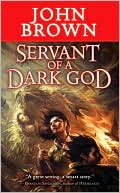


 I’m very pleased to announce that Podium Publishing, the folks producing the audio versions of the Dark God books, has cast Alex Wyndham as the narrator for the Dark God series. Production is scheduled to take place in March and April.
Terrific post. Unpublished notwithstanding – still a blessed group of folks that could attend.
Love the variety of limericks (yea, i am a limerick junkie)
Thanks for posting, John.
Glad you enjoyed it.
Thank a lot It was very helpful,