Good Stuff! The Greatest Showman

I saw the previews of The Greatest Showman, the movie about the circus guy. I rolled my eyes. The circus? Come on.

But my daughters, one by one, went to see it and came home raving.

And then my wife went to see it and came home raving.

And then my youngest was playing some music the other night, and I said, “Ooh, that’s nice. Good beat. Wow. What is that?”

She said with much affection, “The Greatest Showman, loser.”

I said to myself, maybe the previews simply stank. I said, I’ve seen movies where the previews were better than the full-length film. Maybe this was the reverse.

I said, to my fine daughter and wife, “How about a movie night?”

They were more than game to see it a second time. So we went and saw The Greatest Showman this week.

Here’s the report.

Oh. My. Holy. Freaking. Heck!

This movie is one of the best movies I’ve seen in the last few years. And get this: it was released more than eleven weeks ago, back in December of last year. How many movies do you know that stay in the theaters for eleven weeks straight? When a movie keeps attracting crowds week after week, long after the release night hype has faded, they say it “has legs.”

Let me tell you, this one has some legs. The music is awesome. The visuals are wonderful. And the story—the story is everything a story should be. I came out of the theater having wept and cheered and bitten my nails and been thrilled with a number of the scenes. I came out of the theater happy, positive, thinking about life, thinking about what really matters.

Look, if you enjoy musicals, if you enjoy dramas, if you enjoy Hugh Jackman of Wolverine fame, you must drop everything you’re doing right now and run to see this before it leaves the theaters. You’ll be so happy you did.

And now, I’m going to figure out how I can go see it again.

Share

Similar Posts

  • The Husband by Dean Koontz

    TheHusband_DeanKoontzYou’re name is Mitch Rafferty. You’re a gardener. You have no past as a cop, spy, or Navy SEAL–you’re just a plain old petunias and begonias guy. You’re working in someone’s yard when you get a call on your cell phone. You answer. And the guy on the other end has your wife.

    He tells you that you will get him two million dollars or you’ll never see her again.

    You’re lost. This has to be a sick prank. You’re just a gardener. You know peat moss and mulch. You don’t have two million. Heck, you have, at the most, $11,000 in the bank. You tell him this. He tells you he knows.

    Then your wife screams over the phone. The wife who you love, who makes  you whole. They let her talk. It’s not just one man. And then, just to show you that they’re serious, they kill a complete stranger who is walking a dog across the road. They shoot him in the head. You know they’re watching you. You look around and can’t see where the sniper is hiding.

    You’re a gardener. They have your wife. If you go to the cops, they kill her. If you don’t deliver, they kill her. What do you do?

    That’s the premise of Dean Koontz’s The Husband. I listened to this on audio book, read by Holter Graham, and, folks, I don’t think a book has gripped me like this in a very long time. And that despite some quirks in the reader’s presentation. I’m coming to respect Koontz as a writer more and more. I can’t recommend this book highly enough. Go get it. Read it. Do it before they make the movie.

    Share
  • Gandhi & Waiting for Superman

    Enthralling History

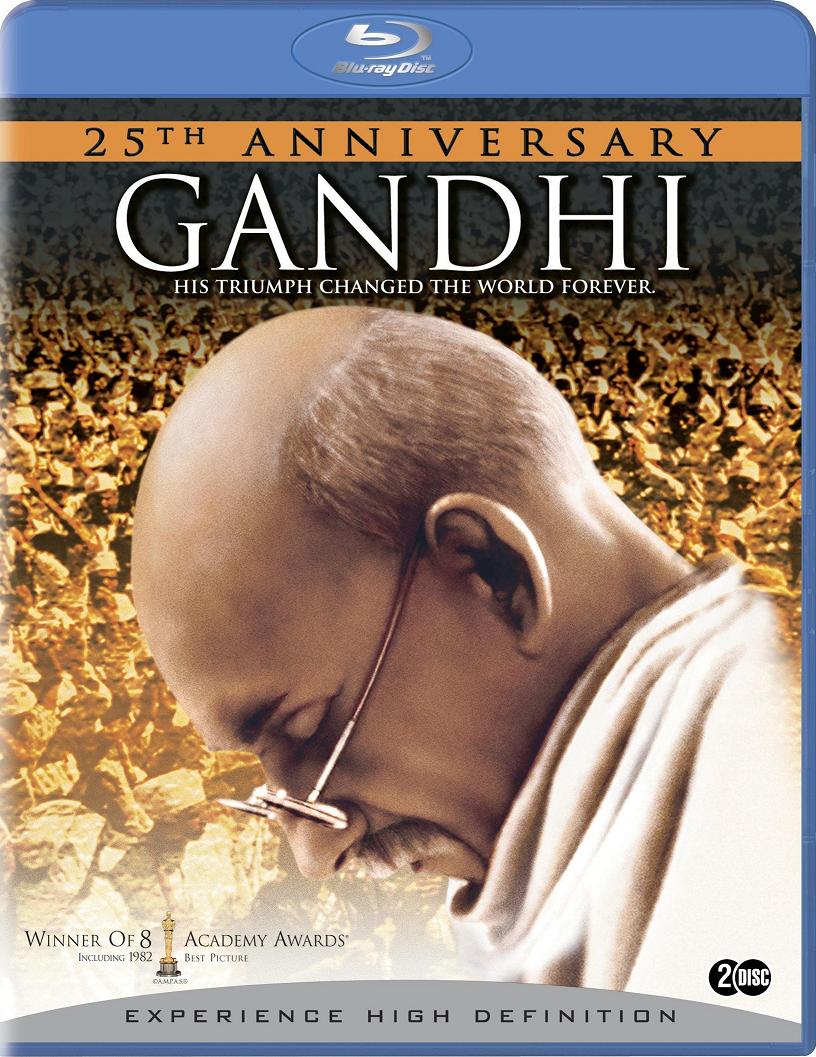
    The miracle of Netflix means that no movie or television show becomes unavailable. And there are so many produced over the last fifty years that are so very good. I recently re-watched the 1982 Gandhi with my family and have to say it is one of those fabulous movies that’s amazing every time I watch it. Not once did the production feel dated. And even though I’d already seen it, I found myself enthralled with the events and the character played so well by Ben Kingsley. No wonder it won eight Academy Awards.

    The movie portrays the last 50 years of Mahatma Gandhi’s life. It starts in 1893, when Gandhi, educated in the UK, is thrown off a South African train for being an Indian and traveling in a first class compartment. Gandhi decides to start a non-violent protest campaign for the rights of all Indians in South Africa. Quite an undertaking in those years. He’s arrested and finds himself in a number of dicey moments, but ultimately brings change.

    Gandhi is then invited back to India, where he is considered a national hero. Leaders there urge him to take up the fight for India’s independence from the British Empire. Gandhi agrees and mounts a non-violent campaign of unprecedented scale. Nothing of this magnitude has ever happened in the recorded history of the world. Which is why it’s a rough road all the way to the end.

    There’s suspense and humor and heartbreak in this movie. But it goes far beyond entertainment. This movie will move you. It has power to change. This movie is what history should be. If you haven’t seen Gandhi, or haven’t seen it in a while, let me recommend you get it this week and sit down with friends or family to enjoy a wonderful experience.

    Education and Teachers Unions

    I find it interesting that teachers in Utah, one of the most conservative states in the union, send almost three million dollars each year to the National Education Association. That’s the $165 in NEA dues for each of the roughly 18,000 union members in Utah. This is interesting because the NEA, the largest labor union in the United States, is one of the biggest supporters of the Democratic party.

    For example, the NEA spends roughly 85-90% of its direct candidate donations on Democrats. The NEA is quick to point out that those direct candidate donations do not come out of the three million Utah teachers send to them, but from additional donations to one of their political action committees. It’s illegal, in fact, to contribute directly to candidates with money received from union dues. However, there are a lot of other ways to support candidates and causes in addition to direct donations. 

    Mike Antonucci, a teacher’s union observer, explains just how that works in his article “How Much Does the NEA Spend on Politics”. The upshot is that the NEA can spend as much as they want on politics with their dues. And the lion’s share of that spending goes toward liberal causes. ACORN, for example, has been a beneficiary of NEA grants.

    Now, I don’t see anything wrong with that. People should be able to donate to whatever cause they think is important. The NEA has just as much right to make their voice heard as anyone else. I just think it’s interesting that so many conservatives have been led to donate their cash to these causes. And it’s not just in Utah. About 60% of NEA members identify themselves as conservative or independent. And yet they donate to these liberal causes via the union. What’s even more ironic is that most of them probably do not personally donate anything close to that to conservative candidates and causes. It’s not like teachers have tons of extra cash.

    It’s a neat trick to get conservatives to donate so much money to liberals. And perhaps some teachers feel it’s the price they have to pay for the services they want from the union. I would think it would be better to start another union, but that’s me. However, this is not the only kink teachers unions have introduced into the education system.

    I’m not going to argue that teachers unions are evil. These unions arose in a time when female teachers were heavily discriminated against. They do some good things. But mixed in with the good is, well, you’ll have decide for yourself if it smells.

    A great place to begin is with the documentary Waiting for Superman. You should know this movie came out of the gate with a huge strike against it in my mind–it’s produced by Davis Guggenheim, the same guy who did An Inconvenient Truth. Good grief, that’s all I wanted was another two hours of Chicken Little running around saying “sky is falling, the sky is falling!”

    But I didn’t find any of that in the film. For example, the film doesn’t say all American schools are awful. It doesn’t say teachers are terrible. Contrary to what the movie’s critics claim, including the NEA and its many state and local affiliates, the film doesn’t suggest charter schools or standardized testing are the silver bullet answers to our issues. I simply didn’t encounter the sensational propaganda others claimed would be there.

    No. What the film does is examine some of the issues in our current system, which put so many children at a disadvantage, and the role the teacher unions play. It does not, as some critics claim, go on to suggest any solutions. It presents a problem, experienced by real parents and children right now, then poses a question: what can be done?

    I found it eye-opening and thought-provoking. I think it’s a must-see. If you have children or grandchildren in school, if you’re one of our many fine teachers or school administrators, you’ll want to watch this movie and then ask yourself that same question. What can be done? What works? What’s best for the children? And does the current way our unions operate work in any way against those interests? For those who elect not to go into immediate union-attack or union-defense mode, I think this film will introduce some valuable points to the discussion about education.

    Share
  • La Brea Bakery Breads Cookbook, Very Young Girls

    Divine Nature

    I became a fan of bread when I lived in Europe. But not just any bread. I’m talking about the kind of bread with a crust that crackles and is chewy. With an inside that’s soft. Bread that doesn’t need anything on it, but makes you sing when you eat it with soup or a thin smear of butter. Alas, I came home and could not find such bread. It was all Wonder Bread nonsense and its many sandwich bread relatives.

    Luckily, I married a gal who had lived in Europe as well. And who, for a few years, actually had some time to bake. It took some time to find a cookbook with recipes that worked. It took some practice. But she was finally able to recreate that crackle, chewy, soft (not the shattering, roof-of-mouth cutting stuff either). And we enjoyed great bread for a few years. Then she took a job outside the home and we’ve been relegated to American sandwich bread again.

    Enter four daughters. Three of whom are working through a church program like the Boy Scouts that’s meant to help them develop key virtues. Each of the virtues requires they complete a number of tasks to educate them about that virtue. When they’ve completed the tasks for a virtue, they are to devise and undertake a ten hour project to help them practice what they’ve learned.

    Recently, I sat down with my oldest to see where she was and found to my surprise that she still had a number of things to complete. As I reviewed the requirements with her, I pointed out that she’d fulfilled the requirements for all of these virtues many times over. But she refused to count her activities that might apply because she didn’t perform them at the time with the intent to fulfill the requirements. She wanted her accomplishment to be purposeful. She’s focused on the intent of the program, not the award for the award’s sake. (Where do such children come from?) I saw her point, applauded it, and went back to work trying to help her brainstorm what she could do.

    We came to the virtue called Divine Nature, which states: “Be partakers of the divine nature. Giving all diligence, add to your faith virtue; and to virtue knowledge; and to knowledge temperance; and to temperance patience; and to patience godliness; and to godliness brotherly kindness; and to brotherly kindness charity.” Many of the activities revolve around womanhood and family. But it was the big project she needed to complete, one that “will help you practice what you have learned. This should be a significant effort that will take at least ten hours to complete.”

    Some of the suggested projects had to do with service in the community, others with talents. Then I read: “Develop a skill you could use in your future home, such as cooking, sewing, making repairs, organizing, or designing.”

    Cooking?

    My bread soul stirred.

    Cooking?! Baking is cooking.

    Memories of crackling crust and soft centers filled the mind of my bread beast. “Bread!” I declared.

    Luckily, Daughter Number 1 had also eaten her mother’s bread and missed it. “Bread,” she agreed. And we pulled the book out that my wife had found so useful, and began.

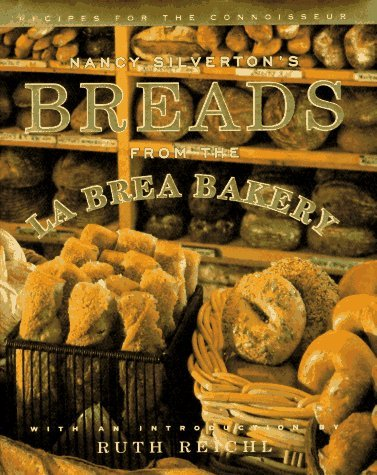
    The book is Nancy Silverton’s Breads From The La Brea Bakery. Silverton is a master chef.  She owns and operates the Campanile restaurant and the La Brea Bakery in Los Angeles. Her bread is sought for all over the nation. Her breads and the breads she shares in this book are all made with a sourdough starter that she teaches you to make from scratch with grapes. Actually, you don’t make it, but feed it. Because it’s a living thing. And after a while it becomes almost like a strange family pet growing on the counter and in the fridge.

    Some might hear “sour” and turn away, but Silverton explains how to keep the starter from becoming too sour. The result is a crackling, chewy, soft bread with a light tang that’s delicious. In fact, Daughter Number 1 just made bagels from the recipe in the book. There’s no tang at all. They’re the best bagels I’ve had. She’s also made the regular loaf, pancakes, and waffles from this same starter. They’re all delicious.

    The book starts off with a lesson in bread making then shares about 60 recipes, everything from baguettes to whole-wheat sandwich bread to sourdough onion rings. The only downside to the book is that I wish it had more pictures. An illustration, for example, in the section on rolling bagels would have been helpful. But we found one on youtube, and it sufficed. And I will confess that I didn’t think once about pictures when eating the bread.

    BTW, we’ve stopped calling this bread. Now, when it’s time, one of us will say, “I think it’s time to make some divine nature.”

    Our Young Girls

    I was recently reading about organized crime and their main activities.  In the section about what ties such groups have to prostitution, the authors reported that it’s estimated that 20% of all prostitutes are street walkers. Another 15% are call girls or escort service workers, and the remaining number, 65%, work in an establishment of some kind—massage parlors, brothers, bars, and hotels.  

    The authors reported that most street walkers have a lover or companion relationship with their pimp. This didn’t make sense to me at the time. But after watching Showtime’s Very Young Girls, I now understand what they’re talking about.

    This film is a documentary about teenage girl prostitutes in New York City and the GEMS (Girls Education and Mentoring Services) that helps them to find a new direction, which is not always easy.

    One of the awful statistics the film reveals is that the average age of entry into street walker prostitution in the United States is just thirteen.

    No, that’s not a typo. It’s thirteen. THIR-TEEN.

    The film introduces us to Rachel Lloyd who dropped out of school and became a teenage stripper and hooker. But she got out. She changed her life and then started the GEMS program to help young girls who found themselves in situations like the one from which she escaped. Lloyd began the program in her apartment and eventually got funding to open a recovery center where girls can seek shelter while they’re trying to redirect their lives.

    The film profiles a number of the girls working through the program. Some of these kids are kidnapped off the street and forced into the “life” as they call it. Some are lured away by pimps who initially act as if they want them to be their girlfriends, flattering them and showing them a good time, and only after they’ve been sleeping together for a while do the pimps then explain that they need to make some money.

    Many of these girls come from broken homes. Many have grown up believing the sexual messages portrayed by the media. The girls are beaten and given drugs.

    Some have been so psychologically manipulated by their pimps that they feel compelled to return. Others have successfully broken with their pasts.

    And all of them are just kids. KIDS!

    This is a movie that’s hard to watch. It’s not graphic in any way. It’s simply the subject matter. It’s also eye-opening and, while the problem is huge, does provide some hope. Thank the Lord for people like Rachel Lloyd. And for people everywhere who live upstanding lives and by kindness and good teaching save their children and others in their communities from this terrible waste. Rent this movie on Netflix. I think you’ll find it’s well worth the time.


    Share
  • Stonefather by Orson Scott Card

    stonefather_72dpi“When Runnel was born, he was given a water name even though there had never been a wetwizard in the family.

    In the old days such names were given only to those babies as would be sacrificed to Yeggut, the water god. Later, such names were given to those whould would live to serve as priests to Yeggut. Still later, wetnames went to children of families thath pretended they once had a watermage in their ancestry.

    But now, in the village o Farzibeck, wetnames were given because the mother was fond of a nearby brooklet or because the father had a freind with such a name.”

    So begins Stonefather by Orson Scott Card. It tells the tale of Runnel who is the ninth son and fifteenth child of a farmwife who likes all her children well enough but calls them all “by each other’s names and didn’t know enough numbers to take a census and notice when one or two were missing.”  He’s also the son a man who beats him. Eventually, Runnel leaves home and seeks his fortunes in Mitherhome, the big city far to the south.

    This isn’t a full novel, but a novella of 112 pages. However, the Subterranean Press edition has a glorious cover and ink illustrations inside. More importantly, the story tells a tale that’s full of wonder, humor, and a number of delightful characters. It reminded me of the best of Card’s Hatrack books. But, of course, this world is very different. It’s strange, and I was happy to explore it with Runnel as my guide. Take an hour to read this. You won’t be disappointed. Then you can look forward, as I do, to the first of the Mithermage novels based on this world.

    Share
  • Last Word & Park City Peaks

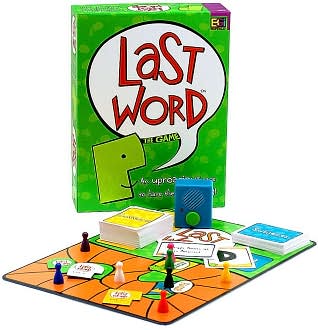
    LastWordGameMy youngest’s birthday fell on Thanksgiving this year. We asked her what she wanted to do. She said she wanted to go to a hotel to swim and then play a game as a family, so Nellie and I went to work. Nellie got the game. I got the hotel. Both were great.

    The game was Last Word by Buffalo Games Inc. It’s fairly simple. There are subject cards with categories on them like “vegetables,” “breeds of dogs,” or “places you find water.”  Then there are letter cards. Each player gets a subject card.

    The round starts when someone flips over a letter card. If you can think of a word that starts with that letter in your category, you shout it out, slam your subject card down, and then everyone else tries to come up with words that start with that letter and fit the category.  Or you try to think of words in someone else’s category if they beat you to it.  There’s no order to it–you just shout out the words as they come to your head.  The last one to come up with a word before the timer buzzes wins that round. The twist that makes it so fun, however, is that the timer is random.

    You can play individually, in teams, or some mix (our youngest and I teamed up). Because of the random timer, anyone who can think up a word can play, which means our daughter who is eight could compete with the one that was seventeen.

    We had a great time. One of the funniest things about it is that everyone is desperately trying to come up with words. Some fit, some don’t. Some don’t even exist. For example, when we did the category “male names,” number 3 shouted out “Mancake.” We couldn’t stop laughing. I think that one is going to enter the family vocabulary.

    ParkCityPeaksHotelWe also had a great time at the Park City Peaks hotel. As far as rooms go, they were good rooms. The bed was a bit too soft for me, but perfect for my wife. We got them for $65 a night, which isn’t bad at all. But it was the pool that made the experience. 

    The pool is an actual pool, not the big bathtubs some newer hotels offer. For example, the deep end is six feet deep. But the cool thing is that half of it is indoors and half of it is out. And the outdoor portion is heated. There’s also a large heated hot tub outside as well. In the picture it’s the thing producing the long row of steam in the back.

    It helped that we didn’t have much snow so the place wasn’t crawling with skiers. In fact, we had the pool mostly to ourselves. So imagine: there we were on a November night in this alpine setting, the steam rising off the water, swimming and horsing around underneath the winter stars. It was marvelous. You can be sure we’re going back.

    BTW, we had Thanksgiving dinner at a restaurant. Let me recommend this to you. It makes the day a breeze. You can still have your homemade turkey dinner, but picking up the turkey  a few days after the holiday allows you to get them for cheap, cheap, cheap.

    Share
  • |

    Buffett’s Letter to Berkshire Hathaway Shareholders on 2008

    I got my masters degree in accounting and information systems. While going to school I started an investment club and learned about a man named Warren Buffett.

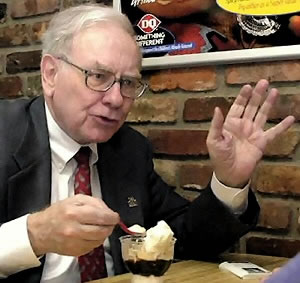
    Warren Buffett is humble, full of folksy humor, and trades places with Bill Gates as the richest man in the world, depending on the year you’re counting. His annual letters to his shareholders are a delight to read. This year’s is full of wisdom about the current financial crisis. Moreover, within a few minutes of reading you will be able to get some key insights that can help as you evaluate the plans being hatched in Washington and how to prevent this particular type of crisis from happening again. 

    If you’re not that into finance, I recommend reading:


    1. The introduction starting on page 2 and ending on page 3
    2. The “Finance and Financial Products” section starting on page 10 and running through page 12

    Once you’ve read those, if you want to laugh and see Buffet’s humor, skip to page 21 where Buffett talks about the annual meeting of shareholders. Tell me you wouldn’t want to attend.

    The Berkshire Hathaway homepage

    This year’s letter to shareholders (you will click on 2008 because he’s discussing the results of that year)

    Share

2 Comments

  1. Ok, you hooked me.

    I had dismissed it along the same line of reasoning that you did.

    But with your glowing .dot.dot.dot one-liner, followed by by more fluent accolades,,,, well, you got me.

    Thanks, John.

Comments are closed.