Good Stuff! Two fun family and party games

There’s nothing quite like the laughter and fun a good family or party game creates. And we discovered two games this summer that have brought hours of pleasure.

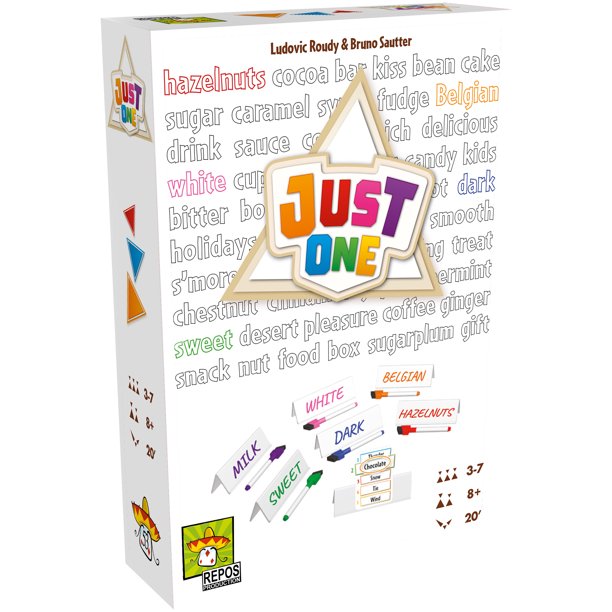
The first is Just One. It’s for 3 to 7 players and takes about 20 minutes to finish.

Now, I was skeptical of this game at first because it’s a cooperative party game.

I mean, come on. Cooperation?

No teams?

No competition?

What were we going to do—hold hands and sing Kumbaya?

I was fully expecting to be bored out of my mind. Boy, was I wrong. There was suspense, laughter, and loads of fun.

There are 13 rounds in each game. In each round, one player blindly selects the number of a word on one of the game cards. The other players each write a one word clue to help that player guess the word. However, if two or more players write down the same word, they have to remove that clue.

So you’re trying to come up with one-word clues the others won’t that still help the guessing player. Some clues lead the guessing player off onto funny tangents. Others are just funny. And then there’s the suspense of whether someone else wrote your word and whether the player will be able to guess it from the clues that are left.

Your goal is to guess all 13 words selected. And there’s a little score card that ranks what it means if you get 13, 12, 11, etc.

As an aside, it’s crazy to me that the score card provided motivation. But it did. It was a delightful little brain hack.

One Word is a quick, fun game. We’ve played it with a few as 3 and as many 8 players and had a ball each time. We are so happy to have it in the family game closet.

The next is Fish Bowl. It’s for 4+ players. What this game does is take favorites like Taboo, One Word, and charades and mixes them together in a competitive game between two teams.

Here’s how you play it. Each person writes up 5 to 7 different words or phrases on separate slips of paper, folds the papers, and puts them in a bowl. Then you do 3 rounds.

Round 1 is like Taboo, where you can describe, but can’t say or act out the word or phrase on the paper. You select a team to go first. One person on the team selects the papers from the bowl and then tries to describe the word or phrase. The team has 30-45 seconds (you decide) to guess as many of the words as possible. When the time is up, it’s the other team’s turn. Back and forth you go, selecting a new team member each turn to give the clues, until there are no more slips of paper in the bowl. Then you count the number of slips each team got and move to round 2.

In round two, you put all of the slips of paper back into the bowl. The team that went second in the first round starts this one. This time the person giving clues gets to share one word. That’s it. And the team has to guess it. Again, the team has 30-45 seconds to guess as many as they can.  Then it goes to the next team. And you switch back and forth just like you did in round 1, and when the slips of paper are gone, each team counts up their score.

In round 3, you put all of the slips of paper back into the bowl. The time the person giving the clues has to act them out. No words allowed. You run this round just like you did the first two with  30-45  second turns, switching back and forth between the teams until all the papers are gone. At that point, the teams  total their scores for this round and then for all 3 rounds together to see which team won.

If you don’t want to use paper, you can play a version online.

Either way, it’s another fast, fun game. In fact, we played it last night. And laughed and laughed when one daughter was trying to get the other to guess “sling” and nailed her teammate in the head trying to act out a rock hitting Goliath.   Movies are great. But sometimes what you need is some delightful game fun. And I’m betting you’ll love these.

Share

Similar Posts

  • Good Stuff! The Addiction Recovery Program

    137-What-is-the-12-Step-Addiction-Program-L2-ldsPart of my research for Bad Penny led me to the Utah state prison. I was able to attend a session with five of the convicts. Let me tell you: walking through those high fences and electric doors and hearing them close behind you was something.

    The five men all had interesting and unfortunate tales to tell. But they were all hopeful. I was there with a couple of kids in a troubled youth program and their leader. And of course there were a couple of guards.

    We got to ask questions and chat. It was an upbeat session despite the topic. One thing I asked about was the food, and one fellow said that the worst thing was this “crack wheat” they served for breakfast.

    “Cracked wheat?” I asked with a smile. “That’s good old Mormon food.”

    He said, “It’s awful.”  We laughed.  There were many times we laughed.

    And there were a lot of things asked and shared. One of the key things that stood out to me was that all of them were there because of drug addictions. And as they shared their goals of staying clean, they revealed that this wasn’t their first time inside. For one it was his third, another his fifth, another his ninth.

    And it was with those comments I realized just what a hold addiction had on these guys.

    Fortunately, most folks with addictions don’t have to go to prison. But a lot fail to break out of them and miss many opportunities for joy, sometimes wrecking the ones they have. The 12-step program has one of the best success rates of any program.

    My church has meetings and programs all over the country. They’re free and open to anyone. If you or someone you know is struggling with an addiction to alcohol, drugs, tobacco, porn, or eating disorders, you might want to go here to see what to expect from a 12-step meeting and how to participate.

    Even with all the vicissitues, life is meant to be enjoyed.

    Share
  • Good Stuff! Three Days in Moscow

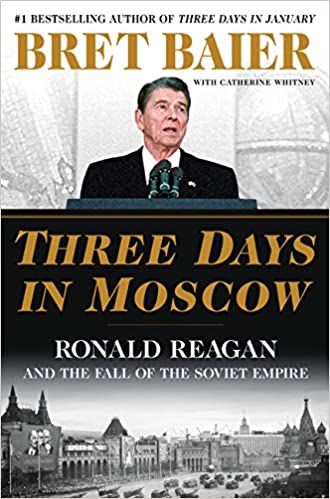
    Book cover, Three Days in Moscow

    I just finished Three Days in Moscow: Ronald Reagan and the Fall of the Soviet Empire by Bret Baier. It’s a New York Times bestseller that takes you into the world of Ronald Reagan, his rise to power in politics, and his role in ending the Cold War. And it does in a personable way with gentle humor throughout.

    I enjoyed the fascinating behind-the-scene insights about the personalities involved and the clarity about what really happened. And how the book brings Reagan to life, as if he’s almost there. Along the way you’ll also get insight into Mikhail Gorbachev, the assassination attempt on Reagan, and more.

    Baier is the chief political anchor for Fox News. In 2001, he became the station’s chief Pentagon correspondent and ended up traveling to Afghanistan 11 times and Iraq 13 times. In 2007, he became the station’s chief correspondent to the White House. More importantly, Baier seems to be one of the few journalists these days who is simply trying to get and report facts instead of spin. And that’s exactly what he’s done here.

    If you like biographies or history, if you want to know how the U.S.A. and the U.S.S.R. stepped back from decades of mutually assured destruction, if you want to get a view into how diplomacy is done, then I think you’ll love this book. And you’ll probably love it even more if you can listen to the audio book version, read by Baier himself, which also includes a recording of Reagan’s speech to the students at Moscow State University. I listened to it via the Overdrive account my public library provides. Baier’s reading was terrific.  

    Share
  • Good Stuff! The political book for our times

    I just finished the most important book on politics I’ve read in years.

    Years.

    In fact, I’ll go so far as to say it is the book for our current political times.

    I say this because America isn’t facing the threat of Communism, Nazism, poverty, illiteracy, or disease. ISIS and the terrorists are on the run. We’re beginning to figure out a better way of treating our LGBT brother and sisters. And we’re not poisoning ourselves with the broad-based racism or sexism of the past. Yes, there are lots of areas where we can improve. But these are not the main problems of our current time.

    In my opinion, the main problem of our current time is a burgeoning contempt between left and right.

    Political scientists find our nation is more polarized than at any time since the Civil War. People in positions of power and influence on both sides of the spectrum, and everywhere in between, are setting us against each other. They tell us our neighbors who are on the other side are evil, corrupt, or stupid. And must be utterly vanquished. And many of us perpetuate the message, very frequently on social media.

    By some measures the divide between right and left in America is beginning to approach the size and feeling of the one between the Israelis and Palestinians.

    Is that really where we want to go?

    I think most people will agree with me that it is not. So what do we do about it?

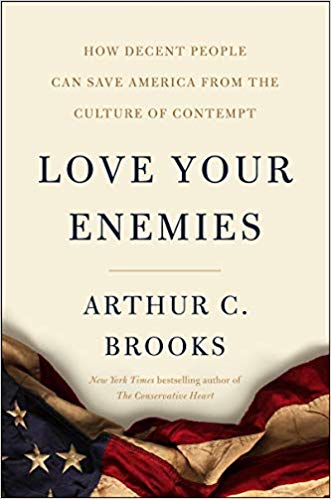
    May I suggest we start by reading this terrific book by Arthur C. Brooks called Love Your Enemies: How Decent People Can Save America from the Culture of Contempt.

    With that title you might think Brooks is suggesting that the solution to the divisions in our country is to start a national program for the singing of “Kum Ba Yah.” If so, you would be wrong.

    Brooks doesn’t claim we need less disagreement. He thinks we need more disagreement. Yes, you read that right. More. He’s calling for more, strong disagreement. It’s just that we need to disagree in a better way. A different way.

    At this point you might be wondering how it’s possible to disagree, and in greater amounts, and not run the nation off the cliff in flames.

    I was wondering that too. And Brooks provides the research, the thinking, and a number of practical methods in his book. Brooks will make you think about how we interact in a totally different way. And he does it with his trademark good humor. You’ll laugh, you’ll think, and you’ll come away seeing a better path.

    If a good portion of us disagree the way Brooks is suggesting, it will change our country. All we need is a core of us willing to try.

    If you’re interested in politics, if you are getting tired of the insults on social media and the news, if you’re tired of the way the parties are not working with each other in Washington, I think you’ll love this book.

    If you want a taste of what Brooks is talking about, watch his eleven-minute commencement speech at BYU this last April. Find it here. If you want another taste, watch his TED talk.

    Share
  • Good Stuff! 3 Remakes That Will Go Down Into Your Bones

    Sometimes a remake of a song is better than the original. Or if not better, different and equally as good. I have three that I think fit that bill.

    First is a mix of “The House of the Rising Sun” by The Animals and “Amazing Grace.” It was sung by Jerry Lawson and the Talk of the Town on NBC’s The Sing-Off, which used to be one of the best music competitions on TV. It was all voice, all a’capella, and the things some of the groups did were simply amazing. But then NBC decided to shorten it all into a one-night competition and basically ruined it by removing the multi-week build of the competition and, more importantly, letting us get to know the groups and hearing a range of songs. Oh, well. At least we got this. Turn up your speakers and let it fill you.

    You can get the single here on Amazon.

    The next is a remake of “Go Down, Moses” by The Lower Lights, who have taken this old choral and infused it with a new folk, soul, revival-style groove that makes me think this is probably how the song was originally sung.

    Every time I hear it, it goes down into my bones and calls forth this desire to sing. You can get it here on Amazon.

    The last is a remake of “Glorious” by Stephanie Mabey. This one was part of Meet the Mormons and sung by David Archuleta.

    You can get the exclusive free download of the single here.


    Share
  • Good Stuff! La Brea, Bingham’s, Aggie Lemon Custard

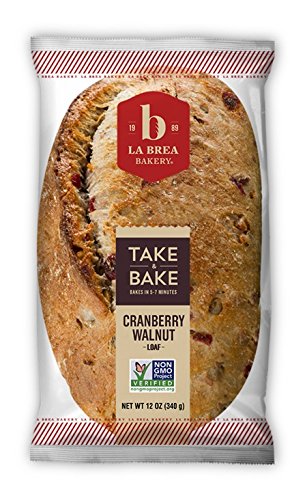
    I have cut my consumption of bread to almost nothing. And so when I want a slice, I’m not going to waste it on run-of-the-mill sandwich bread. I want something delicious. And the best bread we’ve found is the La Brea Bakery bread that’s sold at Smith’s and other Kroger food stores.

    Our favorites are the cranberry walnut loaf, the toasted sunflower honey loaf, and the pecan raisin loaf. These breads are made the old-fashioned way with a substantial crumb and a crackly, chewy crust that’s a joy to eat. And unlike the bread from a chain bread company that will remain unnamed, these loaves are actually fully cooked.

    We just got two loaves today on our trip to Logan. We came back home, cut a few slices, popped them in the toaster, buttered, and ate with some chicken noodle soup. Pure bread heaven.

    #

    With that bread you might want some bratwurst. Not grocery store brats. Real brats. If so, I found the spot to get them (thank you, Larry Correia). There’s a gem of a butcher’s shop in Morgan, Utah called Bingham’s Custom Meats. It’s clean, well-lit, and nice-smelling. The people there are friendly. And they have over thirty different flavors of brats.

    Bratwurst, by the way, comes from German. It’s made up of two words. “Brat,” which means finely chopped meat, and “wurst,” which means sausage. At Bingham’s they don’t add nitrates or any other preservatives. Their recipes are pork mixed with various sets of spices.

    So far I’ve tried nine of their flavors, and they’ve all been delicious. They’re great for a low-carb diet. A Bingham’s brat and a bunch of cooked vegetables makes an awesome lunch. If you want, you can also just slit the casing and cook the sausage patty or stir fry style.

    #

    I’ve also cut my consumption of sweets. Which means if I eat something, I want it to be worth it. And so it gives me great pleasure to report my discovery of a wonderful flavor of Aggie ice cream at the USU Creamery—it’s called lemon custard.

    I know. Lemon ice cream?

    And when I say ice cream, I mean ice cream. This is not a sherbet. And let me tell you right now, this ice cream is amazing. It’s amazing all by itself. It’s amazing with a banana, which they sell at the creamery. Furthermore, for a little fun, if you combine it with the regular Aggie chocolate, the two together taste like a Tootsie Roll. No lie.

    I had it last month, and the month before, and I can’t wait for another date with the wife to go enjoy another scoop.

    Share
  • |

    My First Year as an Indie Author

    On November 24th last year, a little over 13 months ago, I released my first indie title—Servant: The Dark God Book 1. That release was the official rise from the sideways swamp crash I had with Tor Books.

    BTW, sideways swamp crashes in publishing, which can be caused by all sorts of reasons, are not uncommon. Most writers will take a hit or three in their career. That’s just part of the writing business. The question is what happens after the swamp crash?

    In my case, I got to work. And, boy, was it a lot of work.

    The results have been positive. It was not a phoenixian rise from ashes to glory; it was more like a damp crew patching the ship in the jungle with whatever they had at hand and then launching with nothing but a few birds making any noise. We are by no means past the many perils and obstacles on the path–right now a solid hit from just about anything could knock us out of the sky.

    But we are airborne.

    We are flying.

    And by that I mean the business is delighting readers and generating income.

    I’ll probably hit close to 23,000 paid sales since that launch. The large majority of them were for Bad Penny. To give you some perspective, a single title will make the official Publishers Weekly bestsellers lists (of traditionally published authors) hardback and paperback categories when the title has sold around 100,000 copies in the year. The top dogs report sales of a few million.

    It’s clear the John D. Brown crew has got a ways to go.

    But we don’t have to reach that lofty level to be viable. It would be awesome. At the same time, it’s helpful to be realistic. There are somewhere between 300-400 titles on the adult hardback and paperback list combined. The same on the children’s lists. So I estimate there are around 700 traditionally published books, fiction and non-fiction, that sell at those bestseller levels. That’s out of the millions of trade titles available on Amazon.

    The good news is that the majority of writers making a living don’t appear there. The fact is that you don’t have to sell 100,000+ copies of a single title in a year to make a living. In the indie world, you can do just fine with what Russell Blake calls base hits and doubles.

    So are we making a living?

    Those sales have generated enough net profit to purchase us a nice used vehicle and a few other things. Better than a poke in the eye with a sharp stick (as my neighbor Mike Carr used to say), but making $10-20k can’t replace the day job. Not even close. Still, it’s a beginning.

    Will our crew make it?

    Can they survive the ferocious flying monkeys?

    Stay tuned.

    In the meantime, I want to summarize a few things I’ve learned about indie publishing and give a few shout-outs.

    First, I want to thank all the readers who decided to give one of my books a shot. From the reviews and sales, it appears the majority found just what they were looking for (and there was much rejoicing).

    Second, a big thanks goes to Larry Correia. Not only is he generous and enthusiastic, but his audience is as well. The Monster Hunter Nation made a definite difference for me this year.

    I want to thank LL Muir and Diane Darcy, two romance writers who have been incredibly generous in sharing their indie insights and support.

    Devon Dorrity and Dixon Leavitt spent hours, HOURS, of their time helping me with covers. I can’t thank them enough.

    I also need to thank the Codex Writers. There’s a small group of us indies there, and they’ve all be very helpful in sharing insights about what’s worked for them and what hasn’t.

    I’ve found other resources helpful as well. The Passive Voice kept me current on the industry. Russell Blake’s blogs gave me a clear-eyed opinion of what it takes to succeed. The Calibre ebook editor has saved me many times. And Anne-Marie Concepcion’s online course on using InDesign to publish ebooks was a very good introduction, as were Dean Wesley Smith’s online courses on interior and cover formatting.  I list other resources I found useful in my Resources for Indie Writers post.

    Okay, so what have I learned?

    1. Nothing happens without visibility

    This is retail. If your product is not somewhere that people can see it, they won’t buy it.

    I was in Wal-Mart the other day. My sister calls it the Evil Empire, but she’s a Tarzjay snob. I myself am a value shopper. I want what I want, and I want to pay as little for it as possible. At the same time, I’m not going to go out of my way to get it because searching around costs time and money. So if I’m looking for something in Wal-Mart and I don’t see it on the shelves, guess what? I buy something similar that will do the job.

    Wal-Mart used to stock Marzetti’s Ranch Dip. The best vegetable dip EVAR. But then sometime this year, they stopped stocking it.

    Why?! Why do they stop stocking stuff the moment I find it?!

    (Hey, maybe that’s why they’re the Evil Empire . . .)

    I mourned for a few seconds. And then I purchased the Lighthouse dip. It’s good. If they put Marzetti’s back on the shelves, I’ll switch back immediately. But the point is that if it’s not in front of my eyeballs when I go shopping, I ain’t gonna buy it.

    And I’m finding retail is the same with ebooks as it is with everything else. You can have the best product in the world, but you aren’t going anywhere with it until you are visible to your buyers.

    2. There are a couple of ways that I was able to make my stuff visible

    The way to make my stuff visible was not by publishing on Amazon, Nook, and the rest.

    Publishing means nothing.

    Think about it. There are, right now, 3,079,561 books in the Kindle bookstore.

    Yes, three million!

    If those were physical books, and we lined them up spine-out like we do on a bookshelf, and we assumed the spines average about an inch in width, they would make a line 48.6 miles long.

    For us Utahans, that’s a line of books that stretches from the Mormon temple in downtown Salt Lake City, past Provo, and ends in Springville! (Look up your own local distances to get an idea.)

    That’s the kind of visibility you get by publishing your book, which is nada.

    So if getting it in the store that’s 50 miles long didn’t help, what did?

    Getting on a bestseller list.

    I sold thousands of copies of Bad Penny on Nook when I was on the Nook’s top 100 list. I rose to #3, in the entire Nook store, then hung out around #50 for about a month. And when that burst of sales that made me #3 fell out of the algorithm (30 days later), I fell off the list. My sales dropped like a stone. Not to nothing. But they were a fraction of what they had been.

    How did I get that #3 slot to begin with? The same way I rose to #30 for a few hours in the Kindle store, then slowly dropped to the 1,200s for a few days. I got it by placing an ad with the king of book advertising services, aka BookBub.

    How did I get onto BookBub? Here’s their requirements and tips. Please note that the reviews of Bad Penny were part of what made the book appealing to BookBub.

    How did I get reviews? By using other ad services to make my book visible and getting mentions on blogs like Larry Correia’s and a few others. And by following recommendations in the book Let’s Get Visible and Your First 1,000 Copies and the suggestions of others who are selling well. And that’s a key thing too–looking to see what folks who are selling well are doing, not those who aren’t.

    Of course, readers also liked the books enough create word of mouth. And I can track some of my sales spikes to specific posts or people. The ultimate goal is to have so much word of mouth that everyone’s talking about you. But until that time, I ain’t going to rely on word of mouth alone.

    Why not?

    Because I’d like to increase my odds of success. I’d like to accelerate them. And thinking that word of mouth alone is going to do that flies in the face of everything I’ve learned about retail. Read what I had to say about books and lemonade and tending your garden for more. Consistent efforts with methods that actually have some track record of success seem to have helped a great deal.

    BTW, Bad Penny is currently in the top 10 of three of Amazon’s thriller lists. I guaran-dang-tee you that being on those lists is a big factor in me selling somewhere around 60 copies a day. I saw that with Nook. Being visible starts a virtuous cycle–more people give you a try; if they like the book, they spread the word, which leads to more sales, which keeps you visible, which prompts more new readers to give you a try. Yeah, you’ve got to be good. But you’ve got to be visible first.

    3. In most cases, books in a specific genre are substitutes

    When readers purchase a book, they are looking for a certain type of experience. And my book’s experience isn’t so singular that readers can’t get something roughly similar from another book.

    I love Lee Child. But Robert Crais provides an experience that’s basically inside the same ballpark. So does Nelson Demille and a whole host of others, including me.

    If Lee Child stops writing or slows down his production to one book every four years, I’m not going to stop reading thrillers. There are plenty of other authors that give me the general adrenaline, surprise, action experience I’m looking for. I’ll be sad, but there are a lot of good authors out there. And I’m sure a few will become my new Lee Child.

    Of course, we aren’t all exactly the same. I provide a noticeably different tale than Lee Child does even though we’re in the same Lone-Ranger-vigilante-justice action genre. And so, if I produce the best tale I can, I will find some readers will come to prefer me to Child because I line up more with their tastes than he does.

    In addition to continue to work on visibility and craft, this means I’ve got to up my production. I’m going to try for 2.5 brand new books in 2015. That’s nothing for some folks. But that’s a good stretch goal for me.

    4. There is no one sure-fire way to success

    Even though visibility and studying your craft helps, nobody I know who is doing well has a replicable step-by-step program that guarantees success. There are some activities that seem to make the odds better, but there is no guarantee.

    For example, from what I wrote above about BookBub, you’d think that’s the brass ring. Nope. I know other authors who have run promos with them and didn’t have near the success Bad Penny did.

    Russell Blake’s advice on this seems to square best with my experience. See the links to his blogs here to see what I’m talking about.

    5. Figuring out how to make a living with this has a lot in common with Lean Startup principles

    The basic concept behind lean startup is that when you’re in a market without a lot of info on what works, the company that wins is the one that learns what works the fastest. And you do that by conducting experiments.

    You experiment to see if you’re offering any value to the intended audience. You experiment to see if you’re promo methods are actually feeding your engine of growth. You experiment to see if your audience really is big enough.

    The experimental approach taught in the lean startup stuff has freed me from a lot of anxiety. Success or failure is not about me personally. It’s about my techniques. It’s about my craft and business skills. It’s about me learning how to learn quicker.

    I’m approaching my thriller and epic fantasy properties as experiments. I’m approaching various visibility methods as experiments. My current state of craft is an experiment. If what I’m doing with my current properties doesn’t work, I can pivot and experiment with something new.

    The question is whether I can learn what works–to find an opportunity to add value and provide that value–before I run out of runway.

    If you’re interested in these ideas, let me recommend The Lean Startup by Eric Ries, which explains the general principles, and Running Lean: Iterate From Plan A to a Plan That Works by Ash Mayura, which shows you how to start to implement them. These two books have changed how I approach the writing business.

    Bottom Line

    The bottom line is that I love developing stories and sharing them with readers.

    I knew this already, of course. But having the ship up and flying again made it hit home in a big way. I enjoy the process of developing a story. I love the research, the story generation, the surprises that come along the way. And I love the emails I get and the discussions I have with readers who have read my books and enjoyed the heck out of them.

    So that’s the big summary.

    Year two stands before us. Let’s hope John D. Brown and company can learn and produce at higher levels than we ever have before.

    Have a wonderful 2015!

    Edit 1/14/2015: Here’s John Ellsworth, another indie author, with a similar tale. Although I’m jealous of his seven books in a year. I need to get cracking!
    Share