Good Stuff! 3 Remakes That Will Go Down Into Your Bones

Sometimes a remake of a song is better than the original. Or if not better, different and equally as good. I have three that I think fit that bill.

First is a mix of “The House of the Rising Sun” by The Animals and “Amazing Grace.” It was sung by Jerry Lawson and the Talk of the Town on NBC’s The Sing-Off, which used to be one of the best music competitions on TV. It was all voice, all a’capella, and the things some of the groups did were simply amazing. But then NBC decided to shorten it all into a one-night competition and basically ruined it by removing the multi-week build of the competition and, more importantly, letting us get to know the groups and hearing a range of songs. Oh, well. At least we got this. Turn up your speakers and let it fill you.

You can get the single here on Amazon.

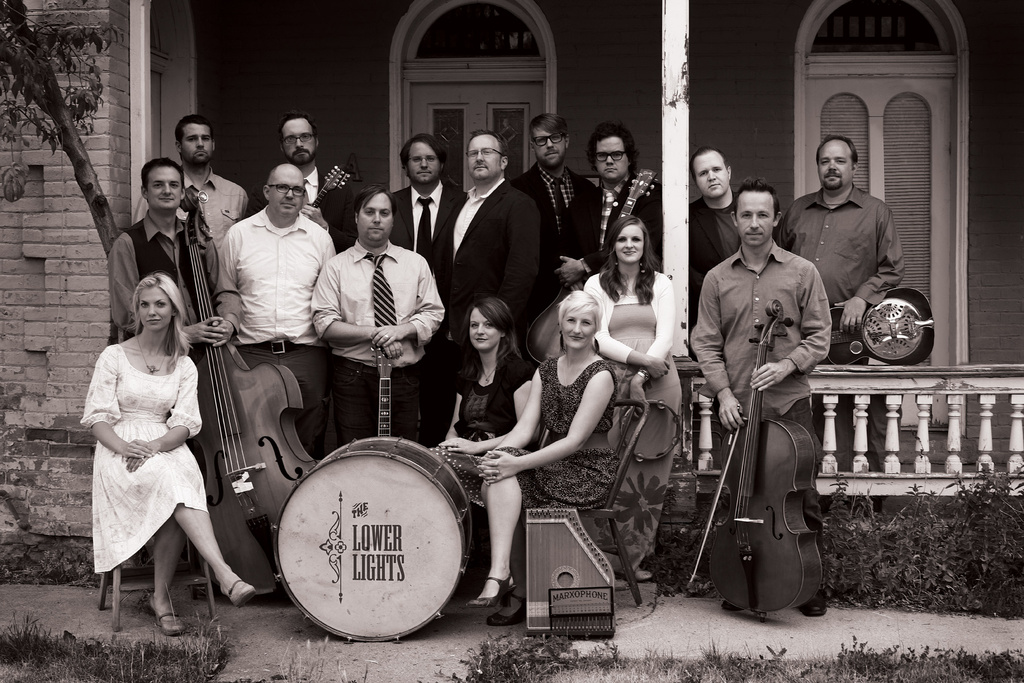
The next is a remake of “Go Down, Moses” by The Lower Lights, who have taken this old choral and infused it with a new folk, soul, revival-style groove that makes me think this is probably how the song was originally sung.

Every time I hear it, it goes down into my bones and calls forth this desire to sing. You can get it here on Amazon.

The last is a remake of “Glorious” by Stephanie Mabey. This one was part of Meet the Mormons and sung by David Archuleta.

You can get the exclusive free download of the single here.


Share

Similar Posts

  • Witchbreaker by Author James Maxey

    I’m supposed to do this tag thing where one author tells about his or her latest project and then tags other authors to tell about theirs and so on and so on until we turn into some weird internet author borg and eat your brains out. 

    Heck with that.

    I want to simply share something cool with you instead. James Maxey (who tagged me in the borg fest) writes stories with lots of action, fun, and character that also make you think. They always start with a bang and never let up. For example, look at how GREATSHADOW, his last book, starts.

    When Infidel grabbed me by the seat of my pants and charged toward the window, I didn’t protest. Partly this was due to the speed of her action, but mostly due to my inebriation from the sacramental wine we’d stolen.

    If an opening like that isn’t going to make you want to read more, I don’t know what will. Especially when the wine was stolen from a lava-pygmy temple carved into the sheer cliff face of a volcano.  I’m not alone in my appreciation of Maxey’s writing. Orson Card wrote this glowing review of GREATSHADOW earlier this year.

    Here is the opening to Maxey’s “To The East, A Bright Star” which was published in Asimov’s.  It has one of my favorite beginnings.

    There was a shark in the kitchen. The shark wasn’t huge, maybe four feet long, gliding across the linoleum toward the refrigerator. Tony stood motionless in the knee-deep water of the dining room. The Wolfman said that the only sharks that came in this far were bull sharks, which were highly aggressive. Tony leaned forward cautiously and shut the door to the kitchen. He’d known the exact time and date of his death for most of his adult life. With only hours to go, he wasn’t about to let the shark do something ironic.  

    Which brings us to the fact that Maxey has another book out called WITCHBREAKER. That’s such a cool title I wish I could off Maxey and steal it for myself. The book has, as you have seen to the right, a fabulous cover as well. About 5000% better than the horrid thing Solaris put on GREATSHADOW.

    Maxey talks about what inspired WITCHBREAKER in this blog post, which I recommend you read in full. But just in case you’re a lazy son-of-a-gun like me, here’s the meat of the thing. WITCHBREAKER is about a woman named Sorrow. Says Maxey:

    Her father was a judge who hung his own mother after she was accused of being a witch. Sorrow rebelled by becoming a witch herself, but her hatred isn’t directed directly at her father, it’s directed at the religious and political institutions that empowered him. So, Sorrow’s life mission is to overthrow that system. She’s one woman against the world, fighting to make it a better place even though everyone she meets keeps insisting that the world isn’t so bad. I’ve got a soft spot in my heart for characters locked into a lifelong battle against forces more powerful than they will ever be.

    Blast that dang Maxey and his character genius. I’m not envious at all. No, sir. Which is why I suggest you give Maxey a go. Maybe you’ll appreciate him as much as thousands of other readers do. Read the first few pages of WITCHBREAKER here with Amazon’s look inside.

    Share
  • |

    Nancie Atwell and Real Learning

    If you’ve read my article on the Teachers section, you know I think a good portion of what we do in our public schools is a waste of time because it’s not driven by any natural motivation. The result is that  students are bored more than they need to be. They develop a distaste for many subjects that could provide them great joy. Finally, when they do learn, it’s for a test, not life. And so when the test is over the promptly forget what they’ve learned. 

    This is not to say that I’m against testing or teaching to a test. Far from it. A good test demonstrates that you’ve learned what you’re supposed to have learned. A good test focuses on the main things you want to learn. Good tests (and there are many types of tests) are critical.  The problem is the objectives the tests are built on. If the objectives are idiotic then teaching to the test becomes idiotic.

    Now Nellie just got a job (we’re so happy!) teaching 7th and 8th grade English. For some of you that will elicit groans. The memories of supreme boredom produced by endless grammar lessons and assigned readings with worksheets are still that strong. And Nellie and I had the same feelings. If her job was to teach grammar et al for nine months, she was going to shrivel and die.

    Because grammar is bad? No, for heaven’s sake. Because grammar isn’t the point. Nor are assigned readings. Or iambic pentameter, rising action, theme, character, plot, induction, deduction, the six traits and all the rest of the usual suspects. The point is to enjoy writing and reading for the things writing and reading do.

    So we’ve been working and disussin how she might still meet all the state requirements yet teach the practical joy. Becasue if she teaches the joy, then the students will become better readers and writers than they ever could be otherwise. Which means they’ll be able to do and enjoy the things that can be enjoyed and done when you know how to write and read.  Case in point: our girls. Nellie’s done such a good job teaching the joy of reading that we have to ground them from books every once in a while.

    So anyway, I came up with some ideas, a first draft of a curriculum. Of course, starting from scratch is a huge project. There were issues with it. More importantly, would it work? You don’t want to risk your first year on the job. Luckily, Nellie is smarter than I am and found someone who already discovered this wheel. Nellie handed me Nancie Atwell’s In the Middle.

    I began to read, and I didn’t stop until almost 1 AM. Everything I’ve learned about teaching in the last 20 years, everything I’ve learned about learning how to write in the last 20 years–it’s all there. The key principles are all there. And the implementation of those principles is simple and proven (they actually test results).

    What are the principles? What is the program?

    Read the book. Heck, just read the first chapter.

    I cannot tell you how excited I am for Nellie. We ordered these books and can’t wait to devour them.

    • In the Middle: New Understanding About Writing, Reading, and Learning
    • The Reading Zone: How to Help Kids Become Skilled, Passionate, Habitual, Critical Readers
    • Lessons That Change Writers
    • Naming the World: A Year of Poems and Lessons
    • Side by Side: Essays on Teaching to Learn

    Nellie is also going to apply for a four-day intership at the Center for Teaching and Learning in Edgecomb, Maine. I hope she gets in. She’s also going to do a week-long writer’s workshop at BYU.

    Stay tuned. I’m going to twist her arm and see if she won’t blog about her experience this first year.

    Share
  • |

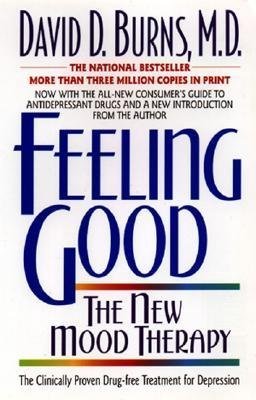
    Brain Nazis and Feeling Good by David D. Burns, M.D.

    Have You Got a Brain Nazi?

    If you’re conscious, you’re monitoring your environment. You have to. It’s how you survive. This is not something you can turn off. It’s just one of those systems that runs automatically, like your liver. You’re always appraising the situation.

    And as soon as you encounter something that’s likely to be of importance to you or yours, your monitor kicks off a physical response to prepare you to deal with or take advantage of it.

    The problem is that sometimes a Nazi propagandist worms his way into the monitoring station. And like any good Nazi, he distorts reality.

    Sometimes those distortions lead to burning resentment, sometimes to unwarranted shame or anxiety, sometimes to eating disorders, sometimes to grave depression. When I heard of the tragic suicide that occurred in our community a few months ago, my heart went out in sympathy to the girl, her family, and friends.  I’m not a doctor. I don’t know the situation. But I’m positive she was dealing with one of these villains.

    I wished I’d been able to share something that’s been a literal life saver to me. Now, it might not have changed anything. But hopefully it can change things in the future for you and others you know who may have to deal with a Nazi in the brain.

    And you will have to deal with a brain Nazi at some time.

    This is not something that affects a miniscule portion of the population. In any given year you can expect more than 15% of a population to experience some form of this [1]. That’s roughly 238 of the estimated 1,592 people 18 years and older in the little county where I live [2]. Rates for teens are similar [3]. Besides, you don’t have to have a full-blown case of a depression for distortions to affect you. How many of us haven’t made faulty comparisons with others? “Oh, she’s so thin and has such great hair; I’m so dumpy.” “Oh, he’s doing so well, and I’m not. I’ll never be a success.”

    The question is not whether you or someone important to you will have to deal with it. The question is how prepared you’ll be when you do. Everyone deals with distortions now and again.  Which means everyone can find a little more enjoyment in life by showing their brain Nazis the door.

    So how does it all work? How do you show the villain out?

    I’m going to summarize it below, but I’ll tell you right now that the book that saved my life was Feeling Good by David D. Burns, MD. This isn’t positive mental attitude. It’s not neuro-linguistic programming. It’s not the mumbo jumbo of Freud and Jung. This is practical and proven. It is the most prescribed intervention for dealing with these issues in the current medical community. It’s prescribed because it works.

    Your Brilliant Appraisal-Emotion System

    To understand this, you have to understand how emotions work. As I said before, you’re always monitoring your situation. You hear a buzz and see a rattlesnake on the path two feet away. Your monitor immediately responds. Alarm, adrenaline, increased blood flow–all of that to get you ready to deal with the situation. Your monitor writes “alarm” on your face to communicate it to those around you–to warn and ask for help. This happens in less than a blink of an eye.

    But this doesn’t just happen with danger. It happens when we encounter unfamiliar things. When we encounter positive things. You see a great friend who makes you laugh all the time. Boom, your monitor responds. You smile. Feel. Focus. You do so because you not only want to avoid dangers, you also want to seek out the things that make you happy.

    Our emotions prepare us to fight, flee, seek, and pitch woo. Our little monitoring and physical response system is brilliant.

    But there’s more. We don’t rely on just the automatic subconscious monitoring. We also have a cognitive (conscious thinking) part. Let’s go back to the rattlesnake. You walk out into the garden, step on a slither, and immediately go into alarm mode. Then you look, consciously see the slithery thing is not a snake, but the garden hose. You relax. Laugh.

    The quick subconscious appraisals keep us alive, because with snakes and other things, if you’re slow, you’re dead. We don’t have time for thought. If you touch a hot stove, you want an immediate reflex. You don’t want to ponder it for a second or two. On the other hand, the cognitive appraisals help us further appraise a situation. They bring more of our resources to bear on the situation.

    How Does the Nazi Get In?

    So there are three parts of the appraisal-emotion system: the subconscious appraisal of the situation, the physical response, and the cognitive appraisal. Each of the three parts affects the other two. And when things are running smoothly, we don’t have problems. But sometimes we get a distortion mucking up the works. We make a faulty appraisal of the situation. And therefore have a faulty physical response.

    For example, you’re a mother. You’ve had a hard day. The kids make a huge mess with flour in the kitchen. You yell, freak out. When they’re cowering in their rooms and you’re cleaning up the flour, you think, “There I go again. I’m a total failure. I can’t stand it! I never do anything right! I’m a terrible mother.” These thoughts make you even sadder.

    And that’s the propaganda. That’s your brain Nazi with his all-or-nothing thinking, telling you that you either perform perfectly or you’re a failure.

    But is that true? No, it’s not. You might be a B+ mother, filling the lives of your kids with all sorts of goodness. You might have just had a great time reading with the kids not thirty minutes before. But the brain Nazi tells you to forget that. “Vatch dis film,” he says, “und see de horrors of vut you are!”    
    And the all-or-nothing thinking gambit is just one of ten common weapons he uses. Furthermore, this happens so quick that we often don’t notice it. In fact, we’ve often repeated some of these distortions so often than they’ve become almost automatic.

    Mr. Nazi, Meet Mr. Bazooka

    The good news is that you can pull the lid off the lies. You can open the door, spot the brain Nazi that slipped in, and take him out. You can do this because one of the three parts of the system is our cognitive appraisal. This means you can consciously stop the movie, pin the distortion on the wall, and uncover the truth. Once you do that, it’s like the rattlesnake scenario above—oh, it’s a hose, we realize, not a snake, and the appropriate emotions immediately follow.

    But you need to know how to stop the movie. You need to know how to spot the lies. David D. Burns, MD tells you exactly how to do this in his book Feeling Good. (By the way, DON’T get this book confused with his Feeling Good Handbook–you DON’T want the handbook; you want Feeling Good, the book.)  In the book, Burns talks about the theory, the results, and then gets right down to the practical techniques used to blow the brain Nazi to kingdom come.

    A few years ago I hit a bad patch with a brain Nazi that had taken up residence. A very bad patch. He’d been there for quite some time. This book and a good counselor saved me. I thank the Lord for that. By the time I went to see a medical doctor to assess whether chemical issues might be playing a role, I was stable. I wasn’t out of the woods yet, but I had opened the lid and found the villain at the controls. I used the techniques Burns gave me, and I’m happy to say that while the brain Nazi still comes round every once in a while, I can spot him. And I can take that sucker out.

    Go to the library and check out the book and take the assessment test. If you, or someone you know, scores in the mild range, maybe you’ve just experienced a very sad event. But maybe you’ve also got a villain in residence. Get the book. Read it. Be happy. Nobody needs to live with a Nazi at the controls.

    For Authors

    By the way, fiction authors should pay special attention to this stuff. Not because we’re more susceptible to brain Nazis than others, although we do have to deal with our fair share as we develop and share our stories. No, we should because the emotion process is exactly what we’re trying to tap into. Knowing the principles can be very useful indeed. Let me recommend you read the books on emotion listed on the Learning With Pros page.

    Sources

    1. 1. http://www.nimh.nih.gov/health/publications/the-numbers-count-mental-disorders-in-america/index.shtml
    2. 2. http://quickfacts.census.gov/qfd/states/49/49033.html (find your state and county and see how many folks are likely dealing with a brain Nazi in your area)
    3. 3. http://www.oas.samhsa.gov/2k5/youthDepression/youthDepression.htm
    Share
  • Earth: the biography, Planter’s Nuts at Sam’s, “The Professor of War”

    Earth: The Biography is one of the most interesting documentary series I’ve seen in a long time. It’s produced by National Geographic and the BCC. Dr. Ian Stewart, a Scotsman, hosts the program and tells the life story of our planet, how it works, and what makes it so special.

    There are five parts: “Volcano,” “Atmosphere,” “Ice,” “Oceans,” and “Rare Earth.” And while they were all good, the last two blew me away.

    For example, I always thought the polar ice caps were a big waste of water. What do they do besides torment penguins and Eskimos?

    But the program reveals that the ice caps are critical to all life everywhere on the planet because they power the great ocean conveyer. This conveyer is a slow current that carries surface water away from the equator up to the polar caps then down to the sea floor and back—transporting oxygen, nutrients, and warmth all around the globe.

    We can see how critical the ocean conveyer is when it stops. There was a time when this happened. With no replenishment of oxygen, the water turned to poison. The poison was picked up in the clouds and rained down upon the land. And almost every living thing on the planet died a toxic death.

    Sniff, sniff–we love you, Polar Ice Caps.

    “Oceans” was fascinating, but “Rare Earth” was the kicker. How common is our cozy little situation here on earth?

    Well, for life to exist as we know it, we needed to be a certain narrow distance from the center of the galaxy, orbit a certain, less common type of star, be within a certain range of that star, have a big old fat vacuum like Jupiter hanging out in the wings sucking up asteroids and comets so they don’t hit us instead, have an orbiting moon of a certain size, an earth core with just the right amount of iron, a tilt to the earth that would allow polar ice caps, water, an atmosphere to protect us from all sorts of celestial mayhem. Heck, we even had to have that nasty mass extinction caused by the broken ocean conveyer. And there’s more.

    So many rare events had to line up just right, that it’s bound to make the atheists among us celebrate their good fortune with illegal-Wyoming-firework abandon and the believers to rise up from their chairs and shout, “Hallelujah and Amen!”

    Nellie, the girls, and I all loved this show.

    ***

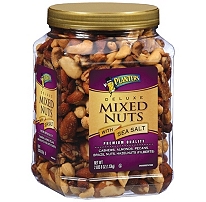
    I’m a nut man. Love nuts. Hazelnuts, walnuts, Brazil nuts, pistachio nuts, cashews, pecans. But nuts are expensive. And while peanuts are lovely, I like some variety and grow weary of the mixes where you get about five thousand peanuts and one burnt almond. So when I saw the forty ounce jars of Planter’s Deluxe Nuts (sea salt, NO peanuts) at Sam’s Club in Logan, Utah selling for a mere $10.98, I just about fainted away and died.

    Eleven bucks?!

    For comparison, please note that a little ten ounce jar of the exact same nuts costs six dollars in the grocery store. Four times the nuts for less than double the price!

    The nuts are good. More importantly, they’re a regular item at Sam’s. So with all the reports coming out about how good nuts are for you, reduce heart disease, reduce diabetes, blah, blah, blah, fight aliens, I can now afford to eat them and hopefully extend my stay as a carbon-based life form.

    ***

    General David Petraeus has revolutionized the way America wages war. It was his strategy that turned the war in Iraq around. It’s his strategy that’s being used in Afghanistan. And it will be his methods that will inform how our soldiers face enemies in years to come.

    The key to his thinking is realizing that there are two different terrains that must be won in the types of war we wage now—the geographic and the human. You know what geography is—take that hill, secure that town, remove the threats from that jungle. The human terrain, on the other hand, is made up of the hearts and minds of the people at the site of the struggle and has proven to be equally important.

    It’s important because the wars we’re most likely to engage in now are not ones where two big armies square off and blast away. Anyone who tries to stand up to the United States using that method is going to very quickly learn what it means to get stomped, shredded, and served to the dogs. So most of the battles are likely to be engagements in unconventional war, where the enemy hides, and where the local populace will make or break the effort.

    In May 2010, Vanity Fair magazine published a fascinating article called “The Professor of War” by Mark Bowden. It summarizes Petraeus’s history, the source of his thinking, and the kind of man he is. With so much at stake, I was grateful to get this well-written glimpse into the general and his approach to war.

    While you’re at the site, you might want to also read another Vanity Fair article titled “General McChrystal’s Three Biggest Strategic Errors in Dealing With Rolling Stone” by Bill Bradley, published June, 2010. McChrystal was Petraeus’s right hand man. The contrast between the two men is enlightening.

    Share
  • Thai Crystal, Rothfuss, Daily Life in the Middle Ages, Perot Charts

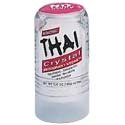
    Thai Crystal Stick - Large, 4.2 ozI don’t like anti-perspirants because they gob up in the underarms of my undershirts. Which means I eventually go walking about with pebbles in my pits. And, yes, we do have a washing machine and use it regularly. There’s something in there that defies anything less than hydro-chloric acid.

    I don’t like deodorants because they wimp out on me. I’ll put on my bracing Speedstick in the morning and be sniffing myself by lunch. And if I put some industrial perfume on it only leads to rashes.

    Someone might be saying that I should just be a real man and smell like a real man smells. But how about I be a real, smart man. See, if you’ve got dog poo in your carpet, you wouldn’t spray it with cologne, hoping to deal with the smell. No, you go to the source. Clean up the stuff and forego all the scents. In fact, if you keep the dog from pooping in the first place, you’re ahead of the game. So why not do the same with underarm odors? Just get rid of the stinkers.

    Well, that’s what I did. Many years ago I found out that natural mineral salts kill underarm bacteria. If the underarm bacteria can’t exist, let alone breed and excrete, then you don’t get underarm odor. What’s more, you can get those mineral salts in “rock” form. Just wet and wipe under your arms and you’re done. It works just like regular anti-perspirant and deodorant, it’s just that you’re delivery bacteria killers instead of perfumes.

    Another good thing about mineral salt deodrant rocks is that they last a LONG time. And I mean looooong. My last rock took about 4 years to use up (heads up all you one-year’s supply people). The problem with them is that you can’t find the rocks in the grocery store next to the big brands. But you CAN find them in health stories. I got my latest from Shangri-lah in Logan. The brand is Thai Crystal (named after the location where the US companies discovered this method of deodorizing).

    Folks, it’s 3:09 PM. I just did the sniff test–aah, the sweet smell of nothing!

    *

    The Name of the Wind (The Kingkiller Chronicle, Day 1)I heard all the hype about Rothfuss and picked up his The Name of the Wind  in a Hastings book shop. The first few pages didn’t grab me and so I put it back. But then I kept hearing the hype. I finally decided, okay, okay, I’ll give it a go.

    By “go” I mean something like five pages. See, I’m impatient with books. If you can’t grab me by the bottom of page one, I’m outta there. I read too many stories in my undergrad program that bored me to the very last page. Sometime after I graduated (why did I wait so long?) I realized that I could increase the odds of reading something interesting me if I only read things that interested me. (You only arrive at this level of brilliance after many years in college.)

    I’m not going to overview the plot here. Just know it’s a fabulous read. For you writers, note that what drives the reader’s suspense is not an overarching plot, but his situation of being alone and destitute. So while there are villains, that really isn’t what keeps the reader going. It’s the wonder of a new place and our hope for this kid.

    *

    Daily Life in the Middle AgesI read more non-fiction than I do fiction each year. I need to so that I have something to say in my writing. And I will tell you that I haven’t found a finer source of cool ideas to huck into stories than Paul Newman’s (no, not the actor cum cookie man) Daily Life in the Middle Ages.

    He breaks up medieval life into topics like Eating and Cooking, Building and Housing, Clothing and Dressing, etc. It’s full of wonderful stuff.

    Did you know that they played football back in old England? Not sissy European style, but hog style, like rugby or American football. Except it was often between two towns and the playing field was miles long.

    Did you know that respectable women wore hats? Those who let their hair go free were young girls and prostitutes. And that if a man knocked a woman’s headdress off it was tantamount to accusing her of prostitution and might result in the woman’s husband or family taking the man to court to exhonorate her. 

    Did you know that the word “curfew” came from the old French “covre feu,” meaning “cover the fire.” Since open flames were such a fire hazard in the old cities, many towns had regulations that required people to douse their lights and carefully bank their fires at a certain time in the evening which was often marked by the tolling of bells.

    I pulled these beauties out just randomly flipping through the pages. The book is full of such delights and you can be sure many of these will be finding their way into my stories.

    *

    I didn’t vote for Ross Perot the first time. I certainly wouldn’t vote for him now. But James Maxey just pointed me to an excellent on-line explanation of the current government budget. It’s worth your time to check this out to be able to understand what folks are talking about when it comes to our money and how Congress spends it. The charts are narrated, compelling, non-partisan, and incredibly easy to follow. Here are more Perot Chart presentations.  

    Share

2 Comments

  1. Hey! I can never get off your website, dang you!
    Where’s the link for the Moses song?!

Comments are closed.