Dungeon Crawlers Radio interviews The Man Monday, March 8th at 10:30 PM MTN. You can listen live or to the archive they’ll post to their site. All brought to you by UtahFM. Malak and Revan are great guys. I had a blast with them.
Cool facts on breaking in, advances, etc. for writers
CURSE OF A DARK GOD is moving along. You should see the progress bar move along quite a bit this week.
Initial Schedule for American Fork Arts Council Conference for Writers
This is a cheap day-long writers conference and looks like it’s going to be another great one. I’ve highlighted what I’ll be doing in red. I’ll be making adjustments to the HOW TO WRITE A STORY THAT ROCKS presentation for things learned at LTUE.
Here’s their website. That night I’ll probably be attending the Whitney Awards Gala which is also being held down in Happy Valley, Utah.
DATE: Saturday April 24 2010
8-9 a.m. Registration
9-9:10 Welcome (Plenary)
KEYNOTES
9:10-9:40 Keynote #1 Ginger Churchill, “What I Wish I had Known as a Beginning Writer”
9:40-10:10 Keynote #2 Ally Condie, “My Journey to National Publication” 10:10-10:40 John D. Brown, “Aiming for National Publication”
INTRODUCTIONS of editors and authors
10:40-11:05 EDITORS: Derk Koldewyn, Granite NAME
AUTHORS: Caleb Warnock, Linda Jefferies, Shannon Guymon
11:05-11:20 15-minute break
11:20-noon BREAKOUT ONE Upstairs room “Crafting the Novel” with Shannon Guymon, John D. Brown
Downstairs One “Finding and Working With an Agent” with Ginger Churchill, Ally Condie, Caleb Warnock
Downstairs Two “Taking Your Questions about Publishing” with Deseret Book and Granite Publishing
noon-1 LUNCH “Mix and Mingle with Authors and Editors”
1-1:40 BREAKOUT TWO
Conference One Derk Koldewyn of Deseret Book “What Deseret Book is looking for now”
Conference Two Ginger Churchill “How to Write and Publish Picture Books” Upstairs room John Brown, “How to Write a Story That Rocks Part 1: First Principles & Story Concept”
Office room Caleb Warnock “10 Things Every Writer Should Know about Copyright”
Downstairs One Granite Publishing “What Granite is looking for now”
Downstairs Two Ally Condie “Writing Young Adult Fiction”
1:40-1:50 Ten-minute break
1:50-2:30 BREAKOUT THREE Upstairs Room John Brown, “How to Write a Story That Rocks Part 2: Character”
Conference Two Ginger Churchill “Genres of Children’s Books, from Board Books to YA Novels”
Conference One Derk Koldewyn of Deseret Book “National Publication with Shadow Mountain”
Office room Caleb Warnock “How to Write the Query Letter”
Downstairs One Granite Publishing “Publishing Options with Granite”
Downstairs Two Shannon Guymon “How to Write Romance”
2:30-2:40 Ten-minute break
2:40-3:20 BREAKOUT FOUR Upstairs Room John Brown, “How to Write a Story That Rocks Part 3: Plot” Conference Two Ginger Churchill “How to be a Writer and a Mother Too”
Conference One Linda Jefferies “Writing Poetry”
Office room Caleb Warnock “Write a Synopsis? I’d Rather Gouge My Eyes Out!”
Downstairs One Ally Condie “Succeeding as an LDS author”
Downstairs Two Shannon Guymon “Writing Nonfiction”
3:20-3:30 Ten-minute break
3:30-4:10 BREAKOUT FIVE Upstairs Room John Brown, “Writing Scenes: The Basic Units of a Novel” Conference Two Ginger Churchill “Querying Agents and Publishers”
Conference One Linda Jefferies “Publishing Poetry”
Office room Caleb Warnock “Okay, You Were Rejected – Why, and What to Do Now”
Downstairs One “How to form a critique group that works”
Downstairs Two Shannon Guymon “Succeeding as an LDS Author”
I just typed the final words of draft 2 of the first book of The Drovers. It now goes to my beta readers (I’m the alpha reader, the one who sees draft 1). And while they’re reading, I will begin draft 2 of the second book.
This is the shortest novel I’ve ever written, clocking in at 61,000 words. My target was 50,000 words, the average size of a Louis L’Amour western. But this will do. Depending on the beta reader feedback, I may add or cut a few thousand words. But not much.
Tor Books’ production department has moved my book’s release date out one month. I’m getting so antsy to have it hit the stores, but October’s actually a better month, it being closer to the holiday season.
You still might be able to get it earlier if you pre-order. The books actually start shipping in the second half of September. But it takes a few weeks to get them out to all the stores.
If you feel a bit lost or anxious about how to teach narrative for the new core, especially stories, I think I can help.
I’m an educator in the private sector and an award-winning novelist and short story writer. I’ve been teaching authors in various venues how to write for the last five years. I’ve been on writing podcasts with thousands of listeners, taught at a number of writers conventions, and had a series of articles published by the national Science Fiction and Fantasy Writers of America organization, an organization for professional authors. I’ve also been helping Nellie, my wonderful wife, teach her 7th and 8th grade language arts students the unit on short stories during that same period. We’ve taught it to twenty different classes and picked up a number of important insights along the way.
This last year I couldn’t help but examine all the materials Nellie brought home during the district’s writing program adoption investigations. Some programs looked very promising; others not so much. Some got some things about writing flat out wrong. Most of the programs had gaps.
Furthermore, because I work with so many people wanting to write, I know that it’s difficult to teach if you really don’t understand what stories really are and how they work. For lots of people, the subject matter can seem impenetrable. And yet writing stories is such a wonderful way to teach writing, especially because so many kids love it. You won’t find a kid who will spend extra hours writing a business letter or poem analysis, but you will find quite a few who will go crazy writing stories. And the whole time they’re practicing their writing skills.
The question is how DO you write a story?
What is a story?
How can you tell if it’s good?
How do you come up with ideas?
Where do you start?
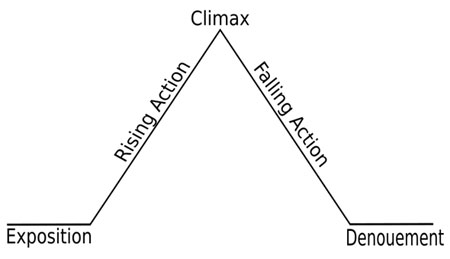
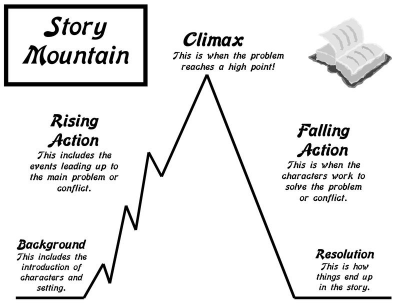
And what the heck is this chart? Do writers really use this? (Not many that I know.)
And does anyone think changing the diagram to look like Aspen, Colorado actually helps?
Hey, students—please make your story look like Aspen, Colorado! (Yeah, that’s going to be effective.)
And yet it’s not as difficult as it appears. Nellie and I have seen a lot of kids really get into writing stories. We’ve seen kids WILLINGLY going way beyond the assignment to write stories that are eight, twelve, twenty-five plus pages. And as they’re writing, they’re practicing grammar, spelling, structure, vocabulary, etc. without knowing it and having a great time. I know that if you enable your students, many of them will write, write, write. Especially in grade school. But also in the higher grades.
Stories can be a blast. The assignments can connect to many students. And the results can be wonderful. I’ve laughed out loud at some of the stories coming out of Nellie’s class. Others have been enjoyable on other levels.
But for this to work in your class, you need to know some key things. You need to understand the core of story and the story development process. You need a lesson plan that details everything step-by-step so your students don’t flounder. And you need to know some fundamental tips (secrets?) about teaching this content.
So I’m going to hold this day-long class for you. A full eight hours. And share everything Nellie and I have learned. This class will be for teachers at ALL levels (I’ll show you some ways to scale the complexity of what you’re doing). There will be NO cost. The only thing you have to bring is a pencil, paper, whatever program materials you have, and a willingness to have a good time.
When we finish, you will know how to write a simple story like the ones your students will write because, ta-dum, you will write one! AND you’ll have a step-by-step lesson plan that builds on whatever materials you have—an official program or one of your own. AND you’ll understand story better than 99% of the population. AND you’ll have a bundle of techniques to help your students. AND you’ll solve both world peace and maybe the lost sock conundrum.
Truly, I think that instead of feeling stress, you’ll actually be looking forward to teaching and writing stories with your students. If not, you may bring tomatoes and huck them at me, but please be aware that I will not stand still; to find satisfaction, you will have to be able to hit a moving target.
If you’re interested, just click the Contact John link under my photo in the left sidebar and send me an email letting me know.
Hope to see you in class!
GET READY FOR A FUN DAY OF LEARNING!
Topic: Teaching writing (narrative & the common core)
Who: Teachers (and writers at least 18 years old), seats are limited
When: Monday, July 29th, 8:15 AM – 5:00 PM
Where: Rich Middle School, 54 E 100 S Laketown, UT 84038
Materials you need to bring:
Pencil
Paper
The writing program you’ll be using this year
Kooky socks, for those who cannot resist the urge
A lunch or a way to get one
AGENDA
8:15 AM Arrive
8:30 AM – 9:20 AM
Can you create a redneck crapper?
The 1st secret to teaching writing: Attributes & techniques
The 5 parts of story
Thieves prosper – using existing patterns
A car, a beggar, and an idiot — basic pattern 1
9:30 AM – 10:20 AM
The 2nd secret to teaching writing: Do it with them
Technique: Sketch then draft
Workshop 1: Zombies and kisses
Technique: Zing hunting
Workshop 2: Hunt zing
10:30 – 11:20
What makes a story big or small
Workshop 3: Select a right-sized THOM and character
Workshop 4: Select a Goal
Workshop 5: Make character sympathetic
Workshop 6: 3 tries
Workshop 7: Resolution
LUNCH
12:00 – 12:50
The 3rd secret to teaching writing: Cognitive modeling and the 6-step process
The 4th secret to teaching writing: Our tiny brains
Writing is telling: Narrative & description
Technique: Yes, SiR
Technique: Broad-brush + 1
Technique: The Pause
1:00 – 1:50
The 5th secret to teaching writing: Have fun
Workshop 8: Write your story
2:00 – 2:50
How the pros revise—concept, line, & copy
Workshop 9: Content edit
The 6th secret to teaching writing: Our brains are still tiny
Workshop 10: Line edit
3:00 – 3:50
The 7th secret to teaching writing: The 3 grunts (responding to a story and grading)
Almost everyone reading this knows what they like in a car. We know what we want a car to do. We can talk about acceleration, voom-voom styling, and handling. Some of us could talk about how engines and transmissions and tires all work together to create those things. We could get really technical.
But how many of us could then go manufacture a tire? Or the paint we’re going to put on the car? How about a windshield?
No?
Well, what about one little bolt? Just a little bolt. Can you do it?
There’s a difference between knowing what a thing is supposed to do, how it works, and actually building it. A lot of people can talk about the first two topics and have no idea at all about the third.
It’s the same with stories.
There are three things we have to learn to write killer stories.
What a story is supposed to do.
How the 5 parts of story—character, setting, problem, plot, and text–do that
How to come up with and develop a story idea in the first place
We authors talk a lot about the second thing. You have books and blogs galore on dialogue, plot, characters, structure, grammar, world-building, setting—you name it. Heck, the big series I wrote last year about the key conditions for reader suspense was all about how story works.
Some of us talk about the first thing. And really there’s no point in blathering on about the how-to’s if we don’t know the what-for’s, which is why I tried to highlight one of the core what-for’s in my series on suspense.
But as important as those two things are, none of it matters if we don’t know how to put it to use. We’re not reviewers or editors. We’re creators. We’re writers—the ones that invent the story in the first place. And let me tell you, knowing how a story works and how to invent one are two very different things.
I didn’t know the principles of invention when I was first starting out. And that gap in my knowledge was one of the things that held me back for years. In fact, I almost gave up my dream of writing stories because of it.
Very early in my attempts to start a career I wrote a story that won an award and $2,000. I was flown out to Cocoa Beach, Florida for a week-long workshop with amazing pros. Was published. And then I went home, finished another story (yea!), and proceeded not be able to finish another thing for five years.
Five years.
FIVE. YEARS!
And I tried.
After five years of failure you begin to wonder if maybe you didn’t get the wrong memo (what am I doing at this empty warehouse?). Your family begins to wonder that as well. You realize life is short and there are a lot of other things you could be spending your time on. You begin to think that only an idiot would spend more time on this. And you’d probably be right.
Unless, of course, you realize that what’s keeping you back isn’t a manifestation of cosmic will. Rather, it’s just a lack of understanding.
That’s what happened in my case. Just a few days before I gave up on all my dreams, the light was turned on for me. I learned some key, but simple, principles of invention that I hadn’t known. You can read the whole story here. After I learned these principles, my production took off like a rocket.
And so what I want to do in this series is share those principles with you. Hopefully, this will unleash your abilities. You might find a huge audience for your stories. You might find only the family dog will stick around to listen to them. The popularity of your stories is a separate matter. But you can’t even find out how big your audience will be if you don’t know how to finish.
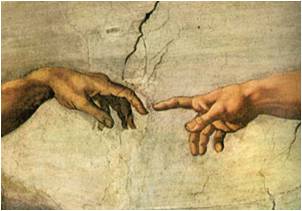
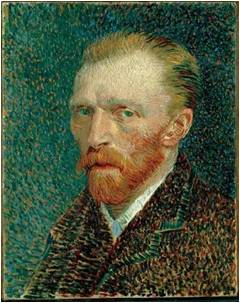
So let’s start. A lot of people think that creativity is about passion. When they think of creativity, they think of someone like this.
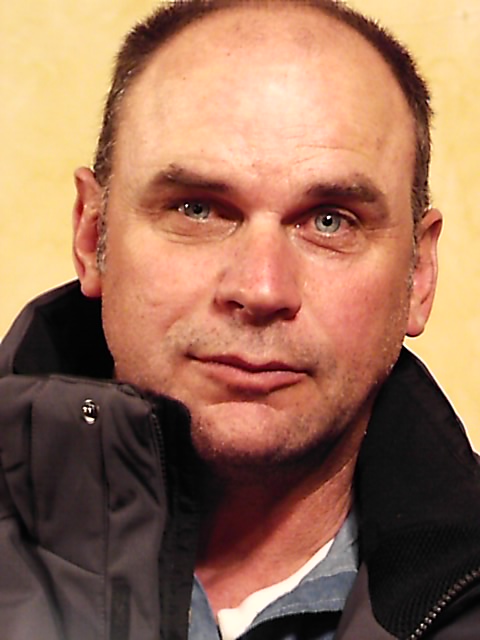
Look at him. Brushed velvet jacket. Beard. Rakish devil-may-care hair. And that gaze. Look at that gaze! It’s full of passion. It’s coming off him in waves. In fact, we all know his inner world is a vast tempestuous sea of passion that sends ideas crashing in great surges onto the rocky beaches of his soul. And those earthly forces cannot be contained. No, he must write them, write them, write them. That’s the face of a man who will channel fire onto the written page because if he didn’t, he would surely burn.
Or maybe not.
Maybe creativity is about being like this guy.
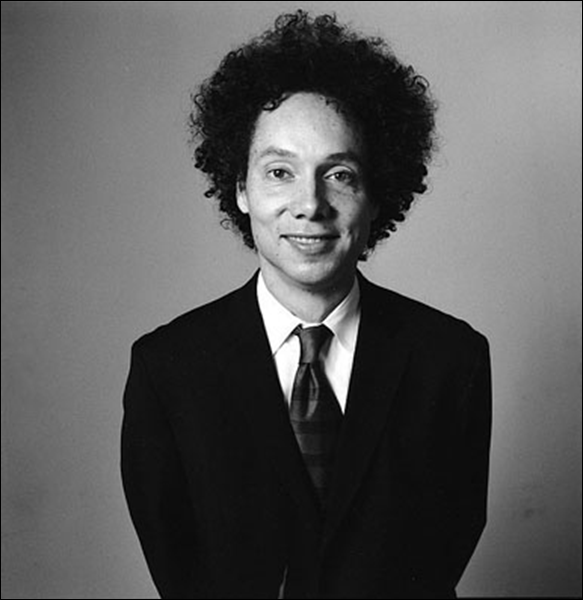
Hello, Malcolm Gladwell. Look at him. There are so many ideas in that great blaze of brains they trip over themselves trying to get out. There are so many they kinked his hair with their electric heat. Oh, fecund mind!
Or maybe not.
Maybe creativity is all a function of being blessed.
Or maybe it’s about alcohol (or some other chemical). After all, isn’t that how Ernest Hemmingway did it?
Booze Makes Ernie Reel Smart
Or it’s about being mentally unstable.
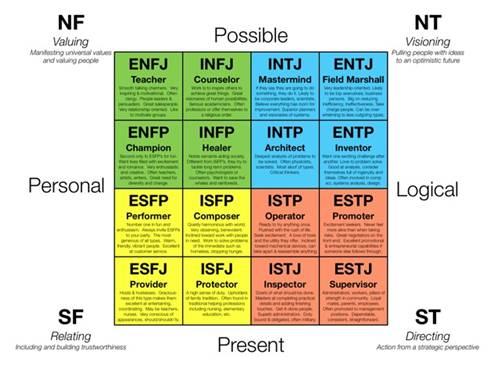
Or it’s about having the right personality type. I remember the day of woe when I learned that I was an ENFJ but that the “natural” writers were all ISFPs!
Alas, me being a blockhead was all scientific
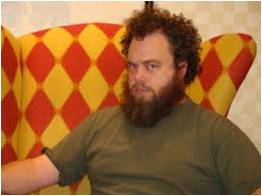
Or it’s about being eccentric.
Patrick Rothfuss shows us the key is crazy beardage and an Alice in Wonderland chair
Or it’s none of that. It’s about being born to it.
I wrote my first novel when I was six
Right? All of those things are what creativity is about. And if, as so clearly demonstrated by those pictures, you don’t have passionate hair, well then, forget about it. Except here’s Larry Correia, a New York Times bestseller, who has no passionate hair whatsoever.
I keep guns in my basement
Huh?!
How could that be?
Here’s how. All those ideas above about creativity–they’re rubbish. Creativity has nothing to do with passion or hair or whether you wear Argyle socks.
Nothing.
Let me show you the face of creativity.
That is Warren Ellis. Warren is my brother-in-law, except when he’s not (do not ask me to explain this). One day our fridge started to drip. The freezer would cycle through its normal thawing, and all the water would drip down into the fridge and soak up our egg cartons and pool in the vegetable crispers. It was a mess.
We defrosted the freezer we weren’t supposed to ever have to defrost, but the problem persisted. So we called Warren because he fixes things.
Warren came to our house, looked the fridge over. He declared that the freezer’s drain tube was plugged. We thought up a few ideas for cleaning it out, none of which were any good, then Warren asked if we had an air compressor. We did and hauled it in.
Warren plugged it in, let it build up the pressure, and then held the compressor nozzle to the bottom end of the tube. The compressed air went in. The obstruction flew up and out and landed on the counter. The obstruction was a fat fly that had crawled in there, gotten stuck, and died.
We poured a quart of water into that freezer, and it all flowed down into the catch pan at the bottom. Warren fixed our freezer with an air compressor.
Folks, that is creativity.
What did Warren have? He didn’t have passionate hair; I can tell you that. No. He had an objective. He knew basically how fridges worked. And he came up with a couple of options to fix the issue.
Let’s look at another example. Here’s Ed Smylie.
Ed was like Warren. He ran into some problems. Actually, the astronauts in Apollo 13 ran into some problems. Ed was tasked to help solve them. One of those problems was the fact that the astronauts were running out of air.
Ed and the others designed the solution in two days. The ground crew relayed the instructions to the flight crew. The lunar module’s CO2 scrubbers started working again, saving the lives of the three astronauts on board. Of the experience, Ed said that he knew the problem was solvable when it was confirmed that duct tape was on the spacecraft. “I felt like we were home free”, he said. “One thing a Southern boy will never say is: I don’t think duct tape will fix it.”
Ed and his crew saved the day. The made a round peg fit into a square hole. How did he come up with such a creative solution?
Ed had an objective. He knew how the CO2 scrubbers and the shuttle worked. He knew about duct tape. He came up with options.
Let’s look at a few more examples of this. I know you’ve seen some of these.
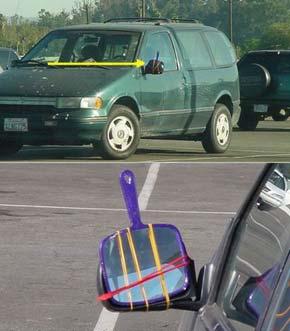
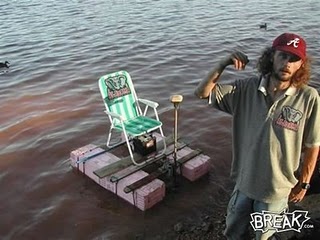
That is creativity. So is this.
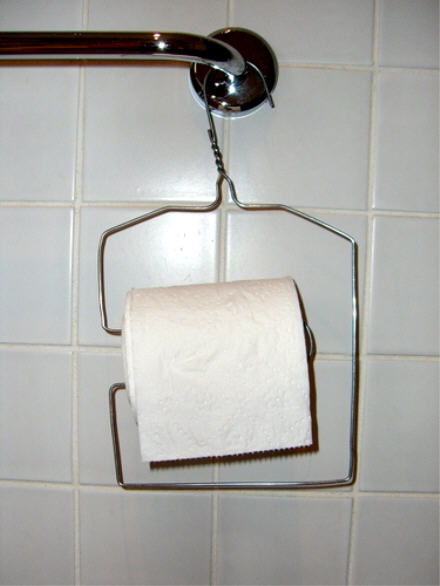
And this . . .
And this . . .
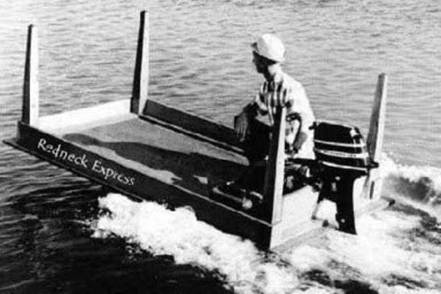
Or this, if you don’t need to go so fast . . .
Smaller size, for trolling
And this . . .
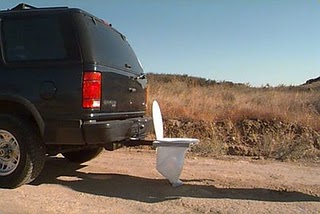
And this, which is officially called a Bumper Dumper . . .
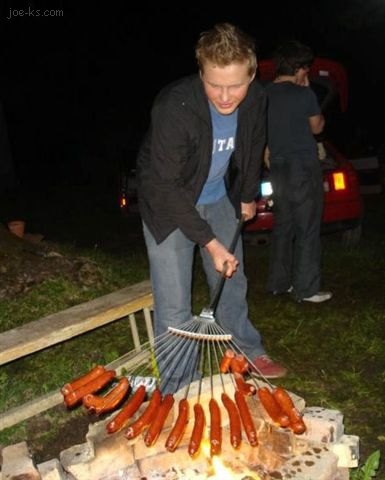
Do you really want to dig?
These fine folks had a goal. They knew the basics of how things worked. They came up with some solutions.
That’s all there is to creativity. Three things. You need to have an idea of what you’re trying to do. You need to have a basic knowledge of how things work. And you have to know how to come up with some solutions to meet your objective.
Not so mystical, is it?
But I can hear some of you complaining. Writing is different. It’s a whole other world. It’s Fiction, which is so significant we must capitalize it. It’s passion. It IS mystical. This is a matter of the heart. It’s not a fridge or space ship or some dumb hotdog roast. You cannot compare these things.
Except I can because they’re the same. It doesn’t matter if you’re trying to invent a different recipe like the folks at Cook’s Illustrated, or decorate your house, or come up with a way to keep the squirrels out of your bird feeders, or make people weep in a movie theater.
What I’ve found is that when we have troubles coming up with ideas, we probably don’t know what our objectives are. Or we probably lack some understanding of how fiction works. Or we don’t know the principles of generating options.
And so we conclude it’s a mystery. It’s arcane lore.
But it just ain’t so. Can you create a redneck toilet? Then you can write a story.
Now, it’s true that a lot of people feel their way through this. They don’t know what they’re doing, but they do it. I did that. Remember: I won an award. But then I couldn’t repeat it. Couldn’t find that groove I’d stumbled into.
I don’t want to stumble around hoping to get lucky. I want to make a living at this. And if I’m going to make a living, I need to produce. Regularly. I can’t be bumbling around, hoping to create something by accident.
The good news is that we don’t have to create by accident. We can create on purpose. There are principles to invention. When we learn them, our productivity will shoot through the roof.
Finding a solution to Apollo 13’s issues might seem impossible to us. But they weren’t impossible to Ed Smylie because Ed had an objective; he knew how things worked up there; and knew how to come up with options.
My intent is that when you finish this series, you’ll know what Ed Smylie knew, except for stories.
On Saturday, gun nut (and author of Monster Hunter International) Larry Correia had a group of his buddies show up to the signing. They explained the explosive target business to me. Larry read the book over the weekend and then held forth in this review.
At a recent writer’s conference I was on a panel and someone asked what the pros and cons of writing groups were. Writing groups can save AND kill your writing. So beware.
Workshop Benefits
Writing groups are great for:
Encouragement
Deadline motivation
Having fun with other authors
Getting a chance to think about and discuss craft
Testing your work
The benefits listed above can all be huge helps to a writer. However, there are two traps that many individuals fall into. You want to avoid both of these because they are plagues that can not only infect, but kill your writing.
Workshop Plague 1: submitting for fixes instead of effect
The first problem occurs when a writer forgets that the purpose of sharing your work with the group is NOT to have them tell you what to do. It’s to test your product on readers who are likely to be in the audience for that particular type of story (please note the last part of that sentence as well).
But in many groups this isn’t what happens. The writer submits his work and then hopes it does well. If it does, he purrs and goes his way rejoicing. If it doesn’t, he figures the group will tell him what to do to fix it. In such groups the readers often arrive with a list of “you shoulds” or “I woulds.”
The dialogue here is clunky, you should…
These characters are stereotypes, I would…
You have infodumps here, here, and here: you should…
This all sounds great, right?
Wrong.
This tells a writer very little that’s worthwhile. What was the problem all these shoulds and woulds are trying to fix? You can’t tell. And not knowing the problem, you don’t know if the fix is really going to work. In fact, the suggested fix might be completely wrong for the story. You are the story designer. YOU have to figure out what’s really wrong and then select the right fix.
Case in point: at this conference another author told of a time her editors came back and said the novel needed to be shorter. It was too slow. In reality, the novel was too short. The real fix was to make it longer. She was skimming the surface of the story in summary and needed to go deeper. She made it longer, and the story worked. But if she had been looking for fixes instead of symptoms she would have done the exact wrong thing for her story.
The most productive thing a writer can hear is what effect the text was having on the reader. Was the reader bored, lost, or feeling it was made up? Or was the reader surprised, intrigued, fascinated, freaked out? In short, did it do what the story was supposed to do to the reader? An accurate report of the reader experience is invaluable. But a list of shoulds and woulds by the Fixits is not. You want symptoms, not diagnoses and presecriptions.
Of course, when you understand the symptoms, you can very easily open it up to the group for suggestions on ways to fix it. Sometimes brilliant solutions arise from such discussions. Sometimes they don’t. Othertimes, they simply provide a way for the writer to work it out in his own mind. But in the end, YOU as writer have to do what’s right for the story you feel in your gut.
One time to be especially careful of this is when you submit revisions of a story to the same group. Here’s why: when someone says a revision lacks blood and vitamins, it may be this is actually the case. But it also might simply be a case of diminishing returns, e.g. the first ice cream cone you eat is great, the second okay, the fourth begins to make you sick. Would the movie you just saw on Friday night be just as powerful if you saw it again on Saturday? And then again on Monday? I know it’s not exactly what’s happening, but it’s similar. After reading a manuscript multiple times, a reader sometimes can see nothing but the stitching.
Furthermore, a reader will often get revision ideas that jazz them about the story only to find the author was jazzed about some other revision idea. And that can often disappoint. And if this multiple revision reading goes through multiple cycles, I’ve found it becomes harder and harder for the reader to avoid becoming a director of sorts, the author trying to perform to their taste. I done this far too often to people feeding me multiple revisions.
There’s an easy way around this one: simply avoid submitting any individual story to the same set of readers more than once. However, I don’t want to suggest you should NEVER submit revisions to the same set of readers. Orson Card submits all his work, originals and revisions, to his wife Kristine. I submit mine to my wife and editors. Many writers have trusted readers. Just be aware that submitting multiple revisions can very easily lead to our chasing someone else’s opinion instead of writing the story we feel in our guts. Tread with caution.
Workshop Plague 2: reading for rule compliance instead of effect
The second problem occurs when you have readers who have forgotten that the ONLY thing that matters is effect. Many times writers will build a list of writing rules as they learn the craft. And they will forget that the rules are, by themselves, meaningless. Please see my post on Rules vs. Objectives. These well-meaning folks come, not with an accurate report of their reading experience, but with a list of your rule violations.
So instead of hearing that the story immediately pulled the reader in but that by page four the reader’s mind was wandering, the reader points out that you started the story with dialogue and you shouldn’t do that. Or that you used said-bookisms, which was a very flabby and naughty thing to do. Or that you had more than one point-of-view in the chapter. Or that you chapters were too short or too long. Or whatever it is that that particular reader has in their rule book.
This kind of feedback is worthless. I don’t care if my story started with dialogue. What I want to know is if it pulled the reader in. And when I say “reader” I mean one who is looking for a story, not for rule infractions. What you want is an accurate report of the reading experience. That’s it. Both the good and the bad.
Here’s an example of what I try to do when I read and report. It’s not the only way, but it illustrates what I’m talking about.
I read the story as a normal reader. No pencil or pen in hand. I’m just thinking: okay, I hope this is good.
I read until I’m bored, lost, or (hopefully) turn the last page in delight. Some folks may wonder why I wouldn’t read to the end of everything I’d agreed to report on. Simple. If I’m bored or lost I’m OUT of the story and cannot judge the effect of what follows as a reader. Maybe I’m bored because of the craft. Maybe I’m bored because I’m not in the audience for that kind of story. If this is the case, my experience doesn’t matter. You wouldn’t give a romance to a thriller reader and then expect them to love it, would you? Well, authors are no different. Just because we write doesn’t mean we automatically love everything (please see my blog Is 90% of Everything Crap).
I write up my experience, making sure I accurately report who and what I was interested in, what delighted me, what bored me, where I was lost, or didn’t believe etc. I’m also very particular to clearly separate the things that had a big effect on my experience versus those that had a small one. For example, some confusion in an exchange of dialogue might be a small thing. Confusion in a whole chapter is a big thing. As a writer I don’t want a laundry list. I want to get a sense of proportion. And I want to know if the reader generally enjoyed the story or not. It’s one thing to know the story is busted. It’s another to know that it works, but has a few paint spots.
If I did not read through to the end, I do so now. Or maybe I skim. Just to get an idea of the whole story.
Then I ask myself what I think this story was trying to do. What kind of an experience, what kind of delights was it offering up to the reader? Suspense, delightful characters, romance, wonder, cool textual pyrotechnics, etc.
Having an idea of what the story was trying to do, I see if I can’t diagnose the problems and think of some ways to fix them.
Finally, I give my report to the writer. I include #3. Then I add #5 and #6, stating that here’s “what I think the root of my issues were and some ideas that might help.”
You might do it differently. Just make sure you focus on accurately reporting your experience reading for effect, not rule compliance. Once you have a number of reports you can see what’s working and what isn’t. If one out of ten people has an issue with a certain part, I may or may not ignore it, depending on my own judgment. However, if four to seven of them have an issue, I’m probably going to fix it.
So writing groups can be wonderful. Just be careful to avoid these two plauges as if they were, well, plagues.
2 Comments
The conference is almost free, but not quite. I think its something like $27, but you’ll have to check.
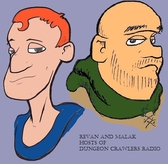 Interview with The Man Monday night







The conference is almost free, but not quite. I think its something like $27, but you’ll have to check.
Thanks for the catch. Edit made. 🙂