How much does author Jim C. Hines make?

Dear But-All-Writers-Are-Rich,

Jim C. Hines is a hard working midlist author with a couple of fun series out. Hines reveals what he makes in his post 2011 Writing Income. More importantly he reveals what he’s been making for a few years. For more information on advances etc., please peruse my page on Writing Business Facts & Figures.

Sincerely,

The Man

Share

Similar Posts

  • Generating Story 14: Freewriting from Inquiry to Outline to Scene to Draft with Author Maya Lassiter

    Maya Lassiter is an unschooling mom, a yogini, a goat keeper, a yurt dweller, and a pantsy fantasy writer. Or should I say very likely soon to be less pantsy and more of a juggernaut? We shall see.  The initial results of her attempt to go from writing by the seat-of-your-pants to doing more pre-draft development seems to be paying off big time in less stress and higher word counts in each writing session.  I asked Maya to share her method with us. Here’s what she had to say.

    Maya

    At one hundred pages in on my eighth novel, I ran aground and could not seem to move forward an inch.  This was totally normal.  As a pantser, I pretty much always ran aground at some point, usually many times per novel, and then had to go back and rewrite, revise, redraft, finding the point I had gone off the rails and fixing things until finally I could get the train drafting moving once again.  Of course, even after all that, I would still go back to the beginning again, once I had hit then end, for revisions were where I found the book out of the mass of stuff I had gotten down by the seat of my writerly pants.  It was usually for four or five more drafts.  Grueling, exhausting work. 

    This time, however, staring at the choked up, broken manuscript before me, I had had enough.  I decided I wanted to be one of those people who planned their book: to heck with this pantsing crap. I wanted to write a draft that hung together the first time through.  I wanted this whole novel writing thing to be easier.

    In deciding this, however, I realized I had no idea how to proceed.  It’s one thing to say, “I want an entirely new way to do this,” and quite another to actually know what that new way is.  So, I did what any avid reader does when trying to figure anything out: I went to the library.  I checked out a giant stack of books–anything about writing fiction, or writers talking about their work, or editors talking about their writers.  I read it all. 

    In the process, I might have figured out how those outliners do it.

    Pantsing, for me anyway, involves figuring everything out in the draft.  Following your nose, your characters, your muse, your whim, and learning about your story as you go, often right along with your protagonist.  I had previously given up on outlining (multiple times) because, how can you outline what you don’t know, and how can you know if you haven’t written it yet?

    I found one solution to this in Alan Watts’s The 90 Day Novel.  In a word, free-writing.  In fact, 30 days of his 90 are spent just making stuff up, fooling around, free-writing without intending to keep a word of it, all using Watt’s copious question prompts about your story, your protagonist, or your antagonist, whenever you need to, to prime the pump.

    So I tried it.  And after 30 days, I knew a ton about my story I hadn’t already figured out—even though I had already written 100 pages of a draft.  (A draft that was riddled with problems, and now I could see what the pieces were.)  Basically, inquiring into the story and characters, and fooling around in longhand to find answers, brought many insights, including flashes of scenes, scraps of dialogue, the voices of the characters coming to life, new ideas….

    At some point I started listing these flashes out.  That is, any time I actually saw a scene-let from my novel spring to life in my head, I wrote it down.  I got an out-of-order laundry list this way of bits and pieces of the book-to-be, and I kept adding to it as the 30 days progressed.  Until one day I realized that two or three of those scene-lets could come together and become a true scene.  And that this bit ought to go in front of that bit–the beginnings of a plot!  Basically, the list started organizing itself as I figured out more about the story through those free-writes.  Magic.

    Watts also makes use of a three-act structure and slotting my proto-scenes and full scenes (as I found them) into his structure helped me see where there were holes…which brought more questions and more inquiry, which brought more free-writing, free-wheeling, answers.  I think any structure could work for this step: a romance structure, a puzzle structure, a plot-coupon epic, a coming of age story, whatever you know and love and want to use. 

    So, the laundry list, the scene list sequence, and then playing with that scene list within a structure template, these were the three steps that took me from a mass of free-written, stream of consciousness stuff, to a pretty clear idea of the arc of the story, beginning, middle, and end.  With lots of information along the way.

    At this point, I was at the end of Watts’s 30 days, the point at which he starts to draft in earnest….but I still wanted more than a laundry list of scenes, even an organized one.  I wanted a tighter sense of the thing.  I wanted less WORK and flailing about as I wrote.  So I took a page from Holly Lisle’s technique–a very similar one, I have learned, to a technique in Victoria Schmidt’s book, Book in a Month, that she supposedly got from Nora Roberts, and on it goes.  What you do is you take an index card for each scene and write a single sentence on it that sums up that scene.  The sentence includes five parts: [A protagonist with a need][in conflict with][an antagonist with a need][in an interesting setting][with a twist].  If you’ve got all five of those parts for each and every scene, you’re going to have tight scenes that move the story along, with no dangling bits or wandering (re: getting lost). 

    I took the “twist” part of that formula and read it to be similar to a central idea in Robert McKee’s book, Story, something he calls the Turn.  Basically, your character walks into a scene expecting X and the general energy charge of the scene is either postive + ish, or negative – ish.  Then something happens, or something is revealed, that changes all that, turns those expectations upside down.  That’s the Turn.  Whatever the charge was to begin with, it is now very different, either much further than it was (really + or really -) or the opposite charge altogether.  If a scene doesn’t have a Turn, it isn’t a scene.  If the charge doesn’t change, you get a monotony in your manuscript.

    All right.  I took my scene list and converted it into Sentence-per-Scenes on index cards, making sure each sentence had all 5 components, more or less, especially including the Turn.  Surprise, there were 28 scenes in this novel.  How about that?

    If I wrote 28 cards-worth of material, I’d have a complete novel draft.  It seems so doable, when it’s put like that.

    But I wasn’t done yet.  I remembered a blog post I had read a while back about increase productivity–and remember, this whole experiment was to see if I could make novel writing an easier, more streamlined process.  Maybe I would fail, maybe writing novels for me was always going to be guts and angst, but I wanted to see what was possible.  I mean, why not, right?  So I went and found that post, a post on Rachel Aaron’s blog, called How I Went from Writing 2000 Words a Day to 10000 Words a Day.  (http://thisblogisaploy.blogspot.ca/2011/06/how-i-went-from-writing-2000-words-day.html  )  One of her primary tricks was to figure out what you were going to write for five or ten minutes–just fool around long hand on a page or two, before you start drafting until the scene is clear in your mind before you start drafting.  It was sort of like Alan Watts’s 30 days of free-writing, in miniature. 

    I also remembered another writer, Laurel Amberdine, talking about her trick of priming the pump for a scene with a sort of cheat sheet she had invented, a list of things she wanted to be sure to hit in each scene–not as a checklist, but as more writing prompts to help her find the details of the scene before drafting.  I went looking for that in our writer’s group threads, merged it with John Brown’s take on that same list, and then added on some questions from McKee’s Story, and I came up with my own prompt-sheet, designed for 10-15 minutes of pre-writing before starting each of my 28 scene cards.  Here it is:

    One Sentence Description:

    Problem:  What does the main character want in this scene?

    What persons or forces stand in the way?  What do they want?

    Value:  What is the value at stake?

    Describe the charge, positive or negative, for the main character as the scene opens.
    Described the value charge as the scene closes.

    Turning Point:  When does a gap open between expectation and result?  Describe it.

    Beat Pattern:  Comment on any of the action/reaction exchanges that may occur.

    WHERE ARE WE?
    – Fun, cool, weird, odd, particular details, surprises for reader
    – Time, weather, etc.
    – Background or world building details?

    WHO IS HERE?
    – What’s the situation for each character?
    – Who is driving this scene?
    – What is his/her concrete objective?
    – What does each of the others want (motive)?
    – Fun & cool stuff?  Surprises for reader?

    WHAT STORY LINES WILL HAVE BEATS HERE?
    – Progress or trouble?
    – Points of conflict?
    – Obstacles?
    -TURN

    Opening/transition:
    Current Situation:
    Setting, and significant details:
    Next big crisis:
    Turn:
    Background/worldbuilding details:
    Desired effect in reader:
    Events:
    Emotions:
    Character’s unique reactions:
    Ending hook:

    Print one of these out, read my scene card, and start fooling around with the prompts.  By the time the page was filled up, the scene was clear in my mind, often with dialogue written, emotional beats I wanted to hit, and most importantly, the Point of it all, that Turn.  Not to mention foreshadowing, setting goodies, backstory bits I needed to get in, all of it on a single, handy page.

    Of course, at this point I had about a half-dozen different writer’s processes rolled together into a giant mash-up that was sure to do me in with sheer weight and complexity.  But so what–this was in the name of Science!  Throw everything against the wall and see what sticks!

    With card #1, built off the bones of my 30 days of free-writing, and my filled up, front and back, worksheet (took about fifteen minutes), I banged out the first scene chapter, 6000 words, in about 3 hours.  That’s double my usual top speed of 1000 words an hour, but who’s counting?  The main thing: it was perfectly painless.

    My scene card #2 was written similarly in record time, the words flowing easily, no staring into space or getting lost, just smooth, lovely writing.

    Plus, I wasn’t at all having the feared, “why write it if you know what’s going to happen?” thing that so many pantsers cite as their reason for not outlining.  On the contrary, I was very excited about each scene because I knew just what was so cool about it, where the juice was coming and why, and I was psyched to get in there and make it as awesome as I knew it could be. 

    In other words, I could focus on the HOW because the WHAT had already been determined.

    I won’t know, of course, until I finish card #28 whether the process will really work. And I REALLY won’t know until I do a revision pass on the complete draft to see if what I’ve got is any good.  So think of this post as a progress report from the trenches.  I’m up to scene card 6 so far, 16,000 words in, and its still going well, easy writing sessions at double my usual speed and no flailing. 

    Too soon to tell, but tentative conclusion…maybe a pantser really can become a plotter?

    John Sez

    Isn’t that absolutely fantastic?

    By simply taking some time to freewrite, which is just another term for sketching, she has been able (so far) to take out a ton of pain AND increase her word count. And increase it dramatically. So let’s see again how she does it.

    Step 1: Sketch the story using questions as prompts

    1. Sketched using inquiry and freewriting a la Alan Watt’s The 90-Day Novel. Among many other things, that pre-draft development generated a number of scenes and scene snippets. (Hum, “inquiry” and “freewriting”; why, they’re just another form of creative Q&A. That dang creative Q&A is popping up everywhere!)
    2. Kept a list of the scenes she saw.
    3. Sequenced the list in a this-before-that order.

    Step 2: Create a working outline

    1. Maya compared what she had to a structure pattern that and tried to fill in any gaps using more inquiry and freewrite.
    2. (I’m a big believer in patterns, not formulas.)

    Step 3: Sketch the scenes

    1. Next, she sketched out each scene on her list using her own version of the Holly Lisle/Victoria Schmidt/Nora Roberts technique. 
    2. Her sketches had 5 parts: [A protagonist with a need][in conflict with][an antagonist with a need][in an interesting setting][with a twist]

    Step 4: Draft

    1. She was now ready to begin drafting, but does one more sketch before she writes each scene.  She uses her own version of the Amberdine “Template,” which I call the “Scene Primer” and Maya calls a “prompt-sheet,” which helps her (a la Rachel Aaron) to envision the scene more clearly.  So does this for about 15 minutes at the beginning of her drafting session.  
    2. She starts to draft, full of excitement, and feeling free to focus on the how instead of so much on the what.

    Note all of the sketching. Note the creative Q&A. Note the developing in iterations. Did you also see her comments on the helpfulness of using a plot pattern?

    I remember when I first started doing this and feeling the same way–I can focus on the how! It’s so liberating! The writing became more of a pleasure. And I never stopped inventing. Because even though I’ve sketched a lot out, things change when you do the next take. It always does.

    I cannot wait to see how this experiment of hers turns out. I think she’ll run into a few snags but find it’s a much more productive method. We shall see.

    We shall also see if I can’t improve my productivity and pleasure because while this is generally how I work, I haven’t used the Lisle card prompts. Nor have I read Watt’s book. Which means it looks like I’m going to be performing an expirement of my own. And it couldn’t come at a better time. I’ll be done with BAD PENNY here in just a few weeks. And it will be time to start another novel. I can’t wait to try these new tools.

    For more in this series, see How to Get and Develop Story Ideas

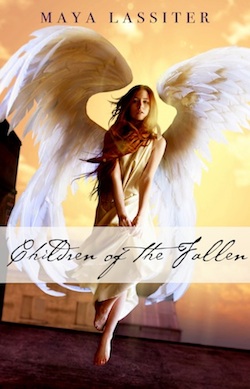
    P.S. Look at the cover of Maya’s latest novel. I think it’s gorgeous.

    Share
  • |

    Indie Thoughts: Publishers know profit, but haven’t tapped best seller lists

    In The Business Rusch: Generational Divide Kris Rusch points out that the new on-demand and long-tail market for books has changed the duration of the opportunity a book has to be successful, but that it seems the industry still isn’t recognizing this in how they measure success.

    The problems come from the fact that those of us who run things—people in our forties, fifties, and sixties—use metrics that were developed by our parents for their world, that tightly controlled Mad Men world where everyone was expected to be the same, not just in what they wore or bought but in what they listened to or watched or read as well.

    The bestseller list?

    It measures velocity. (A good essay on this topic, “The Meaningless Metrics of Fame,”  came from Mike Briggs, husband of Patricia Briggs, earlier this week. I’ve also dealt with it.)

    Reviews?

    They only want new books, and then only at the time of release.

    Brick and mortar bookstores?

    They only have room for the latest releases, and then only the ones that are the most popular with their customers (whoever those folks might be).

    Books have come late to this fight. Books have been available on demand for only about four years now, in the U.S. In other countries, there’s been even less time.

    And we’re all still fighting over meaningless metrics, to use Mike Briggs’ term, because those metrics only measure things that were important around the water cooler, not things which are important now.

    What’s important now?

    She goes on to say:

    The publishing industry isn’t even talking about new metrics. That idea hasn’t occurred to traditional publishing, and indie (or self) published writers are constantly seeking validation from the old system—trying to figure out ways to game the bestseller lists or to get a fantastic review from somewhere that has old-world prestige . . . But at some point, traditional publishers are going to have to develop new ways to figure out which products sell well and which ones don’t. All of their systems—from sales figures (which measure books shipped not books sold) to bestseller lists to critical acclaim—are based on the old models.

    Kris is a very experienced with publishing, but her last point conflates internal accounting with marketing. Publishers DO know which products sell.

    The primary measure of success in a financial enterprise s not new. It’s been around for 100’s of years. And on demand and long-tail markets don’t change it.

    The measure is how much a product or service contributes in profit to the bottom line. You take revenues, minus expenses, and that’s the contribution that product (a book in this instance) makes to your total profit. Or to covering your fixed costs.

    Booksellers have measured the success of their books with actual or estimated profits for quite some time. Publishers already know which books sell well and which don’t. No accountant in the world is going to report books shipped as the measure of success. And they don’t. The very fact that publishers have a profit and loss statement and show returns on royalty statements demonstrate that. They look very closely at actual and estimated profits. And to they do this by channel, which is reflected in a small way when they break out ebooks on royalty reports. This is all basic accounting.

    Here’s an example. Until Ender’s Game the movie, Ender’s Game the book hadn’t appeared on any best seller list since it was first released. And its release was 30 years ago! Yet over the years Tom Doherty touted its sales numbers many times. Tom knew that book was gold. Of course, he did. Because he doesn’t use best seller lists to tell him what’s selling well. He knows those lists are marketing devices. He has the real data in house. Why would he need a list to tell him anything?

    And Tom isn’t going to use books shipped either. Tor may report those numbers to Publishers Weekly for marketing purposes, but he will always multiply that number by an expected return rate to estimate sales. He wants to do that. Because books shipped is meaningless to the bottom line and everyone knows it, including the auditors.

    Publishers are well aware of the long tail. They see it with books that have been rotated out of the brick and mortar channels but are still selling in the online ones. They report it in their annual statements. They know the online channels work differently from the brick & mortar ones.

    The measure of success is still the same as it ever was—how much profit is this property contributing to our bottom line?

    Marketing, however, is a whole other ball of wax.

    What the long tail and on-demand allow are marketing campaigns that are impossible in the brick & mortar channel. In brick & mortar you have a limited time to advertise (roughly 8-15 weeks). After that period, most books are rotated out of the store. This means that any marketing for those brick & mortar buyers MUST coincide with the period when the books are in the stores.

    But the online channels open up all sorts of other opportunities. You can market forever. And the contribution margin is always positive. The online and POD costs are easily recouped with each sale. (Publishers are well aware of this profit potential; this is why we have so many making grabs for backlists.)

    And I see publishers taking advantage of these new marketing methods. This last week I saw publisher books not currently stocked by brick & mortar retailers on BookBub, BargainBooksy, and Book Sends. And the industry isn’t totally focused on new books for reviews. I just had a large newspaper agree to look at my book that was published four months ago. Still, Rusch is right when she says that the publishers haven’t adapted one of their biggest marketing tools to take advantage of the new opportunities–they haven’t done anything with the best seller lists.

    Amazon has lead the way in creating new ways of marketing books to different types of readers with their best seller lists. These lists create the excitement of discovery.

    But every one else is still reporting weekly sales on the big lists.

    If I were a publisher, I’d be asking USA Today to provide more than just the weekly view of the top 150 books. And USA Today is THE list to watch because their numbers are not based on units shipped to a sample of stores, but actual sales. Here are some lists that readers would be interested in.

    1. Most anticipated this week: based on pre-order totals
    2. Most anticipated this month: based on pre-order totals
    3. Hot new releases: based on weekly numbers
    4. Hot new releases for the month: based on monthly numbers
    5. Books with legs: last 3 months; I know it needs a different name (grin)
    6. Best sellers of the last 12 months: annual total of units sold
    7. Best sellers of the last 18 months: total units
    8. Contenders: for each of the lists above show the next 150 books (I always want to see the next 100 books after the top 100 on Amazon’s lists; why not show readers the top 300?)
    9. Movers: for each of the lists above show those that have the biggest rise in percentage sales and meet some unit minimum (you don’t want to feature books with 2,000% increase because they went from selling 1 unit to 20), even if they don’t break the best seller lists
    10. Genre: allow all of this to be sliced by genre.

    Let the reader select the view they want to see!

    Avid readers will gravitate towards the shorter time periods. Those that read fewer books will gravitate towards the longer periods. Everyone who wants to discover something new will go to the contender and mover lists.

    This is about marketing. Not publishers measuring success.

    And then armed with those numbers guess what the publishers will do? They will go back to the brick & mortar venues and pitch to have some of these same books carried in the stores for the first time (some publisher books are printed digital first) or carried again.

    Share
  • The Novel Writers Academy – Do you want it?

    Are you tired of being educated ABOUT writing?

    Do you just want someone who knows what they’re doing help you do it?  

    Specifically, do you want to develop a killer story idea, outline it, and write the first 3 chapters with the guidance of a pro?

    If so, then here’s your chance to vote to have me create a course that will do just that. 

    Read on for more information…

    Educating versus Training

    When you’re educated about something, you can talk about concepts and principles. You can recall facts. But most people I know don’t want to be educated about writing. They want more than another class, podcast, video, or book about the topic.

    They want to be trained.

    They want to develop a killer idea, sketch it out, and actually begin writing. Not just watch or read about it. But they want some help.

    I’ve been asked many times if I would teach an online class or workshop, but I’ve put it off for years because I know that I don’t want to offer just another set of videos about writing.

    Of course, I will offer just videos. That’s all some people want.

    But I know there are others out there who want to go beyond that. They want on-the-job training. They want to develop a fun story, but don’t know the process well enough, and want someone who knows it to guide them.

    They want training.

    But training takes time. More than the time it takes to create videos or posts.

    That’s what I do, by the way. When I’m not writing novels, I work in corporate America training people to actually do things. Over the last 20 years I’ve trained people to do everything from give compelling presentations and speak Dutch to plan and schedule manufacturing plants and close their accounting books at the end of a financial period.

    And so I know there’s a difference between being educated about something and being trained.

    Just think about it. Do you want a surgeon who has been educated about surgery or one that’s been trained to perform surgery at a mastery level? Do you want a plumber who has been educated about plumbing, or one that’s been trained to plumb? Do you want your airplane pilot to be educated about flying or trained to fly, in all sorts of weather?

    Going to school and being educated is cool, awesome, and necessary. But we all know we have to go beyond that. We need to be able to actually DO things. Training requires you know concepts and principles, but it also requires you take the next step and actually do something.

    Do You Want Training?

    I’m willing to provide this on-the-job training, but before I develop and conduct this course, I need to know enough people are interested in it for it to be worth my time (it would probably be more sensible for me to focus exclusively on getting the books I need to write out the door, but I love to teach too, and had to figure out a way to do it).

    So here’s the test. If you want to take the class described below, sign up to express your interest.

    This does not obligate you to anything. It simply says that you are almost 100% sure you want to take the class, barring earthquakes, plagues of demons, or crazy in-laws.

    When enough people signup, I know it will be worth my time, and the love of teaching part of me will be able to convince the sensible part of me to do it.

    And then I’ll do a Kickstarter to make it official. Or I may just develop and release. We shall see.

    So, here’s more on the course.

    Your Novel’s Core: Develop a Killer Idea, Outline it, and Write the First 3 Chapters

    The first order of business is to determine if this course is right for you.

    Do you want to write a novel, but feel like you have no idea what you’re doing?

    Do you often get ideas for a character or setting or snippets of scenes and dialogue, but find they just never go anywhere?

    Are you tired of learning about writing, and just want someone who knows what they’re doing help you to do it?

    If so, this class is for you.

    This is not a theory class. Oh, we’ll talk about theory. You’re going to learn a ton of theory. But this isn’t about theory because I don’t care about theory. And neither, I suspect, do you. I care about developing an awesome story experience and sharing it with readers who enjoy it as much as I do.

    So I’m not interested in talking about it. I’m interested in doing it. And having fun.

    Which means that in this course you’re going to:

    • Develop at least 10 story ideas that beg you to write them
    • Select one of those ideas and create an outline
    • Write the first three chapters of that novel

    In order to do that, you will need to learn the secrets to:

    • A story idea that works and how to come up with one
    • Interesting characters and how to develop one
    • Transporting your reader to the story so they feel like they are witnessing the whole thing
    • Keeping readers on the edge of their seats
    • What story and plot are really about
    • Writers block and why it’s a gift (no, really, it is)
    • Knowing what comes next
    • Getting feedback from beta readers that’s actually helpful (and if you don’t know this, much of what you’ll get will be worthless)

    These secrets and many more. But remember: this isn’t a course about secrets. It’s a course about you actually improving your ability to generate story ideas, develop them into ideas worthy of a novel, and then write them.

    This means you need to not only produce, but also have someone who has the ability look at your work and guide you along. It means getting feedback.

    So I will be there helping you every step of the way. And if you’re writing in a genre I don’t know as well, I will loop in working authors who are successful in that genre to add their two cents.

    Fumbling in the Dark

    I started my novel writing career when I received a three-book, $50,000 deal from a major publisher. I am now an indie author with books that sell thousands of copies each year to readers all over the world. I’ve had publishers purchase and produce my books in audio. I’ve sold story rights to foreign publishers. I love developing and telling stories. And I love teaching others how to do the same.

    But when I started, years before that novel contract, I had no idea what I was doing. I didn’t know where to start stories, how to develop them, or even where they were supposed to end. And I didn’t have anyone to really help me. In fact, I remember asking one of my creative writing professors after class how you knew where to end your story. He looked at me, shrugged, and said, “I don’t know. I just end them.”

    What the heck?

    It was all a vast mystery. I loved stories, but I was clueless about what they were, how they worked, and how someone went about developing and writing one. I had a lot of fun, enjoyed my writing teachers (they were all great people), but I was never able to write something that hung together and felt like something you’d see in a movie or read in a book.

    But that didn’t discourage me. I kept at it. And over the years, I made a number of breakthroughs.

    What I discovered was that there are three things you must learn to write killer stories. You must learn:

    • What stories do to the reader
    • How they do that
    • And effective techniques for both developing and telling the story

    In this class, you’re going to learn those three things and the key principles for each, saving yourself all the frustration and discouragement that comes from trying to discover these insights by stumbling around on your own in the dark. With this class, you can cut years off the time it takes to learn how to write.

    When you know these three things, you will be able to write stories on purpose, instead of by accident. You will have power over your craft.

    You will see that instead of trying to remember a list of hundreds of “writing rules” or use “writing formulas,” many of which are nonsense, you’ll write by focusing on the simple and fundamental heart of what storytelling is all about.

    Course Outline and Price

    Below is a more detailed view of the course. My lessons are called quests because I’m expecting you to actually do something, not just watch.

    Quest 1: Discover what stories do, then create your personal story profile

    • The three things you must learn to write killer stories
    • Your personal story type
    • The three main reader responses you must generate
    • The big secret: trigger and delay
    • Genre
    • Sensitizing yourself

    Quest 2: Discover what you need at the core of your story, then perform a craft analysis of 2 of your favorite novels and report your findings

    • The story engine (without this, your story goes nowhere)
    • What makes characters interesting
    • The vital THOMR
    • The desire to gain or retain something specific
    • Formidable obstacles
    • Uncertainty
    • Surprise
    • The same but different
    • The 3 grunts

    Quest 3: Discover the secret to developing ideas, then develop 10 fully-formed story ideas that beg to be written

    • The 4 main creative principles you must follow
    • 5 super productive techniques for generating ideas
    • Creating a schedule and goals
    • Using the story engine job aid
    • Using the setting job aid
    • Using the magic job aid
    • Using the world building job aid
    • Using the character job aid
    • Using the formidable obstacle job aid

    Quest 4: Discover how to figure out what comes next, then develop your story sketch (outline)

    • The number of scenes for your story
    • The story cycle
    • Story turns
    • Trigger and delay
    • Structure, and why structure models so often fail to help

    Quest 5: Discover how to transport your reader to the story, then write your first three chapters

    • Techniques for telling your story so it’s vivid and clear
    • Narrative summary versus narrative detail and when to use  each
    • Effective description
    • Writing point of view, hot and cold
    • Orienting the reader
    • Transitions

    Quest 6: Discover the three main effects you should read for, then deliver a reader report for the first chapters of seven different novels

    • The 3 grunts (the secret that allows you to learn from other novels)
    • Reader report rules
    • How to get feedback for the rest of your project

    Quest 7: Discover your next steps, then create a plan

    • Methods to write quickly
    • What you need to do to publish independently
    • What you need to do to publish with a traditional publisher

    As you can see, in this course you aren’t going to just hear someone go on about theory. You’re going to define your type of story, surprise yourself by developing at least 10 solid story ideas that beg to be written (by you). Then you’ll select one of those ideas, sketch an outline, and write the first three chapters, all under my guidance, using the same practical, simple methods I use.

    Most important of all, you’ll actually stop thinking about writing and be well on your way to finishing your novel with a clear path to the end.

    Instead of dreaming about someday, you’ll enjoy the excitement of writing a novel right now.

    The cost of the course depends on what you want:

    • Access to all of the videos: $199
    • Access to all of the videos and two rounds of coaching on your story idea, outline, and first three chapters $399

    Not for everyone

    Having said that, you need to know that this class is not for everyone. If you are not willing to actually make time to do the work I ask, you will find no benefit.

    How much time will you need to spend?

    With all of the videos, reading, and development you’ll do, you should expect to take 30-40 hours. You can move through it at your own pace, but I strongly suggest you spend at least five hours per week. Any less than that, and you’re going to find it very difficult to keep your creativity hot enough to make dinner.

    Also, if possible, I recommend you take the course with a friend. You will progress so much more quickly when you discuss the lessons and insights and bounce your ideas off of each other.

    If you want to just watch the videos, that’s perfectly fine. If you want to actually develop a story and learn on the job, then you have to make time to do this awesome thing, just as you would if you wanted to learn how to dance, quilt, race cars, rappel, or paraglide.

    So if you aren’t in a position to make the time, I understand. Please don’t sign up.

    But if you’re interested, then click below to raise your hand as someone who is definitely interested. Once I see there are enough people interested, you’ll get the class.

    Yes, I’m definitely interested!

    If you’re interested, let me know by filling out the form below.

    This does not obligate you to anything. It simply says that you are almost 100% sure you want to take the class, barring earthquakes, plagues of demons, or crazy in-laws.

    * indicates required


    Share
  • |

    John guests on Writing Excuses season 3 episode 16

    writing-excuses-the-guys2-300x139A while ago the Writing Excuses team asked me to record with them, and last Friday I got to do it and had a blast.

    We recorded three episodes. In the first podcast we talk about putting and not putting ourselves in our writing and making characters who don’t all sound like the author. As usual, the guys had some great insights. Check it out: The Anti-Mary Sue Episode.

    Share
  • |

    Amazon vs Macmillan = Big River Fighting to be Big Banana

    Here’s what this brouhaha is all about

    Amazon wants to try to replicate with digital books what Apple has done with digital music. So what has Apple done?

    According to Cnet’s “iTunes reps 1 in every 4 songs“:

    “iTunes-purchased songs now account for 25 percent of the overall music market–both physical and digital–in the U.S., says an NPD Group report released Tuesday.”

    That may not seem like a market leader position, but in the comments one person pointed out the following.

    “35% of the music sales are digital (there’s some conversion where 1 CD = 11 or 12 individual digital downloads). Apple owns 70% of the digital market. 70% of the 35% ~ 25%. So Apple has a 25% share of all music sales.”

    Whoa, Nellie. That there’s what we call a cash cow. Moo-la, Baby, Moo-LA! And this becomes even more significant when you consider the fact that many think the digital part of music sales is only going to grow and grow.

    According to the same set of data, TheStreet.com’s  “iTunes, Wal-Mart Dominate Music Sales” reports:

    Amazon accounts for only 8% of that market .

    How did Apple get the head lock on such a huge portion of the digital market? It appears it has to do with the fact that Apple was first to market with a good MP3 player solution, linked that to its iTunes store, and then bundled the software in such a way as to drive and then keep people coming back to iTunes. Here are a couple of articles. I’m sure we could google dozens more.

    Amazon (and many others) are forecasting digital books to become a very large part of book sales. Amazon wants to be the big banana in that space. Well, it can’t be (drum roll) the big Apple now can it?

    But what does this have to do with publishers?

    Big Banana’s Problem

    Amazon cannot become the big banana if nobody buys its stuff because consumers feel it’s priced too high.

    So why don’t they just price it low?

    Ah, there’s the peel.

    In this new proposed arrangement, Amazon cedes a huge portion of its pricing control to the publisher.

    But Apple’s doing that with its iPad.

    It is. However, Apple already has a model and ability to sell. I think Amazon wants to make sure it keeps the low-price position because this is one of the key reasons people go to Amazon. Amazon pulls online book customers in because (listed in what I estimate is importance):

    1. The new books are usually cheaper and if you really want a low price you can buy them used
    2. Amazon provide long tail stock (what book can’t you get out there?)
    3. It’s easy to type in a title and find out more info about the book (first chapters, user ratings, etc.)
    4. Completing the sales transaction is a snap 

    I’m assuming Amazon is worried that if it allows publishers to price their ebooks higher, then they lose one of their MAIN draws. And therefore their ability to become Big Banana.

    The Existing Supply Chain Model

    Right now you have these distribution or supply chains:

    • Publisher  –> Wholesaler  –> Retailer –> Consumer
    • Publisher  –> Retailer –> Consumer
    • Publisher  –> Consumer

    All of them exist side-by-side. For example, Scholastic will sell books via a Barnes & Noble retailer, but they’ll also sell direct via their school book program. You can get SERVANT at Barnes & Noble or you can get it directly from Macmillan here.

    Why have the middlemen?

    Because middlemen bring the cost of purchasing a book WAY down. Some people don’t think that. All they see is that the retailer buys the book wholesale and then jacks up the price.

    But imagine there were no Wal-Marts, Smith’s grocery, or any other kinds of stores. As a consumer you would have to go to farmer Bill for milk, travel 10 miles to farmer Jane for corn, travel another 10 miles to farmer gill for eggs, and on and on and on for the hundreds and thousands of different products we buy. Furthermore, because middlemen bring the products all together each producer has more incentive to compete on quality, value, and price.

    Middlemen SAVE consumers huge amounts of time and money. That’s why we’ll always have them with us even though producers may still sell direct at the same time.  And that’s why we’re willing to pay the little bit they ask for what they do.

    Price/Volume/Profit Control

    There are two keys to making all of this middlemen business work.

    First, usually only the two parties involved in any transaction control the terms of that transaction. So the publisher and wholesaler agree on a price for their transaction. The wholesaler than makes a separate agreement with the retailer. Finally, the retailer is free to make a separate agreement with the consumer. In each transaction the seller gets to control price, cut deals for high volume purchases, and, therefore control its profit.

    In all cases you negotiate a price/volume mix that’s good for both parties. Sometimes this includes a flat price. Sometimes it includes price deductions for larger volumes.  But in all cases it gives the producer something to count on. If a customer wants a lot of product, great, we’ll sell it to you for X price and make Z profit. If you want less, fine, we’ll sell it for Y and make Q profit.

    Second, wholesalers and retailers want to control costs. They need to be able to turn around and sell your product for some profit. If you sell your stuff to someone else for a humongous discount, then that allows their competitor to charge less and potentially shift volume to them. So buyers will often try to get commitments that you aren’t going to screw them somewhere else. And sellers who value long-term relationships are willing to make such commitments.

    So here’s business as it is today. A retail bookseller (Amazon, B&N, etc.) pays a fixed wholesale price for the book to the publisher. The bookseller might negotiate wholesale price breaks at different quantity levels with the publisher, but that’s a wholesale price/volume agreement that ensures certain profit levels for the publisher. As for the retailer, they maintain a different price/volume/profit control on their end with the consumers, fiddling with volume/price mixes that make sense to them. In this situation BOTH the publisher and the retailer maintain price/volume/profit control.

    What do you want to be–the Marketplace or the Seller?

    But this new percent-of-retail scheme decouples price from volume and forces the publisher or retailer to lose control of profit. Either Amazon or the publisher has to GIVE UP price/volume/profit control with their set of buyers.

    If Amazon gets control, then it can set the retail price however it wants REGARDLESS of volume. In this situation, because wholesale price is pegged to retail price via the %, this means Amazon would dictate the wholesale price to the publisher without any regard to volume. This takes price/volume/profit control away from the publishers, putting them at the mercy of the retailer’s whims.

    Scary, a total shift in the way they’re doing business. Publishers would have to budget for the worst case scenario–the lowest the retailer might charge.

    However, that’s NOT what happened. In this current deal Amazon ceded its control to Macmillan, saying, okay publisher YOU set the price for my customers. This isn’t foreign to Amazon. They do this right now with used book sellers. Those folks set their own price and Amazon acts as the market place. And once Amazon says “we’re the marketplace, not the seller” then they step right out of the “hey, you’re charging too much” equation. So nobody would yell at Amazon for this move. Well, some folks would, but they’d soon figure it out. For example, nobody yells at Amazon now when used book vendors want to charge $99 for a trashy paperback. Everyone gets that Amazon is just the marketplace just as they get that Ebay is the market place.

    However, in this case Amazon did want to retain some control. They said, let’s set a range of prices that are acceptable. You can charge $5.99 to $9.99 but no more or less. This would allow the publisher to sell a book for more money when it’s initially released and gradually drop the price as time goes on until we get the bargain basement price of the remainder tables. The articles I linked to in the original blog discuss this common selling practice.

    Macmillan said, the miminum is great, but we actually want to start higher–$14.99.

    Amazon said, no way, Dude. And the battle was on.

    Magic $9.99?

    But why? Why did Amazon insist on that maximum? Why not just do what they already do with used book sellers and step away completely from controlling price? Wouldn’t they WANT to make more money with higher prices anyway?

    Again, price directly affects volume sold which affects profit. But in this case, it’s not as much about profit but volume and market share.

    The only reason that makes sense to me is what I discussed at the beginning of the article–Amazon wants to dominate the digital book space as Apples does iTunes, and they feel the must keep prices low to continue to get people coming to their Kindle store and growing their customer base.  They’re hoping to spank the competition in this segment by being big first and getting all the volume–it’s the old five yards and a cloud of dust.

    Big Banana. Kind of like Wal-Mart is in its segment. Kind of like Microsoft is in theirs. Kind of like Apple is with digital music.

    And they obviously think $9.99 is the magic number to keep the customers pouring into their Kindle e-book world.

    ebooks cost nothing and my grandma plays in the NBA

    Isn’t $9.99 a good price for the publisher? I mean, heck, ebooks don’t use any paper, so they cost next to nothing to make, right?

    Um, no.

    The answer’s “no” because paper is only a part of the cost. And I’m not talking about the cost of the person who takes the Word document and converts it into PDF or Kindle or whatever the ebook format is. My kid could do that for twenty bucks.

    Every product is a mix of fixed costs that don’t change with the volume you produce and variable costs which do vary. Rent, electricity, buildings, equipment, editorial, art, design, author advances, marketing, etc.–all these things can be fixed costs. It doesn’t matter if you make one book or one million. You still have the same rent, same fixed cost for artwork, same cost for editors.  

    So how big are those fixed costs? Based on the blogs I linked to in the original article (and if I read them correctly), the fixed costs are estimated somewhere between $7,000 and $20,000 per book. But those numbers aren’t hard numbers. For example, books that have bigger author royalities and bigger marketing budgets are going to cost more. Furthermore, because those numbers don’t have any details backing them up, I’m leery of trusting them.

    But we can look at something that is public knowledge to see how this works. For example, Stephenie Meyer got $750,000 for Twilight. Most authors do NOT get that. Most get a $5,000 – $7,000 advance per book. Still it shows the fixed costs can be quite large. Meyer’s advance was a huge fixed cost that needed to be covered by each book her publisher sold.

    If they sold only one book, they’d have to have charged $750,000 for it just to cover that one cost. Do you know anyone willing to pay that for a book? No. So they priced it, hoping to sell thousands. If they were to sell 750,000 copies, then that advance only cost $1 per copy. If they were to sell 1.5 million copies, then it would be .50 cents per book. The more books they sell, the smaller the fixed cost per book. Of course, that’s just one fixed  cost! You need to add all the others in (marketing must have been very large as well). Furthermore, Meyer is THE best seller. The vast majority of authors don’t sell anything that comes close. Yes, they have smaller advances and marketing budgets. But you get the idea–fixed costs matter!

    So all these people saying that since no paper is involved ebooks should cost nothing are ignoring fixed costs. In fact, according to some sources, printing, paper, and shipping only account for 10-20% of the cost of most books. I don’t know if that’s an average at all volume levels. Again, there was nothing to back up those claims. But if it’s accurate, you can see the arguments demanding ebooks be sold for next to nothing become silly at best.

    The fact is that the publisher needs to cover those fixed costs. If you were the publisher, how would you do it? Would you price hardbacks to cover fixed + variable + profit? And then price paperbacks and ebooks at variable + profit? Probably not. Hardbacks are already pushing the price limits for consumers. I think you’d want to spread those fixed costs around. If anything, you might try to cover a higher portion of the fixed costs with the paperback and ebooks.

    My inner accountant is screaming for real data to crunch and display in a spreadsheet, but I don’t have any actual actual price/volume/profit matrices. What I can say is that paper has NEVER been the only cost. For midlist authors I suspect it’s probably the smaller portion of the cost of each indivudal book. Publishers must price the books and move the necessary volume to cover fixed costs + variable costs + some profit. And so it’s only reasonable to expect that ebooks be priced to do that.

    What’s the best for you, dear reader?

    I don’t know which specific potential leader will end up providing better prices, reading devices, services, etc. in the long run. Is that Amazon, Apple, Barnes & Noble? A whole bunch of retailers? Who knows?

    What I do know is that it’s good to have a number of companies competing for the customer’s dollars. My vote is with having lots of retailers. If Amazon can sell a significantly larger number of ebooks with their pricing, then publishers, authors, and readers all win. If they can’t, then it becomes a win-lose.  And the publishers and authors will be on the lookout for a way to improve the situation by seeking out other distribution channels.

    Edit for Macmillan Announcement

    2/4/2010 4:05 PM

    It appears Macmillan and Amazon have come to an agreement.

    Notice Macmillan CEO claims this new agreement will result in them making LESS money than they do with ebooks currently. But it provides a reliable and rational market. I think what he’s saying is that this allows publishers more predictability, even if it comes at a price.

    From what I understand Amazon currently pays 50% of suggested retail price for an ebook. The publisher sets the SRP (you see it on the book often), but Amazon has full control to charge whatever it wants to the customer. Here are the numbers for SERVANT.

    • SRP = $25.99
    • Amazon pays the publisher 50% of $25.99 = $13 for each copy of SERVANT they sell
    • If they sell it for $9.99 they lose $9.99 – $13 = $(3.01) per book
    • If they sell for $14 (about what they’ve been listing it for, the make $14 – $13 = $1 per book

    Under the new deal the publiser sets the SRP and the consumer price. On each sale Amazon gets 30%, the publisher 70%. Here are the number for SERVANT under this scenario.

    • SRP = $25.99
    • Publisher sells ebook for $14
    • Amazon pays the publisher nothing until the sale.
    • Amazon earns $14 x 30% = $4.2. This is MORE than they are making under the current system.
    • Publisher earns $14 x 70% = $9.8. This means the publisher earns $(3.20) less, just as claimed, under the system they WANTED versus the existing method

    So why earn less? As Macmillan says in the announcement above, they’re willing to take less to have a more rational and stable market for ebooks

    Over the last few years we have been deeply concerned about the pricing of electronic books. That pricing, combined with the traditional business model we were using, was creating a market that we believe was fundamentally unbalanced. In the last three weeks, from a standing start we have moved to a new business model. We will make less money on the sale of e books, but we will have a stable and rational market. To repeat myself from last Sunday’ s letter, we will now have a business model that will ensure our intellectual property will be available digitally through many channels, at a price that is both fair to the consumer and that allows those who create and publish it to be fairly compensated.

    We have also started discussions with all our other partners in the digital book world. While there is still lots of work to be done, they have all agreed to move to the agency model.

    So this is how all ebooks will work with Macmillan going forward. I’m betting most or all the other publishers will follow suit.

    I think this is good news for readers, publishers, and retailers. Readers get it for less than hardcover. It will be at the higher end of the range settled with Amazon (I think it was $5.99 – $14.99) unless the publisher decides to run discounts as they do with many blockbusters now in hardback. But the price will drop as time goes on. I imagine when they release the paperback for a book, they’ll have to drop it for certain. And when books go to the remainder tables, they’ll drop again. I can see old ebooks or promotions costing $5.99 – $9.99, new ones $14.00.

    BTW, the standard now for many authors is to be paid 15% royalty of the SRP on ebooks up to a maximum of 40-50% of the net amount publishers get from the retailer (btw, contracts stipulate different royalty rates for ebooks, hardback, mass market, etc.). Something the industry is considering, as mentioned in Sargent’s letter, is setting a % rate of the amount received by Macmillan from Amazon. So instead of paying authors 15% royalty on the SRP, new contracts will likely pay authors 20 -25% of the 70% the publisher receives as royalty. You can do the math. It’s very clear this new deal doesn’t earn the author more per book. 

    Hopefully, then, we’ll simply sell a heck of a lot more copies. One glitch in all this is the fact that publishers haven’t really been setting prices with consumers. That’s been the retailer’s job. And so they’ll probably have a learning curve trying to get the prices right in the beginning. Or maybe not. We’ll have to see.

    Edit to answer Jason_Young @ 2

    2/5/2010

    Your point is, hey, if they have three products (hardback, paperback, and ebook) to spread the fixed costs across, then should that allow them to drop the price of all three products? $100 / 2 = $50. $100 / 3 = $33.3. Have I got the question right?

    FIXED COSTS AND VOLUME

    If so, then the answer is it all depends on the relationship between volume and fixed costs. It always depends on that relationship. In fact, that 20% figure may or may not be accurate because . . . it all depends on volume and fixed costs. Both of which can change.

    Let’s take a totally FABRICATED and SIMPLIFIED situation to see how it works.

    Fixed costs: $10,000
    Variable costs hardback (paper, printing, binding, etc.): $3

    Cost per book by volume printed.
    Printed / Cost per Book / Variable as %
    1 / $10,003 / 0.03%
    1,000 / $1,003 / 0.3%
    5,000 / $5 / 60%
    10,000 / $4 / 75%
    20,000 / $3.50 / 86%
    50,000 / $3.20 / 94%

    Now remember: printing has fixed and variable costs as well. But I’m going to say the printing’s all variable to keep this manageable. And that you sell every book you print (something that never happens). The thing to see here is that when you keep fixed costs constant and increase the volume printed, then the fixed cost amount and % per book goes down. Conversely, variable costs become a larger and larger portion of each unit’s cost. Remember, however, that often fixed costs go up when you plan on printing significatly more books (Twilight etc.) But given a set budget for a book, you want to sell as much as you can.

    VARIABLES CHANGE

    So your argument is that when ebooks come along, the fixed costs have already been covered by the hardbacks and papers, cause they’re all still priced the same and the variable and fixed costs haven’t gone up that much since two or three years ago.

    Here’s some of the assumptions you’ve made that might be false:

    1. Fixed and variable costs haven’t gone up
    2. Publishers are selling the same number of copies per book as they were in the past
    3. Ebooks aren’t cannibalizing sales of hardcopies

    The truth may be that costs have gone up and that books aren’t selling as many copies in their various formats as they used to. But even if both of things have not happened, why should we suppose that ebooks don’t cannibalize hardcopy sales, dropping the volumes and, therefore, increasing the cost per hardcopy? Or that they won’t cannibalize even more in the future as ebook readers become better and better.

    On the revenue end, you’re also assuming publishers are selling books for the same prices they were in the past. SRP may be high, but have you noticed the prices on new books on Amazon and other outlets? My $25.99 SRP book came out and sold for $17. It sold for $15 and change before release! And I’m not a big name they’re trying to drive volume to. This is newbie no-name they’re having to discount.

    What I expect has happened over the last five years is this. Costs have risen. Hardbacks are already pushing the limits on price. Furthermore, sellers and consumers are asking for more and more discounts. Paperbacks still haven’t crossed the $9.99, but there’s still pressure to keep them low. Ebooks are adding revenue, but a significant portion of that comes at the expense of hardcopies. So it changes the mix of products sold. It doesn’t simply open up a whole new stream of untapped cash. Because of this, ebooks allow the publisher another method to earn profit that’s getting squeezed away.

    PRODUCT MIXES AND CONTRIBUTION MARGINS

    The best way to look at this is to look at the cost in two ways. One way is to allocate fixed costs and get a price per unit. But if you look at it only that way, you can make a number of bad judgments on the value or price of a product. This happens because of that relationship between fixed costs and volume. So you also want to look at the contribution margin of each product. And, in fact, this is a better way of judging the profitability of an item.

    In this method you lump all the fixed costs together and then examine each unit of the different products (hard, soft, ebook) only by its variable cost versus revenue to see if each unit sold is contributing something above its variable cost towards the fixed costs. Then you estimate the volume you expect (hope) to sell at given prices and try to price them all in a way that will move enough volume of each type of product to cover fixed costs and provide some profit.

    So you don’t consider each product type individually. You look at the MIX of product and the MIX of contribution margins. And you work it so that together the MIX of products covers costs and earns you a profit. And gets enough volume to keep your author a going concern, growing his numbers so he becomes more profitable as time goes on.

    Edit for Modesitt’s insight

    2/6/2010

    Please check out this blog by L.E. Modesitt, Jr. “Why Amazon and Some Readers are Wrong”

    Second, what’s been overlooked is the fact that a tremendous number of book titles actually lose money. Depending on the publisher and the year, that can range from as little as 30% of all titles published to more than 60%. That means that successful books not only have to cover their own production costs but the losses from unsuccessful books if the publisher is to remain in business.

    Third, hardcover sales of successful books effectively subsidize paperbacks or less successful books. Ten-dollar Kindle books would have created price pressures that would either reduce the sales of hardcovers or replace them with e-books, and as more adaptable e-book reading devices become available, that would reduce overall revenues even more than would $15 e-books. This, in turn, would reduce the ability of publishers to try “new” authors and approaches, and would likely result in more “mass” entertainment and less diversity in a field that is already having trouble publishing books for limited audiences.

    Just in case you didn’t connect it to the discussion above. A HUGE cost that needs to be covered by the contribution margins of the successful books are the fixed AND variable costs of each book that fails to contribute enough segment margin (the contribution margin of a segment of your business, in this case a book in its various formats) to pay for itself.  Look at Modesitt’s percentages of books that lose the publisher money. Think about that. For the publisher to continue to bring in new authors who might not sell well in the beginning but have great potential in the long run to sell well, they have to cover the “start up” costs of those authors.

    He makes a lot of other important points. It’s a good read.  And it all plugs into the fixed costs, volume, price, contribution margin equations.

    Share
  • |

    Killer Story Workshop to be held at CONduit

    I will conduct The 3 Things You Must Learn to Write Killer Stories workshop at CONduit this year. It’s being held at the downtown Raddison hotel. Here’s my schedule.

    Friday, May 22nd

    • Culture-Building in F&SF:  3:00  PM  (with Lee Modesitt, Roger White, Dave Wolverton, Elisabeth Waters, & Brandon Sanderson)
    • The 3 Things You Must Learn to Write Killer Stories Workshop: 8:00 pm – 10:00 pm

    Saturday, May 23rd

    • Mike Oberg asks questions from the audience: 4:00 PM (with Dave Wolverton, James Dashner, & Larry Correia)
    • Reading of Servant of a Dark God: 6:00 PM
    Share