The Drowned Cities by Paolo Bacigalupi

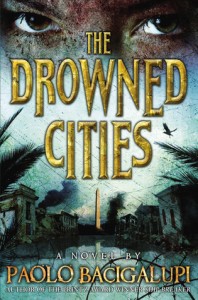
The Drowned Cities by Paolo BacigalupiI just finished The Drowned Cities by Paolo Bacigalupi, and, holy cow, folks—this story rocked.

It’s set in the future in the area around Washington D.C. which is the titular drowned cities. They’re drowned because the climate has gotten warmer, the seas have risen, and D.C. is half under water, permananetly flooded. It’s more like Georgia or Florida—gators, kudzu, the works. But this is not another dumb book about global warming. If it were, I wouldn’t be writing this.

No, the United States has fallen apart. Up north there’s some alliance with money and power and the ability to keep those in the Drowned Cities out. South, who knows? West? Don’t know. But right around D.C. everything has gone to hell.

It’s like Mogadishu, Somalia in the 1990’s (Blackhawk Down) with warlords fighting each other, tearing the place apart.

It’s like Sierra Leone at the end of that decade with different factions butchering locals and forcing kids to fight as soldiers.

Except instead of the U.S. or Europe or the U-freaking-N sending in peacekeepers to stabilize the situation, it’s China. And just like the U.S. in Somalia, the warlords send the Chinese peacekeepers packing. And so now it’s just chaos.

Talk about a setting for a story. But Bacigalupi doesn’t stop there. He adds in genetically modified creatures. He starts the book with one named Tool. A creature that’s got the DNA of humans, mastiffs, tigers, reptiles and who knows what else all combined to make him smarter and stronger than humans ever could be—a monster that’s the ultimate killer, the ultimate soldier, the ultimate war machine. One that was bred to submit to a master, but something went wrong with Tool. And he was able to break free of that bond.

Tool is trying to escape prison and death. But as mighty as he is, he’s weak and injured. And then two kids from a village run into him while in the jungle. He knows they’re going to reveal his whereabouts to the warlord searching for him. In his weakened state, Tool is only able to grab the small boy named Mouse.

Mahlia, the girl, promises to bring medicine if Tool will only spare the boy. He knows she’s lying.

And so starts a rich tale of the monster, the boy, and the girl: a tale that is filled with friendship, triumph, loss, heroism, cowardice, and earthy sci-fi coolness all set in the midst of a guerilla war. The beginning sucks you in. The ending leaves you breathless. Along the way you get to see into the character of all three plus some of the bad guys. In the end you get a story about sacrifice and love.

If you liked A Long Way Gone, Ishmael Beah’s memoir of his time as a child solider in Africa; if you liked The Hunger Games, and not primarily for the romance; if you like person in jeopardy fiction or war flicks where a small group has to fight for its life, I think you will love this book.

This is the second book set in the same world. The first was Ship Breaker. Tool, one of the most interesting characters I’ve come across, is in that one too. But you don’t need to read that to enjoy this. And I wouldn’t put this read off to do so. Go give The Drowned Cities a try. Three or four pages in, I suspect you’ll be completely lost in the wondrous tale.

Share

Similar Posts

  • Good Stuff: Books Worth Multiple Readings Part 1

    Would you like to improve your relationship with your spouse or children?

    Would you like to improve your experience with teachers, coaches, and administrators this coming year at school as you try to influence them and work with them for the benefit of your children?

    Would you like to simply have a better time with the people in your community?

    There are some books so full of practical wisdom about relationships that they deserve to be read every year or three. I want to recommend two such books to you. The first is How to Win Friends and Influence People by Dale Carnegie.
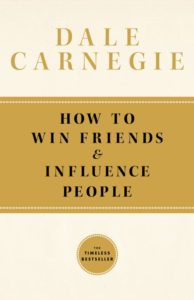
    This book has been in print for eighty years. And not only that, it has been, year after year, one of the bestselling books out there for almost each of those eighty years. For example, Amazon right now ranks it the #9 most read book. You’ll see other books come and go on that list. But books like this and Stephen R. Covey’s The Seven Habits of Highly Successful People stay.

    There are thousands of how-to books published each year on relationships in business and personal settings. Most are never seen again. But this one has stayed because people find it so useful they recommend it over and over again.

    And I wish to heck I’d not waited ten years to pick my copy up again.

    As I re-read the book this last month, I saw that if I’d been thinking about the practical guidelines Carnegie shares, I could have avoided a number of public and private arguments I’ve had over the last few years.

    I could have avoided subjecting those relationships to attack, coming to my senses, and then trying to clean up the mess, large or small.

    But even more important, I could have added a little more sweetness to my life and the life of others I encounter on my way. There are only so many days we have here on earth, and how much better it is to add additional drops of honey to them instead of vinegar.

    One of the wonderful things about his book is that Carnegie shares the wisdom in a down-to-earth way with lots of examples and stories. He shares wisdom on building relationships, being liked, winning people to your way of thinking, and how to make your requests for change known without giving offense or rousing resentment. And he does it simply and in a way that you feel like you’re sitting down with a good-humored grandfather. There are no dry, abstract parts. Just look at a sampling of the chapter titles.

    • “If You Want to Gather Honey, Don’t Kick Over the Beehive”
    • “He Who Can Do This Has the Whole World with Him. He Who Cannot Walks a Lonely Way”
    • “An Easy Way to Become a Good Conversationalist”
    • “If You Must Find Fault, This Is the Way to Begin”
    • “Give a Dog a Good Name”

    I can tell you that every time I try to approach things the way he proposes, they almost always seem to go better.

    If you have an issue you want to discuss with a school teacher, coach, or administrator this year, let me suggest you first listen to what Carnegie has to say. I can promise you you’ll get much farther. And you will probably end up enjoying the interaction.

    If you want to improve your time with your wife and kids, open this book and look for insights.

    If you want to have a better time with your co-workers or boss, I suggest reviewing the wisdom you’ll find here.

    Carnegie doesn’t possess all the wisdom there is to be had about relationships. There are many people out there with great insights. But, gee whiz, he provides a great start. If you want to add some sweetness to your life, I think you’ll find this book a great help.

    Let me illustrate this Carnegie stuff with an experience I had with one of our high school coaches two years ago. I have a vast background in basketball that includes, well, nothing. I basically know how to dribble a ball. Oh, yeah, I also played church ball two or three years in a row back in the 1980s. So, as you can see, my knowledge is vast.

    And not to toot my own horn, but this wasn’t just any church ball team. This was a team that improved the sport.

    How? You ask.

    Well, during one of those church ball years, me and the guys from my ward (“congregation” for those not familiar with the Mormon faith) thought it would be capital to make jeans and concert tee-shirts our uniforms. Back in those days concert tee-shirts looked like this.

    This meant we ran up and down the church courts with drugs, sex, and rock and roll on our chests (I’m sure that’s precisely what the brethren had in mind for the program).

    As you can see, we were way up there on the basketball ladder.

    So back to this coach. My daughter was playing on the high school team, and the team was having a consistently hard time with one type of defense. And I thought, “Self, there’s got to be a way to break that defense.” These are the big thoughts that basketball gurus like myself have.

    And so I researched and watched and talked to folks who had actually played basketball competitively (unfortunately, without concert tee shirts) and identified an offensive counter that looked like it might work.

    And I sent an email to the coach sharing my idea.

    Now, the coach could have reacted in many ways. Especially given the fact that (1) he had already thought of the idea I was proposing, (2) had already tried it in games that, yes, I had attended, and (3) probably knew just a teensy bit more about basketball and his team than I did even though my church ball team had vastly superior uniforms.

    But this coach, whether he knew it or not, was following a number of the principles found in Carnegie’s book, including the chapter titled “Let the Other Person Save Face”. This meant that instead of rolling his eyes or ridiculing or saying something like, “Brown, are you blind?”, he explained what he was doing and then expressed his appreciation. He was happy I was so invested. He thanked me.

    And here’s the thing: he meant it.

    I replied that if he ever wanted someone to suggest an idea he was already trying, to just call. I’d be happy to help.

    We laughed, but the important thing is that what could have been a wedge became a good experience for all. And, more than ever, I wanted to work with him to help my daughter in the program.

    I will give you one more example. There’s a mother who had four of her children go through my wife’s seventh and eighth grade language arts classes. Now, Nellie is a worker. She expects her students to work. She wants to have a good time, loves having great interactions with the kids, but she also wants them to improve and learn, and knows that’s going to take some work. Sometimes the assignments, despite her best efforts, aren’t clearly understood. Sometimes they’re a bit challenging. And this sometimes creates frustration.

    There are a lot of ways that parents deal with this. But this one mother took an approach that, whether she knew it or not, followed many of the principles in the book including those shared in “You Can’t Win an Argument” and “A Formula That Will Work Wonders For You”. This resulted in a fabulous working relationship. It helped the mother have less stress. Helped her kids. And helped Nellie improve her program.

    The issues the mother encountered could have become wedges, but instead, because of how she handled them, they became stepping stones. And this didn’t happen with this one individual. There are many mothers and fathers who have taken a similar approach with similar results. The principles work every time.

    I could go on with many more examples in other situations, but why listen to mine? Carnegie has a book full of them. If you want to improve your relationships or persuade others to your way of thinking, you’ll want to start by reading this book.

    The second book I want to recommend is I Don’t Have to Make Everything All Better by Gary and Joy Lundberg. But this post is full, so stay tuned, and next time I’ll explain what awaits you in its fabulous pages.
    Share
  • The Sing-Off, Sam’s Salmon, The Englishman Who Went Up A Hill

    One of the best TV programs this fall

    American Idol was good until the judges became irrelevant and annoying. Or maybe I was just tired of the format. I didn’t think I’d watch another singing show. But I tuned into the opener for The Sing-Off on NBC last week, and holy harmonies, Batman–it was wonderful.

    Ten of the best a’capella groups in the country compete for a $100,000 prize and a recording contract with Sony Music. Unlike American Idol, the groups represent a wide range of ages—from kids in high school to older adults—and backgrounds. They don’t use any instruments, just their voices, to sing incredible arrangements of modern songs with percussion, bass, and lovely vocals. This ain’t no choir music. And unlike American Idol, the judges actually have interesting and useful things to say. Also unlike American Idol, the judges eliminate the groups until three are left. Only then do the rest of get to call in and vote.

    We were glued to the TV watching each episode. The programs are all two hours long, but move like lightening. Our favorite groups at this point are Committed and The Backbeats.

    This whole show runs a total of three weeks, one episode each on Monday and Wednesday. It started last week, continues this, and finishes next week. Some of you might be depressed, feeling you’ve already missed it.

    Not so! You can watch all of the full episodes online at www.nbc.com/sing-off/ (with fewer commercials). Then tune in for the grand finale. I can’t wait. 

    Are you kidding? From a can?

    Canned tuna fish is one of those un-meats. It doesn’t taste like fish. It doesn’t taste like chicken. I guess the all-white albacore is okay. But tuna’s not one of those spectacular foods I crave.

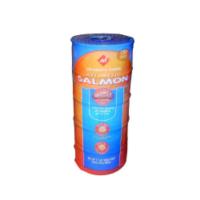
    So you’d think, as I strolled the isles of Sam’s Club, that I would have passed up the canned Member’s Mark Atlantic Salmon. But one of my wild culinary urges, the ones that rarely pan out, overtook me.

    I purchased a pack of five, seven-ounce cans for $11.88. I brought the pack home put it on the shelf and didn’t dare open it. What was I thinking?

    Canned salmon? Canned meat?! When was the last time you had a steak out of a can?

    It couldn’t be good.

    Of course, my sensible hesitations only last so long. I broke down one afternoon when the cupboards were bare. I saw the salmon and thought that it might go well with a salad and baked potato.

    I opened the can. It was pink, like the trout I used to catch and immediately fry when I went camping as a boy. I tasted it. And it tasted like .  .  . fish. Real fish. The light delicious taste of those trout I caught so many years ago.

    I enjoyed a wonderful meal that day and have had several repeats since. Boneless, skinless filets in water, packed with omega-3 fats, all grown on fish farms in Chile. 

    Great movie set in Wales

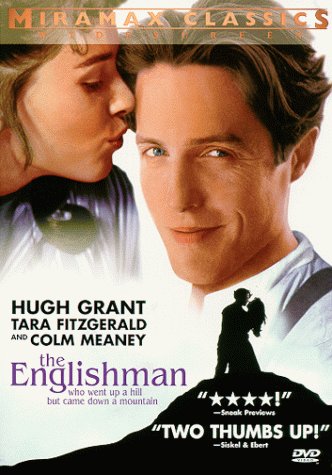
    I enjoy Hugh Grant as an actor. I loved him in Sense & Sensibility with Emma Thompson, one of my most favorite movies ever. And so I was curious about another movie with Grant that received two thumbs up from Siskel and Ebert. It’s called The Englishman Who Went Up A Hill And Came Down A Mountain.

    The setup is unusual. In 1917, with the war still raging in Europe, two English cartographers visit the small South Wales village to measure what is claimed to be the “first mountain inside of Wales.” The villagers are proud of their “mountain,” but become alarmed when the Englishmen measure it and find it’s not a mountain but a hill. The villagers are determined not to lose their status. Especially not to two Englishmen. What follows is good humor, drama, and a bit of romantic comedy. I think you’ll fall in love with the characters. It’s a wonderful tale. And it’s on DVD.

    As a little bonus, here are the opening lines, given to us by two narrators.

    “Narrator: For some odd reason, lost in the mists of time, there’s an extraordinary shortage of last names in Wales. Almost everyone seems to be a Williams, a Jones, or an Evans. To avoid widespread confusion, Welsh people often add an occupation to a name. For example, there was Williams the Petroleum, and Williams the Death. There was Jones the Bottle, and Jones the Prize Cabbage… which described his hobby and his personality. Evans the Bacon, and Evans the End of the World. But one man’s name was a puzzle, and it wasn’t until I was 10 years old that I asked my grandfather about the man with the longest and most enigmatic name of all.

    “Grandfather: The Englishman Who Went Up a Hill but Came Down a Mountain? Now there’s a long name for you. And a long story. You are not going to fidget, are you? For this is a story… an epic story. Yes, epic.”

    Share
  • How to be a hero in your own house

    I have four daughters.

    My four daughters have long hair.

    That long hair finds its way into our drains. (Yes, despite our telling them to get it into that thing called a waste basket.)

    Said hair might flow down the pipes. But said hair does not. Life is not that easy. Instead, some evil house spirit catches the hair just as it begins its voyage and turns it from a luscious thing of beauty into a gunky demon of drain death.

    You would think that Drano could defeat this black magic. But Drano gets its butt kicked every time. Drano is in the pee-wee league against this thing. Drano is like a kitten. And gunk demons don’t listen to kittens.

    So for the last few years, we’d blast with Drano and then still have to stand up to our calves in water when we took a shower. Or wait as the sink decided it might finally slowly empty and leave soap scum, whiskers, and toothpaste on the sides for everyone’s viewing pleasure. And then we had to do the slow clean (I hate the slow clean).

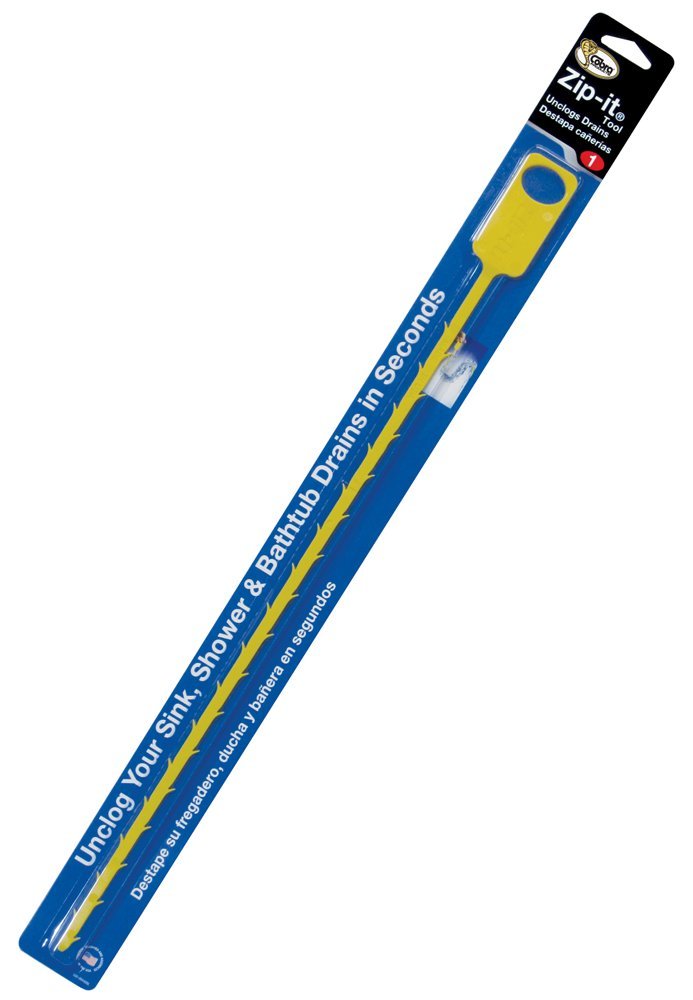
    Recently, I was strolling along in a hardware store and saw this.

    Zip-it drain cleaning tool

    Click on the picture. Get a good look. I bought ye handy yellow flex sword. And I did verily slay the monster lurking in every drain in our  house.

    I am the MAN!

    If you have drain issues, let me suggest you be the hero and buy your own sword. It’s called the Zip-It drain cleaning tool. If you’re a weird-o, in addition to being the hero, you can also use it to draw forth disgusting things to scare nieces and nephews with. Just saying.

    Share
  • Good Stuff: Why We Get Fat

    What if everything you know about fat, cholesterol, and diet is pretty much wrong?

    What if you found out that the science behind the good old food pyramid is, well, not really there?

    We’ve been told that a healthy diet consists of lots of grains, bagels, bread, pasta, cereals, rice, etc. and very little fat. What if it’s actually the reverse?

    If it is, then it might explain why the rates of diabetes and obesity began to skyrocket as the nation started to implement a low fat high carb diet.

    I remember having gained about fifteen pounds when I was first married. I decided I would go on a diet. I read up on the low fat high carb diet and followed it strictly. Two weeks later, I had gained ten more pounds. Did I, at the time, look at the diet and think that maybe there was something wrong with it?

    No. That would have been too intelligent.

    Instead, I figured something must be wrong with me and continued to try to “eat healthy.” What’s that definition of insanity—doing the same thing over and over again and expecting different results? Call me insane. Or slow. Or too trusting of authority.

    It appears that the science of nutrition got hijacked. Government policy then ran away with it. It’s a fascinating and cautionary tale. Let me recommend three books that explain what really causes us to deposit fat and how we got off track.

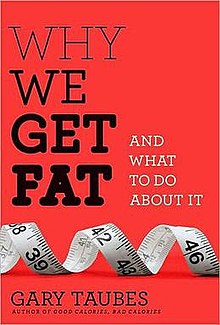
    The first is Why We Get Fat by science writer Gary Taubes. In it he reveals the bad nutritional science of the last century, why the good science was ignored, what really causes us to store fat, and what to do about it.

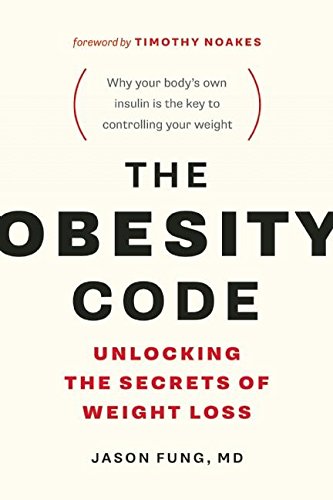
    The next is The Obesity Code by Dr. Jason Fung. Fung is a kidney specialist. Obesity and diabetes are the root of many kidney problems. And so he decided to help his patients by strop treating symptoms and get at the root cause. Fung’s gift is clarity. He explains how obesity and diabetes became an epidemic, the errors in how we think about calories and diet, and then he explains in great clarity the new model of what really causes obesity and how to reverse it.

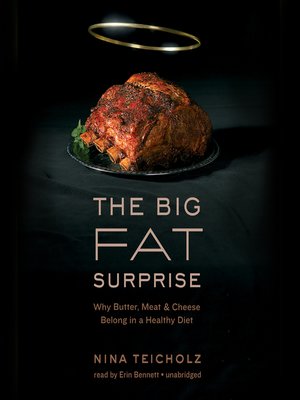
    The last is The Big Fat Surprise: Why Butter, Meat & Cheese Belong in a Healthy Diet by investigative journalist Nina Teicholz. She spent nine years investigating this, and the book reveals how the misinformation about saturated fats took hold in the scientific community, government, and the public and how recent findings overturn these beliefs. It’s a startling history, a cautionary tale showing how ego, bias, and premature institutional consensus allowed dangerous misrepresentations to become dietary dogma.

    If you’re dealing with obesity, heart disease, or diabetes, I think you’ll find these books very interesting.

    Share
  • Brown’s Breakfast Burrito, The Way Back

    The Way Back

    GULag is the acronym for the government agency that administered the main Soviet forced labor camp systems in the early 1900’s. In Romanized Russian that’s “Glavnoye upravlyeniye ispravityel’no-trudovih lagyeryey i koloniy” which means “Chief Administration of Corrective Labor Camps and Colonies.”  The term “Gulag” quickly morphed to represent the camps themselves, which housed a wide range of convicts and many political prisoners.  It’s also come to stand for the repressive Soviet system with its arrests, interrogations, transport in unheated cattle cars, forced labor, destruction of families, years spent in exile, and early and unnecessary deaths.

    The Gulag was a meat grinder. An estimated 1,053,829 people died in the Gulag from 1934 to 1953.

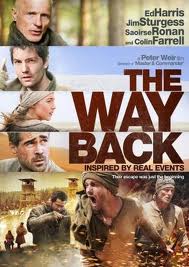
    Some of those camps were in Siberia, one of the most remote and harsh places on earth. Sawomir Rawicz was one of those who claimed to have escaped such a camp in Siberia. He wrote about it and his subsequent 4,000-mile walk to freedom in India in The Long Walk. That story inspired Peter Weir to write and direct The Way Back, which tells the story of a group of men who attempt to escape out of Siberia, across the Mongolian wastes, and into India.

    The film stars Ed Harris (who is interesting in anything he does), Colin Farrel (also starred in Ondine), Mark Strong (the villain in Sherlock Holmes), Saoirse Ronan (the fabulous lead in Hanna), and Jim Sturgess (the boyfriend in One Day). One of the group is an outright murderer. The others are all political dissidents—a teacher, priest, businessman, artist, etc. I found the performances honest and believable. But it wasn’t just the characters–the screenwriters subtly used syntax and word choice to transport the viewer.

    But more important than the believability were the various tensions and stories contained within the escape plot. Each of the men, and the lone girl, has a story, and the film gives space for the stories to be told. As for the lone girl: Ronan was amazing in Hannah.  She’s amazing here. Furthermore, the role she played here leavened the whole film with something it wouldn’t have had otherwise.

    The story will surprise you, make you shed a tear, think, and laugh. When you’re finished, you’ll talk about it. It’s that kind of a film. If you like dramas with action and suspense, I think you’ll like this film.

    As always, use KidsInMind.com to see if it contains things you might find objectionable.

    Brown’s Breakfast Burrito

    How about a meal that’s so good you’ll want to slow way down to savor each bite? A breakfast that will keep you full until lunch? A tasty repast that isn’t loaded with mind-numbing calories? Let me suggest the John Brown breakfast burrito. It’s full of succulent umami, bursts of piquant pepper, healthy mushrooms, and lots of filling protein. And it only takes about 10 minutes to prepare. The recipe below makes one burrito. Scale it up to feed more.  

    VEGGIES

    • 1/4th red bell pepper, chopped into small pieces
    • ½ to 1 cup of mushrooms, sliced
    • Dash of thyme

    EGGS

    • 2 eggs (120 calories)
    • 1 T milk or half-and-half
    • Salt
    • Pepper
    • Dash paprika
    • Dash garlic powder
    • Dash onion powder

     THE REST

    • Pam cooking spray
    • 1 tortilla (150 calories)
    • 1 ounce of Jimmy Dean Premium Pork sausage (90 calories)

    If you don’t have one of the spices, don’t freak out. It will still taste great. But the spices really take it to the next level. Here are the instructions. 

    1. Start with your veggies. Spray pan with Pam and sauté peppers for two minutes on medium high heat. Add mushrooms. Give them a spray of Pam and dash with salt. Cover until the mushrooms sweat (release their water).
    2. Next is the sausage. While mushrooms are cooking, start your sausage frying.
    3. Finish veggies. Uncover mushrooms. Just before you finish them, sprinkle with a dash of thyme. When the spice becomes fragrant (its smell rises up in delicious glory from the pan), remove the veggies from the pan and cover to keep them warm.
    4. Cook eggs. Turn heat down to medium low. Beat eggs, milk, salt, pepper, paprika, garlic powder, and onion powder.  Spray pan you used for veggies with Pam, then cook your scrambled eggs on medium low heat, stirring and scraping the whole time. And keep it on medium low—no browning or burning of eggs allowed! Cook until the eggs glisten with the last bits of moisture. Remember: you don’t want dry desert eggs. You want soft succulent ones.
    5. Assemble the glorious concoction. Put the veggies, scrambled eggs, and sausage in your tortilla and wrap it up smartly. (What does “smartly” mean? I don’t know, but it sounded good, didn’t it?)
    6. Go to heaven and return singing. This means you eat your breakfast burrito, but you do it savoring each bite. This is food meant to be enjoyed, not gobbled.

     As for calories, I estimate about 360 for the main ingredients. Veggies really don’t count in my book. Come on! Nobody gained weight eating turnips. But I’ll round it up to 400 just to be safe. Add in a glass of water and a piece of fruit and you’ve got a 450 calorie breakfast that starts your day off with delight, gratitude, and the joy of redemption. It could also make those you cook for kneel down upon the floor in well-deserved homage. And that’s always a nice thing for the cook.

    Share
  • |

    No Apology

    The Book

    Political TV ads can be fun. And annoying.

    Debates can be fun. And maddening.

    You can indeed learn things about the candidates from watching the ads and debates. But fifteen and thirty second snippets of information really don’t give you the full picture. And sometimes they actually hide the facts, producing nothing more than informational smog.

    Recently, I decided I wanted to really know what Mitt Romney thought.  What he was about.  What he hopes to accomplish if he wins the presidency. If Mitt was someone in my neighborhood, I’d go visit the man, and we’d have a chat.

    I’d ask him about his ideas and past. I’d ask him to give me examples. Because of the nature of the issues at stake and the number of them, I imagine our chat would probably last a few hours.  It might stretch over a number of evenings.

    Of course, I’d want time to consider our chat and determine where I did and didn’t agree with him. I’d want to hear what others thought. And I’d want to look into his history, his successes and failures.

    But the first step would be to go to the man himself and hear him out.

    I hate it when people put words in my mouth. I’m sure Romney, or anyone else running, hates that same thing. If I were running, I’d would hope folks would take the time to hear me out. They may ultimately disagree with me on many or a few things. But I’d hope, as they are gathering information, that they would take the time to actually go to the source and listen to what I myself had to say.

    Unfortunately, I can’t walk around the corner and knock on Mitt’s door. But he did write a book that was published in 2010, and it’s probably the next best thing to talking to Romney at his kitchen table. The book is called No Apology: The Case for American Greatness.

    I’ll admit I thought it was going to be a dry guide book explaining his position on every hot political issue. It’s not a guide book.  In fact, he leaves a number of topics out. Nor was it dry.

    I also suspected it might be a scathing attack piece on the Obama administration. It’s not that either.  Not even close. He does criticize some things where he and Obama differ, but he also commends him on a few things. Either way, Obama is a very small part of the book.

    So what IS this book?

    Romney states its purpose in the introduction: it’s “about what I believe should be our primary national objective: to keep America strong and to preserve its place as the world’s leading nation” and “the course I believe we must take to strengthen the nation in order to remain prosperous, secure, and free” (2). It’s about his ideas on how to make sure America does not falter as so many nations have, but remains wealthy, happy, and productive.

    I finished the book yesterday. I found it interesting, personable, sometimes surprising, and insightful.

    I found Mitt Romney to be a man self-deprecating humor.  He’s also a thinking man, one who likes to look at data to see what it shows. It’s clear he’s a man who does NOT think he knows everything or has a monopoly on every good idea, but he’s also a man who demands evidence.  I also saw a man who is kind.  He doesn’t talk much about his 14 years of service as a lay minister in his church in this book, but you can see how those years changed him as he discusses helping the unemployed, out-of-wedlock births, and single-parent families.  Finally, I saw a man who loves, LOVES, America and is convinced she can remain the hope of the earth, but only if we do things that foster our strength.

    This book outlines what he thinks those things are.

    The book is written in a conversational and easy style with many examples from his personal experience, studies, and history. Romney’s record of accomplishments demonstrates his skills and hard work ethic. This book explains to what end he would apply that skill and work.

    If you’re planning on voting this November for the president of the United States, I think you’ll find this book very useful.  You may end up agreeing with many things he says. You may end up disagreeing with him on many points. But before you can do either, you need to understand what Romney’s position actually is.  And the first step in doing so is to fully hear the man out, in his own words, from his own lips.

    As a result, whether you end up deciding he’s your candidate or not, you WILL come away with important insights into the issues discussed.

    What’s Next

    I want you to know that I do not worship George, Ben, Tom, Adam or any of the other guys who formed our constitution and started this nation.

    They put their lives and fortunes on the line for what they believed in. And I am immensely grateful for what they did.  I enjoy tremendous freedoms because of their courage, determination, and sacrifice. Those guys, by-and-large, rock!

    But I do NOT believe that their words are scripture nor that their ideas are sacrosanct—merely to be accepted and not to be considered and questioned and disagreed with.

    Even so, these guys were gutsy and brilliant. They attempted something everyone thought would fail.  Something that HAD failed every time it had been attempted in their recorded history. But they pulled it off and changed the world.

    These guys believed in the common man. They believed that the educated common man was the best person to hold the reins of government. Thomas Jefferson thought up a rhyme to make the idea easy to remember.  He said, “If a nation expects to be ignorant and free in a state of civilization, it expects what never was and never will be.”

    I can’t argue with that.

    Of course, we’re not going to become experts on every policy issue. But we certainly can become informed on the broad principles and issues. And we can certainly become informed about the candidates.

    Because I found No Apology so useful, over the next few days I’m going to summarize Romney’s main points, chapter by chapter, here. I’ll also point out interesting ideas and facts he shares as well as share any questions, quibbles, or disagreements I have.

    I hope you find it useful. More importantly, I hope you read the book and join in the conversation.

    Share