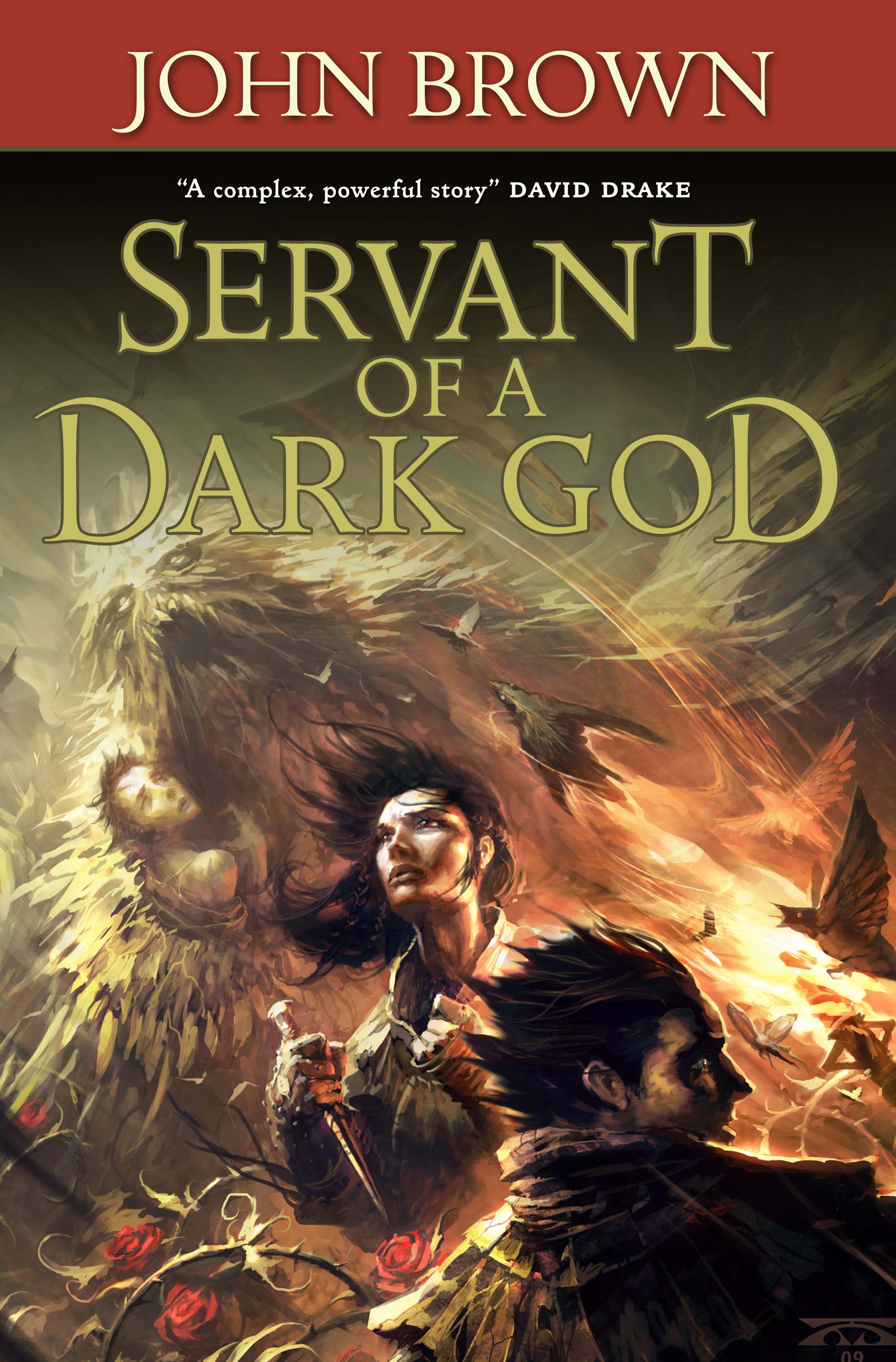
I received the proof of SERVANT from CreateSpace today. Folks, it is georgeous. Inside and out. The cover, title page, Isaac Stewart’s map, headers, front and back matter, chapter titles, the poems. I’m so pleased.
Most readers will look at it and say, hey, looks like another book. But that’s the point. The interior is designed to give a great reading experience and fade into the background, letting the story come to the fore. The cover is meant to grab and give the feel. I think both do their job splendidly.
Of course, you know what this means, don’t you?
It means that next week we will have a new release day with the new release discount pricing. You may wonder why I don’t just do it now. The answer is that there are some copy edits that need to be made. Things you never catch until you see the story in book form. That’s why you always get a proof. As soon as we’ve made those updates, I’ll announce the sale.
A cracking good story idea requires five critical elements.
Until you have all five, you’ll struggle to plot. You’ll write a few scenes and run out of gas. You’ll feel like the story just isn’t going anywhere.
And that’s because it isn’t. It can’t. A story isn’t a story without all five elements.
However, once you develop these five things, your story will suddenly roar to life. There are a few other elements that are important as well, but these five things form the core of the story setup.
In this course you’re not going to merely learn about all of those story elements. You’re going to go deep and learn what can only be learned by actually doing the work and developing story idea after story idea with personal one-on-one feedback from someone who knows what they’re doing.
When you finish, you won’t just know story theory. You will be a story idea machine. And you will be that because you have put in the work. The right work.
Again, this is not a course full of lectures and videos. This is a course where you’re going to work. And develop the insights and skills that only come from doing the work.
You’re actually going to:
Come up with story setup after story setup after story setup
And improve them with one-on-one feedback.
It’s going to:
Eliminate years of you wandering about in the story wilderness trying to figure things out on your own.
Put you miles ahead of other writers who have no idea what’s really at the core of story.
You are going to learn how to develop killer story ideas on purpose instead of on accident. Which means you’ll be able to do again and again. Reliably. Like clockwork.
Course details
The focus of the class is not on learning about story, although you will do that. The majority of your time will be spent on developing stories.
You can’t become a carpenter by watching videos and reading books about it.
You have to get out on the work site, cut wood, and pound nails. You have to make the mistakes all beginning carpenters make, get feedback, and improve.
The same goes for writing.
And you’re going to work in this class. You develop 21 story setups. In fact, you develop more because the 21 are just the ones you turn into me. And with each one your skills, insights, and abilities grow.
In the beginning, your setups will be bare bones. By the end, they’ll be fully developed setups that beg to be written. Setups you can use to immediately write the first draft of your novel, whether that’s in outline or chapter form.
Here’s what you do each week.
Week 1.
Uncover the secrets of what’s really at the heart of story and how to generate ideas.
Define your genre requirements
Create story setups 1-3
Week 2.
Uncover the secrets to compelling characters
Create character sketches
Create story setups 4-7
Week 3.
Uncover the secrets to formidable obstacles
Create story setups 8-11
Week 4.
Uncover the secrets to interesting casts
Create story setups 12-15
Week 5.
Uncover the secrets to managing multiple storylines and series
Create story setups 16-19
Week 6.
Create story setups 20-21. These are your capstone projects where you apply everything you’ve learned and take it to the next level
In this class you develop story idea after story idea after story idea. You are going to be marinated in the work of developing characters, THOMs, goals, obstacles, settings, casts, and more. And because of that, each week will not only bring an explosion of insights, but new skills and abilities.
Every week you get two private, one-on-one, live sessions with me where you get encouragement and feedback on what you’ve developed. And you’ll have access to a private Facebook group where you can apply the principles to brainstorm even MORE ideas for each other’s stories.
At first you might feel a bit shy and worried about your ideas and abilities. But you’ll soon get over that. By the end of the course you’ll be one of those people that can generate terrific ideas easily. And you’ll be able to do that because you will have put in the work to become a different writer.
What’s the price?
Hours of one-on-one instruction from a professional editor or author costs thousands of dollars. An MFA program can cost $25,000 to $30,000 or more!
But this course won’t cost anywhere close to that.
Plus you’re going to learn things here you’ll never get in an MFA program (I know. I was accepted into a top-ranked program).
The cost of this course is $799. And I personally guarantee your results. You’ll be totally oh-my-gosh-I’m-so-happy-I-took-that-class satisfied, or I’ll give you your money back. No questions asked.
Now’s your chance to stop spinning your wheels. I can’t tell you how much I wish I’d had something like this when I’d started:
The secrets about the true core of story.
The secrets about how to come up with ideas.
Actual work with personal one-on-one feedback.
Laser focused on what actually matters, not a bunch of ridiculous writing rules.
When you finish, you will be a story idea machine.
You won’t know plotting. That’s a different course and set of skills. You won’t know how to write chapters. But you’ll know how to create the engine that powers all the rest of that. You’ll know how to create the core that makes awesome plots and chapters possible.
If you want to take this course, click the button below and contact me. I will tell you exactly how to apply.
I’m not going to be able to accept everyone who wants to take the class. I have a very strict limit on the number of students I can work with. So you need to get your application in before the deadline of midnight, December 11th.
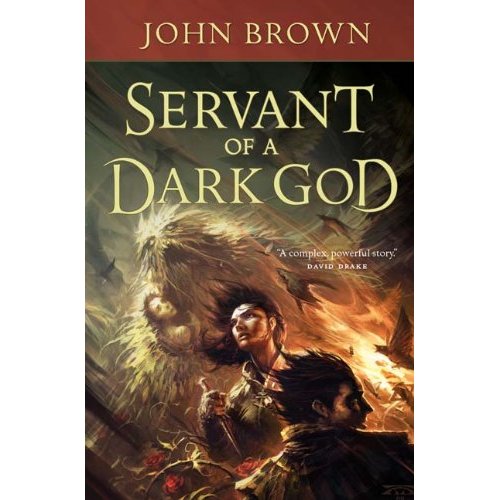
They moved the David Drake blurb to the side, lightened the lettering and moved things so the title wasn’t covering the top of Hunger’s head. At first I thought they moved the lettering, but they didn’t. It appears the shrunk Hunger a bit so we could see more of him. Small changes, but I think they make a significant effect. I think the overall effect is better. I like how Hunger looks more menacing in this one. Sugar is different. Don’t know which version of her I like better. I’m leaning to the original. Your thoughts? Either way, we luvs Tor’s art and production department. Here’s the before and after.
I’ve been busting my chops these last three weeks. CURSE is finished. RAVELER will be finished tonight. I will be putting them both on sale at smoking hot prices for those that have signed up for the newsletter in the next few days.
This is also perfect timing for the Salt Lake City Comic Con. I’ll be there, participating on panels, chatting with readers, and selling copies of my books at a table in the Artist’s Alley (White, booth 40). I’ve invited two other awesome authors to join me at the table–Cheree Alsop and Eric James Stone. This is going to be a great event. If you’re going, please drop by at the table to say hello. I’ll have more on Comic Con in a post in a few days.
Folks, the first tentative schedule for Life, The Universe, & Everything (LTUE)has been set. For the past few years I’ve been teaching a 2-3 hour workshop called “The 3 Things You Must Learn To Write Killer Stories.” I think I must have taught it over 15 times in different venues. Hundreds have attended and said they loved it.
However, this year I’m going to be doing something different. I’m developing a new two-hour workshop called “How to Write a Story that Rocks.”
I’ll be teaching it Thursday evening, February 11th from 5 PM – 7 PM at LTUE at BYU. It’s FREE and open to all.
What I found was that a lot of new aspiring authors get lost in mountains of rules. But great storytelling isn’t about rules. They try to form stories with word counts, chapters, and weird plot diagrams. But stories aren’t about those things. They have a hard time knowing what to write next because they don’t understand how story works. In fact, some don’t know how to start at all. They just flounder in their piles of zing. Finally, even if they can get a bullet outline, they have a hard time turning that into a scene.
So what we’re going to do in this workshop is this.
I’m going to bring in some ideas for character, setting, and problem. We’re not going to generate from scratch as we’ve done in the past because I want to get to the next steps.
Then I’m going to teach you how to go from idea to outline–we’re going to do it together, and you’re going to learn exactly how to know what comes next
Then we’ll go from outline step to scene sketch.
Then from scene sketch to draft.
At every step I’ll be pointing out key story development concepts and principles
When we finish, you should be able to:
Identify the essential story objectives and story development questions–get these right and the rest doesn’t really matter. This will include the HANDFUL of key things you need to worry about and develop with character and plot.
Develop more likeable and interesting characters
Develop more powerful story concepts (call it premise, problem, situation, whatever). Once you get this the story writes a lot of itself.
Explain the real Story Cycle. Not Campbell’s mumbo-jumbo hero’s journey. Not the three, five, seven, nine acts. Not Freytag’s diagram. Story.
Explain what it means to “move a story forward,” “increase the stakes and tension,” “complicate the plot,” “complicate the motive” and how that’s done using surprise, conflict, motive, and problem. Included in this are “turns,” “rugpulls,” and “reversals.”
Use the Story Cycle concepts to generate a story bullet outline and take a bullet step idea and turn it into a scene.
Explain the creative principles that help you generate stories more easily.
Larry Correia will be there as well. So I’m expecting this to be a very helpful workshop. I’m going to do all I can to make it as good or better than the first.
Sometimes, despite our best efforts, mistakes make their ways into the text. Omissions are common. For example, a missing “the” or “of” can be hard to see; your magical mind just fills these tiny words in.
Some omissions are hilarious. I was editing Raveler a few days ago and ran across a howler that made me laugh and laugh.
In one scene Shim is angry about the Bone Faces. When he sees their ships, I meant to have him exclaim with some indignation that they were “Coming to plunder under our noses while we’re tied up here.”
What I wrote was “Coming to plunder our noses while we’re tied up here,” which is a different type of threat altogether.
And then there are the aaarg! omissions. Like leaving the names of awesome folks who provided valuable input out of your acknowledgements. (Head smack!)
Yes, I’m guilty of such an idiocy.
I’m very recently guilty. Like, today guilty.
The good thing about indie publishing is that I can make changes and upload them immediately. I have already fixed the ebooks. The big paperbacks will be fixed on Monday. But these folks deserve better. To make amends, I’m going to spotlight them here, right now, for all posterity.
For excellent feedback on the full manuscript, I want to thank Stephen and Liesl Nelson.
A few years ago, I posted on this website, asking if anyone would be willing to read and report their response to a beginning I wanted to test. These folks stepped up and responded in grand fashion, helping me make the beginning better.
Adam Teachout Alexis Cooper Cameron Wilson David West Eric Allen Hyrum Grissom Justin Fisher Krista Hoeppner Leahy Laurel Amberdine Lindsey Tolis Mark Holt Martin Cahill Melanie Goldmund Merrill Nielson Nick Dianatkhah Ray Solomon Wes Amodt
All of you rock. And may the Bone Faces never come to plunder your noses.


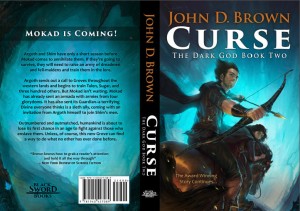 I’ve been busting my chops these last three weeks. CURSE is finished. RAVELER will be finished tonight. I will be putting them both on sale at smoking hot prices for those that have signed up for the newsletter in the next few days.
 Folks, the first tentative schedule for
Woo!