Author: John Brown

  • CODG wordcount update

    Well, I’m less than 300 words from my original estimate of 140,000 words. The problem is that estimates are notoriously unreliable. Especially when most of the invention comes during the draft phase. It appears I have 20-30k more words. So I’m back down in the 80% finished range. But here’s my goal for completing. I hope to deliver it at somewhere around 170,000 words, maximum.

    • April 20 -24: finish pre-climax story lines
    • April 27 – 1: finish pre-climax story lines
    • May 4 – 8: climax, finish
    • May 11 – 15: revise
    • May 18 – 22: revise
    • May 25: deliver

    BTW, let me tell you this story is exciting me–the giant dogmen of Toth that breed monstrous dogs called maulers, a tall insect like creature called ungar that are stealing souls for their magic, wurm fields, battles, mysteries, traitors, our first meeting of the woodikin and Harnock (the one bred by Lumen to be a superior warrior), a wonderful sleth called Eresh who was completely unplanned and completely delightful, plus some incredibly delicious character situations.

    Oh, baby. This one is shaping up with all sorts of delights. Of course, if I don’t execute, readers will just see it as a mess. So it’s back to work.

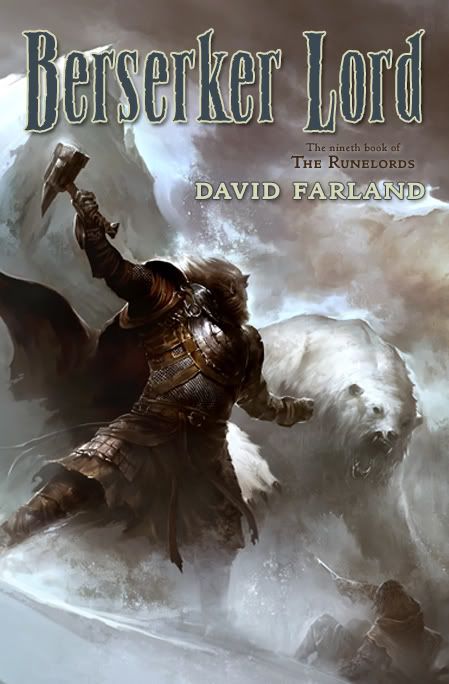
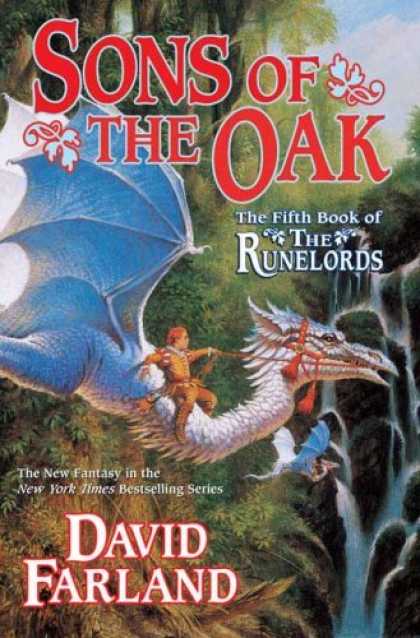
  • Check out Dave Farland’s new cover

    Isaac Stewart pointed this out to me. Wow. And what a change. Farland’s got a whole new look and feel. I don’t know much about cover art/marketing and how well various colors and styles do in the book store (will buyers gloss over this because of its dark color?–I hope not). But however this performs on the shelf, it’s a great illustration.

    See more images on Irene Gallo’s blog about it. Compare with the old style.

    david-farlands-sons-of-the-oak

  • Can you write for love AND money?

    Many artists think you can’t. And not simply because they envy those who are selling hundreds of thousands of copies.

    The reason they think this is for the simple fact that the creative process is fueled by following the zing. It’s ruled by passion. You have to care about AND believe in what you’re writing. You have to because if you think it’s boring or unbelivable, then it’s likely everyone else will as well. 

    For example, let’s say you are deeply bored by vampires, but see that vampire love stories are making piles of cash and decide to write about one with smoldering eyes and a bad habit of chewing tobacco even though it leads to dental problems with the fangs (hey, why would her man-toy care?), then you’re substituting passion (that which springs up from within) for graphs and plots about marektability (stuff that’s imposed from without).

    And so many folks think that there’s a continuum. On one end is writing for passion. On the other is writing for money. And the two don’t cross. But this is a false dichotomy. The truth is that money and passion are independent factors.

    Lon Prater, a writer friend, recently expressed it this way.

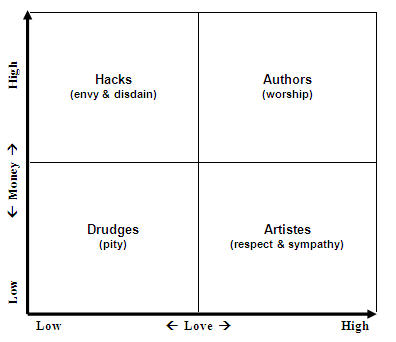
    Not a dichotomy, but rather an X and Y axis, the way I see it.

    There’s:

    low love, low money (SEO writing?)

    low love, high money (For me, this would be tech writing, or media tie-in to a universe I didn’t care about)

    high love, low money (unfortunately too much of my writing!)

    high love, high money. (Loftiest of goals) 🙂

    You can find datapoints for every quadrant, and of course “love” is highly subjective and individualized, as are what counts as low and high for each writer.

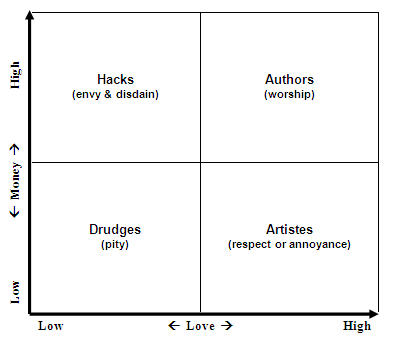
    If we put labels to the quadrants, we get something like this, along with common emotions they tend to evoke in other writers. (Although I will say that envy seems to want to run amok in the author quadrant as well.) 

    writer-love-and-money-quadrants2

  • Can authors make a living?

    A lot of folks hear I’m going to be published and automatically classify me with J.K. Rowling, James Patterson, or Dan Brown. Heck, I at least ought to be categorized with Joe Schmo who was featured on Oprah.

    And why shouldn’t they think that? Those are the authors they see. That’s what it means to them to be published.

    For those of us who have actually gotten a peek behind the curtain, we realize it just ain’t so. Those are best-selling authors. See my post on best sellers to understand the quantities that have to move to make a best seller. Those are huge numbers, but very few authors sell that many books.

    So what do you need to sell to make a living?  Let’s do some math.

    Let’s say you want to make $50,000, the median household income in the US at this time. I know, I know, that’s nothing in some places, but if you’re a writer you don’t have to live in San Francisco. So you want to take home $50k after taxes. That means you’ll probably need to make $62,000 before taxes. That’s our goal.  

    So here are some numbers with conservative royalties.

    What authors make on a paperback
    8% royalty (authors usually make 8 – 12 % on paperbacks)
    15% agent fee
    6.8% net royalty rate

    To net $50k with only PAPERBACK sales would you need:
    $911,765 in sales required in the year
    $7.99 per book
    114,113 books sold

    What authors make on a hardback
    10% royalty (it’s common to make 10-15%)
    15% agent fee
    8.5% net royalty rate

    To net $50k with only HARDBACK sales would you need:
    $729,412 in sales in the year
    $25.00 per book
    29,176 books sold

    If you have previous books that are still selling, they all count. Make foreign sales, they count. Can produce two books per year, maybe one in a different genre, they count. Of course, this doesn’t factor in discounts and the corresponding reduced royalty rates. Nor does it factor in costs of being in business for yourself, including taxes, insurance, etc. But this is enough to get a rough idea of numbers.

    100,000 paperbacks is a BIG number. However, you usually mix and match.

    Let’s say you sell 5,000 hardbacks. 5,000 x $25.00 = $125,000. $125,000 x .085 net royalty = $10,625. $62,000 – $10,625 = $51,375 to be made by the paperbacks when they come out the next year. At a 6.8% net royalty rate you have to make $755,515 or sell about 94,558 paperback copies.

    Here it is in an easy to read list. Given the hardback sales shown below, you’d have to make up the rest of the $62,000 with the paperback sales on the right.

    5,000 HB: 94,558 PB
    10,000 HB: 75,002 PB
    15,000 HB: 55,446 PB
    20,000 HB: 35,890 PB

    I know those seem like small numbers compared to the Publisher’s Weekly 2007 numbers I link to above. But most authors don’t sell that many books. Most authors are happy to sell 5,000 hardbacks.

    But it’s not all bad news. I looked at a few authors on the PW list comparing hardback and paperback numbers. It seems any given author will sell twice the number of paperbacks that they do hardbacks.  So perhaps selling somewhere between 15,000 to 20,000 hardbacks is the magic number.

    20,000 hardbacks is a lot. But it seems doable for a writer who has been publishing for a few years. It’s not the 700,000 of  a James Patterson. But it just might be enough to make, hold your breath, what the average household in America makes in a year.