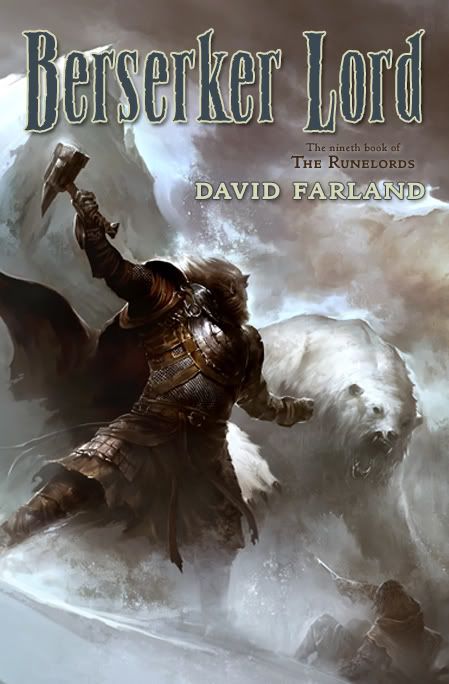
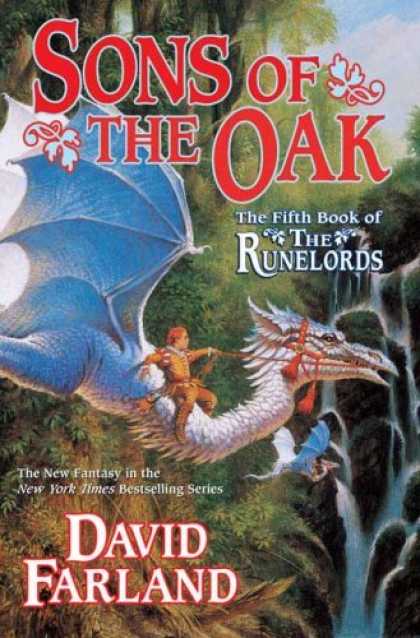
Isaac Stewart pointed this out to me. Wow. And what a change. Farland’s got a whole new look and feel. I don’t know much about cover art/marketing and how well various colors and styles do in the book store (will buyers gloss over this because of its dark color?–I hope not). But however this performs on the shelf, it’s a great illustration.
Lots of great stuff here. I love the idea that “creativity thrives best in solving problems in an environment of flexible rules.” I would replace “rules” with “constraints” or “objectives.” I loved what he had to say about the goal of his poetry and developing a sense of quality. Enjoy
My daughters have introduced me to Studio C, a comedy program that started with The Divine Comedy troupe on the BYU campus who all growed up and were given a gig on TV. They do these hilarious skits.
Next is John Branyan’s brilliant “Three Little Pigs”. My family and I have been enjoying this for months.
Finally, here’s something to think about. You know I enjoyed Jonathan Haidt’s book The Righteous Mind. Matt Wolfe pointed it out his TED talk to me. The one that preceeded his book. If you’re conservative, like I am, this talk will, at times, annoy you. But the ideas behind it are great.
Part of my research for Bad Penny led me to the Utah state prison. I was able to attend a session with five of the convicts. Let me tell you: walking through those high fences and electric doors and hearing them close behind you was something.
The five men all had interesting and unfortunate tales to tell. But they were all hopeful. I was there with a couple of kids in a troubled youth program and their leader. And of course there were a couple of guards.
We got to ask questions and chat. It was an upbeat session despite the topic. One thing I asked about was the food, and one fellow said that the worst thing was this “crack wheat” they served for breakfast.
“Cracked wheat?” I asked with a smile. “That’s good old Mormon food.”
He said, “It’s awful.” We laughed. There were many times we laughed.
And there were a lot of things asked and shared. One of the key things that stood out to me was that all of them were there because of drug addictions. And as they shared their goals of staying clean, they revealed that this wasn’t their first time inside. For one it was his third, another his fifth, another his ninth.
And it was with those comments I realized just what a hold addiction had on these guys.
Fortunately, most folks with addictions don’t have to go to prison. But a lot fail to break out of them and miss many opportunities for joy, sometimes wrecking the ones they have. The 12-step program has one of the best success rates of any program.
My church has meetings and programs all over the country. They’re free and open to anyone. If you or someone you know is struggling with an addiction to alcohol, drugs, tobacco, porn, or eating disorders, you might want to go here to see what to expect from a 12-step meeting and how to participate.
Even with all the vicissitues, life is meant to be enjoyed.
I had business in Vegas and decided it was time to take the family to Zion’s National Park. We could drive down from the northern tip of Utah (Laketown) to the southern tip (St. George) together. Then I’d take a rental to Vegas, do my business, and hook up again with the fam to hike the canyons for two-days. (Hiking Kolob, folks, was incredible, but that’s another post.)
So I ask Nellie what she’s got to read to me as we drive down. She pulls out Diary of a Wimpy Kid by JeffKinney and says all the kids in her classes said she had to read it.
I think, hey, it’s got pictures. Any book with pictures gets one shot at the very least.
I’m happy to say I can’t tell you how many times she had to wait so I could stop laughing. We almost wrecked only once. And if I’m going to wreck I’d rather do it while laughing than asleep. Kenny has written and illustrated a wonderful, fun book. And now we have a new word in the family vocabulary–“Fregley.”
No, really. It’s true. You just have to spend smartly. And in a special way.
Over the course of your life, if you make what the average American does, more than a million dollars will flow through your hands. And yet so many of us don’t feel rich. That’s because money is like the Gingerbread Man. Turn your back on it, and it’s out the door, rudely taunting everyone as it flies by. And then it gets eaten by a fox. Such a waste.
But it doesn’t have to be.
Let me share with you THE best method I’ve found for managing my money. It takes tons of anxiety out of spending and saving. And, if you’re a Dave Ramsey fan, it is the one thing upon which everything else he teaches depends. If you’re not a Ramsey fan, it doesn’t matter. After getting a job, this is the first thing you must do to get rich.
Here’s the big secret. It has three parts:
1) Decide how much you’re going to spend on various things BEFORE you spend it
2) Make what you have left in each spending category EASY to track
3) Manage the things you can’t foresee
To do the first two parts, you’re going to create a special kind of spending plan. We won’t use the term “budgeting” because “spending” is so much more fun, and because that’s what we’re going to do anyway. To understand how to do this, you need to watch three videos.
Before you do, please know I earned a Masters degree in accounting. I’ve used Quicken for more than twenty years. Neither of those things has helped me manage my money like this simple method. If you’re looking for a better way to manage your money, this is it.
First, watch this video to get an overall idea of how this method works.
Note: you can use actual envelopes and cash for everything if that makes you happy, but you really don’t need to. The idea is to think of pre-allocating your monthly income to categories of expenses AND then having an easy way to track what’s left.
Now, watch this bubba explain how he does it.
But John, didn’t he say the same thing?
Basically, but he has a fun accent. Besides, it’s good to see another example. And please note again: you don’t have to use actual envelopes and cash, although many swear by them.
Finally, watch this one. No, it’s not just another repeat. There are some additional important ideas illustrated here.
This video brings up the idea of why simply tracking an overall account balance isn’t very helpful. It also shows you WHY envelope categories are–they make it immediately apparent how much money you have to spend for a thing. If you just use Quicken to track what you spent (looking in the past), you’ll run into troubles. Let me tell you, I know this from experience. We use Quicken, and have for years, and plan use it for some time to come because it makes taxes and bank reconciliation a snap. But Quicken only tracks what you spent. Tracking, as important as it is, is not the key to success. The key is pre-allocating BEFORE you spend. And then tracking so you know what you have left in that category. And making that tracking EASY.
The final thing you have to do is manage the things you can’t foresee because things rarely go exactly to plan. Unexpected things ALWAYS come up. Your daughter will crash the car. Your husband will get appendicitis. You will forget that you had a $200 school sports expense.
Okay, fine. Things happen. But how do you manage them if you can’t foresee them?
If it’s really small, you simply adjust your plan. For example, if you need $30 more in food, you can transfer it from fuel if you have some extra there.
You manage larger things by building up an emergency fund. Ramsey suggests starting with a $1,000 emergency fund and then trying to get two to three months of living expenses—about $10,000 to $15,000 for most people. Unexpected things WILL happen and cost your money. So build up some cushion to take care of them.
Finally, you manage the really large things by getting proper insurance. This is what insurance is for. The types of insurance you need include (1) homeowner’s or renter’s, (2) auto, (3) medical, (4) long-term disability, (5) long-term care (for those 60 and older), and (6) life insurance. You may add true identity theft insurance as well.
Okay, so that’s the overview. If you want to try this, here’s how you do it. It’s fairly easy.
STEP 1: get your head straight
Resolve that you will NOT use credit for anything. You will not spend any money you don’t have. You will not put another dime on a credit card, and this despite the fact that the plastic devil companies are begging you with offers almost every day to sign up for their cards. (Hum, I wonder how they afford all that junk mail.) If your monthly bills are greater than your income, then we have to fix that first. But the new law of the land is zero new debt.
Next, always remember to allocate your money to these categories first—shelter, food, adequate clothing, and adequate transportation. This means if you have a crunch month, you would NOT pay credit card bills before food, even if you work for Visa.
STEP 2: get your blank sheet & pencil
Get out a piece of paper and pencil (not a pen) or open an Excel spreadsheet. Whoa, that was an easy step.
STEP 3: list your monthly income
List your expected monthly income at the top from all sources.
STEP 4: list your spending categories
List your spending categories. You’re going to split them into two groups.
The first group goes right below your income and includes all of your recurring monthly expense/spending categories. Not the amounts you spend. Just the categories. Things like mortgage, electricity, phone, groceries, dining, etc. Make sure you include some entertainment/fun money.
The second group goes below your recurring monthly expenses and includes all of your major annual periodic expense/spending categories. Things like Christmas, vacation, clothing, kids back to school stuff, etc. And things you want to save for—a couch, iPhone, car, etc. Your emergency fund goes here as well.
Decide how much you will spend in each category this month. You should have 0 dollars when you get to the bottom of the sheet. Spend (allocate) every dime BEFORE you start the month. You’re going to do this at the beginning of each month. And you will probably have to adjust it a couple of times during the month.
You will probably have categories that don’t get any money this month.
You will also have categories that get money, but you won’t spend any of it this month. These are your periodic expenses. Your goal is to have the cash up front to pay for them, so you have to save for them. Remember, you are NOT going to take on any new debt.
For example, if you’re saving up for Christmas, you allocate some money for that out of this month’s funds and TRANSFER it to savings. Then it will be there when you need it. You could draw the cash out and put it in an actual envelope, but you don’t have to. Just as long as you keep a record of the total amount in savings and what it’s all supposed to be for, i.e. total savings in July = $1,000: $500 for back to school, $200 for Christmas, and $300 for my trip with kids to Six Flags in 2013.
STEP 6: mark the “watch” categories
Some of the categories you need to watch closely, and some you don’t. The ones you need to watch closely will be your “envelope watch” categories.
The categories you don’t need to watch as closely are those that are automatically taken out of your account each month. And those you will write a check once a month for. These things include mortgage, car payment, electricity, etc. These are NOT categories you need to use actual envelopes for. You can track it on paper or in the spreadsheet. Not much happens with these categories.
But there are other categories that you’re going to be spending throughout the month, and it’s easy to over spend if you don’t track them. Groceries, dining, entertainment, gasoline, a specific vacation, etc. are all categories that you make multiple purchases with each month and are flexible/discretionary and need to be watched closely. So while everything is tracked in a category/envelope on paper or on the computer, you’ll track these with either a real envelope and cash or a virtual one using that free software you saw in the third video or a piece of paper with a running category balance in your wallet.
STEP 7: have fun and spend!
Now go out and spend!
Before spending, check your envelope. Do you have enough money? If you do, spend and be happy. If not, save up for it or find a way to save money in another category and adjust so that you’re still spending the same total amount. Never spend what you don’t have.
If you feel you need something not planned for, well, you have to get it later OR transfer something out of another envelope. I just make myself wait a day or three, and usually the urge to buy, Buy, BUY! goes away, and I see I don’t “need” it right now. Or maybe a more affordable option presents itself.
If the kids want something, and you feel guilty you can’t give it to them, just tell them what’s in the envelope/category, and tell them they can save for it or choose something else in that category that will fit with what you have left.
If you’re tracking envelopes virtually or using the paper balance in your wallet, you MUST update your envelope AFTER every purchase so you don’t spend more than you have. If you find you just can’t seem to remember to do this, go to the cash method.
That’s it!
Of course, that’s not quite it because even though it’s easy, if you haven’t done this before, it might take some adjustment. Give yourself a month or three to get it down. Because when you do, it WILL produce great results and peace. It’s doing that for us.
If you feel you need more info, I suggest you read Dave Ramsey’s Complete Guide to Money. Here’s the first chapter to sample: Complete Guide To Money sample chapter.
Happy spending.
EDIT: here’s another video to watch: http://www.youneedabudget.com/. Then read about the method: http://www.youneedabudget.com/method. This one highlights the idea that you need to make sure you realize that things will happen that you cannot foresee. No plan survives contact with the enemy.
I got my masters degree in accounting and information systems. While going to school I started an investment club and learned about a man named Warren Buffett.
Warren Buffett is humble, full of folksy humor, and trades places with Bill Gates as the richest man in the world, depending on the year you’re counting. His annual letters to his shareholders are a delight to read. This year’s is full of wisdom about the current financial crisis. Moreover, within a few minutes of reading you will be able to get some key insights that can help as you evaluate the plans being hatched in Washington and how to prevent this particular type of crisis from happening again.
If you’re not that into finance, I recommend reading:
The introduction starting on page 2 and ending on page 3
The “Finance and Financial Products” section starting on page 10 and running through page 12
Once you’ve read those, if you want to laugh and see Buffet’s humor, skip to page 21 where Buffett talks about the annual meeting of shareholders. Tell me you wouldn’t want to attend.
I really prefer the new art. I actually resisted buying ‘RuneLords’ years ago because, I REALLY dont care for Darrell K Sweet. More than half the time I’m looking at Wheel of Time covers I ask myself what is he trying to say here? The most boring moment in the book? case in point ‘Knife of Dreams’. Yes he paints better than I can by a long shot, but I’m a writer not a painter. And if I can ever get TOR to take one of my books, I would rather have KK than Sweet.
Sorry just a little rant. I would prefer something like KK for
‘Servant of a Dark God’ too
It’s visceral. KK is like, holy crap, that dude is going to kill me!! Sweet is more tame. I don’t know if Disneyesque is the right term, but you don’t get the feeling of danger with Sweet.
Isaac, who brought this to my attention, suggested this feel matched my book. He’s the one who opened my eyes to the feel of my book, saying it reminded him of Braveheart, Patriot, or an early British Isles feel.
One thing is for sure–cover art marketing is an art. There are all sorts of factors to consider in addition to whether the illustration is cool. I’ll be interested to see what they come up with.
I’ve only read what you have posted thus far, but without tooting your horn too much, I really like it. I think the biggest moment of zing to me, the moment that has me wondering the most about was Sugars mother, how she got that strong and daring to stand by her husband. Is more going to be revealed there soon or did I read something into it that wasn’t there?
Not trying to be off topic, I just started wondering about the Braveheart and Patriot feel of things. I personally like the racist feel of things, the conflict between Koramites and the others, not because Im racist but because thats real. I cant recall which series it was,Im sure it was a bigger one; a friend of mine liked it because there were no race issues. To me in a world of many divergent nations for there to be no race issues is unrealistic. I just didn’t buy it. But Fir-Noy hating others, conquered peoples thats real, fantasy world or no.
So for an art cover comment, something dark and dangerous is better than Sweet and low.
Glad to hear it’s working for you. Yes, more will be revealed about her mother. Hopefully, many delicious moments ahead. 🙂

 I had business in Vegas and decided it was time to take the family to Zion’s National Park. We could drive down from the northern tip of Utah (Laketown) to the southern tip (St. George) together. Then I’d take a rental to Vegas, do my business, and hook up again with the fam to hike the canyons for two-days. (Hiking Kolob, folks, was incredible, but that’s another post.)
I really prefer the new art. I actually resisted buying ‘RuneLords’ years ago because, I REALLY dont care for Darrell K Sweet. More than half the time I’m looking at Wheel of Time covers I ask myself what is he trying to say here? The most boring moment in the book? case in point ‘Knife of Dreams’. Yes he paints better than I can by a long shot, but I’m a writer not a painter. And if I can ever get TOR to take one of my books, I would rather have KK than Sweet.
Sorry just a little rant. I would prefer something like KK for
‘Servant of a Dark God’ too
It’s visceral. KK is like, holy crap, that dude is going to kill me!! Sweet is more tame. I don’t know if Disneyesque is the right term, but you don’t get the feeling of danger with Sweet.
Isaac, who brought this to my attention, suggested this feel matched my book. He’s the one who opened my eyes to the feel of my book, saying it reminded him of Braveheart, Patriot, or an early British Isles feel.
One thing is for sure–cover art marketing is an art. There are all sorts of factors to consider in addition to whether the illustration is cool. I’ll be interested to see what they come up with.
I’ve only read what you have posted thus far, but without tooting your horn too much, I really like it. I think the biggest moment of zing to me, the moment that has me wondering the most about was Sugars mother, how she got that strong and daring to stand by her husband. Is more going to be revealed there soon or did I read something into it that wasn’t there?
Not trying to be off topic, I just started wondering about the Braveheart and Patriot feel of things. I personally like the racist feel of things, the conflict between Koramites and the others, not because Im racist but because thats real. I cant recall which series it was,Im sure it was a bigger one; a friend of mine liked it because there were no race issues. To me in a world of many divergent nations for there to be no race issues is unrealistic. I just didn’t buy it. But Fir-Noy hating others, conquered peoples thats real, fantasy world or no.
So for an art cover comment, something dark and dangerous is better than Sweet and low.
Glad to hear it’s working for you. Yes, more will be revealed about her mother. Hopefully, many delicious moments ahead. 🙂