Similar Posts

  • Life, The Universe, & Everything 2010 Schedule

    If you’re a writer, you’ll find Life, The Universe, & Everything (LTUE) an excellent convention. Yes, it’s focused on science fiction and fantasy, but the principles of writing discussed apply generally and there are a lot of authors who will be there that write in different genres–YA, romance, etc. In fact, there will be a LOT of published authors there, period–including two that have recently been on the NY Times best seller list and others who have just broken in.

    If I were an aspiring author, I’d be making sure I had arrangements to attend at least part of the convention. Follow the link above and look at the list of panel topics. And remember: it’s open to all and FREE of charge.

    Dates: Feb 11-13, 2010
    Wilkinson Center
    Brigham Young University
    Provo, UT 84602
    (801) 422-4636 (BYU information line)

    I’ll be doing the following. Hope to see you there!

    BTW, Stephen Nelson has graciously offered to film the workshop. If the recording and class pass muster, we’ll post it for your viewing enjoyment!

    Thursday, Feb 11

    5 – 7 PM: Writing workshop: “How to Write a Story That Rocks” (John Brown, Larry Correia)

    Friday, Feb 12

    9 AM: Panel: “Paths to publishing: When is traditional best and when should you try an alternative” (Stacy Whitman, John Brown, Dan Willis, Eric Swedin, Sandra Tayler)

    Noon: I will be attending Dan Well’s Pacing and Story Structure presentation.

    1 PM: Panel: “Killer Openings – How to write a gripping, engaging and interesting opening paragraph” (Dr. Steven C. Walker, John Brown, Mette Harrison, Heather Horrocks)

    Saturday, Feb 13

    9 AM: Panel: “A Guys Take on Writing Romance (Male Panelists)” (L. E. Modesitt, Jr., Clint Johnson, Aleta Clegg, Dan Willis, John Brown)

    Noon: Panel: “Building different cultures….” (L. E. Modesitt, Jr., Roger White, John Brown, Brandon Mull, Marty Brenneis)

    1 PM: Signing. (Wish very much I could go to Eric James Stone’s reading at the same time. I’ve gone to 2 or 3 of his and have never been disappointed)

    2 PM: Reading from CURSE OF A DARK GOD.

    Share
  • |

    Writing update: 5/16/11 – outlines & writing vividly

    Finished chapter 5 of CURSE last Saturday. Huzzah!

    The writing is a blast, even though it still requires work. Along those lines, I’ve been meaning for some time to write up the techniques and principles I use when drafting.  So I think I’m going to do a semi-regular post on a weekly basis where I share these tidbits as I run into them. It will be kind of like director commentary, although I’ll have to be careful not to toss out any spoilers.

    This week I’ll talk about using chapter outlines and writing vividly. 

    Bullet Outlines & Chapter Outlines

    Up to this draft, what I’ve done is work from a bullet outline.  Each bullet is a short statement of what needs to occur.  Sometimes it’s very general about the story arc–presentation of the problem, struggle, and resolution.  Sometimes it’s a very specific step.  Sometimes it includes cryptic notes.  For example, here are some bullets for SERVANT:

    1. Talen goes to village, they suspect him
    2. Talen runs, sabin catches him by his hair and pulls him back, field stone size of liver. Plant idea of him catching Hatchlings
    3. Woods back home, freaked
    4. Father is not as concerned, strange, sends him out to field–Talen starts to think about catching the Hatchlings himself

    As you can see, it gives me a roadmap (which often changes) so I’m not starting from nothing when I open up my chapter document.  But it’s very general.  When using this, I often have to use a number of takes to get the scene written because those first takes are me imagining the scene. In fact, my first take is usually a sketch of the scene with me blocking out my goals for the scene and how I expect the events to occur. However, in this last go at CURSE I wrote a chapter outline.  It took me about 25 hours, and the outline for CURSE ran 32 pages. I’ve pasted the first two chapters below.  You can see they’re still mostly in summary, but they represent the initial sketch of what’s going to happen.   

    1.               The Village of Plum – TALEN

    It’s past midnight, behind enemy lines. A thin moon hangs in the sky. Talen, Sugar, River, and five of Shim’s best soldiers crouch in the black shadows of the tree line running along the road to the village of Plum (Sugar’s former village), watching for soldiers or a village guard.

    Talen jokes with Sugar, telling her he wanted a dance tonight, not a sneak behind enemy lines, even if it was in the dark. He’s more than half serious. As they’ve worked together over the last three months since the battle in the cave, he’s become attracted to her.

    Also during those three months, the clans of the New Lands split into two factions. Five clans, led by the Fir-Noy, believed Shim, the leader of the Shoka clan, was being controlled by sleth. The remaining four clans followed Shim. The Fir-Noy faction immediately took up arms, initially to protect themselves, but they soon began talking about ridding the land of the sleth curse. Tensions rose, and in a series of altercations a number of people on both sides were killed. Now both factions have mobilized forces to establish pickets and patrols along a border between them.

    A few days ago, Argoth received word from his spies that something was afoot in the Fir-Noy clan, as if they were preparing for a strike. Futhermore, they’ve decided to excavate the grounds about Sugar’s old house. Argoth knows Purity had her own cache of weaves under the hearth of her old home, the location of which she revealed to Sugar just before she died. Argoth has begun to train up an army of dreadmen for Shim. But he’s stretched thin. He needs all the lore he can get. So he’s sent Sugar and the others to retrieve the items before they’re lost. They’ve come on the evening of the annual apple dance festival, hoping the Fir-Noy would be less vigilant. So far, they’ve been right. In fact, Talen begins to feel like it’s been a little too easy.

    As Talen and the others prepare to move forward, Sugar puts her hand on Talen’s arm. He can feel Sugar’s Fire and soul, and her touch only enflames his desire for both. He’s alarmed by this intensity, and finds it hard to focus, so he moves his arm away.

    “You’re going to give me a boost up,” she says.

    Up ahead in front of the Fir-Noy village stands a thick timber pole probably 11 feet high. Fastened to the top of that pole is what looks to be a skull.

    “You brought us round the wrong side,” Talen says. Their objective was the ash ruins of Sugar’s burned out house, not this pole. 

    “You can’t think we’d come all this way, and I’d leave without it.”

    It’s her father’s skull. The only thing of his that remains. Talen, not wanting contact, motions at one of the taller soldiers with them. “He’d be taller.”

    “Come on,” Sugar says and moves forward in a crouch. They move out of the shadows and into the moonlight, watching the village. Sugar climbs up on Talen’s shoulders and cuts loose the bonds holding her father’s skull. The whole time Talen’s desires make the experience uncomfortable.

    Once Sugar has the skull safely in her sack, the group keeps to the deeper night shadows of the tree line and moves around the edges of the village fields until they come to a ditch. Along the way, one of the soldiers touches Talen, and he feels that same overpowering desire. Something is not right inside of him. He knows it. But there’s nothing to do about it now as they follow the ditch to the ash ruins of Sugar’s house.

    Sugar and Talen sneak over to the hearth of the burned out home. River and the five Shoka soldiers take up watch. Soon Sugar finds the secret cache, but as she’s removing the items, they hear a sound come from one of the surrounding houses. Talen and the others stop and listen. Suddenly Fir-Noy soldiers burst out of the door. They overwhelm one of Shim’s soldiers and rush straight for the others.

    Talen and the others turn to run, but Fir-Noy soldiers begin to pour out of four other houses. Then a Fir-Noy dreadman emerges and shouts it’s the boy that’s wanted. They can slaughter all the rest. It’s clear these soldiers were waiting for them, but there’s no way they could have know Talen and the others were coming, unless they were betrayed. 

    2.               Hue & Cry – SUGAR

    Sugar stuffs the last item in the secret cache into her sack and rises. The Fir-Noy are shouting, but River charges a gap in the quickly forming mob. She fights ferociously. The others race after her, Sugar and another soldier bringing up the rear. Sugar and the others are multiplied, but they’re not fast enough to avoid the soldiers completely, and Sugar is forced to fight and kick to break her way through. When she finally does break past the men, she finds she and the last soldier have been separated from the others and there’s no way to immediately join back up.

    Sugar and the soldier run, but he’s wounded. He tells Sugar to run on without him. She refuses, then a company of Fir-Noy round the corner of a house. The soldier turns to face them and tells her once again to run. In her mind’s eye, Sugar sees the same situation unfolding before her as when the mob came after her mother and da. She ran then and regretted watching her father get butchered. She isn’t going to run now. Besides, she’s multiplied. So instead of running, she rushes over to the soldier and, with lore-given strength, picks him up, puts him over her shoulders, and, despite his protests, speeds away.

    Sugar knows she won’t be able to outdistance her pursuers like this, but she also knows the villager Stout keeps a horse in the barn just ahead. She turns the corner on the barn, puts the soldier down, and tells him to get the horse. Then she darts back out into view of the soldiers following and leads them away. She glances back and sees the soldier slip into the barn. It’s the best she could do for him. If he can get on Stout’s horse, he’ll have a chance to escape.

    Sugar looks to see how she might join back up with Talen and the others, but it’s impossible now. And while most of the Fir-Noy soldiers chased after Talen and the others, a good number are chasing her. Furthermore, others in the village are coming out of their homes. She speeds past them. All over the village dogs begin to bark, but she hears one cluster that sends fear down her spine. The villager Solem keeps a pack of prize-winning sight hounds. He emerges from a barn with his pack on a leash.

    “There!” a man shouts. The barking of Solem’s dogs rises in pitch.

    Sugar increases her speed then hears Solem. “Stu, boys! Take her. Get the wretch!”

    The dogs shoot out after her.

    So how has it worked?

    So far it’s worked very well. Having that initial sketch done means I take a lot less time finishing each chapter.  However, it doesn’t change the general drafting process for me:

    1. The chapters still change as I write. I find cooler ways to accomplish what I need. I also run into things I haven’t imagined yet and have to invent them. For example, on chapter 2 when Sugar is having issues, I realized I didn’t know exactly where the houses lay in the village, so I had to sketch that. It presented opportunities and images.  For example, I thought about the Fir-Noy bowmen being on the roofs. I hadn’t imagined that before, but it was so cool to me, I had to put it in.  Then I felt I wanted Talen and her to huddle together at first. I had to run through a few options about how that played out before I found one that felt right.  
    2. I still find I need to sketch out my goals for the chapters and an initial blocking of what happens. This is much shorter than it’s been on previous drafts, but I still find it helpful. Blocking scenes helps.  This is me just figuring out where everyone is and how they move. Sketching this first helps me write faster.
    3. I still have to do takes, although I move through them more quickly.  

     As you can see, I find the sketch/draft method incredibly helpful.  Just like a painter, I sketch out what I’m thinking of painting. That might require a few sketches where I add in more details.  Then I switch over and begin to paint.


    Writing Vividly

    On another note, I read “Stories are made out of scenes; Scenes are made out of nouns” by author James Maxey again. I really like this essay. Everyone is always talking about verbs, but nouns are such powerhouses.

    Speaking of which, here is the opening to Maxey’s “To The East, A Bright Star” which was published in Asimov’s.  It has one of my favorite beginnings. And part of the reason is what Maxey talks about with nouns.

    TO THE EAST, A BRIGHT STAR

    There was a shark in the kitchen. The shark wasn’t huge, maybe four feet long, gliding across the linoleum toward the refrigerator. Tony stood motionless in the knee-deep water of the dining room. The Wolfman said that the only sharks that came in this far were bull sharks, which were highly aggressive. Tony leaned forward cautiously and shut the door to the kitchen. He’d known the exact time and date of his death for most of his adult life. With only hours to go, he wasn’t about to let the shark do something ironic.  

    Tony waded back to the living room. Here in the coolest part of the house, always shaded, he kept his most valuable possession in an ice-chest stashed beneath the stairs. He pulled away the wooden panel and retrieved the red plastic cooler. Inside was his cigar box, wrapped in plastic bags. He took the box, grabbed one of the jugs of rainwater cooling in the corner, and headed up the stairs to the bathroom. He climbed out the window above the tub onto the low sloping roof over the back porch.

    This all reminds me of Swain’s thoughts on bringing the material to life, which I thought Maxey did so well in those paragraphs.

    Few of us read voluntarily about the primer-level doings of Dick and Jane.  Simplicity is a virtue in writing, true; but never the primary virtue.

    What is?

    Vividness.

    How about brevity?

    It’s important too.  Within reason.

    Within reason?

    Who, just learning this business, knows where or when or how to be brief? In the wrong place, brevity can destroy you.

    So?

    As in the case of simplicity, brevity is never the heart of the issue. Vividness is.

    How do you write vividly?

    You present the story in terms of things that can be verified by sensory perception. Sight, hearing, smell, taste, touch–these are the common denominators of human experience; these are the evidence that men believe.

    Describe them precisely, put them forth in terms of action and of movement, and you’re in business.

    Your two key tools are nouns and verbs.

    (p25 Techniques of the Selling Writer)

    Of course, there’s more–the telling detail, metaphor, working memory overload, details from the point of view. But it all plays into being vivid.

    Share
  • |

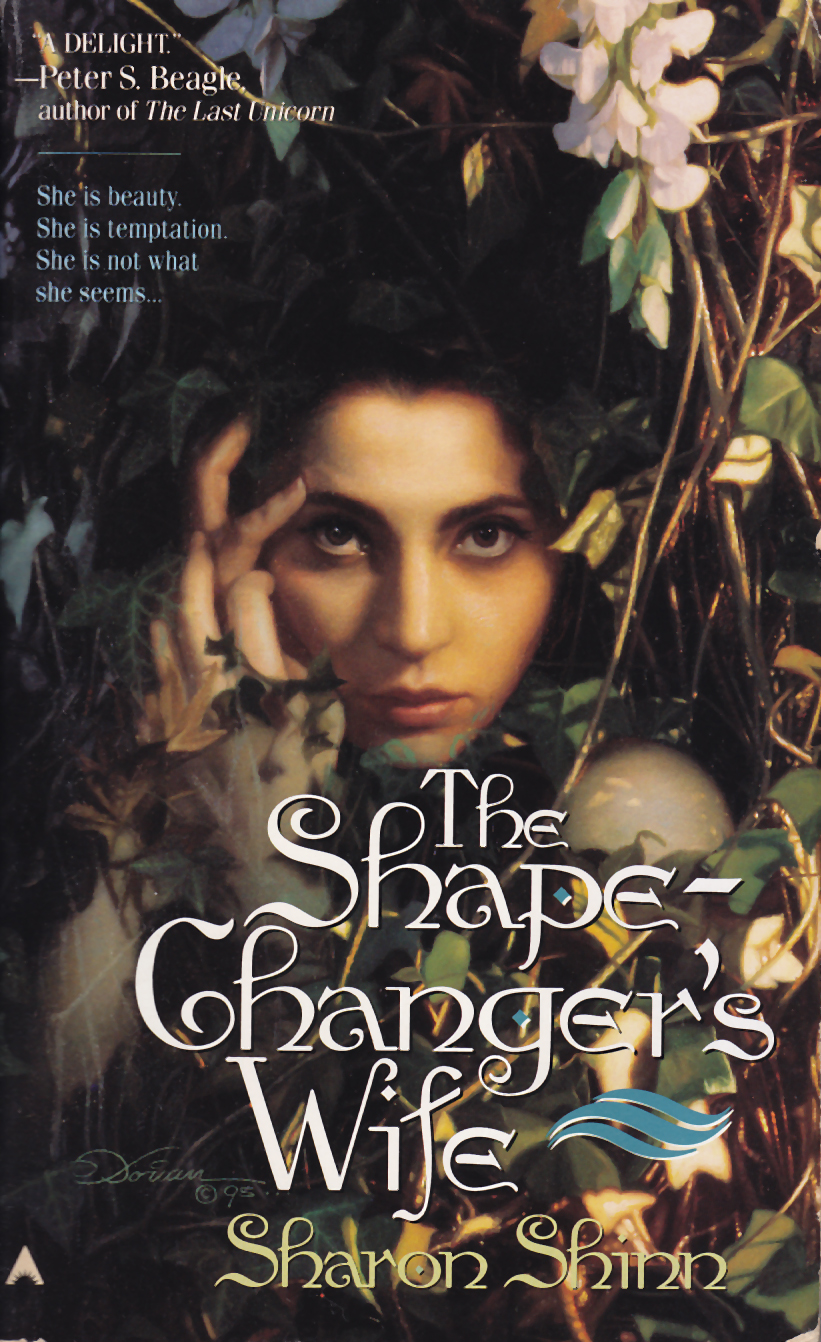
    Update and The Shape-Changer’s Wife

    Assassin is moving along. I’m heading into the last quarter of the book, which is where the fireworks start. I appreciate all of you who have been so patient. My goal is to end this arc of the series with a bang. 

    In the meantime, I’d like to recommend a fantasy novel. I enjoyed it many years ago and recently reread it, finding myself swept away with as much intrigue and delight as the first time. 

    It’s The Shape-Changer’s Wife by Sharon Shinn. 

    The story follows an aspiring wizard named Aubrey who is nearing the end of his training. He asks his mentor, the wizard Cyril, to teach him transmogrification—the art of changing form—but Cyril refuses. Aubrey protests. Cyril knows the spells. He has cast them himself. Still, he refuses. 

    Eventually, however, Cyril’s conscience gets the better of him. A well-rounded wizard should know every branch of magic, even the ones Cyril dislikes. So he writes to another wizard, a shape-changer named Glyrenden, and asks if he will take Aubrey as a student. Glyrenden agrees. 

    As Aubrey sets off, Cyril gives him a warning: “Learn everything he teaches you so well you can cast his own spells back at him. Glyrenden respects only those stronger than he is, and those he hates. If you cannot beat him, he will destroy you.” 

    And so begins the tale. 

    There’s mystery, wonder, betrayal, loss, battle, and even love. Best of all, it’s a complete stand-alone novel, a rarity these days. 

    If you’re hankering for a fantasy adventure that can be read in one volume, I think you’ll be very pleased with this one. 

    Happy reading,  

    John 

    Share
  • Writing update: Curse Draft 3 FINISHED, The Book Academy

    Fanfare!

    Draft 3 of Curse of a Dark God is finished.

    Finished!

    Finished!


    FIIIIINIIIIIIISHED!!!!!!!!!!!!!!!!!!!!!!!!!!!!!!!!!!!!!!!!!!

    245,000 words. 873 manuscript pages.

    That’s a big book. SERVANT was only 170,000. A “normal” novel is somewhere around 90,000 – 120,000 words. I just emailed it to my agent with a huge sigh of relief. And a hope that the editoral sword of Damocles has been lifted a bit. I’m sure my editor will want some changes–most certainly fewer words–but hopefully this is a draft we can agree on and, therefore, set a release date.

    I want to thank the following folks for reading the opening and giving me their feedback. I’ll be incorporating their comments, along with those of my beta readers, agent, and editors, in my review for the edits I’ll make to draft 4. Some of the comments, actually, made it into draft 3.

    • Adam Teachout
    • Alexis Cooper
    • Alex Lamborn
    • Amy Lamborn
    • Cameron Wilson
    • Darren Eggett
    • David C. Walton
    • David West
    • Eric Allen
    • Garrett Winn
    • Hyrum Grissom
    • Justin Fisher
    • Krista Hoeppner Leahy
    • Laurel Amberdine
    • Lindsey Tolis
    • Lynette Wood
    • Martin Cahill
    • Melanie Goldmund
    • Merrill Nielson
    • Mette Ivie Harrison
    • Nick Dianatkhah
    • Rachel Gao 
    • Robert Thompson
    • Steve Diamond
    • Wesley Amodt

    Again, all of you listed above–THANK YOU SO VERY MUCH FOR READING AND RESPONDING!! We luvs you, Precious. And if I missed anyone, please send me an email smack. Your name needs to be there. I’ll move it over into the fiction section later.

    For those who missed out, I’m planning on posting the beginning of Dark God’s Glory for review as well. Although I don’t know how it’s going to work out with pub dates. We’ll have to see.  

    By the way, here’s the opening chapter as it now stands. It may very well change.

    1.   The Harvester

    Berosus saw the girl the first day he arrived on the shores of the New Lands. She was a beautiful Koramite mix. Dark hair. Clear skin the color of caramel. A full set of teeth. But it was her stunning jade eyes that decided him. That and the playful but firm way she handled the sailors wanting more than just a few pints of her grog. He found lodging in a barn that night then ordered three of his men to kidnap her.

    When the time was right, they brought her to him up on the hill. It was in the afternoon of the sixth day. The sun shone brightly in the blue autumn sky. The breeze rustled through the grass and trees. He untied the bonds around her wrists and told her to sit down. He said, “Some of the spark’s gone out of your eyes.”

    She said, “Six days in a hole will do that to you.”

    He gave her credit. She was scared and hiding it very well. He said, “You’re destined for great things.”

    She looked at the tattoos on his wrists, which would tell her nothing, and said, “I’ve a father to tend to, and three brothers.”

    He said, “What’s your name?”

    “Jade.”

    “Of course. Well, Jade. You’re good stock.” He motioned at her. “Wide hips, good bone structure. You would have born many fine children and increased the Mother’s herd. But there’s a higher purpose.”

    She said, “You’re one of those Shimites, aren’t you. One of his sleth.”

    “Ho,” he laughed. “No, lovely. Shim is a nothing. A gnat. A beetle. No, I am a Seeker. A servant of the Sublime. And you will serve me. Does that please you?”

    “You’re not marked.”

    “No, Seekers never are. We can’t announce our coming, now, can we?”

    She swallowed. “They say Shim’s brought on a curse.”

    “That he has,” Berosus replied. “And you’re going to help remove it.” He pulled the rough, black gloryhorn from its pouch. “Do you know what this is?”

    “Not a simple horn,” she said, “or you wouldn’t have asked.”

    She was smart. Brave. Oh, but he liked this one. He had indeed chosen well. “No, not a mere horn. It’s a weave. And like all weaves it needs soul to bring it to life. This one needs a lot of soul.”

    He saw she understood what that meant, for the last of her feisty spirit drained away. She glanced down the hill. She was going to run; he could see it in her eyes. He gave her credit again. She was real quality. By this point many females would have been in a panic, in tears or begging him for mercy. But this one still had her wits.

    He snatched her by the wrist. “Don’t spoil it. You’ll be remembered. I will remember you, this hill, the smell of the autumn leaves, and your eyes under the blue sky.”

    She tried to wrench her arm free, but Berosus had an iron grip. Her tattoo marked her as property of the Mother and gave him access. He pushed through the barriers of her flesh to the soul within and felt her scream.

    #

    When Berosus finished, the husk of Jade’s body stared past him at the trees. Her body and the remnant soul which lingered there might live on for a few days, maybe even a few weeks, but there was no point in allowing that to occur. It would seek the familiar; it would walk back to her home, go about its old habits. Maybe it would sit in a favorite chair, maybe eat a piece of bread or go through the motions of drawing water. But it wouldn’t respond to the conversations of her loved ones or their later pleadings. All this would only raise questions, and questions at this point would not be useful. So Berosus killed the body with a sharp twist to the neck and laid it down upon the dried autumn grass at his feet.

    The captain of Berosus’ dreadmen had brought a small meal. Berosus picked up a salted herring that lay in the cloth the captain had spread upon the grass and took a bite. “Life is meant to be lived consciously,” Berosus said, “deliberately.”

    “Yes, Bright One,” the dreadmen said.

    With his free hand, Berosus ran a handful of the female’s luxurious dark hair through his fingers. He traced her brow and the ridge of her cheek bone, traced the delicate curve of her lips. She was so beautiful in her repose. As graceful and sensuous as the rich petals of an iris.

    “Every day a banquet is spread, Captain. And if you’re not careful, you’ll miss it.” Berosus disdained the Divines who sent others to do their work. Life was full of gifts, full of scenes such as these. And every day they missed it.

    He took another bite of herring.

    The captain said, “We have a report, Bright One.”

    Berosus ignored him. The scene was perfect. The breeze blew gentle waves through the dry meadow grass about Jade. The heads of the grass nodded to and fro, as if reaching out to touch her.

    He contemplated her a moment more then picked up the leather pouch that held the rough, black gloryhorn where the essential parts of the girl’s soul still lived on and put the strap over his neck.

    The gloryhorn was the weave he would use to harvest the fruit of this land. He’d needed a soul to quicken it. He could have used anyone’s soul, but it pleased him to think of Jade in there, for every time he saw the horn, he would also think of her, this hill, and the grass rippling in the breeze. He would think of how poignant it was for something of such beauty to bring forth such destruction.

    He finished the herring and sucked his two fingers clean. In the distance, the towers of Shim’s fortress rose above the trees. “What is the report?”

    “The Mungonite priest has been spotted.”

    Berosus nodded. “Good. We need to find him before he talks.”

    “I’ve already dispatched men.”

    Berosus looked out at Shim’s fortress. He’d been watching Shim’s army for the past six days, and his orders were to harvest every last one of them.

    It was clear to him this army was sleth. They were using weaves of might, but none were in the pattern of any of the houses of Kains he knew. There were no Guardian Divines, no tethered skir, no Fire sacrifices. There simply were no signs that would indicate an enemy Mother was here, claiming this human herd. But there was the sleth Argoth and his Grove.

    When Berosus had received his orders, he’d been informed by the glorious Mother of Mokad herself that this nest of sleth had killed two Divines and perhaps even one of her sisters. He saw now they were starting to build an army of dreadmen. It was all very impressive for sleth. But their time was at an end.

    He looked down upon the body of Jade. She would have been harvested anyway. This outbreak of slethery had to be stopped before it grew too large. A small sleth nest could be useful at times in managing the herd or in attacking another Mother’s holdings. But an army of them would only cause problems. And you couldn’t just kill the leaders. Ideas and knowledge spread like disease. In this situation, it was best to simply destroy them all. 

    Berosus smoothed one side of his long blond moustache and then the other. About him in the woods, his dreadmen kept watch. He’d received message via the weave that bound his chief general to him that the ships with the troops and the other Divines were making good progress. They expected to arrive in just a few days, which gave him just enought time to put himself in place.

    In the distance, banners and wreaths were being hung at the fortress. He thought it fitting: on the morrow, the inhabitants of this land would celebrate the good gifts of the harvest with their annual apple dance feast. In truth, they were only fattening themselves for the real harvest.

    Harvesting humans was essentially the same as harvesting any animal. You gathered them together. Then you killed them. Like many social animals, humans banded together when under threat. Provide the right motivation, and the herd would gather itself.

    “Captain,” he said. “Tomorrow evening at the feast, we set things in motion. You will send in someone with poison. Let him clearly demonstrate our intent.”

    “It will be done, Bright One.”

    Berosus took in a great breath of the sweet air. The day was brisk, the sky sunny and clear. He hoped the sunshine held. It was such fine weather for slaughter.

    Edit. See, it’s already changed. I had two versions when I posted this blog. I let Nellie read both. And she reports that this one created much more interest (curiosity, in this case) much faster. Sigh. It’s a good thing I’m taking a break.

    1.   The Harvester

    The young girl was beautiful. Dark hair. Stunning jade eyes. Clear skin the color of caramel. But her body was merely a husk now because Berosus had removed the vast majority of her soul.

    The husk of her body and the remnant soul which lingered there might live on for a few days, maybe even a few weeks, but there was no point in allowing that to occur. The body would seek the familiar; it would walk back to its home, go about its old habits. Maybe it would sit in a favorite chair, maybe eat a piece of bread or go through the motions of drawing water. But it wouldn’t respond to the conversations of her loved ones or their later pleadings. All this would only raise questions, and questions at this point would be inconvenient. So Berosus killed the girl’s body with a sharp twist to the neck and laid it down upon the dried autumn grass at his feet.

    The captain of Berosus’ dreadmen had brought a small meal. Berosus picked up a salted herring that lay in the cloth the captain had spread upon the grass and took a bite. “Life is meant to be lived consciously,” Berosus said, “deliberately.”

    “Yes, Bright One,” the dreadmen said.

    With his free hand, Berosus ran a handful of the female’s luxurious dark hair through his fingers. He traced her brow and the ridge of her cheek bone, traced the delicate curve of her lips. She was so beautiful in her repose. As graceful and sensuous as the rich petals of an iris.

    “Every day a banquet is spread, Captain. And if you’re not careful, you’ll miss it.” Berosus disdained the Divines who sent others to do their work. Life was full of gifts, full of scenes such as these. And every day they missed it.

    He took another bite of herring.

    The captain said, “We have a report, Bright One.”

    Berosus ignored him. The scene was perfect. The breeze blew gentle waves through the dry meadow grass about Jade. The heads of the grass nodded to and fro, as if reaching out to touch her.

    He contemplated her a moment more then picked up the leather pouch that held the rough, black gloryhorn where the essential parts of the girl’s soul still lived on and put the strap over his neck.

    The gloryhorn was the weave he would use to harvest the fruit of this land. He’d needed a soul to quicken it. He could have used anyone’s soul, but it pleased him to think of Jade in there, for every time he saw the horn, he would also think of her, this hill, and the grass rippling in the breeze. He would think of how poignant it was for something of such beauty to bring forth such destruction.

    He finished the herring and sucked his two fingers clean. In the distance, the towers of Shim’s fortress rose above the trees. “What is the report?”

    “The Mungonite priest has been spotted.”

    Berosus nodded. “Good. We need to find him before he talks.”

    “I’ve already dispatched men.”

    Berosus looked out at Shim’s fortress. He’d been watching Shim’s army for the past six days, and his orders were to harvest every last one of them.

    It was clear to him this army was sleth. They were using weaves of might, but none were in the pattern of any of the houses of Kains he knew. There were no Guardian Divines, no tethered skir, no Fire sacrifices. There simply were no signs that would indicate an enemy Mother was here, claiming this human herd. But there was the sleth Argoth and his Grove.

    When Berosus had received his orders, he’d been informed by the glorious Mother of Mokad herself that this nest of sleth had killed two Divines and perhaps even one of her sisters. He saw now they were starting to build an army of dreadmen. It was all very impressive for sleth. But their time was at an end.

    He looked down upon the body of Jade. She had solid bone structure, wide hips for bearing children, even teeth. She was good stock. In regular circumstances, she would have grown up to bear many fine children and increase the herd. She would have provided many souls as meat for the Mothers. But she would have been harvested anyway. This outbreak of slethery had to be stopped before it grew too large. A small sleth nest could be useful at times in managing the herd or in attacking another Mother’s holdings. But an army of them would only cause problems. And you couldn’t just kill the leaders. Ideas and knowledge spread like disease. In this situation, it was best to simply destroy them all. 

    Berosus smoothed one side of his long blond moustache and then the other. About him in the woods, his dreadmen kept watch. He’d received message via the weave that bound his chief general to him that the ships with the troops and the other Divines were making good progress. They expected to arrive in just a few days, which gave him just enought time to put himself in place.

    In the distance, banners and wreaths were being hung at the fortress. He thought it fitting: on the morrow, the inhabitants of this land would celebrate the good gifts of the harvest with their annual apple dance feast. In truth, they were only fattening themselves for the real harvest.

    Harvesting humans was essentially the same as harvesting any animal. You gathered them together. Then you killed them. Like many social animals, humans banded together when under threat. Provide the right motivation, and the herd would gather itself.

    “Captain,” he said. “Tomorrow evening at the feast, we set things in motion. You will send in someone with poison. Let him clearly demonstrate our intent.”

    “It will be done, Bright One.”

    Berosus took in a great breath of the sweet air. The day was brisk, the sky sunny and clear. He hoped the sunshine held. It was such fine weather for slaughter.

    ***

    In other news, I was invited to present at The Book Academy conference that will be held at UVU in Orem, UT on Thursday, September 30th. It looks like it’s going to be a great time.

    Date & Time Event Type Area Notes
    Thursday, September 30 Writers conference Orem, UT The Book Academy is a one-day conference designed to give authors, aspiring authors, and avid readers the opportunity to learn more about writing, the publishing industry, and the books they love while networking with other authors, publishing professionals, and book lovers. Classes will be taught by successful authors and publishing professionals on writing basics, publishing, marketing, book clubs, and more.*This year it will be hosted by Utah Valley University. The theme is “Power up your writing.” I’ll be teaching a one-hour class on how to make a good idea great. More details to come.
    Share
  • Have the Proof of Servant

    I received the proof of SERVANT from CreateSpace today. Folks, it is georgeous. Inside and out. The cover, title page, Isaac Stewart’s map, headers, front and back matter, chapter titles, the poems. I’m so pleased.

    Most readers will look at it and say, hey, looks like another book. But that’s the point. The interior is designed to give a great reading experience and fade into the background, letting the story come to the fore. The cover is meant to grab and give the feel. I think both do their job splendidly.

    Of course, you know what this means, don’t you?

    It means that next week we will have a new release day with the new release discount pricing. You may wonder why I don’t just do it now. The answer is that there are some copy edits that need to be made. Things you never catch until you see the story in book form. That’s why you always get a proof. As soon as we’ve made those updates, I’ll announce the sale.

    Share
  • |

    Amazon vs Macmillan = Big River Fighting to be Big Banana

    Here’s what this brouhaha is all about

    Amazon wants to try to replicate with digital books what Apple has done with digital music. So what has Apple done?

    According to Cnet’s “iTunes reps 1 in every 4 songs“:

    “iTunes-purchased songs now account for 25 percent of the overall music market–both physical and digital–in the U.S., says an NPD Group report released Tuesday.”

    That may not seem like a market leader position, but in the comments one person pointed out the following.

    “35% of the music sales are digital (there’s some conversion where 1 CD = 11 or 12 individual digital downloads). Apple owns 70% of the digital market. 70% of the 35% ~ 25%. So Apple has a 25% share of all music sales.”

    Whoa, Nellie. That there’s what we call a cash cow. Moo-la, Baby, Moo-LA! And this becomes even more significant when you consider the fact that many think the digital part of music sales is only going to grow and grow.

    According to the same set of data, TheStreet.com’s  “iTunes, Wal-Mart Dominate Music Sales” reports:

    Amazon accounts for only 8% of that market .

    How did Apple get the head lock on such a huge portion of the digital market? It appears it has to do with the fact that Apple was first to market with a good MP3 player solution, linked that to its iTunes store, and then bundled the software in such a way as to drive and then keep people coming back to iTunes. Here are a couple of articles. I’m sure we could google dozens more.

    Amazon (and many others) are forecasting digital books to become a very large part of book sales. Amazon wants to be the big banana in that space. Well, it can’t be (drum roll) the big Apple now can it?

    But what does this have to do with publishers?

    Big Banana’s Problem

    Amazon cannot become the big banana if nobody buys its stuff because consumers feel it’s priced too high.

    So why don’t they just price it low?

    Ah, there’s the peel.

    In this new proposed arrangement, Amazon cedes a huge portion of its pricing control to the publisher.

    But Apple’s doing that with its iPad.

    It is. However, Apple already has a model and ability to sell. I think Amazon wants to make sure it keeps the low-price position because this is one of the key reasons people go to Amazon. Amazon pulls online book customers in because (listed in what I estimate is importance):

    1. The new books are usually cheaper and if you really want a low price you can buy them used
    2. Amazon provide long tail stock (what book can’t you get out there?)
    3. It’s easy to type in a title and find out more info about the book (first chapters, user ratings, etc.)
    4. Completing the sales transaction is a snap 

    I’m assuming Amazon is worried that if it allows publishers to price their ebooks higher, then they lose one of their MAIN draws. And therefore their ability to become Big Banana.

    The Existing Supply Chain Model

    Right now you have these distribution or supply chains:

    • Publisher  –> Wholesaler  –> Retailer –> Consumer
    • Publisher  –> Retailer –> Consumer
    • Publisher  –> Consumer

    All of them exist side-by-side. For example, Scholastic will sell books via a Barnes & Noble retailer, but they’ll also sell direct via their school book program. You can get SERVANT at Barnes & Noble or you can get it directly from Macmillan here.

    Why have the middlemen?

    Because middlemen bring the cost of purchasing a book WAY down. Some people don’t think that. All they see is that the retailer buys the book wholesale and then jacks up the price.

    But imagine there were no Wal-Marts, Smith’s grocery, or any other kinds of stores. As a consumer you would have to go to farmer Bill for milk, travel 10 miles to farmer Jane for corn, travel another 10 miles to farmer gill for eggs, and on and on and on for the hundreds and thousands of different products we buy. Furthermore, because middlemen bring the products all together each producer has more incentive to compete on quality, value, and price.

    Middlemen SAVE consumers huge amounts of time and money. That’s why we’ll always have them with us even though producers may still sell direct at the same time.  And that’s why we’re willing to pay the little bit they ask for what they do.

    Price/Volume/Profit Control

    There are two keys to making all of this middlemen business work.

    First, usually only the two parties involved in any transaction control the terms of that transaction. So the publisher and wholesaler agree on a price for their transaction. The wholesaler than makes a separate agreement with the retailer. Finally, the retailer is free to make a separate agreement with the consumer. In each transaction the seller gets to control price, cut deals for high volume purchases, and, therefore control its profit.

    In all cases you negotiate a price/volume mix that’s good for both parties. Sometimes this includes a flat price. Sometimes it includes price deductions for larger volumes.  But in all cases it gives the producer something to count on. If a customer wants a lot of product, great, we’ll sell it to you for X price and make Z profit. If you want less, fine, we’ll sell it for Y and make Q profit.

    Second, wholesalers and retailers want to control costs. They need to be able to turn around and sell your product for some profit. If you sell your stuff to someone else for a humongous discount, then that allows their competitor to charge less and potentially shift volume to them. So buyers will often try to get commitments that you aren’t going to screw them somewhere else. And sellers who value long-term relationships are willing to make such commitments.

    So here’s business as it is today. A retail bookseller (Amazon, B&N, etc.) pays a fixed wholesale price for the book to the publisher. The bookseller might negotiate wholesale price breaks at different quantity levels with the publisher, but that’s a wholesale price/volume agreement that ensures certain profit levels for the publisher. As for the retailer, they maintain a different price/volume/profit control on their end with the consumers, fiddling with volume/price mixes that make sense to them. In this situation BOTH the publisher and the retailer maintain price/volume/profit control.

    What do you want to be–the Marketplace or the Seller?

    But this new percent-of-retail scheme decouples price from volume and forces the publisher or retailer to lose control of profit. Either Amazon or the publisher has to GIVE UP price/volume/profit control with their set of buyers.

    If Amazon gets control, then it can set the retail price however it wants REGARDLESS of volume. In this situation, because wholesale price is pegged to retail price via the %, this means Amazon would dictate the wholesale price to the publisher without any regard to volume. This takes price/volume/profit control away from the publishers, putting them at the mercy of the retailer’s whims.

    Scary, a total shift in the way they’re doing business. Publishers would have to budget for the worst case scenario–the lowest the retailer might charge.

    However, that’s NOT what happened. In this current deal Amazon ceded its control to Macmillan, saying, okay publisher YOU set the price for my customers. This isn’t foreign to Amazon. They do this right now with used book sellers. Those folks set their own price and Amazon acts as the market place. And once Amazon says “we’re the marketplace, not the seller” then they step right out of the “hey, you’re charging too much” equation. So nobody would yell at Amazon for this move. Well, some folks would, but they’d soon figure it out. For example, nobody yells at Amazon now when used book vendors want to charge $99 for a trashy paperback. Everyone gets that Amazon is just the marketplace just as they get that Ebay is the market place.

    However, in this case Amazon did want to retain some control. They said, let’s set a range of prices that are acceptable. You can charge $5.99 to $9.99 but no more or less. This would allow the publisher to sell a book for more money when it’s initially released and gradually drop the price as time goes on until we get the bargain basement price of the remainder tables. The articles I linked to in the original blog discuss this common selling practice.

    Macmillan said, the miminum is great, but we actually want to start higher–$14.99.

    Amazon said, no way, Dude. And the battle was on.

    Magic $9.99?

    But why? Why did Amazon insist on that maximum? Why not just do what they already do with used book sellers and step away completely from controlling price? Wouldn’t they WANT to make more money with higher prices anyway?

    Again, price directly affects volume sold which affects profit. But in this case, it’s not as much about profit but volume and market share.

    The only reason that makes sense to me is what I discussed at the beginning of the article–Amazon wants to dominate the digital book space as Apples does iTunes, and they feel the must keep prices low to continue to get people coming to their Kindle store and growing their customer base.  They’re hoping to spank the competition in this segment by being big first and getting all the volume–it’s the old five yards and a cloud of dust.

    Big Banana. Kind of like Wal-Mart is in its segment. Kind of like Microsoft is in theirs. Kind of like Apple is with digital music.

    And they obviously think $9.99 is the magic number to keep the customers pouring into their Kindle e-book world.

    ebooks cost nothing and my grandma plays in the NBA

    Isn’t $9.99 a good price for the publisher? I mean, heck, ebooks don’t use any paper, so they cost next to nothing to make, right?

    Um, no.

    The answer’s “no” because paper is only a part of the cost. And I’m not talking about the cost of the person who takes the Word document and converts it into PDF or Kindle or whatever the ebook format is. My kid could do that for twenty bucks.

    Every product is a mix of fixed costs that don’t change with the volume you produce and variable costs which do vary. Rent, electricity, buildings, equipment, editorial, art, design, author advances, marketing, etc.–all these things can be fixed costs. It doesn’t matter if you make one book or one million. You still have the same rent, same fixed cost for artwork, same cost for editors.  

    So how big are those fixed costs? Based on the blogs I linked to in the original article (and if I read them correctly), the fixed costs are estimated somewhere between $7,000 and $20,000 per book. But those numbers aren’t hard numbers. For example, books that have bigger author royalities and bigger marketing budgets are going to cost more. Furthermore, because those numbers don’t have any details backing them up, I’m leery of trusting them.

    But we can look at something that is public knowledge to see how this works. For example, Stephenie Meyer got $750,000 for Twilight. Most authors do NOT get that. Most get a $5,000 – $7,000 advance per book. Still it shows the fixed costs can be quite large. Meyer’s advance was a huge fixed cost that needed to be covered by each book her publisher sold.

    If they sold only one book, they’d have to have charged $750,000 for it just to cover that one cost. Do you know anyone willing to pay that for a book? No. So they priced it, hoping to sell thousands. If they were to sell 750,000 copies, then that advance only cost $1 per copy. If they were to sell 1.5 million copies, then it would be .50 cents per book. The more books they sell, the smaller the fixed cost per book. Of course, that’s just one fixed  cost! You need to add all the others in (marketing must have been very large as well). Furthermore, Meyer is THE best seller. The vast majority of authors don’t sell anything that comes close. Yes, they have smaller advances and marketing budgets. But you get the idea–fixed costs matter!

    So all these people saying that since no paper is involved ebooks should cost nothing are ignoring fixed costs. In fact, according to some sources, printing, paper, and shipping only account for 10-20% of the cost of most books. I don’t know if that’s an average at all volume levels. Again, there was nothing to back up those claims. But if it’s accurate, you can see the arguments demanding ebooks be sold for next to nothing become silly at best.

    The fact is that the publisher needs to cover those fixed costs. If you were the publisher, how would you do it? Would you price hardbacks to cover fixed + variable + profit? And then price paperbacks and ebooks at variable + profit? Probably not. Hardbacks are already pushing the price limits for consumers. I think you’d want to spread those fixed costs around. If anything, you might try to cover a higher portion of the fixed costs with the paperback and ebooks.

    My inner accountant is screaming for real data to crunch and display in a spreadsheet, but I don’t have any actual actual price/volume/profit matrices. What I can say is that paper has NEVER been the only cost. For midlist authors I suspect it’s probably the smaller portion of the cost of each indivudal book. Publishers must price the books and move the necessary volume to cover fixed costs + variable costs + some profit. And so it’s only reasonable to expect that ebooks be priced to do that.

    What’s the best for you, dear reader?

    I don’t know which specific potential leader will end up providing better prices, reading devices, services, etc. in the long run. Is that Amazon, Apple, Barnes & Noble? A whole bunch of retailers? Who knows?

    What I do know is that it’s good to have a number of companies competing for the customer’s dollars. My vote is with having lots of retailers. If Amazon can sell a significantly larger number of ebooks with their pricing, then publishers, authors, and readers all win. If they can’t, then it becomes a win-lose.  And the publishers and authors will be on the lookout for a way to improve the situation by seeking out other distribution channels.

    Edit for Macmillan Announcement

    2/4/2010 4:05 PM

    It appears Macmillan and Amazon have come to an agreement.

    Notice Macmillan CEO claims this new agreement will result in them making LESS money than they do with ebooks currently. But it provides a reliable and rational market. I think what he’s saying is that this allows publishers more predictability, even if it comes at a price.

    From what I understand Amazon currently pays 50% of suggested retail price for an ebook. The publisher sets the SRP (you see it on the book often), but Amazon has full control to charge whatever it wants to the customer. Here are the numbers for SERVANT.

    • SRP = $25.99
    • Amazon pays the publisher 50% of $25.99 = $13 for each copy of SERVANT they sell
    • If they sell it for $9.99 they lose $9.99 – $13 = $(3.01) per book
    • If they sell for $14 (about what they’ve been listing it for, the make $14 – $13 = $1 per book

    Under the new deal the publiser sets the SRP and the consumer price. On each sale Amazon gets 30%, the publisher 70%. Here are the number for SERVANT under this scenario.

    • SRP = $25.99
    • Publisher sells ebook for $14
    • Amazon pays the publisher nothing until the sale.
    • Amazon earns $14 x 30% = $4.2. This is MORE than they are making under the current system.
    • Publisher earns $14 x 70% = $9.8. This means the publisher earns $(3.20) less, just as claimed, under the system they WANTED versus the existing method

    So why earn less? As Macmillan says in the announcement above, they’re willing to take less to have a more rational and stable market for ebooks

    Over the last few years we have been deeply concerned about the pricing of electronic books. That pricing, combined with the traditional business model we were using, was creating a market that we believe was fundamentally unbalanced. In the last three weeks, from a standing start we have moved to a new business model. We will make less money on the sale of e books, but we will have a stable and rational market. To repeat myself from last Sunday’ s letter, we will now have a business model that will ensure our intellectual property will be available digitally through many channels, at a price that is both fair to the consumer and that allows those who create and publish it to be fairly compensated.

    We have also started discussions with all our other partners in the digital book world. While there is still lots of work to be done, they have all agreed to move to the agency model.

    So this is how all ebooks will work with Macmillan going forward. I’m betting most or all the other publishers will follow suit.

    I think this is good news for readers, publishers, and retailers. Readers get it for less than hardcover. It will be at the higher end of the range settled with Amazon (I think it was $5.99 – $14.99) unless the publisher decides to run discounts as they do with many blockbusters now in hardback. But the price will drop as time goes on. I imagine when they release the paperback for a book, they’ll have to drop it for certain. And when books go to the remainder tables, they’ll drop again. I can see old ebooks or promotions costing $5.99 – $9.99, new ones $14.00.

    BTW, the standard now for many authors is to be paid 15% royalty of the SRP on ebooks up to a maximum of 40-50% of the net amount publishers get from the retailer (btw, contracts stipulate different royalty rates for ebooks, hardback, mass market, etc.). Something the industry is considering, as mentioned in Sargent’s letter, is setting a % rate of the amount received by Macmillan from Amazon. So instead of paying authors 15% royalty on the SRP, new contracts will likely pay authors 20 -25% of the 70% the publisher receives as royalty. You can do the math. It’s very clear this new deal doesn’t earn the author more per book. 

    Hopefully, then, we’ll simply sell a heck of a lot more copies. One glitch in all this is the fact that publishers haven’t really been setting prices with consumers. That’s been the retailer’s job. And so they’ll probably have a learning curve trying to get the prices right in the beginning. Or maybe not. We’ll have to see.

    Edit to answer Jason_Young @ 2

    2/5/2010

    Your point is, hey, if they have three products (hardback, paperback, and ebook) to spread the fixed costs across, then should that allow them to drop the price of all three products? $100 / 2 = $50. $100 / 3 = $33.3. Have I got the question right?

    FIXED COSTS AND VOLUME

    If so, then the answer is it all depends on the relationship between volume and fixed costs. It always depends on that relationship. In fact, that 20% figure may or may not be accurate because . . . it all depends on volume and fixed costs. Both of which can change.

    Let’s take a totally FABRICATED and SIMPLIFIED situation to see how it works.

    Fixed costs: $10,000
    Variable costs hardback (paper, printing, binding, etc.): $3

    Cost per book by volume printed.
    Printed / Cost per Book / Variable as %
    1 / $10,003 / 0.03%
    1,000 / $1,003 / 0.3%
    5,000 / $5 / 60%
    10,000 / $4 / 75%
    20,000 / $3.50 / 86%
    50,000 / $3.20 / 94%

    Now remember: printing has fixed and variable costs as well. But I’m going to say the printing’s all variable to keep this manageable. And that you sell every book you print (something that never happens). The thing to see here is that when you keep fixed costs constant and increase the volume printed, then the fixed cost amount and % per book goes down. Conversely, variable costs become a larger and larger portion of each unit’s cost. Remember, however, that often fixed costs go up when you plan on printing significatly more books (Twilight etc.) But given a set budget for a book, you want to sell as much as you can.

    VARIABLES CHANGE

    So your argument is that when ebooks come along, the fixed costs have already been covered by the hardbacks and papers, cause they’re all still priced the same and the variable and fixed costs haven’t gone up that much since two or three years ago.

    Here’s some of the assumptions you’ve made that might be false:

    1. Fixed and variable costs haven’t gone up
    2. Publishers are selling the same number of copies per book as they were in the past
    3. Ebooks aren’t cannibalizing sales of hardcopies

    The truth may be that costs have gone up and that books aren’t selling as many copies in their various formats as they used to. But even if both of things have not happened, why should we suppose that ebooks don’t cannibalize hardcopy sales, dropping the volumes and, therefore, increasing the cost per hardcopy? Or that they won’t cannibalize even more in the future as ebook readers become better and better.

    On the revenue end, you’re also assuming publishers are selling books for the same prices they were in the past. SRP may be high, but have you noticed the prices on new books on Amazon and other outlets? My $25.99 SRP book came out and sold for $17. It sold for $15 and change before release! And I’m not a big name they’re trying to drive volume to. This is newbie no-name they’re having to discount.

    What I expect has happened over the last five years is this. Costs have risen. Hardbacks are already pushing the limits on price. Furthermore, sellers and consumers are asking for more and more discounts. Paperbacks still haven’t crossed the $9.99, but there’s still pressure to keep them low. Ebooks are adding revenue, but a significant portion of that comes at the expense of hardcopies. So it changes the mix of products sold. It doesn’t simply open up a whole new stream of untapped cash. Because of this, ebooks allow the publisher another method to earn profit that’s getting squeezed away.

    PRODUCT MIXES AND CONTRIBUTION MARGINS

    The best way to look at this is to look at the cost in two ways. One way is to allocate fixed costs and get a price per unit. But if you look at it only that way, you can make a number of bad judgments on the value or price of a product. This happens because of that relationship between fixed costs and volume. So you also want to look at the contribution margin of each product. And, in fact, this is a better way of judging the profitability of an item.

    In this method you lump all the fixed costs together and then examine each unit of the different products (hard, soft, ebook) only by its variable cost versus revenue to see if each unit sold is contributing something above its variable cost towards the fixed costs. Then you estimate the volume you expect (hope) to sell at given prices and try to price them all in a way that will move enough volume of each type of product to cover fixed costs and provide some profit.

    So you don’t consider each product type individually. You look at the MIX of product and the MIX of contribution margins. And you work it so that together the MIX of products covers costs and earns you a profit. And gets enough volume to keep your author a going concern, growing his numbers so he becomes more profitable as time goes on.

    Edit for Modesitt’s insight

    2/6/2010

    Please check out this blog by L.E. Modesitt, Jr. “Why Amazon and Some Readers are Wrong”

    Second, what’s been overlooked is the fact that a tremendous number of book titles actually lose money. Depending on the publisher and the year, that can range from as little as 30% of all titles published to more than 60%. That means that successful books not only have to cover their own production costs but the losses from unsuccessful books if the publisher is to remain in business.

    Third, hardcover sales of successful books effectively subsidize paperbacks or less successful books. Ten-dollar Kindle books would have created price pressures that would either reduce the sales of hardcovers or replace them with e-books, and as more adaptable e-book reading devices become available, that would reduce overall revenues even more than would $15 e-books. This, in turn, would reduce the ability of publishers to try “new” authors and approaches, and would likely result in more “mass” entertainment and less diversity in a field that is already having trouble publishing books for limited audiences.

    Just in case you didn’t connect it to the discussion above. A HUGE cost that needs to be covered by the contribution margins of the successful books are the fixed AND variable costs of each book that fails to contribute enough segment margin (the contribution margin of a segment of your business, in this case a book in its various formats) to pay for itself.  Look at Modesitt’s percentages of books that lose the publisher money. Think about that. For the publisher to continue to bring in new authors who might not sell well in the beginning but have great potential in the long run to sell well, they have to cover the “start up” costs of those authors.

    He makes a lot of other important points. It’s a good read.  And it all plugs into the fixed costs, volume, price, contribution margin equations.

    Share