|

Get great writing tips, for cheap!

The annual Life, The Universe, and Everything writer’s conference is being held this year February 11-13. It’s chock full of panels and presentations from working authors. And this year you don’t have to live within driving distance of Provo, Utah to go because they’re doing it all online (thank you, Covid).

I will be delivering two hour-long presentations. The first is about plot, where you learn the John Brown Story Framework that makes plotting so much easier. Heck, it makes story much easier. The second is for folks new to self-publishing and is called Indie Publishing 101.

If you’re a new writer or looking to hone your craft, you will want to check it out.

Share

Similar Posts

  • |

    Amazon vs Macmillan = Big River Fighting to be Big Banana

    Here’s what this brouhaha is all about

    Amazon wants to try to replicate with digital books what Apple has done with digital music. So what has Apple done?

    According to Cnet’s “iTunes reps 1 in every 4 songs“:

    “iTunes-purchased songs now account for 25 percent of the overall music market–both physical and digital–in the U.S., says an NPD Group report released Tuesday.”

    That may not seem like a market leader position, but in the comments one person pointed out the following.

    “35% of the music sales are digital (there’s some conversion where 1 CD = 11 or 12 individual digital downloads). Apple owns 70% of the digital market. 70% of the 35% ~ 25%. So Apple has a 25% share of all music sales.”

    Whoa, Nellie. That there’s what we call a cash cow. Moo-la, Baby, Moo-LA! And this becomes even more significant when you consider the fact that many think the digital part of music sales is only going to grow and grow.

    According to the same set of data, TheStreet.com’s  “iTunes, Wal-Mart Dominate Music Sales” reports:

    Amazon accounts for only 8% of that market .

    How did Apple get the head lock on such a huge portion of the digital market? It appears it has to do with the fact that Apple was first to market with a good MP3 player solution, linked that to its iTunes store, and then bundled the software in such a way as to drive and then keep people coming back to iTunes. Here are a couple of articles. I’m sure we could google dozens more.

    Amazon (and many others) are forecasting digital books to become a very large part of book sales. Amazon wants to be the big banana in that space. Well, it can’t be (drum roll) the big Apple now can it?

    But what does this have to do with publishers?

    Big Banana’s Problem

    Amazon cannot become the big banana if nobody buys its stuff because consumers feel it’s priced too high.

    So why don’t they just price it low?

    Ah, there’s the peel.

    In this new proposed arrangement, Amazon cedes a huge portion of its pricing control to the publisher.

    But Apple’s doing that with its iPad.

    It is. However, Apple already has a model and ability to sell. I think Amazon wants to make sure it keeps the low-price position because this is one of the key reasons people go to Amazon. Amazon pulls online book customers in because (listed in what I estimate is importance):

    1. The new books are usually cheaper and if you really want a low price you can buy them used
    2. Amazon provide long tail stock (what book can’t you get out there?)
    3. It’s easy to type in a title and find out more info about the book (first chapters, user ratings, etc.)
    4. Completing the sales transaction is a snap 

    I’m assuming Amazon is worried that if it allows publishers to price their ebooks higher, then they lose one of their MAIN draws. And therefore their ability to become Big Banana.

    The Existing Supply Chain Model

    Right now you have these distribution or supply chains:

    • Publisher  –> Wholesaler  –> Retailer –> Consumer
    • Publisher  –> Retailer –> Consumer
    • Publisher  –> Consumer

    All of them exist side-by-side. For example, Scholastic will sell books via a Barnes & Noble retailer, but they’ll also sell direct via their school book program. You can get SERVANT at Barnes & Noble or you can get it directly from Macmillan here.

    Why have the middlemen?

    Because middlemen bring the cost of purchasing a book WAY down. Some people don’t think that. All they see is that the retailer buys the book wholesale and then jacks up the price.

    But imagine there were no Wal-Marts, Smith’s grocery, or any other kinds of stores. As a consumer you would have to go to farmer Bill for milk, travel 10 miles to farmer Jane for corn, travel another 10 miles to farmer gill for eggs, and on and on and on for the hundreds and thousands of different products we buy. Furthermore, because middlemen bring the products all together each producer has more incentive to compete on quality, value, and price.

    Middlemen SAVE consumers huge amounts of time and money. That’s why we’ll always have them with us even though producers may still sell direct at the same time.  And that’s why we’re willing to pay the little bit they ask for what they do.

    Price/Volume/Profit Control

    There are two keys to making all of this middlemen business work.

    First, usually only the two parties involved in any transaction control the terms of that transaction. So the publisher and wholesaler agree on a price for their transaction. The wholesaler than makes a separate agreement with the retailer. Finally, the retailer is free to make a separate agreement with the consumer. In each transaction the seller gets to control price, cut deals for high volume purchases, and, therefore control its profit.

    In all cases you negotiate a price/volume mix that’s good for both parties. Sometimes this includes a flat price. Sometimes it includes price deductions for larger volumes.  But in all cases it gives the producer something to count on. If a customer wants a lot of product, great, we’ll sell it to you for X price and make Z profit. If you want less, fine, we’ll sell it for Y and make Q profit.

    Second, wholesalers and retailers want to control costs. They need to be able to turn around and sell your product for some profit. If you sell your stuff to someone else for a humongous discount, then that allows their competitor to charge less and potentially shift volume to them. So buyers will often try to get commitments that you aren’t going to screw them somewhere else. And sellers who value long-term relationships are willing to make such commitments.

    So here’s business as it is today. A retail bookseller (Amazon, B&N, etc.) pays a fixed wholesale price for the book to the publisher. The bookseller might negotiate wholesale price breaks at different quantity levels with the publisher, but that’s a wholesale price/volume agreement that ensures certain profit levels for the publisher. As for the retailer, they maintain a different price/volume/profit control on their end with the consumers, fiddling with volume/price mixes that make sense to them. In this situation BOTH the publisher and the retailer maintain price/volume/profit control.

    What do you want to be–the Marketplace or the Seller?

    But this new percent-of-retail scheme decouples price from volume and forces the publisher or retailer to lose control of profit. Either Amazon or the publisher has to GIVE UP price/volume/profit control with their set of buyers.

    If Amazon gets control, then it can set the retail price however it wants REGARDLESS of volume. In this situation, because wholesale price is pegged to retail price via the %, this means Amazon would dictate the wholesale price to the publisher without any regard to volume. This takes price/volume/profit control away from the publishers, putting them at the mercy of the retailer’s whims.

    Scary, a total shift in the way they’re doing business. Publishers would have to budget for the worst case scenario–the lowest the retailer might charge.

    However, that’s NOT what happened. In this current deal Amazon ceded its control to Macmillan, saying, okay publisher YOU set the price for my customers. This isn’t foreign to Amazon. They do this right now with used book sellers. Those folks set their own price and Amazon acts as the market place. And once Amazon says “we’re the marketplace, not the seller” then they step right out of the “hey, you’re charging too much” equation. So nobody would yell at Amazon for this move. Well, some folks would, but they’d soon figure it out. For example, nobody yells at Amazon now when used book vendors want to charge $99 for a trashy paperback. Everyone gets that Amazon is just the marketplace just as they get that Ebay is the market place.

    However, in this case Amazon did want to retain some control. They said, let’s set a range of prices that are acceptable. You can charge $5.99 to $9.99 but no more or less. This would allow the publisher to sell a book for more money when it’s initially released and gradually drop the price as time goes on until we get the bargain basement price of the remainder tables. The articles I linked to in the original blog discuss this common selling practice.

    Macmillan said, the miminum is great, but we actually want to start higher–$14.99.

    Amazon said, no way, Dude. And the battle was on.

    Magic $9.99?

    But why? Why did Amazon insist on that maximum? Why not just do what they already do with used book sellers and step away completely from controlling price? Wouldn’t they WANT to make more money with higher prices anyway?

    Again, price directly affects volume sold which affects profit. But in this case, it’s not as much about profit but volume and market share.

    The only reason that makes sense to me is what I discussed at the beginning of the article–Amazon wants to dominate the digital book space as Apples does iTunes, and they feel the must keep prices low to continue to get people coming to their Kindle store and growing their customer base.  They’re hoping to spank the competition in this segment by being big first and getting all the volume–it’s the old five yards and a cloud of dust.

    Big Banana. Kind of like Wal-Mart is in its segment. Kind of like Microsoft is in theirs. Kind of like Apple is with digital music.

    And they obviously think $9.99 is the magic number to keep the customers pouring into their Kindle e-book world.

    ebooks cost nothing and my grandma plays in the NBA

    Isn’t $9.99 a good price for the publisher? I mean, heck, ebooks don’t use any paper, so they cost next to nothing to make, right?

    Um, no.

    The answer’s “no” because paper is only a part of the cost. And I’m not talking about the cost of the person who takes the Word document and converts it into PDF or Kindle or whatever the ebook format is. My kid could do that for twenty bucks.

    Every product is a mix of fixed costs that don’t change with the volume you produce and variable costs which do vary. Rent, electricity, buildings, equipment, editorial, art, design, author advances, marketing, etc.–all these things can be fixed costs. It doesn’t matter if you make one book or one million. You still have the same rent, same fixed cost for artwork, same cost for editors.  

    So how big are those fixed costs? Based on the blogs I linked to in the original article (and if I read them correctly), the fixed costs are estimated somewhere between $7,000 and $20,000 per book. But those numbers aren’t hard numbers. For example, books that have bigger author royalities and bigger marketing budgets are going to cost more. Furthermore, because those numbers don’t have any details backing them up, I’m leery of trusting them.

    But we can look at something that is public knowledge to see how this works. For example, Stephenie Meyer got $750,000 for Twilight. Most authors do NOT get that. Most get a $5,000 – $7,000 advance per book. Still it shows the fixed costs can be quite large. Meyer’s advance was a huge fixed cost that needed to be covered by each book her publisher sold.

    If they sold only one book, they’d have to have charged $750,000 for it just to cover that one cost. Do you know anyone willing to pay that for a book? No. So they priced it, hoping to sell thousands. If they were to sell 750,000 copies, then that advance only cost $1 per copy. If they were to sell 1.5 million copies, then it would be .50 cents per book. The more books they sell, the smaller the fixed cost per book. Of course, that’s just one fixed  cost! You need to add all the others in (marketing must have been very large as well). Furthermore, Meyer is THE best seller. The vast majority of authors don’t sell anything that comes close. Yes, they have smaller advances and marketing budgets. But you get the idea–fixed costs matter!

    So all these people saying that since no paper is involved ebooks should cost nothing are ignoring fixed costs. In fact, according to some sources, printing, paper, and shipping only account for 10-20% of the cost of most books. I don’t know if that’s an average at all volume levels. Again, there was nothing to back up those claims. But if it’s accurate, you can see the arguments demanding ebooks be sold for next to nothing become silly at best.

    The fact is that the publisher needs to cover those fixed costs. If you were the publisher, how would you do it? Would you price hardbacks to cover fixed + variable + profit? And then price paperbacks and ebooks at variable + profit? Probably not. Hardbacks are already pushing the price limits for consumers. I think you’d want to spread those fixed costs around. If anything, you might try to cover a higher portion of the fixed costs with the paperback and ebooks.

    My inner accountant is screaming for real data to crunch and display in a spreadsheet, but I don’t have any actual actual price/volume/profit matrices. What I can say is that paper has NEVER been the only cost. For midlist authors I suspect it’s probably the smaller portion of the cost of each indivudal book. Publishers must price the books and move the necessary volume to cover fixed costs + variable costs + some profit. And so it’s only reasonable to expect that ebooks be priced to do that.

    What’s the best for you, dear reader?

    I don’t know which specific potential leader will end up providing better prices, reading devices, services, etc. in the long run. Is that Amazon, Apple, Barnes & Noble? A whole bunch of retailers? Who knows?

    What I do know is that it’s good to have a number of companies competing for the customer’s dollars. My vote is with having lots of retailers. If Amazon can sell a significantly larger number of ebooks with their pricing, then publishers, authors, and readers all win. If they can’t, then it becomes a win-lose.  And the publishers and authors will be on the lookout for a way to improve the situation by seeking out other distribution channels.

    Edit for Macmillan Announcement

    2/4/2010 4:05 PM

    It appears Macmillan and Amazon have come to an agreement.

    Notice Macmillan CEO claims this new agreement will result in them making LESS money than they do with ebooks currently. But it provides a reliable and rational market. I think what he’s saying is that this allows publishers more predictability, even if it comes at a price.

    From what I understand Amazon currently pays 50% of suggested retail price for an ebook. The publisher sets the SRP (you see it on the book often), but Amazon has full control to charge whatever it wants to the customer. Here are the numbers for SERVANT.

    • SRP = $25.99
    • Amazon pays the publisher 50% of $25.99 = $13 for each copy of SERVANT they sell
    • If they sell it for $9.99 they lose $9.99 – $13 = $(3.01) per book
    • If they sell for $14 (about what they’ve been listing it for, the make $14 – $13 = $1 per book

    Under the new deal the publiser sets the SRP and the consumer price. On each sale Amazon gets 30%, the publisher 70%. Here are the number for SERVANT under this scenario.

    • SRP = $25.99
    • Publisher sells ebook for $14
    • Amazon pays the publisher nothing until the sale.
    • Amazon earns $14 x 30% = $4.2. This is MORE than they are making under the current system.
    • Publisher earns $14 x 70% = $9.8. This means the publisher earns $(3.20) less, just as claimed, under the system they WANTED versus the existing method

    So why earn less? As Macmillan says in the announcement above, they’re willing to take less to have a more rational and stable market for ebooks

    Over the last few years we have been deeply concerned about the pricing of electronic books. That pricing, combined with the traditional business model we were using, was creating a market that we believe was fundamentally unbalanced. In the last three weeks, from a standing start we have moved to a new business model. We will make less money on the sale of e books, but we will have a stable and rational market. To repeat myself from last Sunday’ s letter, we will now have a business model that will ensure our intellectual property will be available digitally through many channels, at a price that is both fair to the consumer and that allows those who create and publish it to be fairly compensated.

    We have also started discussions with all our other partners in the digital book world. While there is still lots of work to be done, they have all agreed to move to the agency model.

    So this is how all ebooks will work with Macmillan going forward. I’m betting most or all the other publishers will follow suit.

    I think this is good news for readers, publishers, and retailers. Readers get it for less than hardcover. It will be at the higher end of the range settled with Amazon (I think it was $5.99 – $14.99) unless the publisher decides to run discounts as they do with many blockbusters now in hardback. But the price will drop as time goes on. I imagine when they release the paperback for a book, they’ll have to drop it for certain. And when books go to the remainder tables, they’ll drop again. I can see old ebooks or promotions costing $5.99 – $9.99, new ones $14.00.

    BTW, the standard now for many authors is to be paid 15% royalty of the SRP on ebooks up to a maximum of 40-50% of the net amount publishers get from the retailer (btw, contracts stipulate different royalty rates for ebooks, hardback, mass market, etc.). Something the industry is considering, as mentioned in Sargent’s letter, is setting a % rate of the amount received by Macmillan from Amazon. So instead of paying authors 15% royalty on the SRP, new contracts will likely pay authors 20 -25% of the 70% the publisher receives as royalty. You can do the math. It’s very clear this new deal doesn’t earn the author more per book. 

    Hopefully, then, we’ll simply sell a heck of a lot more copies. One glitch in all this is the fact that publishers haven’t really been setting prices with consumers. That’s been the retailer’s job. And so they’ll probably have a learning curve trying to get the prices right in the beginning. Or maybe not. We’ll have to see.

    Edit to answer Jason_Young @ 2

    2/5/2010

    Your point is, hey, if they have three products (hardback, paperback, and ebook) to spread the fixed costs across, then should that allow them to drop the price of all three products? $100 / 2 = $50. $100 / 3 = $33.3. Have I got the question right?

    FIXED COSTS AND VOLUME

    If so, then the answer is it all depends on the relationship between volume and fixed costs. It always depends on that relationship. In fact, that 20% figure may or may not be accurate because . . . it all depends on volume and fixed costs. Both of which can change.

    Let’s take a totally FABRICATED and SIMPLIFIED situation to see how it works.

    Fixed costs: $10,000
    Variable costs hardback (paper, printing, binding, etc.): $3

    Cost per book by volume printed.
    Printed / Cost per Book / Variable as %
    1 / $10,003 / 0.03%
    1,000 / $1,003 / 0.3%
    5,000 / $5 / 60%
    10,000 / $4 / 75%
    20,000 / $3.50 / 86%
    50,000 / $3.20 / 94%

    Now remember: printing has fixed and variable costs as well. But I’m going to say the printing’s all variable to keep this manageable. And that you sell every book you print (something that never happens). The thing to see here is that when you keep fixed costs constant and increase the volume printed, then the fixed cost amount and % per book goes down. Conversely, variable costs become a larger and larger portion of each unit’s cost. Remember, however, that often fixed costs go up when you plan on printing significatly more books (Twilight etc.) But given a set budget for a book, you want to sell as much as you can.

    VARIABLES CHANGE

    So your argument is that when ebooks come along, the fixed costs have already been covered by the hardbacks and papers, cause they’re all still priced the same and the variable and fixed costs haven’t gone up that much since two or three years ago.

    Here’s some of the assumptions you’ve made that might be false:

    1. Fixed and variable costs haven’t gone up
    2. Publishers are selling the same number of copies per book as they were in the past
    3. Ebooks aren’t cannibalizing sales of hardcopies

    The truth may be that costs have gone up and that books aren’t selling as many copies in their various formats as they used to. But even if both of things have not happened, why should we suppose that ebooks don’t cannibalize hardcopy sales, dropping the volumes and, therefore, increasing the cost per hardcopy? Or that they won’t cannibalize even more in the future as ebook readers become better and better.

    On the revenue end, you’re also assuming publishers are selling books for the same prices they were in the past. SRP may be high, but have you noticed the prices on new books on Amazon and other outlets? My $25.99 SRP book came out and sold for $17. It sold for $15 and change before release! And I’m not a big name they’re trying to drive volume to. This is newbie no-name they’re having to discount.

    What I expect has happened over the last five years is this. Costs have risen. Hardbacks are already pushing the limits on price. Furthermore, sellers and consumers are asking for more and more discounts. Paperbacks still haven’t crossed the $9.99, but there’s still pressure to keep them low. Ebooks are adding revenue, but a significant portion of that comes at the expense of hardcopies. So it changes the mix of products sold. It doesn’t simply open up a whole new stream of untapped cash. Because of this, ebooks allow the publisher another method to earn profit that’s getting squeezed away.

    PRODUCT MIXES AND CONTRIBUTION MARGINS

    The best way to look at this is to look at the cost in two ways. One way is to allocate fixed costs and get a price per unit. But if you look at it only that way, you can make a number of bad judgments on the value or price of a product. This happens because of that relationship between fixed costs and volume. So you also want to look at the contribution margin of each product. And, in fact, this is a better way of judging the profitability of an item.

    In this method you lump all the fixed costs together and then examine each unit of the different products (hard, soft, ebook) only by its variable cost versus revenue to see if each unit sold is contributing something above its variable cost towards the fixed costs. Then you estimate the volume you expect (hope) to sell at given prices and try to price them all in a way that will move enough volume of each type of product to cover fixed costs and provide some profit.

    So you don’t consider each product type individually. You look at the MIX of product and the MIX of contribution margins. And you work it so that together the MIX of products covers costs and earns you a profit. And gets enough volume to keep your author a going concern, growing his numbers so he becomes more profitable as time goes on.

    Edit for Modesitt’s insight

    2/6/2010

    Please check out this blog by L.E. Modesitt, Jr. “Why Amazon and Some Readers are Wrong”

    Second, what’s been overlooked is the fact that a tremendous number of book titles actually lose money. Depending on the publisher and the year, that can range from as little as 30% of all titles published to more than 60%. That means that successful books not only have to cover their own production costs but the losses from unsuccessful books if the publisher is to remain in business.

    Third, hardcover sales of successful books effectively subsidize paperbacks or less successful books. Ten-dollar Kindle books would have created price pressures that would either reduce the sales of hardcovers or replace them with e-books, and as more adaptable e-book reading devices become available, that would reduce overall revenues even more than would $15 e-books. This, in turn, would reduce the ability of publishers to try “new” authors and approaches, and would likely result in more “mass” entertainment and less diversity in a field that is already having trouble publishing books for limited audiences.

    Just in case you didn’t connect it to the discussion above. A HUGE cost that needs to be covered by the contribution margins of the successful books are the fixed AND variable costs of each book that fails to contribute enough segment margin (the contribution margin of a segment of your business, in this case a book in its various formats) to pay for itself.  Look at Modesitt’s percentages of books that lose the publisher money. Think about that. For the publisher to continue to bring in new authors who might not sell well in the beginning but have great potential in the long run to sell well, they have to cover the “start up” costs of those authors.

    He makes a lot of other important points. It’s a good read.  And it all plugs into the fixed costs, volume, price, contribution margin equations.

    Share
  • Why capture zing if you don’t use most of it?

    I agree that the ability to develop and finish a story is more important, and rare, than coming up with or capturing random ideas, especially since “ideas” can be something as small as a two word sentence from your daughter or the colors on some weird bug that you found hiding out in a teacup in your cupboard. Finding one of those is like finding one brick for a 50,000 brick house. Big whoop.

    I also agree that ideas captured in a journal or file of some sort is NOT the only way to start developing a story. Getting a prompt or story parameters, writing to specifications, is obviously a perfect spot to begin as well (e.g. get me a SF story no longer than 6,000 words by Dec 15th that includes a bug). It is, if you think about it, just another type of starter idea. Going from image to story parameters or from parameters to story images–I don’t think the order matters. They’re both aspects of the story that need to be eventually developed. And we all know that stories can start from seeds of all types–character, image, line, issue, setting, problem, technology, AND parameters. What makes a prompt for a real gig powerful is that it pushes you farther down the path from one brick to house. It does this because a huge part of getting a story written depends on making decisions, getting specific. And on getting the motivation to buckle down and finish the thing.

    I’m also going to bet that for all writers MOST of the elements (dialog, plot, character, setting) of any story are generated during the pre-draft planning (including research) and drafting–during the actual writing. Not by continually ransacking idea files like some people do their closets, trying to find pants, shirts, and shoes that will make an outfit. Like most anything else, we generate things (ideas in this case) only when they’re needed.

    It’s true we have to care about and believe in what we’re writing. But I don’t think how any story gets started is significant. Partially because no matter how big the initial idea, it’s still small compared to everything else that must be generated. But more importantly because I think just starting is the key, whether that’s motivated by shot of zing or a deadline or whatever. I say this because I’ve found that zing strikes me more when I’m on the move working.

    So if the vast majority of captured ideas are never used, why observe and capture at all?

    Here are my personal reasons.

    1) Because when I fail to consume new sights, people, ideas, and experiences, I tend to keep using the same things over and over in stories–lines, descriptions, plot turns, etc. Doing this actually helps me see new possibilities and go beyond my current ken.

    2) While I forget most of what goes into the file, I don’t forget everything. When I’m working, the context of the story often evokes memories of some of these things I’ve captured.

    3) Because when I’m on the lookout, I tend to see more. And current idea captures are a great source for random juxtaposition for the current project. I’m writing a story, go on a walk, and see in the snow a raccoon splayed out spead eagle on the side of the road like it’s been sacrificed, its belly torn open, the cavity completely hollow, four thin, almost translucent, ribs rising to the sky. There is some blood, but not much, and where it has fallen the snow is Valentine pink. There’s nothing else around the animal but a multitude of bird tracks and a few dark strings of disconnected and frozen gut. Because this signals story idea to me, I stop and pause to get more details. I write them up, look a bit closer, sketch it. And the impossible to imagine random detail goes into the current story to work its magic.

    4) Because being on the lookout just brings more zest to my life. The universe offers up a small wonder or dread to me, and if I’m trying to be alert, I’m more apt to see it, cherish it, if only for a moment, and go my way rejoicing.

    Share
  • |

    How to Write a Story that Rocks

    Folks, a huge thanks goes to Stephen Nelson for putting all this together. You may kiss his hand when you see him.

    This is a recording of “How to Write a Story that Rocks,” a two-hour seminar Larry Correia and I just put on at the annual BYU’s Life, The Universe, & Everything symposium. I think we had 130-140 people attend. This symposium is focused on writing fiction. And while the panels and presentations do include things specific to the science fiction, horror, and fantasy genres (both adult and young adult), a lot of time is also spent on story writing fundamentals that apply to ALL genres. So when I developed this workshop, I made sure I took the fundamental approach.

    The two-hour seminar has been broken down into 12 segments. To switch between the segments:

    • Hover your mouse pointer over the YouTube below
    • Click the forward and back arrows that appear on the right and left sides to move to the next or previous segment, OR 
    • Scroll through all 12 segments and select the one you want using the playlist control at the bottom

    If you prefer, you can watch all 12 on the How to Write a Story that Rocks YouTube playlist page.

    I’ve found whenever I develop any presentation or training that it takes a few iterations and revisions before it’s the best it can be. This is the first iteration of this seminar. And so below this video I’ve provided additional comments on each segment explaining key concepts, principles, and techniques that we might have failed to discuss or convey as clearly as we’d hoped. Enjoy!

    Handout

    How to Write a Story That Rocks – Handout

    Segment 1

    It’s documented–right-wing gun nut Larry Correia sang “Kumbaya.” What’s next? The hugging of small trees? Oh, Larry, the disilluion. The disillusion.

    The reason why I had Larry sing was not for his mellifluous performance, but to demonstrate the difference in reactions between him and our happy volunteer (“Country Road” by John Denver–this really was a love fest). The volunteer balked because he hadn’t taken any thought to know what to sing before he was commanded to do so. On the other hand, Larry and I had spoken before the seminar. So Larry had something to sing BEFORE he sang it. It’s a simple demonstration, but it illustrates a principle a lot of new writers forget. Writing is a performance. It helps to know what it is you’re going to perform before you perform it.

    It’s one thing for you to tell yourself to write. It’s much easier to tell yourself to write the scene where the rancher finds out one of his illegal ranch hands has been kidnapped.

    Now this doesn’t mean that you have to know everything. Or that you can’t write exploratory drafts to figure out what it is you want to write. But it does illustrate that whatever techniques you use, you’ll be a lot more effective in your writing when you have something to say first.

    But what do you develop? What are the things that bring the story to life? How do you go about getting those things to say? That’s precisely what I wanted to address in the seminar. In the segments that follow, I try to:

    1. Explain what I’ve found are the most important things to develop, the things that define the essence of story, that make the story come alive in the writer’s mind–the things that really matter
    2. Demonstrate techniques to develop those things so you have something to say

    Segment 2

    I think this segment went fairly well. What rocks will different from person to person, even though there will often be a huge overlap between people. So it’s important for authors to seek to develop the kinds of stories that rouse their passion. Watch this interview with best seller Debbie Macomber to see what I mean. So I can’t tell you what to write about. Or if whath you think rocks will resonate with a large number of people. However, what I can do is share the techniques I use that have been most productive in helping me develop initial ideas into something that has much more power.

    You can use the techniques to juice up any of the four parts of story. However, I will say that I find that the most productive, the most important parts, are character and problem. Plot and setting are important. I love them and work to juice them up. But when I get a good character and problem, that’s when the writing seems to flow the easiest.

    And no, I don’t list theme as a part of story. Everyone talks about theme, but when I read what they have to say or press them for examples, it seems that it always either boils down to (1) a story element or topic that’s repeated, (2) a story problem/issue stated in an abstract manner, or (3) some moral situation. Les Miserables is about the “theme” of mercy versus justice. But saying justice versus mercy is just an abstraction of the story problem and dilemmas the story deals with. So, no theme. 

    Segment 3

    Loved this bit about scenes from David Mamet: http://www.slashfilm.com/2010/03/23/a-letter-from-david-mamet-to-the-writers-of-the-unit/ 

    Segment 4

    I’ll be adding my comments to the rest of these segments over the next few days.

    Segment 5

    Segment 6

    Segment 7

    Segment 8

    Segment 9

    Segment 10

    Segment 11

    Segment 12

    Dan Wells on Story Structure

    Check it out: Dan Wells on How to Build a Story (story structure). I find Dan’s “start with the ending” technique helpful as well as thinking about a worst fears realized moment. Watch the videos and see if there isn’t something there that can help you develop your story idea.

    You can get the PowerPoint of How to Build a Story on Dan’s site.

    If you find this approach useful, you might want to check out what novelist Larry Brooks has written about the same material on StoryFix.com.

    Share
  • Good Stuff! Two books, a movie, and a dinner

    Are you ready for a story that’s heroic and inspirational? And poignant. And action-packed. And all true.

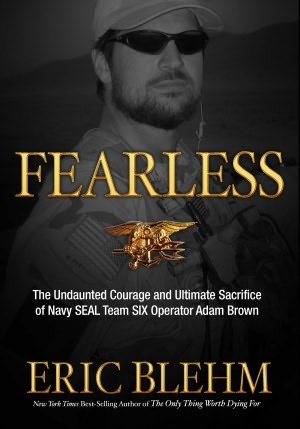
    I just finished Fearless: The Undaunted Courage and Ultimate Sacrifice of Navy SEAL Team SIX Operator Adam Brown by Eric Blehm. And wow. I can’t tell you how happy I am to have read this book.

    It tells the story of Adam Brown who was killed while on assignment in 2010. But this book isn’t about a special operations battle in Afghanistan, although the battle is detailed. It’s not a war book. Although it tells about many episodes in the life of a Navy SEAL operator. No, this book starts when Adam was a kid.

    It like the story of Louis Zamperini that’s told in Unbroken by Laurel Hillenbrand (and, yes,the film adaptation missed so much of the story, including the most important part,that if you haven’t read that book, you are missing out on an absolute treat). In this one, Brown starts out as a boy with bright promise, but after he graduates from high school, he makes a number of bad choices and drives his life right off a cliff.

    You’ll be flipping the pages to see what helps him turn it around and whether he can make the change permanent, or if he’ll lose everything, including the love of his wife and kids. You’ll also be amazed at his grit. It’s a tremendous read. If you can listen to it on audio, you’ll enjoy the narration by Paul Michael. Either way, if you like stories about redemption and triumph amidst struggle, if you like books about special operations forces and elite soldiers, then you’re going to love this book. Highly recommended.

    *

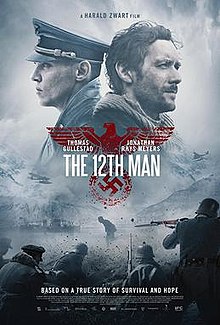
    The 12th Man is a 2017 World War 2 historical drama based on the true story of Jan Baalsrud. He and eleven other Norwegian resistance fighters set off from the UK on board a fishing boat with six to seven tons of TNT to sabotage some German military facilities.

    However, their mission falls apart soon after reaching Norway. A German warship attacks. The resistance fighters set fire to the TNT on their boat and jumped into the water just off shore. Eleven of the fighters are caught by the Germans. The twelfth, Jan Baalsrud, gets shot in the toe, but still runs across land and manages to elude immediate capture by swimming across the fjord, in the dark, in the freezing, winter water.

    Yeah, and that’s just the beginning. The story is about his attempt to get to the safety of Sweden, a neutral country. I watched this with my teenage daughter, and we were riveted with the suspense and action. And we were amazed at what this guy endured.

    You will have to read English subtitles during a large parts, but we found that after a few minutes, we really didn’t notice it. It was a great date night. If you like war movies and action, I think you’ll love this movie.

    *

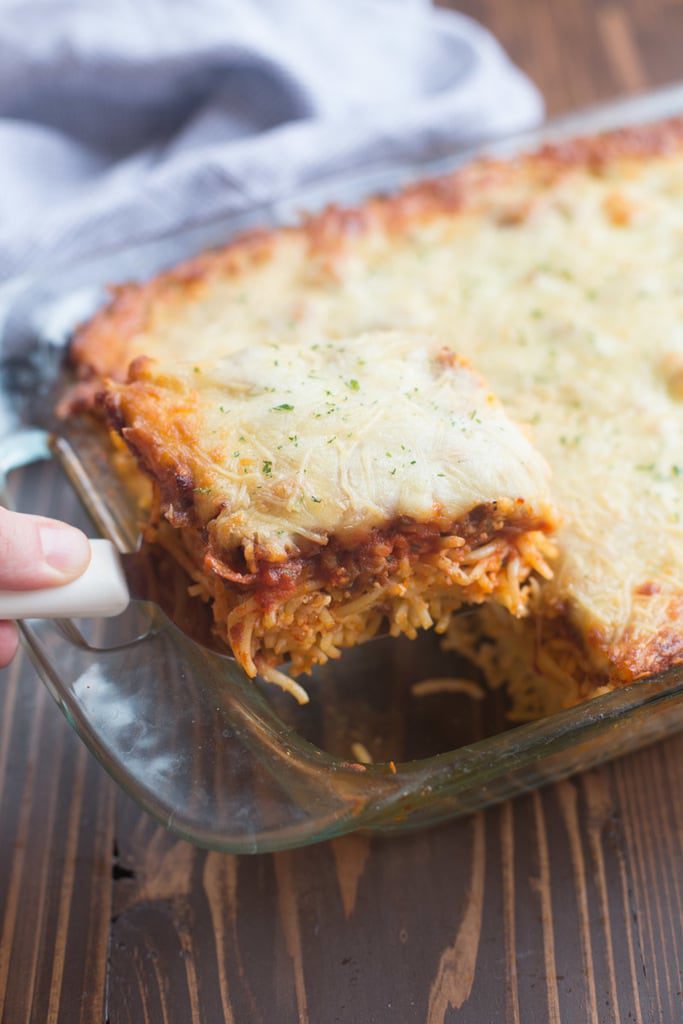
    Tonight I ate a dish that instantly became one of my favorites. My oldest daughter and her husband found it. They love it and shared it with Nellie. And since it was her night to cook, she decided to give it a try. My first bite was wow.

    It’s a baked casserole, a cross between lasagna and spaghetti, called “MillionDollar Spaghetti” from tastesbetterfromscratch.com. Just click on the link the get the recipe.

    Now, here’s the thing: you can use spaghetti pasta, or you can make it totally low carb by replacing the pasta with cooked spaghetti squash like we did. The low carb version was awesome. I can’t wait to heat up the leftovers tomorrow.

    By the way, here’s a quick way to cook spaghetti squash.

    First, cut the squash in half lengthwise. The easiest and safest way I’ve found to do this is to place the uncooked squash on a cutting board. Next, get a big knife and set it along the line you want to cut. Finally, rap the spine of the blade smartly with a thick stick or long block of wood until the knife cuts through all the way. Using a knife this way is called batoning because you’re using a baton, a stick. It’s a slick and safe way to cut a hard squash.

    Once you have cut the squash in half, scrape out the seeds with a large spoon.

    Next, pour about a quarter cup of water into the hollow of the squash, and then turn the squash hollow-side down on a plate or microwave dish. Microwave the half on high for five to six minutes. It’s done when you can easily pierce the outside with a fork.

    Remove the plate with hot pads and use a fork to scrape out the cooked squash. Voila! Cooked spaghetti squash in less than 10 minutes.

    You can also just bake the halves in the oven for 40 minutes on 375 degrees. Baking gives the squash a slightly richer flavor. In this method, you brush the halves with olive oil and sprinkle with salt and pepper then put the sides face-down on a baking sheet. Again, it’s done when you can easily pierce the outside with a fork.

    *

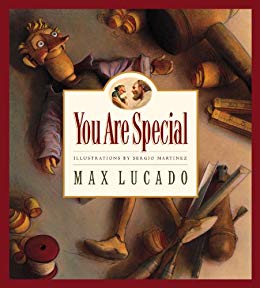
    And here’s one more because it’s Christmas. I attended a young women’s meeting for my local congregation not too long ago. As part of the program, one of the leaders read a picture book called You Are Special by Max Lucado.

    It’s about these small wooden people called Wemmicks who stick gold stars or gray dots on one another. The pretty or talented ones always get stars. The others, like Punchinello, get the ugly gray dots. And then one day Punchinello finds a happy Wemmick that has no dots at all. In fact, no dots stick to her. How does she manage it?

    It’s a great little tale with an important insight. After hearing it, I knew I needed a copy of the book to read to all my grown up kids. 

    Share
  • |

    Audio for my presentations

    Folks. I have 2 mp3 files. One for Story Turns. One for Vivid & Clear. They are each about 48mb in size. But I don’t have the time to figure out how to make them available to you.

    But I know someone out there does have the skillz to mash the slides with the audio in a short period of time and make it available. Maybe create something to upload to YouTube.

    So if you have been waiting for this and would like to offer your services, I’d be happy to throw in a free copy of the ebook edition of Bad Penny and Servant for your efforts. It would in no way cover your time, but it’s better than a poke in the eye with a sharp stick. And the project will also give you all sorts of glowy goodness inside knowing that you’ve served a whole bunch of writers.

    That’s my offer: glowy goodness and ebooks.

    If you’re interested, click my picture in the left sidebar and and let me know 🙂

    Share
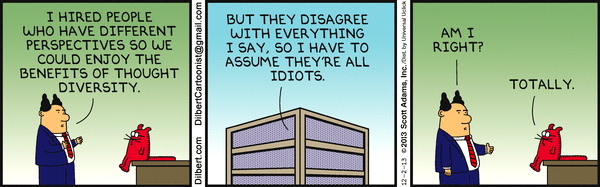
  • “Micro-aggressionism” or “Thou Shalt Not Disagree”

    Last week, I was booted out of Codex Writers, a private, online writer’s group that I’d been a member of for somewhere around fifteen years. I’m not broken up about it, but the reason for said booting is interesting, unexpected, and worth a post.

    Over the years, writers moved in and out of the group, but there were usually somewhere around fifty to a hundred members active on the boards. We discussed the writing craft and business. We held writing contests. We provided critiques. People shared interesting things about their lives.

    The group has moderators. And the moderators got together last week and decided John Brown had to go.

    Why?

    What, of all the sins one may commit online, triggered this?

    Was it refusing to stop posting pictures of cats?

    Using too many emoticons?

    Infecting everyone’s pages with Russian spam bots?

    Nope. Nope. Nope.

    I know what you’re thinking. Surely, John, you must have been posting in a belligerent, arrogant, and strident way. You must have been a jerk.

    That’s what you’d think.

    I assumed that’s what the problem was too. I invited those who were angry and hurt to come to my personal thread and explain what it was that was making them so hurt and angry. A number took me up on the offer. And, to my great surprise, one of their criticisms was that I was too polite.

    One person posted that my politeness made her think I was sealioning (a new term to me). Other’s agreed.

    Another person said that my polite manner surely indicated I wasn’t sincere. Other’s agreed.

    In fact, one of the moderators stated that being polite was part of the insidious problem that was John Brown. She said that my politeness had suckered folks in to letting my awful behavior go on too long.

    I was offensive, and I was too dang polite about it.

    So what was I doing?

    Well, I was asking for evidence.

    Don’t ask for evidence

    My sin was suggesting that some claims being made about a certain topic seemed to be premature. My sin was in looking at the evidence being offered to support some of these claims and firmly stating that I couldn’t see how it supported the conclusions.

    On every topic on the forum, we could question claims and discuss evidence in an effort to figure things out. But there was one topic, as I learned, for which a number of the active members and the moderators decided that was forbidden.

    The topic was systemic or “institutionalized” discrimination. On the forum, most of the discussion was how it related to publishing.

    They explained to me that it was offensive for me to want to see if the evidence actually supported the claims. It was offensive to post when I couldn’t see that it did.

    You might wonder how in the world can that be offensive. After all, evidence is one of the first things we ask for when people make claims.

    If Billy Joe comes up to you and says, “Son, aliens done landed in my yard last night. I swear it on a stack of Bibles.” Most of us would want some additional evidence.

    We’d want to see the video he took and look at the burn mark in his lawn and the broken branches he said were made when their ship landed. And we’d want to see the report showing that the residue collected off the swing set was a substance unknown to mankind.

    But it isn’t just claims about aliens that we do this with.

    Historians do it about history.

    Scientists do it about science.

    Courts require it for reaching verdicts.

    Heck, we even do it when we look at movie reviews—we use those reviews as evidence that the movie is going to probably be good or bad.

    Evidence.

    We’re always looking for evidence to see if our guesses are right. But on this topic, wanting evidence was offensive. I was told it was “hurtful” and “damaging.”

    The logic of micro-aggressionism

    How could folks get to the point where wanting and challenging evidence for claims was a bad thing?

    Well, quite easily. And they aren’t the first to do it.

    And lest you think this unfortunate logic is found only in obscure writers groups, you need to know it has  spread to many American university campuses. That means it’s eventually coming to an organization near you. And that means chances are good that you or someone close to you will have to face, at some time or another, online or elsewhere, an angry mob (or moblet, as the case may be).

    So let’s examine the logic so that when you do, you’ll be able to see the response for what it is, name it, and bring its tenets out into the light and show them for what they are.

    Here’s their logic.

    ONE, each of us has our individual prejudices, biases, and beliefs about the world.

    I’m sure you agree with this. It seems pretty obvious. One guy might think soccer is for wimps, and another might think football is for lumbering meatheads. Of course, it’s not just about sports. We also hold views about people from other groups. Depending on your experience, the media you’ve been exposed to, and the statements and behavior of those around you, you might have unconsciously picked up certain beliefs about Asians, Blacks, Hispanics, Germans, Swedes, Whites, engineers, clowns, etc.

    TWO, it’s likely there are others out there with the same prejudices and biases. Some of those ideas will be held in common by smaller percentages of the population. Others will be held in common by larger percentages of the populations.

    I’m sure you agree with this too. A lot of Americans like football, but some don’t. A lot of Europeans like soccer, but there are some who don’t. We can see this with our beliefs about various groups. For example, ask anyone in the USA what they think about Nazis, hippies, or hockey players, and you’ll find a handful of common responses.

    THREE, various prejudices and biases can get perpetuated in the society. This is what the micro-aggressionists call systemic discrimination.

    I’m sure you’re nodding along here as well. Americans have loved football for generations. Europeans have loved soccer too. Views are passed on from parents to children. They’re passed on via the media. There’s a systemic introduction to and reinforcement of those likes, dislikes, and beliefs.

    I think we’ll all together here.

    However, this is the point where the micro-aggressionists diverge.

    When those who have bought into the micro-aggressionist views see any disparity between groups they focus on (ethnic minorities, women, and minority genders), they claim, FOUR, that the disparity between the two groups MUST be because of systemic discrimination. Nothing else could be the cause.

    I was told it wasn’t up for question. Furthermore, I was told that you can’t prove such things anyway. It’s “like ecology.” And so I shouldn’t ask. I was also told that questioning simply proved that I was lazy and ignorant, because if I’d done any amount of thinking or study, I’d agree with them. 

    But it didn’t stop there. They claim, FIVE, that if you question their default answer, you’re not only an ignoramus, but you are also hurting others. Literally hurting them.  

    The very act of asking for evidence, they say, is a micro aggression, a micro threat, a micro attack. It’s a tiny assault. And those tiny assaults perpetuate the discrimination. So if you disagree, you’re bullying and hurting. If you question, challenge, or want evidence, you’re damaging people’s lives.

    And this all leads them to their final conclusion—SIX, if you won’t voluntarily stop, you must be made to stop. You must be silenced. And if you can’t be silenced, then you must be banished.

    Did you see where they went off the rails?

    Multiple factors

    The fact is that there are a LOT of factors that could cause differences in the situations between two people. And commonly held prejudices or biases is ONLY ONE of them. And until you’ve really dug into it, there’s no way to tell how large a factor it is, or if it’s a factor at all.

    Here are just a few of the factors that have been shown to have significant effects on a person’s success:

    • Birth order
    • Beliefs about self-efficacy
    • Grit
    • Work ethic
    • Whether you were born and raised in a single-parent family
    • How wealthy your family was
    • Self-control
    • Whether you graduated from high school
    • Certain pollutants in the environment
    • Where you lived
    • Your height
    • Your level of attractiveness (and it’s different attributes for men versus women)
    • Your age
    • Learning disabilities
    • Reading ability
    • Level of activity in a religion
    • General health

    Notice that none of them have anything to do with ethnicity, skin color, or gender. To ignore these as contributing factors in any given situation is not only simplistic and wrong-headed, it can be harmful.

    For example, why do Blacks have such high murder rates in some of our biggest cities?

    Micro-aggressionism would ignore all the many factors above and assume that it must be some form of systemic racism. It would demand you accept that explanation. And tell you you’re ultimately contributing to a perpetuation of high murder rates if you question it.

    Luckily, there are others who are looking into that issue. One strong correlation is with high out-of-wedlock birthrates. Another, with the spike in the late ’70s, is with unleaded gasoline. Or was it simply the boom in males aged 15-24? Or is it possible that murder rates are caused by different mixtures of factors at different times? Look at the graphs here.

    What if a major factor is out-of-wedlock births? That has nothing to do with discrimination. It has everything to do with a life choice. And if that is indeed one of the main causes, then we can help save thousands of lives by figuring out a way to help the kids in those cities make better life choices and avoid getting pregnant outside of marriage. What if a pollutant is a compounding factor? Working on fuzzy claims of racism isn’t going to take lead out of the air.

    But those under the sway of micro-aggressionism gloss over all of that. They are like doctors who diagnose every symptom as a sign of a broken leg.

    Your chest hurts?

    It must be a broken leg.

    You’re bleeding from the head?

    It must be a broken leg.

    Your belly is distended?

    Dang, another broken leg.

    Criminalizing disagreement

    The second error the micro-aggressionist philosophy makes is in thinking disagreement is bad.

    Yes, it can be uncomfortable when people disagree with you.

    Yes, disagreement, even when polite, can stress you, raise your anxiety level, or make you lose sleep.

    But if you forbid disagreement, then you lose all of the good things disagreement and the challenging of ideas brings.

    Things like science and the search for truth.

    Things like votes for women.

    Things like civil rights.

    The progress of our society has only been possible because we’ve been able to disagree. When we begin to think disagreement is bad, we start down a road that ultimately leads to a tragic end. One we’ve seen over and over.

    It’s the road of the Taliban and ISIS. The road of the Inquisition. The road of the KKK. It’s one of the main roads that leads to oppression.

    In the last century, Joseph Stalin, the champion of socialism, the champion of the common man, the one who wanted to wipe out inequity, killed an estimated 9-20 million non-combatants. Compare that to the estimated 11-12 million Hitler and his Nazi regime killed. What was Stalin’s view on disagreement? “Ideas are far more powerful than guns,” he said. “We don’t let our people have guns. Why should we let them have ideas?”

    Indeed.

    To Stalin, disagreement with his socialist ideas was hurtful. It was damaging. It perpetuated inequality. Those that expressed even a whiff of it were either shot or shipped off to the Gulag, the wonderful forced-labor prison camps where people died in droves.

    Mao, Pol Pot, and others all felt the same way about their programs.

    But the micro-aggressionist philosophy blindly ignores that. It ignores they all started with the righteous cause of equality.

    Sure, in the beginning, it might feel like the yellow brick road, but that path doesn’t lead to Oz. It doesn’t even lead to the witch’s place. That road leads to Mordor.

    If you go there and raise that regime, you’d better hope two little fellows show up who have the courage to disagree.

    The truth is that disagreement is like the tension and stress you feel when you workout and build muscles. It leads to a healthy, vibrant, and strong society.

    Banning disagreement is like banning exercise. The result is a dramatic loss of health. A society of couch potato, Ding Dong hunchbacks.

    What now

    The writer’s group I got kicked out of is filled with good and interesting people. I wish them no ill will. And, again, I’m not broken up about being thrown out. Oh sure, there were good conversations and helpful insights. But, ultimately, it means one less distraction. And that’s good for me getting books out the door.

    However, the ideology that some there hold is simplistic, unhelpful, and wrong. It’s not going to take them where they want to go. We know because we’ve seen how that movie ends.

    And it appears it hasn’t run its course yet in our society. Which means at some point in the future, you’re probably going to meet folks who have, out of the goodness of their hearts, fallen for this logical trap.

    I hope you find opportunity to speak up.

    When you do, I hope you treat them politely and with good humor.

    And I hope you clearly and unfailingly disagree.

    Extras

    If you want to know more, here are some great reads and interviews to get you started.

    How we pick up unconscious biases

    “The Hidden Brain”. This is a Radio West interview of Shankar Vedantam. Nobody conducts interviews better than Doug Fabrizio. In this one Vedantam shares fascinating insights about how we pick up our unconscious biases.

    Thinking, Fast and Slow by Daniel Khaneman. A good-humored and groundbreaking tour of the two systems in the mind that drive the way we think and the resulting cognitive biases.

    The Righteous Mind: Why Good People are Divided by Politics and Religion by Jonathan Haidt. How those two systems Khaneman talks about manifest themselves in politics and religion and how we can have better civic dialogue.

    Free speech and micro-aggressionism

    “Hate speech is protected free speech, even on college campuses” by Erwin Chemerinsky. An article in Vox, a liberal-leaning publication, by a Harvard Law professor who has taught about free speech for decades.

    “What exactly is a microaggression?” By Jenee Desmond-Harris. Another article from Vox that explains what microaggressions are from the point of view of someone who agrees with that philosophy.

    The First Amendment by the Cornell Law School. An overview of what speech is currently protected and what isn’t.

    An example of civic dialogue between a classical liberal and someone who disagrees.

    Share