Good Stuff! A clear-eyed view of the Founders

When it comes to politics, we frequently talk twice as much as we should and listen half as much as is deserved. With our mouths open so much of the time, we fail to get the facts. And this often leads us to paint things in hyperbolic black or white.

One area where we seem to do this regularly is with the Founding Fathers. Depending on our side, we label the Founders as devils or demigods and the constitution as a wicked document or holy writ.

Is it possible both sides are distorting the truth?

Joseph Ellis, one of the nation’s foremost scholars of American history, suggests that we are. He has written an excellent article for the online Encyclopedia Britannica called “Founding Fathers” that points out both the amazing things the Founders achieved with the birth of this nation and some of their most egregious failures.

I don’t know about you, but I find clarity a good thing. I think it helps us have more productive conversations. If you agree with me, I think you’ll enjoy the clarity Ellis brings to the Founders and the nation they set up. Read his article here.

For my part, I think the Founders set up an awesome system. Not because it was perfect at birth, but because it was a system that got enough right to allow us to get where we are today. Look at how far we’ve come on so many fronts! And it got enough right to allow us as a nation to get even better in the future.

Just consider what the Founders implemented that was in no government at that time. The ideals of individual liberty, the separation of powers, the ability for a huge swath of citizens to elect their leaders, the ability to change the constitution itself, the separation of church and state, and the engine of democratic capitalism that has lifted more people out of poverty than anything else the world has seen.

The Framers didn’t create the Constitution in a vacuum, but nowhere in the world had anyone set anything up that went so far. There was nothing like it, no real examples to follow. And many thought it would fail, just as France’s attempt in their revolution failed just a few years later.

As for things they got wrong. Well, they themselves soon recognized the way we elect the president and vice president didn’t work and adjusted it. Their idea that political parties wouldn’t form was wrong. Their idea of a militia for common defense didn’t work (see my writeup here). Their compromise on slavery was a festering sore that came to a head before the Union was 100 years old. Their treatment of the Indians was awful. Their reasons for excluding women and those not owning land was bone-headed.

So, yes, they got some things wrong. Some of them held some beliefs that we find appalling today. And the nation has not implemented their stated ideals as well as we might have hoped. However, the Founders got so many things right. And what’s more, they did it as men living in the times they lived, having grown up with the beliefs and values of that time, not those of 2019!

While we as a nation have progressed from some of their failures (thank heavens), in other ways the Founders may be are our betters. There are a great many lessons to learn from them, both from their successes and failures. One is their humility—they knew what they’d created wasn’t perfect. Let’s not imagine that we or our ideas are perfect either.

If you’re at all interested in politics, I recommend Ellis’s article and its view of the Founders. Read it article here.

Share

Similar Posts

  • I’m done being Amazon’s fool

    Do you see this picture? This is Jeff Bezos laughing at John Brown. Because John Brown was a fool.

    Let me explain.

    When I sell my ebooks on Amazon for $2.99 to $9.99, Amazon charges me 30% of the price. I keep 70%. That’s a decent deal. I’m happy to do business with them as a partner with my ebooks.

    But Amazon’s got some alter ego going when dealing with folks selling used books. When I sell used books, Amazon somehow thinks it’s a swell deal for all of us little guys if they take a huge chunk of the pie. Look at the numbers below.

    Order date: 04/08/2017
    Price: $3.98
    Shipping: $3.99
    Amazon fees: -$3.99 (100% of sale price)
    Your earnings: $3.98

    Order date: 04/05/2017
    Price: $5.50
    Shipping: $3.99
    Amazon fees: -$4.21 (77% of sale price)
    Your earnings: $5.28

    Order date: 03/23/2017
    Price: $3.50
    Shipping: $3.99
    Amazon fees: -$3.91 (112% of sale price)
    Your earnings: $3.58

    Order date: 03/15/2017
    Price: $1.49
    Shipping: $3.99
    Amazon fees: -$3.61 (242% of sale price)
    Your earnings: $1.87

    You might think, hey, John, you’re making a few bucks on each. But no, what you see above is what I get from Amazon. I still have to ship the product. And if I purchased the book somewhere, I have to cover those costs as well.

    For example, look at the last one. Amazon feels that not only do they need to charge me the total sale price of the book, they also need more than half of the shipping costs. That book cost over three dollars to ship plus a little for a bubble mailer because I actually care that the book is in great shape when the buyer opens the package. So I lost money. But Amazon did just fine.

    And Bezos was laughing because John Brown, the fool, was paying Amazon for the pleasure of taking time to list the book, shelve the book at his house, package it, and then post it. It was as good as going to Disneyland!

    The fees used to be lower.

    Order date: 06/26/2014
    Price: $3.59
    Amazon fees: -$2.88 (a mere 80% of the sale price)
    Shipping: $3.99
    Your earnings: $4.70

    I hated the fees they were charging then, but after postage, we could still make a buck or so on books priced at this level. Not anymore.

    So adios Amazon. I’m done being your fool. And shame on me for taking so long to recognize it. I’m moving all my used book stock to Half.com because they actually have a good thing going. Look at what they charge for their services.

    $0.75 – $50.00: 25.0%
    $50.01 – $100.00: 22.5%
    $100.01 – $250.00: 20.0%
    $250.01 – $500.00: 17.5%
    > $500.00: 15.0%

    That means on that $1.49 book, they would have charged me a whopping 37 cents.

    Hey, profit for them AND me. And a great price for the buyer. Win-win-win.

    How nice.

    Share
  • The Surprising Truth About Militias and the Second Amendment

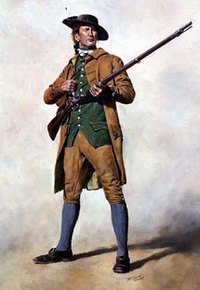
    When the founding fathers spoke of “militias,” they were not referring to a bunch of yahoos running around in the woods with paint on their faces outside of state control.

    They were referring to a citizen army under state control.

    So is “militia” just the old-time word for what our army is today?

    No.

    A standing or “regular” army is one made up of professional, full-time soldiers like the US Army, the Marines, the Navy, and the Air Force. And it’s permanent, meaning you don’t disband the army when the fighting is done.

    A militia back in those days was something completely different.

    The problem of a standing army

    The founding fathers knew they needed to provide for the common defense, but they saw standing armies controlled by a central government as an immediate threat to the liberty the new union sought to preserve.

    Why would they think that?

    Easy. History was littered with case after case where standing armies had become a law unto themselves and oppressed the populace. One glaring example is what happened to the Roman empire. It suffered centuries where this faction and then that faction of the army was in control, and it brought nothing but a continual procession of civil wars and bloodshed.

    History also showed that even if the military didn’t take over, kings and queens were happy to wield standing armies to impose their will and oppress the people. Remember: the world then was ruled by monarchies. The founders had never seen a standing army wielded by any other type of power.

    So the founders didn’t want to give a president or any other central authority that power. They feared doing so would only pave the way to the ruin of the new nation they sought to form.

    So if you don’t have a standing army, how do you defend your country?

    The fyrd

    The founding fathers thought they saw a solution in a tradition of duty that went back hundreds of years in England. In the days when the Saxons ruled England, the kings and dukes would muster and deploy the fyrd to help them fight their wars.

    The fyrd was made up of all able-bodied free males between certain ages, regardless of their vocation. It was their duty to provide their own arms and defend the land when called by their leaders. So this was an army made up of farmers, tanners, smiths, tailors, etc.

    But the fyrd wasn’t a standing army. Nor was it populated with full-time soldiers. This citizen army was to be called out when needed, and when the crisis was over, it was disbanded, and the men went back to their vocations.

    The militia scheme

    The founders took this idea and tweaked it. Back in the Saxon days, the king controlled the fyrd. In this new scheme, the United States would rely on a fyrd (which they called a militia), but the powers to control it would be split between the president, Congress, and the States.

    First, Congress, not the president, was the only authority that could declare war and summon the state militias. So the president would be the commander in chief when the militia was active. But the minute Congress decided to end a war and disband the militia, that army dissolved, leaving the president as commander in chief of only the tiny number of troops that had been authorized as the regular army (less than 1,000 at the time).

    Second, while the Federal government would provide the weapons the militia would use when it mustered them for war, the state governments would be the ones to appoint the officers and train the soldiers. You can’t run an army without officers. So this would prevent the Federal government from taking control by stacking the army leadership with those loyal to a despot president or Congress.

    So the militia was supposed to be the main force that fought our wars, and it was supposed to be temporary. It’s true that Congress did authorize a standing army, but it was tiny. And with this setup, the founders figured we’d have the army we’d need, but we’d avoid the problems standing armies had posed in the past.

    So militias, as thought of by the founders in the 1700s, were not groups outside the government’s control. They were temporary citizen armies. And power over them was broken up between the president, Congress, and the States so no one group or person could wield them tyrannically.

    1791 and The Bill of Rights

    Accordingly, the founders wrote the articles and sections of the Constitution in 1787 to set all of this up. However, many anti-federalists were concerned that the Constitution didn’t go far enough to protect the rights of individuals and limit the power of the Federal government. In fact, many of the founders were so concerned about the issue that they refused to ratify the Constitution as it was.

    The only way they’d sign on is with the promise of the Bill of Rights. When they knew that bill was forthcoming, delegates from nine of the original thirteen states ratified the Constitution. The delegates of two other states waited until the document was produced. The final two (North Carolina and Rhode Island) waited until 1791 when the Bill of Rights, which includes the second amendment, was passed.

    So let’s look at the language of the Second Amendment in light of what we know about the fear the founders had of standing armies.

    “A well regulated Militia being necessary to the security of a free State, the right of the people to keep and bear Arms shall not be infringed.”

    Why did they include this? It was not because they wanted the citizens to be able to hunt or protect themselves with guns. They figured that was a given. They included this amendment because they concluded that an armed citizenry would make it impossible for tyranny to arise.

    Noah Webster, a Federalist, stated the idea this way when trying to persuade Pennsylvania to ratify the Constitution:

    “Before a standing army can rule, the people must be disarmed; as they are in almost every kingdom of Europe. The supreme power in America cannot enforce unjust laws by the sword; because the whole body of the people are armed, and constitute a force superior to any bands of regular troops that can be, on any pretense, raised in the United States. A military force, at the command of Congress, can execute no laws, but such as the people perceive to be just and constitutional; for they will possess the power, and jealousy will instantly inspire the inclination, to resist the execution of a law which appears to them unjust and oppressive”

    So the second amendment was included in the Bill of Rights because enough of the founders feared that the Constitution could be read in a way that would allow the Federal government to disarm the populace. Disarming the populace would open the way to a standing army under Federal control. And that would open the way to tyranny.

    When all was said and done, the founders separated the power of the military in this way:

    • Only Congress could declare war and muster the militia
    • Only Congress could finance it
    • There would be no standing army to speak of
    • Only the states could appoint officers to the militia
    • The government was forbidden to infringe on the rights of individuals to keep and bear arms

    So what happened?

    Militias didn’t work

    The problem is the militia didn’t work well enough to actually provide for the common defense.

    It didn’t work during the Revolutionary War. The republic had to create the Continental Army. That army was supported by the militias, but the colonists found they couldn’t rely on the militias alone. They had to have the regular army to fight the British.

    After the war, the Continental Army was disbanded, but the militias simply weren’t good enough to face the threats the new nation faced, and George Washington himself openly lamented it. The troops took a licking in 1791 at the battle of St. Claire’s and then time and again during the War of 1812.

    Heck, militias didn’t even work in the days of the fyrd. In those days, the Saxon and Norman kings relied on their house warriors (their standing army) and mercenaries for most of the work. They only supplemented with the fyrd.

    1792

    After the defeat in 1791, the early leaders concluded they needed a regular army with the training and skill it possessed. So in 1792 Congress authorized the creation of the First Legion of the United States, a standing army of 5,190 men. The legion was renamed “The United States Army” in 1796.

    In 1792 Congress also passed the Militia Acts. The acts were written to expire in two years. But Congress wrote another in 1795 to replace them. These laws authorized the president to called out the militia “whenever the United States shall be invaded, or be in imminent danger of invasion” and “whenever the laws of the United States shall be opposed or the execution thereof obstructed, in any state, by combinations too powerful to be suppressed by the ordinary course of judicial proceedings, or by the powers vested in the marshals by this act.”

    So a mere five years after the Constitution was first ratified, and a year after the Bill of Rights, Congress dramatically increased the size of the nation’s standing army and gave the President the authority to call out the militia! It’s clear that right from the beginning the militia scheme started showing some cracks.

    Today

    The First Legion was small. But it grew again in 1808, and then again during the war of 1812. And it continued to grow slowly, then ballooned in the 1900s until we now have more than a million troops in the armed forces of the US.

    The National Guard is what the militias of the 1800s transformed into in the early 1900s, but, wouldn’t you know it, the National Guard is now mostly under the control of the Federal government too.

    What does this mean?

    It means we now have the most powerful standing army the world has ever known and almost no militia. It means our military is a complete 180 of what the founders envisioned.

    I’m not saying it’s bad. I love our military.

    I’m merely pointing out that militias back then meant a certain thing and the founders wanted them for a certain reason. And that we have completely replaced that arrangement with the exact opposite.

    As for tyranny, we still have armed citizens. Maybe this is enough to deter tyranny as Webster claimed. Although the disparity between what the citizens can arm themselves with now and what the regular army has is nothing like it was in the 1700s. So maybe there are other laws and aspects of our culture that have prevented it. Maybe it’s both.

    Either way, it’s important to understand what the original militias were, why the founders wanted them, and what the second amendment was all about.

    More

    Helpful articles

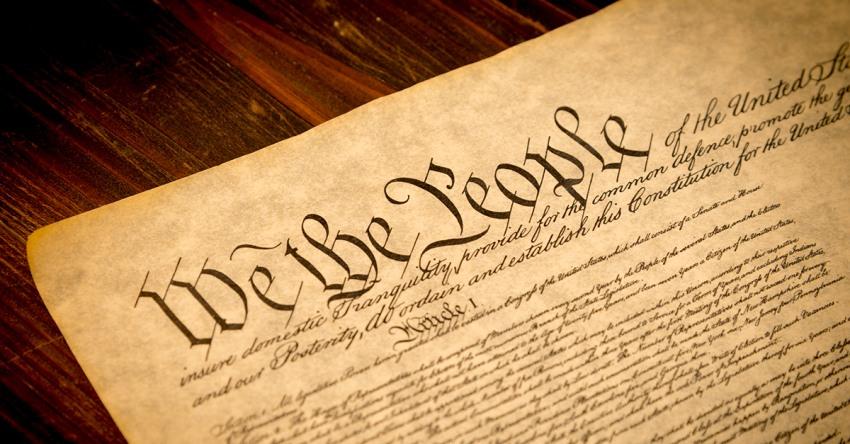
    US Constitution – Provisions for the military

    Here are all of the parts of the original seven articles of the Constitution that deal with the military.

    Article 1 – The Congress
    Section 8

    This section gives Congress seventeen powers. Six of these have to with the common defense. Those military powers granted are:

    • To declare War, grant Letters of Marque and Reprisal, and make Rules concerning Captures on Land and Water;
    • To raise and support Armies, but no Appropriation of Money to that Use shall be for a longer Term than two Years;
    • To provide and maintain a Navy;
    • To make Rules for the Government and Regulation of the land and naval Forces;
    • To provide for calling forth the Militia to execute the Laws of the Union, suppress Insurrections and repel Invasions; [notice there are only three cases that warrant the calling forth of the militia]
    • To provide for organizing, arming, and disciplining, the Militia, and for governing such Part of them as may be employed in the Service of the United States, reserving to the States respectively, the Appointment of the Officers, and the Authority of training the Militia according to the discipline prescribed by Congress;
    Section 10

    This section prevents the States from doing thirteen things. Three of these have to do with the military.

    “No State shall, without the Consent of Congress, lay any Duty of Tonnage, keep Troops, or Ships of War in time of Peace, enter into any Agreement or Compact with another State, or with a foreign Power, or engage in War, unless actually invaded, or in such imminent Danger as will not admit of delay.”

    Article 2 – The President
    Section 2

    “The President shall be Commander in Chief of the Army and Navy of the United States, and of the Militia of the several States, when called into the actual Service of the United States;”

    Article 4 – The States
    Section 4

    “The United States shall guarantee to every State in this Union a Republican Form of Government, and shall protect each of them against Invasion;”
    Share
  • Good Stuff! Savory Thai, Planters Medley, Everest, The Arrival

    I love finding little, non-chain restaurants with excellent, reasonably priced food. And I just found another one this week. It’s called Savory Thai, and it’s on 182 W Center Street in Orem, UT.

    Oh, baby. If you decide to go, you are in for a treat. We ate there in celebration of my third daughter’s call to do missionary work in the middle and western Pennsylvania area (go Steelers, Amish, and “yous all”).

    I learned to love Thai food because it’s so close to Indonesian food. And I learned to love that because I lived in the city of Nijmegen in the Netherlands for five months and in Amersfoort, which is maybe an hour away, for seven. In Nijmegen, I lived in the attic of a row house with a series of missionary companions. In Amersfoort, I lived in a spare bedroom with another series of companions. Both homes were owned by Indonesian grandmothers who cooked one or two Indonesian meals a day for us. Think about that—home cooked Indonesian food every day. It was marvelous. When I came back to the States, Indonesian restaurants were few and far between, but to my delight I found that the Thai cuisine is very close, and so that became my stand in.

    If you’ve never had Thai food, it’s kind of like Chinese, but it’s got curries, so it’s a little like Indian as well, but that doesn’t describe it either because it has its own separate taste that’s entirely wonderful.

    This place is in a little strip of stores. It’s small enough that you could drive right past and never know it existed. But when you walk in, you’ll see that they know how to make a good first impression. It’s clean, smells good, and the host is friendly, but these guys go farther than that. You’ll notice, of all things, the menu cover. Instead of handing out some flimsy paper or laminated thing, they hand out these thick menus covered in what looks like some kind of leather. It gives a feel of permanence, of solidity, as if the restaurant has been there for years (it’s two months old). But of course we weren’t there for menus or friendly servers. We were there for the food. And we were not disappointed.

    I can happily report that their green curry (spicy), pineapple curry, massaman curry (a lovely peanuty sauce), orange chicken, chicken cashew, fried rice, and pad Thai were all excellent. They use no MSG, cook it fresh, and keep it reasonably priced, $8-$10 per dish. I can promise you that we’ll be back.

    If you’re in the area and want some great food, stop at Savory Thai.

    *

    I love almonds and have been for many years a big fan of the W?nderful brand bags of roasted and salted almonds you can find in Sam’s Club. However, this last week, I came across something new from Planters called their Almond Lover’s Medley, which is a blend of four different varieties of almonds, dry roasted and unsalted. It includes the Marcona, Nonpareil, Fritz, and Butte-padres, which is the variety used in the W?nderful bags. I can report that this mix from Planters is delicious. The differences in taste and texture between the varieties is subtle, but real. And I was surprised at how much I enjoyed them unsalted. If you love nuts, you’ll want to give this blend a try.

    *

    I did not want to watch a movie about climbing Mt. Everest. Everest? Were you kidding me? I couldn’t think of anything more boring, but this is what my daughters wanted, and it was Thanksgiving weekend, and so we watched Everest, the 2015 movie.

    I am happy to report that it ended up being a great, disaster thriller, based on a true story, which was captured in the book Into Thin Air by Jon Krakauer. I cared about the characters, was on pins and needles during great portions, and exclaimed out loud during a number of tense parts. And after all that sweating, the story made me think about the things we do and how to prioritize when life is on the line.

    If you like stories about survival, you’ll love this. If you don’t, I still think there’s a good shot you’ll really enjoy it.

    *

    My wife is a sport. We were in the big city to watch a movie with our youngest daughter who is in high school. Our daughter, with her teenage brain, had the wild idea of a double-feature. My original man brain thought that sounded capital—how long had it been since we’d squandered five or six hours watching movies! The wise man brain didn’t think it was a very practical idea, and suggested it would be much better to do a double-feature next week we we could start at three in the afternoon. But the wise man brain was outnumbered and soon succumbed. And then all of the crazy brains ganged up on my wife, who graciously relented, and so we watch The Arrival and Fantastic Beasts and Where to Find Them and got home at like 1:30 am.

    As for Fantastic Beasts, if you like Harry Potter stuff, you’ll love it. If you’re not mad for Harry Potter, it’s not going to rock your world (although you still might have a good time). Enough said.

    What about The Arrival?

    This is a movie about the arrival of aliens, but it’s not a shoot-em-up like Independence Day or War of the Worlds. It’s more like Contact, the one with Jodie Foster. It’s a film that makes you think and is for those who are willing to be a little patient. If you can slow down and just enjoy the film, I think you’ll end up loving it because it’s about far more than meeting mysterious creatures. It ends up being about the choices a woman makes about her family. If you go and give it the space it needs, I guarantee you’ll chat about it and savor it afterwards.

    I won’t tell you anything more because you’ll only understand what’s going on in the woman’s life when you get to the last fourth of the movie, and I don’t want to spoil the delicious revelation for you. So just know that the alien tech and the alien themselves are strange and mysterious and cool, but that this movie is about so much more.

    If you liked Contact or even Inception (sans the frustrating non-ending), you’ll love this.

    Share
  • LTUE 2024 Writing Presentations

    Yesterday, I gave two presentations at Life, The Universe, and Everything, a SFF writers conference in Provo, Utah. A number of the attendees wanted copies of the presentations. I’ve linked to them below.

    There are two types of plots that power almost all successful commercial fiction. Are you using them in your stories? Do you know how they work? In this class, you learn both plot types, their key beats, the 3 big mistakes writers make, how to generate scenes, and much, much more. Come learn how to make plotting easier and deliver the ride your readers are looking for.

    My lecture notes.

    The #1 thing that slays more writing dreams than anything else is the writer’s own head games. In 2005 I fiddled with death. Cognitive therapy (and God and a good counselor) saved me. And gave me an explosion of insights about writing stories and the distortions that sabotage so many of us writers. In this class, you learn the distortions, the truth, and a tried-and-true technique for removing the distortions that anyone can follow. You don’t need to struggle anymore. Banish your writer’s block, fear, imposter’s syndrome, comparisonitis, and more. Come learn how to unleash your awesome creativity and have a blast writing.

    PDF of presentation slides.

    Share
  • Billenkoek

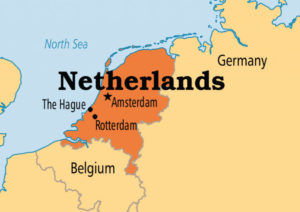
    netherlandsSo I lived for almost two years in the Netherlands and Belgium and learned the Dutch language, which is full of delights. Today’s delight is billenkoek.

    Now koek means cake. A koekje (small cake) is a cookie. Boterkoek is butter cake, this delicious sweet, to-die-for Dutch version of shortbread.

    So what does billen mean?

    Back in the day when I’d visit various Dutchies (the people, not political territories), they’d always ask if I was thirsty. And very frequently when I’d ask for water, someone would say, “Water? The frogs wash their billen in that.”

    Billen means bum as in behind, butt, buttocks. Bil is singular, one half of the full billen, if you will.

    So what do you think a billenkoek is?

    No, not that.

    It’s a spanking.

    “Honey, you’ll clean the dishes, or you’re going to get a little bum cake. What will it be?”

    Gotta love the Dutch.

    Share