Good Stuff!

  • Good Stuff! Jesus Revolution
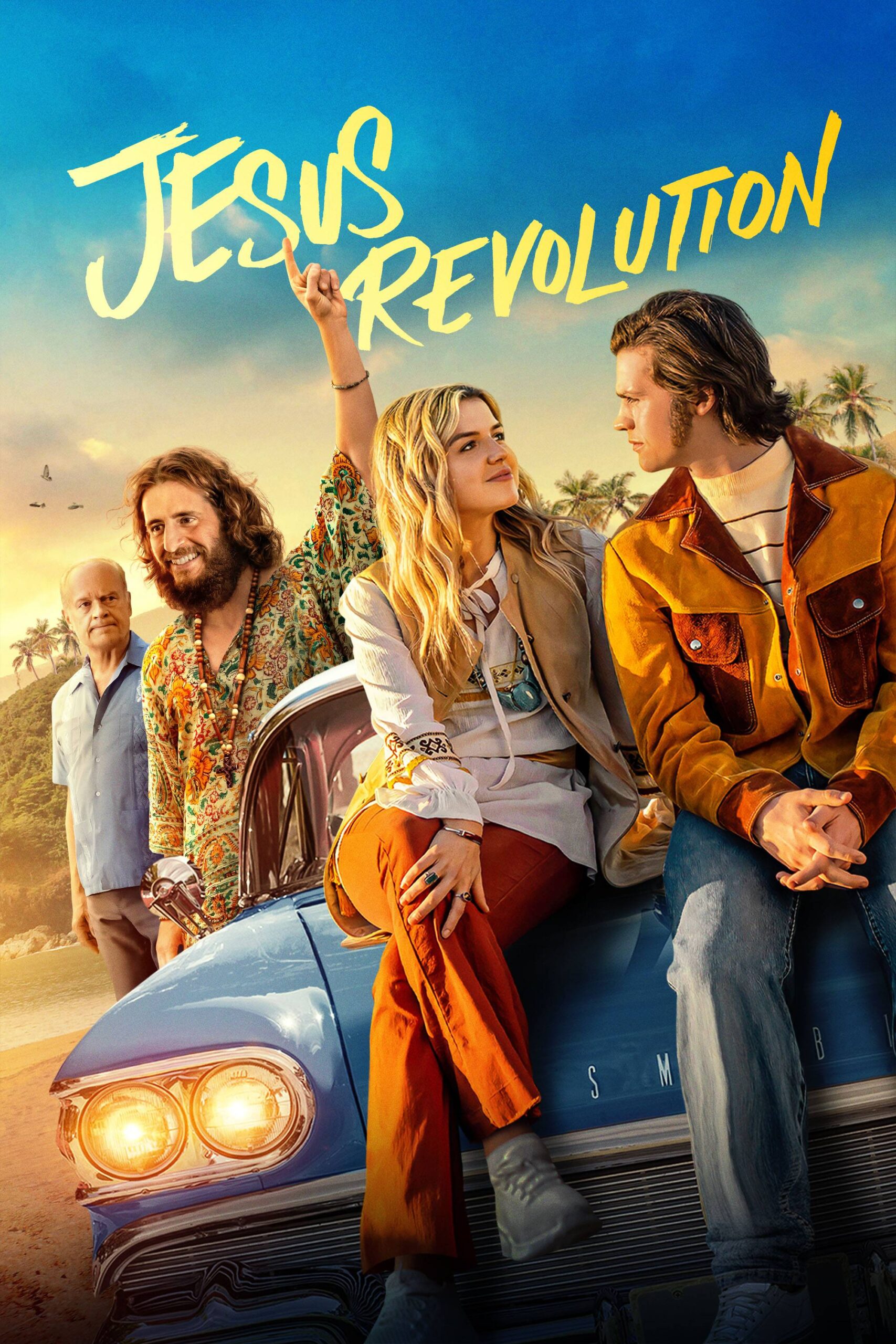
    Jesus Revolution poster

    In 1969, Greg Laurie, was seventeen and going to high school Newport Harbor High School in California. Fourteen miles from Disneyland. Just one mile from the beach.

    Laurie was raised by a single mother who had seven marriages and struggled with alcoholism. They moved often, sometimes to very different locations such as New Jersey and Hawaii. He was not raised in the Christian faith or a church environment.

    He began participating in the hippie movement, doing drugs, dropping out, because it was fun and because maybe this was the way.

    The 1960s and early 1970s was the height of the hippie movement, which sought love, beauty, honesty, freedom, and fun. Hippies felt that “The Man” (the establishment, the authorities, those in charge, Big Brother) had caused huge problems. And they wanted to drop out of that society. Leave it utterly. Find a new way.

    Why? What was the problem?

    The 1960s was the decade of the Vietnam war. It was the decade when we came to the brink of a nuclear World War 3 with the USSR over the Cuban Missile Crisis. It was the decade when a huge portion of the United States strove for equal rights for minorities and women against a lot of opposition. There were riots. Protests. Beatings. This was the decade when Martin Luther King Jr. and John F. Kennedy were assassinated. There were problems galore.

    Now the 1960s was also a terrific decade. We passed civil rights legislation, men landed on the moon, super nerds introduced BASIC computer code which opened the door to the computer revolution. It was a decade of many good things, including the year when Lovely Wife was born. Let’s not forget that.

    But it was certainly a tumultuous decade. And the hippies offered a counterculture. A different path.

    A lot of youth followed that path. For example, in 1969 half a million hippies showed up at the Woodstock festival to protest the war, capitalism, and convention, and celebrate peace, love, and individual freedom.

    This is the world young Greg Laurie was living in. And he was heading down the drug-hippie path.

    But then he met a man named Lonnie Frisbee who looked like a hippie, had been a hippie, right at the epicenter in San Francisco, but was now inviting fellow hippies and youth to a different path.

    A path that featured Christ. But not in the way of many of the churches at the time.

    How was this path different? Did Greg turn around?

    There’s a new movie out that is based on these true events. You can watch it and find out.

    It’s called Jesus Revolution.

    Nellie and I enjoyed the heck out of it. We laughed. We were on the edge of our seats, moved, and inspired. In fact, I enjoyed it so much I want to watch it again.

    It’s a great entertainment for the whole family.

    If you’re looking for a terrific, feel-good show, I think you’ll love Jesus Revolution. Give it a try.
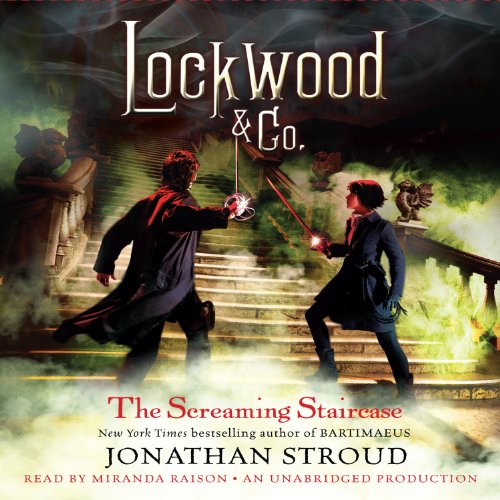
  • Good Stuff! The audio production of Lockwood & Co.

    I’m excited to share the Lockwood & Co. series by Jonathan Stroud. It’s a delightful audiobook experience for the whole family.

    Nellie introduced me to it on our road trip to Yosemite last October.

    And, oh my gosh, how we’ve enjoyed listening.

    They’re young adult paranormal thrillers with a good dose of humor and English charm.

    Yes, Netflix, launched a show based on the books, but Nellie and I tried it, and the Netflix productions don’t hold a candle to the audiobooks.

    It’s not even close.

    If you’re going to do this series, listen to the audiobooks or read them.

    The story is set in England in, I’d say, the 1980s, before cell phones and the internet became a thing. The problem is that ghosts, specters, tommy knockers, etc. are appearing all over the place and causing havoc. Because, in this world, when you’re touched by a visitor from the other side, you can easily become ghost locked, basically put in coma, or die.

    And while the ghosts can touch anyone, children and teens are the only ones who can see them. And so it’s children and teens who must fight them. Of course, large ghost protection agencies are formed, but our story is about Lucy Carlisle, who joins a tiny agency run by a daring young man named Anthony Lockwood.

    There are five books in the series, which translates to about fifty-nine hours of delightful listening. Perfect for the long road trips, cleaning, fixing dinner, walks, etc.

    Miranda Raison is the reader for the first book, Katie Lyons the second, and Emily Bevan for the final three. And they’ve all been a joy to listen to.

    I’m not normally a paranormal kind of guy, but this is making me reconsider. We loved Stroud’s Bartimaeus series. And he brings the same fast action, interesting characters, and wit to these. 

    If you enjoy delightful characters and derring-do leavened with some humor, give these a try. I think you’ll be glad you did.

  • | |

    30 books you should read before you die

    An avid reader friend of mine began reading through the books in a list called “100 books you must read before you die.”

    She got to Jack Kerouac’s On The Road and went to Facebook and posted the following: “I don’t get the appeal. It’s about a group of boys/men who are irresponsible, drunks, whoring around taking advantage of others and being enabled by their women. Why is this a classic and why should I have wasted my time on it? Can some of my literary friends explain? I hated a brave new world and the handmaid’s tale too.”

    Is the book a classic?

    Should she read it before she dies?

    Is it really that important?

    Let me share an edited version of my response and then provide my list of 30 books you should read before you die.

    *

    Annette, the unfortunate truth is that these lists of “classics” are a sham because there is no objective criteria for determining literary excellence.

    Or maybe I should say that measuring quality in the arts isn’t like measuring the unambiguous, objective score of a baseball game. After books exhibit a certain level of proficiency, it becomes increasingly difficult to distinguish the quality of one book from another, especially because much of this depends on a reader’s interests and subjective experience of the story.

    When it becomes hard to rank performances, people rely on other measures. One of the most powerful is social networks.

    So if two readers find two different books that blow them away, one of the books might get all the attention because the one book gets picked up by a news service (The New York Times) or a platform (the Oprah Book Club effect) or some other social network of influence. A lot of the so-called literary classics only appear on various lists because they tapped into the academic network, which kept them alive far longer than they would have lasted otherwise.

    On The Road is simply a book that made a stir among some circles in the 1950s. That’s it.

    Was it more important or of higher quality than Exodus? The Chronicles of Narnia? Lord of the Rings? A Town Like Alice? All published in the 1950s as well.

    It depends.

    If you’re wanting to understand the 1950s beat culture, it would be an important book.

    But if you’re wanting to understand fantasy writing of the time, it wouldn’t.

    If you’re wanting to read a book that’s had a huge impact on popular culture, well, LOTR beats On The Road like a dog.

    Some people have the feeling that the so-called classics have some inherent medicinal value because someone put them on a list and called them classics.

    Nope. They’re just stories. Some of which can shed light on the issues and interests of a part of the culture in a given period. But if you’re not interested in that specific sub-culture, who cares?

    And if you’re reading to be entertained, moved, uplifted, or educated—which ones do that best for Annette is for you to decide.

    So all that to say I wouldn’t devalue your reaction to the book ?

    *

    I’m now going to give you my list.

    But it’s not going to be a list of titles. Nor will it focus on a book’s impact on some sub-culture of a given period.

    It’s going to be a real list. One that focuses on what so many of us go to stories for.

    1. The one that makes you weep.
    2. The one that makes you giggle and snort.
    3. The one that reminds you of what it’s like to fall in love.
    4. The one that gives you hope.
    5. The one that you begin to read more and more slowly because you don’t want it to end.
    6. The one that scares the soup out of you.
    7. The one that you can’t put down, even though you need to wake up early in the morning.
    8. The one that makes you wish you lived there.
    9. The one that’s so good that when you close it, you immediately start to read it a second time.
    10. The one that gives you and your child hours of pleasure together.
    11. The one that gives you a sacred, spiritual experience.
    12. The one that makes you reread some of the lines because the turns of phrase are just so delicious.
    13. The one that gives you courage.
    14. The one that takes you on an awesome adventure.
    15. The one that makes you want to be a better person.
    16. The one that bores you to tears (just so know you how good the others are).
    17. The one that introduces you to a different culture that delights you.
    18. The one that makes you think.
    19. The one that lingers with you for days.
    20. The one that gives you lovely insights.
    21. The one that inspires you to love your spouse more.
    22. The one that introduces you to the sorts of people you normally don’t like and makes you actually like them.
    23. The one that delights you with its characters.
    24. The one that whisks you away to a different historical period.
    25. The one that inspires you to give your children a hug.
    26. The one that gets your adrenaline pumping.
    27. The one that sparks all sorts of ideas in your head.
    28. The one that makes you wonder and start imagining what it would be like to be there.
    29. The one that blows your freaking mind.
    30. The one that makes you stand up in your living room and cheer.

    We could do more than 30, couldn’t we?

    Like the one that makes you think people from a different time period are just like us. And the one that makes you think people from that same period are completely alien.

    But I think we’ll stop. That there above is a list.

    Those are 30 books I think everyone will want to read before they die.

  • Good Stuff! Crossnet and Bang!

    Today I have some good fun coming your way.

    The first is a game called Crossnet. It’s a mixture of volleyball and the playground game four square, and it’s a blast.

    You can have one person per square or two people. And just like four square, those wanting to play line up by square one, waiting for someone to get out.

    We did it with a huge group.  Our line always had 12-15 people in it, but you never waited long because the games moves fast. We laughed, teased each other, and had a great time.

    The other great thing was that we could play it with folks of all ages. We had folks from 55 all the way down to 8 playing. And they all enjoyed it.

    If you’re wondering what to do for the next family reunion or group activity, I think you’ll love Crossnet.

    *

    The next fun activity is a shootout card game called Bang!

    It’s played with 4-7 people. Each player is delt a unique Wild West character with special abilities and a role card. Some of the roles are on the side of law and order. Some are on the side of the outlaws.

    As you play you shoot it out, try to figure out who the outlaws are, get life points back, acquire guns, steal cards from each other, avoid the dynamite, and more.

    The game moves quickly. You can be done in less than 30 minutes, which is perfect for a family or date night. It’s one of our favorite family games.

    If you’re looking for a new, fun, quick game to play, give Bang! a try.

    I think you’ll be pleased you did.

  • Good Stuff! News of the World and two for the Downton Abbey crowd

    I recently watched a move and two British TV mini-series that were just terrific.

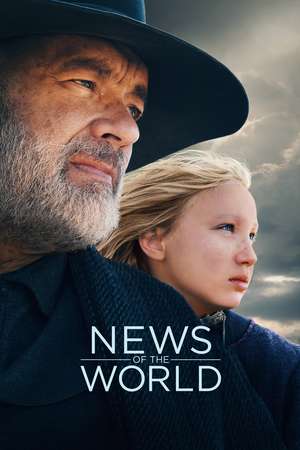
    The movie is News of the World. It’s a Western set in 1870, starring Tom Hanks as Captain Jefferson Kyle Kidd, a former Confederate officer who makes a living traveling from town to town in Texas and reading newspapers to local residents for an admission fee of ten cents.

    After departing Wichita Falls, Kidd comes across an overturned wagon on the road and finds the driver, a black freedman, had been lynched. He also finds the stray, young white girl who only speaks Kiowa (the language of an American Indian tribe), that the freedman has been transporting.

    Kidd learns from the girl’s paperwork that she is Johanna Leonberger, who had been kidnapped and by Kiowa six years earlier. She doesn’t speak English. Doesn’t want to go with Kidd. But Kidd is tasked with getting her to safety. Of course there are all sorts of perils and issues along the way that threaten that goal.

    There’s suspense, action, drama, bad guys, and some poignant moments that will move your heart strings. If you like westerns or Tom Hanks, I think you’ll love this movie. It’s the best western I’ve seen in a long time.

    ***

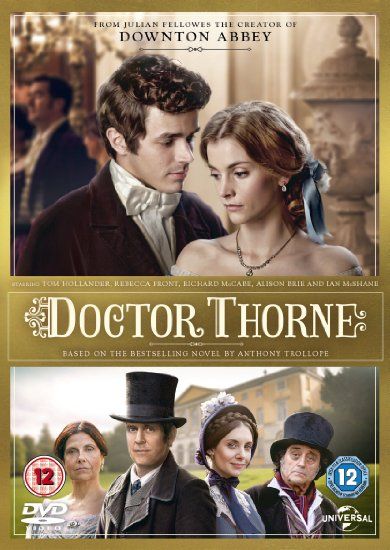
    Those of you enjoyed Downton Abbey will be very happy to hear that Julian Fellowes, who was the executive producer for that series and wrote many of the episodes, is back and has written two more historical dramas with that same type of feel.

    The first is Dr. Thorne,a three-episode miniseries based on the novel by Anthony Trollope.

    It’s set in the late 1800s. Mary Thorne and Frank Gresham, the only son and heir of the squire of Greshamsbury, fall in love. However, Frank’s parents want him to marry wealth because they have very little to leave their son. Mary is penniless and of suspicious birth. She’s not anything at all that would help Frank in the world. And so the drama begins. You get to enjoy the historical setting, the manners, and romantic suspense.

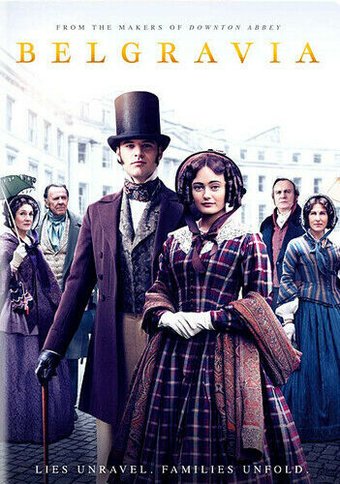
    The second is Belgravia, a six-episode miniseries set in the 1800s and based on the novel by Julian Fellowes himself.

    For you geography buffs, Belgravia is an actual place, an affluent district of London. And the story set there is about two couples. The first, the Richmonds, are part of the aristocracy. The other, the Trenchards, are from the business class.

    The Richmond’s had one child, a son. The Trenchards had one child, a daughter. The two fell in love. But the son was killed in the battle of Waterloo. And the daughter died in childbirth. However, it was an illegitimate childbirth that the Richmonds don’t know about. The Trenchards thought it best, to retain the reputation of their daughter, to have someone else raise him.

    Twenty-five years later, however, both couples still feel the hole those deaths left in their hearts. Mrs. Trenchard feels it’s time to reveal the truth to the Mrs. Richmond. But it does not go as planned. Especially not when the Richmond’s nephew wants the Richmond’s inheritance and is willing to remove all obstacles in his path.

    It’s a story full of manners, heartbreak, suspense, hope, and, well, I won’t tell you the ending. But I will say that if you like these types of historical dramas, you’ll probably love this.