|

I want to be Scott Westerfield

Laura Miller at Salon.com has it all wrong when she says promoting books with movie-style trailers is a silly idea.

Here, watch this book trailer for Scott Westerfield’s Leviathan.

Yeah, I know you want to–go ahead, watch it again.

Miller looks at book trailers, sees that the vast majority of them are lame, lame, lame (actually, this is the FIRST I’ve seen that’s any good). Sees that they reach no markets and then concludes that all trailers are silly. It’s true: lame trailers ARE a waste of time and money. But ANY advertisement (print, video, audio, whatever) that’s lame is a waste of time and money. Making killer trailers that nobody sees is an even bigger waste of time and money. But that’s true of ANY killer advertisement that nobody sees.  

Look. I’ve never read Westerfield. Don’t know much about him or his books. But I saw that clip and now want to read that book. Hum, trailer worked for me. I AM a reptoid mutant, but I suspect there are others out there like me. I mean, come on. Good gravy, woman–“Do you oil your war machines? Or do you feed them?” Killer!

Movie trailers, book trailers–any advertisement–isn’t about delivering what the person is going to experience on the spot. If that were the case, then you’d never show a print ad of a meal at Olive Garden because it doesn’t deliver the goods right there on page 10 of Woman’s Day. Nope, all you’d do is go around giving out samples in places with Italian mood.

Miller’s error is not understanding the difference between making an offer and delivering on one. What an ad is supposed to do is make the offer. Let you know this thing is available. Because you’re not delivering the actual experience,  you can make the offer via all sorts of media. Now, if you can give them a taste, that’s great. But you don’t need to deliver the full deal right there.

So what do you need in an offer? You need the offer to say, “Hey, I’ll deliver this type of experience.” It needs to call to some action, either directly or by implication–“buy this” or “be here.” You also need it to say, “You can trust this will be worth it” and make the consumer believe that’s likely to be true. It communicates this last bit by being a quality piece of work.

Making an offer is exactly what book covers do–they make the offer and give the consumer a little taste. And book covers matter. This has been proven over and over. Just like most people, when I see a cool cover, I pick up the book and check it out. When I see a lame one, or one that offers something I’m not interested in, you’re going to have to threaten me to pick that book up. Or it better dang well have some righteous word of mouth. It’s that simple. We all judge books by their covers because the cover is making an offer. And lame offers don’t get very many takers.

Book trailers are nothing more than deluxe book covers. The cool thing about them is the cool thing about movie trailers–you can make the offer by providing a little taste. You do that by giving the audience the story situation, the pitch. You do it by communicating the feel of the experience and raising curiosity. You do it by making it a pro job. The good  ones make you laugh, say cool!, or raise curiosity and expectation.

And that Westerfield trailer does that.

Dang, “Do you oil your machines? Or do you feed them?”

Run that on TV. Run it on the radio. Put it up on sites where people are likely to see and click. Confirm it in print. Make the offer to real people. Get it infront of young readers. I’ll stake my eyebrows that ad can sell as many books as a good movie trailer can sell movie tickets.

Crimeny, now I want to be Scott Westerfield.

Edit, I lied

I have seen another book trailer that’s as good as Westerfield’s. Do you remember this: http://thesecret.tv/movie/trailer.html ?

Very effective advertising for the book. I think the content of the book is crap, but that trailer made me pick it up just to see what it was all about.

Do you notice that this one and the Westerfield one combine extreme professionalism AND they make the pitch in a clear and grabbing way? The pitch for both was what the book was about. For fiction it’s the concept. For non-fiction how to it’s the promise.

So many of the book trailers lack one or more of those things. For example, look at the book award finalist for THE FALLEN: http://www.youtube.com/watch?v=vsLE6bNaIrk. I don’t know what the heck the book is even about after a long 2 minutes. They’re trying to make a movie.

Something else. On both of these you have a voice over PITCHING the book to you just as someone might do it in person or to an editor. It’s a powerful method, I think.

Notice also how short the Westerfield one is. Just over a minute. Westerfield’s really is like a query pitch or cover copy–in just a few lines tell me what your story is about. We get genre, setting, character, and the story problem or concept.

Share

Similar Posts

  • “The Only Law of Literature” by James Maxey

    james-maxey

    You already know how I feel about writerly rules. So when I read James Maxey’s “The Only Law of Literature,” I had to share it.

    I want to quote the whole thing here. But I’ll resist and quote only the conclusion.

    [In response to critiquing stories that don’t work for you] All the literary analysis of writing techniques, of style, of world building, of creating characters–it all has it’s place, but it’s almost completely useless as a guide to writing a good book. You are never going to be able to think or study or analyze your way into writing a book that people love.

    There is only one law of good literature: Write what you’d love to read.

    Not what you have read and loved. What you love, but haven’t yet read.

    To quote myself from the Impish Idea thread:

    Every thing you write should be a love story. Not a romance. But a story written because you loved it.

    Follow your passion. Don’t worry about pleasing everyone. Fill your book with the stuff that makes your heart race and leave out the stuff that bores you. If you don’t make it into print, at least you’ll have a book you can look at with pride as being truly your own.

    Once you’ve learned this secret, everything else falls into place.

    Go read the whole post.

    It’s important to learn craft. You cannot get away from it. But craft is only useful as a tool to tell this cool, wonderful, poignant, amazing thing we’ve invented and discovered.

    Share
  • Writing a tie-in

    I read this article today, laughed, and then thought a while. Don’t know if tie-ins will ever be in my future. I would hope to do it just once for a series or film I love. In the meantime, it’s great fun reading about someone else’s experience.

    ‘Burn Notice’: The Novel
    Does a real writer accept a gig doing books spun off from films or TV shows? A real writer found the answer to his own question.
    By Tod Goldberg, Special to The Times
    August 24, 2008

    http://www.latimes.com/features/books/la-ca-tie-ins24-2008aug24,0,1463672.story 

    Share
  • Health Care Solutions

    I am a big believer in free-market solutions. However, I’m not a big believer in Wild West capitalism. Government plays a vital role in helping us prevent capitalistic abuse. But what’s the right role of government in health care?

    I found that both John Stossel’s 20/20 “Sick in America” and a recent report from Safeway give brilliant insight into the situation and possible solutions. Enjoy!

    Sick in America Part 2
    Sick in America Part 3
    Sick in America Part 4
    Sick in America Part 5
    Sick in America Part 6

    How Safeway Is Cutting Health-Care Costs from the Wall Street Journal

    Share
  • |

    Since when did young adult fiction become the cure for cancer?

    Meghan Cox Gurdon wrote an opinion piece for the Wall Stree Journal called “Darkness Too Visible” in which she complained that it was hard to find young adult fiction these days that isn’t filled with coarse, dark material–profanity, pederasty, mutilation, etc. She claims that “contemporary fiction for teens is rife with explicit abuse, violence and depravity” and wonders “why is this considered a good idea?” She concludes by saying:

    So it may be that the book industry’s ever-more-appalling offerings for adolescent readers spring from a desperate desire to keep books relevant for the young. Still, everyone does not share the same objectives. The book business exists to sell books; parents exist to rear children, and oughtn’t be daunted by cries of censorship. No family is obliged to acquiesce when publishers use the vehicle of fundamental free-expression principles to try to bulldoze coarseness or misery into their children’s lives.

    This, of course, sent hordes of folks into a frenzy of posts sneering at Gurdon’s so-called prissy sensibilities, decrying censorship, and extolling the virtues of young adult literature and dark material in particular. For example, Mary Elizabeth Williams in a Salon piece called “Has young adult fiction become too dark?” rolls her eyes, then deigns to wade into what’s she thinks is an obviously juvenile argument to apparently show Gourdon how “stupid” she really is. Williams concludes:

    One of the terrific side effects of an obviously click-baiting piece of editorial twaddle like Gurdon’s is that it reminds people how many fellow passionate readers there are in the world. That incendiary WSJ piece promptly sparked a tear-jerkingly beautiful twitter #YA saves trend full of heartfelt reactions and links to outstandingly reasoned, article responses from well-read adults and teens on the value within so much of YA literature and its downright lifesaving effects.

    Williams suggests fiction doesn’t have the power to lead people into bad behaviors. After all, she assures us, “an entire generation of women managed to devour the ‘Flowers in the Attic’ series without having sex with their brothers.” No, according to Williams (and all the #YAsaves folks), YA fiction only saves lives. And she provides a link to prove it.

    But Williams misses the mark. Completely. This isn’t about whether fiction has power to influence us in good and bad ways. There’s a huge body of research on media effects which clearly proves fiction’s power for both. Nor is it about the theraputic uses of dark material.

    The heart of the matter revolves around a rather mundane thing–customer service and marketing.

    Gurdon and those parents she describes in her article want a certain type of entertainment. For years, YA fiction has provided that type of entertainment. But things have changed, and the YA label isn’t reliable to them any more. It’s like someone who has purchased steel cut oatmeal for years is now suddenly bringing the bags home to find them filled with sardines or, horrors, Twinkies.

    We can argue the merits of sardines and Twinkies. And a hundred other foods. We can argue the merits of certain types of stories for certain types of readers. And my metaphor above–maybe you think using Twinkies is unfair; maybe you would have wanted me to use something like Triscuts or Wheat Thins. But that’s all beside the point.

    The real problem here is that the publishers have ignored a significant segment of the market who want to buy books but can’t find the types they’re interested in. Either the covers and blurb material don’t help them find what they’re looking for, sometimes misleading them, or the publishers have simply made the mistake of not thinking about this segment of the reading market.

    The fix is easy. (1) Produce more books for these folks. (2) Label your books in a way that makes it easy for the consumer to find what they want. They’re not asking for censorship. They’re asking for a nutrition label that lets them know what they’re getting. Publishers can do what the movie and gaming industries have done with rating systems that prominently display on the cover. Or use some other method. This isn’t a moral issue, it’s simply a matter of helping the right customers find your good or service. It’s a matter of good marketing and branding.

    And I would think, with the upheavals in the book industry today, that publishers and booksellers would want to do whatever they could to boost sales. Surely it doesn’t help to turn customers away because your package is confusing them.

    In the meantime, the battle will rage and this simple practical core of the issue will be lost in the fires and clouds of smoke produced by the arguments extolling and excoriating the virtues and vices of fiction.

    Share
  • Suckling pig

    This from a gal I know who’s been touring Spain…

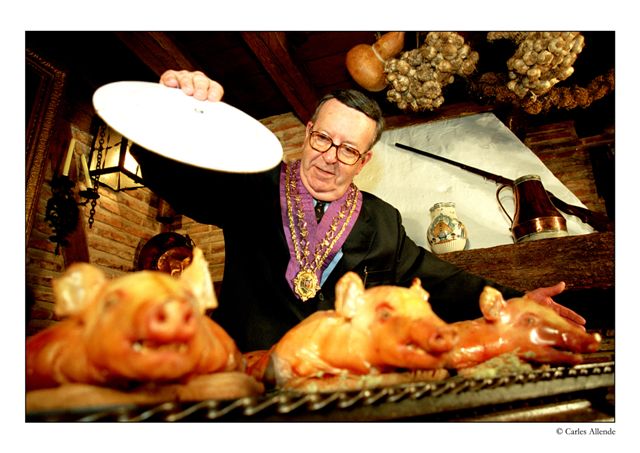
    I ate a quarter of a suckling pig today. I feel like a monster for eating such a young animal; a rotund, content, sleepily sluggish, well fed monster.

    If you’re going to kill an animal, kill it when it’s young. It so much more barbaric that way…

    And she sends along these pictures.

    Is that not the voice of a character speaking to you?

    Zing, Baby!

    Share
  • Villainous Heroes

    If we root against villains based on moral judgments, then how is it possible to root for heroes who are not just bad boys but down right criminal, e.g. hitmen, mobsters, thieves?

    It’s a wonderful question that has a simple and revealing explanation.  We root for these bad guys because they’re really good.

    What?!

    When talking about bad heroes, what we often do is:

    1. Take them out of their context.
    2. Focus on one or two negative traits, not the person as a whole.
    3. Abstract them and miss what’s happening in real time as we process the story. We only have so much working memory and usually can only think about what’s being presented versus what we think about when we’re out of the story. What’s being presented in the story is mostly the threats to these heroes, not the consequences of their evil deeds. And if the consequences are show, it’s always modified by context (#1 and #2 above).
    4. Confuse fascination with rooting.

    When we actually look at what’s happening with the hero in the context of the story, what we find is that rooting is still based on moral judgments of who is good/right and who is not. We root for people we think are in the right (given their context) or are getting, undeservedly, the short end of the stick; we root against people who we think are in the wrong.

    Here are some examples.

    DISNEY’S ALADDIN

    Thief. This one’s easy, I grant it. But it’s illustrative. I never once didn’t root for the boy. But I also never saw him as a true bad boy. He was nice. He shared the bread he stole with kids less fortunate. The guards were mean brutes. Jaffar was wicked and threatened the sultan and Jasmine who were good and innocent. was in a situation that provided some leeway for his behavior (alone, penniless).

    1. Context. He’s fighting a much greater evil, someone we are rooting against.
    2. Whole Person. He is a thief, but he’s also kind. Given his whole person, he falls on the side of good.
    3. Processing. As we process the story we’re never shown awful consequnces of his theiving. Mostly just the good and courageous things he does. And the threats to his welfare.

    THE ITALIAN JOB

    Thieves.

    1. Context. The movie starts with a heist and then a betrayal and murders by a traitor. Yes they’re theives, but we wittness a greater evil. The people they fight against are worse than they are.
    2. Whole person. Except for the thieving, he’s a likeable guy.
    3. Processing. We see few negative consequences of their actions to others, but we are constantly being presented with threats to them by guys who are committing greater crimes.
    4. Fascination. I was incredibly interested in the scam–the plans, tech, everything.

    THE PROFESSIONAL

    Mob Hit Man

    1. Context. He’s protecting a girl from other hit men. He’s fighting a bigger evil. He’s also taken advantage of by his boss.
    2. Whole Person. He’s a hitman, but more time is spent on his kindness.
    3. Processing. We see very little of the effect his hits have on others. Instead we are presented with threats to the girl and him.

    DIRTY HARRY

    Murdering vigilante

    1. Context. He’s stopping guys who are doing terrible things.
    3. Processing. We don’t focus on negative consequences of his vigilantism, but the threats from these really bad guys.

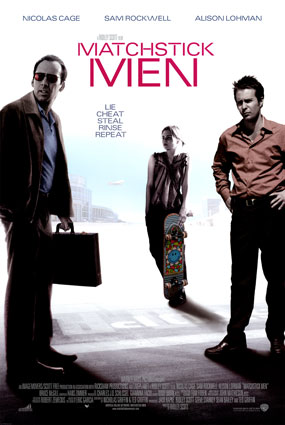
    MATCHSTICK MEN

    Scammers of the elderly

    From IMDB “Roy’s private life, however, is not so successful. An obsessive-compulsive agoraphobe with no personal relationships to call his own, Roy is barely hanging on to his wits, and when his idiosyncrasies begin to threaten his criminal productivity he’s forced to seek the help of a psychoanalyst just to keep him in working order. While Roy is looking for a quick fix, his therapy begets more than he bargained for: the revelation that he has a teenage daughter–a child whose existence he suspected but never dared confirm. What’s more troubling, 14-year-old Angela wants to meet the father she never knew. At first, Angela’s appearance disrupts her neurotic father’s carefully ordered routine. Soon, however, with his own unique spin on parenthood, Roy begins to enjoy a relationship he never dreamed of having with his daughter.”

    1. Context. Much of the time is spent his on his loneliness and issues with his estranged daughter.
    2. Whole person. He steals, but we never see huge suffering from it. We see all the other issues he deals and have sympathy for him.
    3. Processing. We’re focused on the threats to him, not the consequences of his one negative trait.
    4. Fascination. I was fascinated by the scam and this pulled me along through the first.

    CONCLUSION

    What happened in all these stories as I experienced them was that the story carefully managed my view of the hero. He was always on the better side of the antagonists. He was always more good than bad, even if only by a little. And the story focused my attention most of the time on the bad/threats/consequences flowing from the antagonists, not the bad from the hero’s deeds.

    What this shows is that you could write a story about a villain and make him the hero. In some instances it might be exceedingly difficult. For example, I think Hitler would be a hard sell as a hero, someone we’d root for. But the Neo-Nazis prove it’s not too hard a sell for some people. 

    I don’t think recognizing the fact that we can make “bad” people sympathetic means authors are “simply being clever” or “pushing buttons.” After all, to write well you must believe and care about what you’re writing about. YOU have to believe it. Nor do I think it undercuts the notion that we root for people based on a moral stance. It just recognizes the fact that moral judgments, in fact, the vast majority of appraisals of situations, happen quickly with the facts at hand, which are the ones in our working memories. The ones the authors are controlling.

    Share

4 Comments

  1. I want to see the trailer for YOUR book now. If you want a live actor, I could play the part of… well… maybe… Hunger food?

    Zing me just one more time.

  2. Andrewv, definite quality. Nice. Dude, those Portuguese do better work than a lot of the Random House trailers. Go Portugal. Larry Correia should be happy.

Comments are closed.