Are Squirrels Smarter Than We Think?

I miss the squirrels we had at the old homestead. No, that’s not hyperbole. Until two years ago the six of us lived in a 900 sf home my wife’s grandmother homesteaded for. But that’s beside the point. We had squirrels there. They chittered, ran about, tossed apples down at my girls when they tried to inhabit the hammock.

For those of you not from Utah, you might be wondering why this is such a big deal. If you’re from the East you might be thinking I’m nuts. But out West trees are few and far between, which means so are the squirrels. So we loved our squirrels, but then they got into our neighbor’s fifth wheel and he promptly killed them all.

Alas.

But here, for your pleasure, are squirrels using their god-given intelligence to do what they were bred to do–steal and eat.

Of course, they are squirrels.  Not quite geniuses yet.

One of my stories either needs a squirrel who steals candy bars or a character who is constantly setting up obstacle courses for the varmits.

Share

Similar Posts

  • Laboratory Grown Meats?

    How would you like to eat cuts from slabs of meat grown from stem cells?  

    Give the cells some water, glucose and natural proteins. To make sure you have something that feels like meat you “exercise” the muscle with electrical pulses.

    Gross? Maybe. But someone is thinking about it.

    http://www.popsci.com/environment/gallery/2008-09/inside-vertical-skyscraper

    As with all zing, post story ideas in the comments.

    Share
  • Leonard and Lady Randy (yes, that kind of randy)

    Maybe you’ve heard this one from Paul Harvey. Can you guess who it is?

    “Escape!

    Of all the positions in the field of journalism, that of war correspondent is perhaps most dangerous. Some are captured, some escape. Some die.

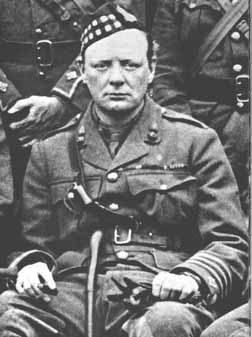
    Twenty-five-year-old Leonard Spencer was the London Morning Post’s newest correspondent. His assignment was the Boer War, in South Africa.

    Had young Leonard foreseen the peril awaiting him, he would probably have taken the assignment anyway. That’s how Leonard was.

    About twenty miles from Ladysmith, Leonard could hear the booming guns. He was aboard a British armored train that would take him as close to the front as he could get.

    The train got too close. There was a sudden crash. The train had struck a boulder on the tracks … a Boer booby trap. It was an ambush!

    Immediately, a fusillade of rifle fire followed. Surprised, British troops on the train fired back.

    And Leonard? Leonard ignored the gunshots and exploding shells. He jumped off the train, directed the British defense, helped to clear the wreckage.

    In fact, without the aid of this youthful correspondent from the Morning Post, the train might well have been lost and the British troops massacred.

    Instead, the wreckage was cleared, the train did pull out of the trap and carried a good many British soldiers with it.

    The one left behind to face the enemy…was Leonard! No, the story does not end sadly there.

    Leonard was captured, unharmed. Even though Leonard was technically a war correspondent, the Boer commander was sufficiently impressed with his bravery…to have Leonard thrown into prison at Pretoria.

    The Pretoria prison was among the world’s most carefully guarded strongholds. Still, that did not stop Leonard from plotting an escape with two other British captives.

    As darkness fell, the trio waited for their opportunity. It was now pitch black. The sentries exchanged their posts. Leonard sprang across an open area, hurdled a fence of barbed-wire mesh. When he looked back, there was no one. His comrades had missed their chance!

    Three hundred miles of hostile territory lay between Leonard and his freedom. For a while, he followed the railroad tracks to the east, stumbling alone, through the dark, dodging enemy patrols. Tired, hungry, thirsty…Leonard plodded long into the night, knowing that, each painful foot of the way, one false step could be his last.

    The night turned to day and back to night again, until the days and nights blurred.

    Finally Leonard reached a mining town. His luck wearing thin but holding, he knocked on the door of the only Britisher in the territory and was smuggled onto a train loaded with bales of wool.

    The train would carry him to the British consul. To safety.

    And that’s how Leonard Spencer, the London Morning Post’s fledgling correspondent, got his story…and his reputation for daring.

    History has all but forgotten this incident in his life in order to make room for later glory.

    The fortune that once seemed to be wearing thin had only begun…and one day rubbed off on all of England.

    For the young correspondent who once upon a time saved a British armored train and escaped the enemy under impossible circumstances…continued to do the impossible for the rest of his life.

    We knew him as Sir Winston Leonard Spencer Churchill!

    And now you know THE REST OF THE STORY.”

    Um, no, not even close. 
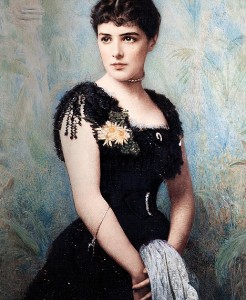
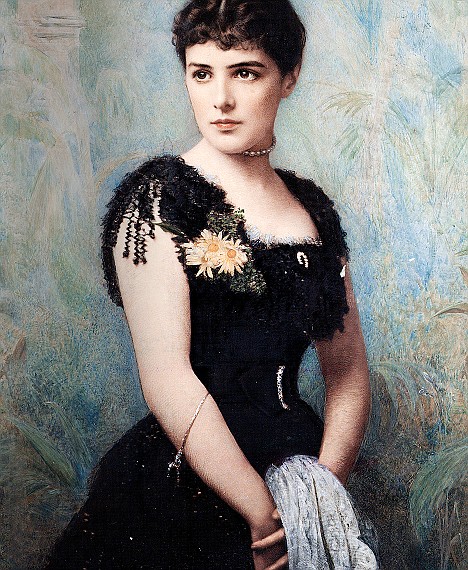
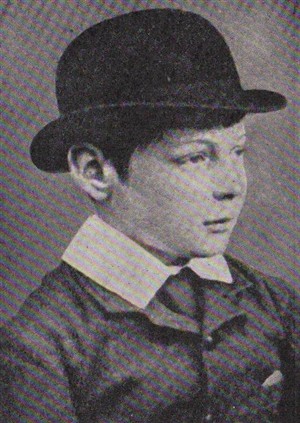
    When I read about the childhoods of famous historical figures I’m often surprised. For example, I’m still freaking out that Hitler was a street artist. So I ran across this article today about Winston Churchill’s childhood and his mother who was nicknamed “Lady Randy” for her promiscuity (rumored 200 lovers).

    She had no time for Winston. Other people raised him. Yet she wasn’t completely absent in his life. Apparently, she called on favors from previous lovers when Winston needed to learn French. Nevertheless, it appears Winston was raised without a father or mother, yet ends up being the kind of man who could lead a nation at war.

    This is fertile ground for drama of the best kind.

    I’m going to be seeking out some biographies. It’s going to be fascinating seeing how Winston pulled it off and who influenced and helped him along the way. 

    There’s one thing more. These facts aren’t all that drew me. What Winston wrote upon his mother’s death, well, it’s the finest poetry I’ve heard this last month.

    “I do not feel a sense of tragedy,” he said, “but only loss. Her life was a full one. The wind was in her veins.”

    That metaphoric power of that last sentence given her history and relationship with him–it’s stunning. 
     
    Read a summary of the documentary here.

    Share
  • Hooligan Hawks

    That guy just doesn't know when to quit...
    That guy just doesn't know when to quit...

    To allow my inner Swedish svelteness to manifest itself I’ve been doing some hiking and biking. I do my own Elmer Fudd biathalon in which I bike for a mighty 3 miles. Hike a hill interval style that I swear rises up at 90 degrees. Then go back to the bike and bike up another hill of the same size. And so I face the normal obstacles–inertia, rocks, mosquitoes, dump truck drivers who flirt with the idea of running me over. That sort of thing. But now I’ve got one more.

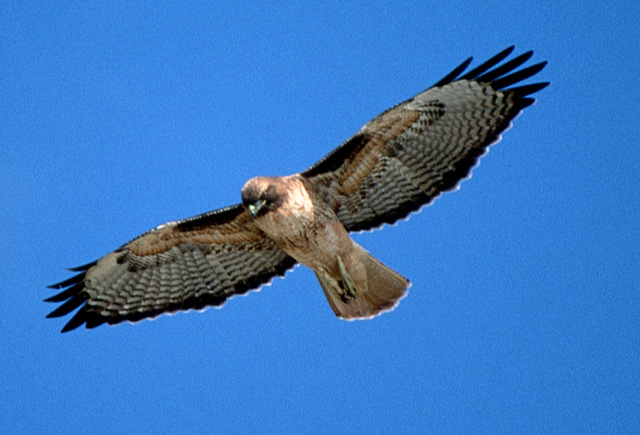
    You know I’ve been trying to attract some crows and ravens. No luck yet. I’ve gone to plan Q which is probably what most people would do for plan A–just put up a bird feeder with cat food in it. Except I haven’t gotten around to erecting the whole apparatus. So no crows or ravens yet. But I have been able to attract the attention of a pair of hawks.

    At first I thought they were protecting their nest. A pair of doughty parents. But I’ve looked about and can’t find any nest. Furthermore, they don’t always pull their stunt in the same area. And so I’m beginning to suspect they’re toying with me.

    Here’s what happens. I go on my hike and while I’m walking in place at the beginning of a new interval, looking out over the magnificent mountain vistas and contemplating important things like cheese, one of these hooligans will sneak dive bomb me from behind. At the last moment the bird will pull up making a huge WAAAHOOOF sound with its wings that sends my heart racing even faster than it already is. It’s like someone taking a huge broom and swinging it at speed three inches from the back of your head.

    Yesterday, I saw them off to the right at about 100 yards, calling out, making that piercing cry. I thought—ha! they’re over there. But THEY weren’t. It was only one of them. The other guy was between me and the sun. And so I’m hiking along minding my own business and WHAAAHOOOF!  I just about had a heart attack.

    I’ve caught one diving at me once. It’s an amazing thing to see a bird of that size hurtling from the sky straight at your head. And I would welcome such an experience again. But they just won’t perform. No, they’ve got to blindside me. 

    This week I’m going to get a picture of the low-budget criminals and post it here.

    Share
  • |

    Is Product Popularity Random?

    In Why Publishing is Making You Crazy—and What You Can Do About It: The Tao of Publishing, Steven Axelrod and Julie Anne Long write an interesting post that takes some findings made by Duncan Watts and attempts to explain why writers should only focus on the quality of their work because they cannot reliably affect popularity in any other way.

    I agree with them that social-influence seems like a good explanation for the sometimes unexplicable successes we see in publishing and the difficulty publishers have in both predicting and producing a steady stream of hits. However, I do not find support for their main conclusion that writers can do nothing but write.  In fact, I suggest that Watts’ findings show quite the opposite.

    Axelrod and Long base much of their argument on an experiment conducted by Duncan Watts that tested the power of social-influence on music selection in some controlled music websites. Watts summarizes his findings in the excellent Is Justin Timberlake a Product of Cumulative Advantage?.

    In his part of the post, Axelrod points out that the Watts findings indicate “50% of the factors affecting your career could be totally outside of your control—totally random” and that “unless we can separate out those random factors which contributed to an author’s past success [and we can’t, Axelrod suggests], anything we can say or predict about why she succeeded will invariably be way off-the-mark.” And therefore “what’s interesting—and chilling, as well—is that there’s evidence that the harder a person works to make sense of a random event, the farther they’ll end up from the truth.”

    In other words, the only thing an author can reliably do to improve the popularity of his stories is focus on their instrinsic quality. And get more stories out so he has more shots in the fickle social-influence game.

    I agree that having more product in the market increases your odds. I also agree that focusing on the intrinsic quality of the writing can do the same. I even agree that this is where authors should spend most of their time. However, Watts’ studies do not indicate other efforts are wasted. In fact, they suggest the opposite.

    Watts does not controvert anything we now know about marketing. What he does is clarify the power of social-influence in our decision making and the dynamics of ONE type of endorsement system. What Watts shows is:

    1. A perceived non-bias endorsement of your product can have a huge effect in the product’s popularity.
    2. The intrinsic quality of the product has an effect on popularity, but social-influence plays as large or larger role.
    3. Popularity in the system set up in the test websites depended on the decisions of a few early-arriving potential endorsers, i.e. good early reviews (downloads in this case) are amplified and lead to an effect he calls “the richer getting richer.”
    4. In this one endorsement system, neither a future endorsement nor the identity of the early endorser can be predicted.

    These findings, however, need to be put in context. From cars, to camcorders, to recipes, the popularity of a product depends on three main factors. These aren’t new ideas and publishing is no different than any other industry. The factors come from long-standing marketing practice:

    1. Visibility (people know about it)
    2. Endorsement (recommendation from an attractive person, trusted authority or friend, or trusted system like the perceived unbiased reviews on Amazon or “most downloads” stats)
    3. Attractiveness (intrinsic to the product, the perceived value offered the target market, and the social effect as pointed out by Watts)

    Each of these three affects the other two. Visibility makes endorsements and initial attractiveness possible. Endorsements make a product more attractive and more likely to be visible. Attractiveness makes something more visible and more likely to be endorsed. And round and round we go.

    It’s true that Watts shows 50% of the effect is due to endorsement. But nowhere does Watts suggest an author cannot increase the probability of visibility and endorsement.

    In the study, the endorsement method used was a counter showing the number of times the song had been downloaded. It was random, anonymous, and perceived as unbiased. That was a controlled environment. However, what if a singer had been able to ask all those he knew who loved his song to download it from the site? Or what if someone organized such a campaign independent of the singer? Both actions would immediately affect the probability of the song increasing in visiblity and endorsement and, hence, popularity.

    It’s too bad Watts didn’t test this in one of his sites to see if he could make a winner. As it was, all Watts was doing was seeing if he could predict a success by quality alone. He was passively observing, not actively taking measures to increase visibility and endorsement.

    Furthermore, the counter is just one type of endorsement system. There are a number of others. We’ve all seen how an Oprah endorsement can move the market. The identity of that endorser is NOT random and has great predictive value. Her decision to endorse is still random. But what if you have a way to make your book visible to her? Would it be a waste of time to do so?

    Robert Sawyer loves to tell of one action he took with someone with much less endorsement power than Oprah and the effect it had on his sales. Was Sawyer guaranteed visibility and endorsement from that action? No. However, he DID increase the probability, and it resulted in sales. Here’s his account.

    Watts confirms that endorsements have a mighty effect on popularity. Even something as simple as a “most downloads” counter can easily overwhelm a listener’s own reactions. But the logical conclusion is not to do nothing. The logical conclusion is that if authors want to increase their popularity, they must not rely only on the intrinsic value of their product, but they must also search for ways to increase visibility and endorsement.

    Axelrod is correct that it’s sometimes difficult to see the effect of any given marketing campaign or tactic. This is because marketing efforts are probabilistic, not deterministic. However, probabilistic does not mean random. Furthermore, it does not indicate you cannot increase the probability of success. While publishers may not be able to produce best sellers every time, I’m confident if they decided to stop marketing altogether, sales would drop.

    Will all efforts succeed? No. Any marketing progam needs to consider the effect of diminishing returns. The effectiveness of some actions may be difficult to test. Furthermore, authors may not have the budget to run a campaign large enough to increase their probabilities, although there are strategies to become a big fish in a small pond (see Geoffery Moore’s Crossing the Chasm).

    Despite all these issues, we know, in general, getting endorsements helps. In general, the right placement in book stores increases visibility. Author visits to schools, if done right for middle age readers, can also increase visibility. Radio interviews, if done right, do the same. There are many things that DO improve an author’s odds. We can increase the probability of visibility and endorsement by taking intelligence, consistent action.

    And that’s good news. We might not be able to guarantee a hit, but one thing IS certain—we’ll have no direct influence on visibility and endorsement if we do nothing.

    (BTW, for those interested, here’s a great presentation on a related idea:Six Degrees: The Science of the Connected Age a presentation by Duncan J. Watts.)

    Share
  • |

    Monks in Mormonland (and their honey)

    We just visted the Abbey of our Lady of the Holy Trinity this week with my family. It’s nestled on over 1,800 acres of some the most beautiful country in Utah.

    I think almost every religion demonstrates virtues we can all learn from. The dedication of these good men to their beliefs and vows to God is one such example.  As is their decision to live simply. And their creamed honey blends, which you can order from their website, are delicious! So far the maple honey is my favorite. Here’s a 2 minute National Geographic video about this abbey.

    Share
  • Health Care Solutions

    I am a big believer in free-market solutions. However, I’m not a big believer in Wild West capitalism. Government plays a vital role in helping us prevent capitalistic abuse. But what’s the right role of government in health care?

    I found that both John Stossel’s 20/20 “Sick in America” and a recent report from Safeway give brilliant insight into the situation and possible solutions. Enjoy!

    Sick in America Part 2
    Sick in America Part 3
    Sick in America Part 4
    Sick in America Part 5
    Sick in America Part 6

    How Safeway Is Cutting Health-Care Costs from the Wall Street Journal

    Share