Larry Correia and I on Blades and Blasters Podcast talking about Gun Runner

Larry and I went on the Blasters and Blades podcast to talk about fantasy, science fiction, and working together on Gun Runner. I also shared my weirdest experience on a book tour (hint: Reptoids from the Hollow Earth). It was a fun show.

Podcast: https://anchor.fm/blasters-and-blades/episodes/Episode-9-Larry-Correia–John-D-Brown–Running-Down-the-Guns-etdli3

YouTube: https://youtu.be/ujQj-crWe-8

Share

Similar Posts

  • |

    Good Stuff! The actual Christmas story

    It’s interesting how many things we’ve added to the accounts we have in the Bible.

    For example, nowhere does the Bible say that Mary rode a donkey. Mary might have walked. Or rode in a cart. Or gotten piggy back rides. We don’t know. We do know that there is no donkey mentioned in the record.

    It also doesn’t say she had the child the night they arrived.

    It only says she was “great with child” when they made the roughly 80-mile journey from Nazareth to Bethlehem. And that “while they were there” in Bethlehem “the days were accomplished that she should be delivered.”

    So she had the baby sometime while they were there. That could have been during the first hour. But it could have also been a week or month later. We just don’t know.

    It doesn’t mention anywhere the word stable.

    Christ might have been born in a stable, or he might have been born in a cave, or inside the house, or out on the porch, or on the roof (lots of those places had flat roofs where they hung out). We just don’t know. What we do know is that he wasn’t born in a palace. And that they laid him in a manger because there wasn’t any room in the inn. An odd circumstance for a king.  

    Notice as well that there weren’t multiple inns.

    It just says “the inn.” And if you look up that word in the Greek, it’s translated as “guest chamber” in the other spots where it’s used in Luke. So they could have been talking about the one guest room in the house where they were staying. Either way, we don’t have anything that says there was a mean innkeeper who later regretted turning the couple away or that Joseph went door-to-door looking for a place.

    We have no record in the account of three wisemen.

    It just says “wisemen.” So there might have been two of them. Or twelve. We don’t know. And it appears they came sometime after Jesus had been born because they first saw the star of his birth in the east and only then set out to find him. They might have been coming from Persia, hundreds of miles away. Or they could have been living in Bethphage, a mile to the east of Jerusalem. Either way, they didn’t know they should travel to Bethlehem because it says they went and talked to Herod first, in Jerusalem, and asked “where is he that is born King of the Jews?”

    The question freaked Herod out (if you’re the current king, you kind of want to know who else is claiming your throne), and so he gathered all the chief priests and scribes to discuss it, and those guys said the prophecies said it would be Bethlehem. And so Herod met with the wisemen again and told them to go there. And only then did they go down to Bethlehem. So it doesn’t appear the wisemen were there the night of the birth.  

    There’s no record of camels hanging out with the baby either. Or sheep. Or goats. There’s not a lot there. But what is there is interesting.

    Now, I want to go on record stating I have no problem speculating about the event and imagining what it might have been like. I love to do it. Good grief, I write fiction.

    In fact, for many years I figured I needed to get in on the Christmas noun gig. You know what I mean. Every year we get heart-warming books about new Christmas nouns. We’ve had Christmas sweaters, Christmas jars, Christmas boxes, Christmas candles, Christmas carols. This year I see there’s one about Christmas fudge and other about a Christmas train. So I figured I’d do one. Mine would be about the Christmas rat. A little fellow who decided to snuggle up with the babe instead of giving him a nibble. One of these days I will get that hungry rat story written.  

    In the meantime, while there’s a lot of good stuff we’ve added to make the event special, it’s also nice to know what the record actually does say. Whether you’re Christian or not, it’s helpful when dealing with others to know what was recorded about this event that is so significant to the largest religion in the world.

    And so the last bit of good stuff I recommend this month are the two brief accounts we have. The first one is in Matthew 2:1-16 and tells the story of the wisemen. The other is in Luke 2:1-20 and features some shepherds.

    Merry Christmas!

    Share
  • Good Stuff! The political book for our times

    I just finished the most important book on politics I’ve read in years.

    Years.

    In fact, I’ll go so far as to say it is the book for our current political times.

    I say this because America isn’t facing the threat of Communism, Nazism, poverty, illiteracy, or disease. ISIS and the terrorists are on the run. We’re beginning to figure out a better way of treating our LGBT brother and sisters. And we’re not poisoning ourselves with the broad-based racism or sexism of the past. Yes, there are lots of areas where we can improve. But these are not the main problems of our current time.

    In my opinion, the main problem of our current time is a burgeoning contempt between left and right.

    Political scientists find our nation is more polarized than at any time since the Civil War. People in positions of power and influence on both sides of the spectrum, and everywhere in between, are setting us against each other. They tell us our neighbors who are on the other side are evil, corrupt, or stupid. And must be utterly vanquished. And many of us perpetuate the message, very frequently on social media.

    By some measures the divide between right and left in America is beginning to approach the size and feeling of the one between the Israelis and Palestinians.

    Is that really where we want to go?

    I think most people will agree with me that it is not. So what do we do about it?

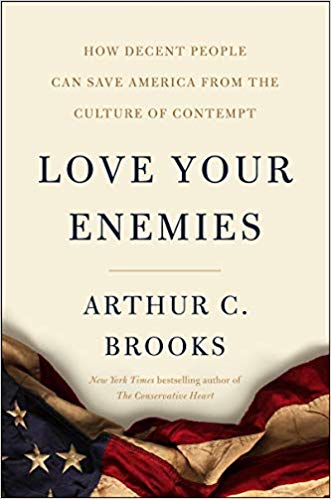
    May I suggest we start by reading this terrific book by Arthur C. Brooks called Love Your Enemies: How Decent People Can Save America from the Culture of Contempt.

    With that title you might think Brooks is suggesting that the solution to the divisions in our country is to start a national program for the singing of “Kum Ba Yah.” If so, you would be wrong.

    Brooks doesn’t claim we need less disagreement. He thinks we need more disagreement. Yes, you read that right. More. He’s calling for more, strong disagreement. It’s just that we need to disagree in a better way. A different way.

    At this point you might be wondering how it’s possible to disagree, and in greater amounts, and not run the nation off the cliff in flames.

    I was wondering that too. And Brooks provides the research, the thinking, and a number of practical methods in his book. Brooks will make you think about how we interact in a totally different way. And he does it with his trademark good humor. You’ll laugh, you’ll think, and you’ll come away seeing a better path.

    If a good portion of us disagree the way Brooks is suggesting, it will change our country. All we need is a core of us willing to try.

    If you’re interested in politics, if you are getting tired of the insults on social media and the news, if you’re tired of the way the parties are not working with each other in Washington, I think you’ll love this book.

    If you want a taste of what Brooks is talking about, watch his eleven-minute commencement speech at BYU this last April. Find it here. If you want another taste, watch his TED talk.

    Share
  • Good Stuff! Easy WFPB

    If you’ve decided to try the whole-food, plant-based lifestyle (WFPB) to lose weight or lower your risk of certain diseases, you will immediately find there’s a bit of a learning curve.

    That’s because the food culture in the United States is geared towards foods that are animal-based and processed—cheese, meats, sugar, flour-based products, chips, candy, etc. In fact, WFPB is such a large change, you might wonder if you’ll be eating anything other than cardboard.

    I can happily report that WFPB eating is satisfying and delicious.

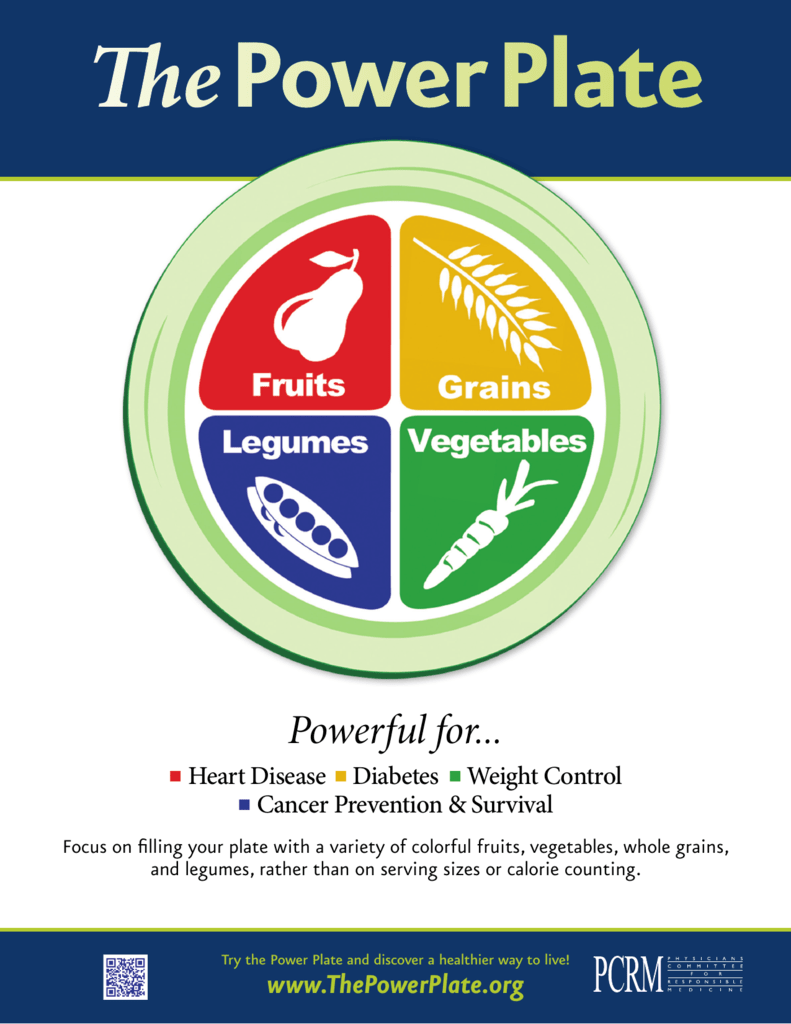
    Let’s review the general guidelines. With WFPB there are three things to avoid or minimize.

    • Added sugar (and artificial sweeteners)
    • Flour-based products
    • Animal-based products (meat, dairy, eggs)

    And there are five things you eat. The main four include:

    • Legumes
    • Grains (as close to whole kernel as you can get it)
    • Vegetables
    • Fruits (natural form, not canned)

    The fifth category is some added fat on the side. That includes things like a tablespoon of mayo, peanut butter, oil, avocado, etc. Or it could be an ounce of nuts or seeds.

    We’ve found it easiest to compose a meal by simply thinking about the five categories and filling in the blanks. If you don’t include one of the main four groups in a meal, that’s fine. Just be sure you’re not excluding it all the time.

    There are dozens and dozens of delicious meals. Over the next months I’ll be sharing some of those we love. Let’s start with the base.

    The base

    Grains

    Our InstaPot has been a huge help with grains. It makes them so easy to cook. You can make them in a batch and enjoy them over the course of a few days.

    Wheat

    • 2 cups food storage wheat berries (Yes! Finally a use for all those bags of food storage wheat in the basement!)
    • 5.5 cups water (or use vegetable stock if you want it savory)
    • ½ tsp salt
    • Cook for 35 minutes on high pressure followed by immediate pressure release. Drain if necessary.

    Rye berries, oat groats, pearled barley, brown rice

    • 2 cups grain
    • 2.5 cups water (or vegetable stock if you want it savory)
    • ½ tsp salt
    • Cook for 22 minutes on high pressure followed by 10 minutes of natural pressure release. Drain if necessary.

    When you want the grain as a savory dish, use vegetable broth or stock. It gives the grain a wonderful flavor. It’s total magic. You can get cartons at the grocery store for under two bucks. 

    For rice, we love the Lundberg wild rice mix. Lundberg also happens to be California rice which doesn’t have the high levels of arsenic that rice from the Southern United States has.

    Legumes

    Lentils

    • 1 cup brown or green lentils (do not use red for this)
    • 2 cups vegetable broth (the broth is the magical ingredient)
    • ½ tsp salt
    • Cook for 15 minutes on high with 10 minutes of natural pressure release. Drain if necessary.

    For other beans, we just purchased them in the can. They’re cheap and easy. Pinto, black, white, black-eyed peas, etc. You might find it easiest to start with pinto and garbanzo beans.

    Fruits

    Easy. Just get whole fruits. You can also get the frozen berries and cherries.

    Vegetables

    Easy. Just get a variety of veggies and salad.

    Nuts and seeds

    Easy. Get whole almonds, pecans, walnuts, etc. Whatever you like. Try to get them raw. You can heat them up in a pan on the over before you eat. Stove-roasted pecans are tasty.  

    Added oils

    Olive oil, avocado oil, coconut oil. You’re not going to be using a ton. If you want to use mayo and salad dressing, do it. Again, you’re not going to be using much.

    Spices

    Use all you want—cinnamon, ginger, basil, etc. Also use mustard, soy sauce, hot sauce. Balsamic vinegar is great on many things.

    Recipes

    With meal recipes we mix and match. Here are some meals we like.

    Grain Bowl

    For 1 person.

    • 4-6 oz of grain
    • 6 oz of berries, cherries, or 1 whole fruit
    • Some almond milk
    • Some spices like cinnamon or pumpkin pie spice or ginger (could do fresh ginger if you like it), or cocoa.
    • 1 oz of nuts, 1 tablespoon of peanut butter, or 1 tablespoon of coconut cream
    • Heat in microwave if desired

    Great for breakfast. Using different fruits and spices gives it lots of variety from day to day.

    Homemade Costa Vida Salad

    For 1 person.

    • 4-6 oz beans
    • 3-4 oz salad greens (you will need a big bowl)
    • Some mango salsa
    • 1 tablespoon Ranch dressing or may
    • 2 or 3 tablespoons of balsamic vinegar
    • Salt and pepper to taste

    Just mix it all up and enjoy. You can add cooked rice if you want and other sautéed veggies. You can also add rosemary leaves and turmeric for the health benefits.

    Other tips

    Here are some other things we’ve found.

    • Broccoli tastes the best, hands down, when cooked in a steamer.
    • Cabbage is great when steamed and stir fried with soy sauce, ginger, garlic powder, and onion powder
    • Succotash is tasty, especially if you make it with some small cubes of potato.
    • You can substitute lentils for ground beef in many meals. We’ve done it with stuff green peppers, shepherd’s pie, and many others, and our picky, teenage daughter actually likes it.
    • Some corn added to beans for a burrito or chili gives it a nice sweet flavor.
    • Sautéed mushrooms are great with onion powder, garlic powder, and thyme.
    • Garbanzos go really well with peanuts.

    We’re not fanatics about this. But I’d say we’ve been able to get 90% of the way to a WFPB lifestyle. And we’re enjoying the food. In fact, the longer we eat this way, the tastier it becomes.

    For about two years, we ate a diet high in vegetables and animal-based foods (meat, dairy, and eggs). We were diligent, but didn’t see the results we hoped for. Four months ago, we switched over to WFPB. I recently had some blood work done. After four months of eating this new way, I’ve dropped about fifteen pounds. My total cholesterol is down from 214 to 188. My blood sugar levels went from 107 to 83. And my blood pressure has improved. And that’s after just four months with some days of holiday eating mixed in. I can’t wait to see what happens after eating this way for a year.

    If you want to hear the research behind this to consider the evidence yourself, I recommend the following:

    • The China Study: The Most Comprehensive Study of Nutrition Ever Conducted (Revised and Expanded) by Colin T. Campbell, PhD
    • Whole: Rethinking the Science of Nutrition by Colin T. Campbell, PhD
    • How Not to Die: Discover the Foods Scientifically Proven to Prevent and Reverse Disease by Michael Greger, M.D.
    • How Not to Diet: The Groundbreaking Science of Healthy, Permanent Weight Loss by Michael Greger, M.D.

    You can get all of them from your local library. If they don’t have the books there physically, ask the librarian how to use their Overdrive account to check out an ebook or audio book version online.

    Share
  • Good Stuff! The Chosen

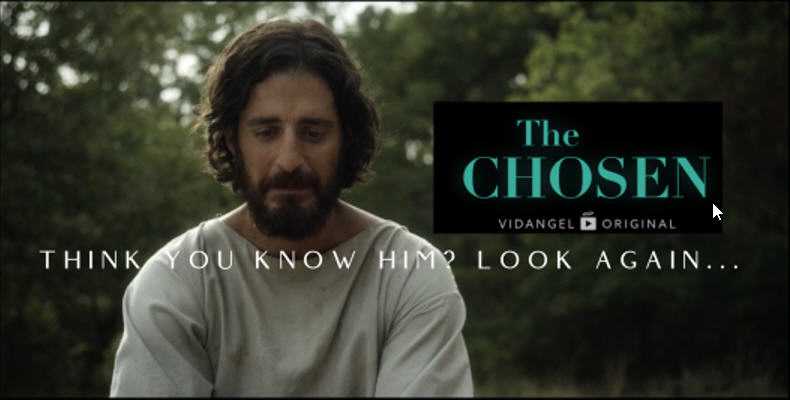
    Nellie and I stumbled onto a new TV series that we are really enjoying. It’s made us laugh, think, and feel. It’s called The Chosen and is based on the life of Jesus Christ, but it’s not like any Jesus series I’ve seen before.

    Now I have to admit that when I first saw ads for this, I wasn’t interested. It’s not that I don’t like videos about scriptures. There are some I love. It’s just that the purpose of so many of them is to illustrate a scripture instead of tell a story. And there’s nothing wrong with that. It’s just that when I’m looking for a drama, I want to watch a drama.

    But this series is different. They have taken a historical fiction approach, which means that while they adhere as closely to the facts as we know them, they don’t limit the story to those facts. And so they imagine people, events, and motives that are plausible, and then tell a story. A great example of this type of storytelling is Gerald N. Lund’s bestselling The Work and The Glory series about a family in the early 1800s who join The Church of Jesus Christ of Latter-day Saints. Or Michael Shaara’s bestselling The Killer Angels about the battle of Gettysburg in the United States Civil War.

    The Chosen focuses on stories about characters surrounding Jesus and those who plausibly could have met him. It also imagines Jesus as more than a sober Lord. He laughs, jokes, engages with children. It is a reimagining of the familiar that makes the story fresh again and leaves you wondering and pondering.

    It’s created by Dallas Jenkins, an evangelical Christian, and produced and distributed by VidAngel Studios, run by Latter-day Saints. And their love of and delight in the subject show. I can’t wait to see the next episode. You can watch it right now for free. Go to the VidAngel site or to https://studios.vidangel.com/the-chosen/. Or you can watch it on YouTube with ads.

    If you like religious fiction, if you like a good drama, if you’re interested in knowing more about the life and times of Jesus Christ, then I think you’ll love this.

    Share
  • The First Step to Being an Entertaining Storyteller

    What’s the first step to becoming an entertaining storyteller?

    In a recent ZOE Nutrition podcast, James Clear, author of Atomic Habits, suggests the key to starting a new behavior, like telling entertaining stories, is doing four things:

    • Make the cue to the behavior OBVIOUS.
    • Make the behavior more ATTRACTIVE.
    • Make the behavior EASY.
    • Make the behavior SATISFYING.

    But what’s the FIRST step?

    It’s mastering the art of showing up.

    That’s it.

    What does that look like?

    He shared an interesting story in the section where they were talking about making the behavior easy.

    START

    Let me give you two examples that’ll probably help clarify. So the first one this is just a really simple tactic, a very actionable thing, that you can use for building better habits. I call it the two-minute rule, and it just says take whatever habit you’re trying to build and you scale it down to something that takes 2 minutes or less to do.

    So read 30 books a year becomes read one page. Do yoga four days a week becomes take out my yoga mat.

    Now sometimes people resist that a little bit because they’re like, okay buddy, you know I know the real goal is not to just take my yoga mat out. I know I’m actually trying to do the workout, so this is some kind of trick, and if I know it’s a trick, then why would I fall for it?

    I have this reader his name is Mitch. I mentioned him in Atomic Habits. He lost over 100 pounds. So what is that? 40 or 50 kilos? And he kept it off for more than a decade. And he had this strange little rule for himself where he first started going to the gym, and for the first like 6 weeks he wasn’t allowed to stay for longer than 5 minutes.

    So he would get in the car, drive to the gym, get out, do half an exercise, get back in the car, and drive home, and it sounds ridiculous. You know? It sounds silly. It’s obviously not going to get the guy the results that he wants, but what you realize is that he was mastering the art of showing up.

    He was becoming the type of person that went to the gym four days a week even if it was only for 5 minutes, and this is a pretty deep truth about habits. Which is that a habit must be established before it can be improved. It has to become the standard in your life before you can scale it up and turn it into something more. You need to standardize before you optimize.

    And so the two-minute rule kind of helps push back against that perfectionist tendency that we have sometimes, or against that tendency to try to do too much, and encourages you to master the art of just showing up.

    END

    That’s the answer!

    If we want to be entertaining storytellers, the first, most powerful identity we can adopt is being the creative who shows up every day to work on his or her entertainment. Or maybe it’s five days a week. Or six days, four days, whatever your number is.

    The first identity is that I’m the kind of creative that shows up to work. This awesome work of entertainment.

    So what’s a two-minute behavior that might go along with that?

    Here’s mine. After I come back from weighing myself in the morning, I set my writing session timer, open my writing document, read a bit of what I wrote in the previous session, and identify the task for this session.

    That’s it. Nothing more.

    That’s showing up.

    If I show up and do that, I’ve shown up.

    If, for some reason, I miss showing up. I identify the next slot in that day to get it done.

    I can master all the other parts of writing entertainment later. But I must master the art of SHOWING UP first.

    So tell yourself you’re the kind of creative who shows up to write entertainment every day.

    Make that your identity. You can expand that identity later. But let’s start here.

    Write your two-minute behavior. Get specific on the time and action.

    Then be like Mitch. Show up and celebrate showing up.

    And if, like Mitch, it takes you six weeks to master the art of showing up, then it takes six weeks. Big whoop.

    Writing fiction is a long-haul game. That means the name of this game is playing the game until you win the game. And to do that you first have to master the art of showing up.

    This is the key. When you master this, everything else is possible.

    “I am the kind of creative who shows up every day to create.”

    Tell yourself that. Repeat it when brushing your teeth. Make that your identity. Be that guy.

    If you have a two-minute action for showing up, share it.

    If you don’t have one yet, identify one and share it. And if your action doesn’t work? No biggie. Act like a scientist and tweak it until it does.

    NOTES

    ZOE Nutrition podcast with James Clear. https://www.youtube.com/watch?v=mcdzK8BOfBY or https://zoe.com/learn/podcast-how-to-master-healthy-eating

    Share
  • A Response to John Scalzi

    The best way to change someone’s mind: use the skills you learned writing fiction.

    John Scalzi recently wrote a post about White Privilege.  You know: the idea that Straight White Males (SWMs) have all the cards stacked in their favor.  It’s called “Straight White Male: The Lowest Difficulty Setting There Is.” I assume he wrote it to help SWMs have more sympathy for those who aren’t SWM.

    It’s a noble cause.  Not as noble as true love, but that’s so rare–not one couple in a century has a chance at true love (at least when you live in Guilder).

    The problem is that Scalzi’s post is a great 101 on how To NOT Win Friends and Influence People.  Actually, that’s not right.  He will win new friends and increase his influence among those who are like-minded.  But if he was hoping to win over those who didn’t already see things his way, I don’t think he’s going to be very successful.

    His posts generated hundreds of comments. When you look at the comments, you’ll see that the vast majority of them are folks arguing Scalzi’s side with smug condescension and other folks arguing points against Scalzi with an equal lack of tact.

    In short, it’s a classic online bring-your-guns-to-the-party event.

    Alas.

    Except I must admit such events can be a lot of fun if you’re on the side with greater numbers.  Furthermore, there is sometimes a tremendous pleasure to be had in being provocative.  Sometimes we simply must publish something with teeth in it.  And maybe that’s what Scalzi was trying to do. 

    But if not, here’s where Scalzi’s post went admirably wrong.  And it has everything to do with principles that underlie influence as well as writing fiction.  You see, when you’re writing fiction and you want someone to root for your character, you do not turn to the reader and insult him. Insults don’t bring readers into your world.

    Equally as important, telling, or demanding someone feel a certain way towards someone else, will fail every time you try it. You cannot demand (or whine) that a reader must feel sympathy and admiration for the character.  Why?  Because emotions don’t respond to demands.  They just don’t.  It’s like trying to freeze water by seasoning it with pepper. 

    The advice “Show, don’t tell” works in real life as well as it works in fiction.

    Emotions are automatic.  If someone presents the right stimulus, we WILL feel the desired emotion in response.  We don’t experience a sympathetic change of heart when someone gets in our face and demands we feel sympathy.  We do feel that change when we see the antecedents which prompt the emotional response in us.  Show me.  Make me believe.  And the response is automatic.  

    This is what happened with Uncle Tom’s Cabin and the movie Ghandi and the TV series Roots and the more recent movie Believe in Me and the novel Les Miserables and thousands of others.  It’s what happens every day when someone in one group meets someone in another group they feel some distrust for and begins to build a friendship. 

    Show the antecedents, help folks identify, and you’ll move millions.  Get up and rant at someone, and all you’ll get is the bird.  And applause from the true believers.

    Scalzi claims that if you feel offended by his post then you’re hypersensitive because all he was doing is pointing out the facts.  Um, no.  Jim Hines is trying to establish potential facts.  You could try to verify those.  You could try to separate out causation from correlation.  But Scalzi is not doing that. He’s telling all SWM that they are playing on the kiddy version of the life video game.  Your life is so easy.  Everything is rigged for you.  You’re playing the baby version.  And because of that everyone else’s life is so much harder.

    No, he didn’t say those words exactly. But there is this thing call connotation. There is this thing called tone.  And no matter how hard you try, you’re can’t separate the non-verbal communication from the message. 

    Everyone knows that some people have it harder in life and some have it easier. Like, duh.  I think we all learn that when we showed up to the first grade.  So what’s the point of telling all the SWM’s reading his blog that they are playing the dweeb version of life, the one with training wheels?

    Furthermore, instead of helping all of us pampered SWMs identify with our brothers and sisters, he tries to erect more boundaries that would push us apart by giving all of us another way to discriminate and another reason to be resentful.

    Lowly, pampered SWMs at the bottom.  Gays, people of color, and women farther up. 

    So now we’re going to go around with a My Life’s Harder Than Yours number?  The opinions of those with low numbers will have less weight.  How could they have anything as worthwhile to say when their life has been so easy?  Those with higher numbers will have more weight. 

    A whole new group calculus will have to be developed and standardized.  And it will have to go beyond which shade of brown your skin is (yes, White people really are just a lighter shade of brown), your gender, and sexual orientation.  Because those who are handicapped, by birth or by accident have it really rough too.  We’d have to figure out if they had it more or less rough that someone who was gay, and would that change if that gay person lived in San Francisco versus Laramie, Wyoming?  A geographical element!  And what about those with idiot parents who teach their kids to take meth and don’t get them to school or beat them in alcoholic rages or who are never around?  I wonder what score that would bring.  And what about the kids who grow up with grandpa molesting them?  And what about the short, the fat, the plain?  What about those with glasses?  Those who are runty bully targets?  Or those with a minority religion.  What about those born with AIDS? 

    Are we sure it’s a good idea to start ranking ourselves, using color, gender, and sexual preference to tag our status? 

    Wait, haven’t we already tried that?

    When someone comes up to you at a party and condescends, when they’re always one-upping you with a “you think you’ve got it hard you haven’t seen squat” line, what is your response?  Even if it is legit.  What about when they get in your face for someone else?  Does that change your default response?

    It’s the same at internet parties and gatherings.

    So.

    Lesson 1: If you want to influence someone, don’t start by insulting them and continue by talking down to them. If you want to have a good time with like-minded friends, then, by all means, skewer.

    Lesson 2: Remember “show, don’t tell” to win someone’s affection.  Present the person’s story, and the reader will feel respect, trust, sympathy, sorrow, regret, and admiration automatically (okay, you’re right, some of that depends on the reader).  Tell or demand, and none of that will occur.

    Lesson 3: Don’t raise barriers between two groups when you want members of one group to identify with members of another.

    Here’s a better way. 

    Tell me a story about a real gay black woman.  Make me love her.  Make me care.  Tell me a story about her I can sympathize with.  Just show me the woman.  Make it about her, not her group category.  Or tell me a story about a Mexican man who is just trying to provide for his children in America.  Or tell me about a sympathetic SWM who goes to Asia or Polynesia and finds the cards stacked against him.  Stories like this abound.  

    In fact, why don’t you drop the whole “SWM” business.  If you want me to identify, to experience-take (yes, that official jargon), it’s probably best not to slap SWM on me and set me in one corner and slap GBM on someone else and set them in another.  Help me identify.  Focus on how we are alike. When you do discuss the differences, magnify those things that are wonderful and unique, or eccentric and unique, or goofy and unique, or weird and unique, or whatever, but make it positive.  And when you must talk about old or continuing grievances between two groups, do so with respect, with a desire to calm, not enflame.

    Lest you think I don’t know what I’m talking about, I grew up working in a family business where employees were White, Black, Hispanic, Tongan, and Japanese.  Male, female, homosexual, heterosexual.  And we were a big family.  My father and mother held out big welcoming arms.  I have Whites and Blacks in my biological family.  I hope my daughters find great men to be their husbands.  And if they happen to also be Indian or Puerto Rican or Black or Asian or Maori or Scottish or Southern or whatever, I would think it was grand.  It’s possible I might experience some of that mild “other group” anxiety that sometimes comes when you meet someone that’s not just like you.  But I know it’s possible to get beyond that by seeing what’s common, building friendships, and celebrating and laughing at and with the differences.

    My father, God rest his soul, liked to quote Edwin Markam.  I thought it fitting.

    He drew a circle to keep me out,

    A thing of scorn, and a thing to flout.

    But love and I had the wit to win:

    We drew a circle that took him in.

    You want to laugh with the like-minded?  Draw the first kind of circle.  You want to win hearts and minds?  Draw the bigger one.

    Share