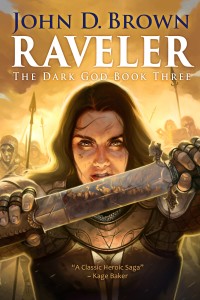
Writing update: Curse Draft 3 FINISHED, The Book Academy

Fanfare!

Draft 3 of Curse of a Dark God is finished.

Finished!

Finished!


FIIIIINIIIIIIISHED!!!!!!!!!!!!!!!!!!!!!!!!!!!!!!!!!!!!!!!!!!

245,000 words. 873 manuscript pages.

That’s a big book. SERVANT was only 170,000. A “normal” novel is somewhere around 90,000 – 120,000 words. I just emailed it to my agent with a huge sigh of relief. And a hope that the editoral sword of Damocles has been lifted a bit. I’m sure my editor will want some changes–most certainly fewer words–but hopefully this is a draft we can agree on and, therefore, set a release date.

I want to thank the following folks for reading the opening and giving me their feedback. I’ll be incorporating their comments, along with those of my beta readers, agent, and editors, in my review for the edits I’ll make to draft 4. Some of the comments, actually, made it into draft 3.

  • Adam Teachout
  • Alexis Cooper
  • Alex Lamborn
  • Amy Lamborn
  • Cameron Wilson
  • Darren Eggett
  • David C. Walton
  • David West
  • Eric Allen
  • Garrett Winn
  • Hyrum Grissom
  • Justin Fisher
  • Krista Hoeppner Leahy
  • Laurel Amberdine
  • Lindsey Tolis
  • Lynette Wood
  • Martin Cahill
  • Melanie Goldmund
  • Merrill Nielson
  • Mette Ivie Harrison
  • Nick Dianatkhah
  • Rachel Gao 
  • Robert Thompson
  • Steve Diamond
  • Wesley Amodt

Again, all of you listed above–THANK YOU SO VERY MUCH FOR READING AND RESPONDING!! We luvs you, Precious. And if I missed anyone, please send me an email smack. Your name needs to be there. I’ll move it over into the fiction section later.

For those who missed out, I’m planning on posting the beginning of Dark God’s Glory for review as well. Although I don’t know how it’s going to work out with pub dates. We’ll have to see.  

By the way, here’s the opening chapter as it now stands. It may very well change.

1.   The Harvester

Berosus saw the girl the first day he arrived on the shores of the New Lands. She was a beautiful Koramite mix. Dark hair. Clear skin the color of caramel. A full set of teeth. But it was her stunning jade eyes that decided him. That and the playful but firm way she handled the sailors wanting more than just a few pints of her grog. He found lodging in a barn that night then ordered three of his men to kidnap her.

When the time was right, they brought her to him up on the hill. It was in the afternoon of the sixth day. The sun shone brightly in the blue autumn sky. The breeze rustled through the grass and trees. He untied the bonds around her wrists and told her to sit down. He said, “Some of the spark’s gone out of your eyes.”

She said, “Six days in a hole will do that to you.”

He gave her credit. She was scared and hiding it very well. He said, “You’re destined for great things.”

She looked at the tattoos on his wrists, which would tell her nothing, and said, “I’ve a father to tend to, and three brothers.”

He said, “What’s your name?”

“Jade.”

“Of course. Well, Jade. You’re good stock.” He motioned at her. “Wide hips, good bone structure. You would have born many fine children and increased the Mother’s herd. But there’s a higher purpose.”

She said, “You’re one of those Shimites, aren’t you. One of his sleth.”

“Ho,” he laughed. “No, lovely. Shim is a nothing. A gnat. A beetle. No, I am a Seeker. A servant of the Sublime. And you will serve me. Does that please you?”

“You’re not marked.”

“No, Seekers never are. We can’t announce our coming, now, can we?”

She swallowed. “They say Shim’s brought on a curse.”

“That he has,” Berosus replied. “And you’re going to help remove it.” He pulled the rough, black gloryhorn from its pouch. “Do you know what this is?”

“Not a simple horn,” she said, “or you wouldn’t have asked.”

She was smart. Brave. Oh, but he liked this one. He had indeed chosen well. “No, not a mere horn. It’s a weave. And like all weaves it needs soul to bring it to life. This one needs a lot of soul.”

He saw she understood what that meant, for the last of her feisty spirit drained away. She glanced down the hill. She was going to run; he could see it in her eyes. He gave her credit again. She was real quality. By this point many females would have been in a panic, in tears or begging him for mercy. But this one still had her wits.

He snatched her by the wrist. “Don’t spoil it. You’ll be remembered. I will remember you, this hill, the smell of the autumn leaves, and your eyes under the blue sky.”

She tried to wrench her arm free, but Berosus had an iron grip. Her tattoo marked her as property of the Mother and gave him access. He pushed through the barriers of her flesh to the soul within and felt her scream.

#

When Berosus finished, the husk of Jade’s body stared past him at the trees. Her body and the remnant soul which lingered there might live on for a few days, maybe even a few weeks, but there was no point in allowing that to occur. It would seek the familiar; it would walk back to her home, go about its old habits. Maybe it would sit in a favorite chair, maybe eat a piece of bread or go through the motions of drawing water. But it wouldn’t respond to the conversations of her loved ones or their later pleadings. All this would only raise questions, and questions at this point would not be useful. So Berosus killed the body with a sharp twist to the neck and laid it down upon the dried autumn grass at his feet.

The captain of Berosus’ dreadmen had brought a small meal. Berosus picked up a salted herring that lay in the cloth the captain had spread upon the grass and took a bite. “Life is meant to be lived consciously,” Berosus said, “deliberately.”

“Yes, Bright One,” the dreadmen said.

With his free hand, Berosus ran a handful of the female’s luxurious dark hair through his fingers. He traced her brow and the ridge of her cheek bone, traced the delicate curve of her lips. She was so beautiful in her repose. As graceful and sensuous as the rich petals of an iris.

“Every day a banquet is spread, Captain. And if you’re not careful, you’ll miss it.” Berosus disdained the Divines who sent others to do their work. Life was full of gifts, full of scenes such as these. And every day they missed it.

He took another bite of herring.

The captain said, “We have a report, Bright One.”

Berosus ignored him. The scene was perfect. The breeze blew gentle waves through the dry meadow grass about Jade. The heads of the grass nodded to and fro, as if reaching out to touch her.

He contemplated her a moment more then picked up the leather pouch that held the rough, black gloryhorn where the essential parts of the girl’s soul still lived on and put the strap over his neck.

The gloryhorn was the weave he would use to harvest the fruit of this land. He’d needed a soul to quicken it. He could have used anyone’s soul, but it pleased him to think of Jade in there, for every time he saw the horn, he would also think of her, this hill, and the grass rippling in the breeze. He would think of how poignant it was for something of such beauty to bring forth such destruction.

He finished the herring and sucked his two fingers clean. In the distance, the towers of Shim’s fortress rose above the trees. “What is the report?”

“The Mungonite priest has been spotted.”

Berosus nodded. “Good. We need to find him before he talks.”

“I’ve already dispatched men.”

Berosus looked out at Shim’s fortress. He’d been watching Shim’s army for the past six days, and his orders were to harvest every last one of them.

It was clear to him this army was sleth. They were using weaves of might, but none were in the pattern of any of the houses of Kains he knew. There were no Guardian Divines, no tethered skir, no Fire sacrifices. There simply were no signs that would indicate an enemy Mother was here, claiming this human herd. But there was the sleth Argoth and his Grove.

When Berosus had received his orders, he’d been informed by the glorious Mother of Mokad herself that this nest of sleth had killed two Divines and perhaps even one of her sisters. He saw now they were starting to build an army of dreadmen. It was all very impressive for sleth. But their time was at an end.

He looked down upon the body of Jade. She would have been harvested anyway. This outbreak of slethery had to be stopped before it grew too large. A small sleth nest could be useful at times in managing the herd or in attacking another Mother’s holdings. But an army of them would only cause problems. And you couldn’t just kill the leaders. Ideas and knowledge spread like disease. In this situation, it was best to simply destroy them all. 

Berosus smoothed one side of his long blond moustache and then the other. About him in the woods, his dreadmen kept watch. He’d received message via the weave that bound his chief general to him that the ships with the troops and the other Divines were making good progress. They expected to arrive in just a few days, which gave him just enought time to put himself in place.

In the distance, banners and wreaths were being hung at the fortress. He thought it fitting: on the morrow, the inhabitants of this land would celebrate the good gifts of the harvest with their annual apple dance feast. In truth, they were only fattening themselves for the real harvest.

Harvesting humans was essentially the same as harvesting any animal. You gathered them together. Then you killed them. Like many social animals, humans banded together when under threat. Provide the right motivation, and the herd would gather itself.

“Captain,” he said. “Tomorrow evening at the feast, we set things in motion. You will send in someone with poison. Let him clearly demonstrate our intent.”

“It will be done, Bright One.”

Berosus took in a great breath of the sweet air. The day was brisk, the sky sunny and clear. He hoped the sunshine held. It was such fine weather for slaughter.

Edit. See, it’s already changed. I had two versions when I posted this blog. I let Nellie read both. And she reports that this one created much more interest (curiosity, in this case) much faster. Sigh. It’s a good thing I’m taking a break.

1.   The Harvester

The young girl was beautiful. Dark hair. Stunning jade eyes. Clear skin the color of caramel. But her body was merely a husk now because Berosus had removed the vast majority of her soul.

The husk of her body and the remnant soul which lingered there might live on for a few days, maybe even a few weeks, but there was no point in allowing that to occur. The body would seek the familiar; it would walk back to its home, go about its old habits. Maybe it would sit in a favorite chair, maybe eat a piece of bread or go through the motions of drawing water. But it wouldn’t respond to the conversations of her loved ones or their later pleadings. All this would only raise questions, and questions at this point would be inconvenient. So Berosus killed the girl’s body with a sharp twist to the neck and laid it down upon the dried autumn grass at his feet.

The captain of Berosus’ dreadmen had brought a small meal. Berosus picked up a salted herring that lay in the cloth the captain had spread upon the grass and took a bite. “Life is meant to be lived consciously,” Berosus said, “deliberately.”

“Yes, Bright One,” the dreadmen said.

With his free hand, Berosus ran a handful of the female’s luxurious dark hair through his fingers. He traced her brow and the ridge of her cheek bone, traced the delicate curve of her lips. She was so beautiful in her repose. As graceful and sensuous as the rich petals of an iris.

“Every day a banquet is spread, Captain. And if you’re not careful, you’ll miss it.” Berosus disdained the Divines who sent others to do their work. Life was full of gifts, full of scenes such as these. And every day they missed it.

He took another bite of herring.

The captain said, “We have a report, Bright One.”

Berosus ignored him. The scene was perfect. The breeze blew gentle waves through the dry meadow grass about Jade. The heads of the grass nodded to and fro, as if reaching out to touch her.

He contemplated her a moment more then picked up the leather pouch that held the rough, black gloryhorn where the essential parts of the girl’s soul still lived on and put the strap over his neck.

The gloryhorn was the weave he would use to harvest the fruit of this land. He’d needed a soul to quicken it. He could have used anyone’s soul, but it pleased him to think of Jade in there, for every time he saw the horn, he would also think of her, this hill, and the grass rippling in the breeze. He would think of how poignant it was for something of such beauty to bring forth such destruction.

He finished the herring and sucked his two fingers clean. In the distance, the towers of Shim’s fortress rose above the trees. “What is the report?”

“The Mungonite priest has been spotted.”

Berosus nodded. “Good. We need to find him before he talks.”

“I’ve already dispatched men.”

Berosus looked out at Shim’s fortress. He’d been watching Shim’s army for the past six days, and his orders were to harvest every last one of them.

It was clear to him this army was sleth. They were using weaves of might, but none were in the pattern of any of the houses of Kains he knew. There were no Guardian Divines, no tethered skir, no Fire sacrifices. There simply were no signs that would indicate an enemy Mother was here, claiming this human herd. But there was the sleth Argoth and his Grove.

When Berosus had received his orders, he’d been informed by the glorious Mother of Mokad herself that this nest of sleth had killed two Divines and perhaps even one of her sisters. He saw now they were starting to build an army of dreadmen. It was all very impressive for sleth. But their time was at an end.

He looked down upon the body of Jade. She had solid bone structure, wide hips for bearing children, even teeth. She was good stock. In regular circumstances, she would have grown up to bear many fine children and increase the herd. She would have provided many souls as meat for the Mothers. But she would have been harvested anyway. This outbreak of slethery had to be stopped before it grew too large. A small sleth nest could be useful at times in managing the herd or in attacking another Mother’s holdings. But an army of them would only cause problems. And you couldn’t just kill the leaders. Ideas and knowledge spread like disease. In this situation, it was best to simply destroy them all. 

Berosus smoothed one side of his long blond moustache and then the other. About him in the woods, his dreadmen kept watch. He’d received message via the weave that bound his chief general to him that the ships with the troops and the other Divines were making good progress. They expected to arrive in just a few days, which gave him just enought time to put himself in place.

In the distance, banners and wreaths were being hung at the fortress. He thought it fitting: on the morrow, the inhabitants of this land would celebrate the good gifts of the harvest with their annual apple dance feast. In truth, they were only fattening themselves for the real harvest.

Harvesting humans was essentially the same as harvesting any animal. You gathered them together. Then you killed them. Like many social animals, humans banded together when under threat. Provide the right motivation, and the herd would gather itself.

“Captain,” he said. “Tomorrow evening at the feast, we set things in motion. You will send in someone with poison. Let him clearly demonstrate our intent.”

“It will be done, Bright One.”

Berosus took in a great breath of the sweet air. The day was brisk, the sky sunny and clear. He hoped the sunshine held. It was such fine weather for slaughter.

***

In other news, I was invited to present at The Book Academy conference that will be held at UVU in Orem, UT on Thursday, September 30th. It looks like it’s going to be a great time.

Date & Time Event Type Area Notes
Thursday, September 30 Writers conference Orem, UT The Book Academy is a one-day conference designed to give authors, aspiring authors, and avid readers the opportunity to learn more about writing, the publishing industry, and the books they love while networking with other authors, publishing professionals, and book lovers. Classes will be taught by successful authors and publishing professionals on writing basics, publishing, marketing, book clubs, and more.*This year it will be hosted by Utah Valley University. The theme is “Power up your writing.” I’ll be teaching a one-hour class on how to make a good idea great. More details to come.

Teacher power, crawdad fun, and lemon bars

Teacher Power

When we find great teachers, we prize them not only because what we learn improves our lives but also because good learning can be one of the most exhilarating things we experience. Unfortunately, a lot of teaching stinks. It’s boring, misguided, useless.

I’ve made a study of teaching. I’ve had to. For almost 20 years I’ve taught and designed courses in the private sector. And for many of those years, my work has been in a revenue-generating department. That means that my classes had better be effective and interesting, otherwise nobody signs up, revenue falls, and a lot of folks will stand around and wonder if it might not be better to just replace me with a potted plant.

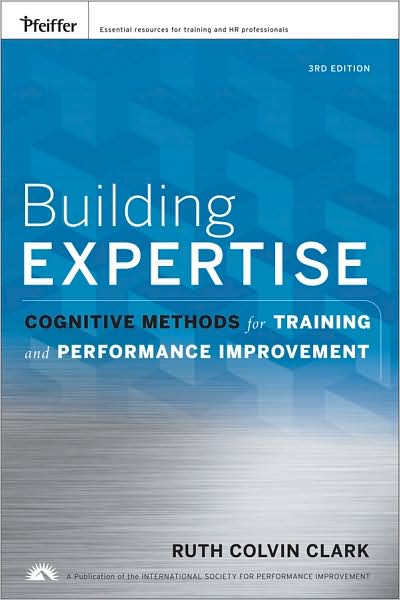
I kind of like having a job. And so I’ve tried my best to find the most effective methods for instruction. In the last few decades, education researchers have put many teaching techniques and principles to the test. We know better now than ever before how to structure learning that is effective and interesting. And I have yet to find a better explanation of the proven techniques and principles than Ruth Colvin Clark’s Building Expertise: Cognitive Methods for Training and Performance Improvement, 3rd Edition

Don’t let the “training” part fool you. We often associate “training” with learning procedures and simple tasks, e.g. the State pays for “sex education” in our schools, not “sex training.” But Clark isn’t using the term that way. Clark’s “training” includes all types of learning.

Two things separate Clark from so many others who would offer advice on teaching. First, she bases everything on tested principles and techniques. I’m not talking about tested as in some teacher somewhere tried it and was impressed. I’m talking about scientifically valid testing that controls for variables and shows causation. The methods she describes are practical and proven. Second, she writes clearly enough and uses enough examples so that I can read about the principle and immediately see how I can apply it in my own class.

Among other things, you’ll learn:

  • Why working memory is key to instruction and how to overcome its limits
  • How to motivate learners
  • How to structure learning
  • When to use lecture and when to put learners into action
  • When taking notes can actually be counterproductive

You’ll even learn why assigning lots of practice is NOT always the best way to learn. In fact, sometimes your child will learn more if you do half of their homework questions for them. Sound ridiculous? It’s not. It’s science.

You’ll find that there is no yellow brick road in teaching. Instead, you’ll see that the effectiveness of any method depends on whether it’s suited to the specific situation. And Clark will explain what the key factors in any situation are so you know which methods to apply and the trade-offs you’ll make when you do.

If you’re a teacher in any setting–family, job, church, school, or recreation–or if you’re trying to teach yourself, this book (specifically the 3rd edition) will be a goldmine. I can’t recommend it highly enough.

Crawdads & the Bear River Greenway in Evanston

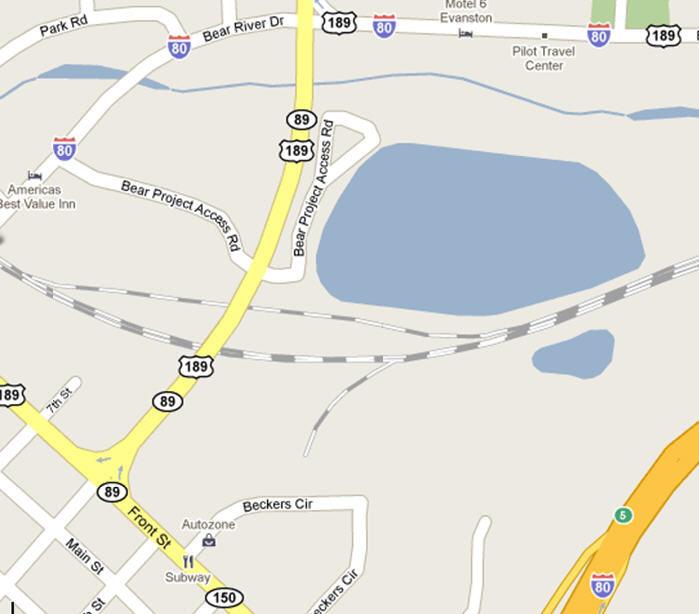
Here’s a recipe for a whole lot of family or date fun. And it costs almost nothing. Drive to Evanston, Wyoming. Make sure you bring a bucket. Pick up a few pieces of fried chicken at Wal-Mart then picnic at the Bear River Pavilion park. It’s the one with the small lake west of Wal-Mart and east of the overpass on 89. Keep your chicken bones.

When you finish eating, attach a length of about four feet of string or yarn to each chicken bone. Weight the bone down with some rocks or washers. You want it to sink deep. Tie a loop for your finger in the end of the string. Then go out to the pier or the cement box on the northwest side of the small lake and drop your bone in.

Wait.

Slowing bring your chicken bone up. You’ll find a crawdad clinging to it, thinking he’s gone to free lunch heaven. Use a net to snag the crawdad. A simple fish aquarium net will do. You can get them at Wal-Mart for a few bucks. Plop crawdad into the bucket. Ooh and aah appropriately. Make sure he’s got some water to swim around in.

Drop your line in again and repeat until you and the kids or dates are bored. We had a bucketful in about twenty minutes. You might want to pick a few of the crustaceans up. Just grab them on the sides just behind the spot where the arms of their big pincers join the body. Wave the crawdad at a selected victim—wife, daughter, girlfriend–for special effects.

When you’re done, dump the critters back into the water. But don’t go home yet. Take a stroll along the greenway that follows the river and enjoy the beautiful sights. If you walk east from the park, you might be able to be at the right spot at the right time to see a train up close as it thunders by.

We just did this with family from Colorado and California and had a great time. Who would have thought Evanston had this gem?

Crocker’s Luscious Lemon Bars

I luv lemon in desserts. I especially love lemon pies, but they take too long to make. Plus you’ve got the meringue to whip up, and half the people hate that stuff anyway. I’ve found lemon bars taste just as good, probably better, and are far easier. Here’s a recipe I just tried and loved. It’s from our Betty Crocker cookbook. Please remember to include the sugar. My sister, bless her heart, attempted it without, and she can verify that, surprise surprise, it just doesn’t taste quite as good.

STEP 1: Preheat oven to 350 degrees.

STEP 2: Make pastry crust.

1.   Combine: 2 C flour, ½ C powdered sugar, 2 T cornstarch, and ¼ t salt

2.   Use pastry blender and cut in ¾ C butter until it mixture resembles coarse crumbs

3.   Press mixture into bottom of greased 13x9x2 inch pan

4.   Bake for 18-20 minutes or until edges are golden

STEP 3: While crust is cooking, make filling by stirring together: 4 slightly beaten eggs, 1.5 C granulated sugar, 3 T flour, 1 t lemon peel (optional),  ¾ C lemon juice, ¼ C half-and-half (you can substitute with light cream or milk if needed)

STEP 4: When crust finishes, pour filling over hot crust.

STEP 5: Put it all back into oven and bake for 15-20 minutes or until center is set, i.e. it doesn’t jiggle and slosh.

STEP 6: Cool on a wire rack for 20 minutes.

STEP 7: Cut into bars, but DO NOT EAT IT YET! The lemon bars will taste 500% better if you totally chill them in fridge (the chill is the secret, folks). So put that pan in the fridge and wait! It will take a few hours.

STEP 8: When TOTALLY chilled, take out of fridge, sift some powdered sugar over the top, and serve.

Try to refrain from eating half of the pan.

Earth: the biography, Planter’s Nuts at Sam’s, “The Professor of War”

Earth: The Biography is one of the most interesting documentary series I’ve seen in a long time. It’s produced by National Geographic and the BCC. Dr. Ian Stewart, a Scotsman, hosts the program and tells the life story of our planet, how it works, and what makes it so special.

There are five parts: “Volcano,” “Atmosphere,” “Ice,” “Oceans,” and “Rare Earth.” And while they were all good, the last two blew me away.

For example, I always thought the polar ice caps were a big waste of water. What do they do besides torment penguins and Eskimos?

But the program reveals that the ice caps are critical to all life everywhere on the planet because they power the great ocean conveyer. This conveyer is a slow current that carries surface water away from the equator up to the polar caps then down to the sea floor and back—transporting oxygen, nutrients, and warmth all around the globe.

We can see how critical the ocean conveyer is when it stops. There was a time when this happened. With no replenishment of oxygen, the water turned to poison. The poison was picked up in the clouds and rained down upon the land. And almost every living thing on the planet died a toxic death.

Sniff, sniff–we love you, Polar Ice Caps.

“Oceans” was fascinating, but “Rare Earth” was the kicker. How common is our cozy little situation here on earth?

Well, for life to exist as we know it, we needed to be a certain narrow distance from the center of the galaxy, orbit a certain, less common type of star, be within a certain range of that star, have a big old fat vacuum like Jupiter hanging out in the wings sucking up asteroids and comets so they don’t hit us instead, have an orbiting moon of a certain size, an earth core with just the right amount of iron, a tilt to the earth that would allow polar ice caps, water, an atmosphere to protect us from all sorts of celestial mayhem. Heck, we even had to have that nasty mass extinction caused by the broken ocean conveyer. And there’s more.

So many rare events had to line up just right, that it’s bound to make the atheists among us celebrate their good fortune with illegal-Wyoming-firework abandon and the believers to rise up from their chairs and shout, “Hallelujah and Amen!”

Nellie, the girls, and I all loved this show.

***

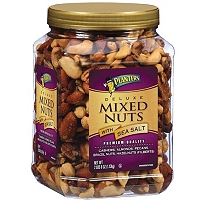
I’m a nut man. Love nuts. Hazelnuts, walnuts, Brazil nuts, pistachio nuts, cashews, pecans. But nuts are expensive. And while peanuts are lovely, I like some variety and grow weary of the mixes where you get about five thousand peanuts and one burnt almond. So when I saw the forty ounce jars of Planter’s Deluxe Nuts (sea salt, NO peanuts) at Sam’s Club in Logan, Utah selling for a mere $10.98, I just about fainted away and died.

Eleven bucks?!

For comparison, please note that a little ten ounce jar of the exact same nuts costs six dollars in the grocery store. Four times the nuts for less than double the price!

The nuts are good. More importantly, they’re a regular item at Sam’s. So with all the reports coming out about how good nuts are for you, reduce heart disease, reduce diabetes, blah, blah, blah, fight aliens, I can now afford to eat them and hopefully extend my stay as a carbon-based life form.

***

General David Petraeus has revolutionized the way America wages war. It was his strategy that turned the war in Iraq around. It’s his strategy that’s being used in Afghanistan. And it will be his methods that will inform how our soldiers face enemies in years to come.

The key to his thinking is realizing that there are two different terrains that must be won in the types of war we wage now—the geographic and the human. You know what geography is—take that hill, secure that town, remove the threats from that jungle. The human terrain, on the other hand, is made up of the hearts and minds of the people at the site of the struggle and has proven to be equally important.

It’s important because the wars we’re most likely to engage in now are not ones where two big armies square off and blast away. Anyone who tries to stand up to the United States using that method is going to very quickly learn what it means to get stomped, shredded, and served to the dogs. So most of the battles are likely to be engagements in unconventional war, where the enemy hides, and where the local populace will make or break the effort.

In May 2010, Vanity Fair magazine published a fascinating article called “The Professor of War” by Mark Bowden. It summarizes Petraeus’s history, the source of his thinking, and the kind of man he is. With so much at stake, I was grateful to get this well-written glimpse into the general and his approach to war.

While you’re at the site, you might want to also read another Vanity Fair article titled “General McChrystal’s Three Biggest Strategic Errors in Dealing With Rolling Stone” by Bill Bradley, published June, 2010. McChrystal was Petraeus’s right hand man. The contrast between the two men is enlightening.

Navy SEALS Buds Class 234, Crackting the ACT, & Running the Green River

 Of the 1.4 million people in the armed forces, only 2,800 of them are Navy SEALS (acronym for “sea, air, and land”). That’s 1/5th of one percent. They are one of the most elite fighting forces in the world. However, less than 20% of those who attempt to become a SEAL ever succeed. To even try you must pass a physical screening test which requires you to swim 500 yards in ten minutes or less, perform seventy-nine push-ups in two minutes or less, and eleven pull-ups. You have to be able to run 1.5 miles in at least 10:20 minutes, and that’s while wearing boots and trousers.

Some may think: well, that’s not too difficult. I could work up to that. However, the reality is that this level of physical fitness will not be enough. Because once you get into the initial training, you’re going to be doing far more than this every day.

Can you knock out 500 push-ups in a day, along with a four mile run, hours of paddling out in a six-man raft into a ten foot wave that tumbles you again and again into chilling waters, hefting your share of a 160 pound log over your head until you can barely lift your arms, and running an obstacle course with obstacles three-stories high. You’ll do a lot of this while covered with sand, your thighs and armpits chafing. On some days you’ll have to swim a few miles in a cold sea. And then you’ve got to get up and do it all again the next day. No wimpy hour-long workouts on Monday, Wednesday, and Friday with rest days in between. Heck, on the third week, you’ll get only about four hours of sleep over four days.

Can you do it?

Maybe you can. But before you try, or assure yourself that you could have if you’d only had the chance, let me suggest you watch Discovery Channel’s Navy SEALS BUDS Class 234 to witness what it takes to become the best of the best. It’s a fascinating three-DVD set, just over five hours of programming, that follows class 234 through the initial six-month SEAL training called BUDS (basic underwater demolition/SEALS). You’ll see 114 men start the six-month course and only 17 finish it. In fact, less than thirty make it past the first three weeks, which include the most grueling and punishing training I’ve ever seen. Those initial weeks are designed specifically to weed out all but the most committed and able.

The Discovery Channel does a great job with this six-part series. And it’s not just for guys. It only took about three minutes for each of my daughters to get hooked as well. And why wouldn’t they? It’s as fascinating as any American Idol or So You Think You Can Dance. In fact, in many ways it’s far more interesting. Heck, it was so good I think I’m going to watch it again. You can get it on Amazon, rent if from Netflix, or check it out from the Logan library.

For more info on the SEALS, let me recommend you start with these two sites: http://www.seal.navy.mil/seal/ and http://en.wikipedia.org/wiki/United_States_Navy_SEALs

*** 

My high school age daughters took the ACT last year and got good scores. But we wanted to make sure that they had excellent scores. High enough to put them in the upper levels of those applying to their desired universities. But how would we prepare them?

Back in the olden days when I was preparing to get my Masters of accounting degree, I knew I’d need some help to get a score on the GMAT that would be competitive. I looked at a number of study guides and ended up choosing the Princeton Review guide for the GMAT. I studied hard, got a great score, and became a believer. The guide made everything so easy. More importantly, everything the guide prepared me for was on the test. This is why, when I wanted to get a Masters of fine arts in creative writing, I used the Princeton Review for the GRE. Again, the study guide was easy to follow, and I got an equally good score on that test. Having had two great experiences, it’s no surprise I turned to Princeton Review again to help my two girls with their test. (BTW, some may see an attempt to get more than one graduate degree as smart, others as masochistic, and yet others as simple ivory tower bone-headery—I’ll let you decide which it might be in this case.)

The Princeton Review guide for the ACT is called Cracking the ACT. A new edition is published every year and includes general ACT test-taking tips, everything you need to know in the specific content areas, and practice tests. It also includes access to the Princeton Review’s online resources which include another practice test. It’s a big guide (this year’s edition was 619 pages), but the size is deceptive. There’s plenty of white space for taking notes, and the text is written so clearly, and everything broken down in such an easy manner to follow, that you’ll start only to suddenly realize you’ve just read thirty pages. Besides, you don’t have to study it all. You can focus on specific content areas, if that’s all you want to do.

This spring, both daughters worked through the book. We looked at their previous scores, identified areas for improvement, and set up a six-week schedule that required them to study about an hour per day, sometimes with help from Mom or Dad, but mostly on their own. One daughter studied hard, took the test in June, and improved her score by five points. The other daughter studied a little less diligently, took the same test, and improved her score by four points.

When 36 is the highest possible score, such jumps become significant. However, they’re not the result of special DNA. While I tend to think my girls are everything and a bag of chips (especially when they give me back scratches), the truth is the ACT doesn’t test some mumbo-jumbo innate intelligence. It tests skills. Skills anyone can learn. What my girls supplied was consistent effort. All they needed was expert guidance in how to apply the effort. And Cracking the ACT provides boatloads of that.

If you’re looking to improve your own score or help your children improve theirs, get this book. I have no doubt that anyone who supplies a bit of effort will be able see some nice results.

***

Imagine emerald pools, steep red canyons, and a gentle breeze. Imagine water so clear you can see the plants and rocks sixteen feet down on the bottom. Imagine trout swimming only feet away. Imagine swimming with those trout and then getting back into your raft to ride some rapids. Imagine picnicking a the water’s edge or atop a flat, shaded rock forty feet up that gives you a grand view of the river. If you’re lucky, maybe you’ll see an osprey dive for a fish or watch a pair of river otters swim by. Imagine doing this with family or friends, all in a short twenty-four hour period.

This experience is only about three hours away from Laketown, Utah. Well, everything except the swimming with the trout bit. The fish don’t really swim with you. They mostly just flee, but you get the idea. To enjoy it, all you need to do is raft the seven mile stretch of the Green River from the Flaming Gorge dam down to the Little Hole campground.

My family and I just did this with some friends and had a grand time. Because the river is relatively slow and the rapids are relatively moderate and short, parents don’t have to worry every second that someone is going to fall in and drown in a man-eating surge. In fact, along many of the calm areas we actively helped the children into the sparkling cold water (grin), including one rafter who was only three years old. One of the most enjoyable moments was when we pulled the rafts up into the gentle backwash of a large rock in the middle of the river, climbed the rock, and took turns jumping into the current and letting it carry us downstream.

The sun was shining, the weather warm. It was a wonderful trip. A total memory-maker. We put in just before noon and hauled the raft out just before 6 PM. But we could have taken much longer to play along the way.

The experience was fairly cheap. It cost about $70 to rent an eight-man raft. Perfect for six people. But there are other smaller and larger raft sizes. You’ll need to arrange a way to get the raft to the river and back again. We simply tied our raft to the top of our minivan. You can pay the rental people to drive your car to the exit ramp at Little Hole after you put into the river, or bring two cars (or a bike) and drop one at the exit. Or you can pay for a shuttle service where they drive you to the River and pick you up.

You’ll want to bring a small cooler with drinks, snacks, and sunscreen. You’ll also want to have good footwear. The river bed is rocky, and when you pull into shore, you don’t want to be ouching it the whole way in. I don’t recommend flip flops. They’re no better than bare feet. Old sneakers are fine, but they don’t dry quickly. And they waterlog and get heavy, which makes them less than ideal for swimming. Your best bet is to get real water shoes that are made to be light and drain quickly and yet still have a decent sole–a sandal or mesh covered shoe that uses Velcro to strap up. You can be fancy and spend a lot, or do what I did and get yours at Wal-Mart for less than ten bucks.  

You could make it a long trip and drive to and from the gorge and run the river all in one day, but why push it? Just find a place to stay overnight. There are some motels in the area, but we elected to camp. The spots at the Firefighters Memorial campground were $27 per night. The campground was beautiful and tidy with restrooms and running water. One of the most surprising things about this particular campground was that I didn’t see one mosquito while I was there.

I’m one of these types that attracts the villains. If there’s only one mosquito within a mile radius, it will smell me, pass up many other suitable victims (including my wife), and risk its life and limbs to sink its #@!* proboscis into my flesh. I think my blood must be some kind of mosquito crack. There’s probably some mosquito black market out there for it, run by some nasty mosquito cartel, which is led by a murderous, malaria-ridden mosquito boss making piles of evil mosquito money and spending it on opulent mosquito yachts and guns!

Anyway, not one bite. We watched the sun set and then fell to sleep with the stars overhead and the wind gently soughing through the boughs of the pine trees.

To make campsite reservations, go to www.utah.com to get a good map view of possible camping sites. Then go to www.recreation,gov to make the reservations online. Make sure your specific camping spot has everything you need. Our campground was very rocky and not all of the sites had tent pads. If you want to scope the lay of the land, the recreation.gov site will give you GPS coordinates of the campground. Enter those into Google maps then switch to satellite view and zoom in. You see exactly what you get. This way you can avoid accidently booking the site right next to the bathrooms or road or the one that features no trees.

Finally, when you’re done, you might want to top it all off by stopping at the The Flaming Gorge Lodge restaurant, just a few miles south of the dam, and enjoying a monster-sized cup of hot chocolate with whipped cream and one of their fabulous desserts. The blackberry cobbler and ice cream was delicious.