Teacher power, crawdad fun, and lemon bars
Teacher Power
 When we find great teachers, we prize them not only because what we learn improves our lives but also because good learning can be one of the most exhilarating things we experience. Unfortunately, a lot of teaching stinks. It’s boring, misguided, useless.
I’ve made a study of teaching. I’ve had to. For almost 20 years I’ve taught and designed courses in the private sector. And for many of those years, my work has been in a revenue-generating department. That means that my classes had better be effective and interesting, otherwise nobody signs up, revenue falls, and a lot of folks will stand around and wonder if it might not be better to just replace me with a potted plant.
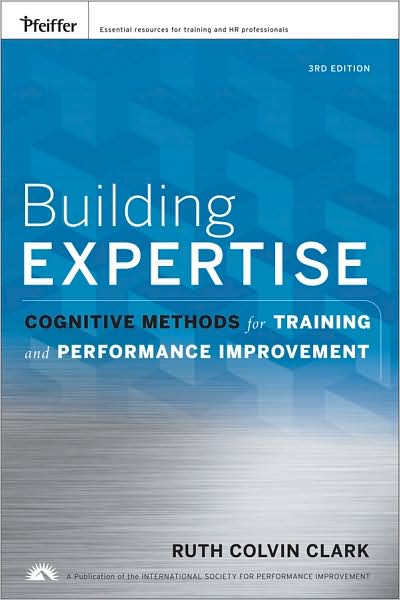
I kind of like having a job. And so I’ve tried my best to find the most effective methods for instruction. In the last few decades, education researchers have put many teaching techniques and principles to the test. We know better now than ever before how to structure learning that is effective and interesting. And I have yet to find a better explanation of the proven techniques and principles than Ruth Colvin Clark’s Building Expertise: Cognitive Methods for Training and Performance Improvement, 3rd Edition.
Don’t let the “training” part fool you. We often associate “training” with learning procedures and simple tasks, e.g. the State pays for “sex education” in our schools, not “sex training.” But Clark isn’t using the term that way. Clark’s “training” includes all types of learning.
Two things separate Clark from so many others who would offer advice on teaching. First, she bases everything on tested principles and techniques. I’m not talking about tested as in some teacher somewhere tried it and was impressed. I’m talking about scientifically valid testing that controls for variables and shows causation. The methods she describes are practical and proven. Second, she writes clearly enough and uses enough examples so that I can read about the principle and immediately see how I can apply it in my own class.
Among other things, you’ll learn:
- Why working memory is key to instruction and how to overcome its limits
- How to motivate learners
- How to structure learning
- When to use lecture and when to put learners into action
- When taking notes can actually be counterproductive
You’ll even learn why assigning lots of practice is NOT always the best way to learn. In fact, sometimes your child will learn more if you do half of their homework questions for them. Sound ridiculous? It’s not. It’s science.
You’ll find that there is no yellow brick road in teaching. Instead, you’ll see that the effectiveness of any method depends on whether it’s suited to the specific situation. And Clark will explain what the key factors in any situation are so you know which methods to apply and the trade-offs you’ll make when you do.
If you’re a teacher in any setting–family, job, church, school, or recreation–or if you’re trying to teach yourself, this book (specifically the 3rd edition) will be a goldmine. I can’t recommend it highly enough.
Crawdads & the Bear River Greenway in Evanston
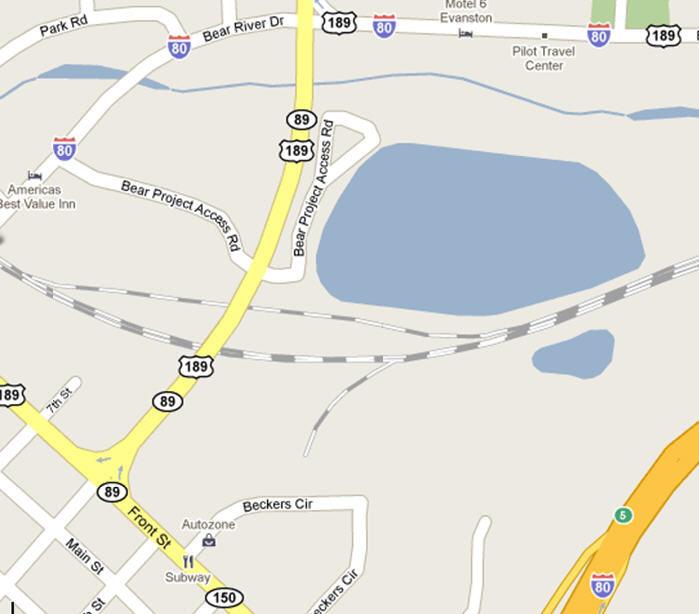 Here’s a recipe for a whole lot of family or date fun. And it costs almost nothing. Drive to Evanston, Wyoming. Make sure you bring a bucket. Pick up a few pieces of fried chicken at Wal-Mart then picnic at the Bear River Pavilion park. It’s the one with the small lake west of Wal-Mart and east of the overpass on 89. Keep your chicken bones.
When you finish eating, attach a length of about four feet of string or yarn to each chicken bone. Weight the bone down with some rocks or washers. You want it to sink deep. Tie a loop for your finger in the end of the string. Then go out to the pier or the cement box on the northwest side of the small lake and drop your bone in.
Wait.
Slowing bring your chicken bone up. You’ll find a crawdad clinging to it, thinking he’s gone to free lunch heaven. Use a net to snag the crawdad. A simple fish aquarium net will do. You can get them at Wal-Mart for a few bucks. Plop crawdad into the bucket. Ooh and aah appropriately. Make sure he’s got some water to swim around in.
Drop your line in again and repeat until you and the kids or dates are bored. We had a bucketful in about twenty minutes. You might want to pick a few of the crustaceans up. Just grab them on the sides just behind the spot where the arms of their big pincers join the body. Wave the crawdad at a selected victim—wife, daughter, girlfriend–for special effects.
When you’re done, dump the critters back into the water. But don’t go home yet. Take a stroll along the greenway that follows the river and enjoy the beautiful sights. If you walk east from the park, you might be able to be at the right spot at the right time to see a train up close as it thunders by.
We just did this with family from Colorado and California and had a great time. Who would have thought Evanston had this gem?
Crocker’s Luscious Lemon Bars
 I luv lemon in desserts. I especially love lemon pies, but they take too long to make. Plus you’ve got the meringue to whip up, and half the people hate that stuff anyway. I’ve found lemon bars taste just as good, probably better, and are far easier. Here’s a recipe I just tried and loved. It’s from our Betty Crocker cookbook. Please remember to include the sugar. My sister, bless her heart, attempted it without, and she can verify that, surprise surprise, it just doesn’t taste quite as good.
STEP 1: Preheat oven to 350 degrees.
STEP 2: Make pastry crust.
1. Combine: 2 C flour, ½ C powdered sugar, 2 T cornstarch, and ¼ t salt
2. Use pastry blender and cut in ¾ C butter until it mixture resembles coarse crumbs
3. Press mixture into bottom of greased 13x9x2 inch pan
4. Bake for 18-20 minutes or until edges are golden
STEP 3: While crust is cooking, make filling by stirring together: 4 slightly beaten eggs, 1.5 C granulated sugar, 3 T flour, 1 t lemon peel (optional), ¾ C lemon juice, ¼ C half-and-half (you can substitute with light cream or milk if needed)
STEP 4: When crust finishes, pour filling over hot crust.
STEP 5: Put it all back into oven and bake for 15-20 minutes or until center is set, i.e. it doesn’t jiggle and slosh.
STEP 6: Cool on a wire rack for 20 minutes.
STEP 7: Cut into bars, but DO NOT EAT IT YET! The lemon bars will taste 500% better if you totally chill them in fridge (the chill is the secret, folks). So put that pan in the fridge and wait! It will take a few hours.
STEP 8: When TOTALLY chilled, take out of fridge, sift some powdered sugar over the top, and serve.
Try to refrain from eating half of the pan.

 I’m supposed to do this tag thing where one author tells about his or her latest project and then tags other authors to tell about theirs and so on and so on until we turn into some weird internet author borg and eat your brains out.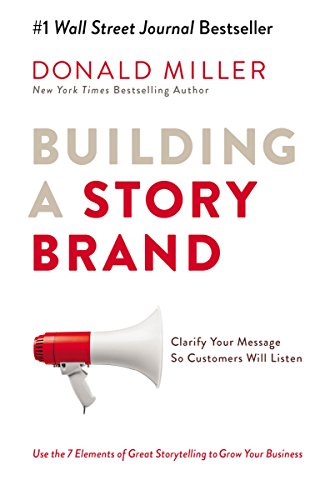


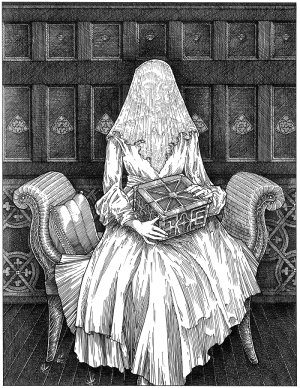 Take a runty warrior and a slow-witted wizard who have been contracted by a veiled bride willing to pay diamonds to anyone who would fetch an oh so precious box from the castle of a dead wizard. A castle from which no adventurers have returned. Well, except for Thogar the Mighty. Of course, he’s now Thogar the One-Armed Madman. But let’s not quibble.

Sounds like that book would be a really big help for a lot of teachers out there. I’ve had way too many classes that assign hours and hours of busy work on a daily basis–instead of actually learning the material, I just learned how to get through homework more quickly. =P
And I’ve found out that in classes that try to cover like three days’ worth of material in one day (which is not so uncommon in college), it really is better to just not take notes, because there’s no time for my brain to process the information at all if I’m never lifting my pencil from my paper for an hour.
Yes, it’s been a great resource for me.
I’m not a teacher or instructor of any kind, but I’ve been to a few seminars, and I’ve heard of or known lots of others who are teachers. It seems like a lot them focus on either the left brain/right brain dichotomy or the visual/auditory/kinesthetic distinction. Does Clark address those issues at all? I’m curious because it’s my only frame of reference.
Well, the left brain right brain business has been shown to be not so accurate. Here is a recent article with some summary and a great interview by Radio West.
http://www.newsweek.com/2010/07/10/the-creativity-crisis.html
http://www.publicbroadcasting.net/kuer/news.newsmain/article/184/0/1685545/RadioWest.(M-F..11AM..and..7PM)/8910.The.Creativity.Crisis
The visual/auditory/kinesthetic stuff also has very little basis that I’ve been able to find, and I’ve read, taken classes, and tried to implement a lot of it. I don’t know of any studies that show how to test people for their “learning mode” and then use techniques that actually demonstrate statistically valid improvements in learning over control groups. I’ve concluded it’s yet more teaching folklore. Ideas with no real scientific evidence.
What has been shown to benefit learners, and what Clark details, is managing visual and auditory working memory channels so they’re not overloaded and so they complement each other. We also know that aerobic exercise and short breaks with some activity seem to increase learning. But I haven’t seen any studies to suggest it’s only for people of a certain measurable type. It’s useful for everyone. Active projects can help all sorts of people encode what’s in working memory.
There’s a whole body of research and testing of what is required for expertise in a specific domain. And Clark puts a lot of it in her book. It’s not the only book I’d recommend, but it’s a great one.
I swear I’ve asked this before, but can’t find the answer.
John, when the devil is your next book coming out? Honestly, there are a lot of series that I’ve started, but the one I’m interested in continuing is yours.
Well, to my chagrin the date was this October. Then I slipped the schedule and we went to January, 2011. But the revisions for CURSE ended up rippling out through the whole book. They were massive and took far longer than I expected. So Hartwell decided to let the date float until we had a manuscript we agreed on. I just, I’m taking two seconds ago, finished draft 3. I’m going to email it to my agent here after my wife reads the two versions of the first chapter I have. Then it’s off to Tor. I hope we have a date set in a few weeks. I’m so sorry for not getting it out more quickly. But the story had to be my best.
WHAT! WHAT!? WHAT?!!!!???? YOU OWE US A BOOK YOU DIRTY ROTTEN SCOUNDREL! YOU OWE IT TO US!!! THIS IS UNBELIEVABLE!! CLEARLY YOU DON’T CARE ABOUT US!!!! ALL YOU CARE ABOUT IS MILKING YOUR FRANCHISE AS LONG AS YOU CAN!!!
Okay, totally kidding. I just wanted to give you a taste of what it will be like in several years when you’re huge and totally living off of your books in much the same way that Stephen King currently does. And you miss a deadline. And all your rabid fans turn even more rabid, like the fluffy white rabbit with very long fangs in a well-known Monty Pithon movie.
It’s all good. I guess I’ll have to settle for Ken Scholes’ new book. Not that that’s bad. It’s a pretty good series. You know, it’s just not . . . John D. Brown.
Hezekiah, thanks. Your comment made my day. Of course you have Brandon’s twelve gazillion pager coming out in just a week. That should keep you busy 🙂
Honestly, I don’t think that I’m going to read that. Not any time soon. I’ll probably pick it up just so I can have a numbered copy, and to boost his numbers for the first week, but I don’t think I’ll read it, yet. I don’t have the stomach for a 10-books series that won’t be completed for 10+ years.
Plenty of other books to read in the meantime.
That’s true. It’s going to be a looooooong journey. But I expect it to be a good one.