Press Release – SF/Fantasy Key to Teen Literacy

FOR IMMEDIATE RELEASE

IS SF/FANTASY KEY TO TEEN LITERACY?

Findings presented at national American Library Association conference reveal science fiction & fantasy literal gateway drugs to youth literacy

CHICAGO, ILLINOIS |  July 11, 2009 | Utah’s newest author, John Brown, summarized statistics and research at the 2009 national American Library Association (ALA) conference held in Chicago which suggest that science fiction and fantasy are two of the main gateway drugs to literacy for youth. Data provided by Nielsen BookScan, public libraries, and recent studies published by the National Endowment for the Arts (NEA), suggest that at least 1 in 3 youths read for the effect produced by Science Fiction and Fantasy. “However,” says Brown, “given library circulation statistics, that number may well be 2 out of 3. These are incredible numbers, and have important implications for youth reading programs.”

According to Brown, “the latest research in emotion shows that reading fiction produces a physical response, as real and physical a response as when we take aspirin, alcohol, or crack. The good thing is that while stimulating pleasure centers, it doesn’t change the brain the way hard drugs do. Furthermore, it also carries the powerful and desirable side-effect of improving reading skills. The key is in finding the type of fiction which appeals to the given age group. And for youth it appears that drug of choice is science fiction and fantasy.”

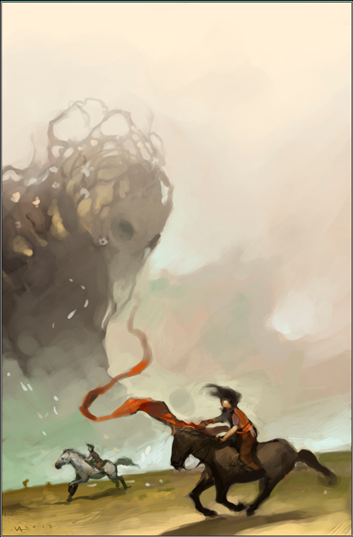
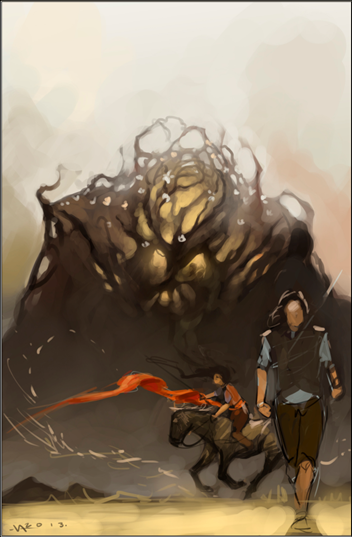
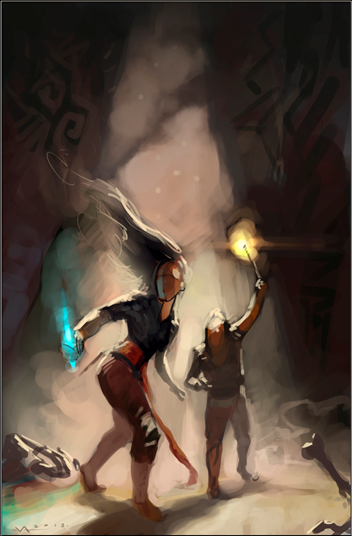
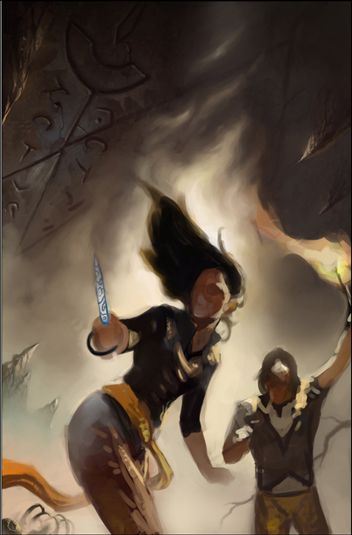
John Brown’s epic fantasy for teens and adults, Servant of a Dark God, will be released in October 2009 by Tor Books, the largest publisher of science fiction and fantasy in the world. For more information see the links below.

Share

Similar Posts

  • |

    Wolves in my backyard

    National Geographic ran an article in the March issue titled “Wolf Wars.” It has a great interactive map. You’ll want to read the whole article, but I want you to look at something.

    First, here’s a picture of a wolf in Yellowstone licking his or her chops over a recent elk kill.  Looks real friendly, doesn’t it. Here, poochie, poochie, poochie.

    A few facts. Wolves can grow up to six feet long (tip of nose to tip of tail) and three feet tall. They weigh on average about 80 pounds but can be as heavy as 150-190 pounds. Wolves can reach 40 mph when chasing, but the use their stamina more than speed. Regardless of how they catch you, their jaws are strong enough to crush bones. You want more facts? Go to this wiki article on canis lupis.  The point is that they are large, smart predators. At the top of the food chain. These aren’t little doggies. They’re killers. And they are mighty hard to socialize with humans (read the wiki article).

    Of course, it can be done. Not far away in Heber City, Utah lives Doug and Lynne Seus (yes, that’s the name–gotta love it!) who train wild animals for movies. The company is called Rocky Mountain Wasatch Wildlife. I know you’ve seen one of their animal “actors,” Bart the bear, in many movies. The Seuses also happen to train wolves. A friend of mine grew up in Heber with the daughter of Doug and Lynne. She visits from time to time. Last summer she went down and saw the wolves. My friend was told that she had to carry any children she might bring.

    Why?

    Because the children are food. That’s why. And when she went out there, the wolves were tracking those children every minute with their eyes. Freaked her out. In fact, another friend got so freaked she took her kid back to the main house and didn’t come out again. Folks, these are wolves that work with humans ALL THE TIME.

    I know the nature programs often make it seem like wolves are harmless, but they’re predators. Just like grizzlies, tigers, or crocodiles. Wolves are dangerous. A pack kills up to two elk a week. That’s a lot of eating. But they’re all up in Yellowstone, right?

    Um, no.

    Exhibit 1: Documented wolf packs, i.e. two or more wolves, in 1992 (click on image to see it full size)

    Exhibit 2: packs released in 1995


    Exhibit 3: wolf packs as of 2008 (2 years ago)

    Holy schnitzel!

    If you didn’t read it above, they’re estimating about 1,645 wolves in 217 packs. And that’s just the ones that have been officially documented. You know there are more out there that haven’t been seen. Look at the one all the way out by Casper, WY. Those bad boys can travel. In fact, the NG article says that wolves stake out a territory of about 200 to 500 square miles (a circle of that size has a radius of 8 to 13 miles). They travel on average (AVERAGE!) 60 miles from their pack when seeking a mate or new pack. Although one was recorded traveling 500 miles.

    Okay, so given the maps and sightings above, how is the John Brown family doing down in Laketown?

    Exhibit 4: I need a gun!

    The map below marks Laketown, UT with an A. I marked over that the packs shown in NG in red and others reported in pink. I also show orange rings 20 miles apart.  

    The “unofficial” sighting just inside the 80 mile ring was by my brother-in-law. The wolves were killing a bunch of his neighbor’s ewes he was taking care of. I didn’t say “eating” because they were killing far too many to eat. Wolves looked up at brother-in-law on four-wheeler. Assessed him. No whimpering, no cowering, no doggie wagging of tails. Just a frank assessment–human, danger or lunch? Said wolves sent a herd of the willies galloping up brother-in-law’s back. Freaked him out. He high-tailed it out of there and called the Feds who found that pack and killed them about fifteen miles away. But that sighting was before 2003. The sighting just outside the 100 mile mark was by some neighbors around 2007. The sighting down by Manila, UT was reported in a  news report by KSL news in 2008, just two years ago.

    Okay, so I think it’s pretty safe to say that we probably have wolves in our backyard. And if we don’t, they’ll be here in a year or three.

    Go read “Wolf Wars” in the the National Geographic. It’s free. Then tell me how you’d feel with a few packs in your backyard. Are you all warm and comfy? Here, little doggie . . .

    So I’m thinking that when the girls or I go hiking, which we do all the time, we need to carry more than a walking stick. More than a paintball gun used to scare the deer out of our garden. I know that even with all the packs shown above, I haven’t heard about wolves attacking humans, but is it wise to assume they just freak out when they see humans and all run away–“that’s a eight-year-old human girl, she will make me wear the cone of shame. I do not like the cone of shame.”

    Or will it be, “Hum, possible lunch over there, let’s check it out. Ooh, look at the fat one. I bet he’s tasty.”

    What do you think?

    Share
  • LA/Book 2, in which the novel kicks my butt

    I’ll make this short. I have a deadline for my next revision of CURSE OF A DARK GOD. It’s November 20th. But the book is kicking me around like a tin can. I sat down Saturday to work on my current revisions and as I unpicked the chapter I was working on the whole story unraveled in my hands. I worked for 8 hours trying to put it back together, but it resisted all efforts.

    I’m not one to take this lying down. I’m going to San Diego this week, but will fly back early to work on the book, which means I will not be visiting Los Angeles. Alas. This wild beast will come under control. And that should please all those who have read SERVANT and are waiting for the next installment.

    Share
  • Update on CURSE OF A DARK GOD – just finished numba 40

    For those who haven’t noticed, I just finished chapter 40 of 60 on this draft of Curse of a Dark God. My original target was September 5th to finish the draft. I’m closer in my projections than I have been in the past, but I’m clearly not going to make that date. However, I’m going to see what I can do these next three weeks and hopefully pull it off by the end of September. 

    This is possible.  Author James Maxey just finished a novel of almost 60,000 words in one week. Yes, you heard that right. ONE WEEK! Here are his tips for doing this and here was his master plan when he started. I got to read his updates a few times each day. It was simply amazing.

    Of course, there’s no way I can write 60,000 words in one week. Not because I think it’s impossible. But because it takes time. James had a week off and spent like 10 hours a day at it.  I can’t take a week off.  But even if I could, I don’t write as fast as James. But hopefully I can structure things to get more time and finish it in three weeks. We’ll see. I’ve been working on this draft for the last four months and have put in about 240 hours on it, roughly 12.5 per week.  My slow 500 words per hour that I can’t seem to budge (yes, some is writing and some is revising as I go along).  I wanted to get a solid 20 hours in each week–that’s really the key–and am disappointed I haven’t managed to do this.  Of course, it’s hard with a full-time job and family and a daughter going off to college and life.  Waa, waa, waa. But I’m going to see what I can do to boost that to 25 hours per week for the next few weeks.  The good thing is that I’m really enjoying the story on the page.

    As for manuscript size, the issue with the last draft, right now the manuscript is 123,000 words. The target is around 170,000. I’m roughly on track to hit that. I’m trying to keep my chapters around 2,500 words.  We’ll see how close I get.

    Share
  • CONduit report & some interesting numbers

    CONduit is a conference for speculative fiction writers. This year’s conference was great. I was able to see and talk to a bunch of writer friends (Dave Wolverton, Dan Wells, Brandon Sanderson, Howard & Sandra Tayler, Eric James Stone, Ami Chopine, Darren Egget, Skipper Ritchotte, Mette Harrison), make some new ones (Lee Modesitt, James Dashner, Julie Wright, Aprilynne Pike, Larry Correia), plus chat with a multitude of others who are trying to break in. I also got to record with the Dragon Crawlers Radio guys. Nothing better than spending a weekend with a swarm of friendly and talented folks.

    I’m amazed at the success some of these people are having:

    • Aprilynne Pike had an initial print run of 200,000 hardback copies and was #1 on the NY Times Best Seller list.
    • James Dashner is going to be one of the main events from Random House this fall. I’m expecting an equally large print of his Maze Runner.
    • Brandon Sanderson just signed a contract that was announced on Publisher’s Lunch for somewhere around 2.5 million for four books. Folks, this is amazingly large for our genre.

    Of course, we already know Dave Wolverton and Lee Modesitt are some of the biggest sellers for Tor. Dan Wells is going to be big as well. And the Taylers have already got tens of thousands who read them regularly. They threw a great release party at this con.

    Larry Correia has had some interesting success as well and came at it from a side alley. He self-published Monster Hunters International. He sold a few thousand copies (no mean feat, especially for a self-published book), with many of the readers coming from the armed forces in Afganistan and Iraq. The book was so good the owner of a large independent store in Minnesota, Uncle Hugo’s, called the editor of Baen Books up and told her that she was an idiot if she didn’t buy Larry’s book because he could sell the heck out of it. So she took a look, agreed, and Larry’s now under contract with a real publisher. It’s coming out in July.

    In one conversation I learned the following about the Science Fiction & Fantasy genre.

    • 4,000 hardback copies for a title in a year is the rough break even point for Tor. You sell more than that, you’re okay. You sell less and Tor might have to drop you.
    • 10,000 hardback copies would be considered a very good seller.
    • 15,000 – 30,000 hardback copies and you are hitting the top of the midlist
    • Robert Jordan sold around 600,000 of each of his titles in hardback.
    • Depending on the time of year, 4,000 – 5,000 hardbacks sold in a week will put you in the top ten, even the top three, on the NY Times bestseller list.

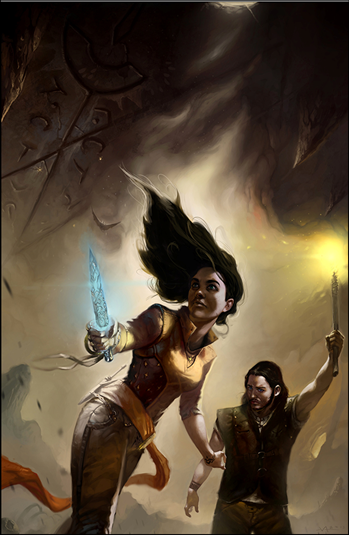
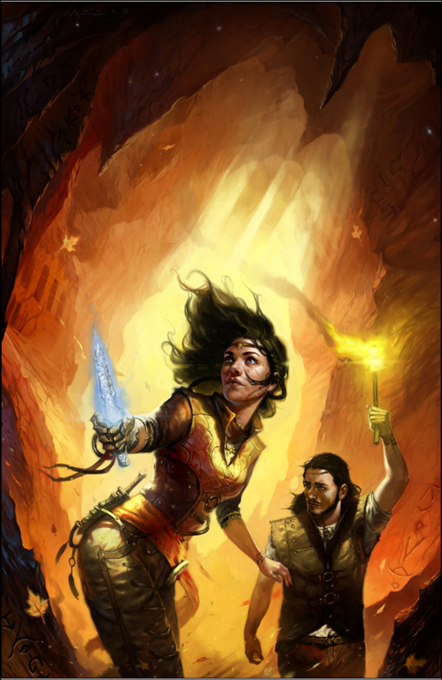
    As for me, I printed up some posters and book marks using Swanland’s art. The cover got a great reaction there. And that’s huge for me because, looking at that Gallup Poll blog I wrote, the cover is going to drive a lot of sales for a new author. I had a wonderful time giving my workshop. And I think I finally figured out which part of my novel I can use for readers. Oh, and if you get a chance to hear Eric James Stone read any of his short stories, take it. I’ve listened to him twice now and both have been well worth the 20 minutes.

    Share
  • |

    How to Write a Story that Rocks

    Folks, a huge thanks goes to Stephen Nelson for putting all this together. You may kiss his hand when you see him.

    This is a recording of “How to Write a Story that Rocks,” a two-hour seminar Larry Correia and I just put on at the annual BYU’s Life, The Universe, & Everything symposium. I think we had 130-140 people attend. This symposium is focused on writing fiction. And while the panels and presentations do include things specific to the science fiction, horror, and fantasy genres (both adult and young adult), a lot of time is also spent on story writing fundamentals that apply to ALL genres. So when I developed this workshop, I made sure I took the fundamental approach.

    The two-hour seminar has been broken down into 12 segments. To switch between the segments:

    • Hover your mouse pointer over the YouTube below
    • Click the forward and back arrows that appear on the right and left sides to move to the next or previous segment, OR 
    • Scroll through all 12 segments and select the one you want using the playlist control at the bottom

    If you prefer, you can watch all 12 on the How to Write a Story that Rocks YouTube playlist page.

    I’ve found whenever I develop any presentation or training that it takes a few iterations and revisions before it’s the best it can be. This is the first iteration of this seminar. And so below this video I’ve provided additional comments on each segment explaining key concepts, principles, and techniques that we might have failed to discuss or convey as clearly as we’d hoped. Enjoy!

    Handout

    How to Write a Story That Rocks – Handout

    Segment 1

    It’s documented–right-wing gun nut Larry Correia sang “Kumbaya.” What’s next? The hugging of small trees? Oh, Larry, the disilluion. The disillusion.

    The reason why I had Larry sing was not for his mellifluous performance, but to demonstrate the difference in reactions between him and our happy volunteer (“Country Road” by John Denver–this really was a love fest). The volunteer balked because he hadn’t taken any thought to know what to sing before he was commanded to do so. On the other hand, Larry and I had spoken before the seminar. So Larry had something to sing BEFORE he sang it. It’s a simple demonstration, but it illustrates a principle a lot of new writers forget. Writing is a performance. It helps to know what it is you’re going to perform before you perform it.

    It’s one thing for you to tell yourself to write. It’s much easier to tell yourself to write the scene where the rancher finds out one of his illegal ranch hands has been kidnapped.

    Now this doesn’t mean that you have to know everything. Or that you can’t write exploratory drafts to figure out what it is you want to write. But it does illustrate that whatever techniques you use, you’ll be a lot more effective in your writing when you have something to say first.

    But what do you develop? What are the things that bring the story to life? How do you go about getting those things to say? That’s precisely what I wanted to address in the seminar. In the segments that follow, I try to:

    1. Explain what I’ve found are the most important things to develop, the things that define the essence of story, that make the story come alive in the writer’s mind–the things that really matter
    2. Demonstrate techniques to develop those things so you have something to say

    Segment 2

    I think this segment went fairly well. What rocks will different from person to person, even though there will often be a huge overlap between people. So it’s important for authors to seek to develop the kinds of stories that rouse their passion. Watch this interview with best seller Debbie Macomber to see what I mean. So I can’t tell you what to write about. Or if whath you think rocks will resonate with a large number of people. However, what I can do is share the techniques I use that have been most productive in helping me develop initial ideas into something that has much more power.

    You can use the techniques to juice up any of the four parts of story. However, I will say that I find that the most productive, the most important parts, are character and problem. Plot and setting are important. I love them and work to juice them up. But when I get a good character and problem, that’s when the writing seems to flow the easiest.

    And no, I don’t list theme as a part of story. Everyone talks about theme, but when I read what they have to say or press them for examples, it seems that it always either boils down to (1) a story element or topic that’s repeated, (2) a story problem/issue stated in an abstract manner, or (3) some moral situation. Les Miserables is about the “theme” of mercy versus justice. But saying justice versus mercy is just an abstraction of the story problem and dilemmas the story deals with. So, no theme. 

    Segment 3

    Loved this bit about scenes from David Mamet: http://www.slashfilm.com/2010/03/23/a-letter-from-david-mamet-to-the-writers-of-the-unit/ 

    Segment 4

    I’ll be adding my comments to the rest of these segments over the next few days.

    Segment 5

    Segment 6

    Segment 7

    Segment 8

    Segment 9

    Segment 10

    Segment 11

    Segment 12

    Dan Wells on Story Structure

    Check it out: Dan Wells on How to Build a Story (story structure). I find Dan’s “start with the ending” technique helpful as well as thinking about a worst fears realized moment. Watch the videos and see if there isn’t something there that can help you develop your story idea.

    You can get the PowerPoint of How to Build a Story on Dan’s site.

    If you find this approach useful, you might want to check out what novelist Larry Brooks has written about the same material on StoryFix.com.

    Share
  • Gun Runner – Graphic Novel- Kickstarter Live Now

    The Dragon Award winning novel Gun Runner, by Larry Correia and me, is being adopted into a graphic novel by Hound Dog Media. The writer is the legendary Mike Baron (The Punisher, Nexus) and the art is by Marcelo Salazar.

    This is a story about a smuggler crew who specialize in stealing battle mechs and selling them to worlds that aren’t allowed to have them. The book is great. I can’t wait to see it as a graphic novel.

    This is going to be awesome. Check it out. There’s even a pledge level to get yourself drawn as a member of the crew.

    Share