
Similar Posts
Your local zombie author appears on Writing Excuses, Plus the Writing Debrief explained
 After a cancerous death, I appeared on Writing Excuses this week to groan and hold forth with the guys on writing second novels and second books in a series.
During the podcast I talked about my practice of debriefing after every writing project. A reader just asked what that was, and so I thought I’d explain it here.
The debrief is a simple thing. I learned it back when I worked as a business consultant. It always provides great insights. Sometimes it provides massive insights. The principle is to pull back and look at the big picture every once in a while. So here’s what I do. When I finish a project, I sit down and simply list out what I struggled with, what went well, and anything I learned. I list out things I’d do again that worked particularly well and things I’d do differently. This might be about craft or process. Sometimes I might take some time to reflect on the nature of story and read a favorite book about the craft or perform a story analysis on another movie or book. Then I write up my insights in a form that I can read later and know what the heck I’m talking about. This can take a few hours or a few days. This last debrief after draft 3 of CURSE coincided with my preparation for a day-long workshop I had agreed to give on story, and so the insights came thick and fast. I recommend the practice highly.
Servant cover art
The cover illustration for SERVANT is finished!
(and there was much rejoicing.)
yea.
Actually, there was DANCING. Because I think the final piece rocks. The artist is Victor Minguez. Here are two of his pieces that I really enjoy.
The first is “Angel.” I love the bright contrast, the face, and the fact that there’s so much rich detail.

The next is “Champagne Havoc.” Again, a wonderful face, but also an awesome idea (a robot carrying a woman in the palm of its hand), and then the lines and chopper give the whole piece a lot of energy.

Click here to see other works in his portfolio.
So we kicked the project off by me sharing the goals I had for the cover and tons of reference on everything from color scheme to character costume. I asked Victor to develop some concepts for an ensemble of Hunger, Sugar, and Talen as well as some for the cave scene towards the end of the book. He came back with these sketches.
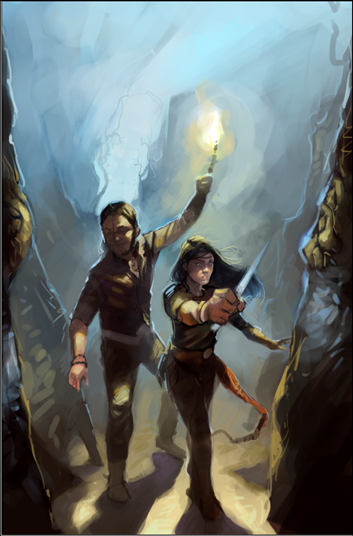
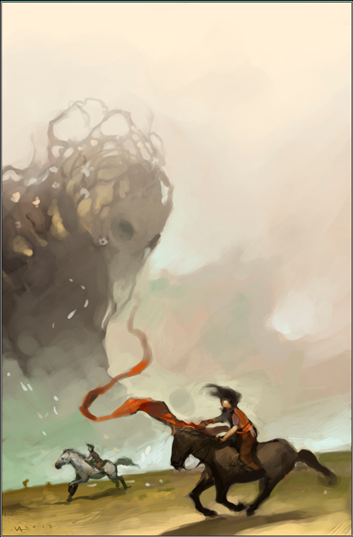
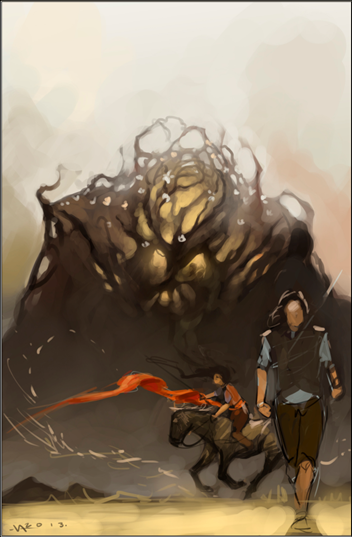
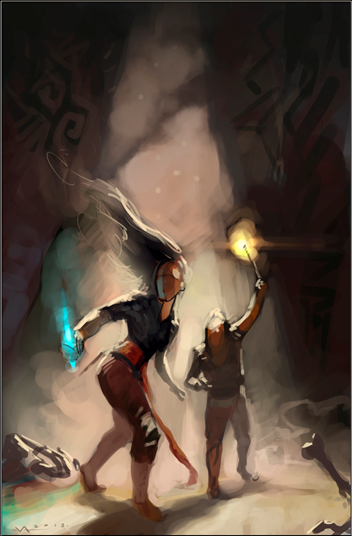
I liked the first because it would allow us to see the figure’s faces more clearly. And there was a lot of interesting detail with the cave. Look at the roots by the entrance. I also liked the structure. I liked the third because it included Hunger, and Victor was taking Hunger in a new direction. I also thought we could do some neat things with the energy of Sugar on the horse and that long sash. The fourth one, however, just felt right. It had so much potential energy. I was immediately drawn to the body language. And so this is the one we decided to develop. Then one of my beta art viewers suggested moving closer and putting in more strong diagonals. It was a perfect idea. Victor agreed and came back with this.
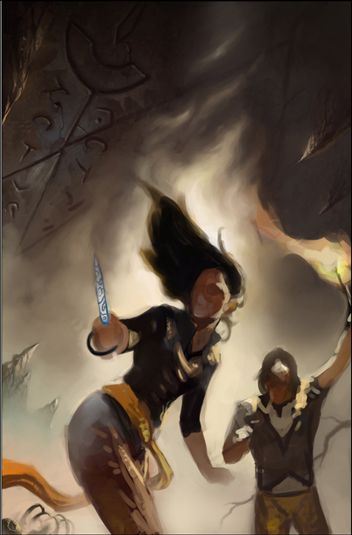
I liked the lines of her stance but wondered if she needed something stronger with her legs. Victor adjusted, but my idea just wasn’t an improvement.
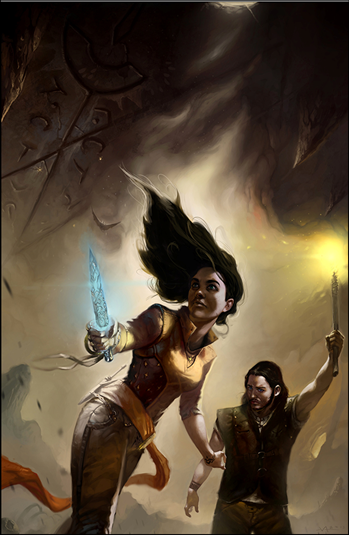
So we decided to stick with the previous version. However, this was all too dark. Way too much gray. When looking at things in thumbnail, the cover has to pop. I shared more reference images. And Victor went back and delivered this.
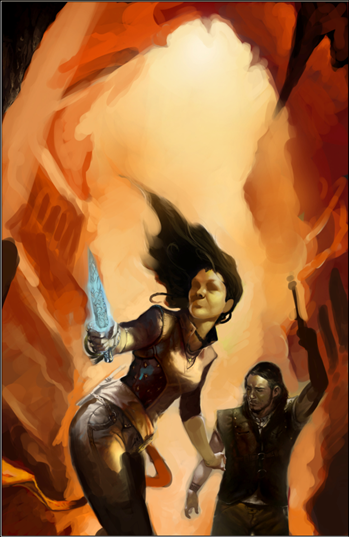
Boom! That was exactly what I was looking for. Bright, dynamic. However, we needed a more neutral bit at the top for the title and author’s name. And the brightest spot had to be behind Sugar to draw the eye to her. Here was the next version.
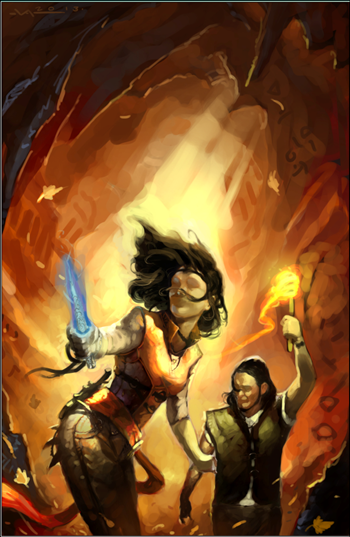
At this point I started to dance. This was IT! There was a lot going on here. We had the high contrast I wanted. We had the energy. The wind with the hair and leaves and sash and torch all add kinetic energy. As do all the diagonals. Notice as well the cave details–we have hints at previous habitation, runes, and some interesting contrast with the dark foreground. I had shared a number of N.C. Wyeth and Tim and Greg Hildebrandt pieces as reference, and I think this captured elements of those and gave them a new twist. Note as well the sharp projections on Sugar’s behind. Victor put them in there purely for aesthetic reasons. He had no idea what they were. I loved them. He loved them. They worked. We would just have to make them make sense.
After a few more iterations, he delivered the final.
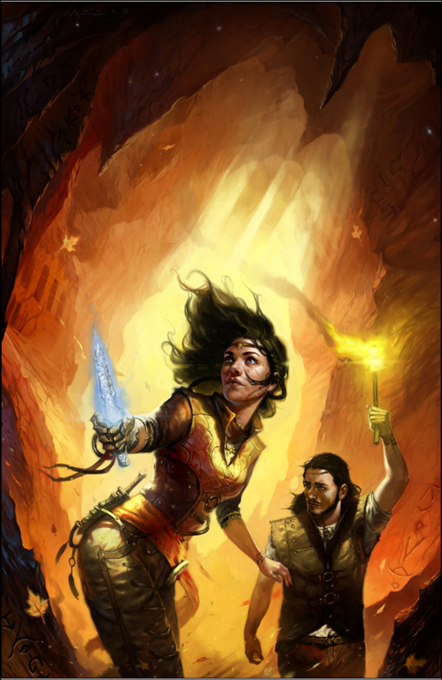
I think it’s gorgeous. And will advertise the book perfectly. In a few days I will reveal the final cover with title etc. Shortly after that, SERVANT will be available again to please English readers worldwide.
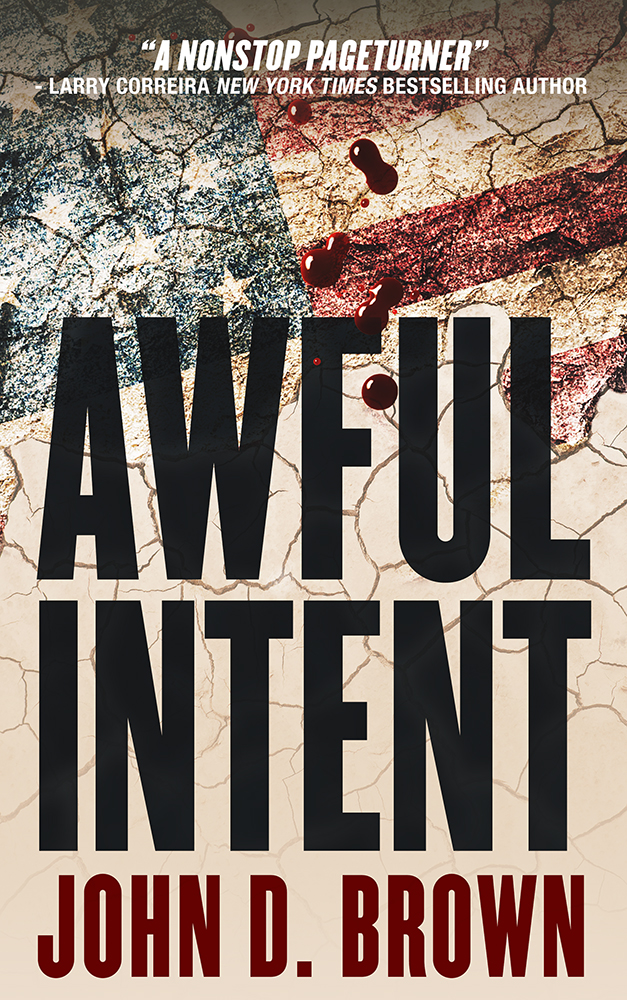
Awful Intent Cover Reveal
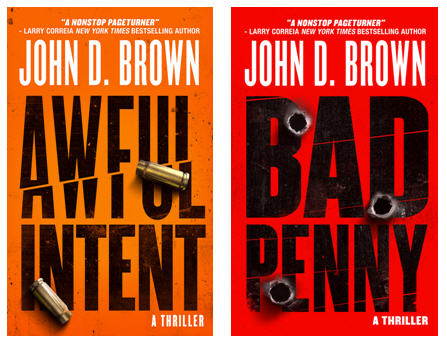
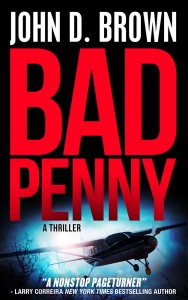
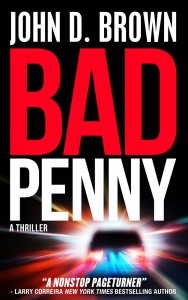
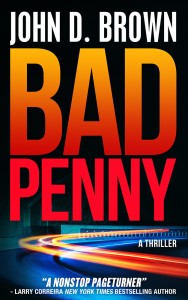
For Awful Intent, I looked around at different cover design shops and decided to use Damonza. I sent over the brief, and we began. What I needed was a cover in the same style of Bad Penny. A match. I also told Grady, the designer, that if he did something new with Bad Penny, I might consider it.
He sent back these.
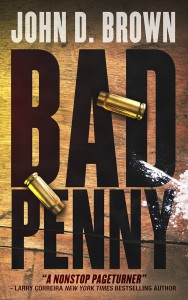
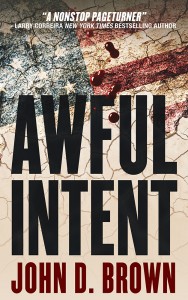
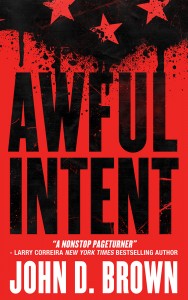
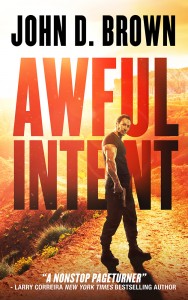
I loved what he did with Bad Penny. But it was nowhere near what we’d done with the original. And none of the others matched either. And that was a problem. I need all of the covers in the series to look like siblings.
We went back and forth with a number of iterations. Then decided to focus on Bad Penny.
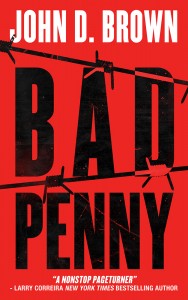
And then I realized that I was falling prey to shiny object syndrome. It’s the bane of my life. There were all sorts of great ways to approach the cover, but I had already spent hours sorting through all that with the Bad Penny original. And the cover must be doing okay, because we sold lots of copies last year. I decided for everyone’s sanity to stick with the original decisions and parameters. That meant:
- Bold, action-thriller colors
- High contrast
- Big fonts
- Some texture
- And some small element over top
But I was still having a hard time clarifying in my mind something that was eluding me. Luckily I was in Cedar City for the Shakespeare Festival at the time and having lunch with Dixon and Linda Leavitt. Dixon pointed out that I was waffling between a literal and symbolic approach. Once he said that, I could see exactly what he meant. For example, the Bad Penny in the first batch was painted on a board. It was more realistic. The red Awful Intent was more symbolic. He also pointed out that I had used a small element in the original. With that clarity, we went back to work.
I’m very pleased with the finals (BTW, I’ll be tweaking the text above my name in Awful Intent; so that one isn’t final-final yet).
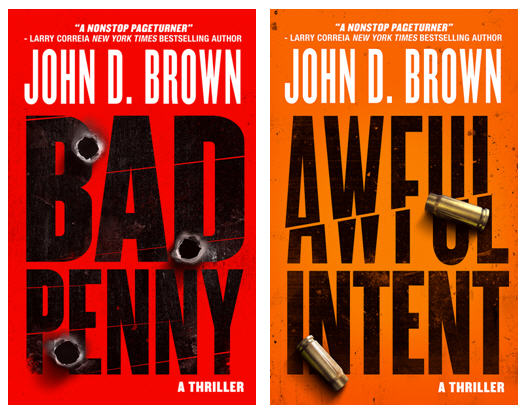
I think they say action thriller loud and clear and will easily stand out in a line-up.
Denver: fire, snow snakes, and farty beef jerky
Here’s the report of what happend on the Larry and John tour of Denver.
On the way out:
- We met in Evanston, WY at 8:00 AM
- On a lonely stretch of I-80 we passed a semi that was on FIRE. Didn’t stop because Larry and I wanted to see the driver burn.
- Was freeze-dried in a parking lot in Rawlins by Arctic winds in the four seconds it took to open the car door, say “Holy schnitzel! It’s freezing,” and then run to the Subway. It was cold. COLD!
- On another lonely stretch of I-80 we passed a truck driver out in that wind with a knife. He was down in the median trying to hack off the antlers of a bull elk that had obviously been hit by a vehicle. His truck was slowly rolling forward. Someone had to be driving, but I didn’t see anyone.
- Because it was soooo cold the snow didn’t stick. So in various stretches the wind would blow the snow across the road in long trails that looked like ribbons of fire or snakes. Totally awesome!
- Then we started hitting stores all the way down to Denver–Cheyenne, Fort Collins, Boulder, etc. I can’t tell you how much I like Barnes & Noble booksellers. Everyone was happy to see us and nice to work with.
- Oh, and Larry bought treats. Wal-Mart trail mix, cookies, and beef jerky. When he opened the beef jerky, he said, “Holy cow, did you just fart?” I had not. It was the jerky. You have been forewarned.
Other highlights:
- A number of the stores ordered extra copies of our books for our driveby signings. But the Barnes & Noble in the Aurora Southlands Town Center beat them all hands down. They rolled out a hand truck stacked with books.
- Had a great time in Loveland at the B&N there. Vivian Tapp was a peach with a Santa’s hat to boot.
- We had a bunch of folks show up at the Lone Tree signing. Thanks to everyone there. I’ve forgotten all the names except that of James, the store’s fantasy nut.
- Then we went out to dinner with a great crowd. Larry had a bunch of his interesting friends. I got to hang out at the other end of the table with my sister and her man Mark, Rachel Dryden, and Ken and Rachel Kao (who both do parkour–cool!!).
On the way back:
- We almost died. You can read Larry’s version of the story here.
- More of that fine smelling jerky and road crawling with snow snakes.
It has begun
The very observant will note that the progress bar for draf 4 of CURSE OF A DARK GOD has moved. Here’s the opening, although I’m sure it will change. We’re on our way, folks.
It was well past midnight, and they were deep in enemy Fir-Noy territory. There were eight of them: Talen, Sugar, River, and five of Shim’s soldiers, all of them staying back in the deep moon shadows at the edge of the wood, crouching low in the dry autumn weeds that had not yet been eaten down by the village livestock. They had to be careful. Talen, Sugar, and River all had sizeable Fir-Noy bounties on their heads. And even though they wore weaves of might, being multiplied didn’t make their flesh impervious to arrows and blades.
This vulnerability had been made abundantly clear to Talen in his training. In addition to his many fine bruises and the finger which had recently healed from a break, he wore a bandage around his arm where a soldier had cut him in practice two days ago with a spear.
The night shadows of the clouds played over the moonlit fields and houses and road that ran through the village of Plum. The village where Sugar’s father had been killed and her mother taken and beaten. The village where the Fir-Noy had burned her life to the ground. The village that was their destination.
Purity, Sugar’s mother, had hidden valuables there. Weaves and maybe a codex of lore. Talen and the others had been tasked to steal into the village and retrieve the items, right under the noses of the sleeping Fir-Noy.
Except this wasn’t right. They were supposed to have come out across from the ash ruins of Sugar’s old house. “I think you’ve brought us to the wrong end,” Talen whispered to Sugar.
“No, I’m just coming to get what’s mine first.” Sugar pointed up the road to the entrance of the village.
Talen followed her finger. The Fir-Noy here had begun to build a wall around their village. A wooden palisade atop a mound of dirt. But she wasn’t pointing at the half-finished wall with its timber supports still showing like bones. She was pointing at a tall pole that had been erected at the gate of the village. Something had been fastened to the top of the pole. Talen peered closer and saw a skull shining pale in the moonlight.
“That’s your father’s, isn’t it?”
“You’re going to help me,” she said. “He deserves better than that.”
Teachers (and writers)! Free Class Next Monday on How to Teach Narrative for the Common Core
If you feel a bit lost or anxious about how to teach narrative for the new core, especially stories, I think I can help.
I’m an educator in the private sector and an award-winning novelist and short story writer. I’ve been teaching authors in various venues how to write for the last five years. I’ve been on writing podcasts with thousands of listeners, taught at a number of writers conventions, and had a series of articles published by the national Science Fiction and Fantasy Writers of America organization, an organization for professional authors. I’ve also been helping Nellie, my wonderful wife, teach her 7th and 8th grade language arts students the unit on short stories during that same period. We’ve taught it to twenty different classes and picked up a number of important insights along the way.
This last year I couldn’t help but examine all the materials Nellie brought home during the district’s writing program adoption investigations. Some programs looked very promising; others not so much. Some got some things about writing flat out wrong. Most of the programs had gaps.
Furthermore, because I work with so many people wanting to write, I know that it’s difficult to teach if you really don’t understand what stories really are and how they work. For lots of people, the subject matter can seem impenetrable. And yet writing stories is such a wonderful way to teach writing, especially because so many kids love it. You won’t find a kid who will spend extra hours writing a business letter or poem analysis, but you will find quite a few who will go crazy writing stories. And the whole time they’re practicing their writing skills.
The question is how DO you write a story?
What is a story?
How can you tell if it’s good?
How do you come up with ideas?
Where do you start?
And what the heck is this chart? Do writers really use this? (Not many that I know.)
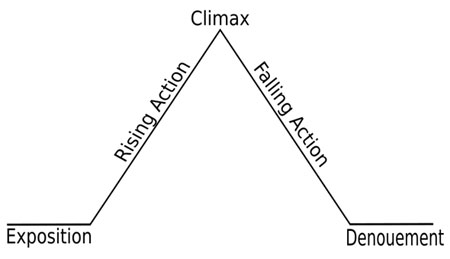
And does anyone think changing the diagram to look like Aspen, Colorado actually helps?
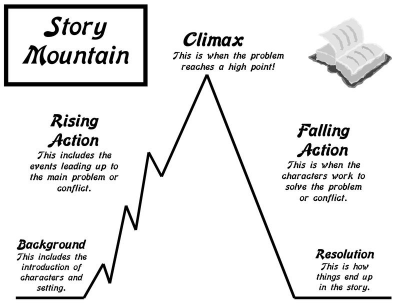
Hey, students—please make your story look like Aspen, Colorado! (Yeah, that’s going to be effective.)
And yet it’s not as difficult as it appears. Nellie and I have seen a lot of kids really get into writing stories. We’ve seen kids WILLINGLY going way beyond the assignment to write stories that are eight, twelve, twenty-five plus pages. And as they’re writing, they’re practicing grammar, spelling, structure, vocabulary, etc. without knowing it and having a great time. I know that if you enable your students, many of them will write, write, write. Especially in grade school. But also in the higher grades.
Stories can be a blast. The assignments can connect to many students. And the results can be wonderful. I’ve laughed out loud at some of the stories coming out of Nellie’s class. Others have been enjoyable on other levels.
But for this to work in your class, you need to know some key things. You need to understand the core of story and the story development process. You need a lesson plan that details everything step-by-step so your students don’t flounder. And you need to know some fundamental tips (secrets?) about teaching this content.
So I’m going to hold this day-long class for you. A full eight hours. And share everything Nellie and I have learned. This class will be for teachers at ALL levels (I’ll show you some ways to scale the complexity of what you’re doing). There will be NO cost. The only thing you have to bring is a pencil, paper, whatever program materials you have, and a willingness to have a good time.
When we finish, you will know how to write a simple story like the ones your students will write because, ta-dum, you will write one! AND you’ll have a step-by-step lesson plan that builds on whatever materials you have—an official program or one of your own. AND you’ll understand story better than 99% of the population. AND you’ll have a bundle of techniques to help your students. AND you’ll solve both world peace and maybe the lost sock conundrum.
Truly, I think that instead of feeling stress, you’ll actually be looking forward to teaching and writing stories with your students. If not, you may bring tomatoes and huck them at me, but please be aware that I will not stand still; to find satisfaction, you will have to be able to hit a moving target.
If you’re interested, just click the Contact John link under my photo in the left sidebar and send me an email letting me know.
Hope to see you in class!
GET READY FOR A FUN DAY OF LEARNING!
Topic: Teaching writing (narrative & the common core)
Who: Teachers (and writers at least 18 years old), seats are limited
When: Monday, July 29th, 8:15 AM – 5:00 PM
Where: Rich Middle School, 54 E 100 S Laketown, UT 84038
Materials you need to bring:
- Pencil
- Paper
- The writing program you’ll be using this year
- Kooky socks, for those who cannot resist the urge
- A lunch or a way to get one
AGENDA
8:15 AM Arrive
8:30 AM – 9:20 AM
- Can you create a redneck crapper?
- The 1st secret to teaching writing: Attributes & techniques
- The 5 parts of story
- Thieves prosper – using existing patterns
- A car, a beggar, and an idiot — basic pattern 1
9:30 AM – 10:20 AM
- The 2nd secret to teaching writing: Do it with them
- Technique: Sketch then draft
- Workshop 1: Zombies and kisses
- Technique: Zing hunting
- Workshop 2: Hunt zing
10:30 – 11:20
- What makes a story big or small
- Workshop 3: Select a right-sized THOM and character
- Workshop 4: Select a Goal
- Workshop 5: Make character sympathetic
- Workshop 6: 3 tries
- Workshop 7: Resolution
LUNCH
12:00 – 12:50
- The 3rd secret to teaching writing: Cognitive modeling and the 6-step process
- The 4th secret to teaching writing: Our tiny brains
- Writing is telling: Narrative & description
- Technique: Yes, SiR
- Technique: Broad-brush + 1
- Technique: The Pause
1:00 – 1:50
- The 5th secret to teaching writing: Have fun
- Workshop 8: Write your story
2:00 – 2:50
- How the pros revise—concept, line, & copy
- Workshop 9: Content edit
- The 6th secret to teaching writing: Our brains are still tiny
- Workshop 10: Line edit
3:00 – 3:50
- The 7th secret to teaching writing: The 3 grunts (responding to a story and grading)
- Share stories
- What the heck did we just do?
4:00 – 4:50
- How to adjust for grade level
- Common core
- Your program and lesson plan
- Identify black holes
- Wrap up & next steps