books

  • Amano, Jason’s Deli, and The Hunger Games

    The first time I tasted real chocolate was when I was a teenager in Switzerland. Up until then, I’d only eaten American Hershey nastiness or the left over chocolates at my grandma’s that she’d poked the bottoms out of and passed over. You know what I’m talking about: those yummy mystery fillings with weird chewy bits that make you wonder if the chocolates weren’t designed by toddlers with too much food on their plates. As you can see, I didn’t have a high opinion of the stuff.

    But in the thin oxygen altitudes of the Swiss Alps, I lost my mind and let my sister convince me to try a big flat bar of Swiss milk chocolate with her. We broke off two little pieces. I prepared myself to yak, picked up my piece, and put the chunk in my mouth. She took a bite of hers, and we immediately looked at each other in surprise. We then proceeded to gobble the rest of that large bar and one other before we realized what we’d done. It was so smooth and creamy, so rich, so . . . hallelujah!

    After the heavens closed and I came back to my body, I decided maybe chocolate wasn’t such a bad thing after all. Still, nothing I could find in the States compared, and so the chocolate dream faded. Then I married a girl who came with a special IV that fed chocolate directly to her bloodstream. Needless to say, I’ve had plenty of opportunity to eat all manner of chocolate since then. I’ve even learned to appreciate dark chocolate.

    I found that there is chocolate that you eat as a snack (chocolate biscotti with milk), chocolate that can make a meal (chocolate cheesecake with strawberries), and chocolate that’s meant to be savored. We recently found one of the latter. And it’s not a Swiss concoction. It’s made in, of all places, Orem, Utah.

    The company is called Amano Artisan Chocolate. According to the company’s website: “In 1996 while on his honeymoon, the founder of Amano, Art Pollard decided that there had to be better chocolate than what was being produced in the United States or that of numerous imported varieties. Thus began his search for the ultimate chocolate, which is not bland or flat, but has superior flavor and texture.”

    Of course, my wife and I had to give it a try. I can report that it’s lovely. I prefer the rich milk chocolates; she likes the darks. Again, this isn’t chocolate meant for eating. It’s chocolate meant for savoring. You want to take it slow. Let the taste linger and the secondary flavor notes have their moments. Besides, you won’t need to devour it. My wife, who is about as hooked as any junkie, can get her daily fix of joy with just one little square. If you’re a chocolate lover, you’ll want to give it a try. You can order from their website at www.amanochocolate.com or visit their outlet store in Orem.

    *

    Because we live where we do, we have to travel two gazillion miles each year for shopping, movies, and to watch our kids play sports. After a few trips, burgers make me want to gag. Which is why I’m so happy I found a fabulous fast food soup and sandwich joint. It’s called Jason’s Deli.

    No, it’s not THAT kind of deli—one of those narrow little places full of weird smells and coolers displaying things not meant for human consumption. This is a soup and sandwich shop. Tall ceilings. Lots of tables. Yummy smells. And food that is reasonably priced and delicious.

    I just dragged my wife to the one in Orem this last weekend. She got a Mediterranean Chicken on flatbread with hummus and loved it. I ordered my favorite, their California Club—sprouts, avocado, cheese, and tender meat on a flaky croissant. I always get it with the vegetable soup and fruit, which comes with a small bit of dipping yogurt. And if I’m really hungry, I get a piece of their strawberry shortcake made with real whip cream, not the canned stuff. When you tire of all the same old joints, go to Jason’s Deli. They have locations in Layton, Salt Lake, Murray, and Orem. You can find addresses at www.jasonsdeli.com.

    *
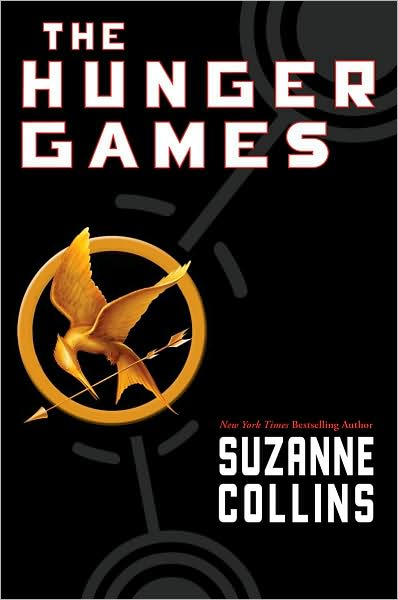
    A week ago Friday, I brushed my teeth, sat down on my bed, and thought I’d read a chapter or two of a book and then go to sleep. At two o’clock a.m. when my wife came home, I was still reading. She got ready for bed. I moved into the bathroom and told myself I would read just one more chapter. Just one. At four o’clock a.m., I finished the book.

    Folks, The Hunger Games by Suzanne Collins is delicious ride from start to finish. It’s about sixteen-year-old Katniss Everdeen, who lives in a post-apocalyptic world in the country of Panem where North America once stood. In the book, the Hunger Games are an annual televised event where the government of Capitol chooses one boy and one girl from each conquered district to fight until only one is left alive. The games exist to remind the districts they have no hope of any rebellion. The problem is that Katniss’ younger sister, who couldn’t hurt a fly, gets chosen to fight. So Katniss volunteers to take her place. But Katniss’ troubles only multiply. Not only are most of the other 23 fighters bigger than she, but they include a young man from her community who has been nothing but kind to her.

    The book is written to young adults, but this is one of those stories like Twilight and Harry Potter that will please adults as well. It delivers moments of wonder, tenderness, and humor. There’s a love subplot. But it’s the poignant suspense that will literally prevent you from putting the book down.

    I loved this book so much, I immediately read it again as an author to see how she pulled it off and found myself having an even more powerful experience the second time. It’s a best-seller and is going to be made into a movie. But don’t wait. I’m not. There are two more books in the series. And both are in the mail (thank you, Amazon). Here’s to two more joyful (and sleepless) nights.
  • Cinefour theaters & the goodreads.com pricer

    I think I could write a horror novel about some dollar movie theaters. The unsuspecting movie goers are lured in. They blindly walk into the theater and take a seat, but, no! When they sit down, they find they’re trapped, their feet glued to the sticky soda floor. The doors close behind them. Outside the theater a man walking by thinks he hears screams. He pauses, alarmed. Those sound like REAL screams, people dying? But no, he thinks, it’s just a movie theater, just a scary movie, and he walks away. Moments later blood begins to seep out from underneath the theater’s exit door.

    Too gruesome? Okay, how about this. You go in, swim through a sea of popcorn to your seat only to find that all the seats flop back and leave you staring at the ceiling. This means that while you could listen to the movie, you actually have to crane your neck forward for two hours to see it. By the time the ending credits roll, you can’t walk. Instead, you have to hobble out like a troll. When you finally reach the exit, you swear you can hear the theater owner cackling. A man in a doctor’s coat shows up and slips the owner a manila envelope full of cash. Suddenly, it all becomes clear—it’s not a theater but a medical scam perpetrated by those who sell orthopedic suits and chiropractics. Mwuhahahaha!

    So you can see why the dollar theater dread fell upon me when I went up to the ticket counter at Logan, Utah’s Cinefour theaters and found out the tickets were only $3 each. Sweat began to bead on my brow. I looked around for signs of monster cockroaches that might carry me and my family away to feed to their young, but, to my surprise, the theater was, well, clean. When we entered, we found no sea of trash. No sticky floor. And the seats didn’t flop back into the dentist chair position (unlike another theater on the other side of the street). They actually supported our backs nicely.

    We sat in the dimly lit theater like the old days when you didn’t watch a steady stream of commercials. We chatted. Then the previews started up, the film ran, and nobody came out to murder us. It was great.

    Cinefour. Cheap movies. Nice little theaters. You can take the whole family out and still have money left over to buy a sink at Angie’s.

    ***

    If you love books as much as I do, you can easily spend your mortgage on them. Which is why libraries are so very nice. But even though libraries are great, there are still some books I want to own. One of the fab things about the internet is that it allows lots of companies and individuals to sell new and previously read (but in great condition) books for cheap. The bad news is that it’s hard to do comparison shopping to find the deals. But no longer–www.goodreads.com has solved that problem by doing the searching for you.

    Simply go to the site and search for a book title. When the search results display, click on the book you’re interested in. When the book’s page comes up, you’ll see a little button below the cover that says “buy for” and lists a price. Click that button, and you’ll see a list of all the main vendors and prices. You can then link to one of the vendors and make your purchase.

    So how much can you save? Sometimes a lot. For example, I looked up my own book. Its hard cover list price is $25.99. However, by using the goodreads.com feature, I found a brand new copy for $4.89. I could get a good used copy for one buck. ONE BUCK! Holy schnitzel, that’s a 96% discount. If you want to buy a book, go to goodreads.com to find the deals.

  • Navy SEALS Buds Class 234, Crackting the ACT, & Running the Green River

     Of the 1.4 million people in the armed forces, only 2,800 of them are Navy SEALS (acronym for “sea, air, and land”). That’s 1/5th of one percent. They are one of the most elite fighting forces in the world. However, less than 20% of those who attempt to become a SEAL ever succeed. To even try you must pass a physical screening test which requires you to swim 500 yards in ten minutes or less, perform seventy-nine push-ups in two minutes or less, and eleven pull-ups. You have to be able to run 1.5 miles in at least 10:20 minutes, and that’s while wearing boots and trousers.

    Some may think: well, that’s not too difficult. I could work up to that. However, the reality is that this level of physical fitness will not be enough. Because once you get into the initial training, you’re going to be doing far more than this every day.

    Can you knock out 500 push-ups in a day, along with a four mile run, hours of paddling out in a six-man raft into a ten foot wave that tumbles you again and again into chilling waters, hefting your share of a 160 pound log over your head until you can barely lift your arms, and running an obstacle course with obstacles three-stories high. You’ll do a lot of this while covered with sand, your thighs and armpits chafing. On some days you’ll have to swim a few miles in a cold sea. And then you’ve got to get up and do it all again the next day. No wimpy hour-long workouts on Monday, Wednesday, and Friday with rest days in between. Heck, on the third week, you’ll get only about four hours of sleep over four days.

    Can you do it?

    Maybe you can. But before you try, or assure yourself that you could have if you’d only had the chance, let me suggest you watch Discovery Channel’s Navy SEALS BUDS Class 234 to witness what it takes to become the best of the best. It’s a fascinating three-DVD set, just over five hours of programming, that follows class 234 through the initial six-month SEAL training called BUDS (basic underwater demolition/SEALS). You’ll see 114 men start the six-month course and only 17 finish it. In fact, less than thirty make it past the first three weeks, which include the most grueling and punishing training I’ve ever seen. Those initial weeks are designed specifically to weed out all but the most committed and able.

    The Discovery Channel does a great job with this six-part series. And it’s not just for guys. It only took about three minutes for each of my daughters to get hooked as well. And why wouldn’t they? It’s as fascinating as any American Idol or So You Think You Can Dance. In fact, in many ways it’s far more interesting. Heck, it was so good I think I’m going to watch it again. You can get it on Amazon, rent if from Netflix, or check it out from the Logan library.

    For more info on the SEALS, let me recommend you start with these two sites: http://www.seal.navy.mil/seal/ and http://en.wikipedia.org/wiki/United_States_Navy_SEALs

    *** 

    My high school age daughters took the ACT last year and got good scores. But we wanted to make sure that they had excellent scores. High enough to put them in the upper levels of those applying to their desired universities. But how would we prepare them?

    Back in the olden days when I was preparing to get my Masters of accounting degree, I knew I’d need some help to get a score on the GMAT that would be competitive. I looked at a number of study guides and ended up choosing the Princeton Review guide for the GMAT. I studied hard, got a great score, and became a believer. The guide made everything so easy. More importantly, everything the guide prepared me for was on the test. This is why, when I wanted to get a Masters of fine arts in creative writing, I used the Princeton Review for the GRE. Again, the study guide was easy to follow, and I got an equally good score on that test. Having had two great experiences, it’s no surprise I turned to Princeton Review again to help my two girls with their test. (BTW, some may see an attempt to get more than one graduate degree as smart, others as masochistic, and yet others as simple ivory tower bone-headery—I’ll let you decide which it might be in this case.)

    The Princeton Review guide for the ACT is called Cracking the ACT. A new edition is published every year and includes general ACT test-taking tips, everything you need to know in the specific content areas, and practice tests. It also includes access to the Princeton Review’s online resources which include another practice test. It’s a big guide (this year’s edition was 619 pages), but the size is deceptive. There’s plenty of white space for taking notes, and the text is written so clearly, and everything broken down in such an easy manner to follow, that you’ll start only to suddenly realize you’ve just read thirty pages. Besides, you don’t have to study it all. You can focus on specific content areas, if that’s all you want to do.

    This spring, both daughters worked through the book. We looked at their previous scores, identified areas for improvement, and set up a six-week schedule that required them to study about an hour per day, sometimes with help from Mom or Dad, but mostly on their own. One daughter studied hard, took the test in June, and improved her score by five points. The other daughter studied a little less diligently, took the same test, and improved her score by four points.

    When 36 is the highest possible score, such jumps become significant. However, they’re not the result of special DNA. While I tend to think my girls are everything and a bag of chips (especially when they give me back scratches), the truth is the ACT doesn’t test some mumbo-jumbo innate intelligence. It tests skills. Skills anyone can learn. What my girls supplied was consistent effort. All they needed was expert guidance in how to apply the effort. And Cracking the ACT provides boatloads of that.

    If you’re looking to improve your own score or help your children improve theirs, get this book. I have no doubt that anyone who supplies a bit of effort will be able see some nice results.

    ***

    Imagine emerald pools, steep red canyons, and a gentle breeze. Imagine water so clear you can see the plants and rocks sixteen feet down on the bottom. Imagine trout swimming only feet away. Imagine swimming with those trout and then getting back into your raft to ride some rapids. Imagine picnicking a the water’s edge or atop a flat, shaded rock forty feet up that gives you a grand view of the river. If you’re lucky, maybe you’ll see an osprey dive for a fish or watch a pair of river otters swim by. Imagine doing this with family or friends, all in a short twenty-four hour period.

    This experience is only about three hours away from Laketown, Utah. Well, everything except the swimming with the trout bit. The fish don’t really swim with you. They mostly just flee, but you get the idea. To enjoy it, all you need to do is raft the seven mile stretch of the Green River from the Flaming Gorge dam down to the Little Hole campground.

    My family and I just did this with some friends and had a grand time. Because the river is relatively slow and the rapids are relatively moderate and short, parents don’t have to worry every second that someone is going to fall in and drown in a man-eating surge. In fact, along many of the calm areas we actively helped the children into the sparkling cold water (grin), including one rafter who was only three years old. One of the most enjoyable moments was when we pulled the rafts up into the gentle backwash of a large rock in the middle of the river, climbed the rock, and took turns jumping into the current and letting it carry us downstream.

    The sun was shining, the weather warm. It was a wonderful trip. A total memory-maker. We put in just before noon and hauled the raft out just before 6 PM. But we could have taken much longer to play along the way.

    The experience was fairly cheap. It cost about $70 to rent an eight-man raft. Perfect for six people. But there are other smaller and larger raft sizes. You’ll need to arrange a way to get the raft to the river and back again. We simply tied our raft to the top of our minivan. You can pay the rental people to drive your car to the exit ramp at Little Hole after you put into the river, or bring two cars (or a bike) and drop one at the exit. Or you can pay for a shuttle service where they drive you to the River and pick you up.

    You’ll want to bring a small cooler with drinks, snacks, and sunscreen. You’ll also want to have good footwear. The river bed is rocky, and when you pull into shore, you don’t want to be ouching it the whole way in. I don’t recommend flip flops. They’re no better than bare feet. Old sneakers are fine, but they don’t dry quickly. And they waterlog and get heavy, which makes them less than ideal for swimming. Your best bet is to get real water shoes that are made to be light and drain quickly and yet still have a decent sole–a sandal or mesh covered shoe that uses Velcro to strap up. You can be fancy and spend a lot, or do what I did and get yours at Wal-Mart for less than ten bucks.  

    You could make it a long trip and drive to and from the gorge and run the river all in one day, but why push it? Just find a place to stay overnight. There are some motels in the area, but we elected to camp. The spots at the Firefighters Memorial campground were $27 per night. The campground was beautiful and tidy with restrooms and running water. One of the most surprising things about this particular campground was that I didn’t see one mosquito while I was there.

    I’m one of these types that attracts the villains. If there’s only one mosquito within a mile radius, it will smell me, pass up many other suitable victims (including my wife), and risk its life and limbs to sink its #@!* proboscis into my flesh. I think my blood must be some kind of mosquito crack. There’s probably some mosquito black market out there for it, run by some nasty mosquito cartel, which is led by a murderous, malaria-ridden mosquito boss making piles of evil mosquito money and spending it on opulent mosquito yachts and guns!

    Anyway, not one bite. We watched the sun set and then fell to sleep with the stars overhead and the wind gently soughing through the boughs of the pine trees.

    To make campsite reservations, go to www.utah.com to get a good map view of possible camping sites. Then go to www.recreation,gov to make the reservations online. Make sure your specific camping spot has everything you need. Our campground was very rocky and not all of the sites had tent pads. If you want to scope the lay of the land, the recreation.gov site will give you GPS coordinates of the campground. Enter those into Google maps then switch to satellite view and zoom in. You see exactly what you get. This way you can avoid accidently booking the site right next to the bathrooms or road or the one that features no trees.

    Finally, when you’re done, you might want to top it all off by stopping at the The Flaming Gorge Lodge restaurant, just a few miles south of the dam, and enjoying a monster-sized cup of hot chocolate with whipped cream and one of their fabulous desserts. The blackberry cobbler and ice cream was delicious.

  • |

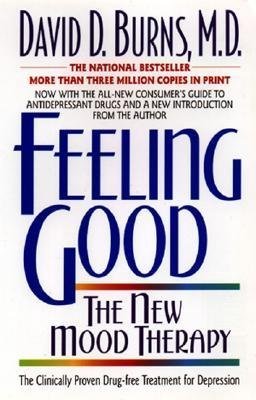
    Brain Nazis and Feeling Good by David D. Burns, M.D.

    Have You Got a Brain Nazi?

    If you’re conscious, you’re monitoring your environment. You have to. It’s how you survive. This is not something you can turn off. It’s just one of those systems that runs automatically, like your liver. You’re always appraising the situation.

    And as soon as you encounter something that’s likely to be of importance to you or yours, your monitor kicks off a physical response to prepare you to deal with or take advantage of it.

    The problem is that sometimes a Nazi propagandist worms his way into the monitoring station. And like any good Nazi, he distorts reality.

    Sometimes those distortions lead to burning resentment, sometimes to unwarranted shame or anxiety, sometimes to eating disorders, sometimes to grave depression. When I heard of the tragic suicide that occurred in our community a few months ago, my heart went out in sympathy to the girl, her family, and friends.  I’m not a doctor. I don’t know the situation. But I’m positive she was dealing with one of these villains.

    I wished I’d been able to share something that’s been a literal life saver to me. Now, it might not have changed anything. But hopefully it can change things in the future for you and others you know who may have to deal with a Nazi in the brain.

    And you will have to deal with a brain Nazi at some time.

    This is not something that affects a miniscule portion of the population. In any given year you can expect more than 15% of a population to experience some form of this [1]. That’s roughly 238 of the estimated 1,592 people 18 years and older in the little county where I live [2]. Rates for teens are similar [3]. Besides, you don’t have to have a full-blown case of a depression for distortions to affect you. How many of us haven’t made faulty comparisons with others? “Oh, she’s so thin and has such great hair; I’m so dumpy.” “Oh, he’s doing so well, and I’m not. I’ll never be a success.”

    The question is not whether you or someone important to you will have to deal with it. The question is how prepared you’ll be when you do. Everyone deals with distortions now and again.  Which means everyone can find a little more enjoyment in life by showing their brain Nazis the door.

    So how does it all work? How do you show the villain out?

    I’m going to summarize it below, but I’ll tell you right now that the book that saved my life was Feeling Good by David D. Burns, MD. This isn’t positive mental attitude. It’s not neuro-linguistic programming. It’s not the mumbo jumbo of Freud and Jung. This is practical and proven. It is the most prescribed intervention for dealing with these issues in the current medical community. It’s prescribed because it works.

    Your Brilliant Appraisal-Emotion System

    To understand this, you have to understand how emotions work. As I said before, you’re always monitoring your situation. You hear a buzz and see a rattlesnake on the path two feet away. Your monitor immediately responds. Alarm, adrenaline, increased blood flow–all of that to get you ready to deal with the situation. Your monitor writes “alarm” on your face to communicate it to those around you–to warn and ask for help. This happens in less than a blink of an eye.

    But this doesn’t just happen with danger. It happens when we encounter unfamiliar things. When we encounter positive things. You see a great friend who makes you laugh all the time. Boom, your monitor responds. You smile. Feel. Focus. You do so because you not only want to avoid dangers, you also want to seek out the things that make you happy.

    Our emotions prepare us to fight, flee, seek, and pitch woo. Our little monitoring and physical response system is brilliant.

    But there’s more. We don’t rely on just the automatic subconscious monitoring. We also have a cognitive (conscious thinking) part. Let’s go back to the rattlesnake. You walk out into the garden, step on a slither, and immediately go into alarm mode. Then you look, consciously see the slithery thing is not a snake, but the garden hose. You relax. Laugh.

    The quick subconscious appraisals keep us alive, because with snakes and other things, if you’re slow, you’re dead. We don’t have time for thought. If you touch a hot stove, you want an immediate reflex. You don’t want to ponder it for a second or two. On the other hand, the cognitive appraisals help us further appraise a situation. They bring more of our resources to bear on the situation.

    How Does the Nazi Get In?

    So there are three parts of the appraisal-emotion system: the subconscious appraisal of the situation, the physical response, and the cognitive appraisal. Each of the three parts affects the other two. And when things are running smoothly, we don’t have problems. But sometimes we get a distortion mucking up the works. We make a faulty appraisal of the situation. And therefore have a faulty physical response.

    For example, you’re a mother. You’ve had a hard day. The kids make a huge mess with flour in the kitchen. You yell, freak out. When they’re cowering in their rooms and you’re cleaning up the flour, you think, “There I go again. I’m a total failure. I can’t stand it! I never do anything right! I’m a terrible mother.” These thoughts make you even sadder.

    And that’s the propaganda. That’s your brain Nazi with his all-or-nothing thinking, telling you that you either perform perfectly or you’re a failure.

    But is that true? No, it’s not. You might be a B+ mother, filling the lives of your kids with all sorts of goodness. You might have just had a great time reading with the kids not thirty minutes before. But the brain Nazi tells you to forget that. “Vatch dis film,” he says, “und see de horrors of vut you are!”    

    And the all-or-nothing thinking gambit is just one of ten common weapons he uses. Furthermore, this happens so quick that we often don’t notice it. In fact, we’ve often repeated some of these distortions so often than they’ve become almost automatic.

    Mr. Nazi, Meet Mr. Bazooka

    The good news is that you can pull the lid off the lies. You can open the door, spot the brain Nazi that slipped in, and take him out. You can do this because one of the three parts of the system is our cognitive appraisal. This means you can consciously stop the movie, pin the distortion on the wall, and uncover the truth. Once you do that, it’s like the rattlesnake scenario above—oh, it’s a hose, we realize, not a snake, and the appropriate emotions immediately follow.

    But you need to know how to stop the movie. You need to know how to spot the lies. David D. Burns, MD tells you exactly how to do this in his book Feeling Good. (By the way, DON’T get this book confused with his Feeling Good Handbook–you DON’T want the handbook; you want Feeling Good, the book.)  In the book, Burns talks about the theory, the results, and then gets right down to the practical techniques used to blow the brain Nazi to kingdom come.

    A few years ago I hit a bad patch with a brain Nazi that had taken up residence. A very bad patch. He’d been there for quite some time. This book and a good counselor saved me. I thank the Lord for that. By the time I went to see a medical doctor to assess whether chemical issues might be playing a role, I was stable. I wasn’t out of the woods yet, but I had opened the lid and found the villain at the controls. I used the techniques Burns gave me, and I’m happy to say that while the brain Nazi still comes round every once in a while, I can spot him. And I can take that sucker out.

    Go to the library and check out the book and take the assessment test. If you, or someone you know, scores in the mild range, maybe you’ve just experienced a very sad event. But maybe you’ve also got a villain in residence. Get the book. Read it. Be happy. Nobody needs to live with a Nazi at the controls.

    For Authors

    By the way, fiction authors should pay special attention to this stuff. Not because we’re more susceptible to brain Nazis than others, although we do have to deal with our fair share as we develop and share our stories. No, we should because the emotion process is exactly what we’re trying to tap into. Knowing the principles can be very useful indeed. Let me recommend you read the books on emotion listed on the Learning With Pros page.

    Sources

    1. 1. http://www.nimh.nih.gov/health/publications/the-numbers-count-mental-disorders-in-america/index.shtml
    2. 2. http://quickfacts.census.gov/qfd/states/49/49033.html (find your state and county and see how many folks are likely dealing with a brain Nazi in your area)
    3. 3. http://www.oas.samhsa.gov/2k5/youthDepression/youthDepression.htm
  • |

    “The Fringe Benefits of Failure, and the Importance of Imagination” by J.K. Rowling

    This is J. K. Rowling’s 2008 Harvard commencement speech, “The Fringe Benefits of Failure, and the Importance of Imagination.” It’s one of the best speeches I’ve ever heard. Watch and then watch again. Read the full text here.

    Two quotes that in no way can do justice to the whole thing.

    And so rock bottom became the solid foundation on which I rebuilt my life.

    You might never fail on the scale I did, but some failure in life is inevitable. It is impossible to live without failing at something, unless you live so cautiously that you might as well not have lived at all – in which case, you fail by default.

    . . . 

    Though I personally will defend the value of bedtime stories to my last gasp, I have learned to value imagination in a much broader sense. Imagination is not only the uniquely human capacity to envision that which is not, and therefore the fount of all invention and innovation. In its arguably most transformative and revelatory capacity, it is the power that enables us to empathise with humans whose experiences we have never shared.

    One of the greatest formative experiences of my life preceded Harry Potter, though it informed much of what I subsequently wrote in those books.