Amano, Jason’s Deli, and The Hunger Games

The first time I tasted real chocolate was when I was a teenager in Switzerland. Up until then, I’d only eaten American Hershey nastiness or the left over chocolates at my grandma’s that she’d poked the bottoms out of and passed over. You know what I’m talking about: those yummy mystery fillings with weird chewy bits that make you wonder if the chocolates weren’t designed by toddlers with too much food on their plates. As you can see, I didn’t have a high opinion of the stuff.

But in the thin oxygen altitudes of the Swiss Alps, I lost my mind and let my sister convince me to try a big flat bar of Swiss milk chocolate with her. We broke off two little pieces. I prepared myself to yak, picked up my piece, and put the chunk in my mouth. She took a bite of hers, and we immediately looked at each other in surprise. We then proceeded to gobble the rest of that large bar and one other before we realized what we’d done. It was so smooth and creamy, so rich, so . . . hallelujah!

After the heavens closed and I came back to my body, I decided maybe chocolate wasn’t such a bad thing after all. Still, nothing I could find in the States compared, and so the chocolate dream faded. Then I married a girl who came with a special IV that fed chocolate directly to her bloodstream. Needless to say, I’ve had plenty of opportunity to eat all manner of chocolate since then. I’ve even learned to appreciate dark chocolate.

I found that there is chocolate that you eat as a snack (chocolate biscotti with milk), chocolate that can make a meal (chocolate cheesecake with strawberries), and chocolate that’s meant to be savored. We recently found one of the latter. And it’s not a Swiss concoction. It’s made in, of all places, Orem, Utah.

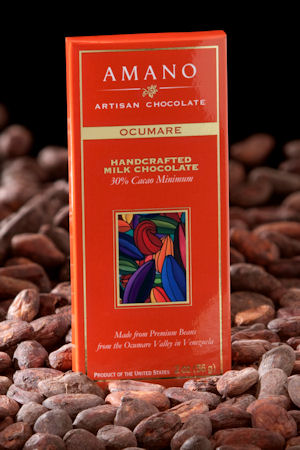
The company is called Amano Artisan Chocolate. According to the company’s website: “In 1996 while on his honeymoon, the founder of Amano, Art Pollard decided that there had to be better chocolate than what was being produced in the United States or that of numerous imported varieties. Thus began his search for the ultimate chocolate, which is not bland or flat, but has superior flavor and texture.”

Of course, my wife and I had to give it a try. I can report that it’s lovely. I prefer the rich milk chocolates; she likes the darks. Again, this isn’t chocolate meant for eating. It’s chocolate meant for savoring. You want to take it slow. Let the taste linger and the secondary flavor notes have their moments. Besides, you won’t need to devour it. My wife, who is about as hooked as any junkie, can get her daily fix of joy with just one little square. If you’re a chocolate lover, you’ll want to give it a try. You can order from their website at www.amanochocolate.com or visit their outlet store in Orem.

*

Because we live where we do, we have to travel two gazillion miles each year for shopping, movies, and to watch our kids play sports. After a few trips, burgers make me want to gag. Which is why I’m so happy I found a fabulous fast food soup and sandwich joint. It’s called Jason’s Deli.

No, it’s not THAT kind of deli—one of those narrow little places full of weird smells and coolers displaying things not meant for human consumption. This is a soup and sandwich shop. Tall ceilings. Lots of tables. Yummy smells. And food that is reasonably priced and delicious.

I just dragged my wife to the one in Orem this last weekend. She got a Mediterranean Chicken on flatbread with hummus and loved it. I ordered my favorite, their California Club—sprouts, avocado, cheese, and tender meat on a flaky croissant. I always get it with the vegetable soup and fruit, which comes with a small bit of dipping yogurt. And if I’m really hungry, I get a piece of their strawberry shortcake made with real whip cream, not the canned stuff. When you tire of all the same old joints, go to Jason’s Deli. They have locations in Layton, Salt Lake, Murray, and Orem. You can find addresses at www.jasonsdeli.com.

*

A week ago Friday, I brushed my teeth, sat down on my bed, and thought I’d read a chapter or two of a book and then go to sleep. At two o’clock a.m. when my wife came home, I was still reading. She got ready for bed. I moved into the bathroom and told myself I would read just one more chapter. Just one. At four o’clock a.m., I finished the book.

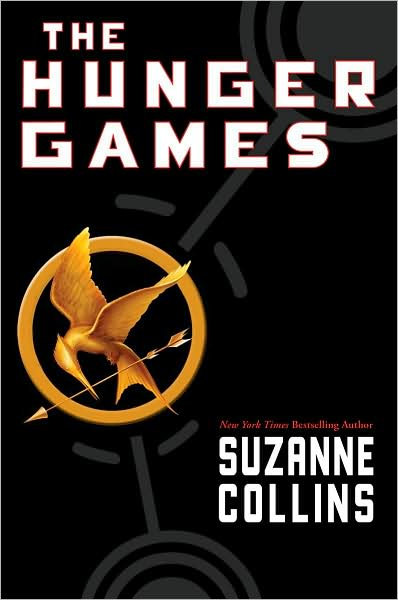
Folks, The Hunger Games by Suzanne Collins is delicious ride from start to finish. It’s about sixteen-year-old Katniss Everdeen, who lives in a post-apocalyptic world in the country of Panem where North America once stood. In the book, the Hunger Games are an annual televised event where the government of Capitol chooses one boy and one girl from each conquered district to fight until only one is left alive. The games exist to remind the districts they have no hope of any rebellion. The problem is that Katniss’ younger sister, who couldn’t hurt a fly, gets chosen to fight. So Katniss volunteers to take her place. But Katniss’ troubles only multiply. Not only are most of the other 23 fighters bigger than she, but they include a young man from her community who has been nothing but kind to her.

The book is written to young adults, but this is one of those stories like Twilight and Harry Potter that will please adults as well. It delivers moments of wonder, tenderness, and humor. There’s a love subplot. But it’s the poignant suspense that will literally prevent you from putting the book down.

I loved this book so much, I immediately read it again as an author to see how she pulled it off and found myself having an even more powerful experience the second time. It’s a best-seller and is going to be made into a movie. But don’t wait. I’m not. There are two more books in the series. And both are in the mail (thank you, Amazon). Here’s to two more joyful (and sleepless) nights.

Share

Similar Posts

  • Murder, Courts, and Bart D. Ehrman

    I’m going to talk a bit about some murderers in Detroit, Jesus, and a couple of books I recently read that I think are just awesome.

    MURDER
    Highers BrothersSo, the murderers.

    Let me start by asking this question: can you establish the truth in a court of law?

    Is that what the judge and jury are deciding? The Truth, with a capital T?

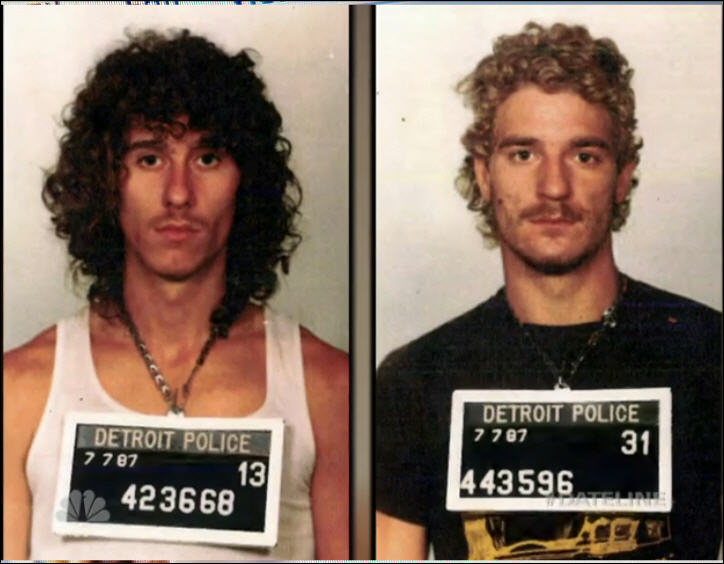
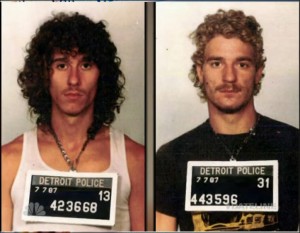
    Think about Tommy and Ray Highers, brothers from Detroit. They were convicted of murder. Open and shut case. No parole. They were two nasty buggers who shot a man down over some dope.

    But then twenty-five years later (last year, in fact) they were back in court because new evidence had come to light that undermined the original conviction. For the curious, this fascinating Dateline episode reveals the amazing way the evidence came to light and what happened because of it: http://www.nbcnews.com/dateline/full-episode-graduation-night-n72666. Watch it. You’ll be happy you did.

    So the Truth. Capital T. Can you establish that in a court of law?

    No.

    What the justice system does is try to determine which story about the evidence available is the most convincing.

    It’s about telling and judging stories.

    There are many types of evidence folks use when telling their stories. Some of it is very strong. Some is so unreliable, like hunches and hearsay, that the court won’t even allow it to be presented.

    Whatever the evidence, the fundamental nature of this is that you can often tell a number of different stories using the same set of data, the same evidence. Sometimes the stories are variations with minor differences. Sometimes the stories are radically different.

    It’s like having only some of the pieces of a 100 piece puzzle. You look at the four, twenty, or thirty pieces you have and imagine what the rest of the puzzle looks like. And then you invent something that seems reasonable.

    You invent it.

    And if that story meets certain standards of proof, then our system allows the authorities to take certain actions. If the standard of a “reasonable suspicion” is met, it allows a police officer to stop someone. If the standard of “probable cause” is met, a higher standard than reasonable suspicion, an officer can arrest you. If a jury in a criminal case decides the defendant is guilty “beyond a reasonable doubt,” an even higher standard of proof, then the justice system authorizes the authorities to sentence the defendant.

    But at no time does the system seek to establish the absolute truth, the truth with a capital T. It only seeks to establish some level of probability that the story being told about the evidence is true.

    All of this is made more complex because what’s “reasonable” is based on other people’s opinion. We have guidelines and rules to help folks be “reasonable.” But reasonableness is still affected by culture, background, history, etc.

    It’s still opinion.

    OTHER PUZZLES

    What other realm of knowledge works like the justice system and consists of inventing stories about missing parts of the puzzle?

    Well, history does.

    In fact, if you think about it, history is what courts do. The processes and principles of our justice system guide everyone involved in how they go about telling the stories that make up that specific type of history.

    And all historians (lawyers, judges, and juries included) have no means of establishing the absolute truth.

    They can’t use science. Science requires you conduct experiments and reproduce results. But how is a historian going to reproduce the same events? What, they’re going to get Lincoln shot all over again and let the rest of us watch it? Dang, John Wilkes Booth did shoot the man. We all saw it happen down in the lab.

    Sure, they can use science to date a manuscript, or determine what something is made of, or establish some other fact. But all science is doing is providing facts about the pieces of the puzzle you have. About the claims the evidence makes.

    But science can’t fill in the missing pieces of the puzzle. It can’t tell the story. The historian has to invent the story that makes the pieces all make sense.

    And then the rest of us determine if that story, that sketch of the full puzzle, is reasonable.

    But that isn’t all there is to it.

    STANDARDS OF PROOF

    Think about conspiracy theories like the ones that claim that the US government perpetrated the 9/11 bombings. Conspiracy theorists are practicing history. They are inventing a story that seems to fit the evidence available to them.

    But what happens when you have only five or ten pieces of a 1,000 piece puzzle? What happens when you don’t thoroughly vet the evidence? What happens when someone screws around with the evidence? And I’m not just talking about tampering or invalidating it by thoughtless handling (contaminating DNA, for example). Folks with the best intentions have biases. In fact, we all have biases that lead us to include and exclude various pieces of evidence based on whether they support or oppose the ideas we want to believe.

    Jonathan Haidt explains these biases in his excellent book The Righteous Mind. He explains that with things we want to believe, we often use the standard of “Can I Believe It”?  We look for anything at all that would allow us to believe our position. If we find it, even if it’s flimsy, we discount all the other evidence that may point another way and conclude we have met the burden of proof for our view.

    For things that we don’t want to believe, we often use the standard of “Must I Believe It”? When falling prey to this bias, we look for anything at all that would undermine the thing we don’t want to believe, even if that evidence is flimsy. If we find it, we ignore all the other evidence, even if there’s a mountain of it pointing another way, and claim we have met the necessary burden of proof.

    In court there are all sorts of procedures and standards that need to be followed to help us avoid invalidating evidence or falling prey to our biases. Those procedures and standards don’t remove all risk. But they do remove a lot.

    Which court system would you want to be processed through? The current American justice system or the medieval witch trials?

    Oh, for sure I’d want to be someone accused of witchcraft back when a claim of “I saw her as a witch in my dream” was admissible, as was the test of poking a mole on the accused’s body with a needle to see if said witch flinched enough. I’d be so happy to go back to the days when a confession obtained by torture was incontrovertible evidence.

    So when practicing history, it’s important to have some guidelines, some rules to establish which bits of evidence are more likely (not guaranteed, but more likely) to be reliable. And it’s important that when folks tell their story, they not only share the evidence, but also all the assumptions they’re making.

    JESUS

    Where does Jesus of Nazareth come into all of this?
    Misquoting Jesus by Bart D Ehrman

    Well, Jesus has affected the world more than any other person who has lived on it. The stories we tell about him (the history we have practiced about him for the last 2,000+ years) have changed the world. And those stories will continue to affect us, especially folks in Western cultures, on everything from foreign policy to which clothes think are fit to be worn in public.

    Who was Jesus? Did he really exist? Was he a god? What did he really teach? Have his teachings been changed?

    These are all fundamental questions. And for the last two-hundred years historians have been re-examining the pieces of the puzzle, finding new pieces, and telling new stories to explain it all.

    Some of these historians believe in Jesus as a god. Some don’t. Either way, the conversation is fascinating.
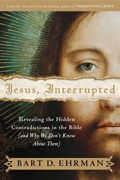
    Jesus Interrupted  Bart D Ehrman

    I just read three historical books about Jesus that were awesome. AWESOME. Not because I agreed with all of the author’s conclusions, i.e. his stories. I don’t. But because of the way he practiced his history. The way he told his stories. And because what he shared gave me new insights to my stories about Jesus.

    The three books, all by Bart D. Ehrman, a professor of religious studies at the University of North Carolina, Chapel Hill, are:

    1. Misquoting Jesus: The Story Behind Who Changed the Bible and Why
    2. Jesus Interrupted: Revealing the Hidden Contradictions in the Bible (And Why We Don’t Know About Them)
    3. Did Jesus Exist? The Historical Argument for Jesus of Nazareth

    I’ve read the Bible many times, and I’m a believer. Of course, the question is a believer in which story?

    Did Jesus Exist Bart D Ehrman

    What Ehrman so engagingly makes clear is that there have indeed been many stories about Jesus. In fact, the gospels (Matthew, Mark, Luke, and John) and the writings of Paul (most of the rest of the New Testament) seem to all portray a different man and message. Not only do they say things that flat out contradict each other on some details, but if you look at each book separately, each author seems to have a slightly different take on Jesus.

    Furthermore, it appears that what we now have has changed over time. For example, it seems the last twelve verses of Mark were not in the oldest manuscripts. There have been other changes. One of the more notable ones occurs in John 5:7-8.

    Our earliest texts say:

    “For there are three that bear record, the spirit, and the water, and the blood: and these three agree in one.”

    But later texts say:

    “For there are three that bear record in heaven, the Father, the Word, and the Holy Ghost: and these three are one. And there are three that bear witness in earth, the spirit, and the water, and the blood: and these three agree in one.”

    Nowhere else in the New Testament do we have anything that states that creedal doctrine so explicitly. Did John write that? Or was the extra material added to make the idea of the trinity scriptural?

    And what do we make of the fact that we have no manuscript that dates to anywhere close to when Jesus lived? We have some small fragments of manuscripts with a few verses of John, Revelation, and Matthew dated around 150 AD. But the oldest manuscripts we have that contain the majority of any of the gospels are for the gospels of Luke and John, and these are dated around 200 AD. The oldest manuscripts with the full New Testament are dated around 350 AD.

    That’s more than 300 years after Jesus died!

    Have you played the game of telephone? Are we sure that the oral traditions that were written down weren’t changed? What happened to the books mentioned in the Bible that we don’t have now? For example, Jude mentions a prophecy of Enoch that we don’t have in our current Bible. Are we sure that the copyists didn’t add to the text like it seems some did to John?

    And what about the term “Christ”? It’s actually the Greek word for “messiah” which just means one anointed with oil to perform a special service for god. Christ wasn’t Jesus’s last name. It was a title: Jesus the anointed one.

    The anointed ones in those days were kings and prophets and priests. It appears most of the historical sources suggest that a “messiah” to the Jews of that time was someone who would throw off foreign rule and establish the kingdom of Israel as David had. In fact, there were a whole bunch of people who claimed to be messiahs. Here’s a nice list: http://en.wikipedia.org/wiki/Jewish_Messiah_claimants.

    Judas Maccabeus was considered a messiah because he threw off Greek rule in 164 BC. But then around 63 BC Israel was taken over by Rome. And Rome wasn’t too keen on revolts, so around 4 BC they crucified Judas the Galilean for claiming to be the messiah, the king of the Jews. Crucifixion, it seems, was the punishment reserved for seditionists. They crucified Jesus and a whole bunch of other guys claiming to be the king of the Jews. And their crimes were written on a board above them, which is why they hung the words “King of the Jews” over Jesus’s head on the cross. Here’s the criminal, and here’s his crime. These other messiahs were not claiming to be a god that came to earth to atone for sins, but anointed by God to throw off foreign rule and establish his earthly kingdom again.

    Jesus talks a lot about the kingdom of God. Was Jesus just another one of the seditionists?

    Ehrman examines these and many other questions as a historian, providing all sorts of insights.

    But the fabulous thing is that he doesn’t just tell his story. He gives his evidence. Exposes his assumptions. And in all three books he explains the guidelines or “rules” historians use to when trying to determine which stories are more likely and which evidence is more reliable.

    I was enlightened, challenged, and delighted. I learned things about Jesus’s life and times that have helped me understand what I read in the Bible better.

    LIMITS

    Of course, the historical method has its limits.

    Historians, because they are looking for explanations (stories) that are more probable, automatically select against things that are improbable. They exclude miracles. They exclude any story that says Christ was actually resurrected.  They may establish that a lot of folks thought he was resurrected, but they don’t have any methods to establish something like a resurrection actually occurred. And so they ignore it. Historians exclude modern revelation. If someone today were to have a visitation from Jesus as Paul did, the historians would exclude that.

    But we all know that truth is sometimes stranger than fiction. We all know that sometimes the less likely thing is exactly what occurred.

    Historians are looking for what is most probable. Not what actually happened. Because they can’t go back and time and verify their story.

    Excluding “improbable” things changes the types of stories the pieces of the puzzle support. For many of us, me included, we do accept evidences many historians don’t as pieces of the puzzle. And because we have these pieces, we’re able to tell different types of stories.

    The cool thing about Ehrman is that he explains this. He’s not trying to hide anything. Instead, he’s explaining how to approach the Bible from a historical point of view, and where the principles of the historical method lead him.

    And I have found that those methods in his hands have a lot to offer.

    If you’re someone who is interested in religion–as a believer, agonistic, or atheist–you will love these books. Ehrman himself was once an ardent believer, but is now agnostic. However, his respect for believers, including other scholars in his field who believe in the divine Jesus, comes through loud and clear. Ehrman has no axe to grind. He is simply sharing the stories of Jesus that make sense to him and many other historians. And he does it in a very interesting and easy-to-read style.

    If these books sound like something you want to try, I’d start with Misquoting Jesus, move to Jesus Interrupted, and then finish with Did Jesus Exist? And if you enjoy those, let me recommend two more of Ehrman’s books. The first is The Lost Gospel of Judas Iscariot: A New Look at Betrayer and Betrayed, which looks at the discovery and content of a very ancient manuscript that calls itself The Gospel of Judas. The second is Lost Christianities: The Battles for Scripture and the Faiths We Never Knew, which explores the variety of Christian faiths that existed in the few hundred years after Jesus’s death.

    Happy reading!
    Share
  • Good Stuff! Mr. Holmes and 13 Hours, the book

    Earlier this month I watched Mr. Holmes.

    Mr._Holmes_poster

    It left me with this fine peace. With this feeling of goodness and light, in spite of, or probably because of, a number of poignant moments. It also surprised me.

    To write a story like this, to give people this kind of gift…

    What a wonderful, powerful thing.

    Now, it was not a thriller. It’s not an episode of Sherlock or Elementary. It’s not a murder mystery. It reminds me of Saving Mr. Banks most, but also of Miss Potter, maybe even The King’s English. It has that kind of tempo.

    Basically, Sherlock Holmes is a much older man. He’s retired. And there’s a case he’s trying to solve. But, again, this isn’t a murder mystery. This story is about Sherlock himself and wisdom and the beauty of change whenever it occurs.

    The story lingered with me, and I avoided reading or watching anything else for a few days to savor it. Give yourselves a treat. Watch this wonderful story.

    *

    The book 13 Hours: The Inside Account of What Really Happened in Benghazi was the answer to so many questions.

    13_Hours_ZuckhoffWant really happened in Benghazi?

    What we’re we doing there?

    Who are the brave men who tried to save the ambassador?

    It was also a thrilling read in the tradition of Marcus Luttrell’s Lone Survivor. As such, it purposely avoids the political aspect of the incident. It’s not about what the officials of the United States government did, said, or knew, or the political firestorm that ensued.

    It’s not a hit piece on Clinton and Obama, nor is it any kind of defense. Instead it simply documents the events on the ground in those last 13 hours, relying most heavily on what the five American security contractors who rushed to give aid said happened. Those men–two former Marines, two former SEALs, and a former Army Ranger—teamed up with Mitchell Zuckoff, the writer, to simply set the record straight.

    I couldn’t put the book down. Not only because the book’s well-written and the characters and situation are compelling, but also because of the insight it shared into some key dynamics within Libya itself. For example, it helps you understand why the revolt against Muammar Gaddafi centered in Benghazi, not Tripoli. It also touches on some of the currents inside these Muslim-majority countries close to the epicenter of Sunni extremism—Egypt and Saudi Arabia–so volatile. And it shares details, large and small, as only those who experience such things first hand can.

    If you want a fascinating account of really happened on the ground in Benghazi, get this book.


    Share
  • Blindingly white and female!

    MaryLeonhardt_KeepingKidsReadingThe Guardian just published a report of a survey taken of 34 American book publishers and found that 79% of staff are white and 78% female. Or as The Guardian put it “blindingly white and female” as if it’s some kind of horror show.  The rest of the article bemoans the lack of diversity in publishing and our society in general and quotes the author of the study suggesting that these percentages should be monitored.

    Is anyone up in arms about appropriate diversity percentages in the NBA or NFL?

    Some might roll their eyes and ask me not to trot out that old chestnut. But it’s not a chestnut. It’s a point–nobody cares, me included. So why care about this? Many industries will be skewed toward one gender or race than another. As long as everyone has free opportunity to compete, who gives a flip?

    Maybe that still doesn’t satisfy. Okay, how about this. According to Humanites Indicators, approximately 70% of degrees in English language and literature in America are awarded to…women. And about 82% are awarded to Whites. I’m assuming these percentages are probably pretty good indicators for the gender and race of folks interested in working at publishing companies.

    If so, the survey results don’t reflect some white woman conspiracy at these publishing houses. They simply reflect the choices people make in college.

    By the way, did you know the United States is still 72% White and European. So it’s not surprising to see roughly that many Whites in these jobs. The numbers might be a little high, but minorities seem to be pursuing other degrees in greater numbers (compare the overall percentages here versus those with ELL degrees).

    This is not to say that we don’t want to welcome authors from all different background. We do. But if you want more men and more minorities, then maybe instead of monitoring publishers, you ought to start by seeing if you can attract more men and minorities to ELL degrees.

    Or even better yet, how about reaching out to more boys and minorities at an earlier age and helping them learn the delights of reading and writing? Maybe if they like it, more of them will go into it as a career.

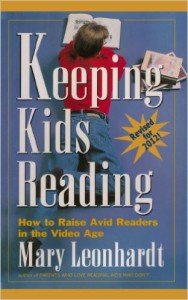
    The best program I’ve seen for helping kids learn to love reading is the one Mary Leonhardt outlines in Keeping Kids Reading: How to Raise Avid Readers in the Video Age. It’s the culmination of the insights she gained over her thirty-five years teaching high school English and focusing on helping kids learn to LOVE reading. What an excellent book!

    Oh, and one other idea. It might be effective to maybe just skip publishers altogether and help folks go directly to readers as indie writers. Amazon’s algorithms are pretty much race- and gender-blind.

    Share
  • Monster Hunter International by Larry Correia

    MonsterHunterInternational_LarryCorreiaThere’s a joke that all horror movies would be over in two minutes if you just made the hero smart and gave him a gun.

    Well, Correia gives his likeable hero a gun, but not just any old thing. If you’re going to kill a vampire, why not use a rocket propelled grenade or a flame thrower? In fact, if there were enough monster outbreaks, you might have a government agency. You might also find that agency was willing to outsource some of the monster hunting to private contractors (ala Blackwater). And you can bet they won’t be hunting with pea shooters. They’ll be doing it right, with brains and firepower. Correia, someone who loves guns (used to own a gun shop and shoot competitively in rifle, shotgun, and pistol) and monsters, wrote a story that does just that.

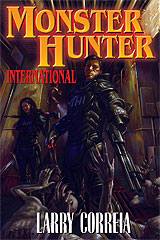
    The idea of Larry Correia’s Monster Hunter International might remind you a bit of X-Files or Men in Black, but it’s neither. However, it is as  good as or better than both. Correia tells the story of Owen Pitt, a big lug of an accountant, who, as he was working late one evening, gets called into the office of his boss. No big deal, right? Except the fat man is naked, transforming into a werewolf, and vows to eat Pitt’s heart. It’s not quite how you want to end your day tallying debits and credits. Pitt almost dies in the encounter, but manages to “live the American dream” and throw his incompetent jerk of a boss from the fourteenth-story window and splatter him on a double-parked Lincoln Navigator below.

    Good work for a bean counter. When Pitt finally recovers, he gets an offer he can’t refuse (mostly because of the alluring agent that comes to recruit him), and he joins Monster Hunter International (MHI), the private contractor who sends out special force teams to use any means at their disposal to kill monsters. Unlucikly for Pitt, one of the baddest monsters around is just about to ruin the world forever, and Pitt finds himself in the middle of the fight.

    Correia fills the book with enough action for any red-blooded male, a variety of bad mamba jamba monsters, and wonderful characters. There’s romance and heroism (I got a lump in my throat at one part toward the end), but his signature is his humor. I laughed again and again.

    Part of that humor stems from the fact that Correia has an ear for good lines. Part stems from his delight in taking common tropes and stereotypes and twisting them. And this is another one of the things that I enjoyed immensely about the book. For example, the team of newbie hunters that Pitt joins is not made up of square-jawed males and females with Navy SEAL backgrounds, although some in the company do have that. Nope, Correia puts together an accountant, librarian, school teacher, and stripper (all people who faced some kind of monster and are ready for payback), and he makes them believable hunters. 

    This tongue-in-cheek tweaking is everywhere. There are elves in this book unlike any you have ever seen. But he also makes it personal. Owen is not your typical accountant. Even a number of the minor characters get this treatment. For example, one of the people on the team is a Black guy with Rasta hair. But Correia doesn’t choose from what Correia calls one of the four Hollywood stereotypes. Nope, this guy plays against those types. He isn’t the comic relief, the gangsta, the sports dude, or scary male. He’s his own man, a shy virgin with a good heart. Correia also gives his characters interesting backstories. And one of the delights is discovering them.

    I encountered a few minor flaws in the presentation, but these are easily overlooked. Easily. There’s also quite a bit of profanity (and so those who wish to avoid it are forewarned). However, when I turned the last page Friday night, I looked up at Larry who was lying on his bed in our La Quinta hotel room in Denver, his concealed .45 and 9mm guns on the floor beside him, and said, “Wow. WOW.” And then I think I said, “Dude, what a marvelous read” or maybe it was “Oh, great lord of zombie destruction tales do not smite me,” but I’m not sure because I was still thinking about the perfect last line of the perfect last scene of the last chapter.

    Now, those exclamations of satisfaction and delight had nothing to do with the guns on the floor, that Larry’s a deadly shot, or that he’s a big 6’3″ Portugese. It has nothing to do with the fact that he and I were on a book tour together. I don’t read books that don’t grab me. End of story. I stopped doing that long ago. I don’t care who wrote them. And I don’t give false praise. False praise irks me to no end and does nobody any good, especially not the receiver. The truth is that Larry’s book was simply too good to put down. It pulled me in with the opening quote and kept delivering the goods until the end. And if you don’t believe me, you read the quote that both inspiried and opens the book and tell me you don’t want to turn the next page.

    “You know what the difference between me and you really is? You look out there and see a horde of evil, brain-eating zombines. I look out there and see a target-rich environment.” ~Dillis D. Freeman Jr.

    Yeah, it got ya, didn’t it. The ride is waiting folks. Just go on over to Amazon. Correia is going to be a writer to watch.

    Share
  • Good Stuff! Wonder, Darkest Hour, Sea Wolves

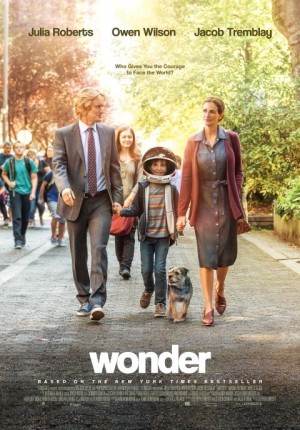
    I had seen a lot of good reviews of Wonder. My wife told me a lot of her students enjoyed the book. But I thought it was going to be a heavy topic, full of sadness and heart-wrenching drama. I’m happy to report that while Wonder does indeed have some difficult moments, it’s also full of humor. And triumph.

    It’s a story about Auggie, a boy with a rare medical deformity that has put him through multiple surgeries. His parents have homeschooled him, but now that he’s at the age where he could go to middle school, they feel it’s time for him to navigate the world. The perfect time, right?

    But it’s not just about Auggie. The film is also about Auggie’s sister, her former best friend, and Jack, Auggie’s classmate. We get to see their stories as well, and they are woven into a wonderful, poignant story.

    You’ll laugh and wince and cry and cheer. You’ll enjoy Julia Roberts and Owen Wilson, who do a wonderful job as Auggie’s parents. And you’ll enjoy the children and teens. Me, my wife, my married daughter, and my teen all loved this film. I will be watching it again. If you want a great movie to watch as a family, I think you’ll love this.

    *

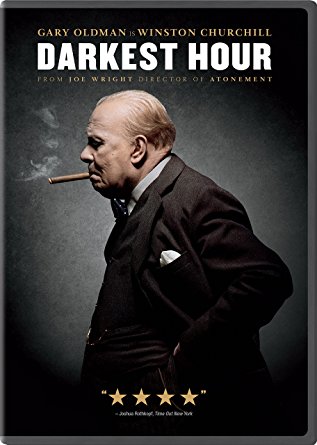
    As soon as I saw the preview for the Darkest Hour, I knew I had to see it. And, boy oh boy, this is yet another movie I can’t wait to watch again.

    The phrase “The Darkest Hour” is used in Britain to refer to the time when the United Kingdom appeared to be under direct threat of invasion from Germany at the beginning of World War 2. Germany had launched its attack on France, Belgium, and the Netherlands and had smashed their armies, sweeping all before them. The bulk of the British army was trapped at Dunkirk and looked like it would be annihilated.

    The British government was split between those who saw no path to victory and wanted to make a peace treaty with Hitler and those who wanted to resist him. The opposition party in parliament forced Neville Chamberlain to resign. And the only man they’d accept in his place is Winston Churchill. But Churchill was not the lion we think of him as today. He had a poor reputation among many of the leaders of his party and was not someone they wanted to elevate.

    So the film starts with the ouster of Chamberlain. We then get to watch how Churchill deals with the catastrophe of what’s happening just across the channel and all the voices pressuring him to make peace.

    There’s humor, suspense, and a number of one-liners that we all began repeating to each other immediately after the film ended. You get a feel for what it must have been like at the time and why so many wanted to sue for some peace treaty with the monster across the channel. You also get to see a slightly different picture of Churchill as a man. I particularly loved the exchanges between him and his wife.

    If you are interested in World War 2 or Britain in even the slightest degree, you simply must see this film.

    *

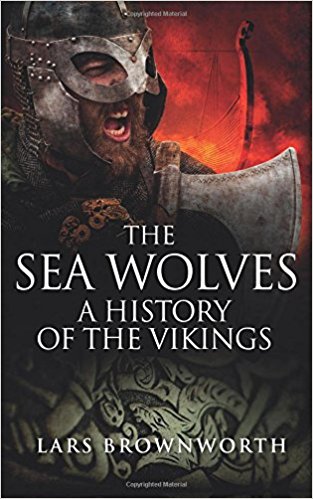
    I have now listed to the audio book of The Sea Wolves by Lars Brownworth twice.

    Yes, it’s that good.

    In this book, Brownworth tells the history of the Vikings. And he tells the history the way history should be told, bringing to life the old Norse world of epic poets, sea kings, and raiders, including Ivar the Boneless, Eric Bloodaxe, Harald Hardrada, Rollo the Walker—all the major figures.

    And Brownworth does it in a way that helps you understand how their dominance was possible and what their effect on the wider world was. Did you know, for example, that Russia comes from the word “Rus”, which was the name for the Swedish Vikings that started that nation?

    What? Russia was started by the Vikings?

    Yes.

    Read or listen to the book. You’ll learn that plus a whole bunch more that will make you look at that time in a different light.

    And if you want to get the other side of the tale, let me recommend reading Bernard Cornwell’s historical fiction series that starts with The Last Kingdom. The series tells the story of the invasion of the Danes during King Alfred’s rule from the point of view of Uhtred of Bebbanburg. It’s a terrific series.

    By the way, I do not recommend the TV series based on the books—too much sex for my tastes. But the books are fabulous. As are the audio versions. I’ve listened to six of them so far, and they have provided hours of enjoyment and interesting insights about the time and the events that took place.

    Share
  • |

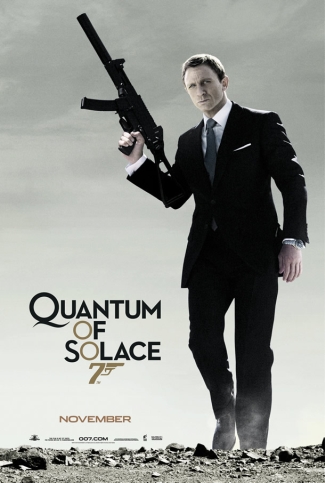
    Diagnosing Quantum of Solace

    ***SPOILERS***

    Last night I went out with my wife and some friends to watch QUANTUM OF SOLACE. I was so excited. But when the movie ended, I was totally unsatisfied. There was no release. Nothing. It just ended.

    There was lots of great stuff in it. Love the character and style of this new bond. Loved CASINO ROYALE, but this just didn’t work for me. My diagnosis has two parts.

    MINOR ISSUE: clarity in story. The chase scenes were so choppy I couldn’t get a feel for what was going on so I could worry for Bond. All I did was get sick to my stomach. Part of the way through I told my wife I was going to write death threats to the freaking director. Who in the world thought that was a good idea? It doesn’t mimic battle etc. In battle you are HYPER alert and focused. Your world doesn’t turn into chaos.

    But it was more than the chase scenes. There were times when I did not know what was going on. Why was Bond going to his friend from movie 1, why was he watching that guy pick up a bag at the play, why was he going to the party, etc.?

    If he’d shared any of his plans, I could have gotten worried when antagonistic forces thwarted him. As it was, I was just watching him do stuff and only realizing at the end what the goal was.

    The basic principle of suspense is to let me know what they need to do and why they need to do it, then let me worry as I see the operation fall apart. Or let me know the danger and see them walking into it. But time and again they didn’t provider the viewer with the necessary information in this movie. 

    MAJOR ISSUE: ineffective story structure. I think for a film to build to a huge climax and release, the hero has to find himself in more and more desperate circumstances. His situation has to become darker and darker until we see no way out for him. By the end of act 2 his plans etc. should all be in shambles. He’s out of options.

    In this Bond I rarely felt he was in danger. Yes, there were some fight sequences which were tense, but he never ended up in worse shape afterwards. We got messages that he was being framed for murders, but I never really felt the screws tightening on him. So it never got darker and darker for him.

    His plans seemed to only be delayed, not destroyed. In Casino Royale, his car is wrecked and he’s taken captive and is going to die. He loses. In this one, nothing. Even when his plane is shot down going out to the desert, it’s just a delay. They walk to the bustop and are soon back on track.

    There might be another point about something being at stake. The water grab is a great idea, but we’re talking a 50 year plot. It’s not THAT urgent.

    A FIX?

    I think they could have done more by playing up the revenge/mystery of the last one. Yes, have the water grab, but make this personal to him. He’s searching for the answers to who was behind his lover’s death. Why not?

    Then get the villain, the US CIA, and the British hunting him down with real resources. He evaded everyone fairly easily in this one. He’s running FROM all these forces, barely one step ahead, until he gets caught by them. And it’s one of Green’s guys in the CIA or something like that who captures him. So he’s totally screwed. Then have the Black CIA officer do something to spring him. He’d probably have to die for it.

    I’m sure there are more and better options. But do something so that Bond is running for his life, FAILS, then pulls it out. Not chasing down the bad guys one by one with relative ease.

    Just one option. Thoughts?

    Share

5 Comments

  1. I’ve just finished Hunger Games and am 127 pages into Catching Fire, and trying to decide if I can realistically finish it before bed/sleep tonight, or if i should give myself a budget of one or two more chapters and save the majority of it for tomorrow…I’ll let you know YAWN how that works out for me. 😉 It’s a very fun set of books, though I’ll be honest that I’m a little shocked at how many pretty young kids are talking about them. I let my kids read up – WAAAAAY up in many cases, but this is one I’ll hold off with them until they’re older (they’re 9 and 6 right now.) My 10 year old nephew’s 5th grade teacher is reading Hunger Games aloud to the class. I find that a little astonishing. Great book, very enjoyable, but really quite dark, disturbing, violent, negative, and otherwise quite a roller-coaster ride. While I’m all for roller coaster rides in my fiction, aren’t there enough other books out there that she could read to the 5th graders? What about going back in time to Wizard of Earthsea or Prydain? Most of today’s 5th graders haven’t read those books yet but they’re fantastic. Sorry, soapbox moment, just can’t quite figure it out. I think the reviews I’ve read of the book are all spot-on when they talk about Hunger Games as being appropriate for ages 12+.

  2. Updated, Kirahfaye. Thanks for the catch!!

    Karentsmith, yeah, you’re probably right. It’s not a middle grade book. YA and up. My male sensibilities sometimes make me overlook the degree of violence.

  3. The Amano store is not that far from where I work in Orem. I’d heard of their chocolate before, but wanted to check it out firsthand after reading your post, so a coworker and I went there today and had a wonderful time testing the chocolates and hearing about how they’re made. I’m definitely taking my wife next time. And, of course, after trying the chocolate I couldn’t keep myself from buying some of it. 🙂 This is some of the best chocolate I’ve ever had!

  4. Did you get some of the hot chocolate. First sip was not too good. But something happened after that and each one kept getting better. The guy makes me laugh–he reminds me a bit of Gene Wilder in Willy Wonka. Glad you liked it.

Comments are closed.