I think I could write a horror novel about some dollar movie theaters. The unsuspecting movie goers are lured in. They blindly walk into the theater and take a seat, but, no! When they sit down, they find they’re trapped, their feet glued to the sticky soda floor. The doors close behind them. Outside the theater a man walking by thinks he hears screams. He pauses, alarmed. Those sound like REAL screams, people dying? But no, he thinks, it’s just a movie theater, just a scary movie, and he walks away. Moments later blood begins to seep out from underneath the theater’s exit door.
Too gruesome? Okay, how about this. You go in, swim through a sea of popcorn to your seat only to find that all the seats flop back and leave you staring at the ceiling. This means that while you could listen to the movie, you actually have to crane your neck forward for two hours to see it. By the time the ending credits roll, you can’t walk. Instead, you have to hobble out like a troll. When you finally reach the exit, you swear you can hear the theater owner cackling. A man in a doctor’s coat shows up and slips the owner a manila envelope full of cash. Suddenly, it all becomes clear—it’s not a theater but a medical scam perpetrated by those who sell orthopedic suits and chiropractics. Mwuhahahaha!
So you can see why the dollar theater dread fell upon me when I went up to the ticket counter at Logan, Utah’s Cinefour theaters and found out the tickets were only $3 each. Sweat began to bead on my brow. I looked around for signs of monster cockroaches that might carry me and my family away to feed to their young, but, to my surprise, the theater was, well, clean. When we entered, we found no sea of trash. No sticky floor. And the seats didn’t flop back into the dentist chair position (unlike another theater on the other side of the street). They actually supported our backs nicely.
We sat in the dimly lit theater like the old days when you didn’t watch a steady stream of commercials. We chatted. Then the previews started up, the film ran, and nobody came out to murder us. It was great.
Cinefour. Cheap movies. Nice little theaters. You can take the whole family out and still have money left over to buy a sink at Angie’s.
***
If you love books as much as I do, you can easily spend your mortgage on them. Which is why libraries are so very nice. But even though libraries are great, there are still some books I want to own. One of the fab things about the internet is that it allows lots of companies and individuals to sell new and previously read (but in great condition) books for cheap. The bad news is that it’s hard to do comparison shopping to find the deals. But no longer–www.goodreads.com has solved that problem by doing the searching for you.
Simply go to the site and search for a book title. When the search results display, click on the book you’re interested in. When the book’s page comes up, you’ll see a little button below the cover that says “buy for” and lists a price. Click that button, and you’ll see a list of all the main vendors and prices. You can then link to one of the vendors and make your purchase.
So how much can you save? Sometimes a lot. For example, I looked up my own book. Its hard cover list price is $25.99. However, by using the goodreads.com feature, I found a brand new copy for $4.89. I could get a good used copy for one buck. ONE BUCK! Holy schnitzel, that’s a 96% discount. If you want to buy a book, go to goodreads.com to find the deals.
It’s interesting how many things we’ve added to the accounts we have in the Bible.
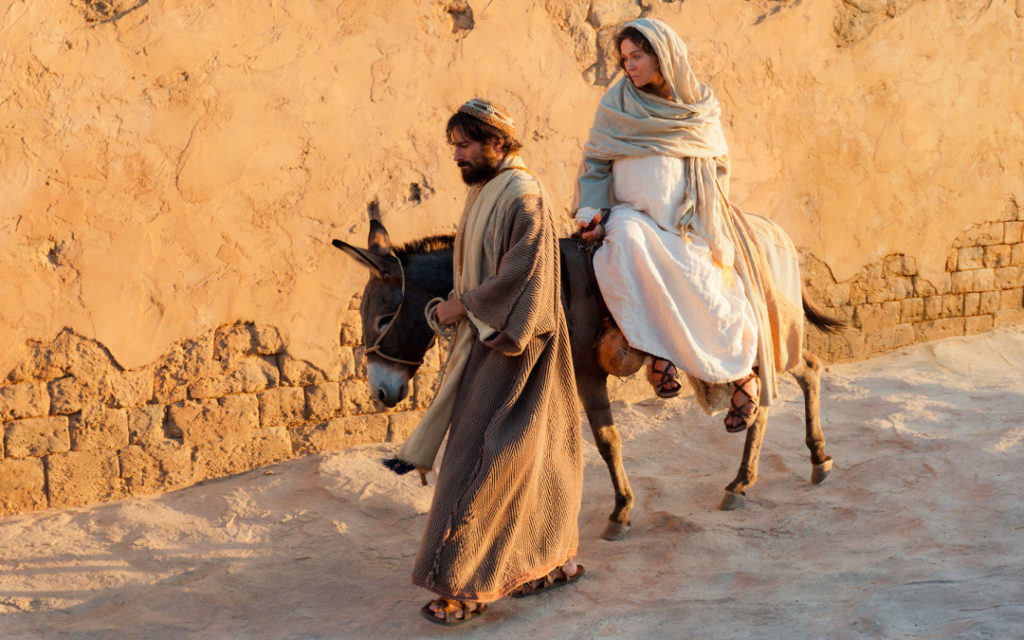
For example, nowhere does the Bible say that Mary rode a donkey. Mary might have walked. Or rode in a cart. Or gotten piggy back rides. We don’t know. We do know that there is no donkey mentioned in the record.
It also doesn’t say she had the child the night they arrived.
It only says she was “great with child” when they made the roughly 80-mile journey from Nazareth to Bethlehem. And that “while they were there” in Bethlehem “the days were accomplished that she should be delivered.”
So she had the baby sometime while they were there. That could have been during the first hour. But it could have also been a week or month later. We just don’t know.
It doesn’t mention anywhere the word stable.
Christ might have been born in a stable, or he might have been born in a cave, or inside the house, or out on the porch, or on the roof (lots of those places had flat roofs where they hung out). We just don’t know. What we do know is that he wasn’t born in a palace. And that they laid him in a manger because there wasn’t any room in the inn. An odd circumstance for a king.
Notice as well that there weren’t multiple inns.
It just says “the inn.” And if you look up that word in the Greek, it’s translated as “guest chamber” in the other spots where it’s used in Luke. So they could have been talking about the one guest room in the house where they were staying. Either way, we don’t have anything that says there was a mean innkeeper who later regretted turning the couple away or that Joseph went door-to-door looking for a place.
We have no record in the account of three wisemen.
It just says “wisemen.” So there might have been two of them. Or twelve. We don’t know. And it appears they came sometime after Jesus had been born because they first saw the star of his birth in the east and only then set out to find him. They might have been coming from Persia, hundreds of miles away. Or they could have been living in Bethphage, a mile to the east of Jerusalem. Either way, they didn’t know they should travel to Bethlehem because it says they went and talked to Herod first, in Jerusalem, and asked “where is he that is born King of the Jews?”
The question freaked Herod out (if you’re the current king, you kind of want to know who else is claiming your throne), and so he gathered all the chief priests and scribes to discuss it, and those guys said the prophecies said it would be Bethlehem. And so Herod met with the wisemen again and told them to go there. And only then did they go down to Bethlehem. So it doesn’t appear the wisemen were there the night of the birth.
There’s no record of camels hanging out with the baby either. Or sheep. Or goats. There’s not a lot there. But what is there is interesting.
Now, I want to go on record stating I have no problem speculating about the event and imagining what it might have been like. I love to do it. Good grief, I write fiction.
In fact, for many years I figured I needed to get in on the Christmas noun gig. You know what I mean. Every year we get heart-warming books about new Christmas nouns. We’ve had Christmas sweaters, Christmas jars, Christmas boxes, Christmas candles, Christmas carols. This year I see there’s one about Christmas fudge and other about a Christmas train. So I figured I’d do one. Mine would be about the Christmas rat. A little fellow who decided to snuggle up with the babe instead of giving him a nibble. One of these days I will get that hungry rat story written.
In the meantime, while there’s a lot of good stuff we’ve added to make the event special, it’s also nice to know what the record actually does say. Whether you’re Christian or not, it’s helpful when dealing with others to know what was recorded about this event that is so significant to the largest religion in the world.
And so the last bit of good stuff I recommend this month are the two brief accounts we have. The first one is in Matthew 2:1-16and tells the story of the wisemen. The other is in Luke 2:1-20 and features some shepherds.
How about former CIA operatives and Navy Seals forming a private group to rescue child slaves?
Last January, Ballard made a bold move and left his job to form his own team of former CIA operatives and Navy Seals who operate undercover to bust child slavery rings
. . . . .
Ballard’s organization is called Operation Underground Railroad, and members call themselves abolitionists. The references to 19th-century slave liberation are deliberate.
There are currently 25 million people living in slavery, according to the 2014 Global Slavery Index research released by anti-trafficking organization Walk Free Foundation. The U.S. State Department puts the figure closer to 21 million, and about two million of those slaves are children.
Ballard’s line of work has opened his eyes to a problem most people are blind to — the fact that there are more people living in slavery now than at the height of the trans-Atlantic slave trade.
. . . . .
Ballard knows better than anyone just how easy it is to buy a child. In an operation in Haiti earlier this year, he posed as a trafficker and visited an orphanage where two children — a brother and sister ages 2 and 3 — were sold to him for $15,000 apiece.
That’s the going rate for a child, says Ballard, and over time, the owner can make millions of dollars by selling the child for sex or forced labor.
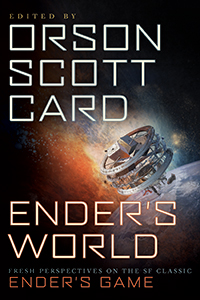
There’s a special joy in sharing a wonderful experience with someone else. There’s a delight in reliving the experience afterwards, in recalling key moments and quoting funny or cool lines. This is especially true of books. One of my favorite book experiences is Ender’s Game. Which is why I’m so happy to announce that Smart Pop is about to release a collection of articles written by folks sharing their experience with that book.
You get to hear from Eric James Stone about how the book should have ended. You get to hear from Matt Nix (creator and producer of Burn Notice) how the book was a guide to his life. You get to hear from Colonel Tom Ruby why he made the book mandatory reading for the Air Force’s Air Command and Staff College.
There are 11 other articles from Neal Shusterman, Captain John F. Schmitt U.S.M.C., Mary Robinette Kowal, Hilari Bell, Ken Scholes, Mette Ivie Harrison, and many others. There are Q&A sections. And there is Card’s own introduction in which he explains what Ender’s Game is really about for him. All of these articles are wonderful reads.
If you loved Ender’s Game like I did, you’re going to enjoy this book. You can get a free PDF excerpt from the book that includes a few of the Q&As from Card along with the full version of my essay “The Monster’s Heart.” To download the PDF, just scroll down to where it says “Sign Up for Free Chapters & Book Updates”: http://www.smartpopbooks.com/book/enders-world.
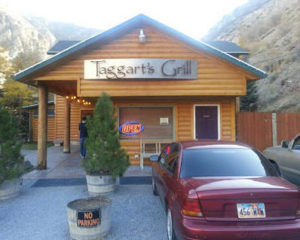
Most of the time when you go to hole-in-the-wall restaurant, it’s a hole-in-the-wall.
But sometimes you strike gold.
And my youngest daughter and I struck big-time gold last week two miles east of Morgan, Utah, in the canyon between Morgan and Henefer off of exit 108. I’ve driven that stretch many times and never knew anything was off that exit. Literally, if you blink, you’ll think nothing is there.
It’s nestled in some trees up against the northern slope. The first thing that strikes you when you get out of the car is the delicious aroma. Then you notice the peacocks running about. And then you enter the diner and see a display case of tantalizing, large desserts such as cheesecake, carrot cake, and huge pink-frosted cookies.
The diner itself has a wonderful airy feeling with a high ceiling and lots of windows that offer views of the grove and garden surrounding the diner. There are seats outside in an area with a small waterfall. But we sat inside with the walls of log-cabin wood and the stained glass panels hanging in the windows.
They serve a variety of dishes from sandwiches and soups to pizza, burgers, and fancy plates of salmon or tenderloin. And while the views and setting is awesome, the food is where they really shine.
The beef stew was thick and amazing. The battered fries perfect. The sandwiches were wrapped in thick and soft flat bread that was delicious. And speaking of bread, they asked if I wanted a roll with the stew. I said yes. They didn’t bring out a roll–they brought out a small loaf of what appeared to be freshly baked bread. We of course had to try one of the desserts and opted for the
carrot cake. It was lovely with a hint of almond in the cream cheese frosting.
The portions were huge and so we took enough home for another meal for three.
We’re going back.
I want to try one of their burgers, the halibut, and the BLT.
If you like great food at a great price and are anywhere near Morgan, don’t blink at exit 108. Just pull off and enjoy an awesome meal.
*
Parents of Rich Middle School students, what if I told you that researchers have uncovered a secret activity that teens enjoy that has the side benefit of actually raising their grades in all of their classes.
But that’s not all. This one secret thing will help them get better jobs years in the future.
It will help them make more money.
And they won’t even know that it’s doing this for them. They won’t care. Because they won’t be doing it for the grades or money. They’ll be doing it for the enjoyment it brings. They’ll be doing it just because they like to do it.
One little surprising thing.
And it’s backed up by lots and lots of research.
Do you want to know what this activity is?
Do you want to open up opportunities for your child?
If you do, come to the meeting Mrs. Brown is having at 7:00 p.m. on Wednesday, October 12 at the Rich Middle School.
No, really. It’s true. You just have to spend smartly. And in a special way.
Over the course of your life, if you make what the average American does, more than a million dollars will flow through your hands. And yet so many of us don’t feel rich. That’s because money is like the Gingerbread Man. Turn your back on it, and it’s out the door, rudely taunting everyone as it flies by. And then it gets eaten by a fox. Such a waste.
But it doesn’t have to be.
Let me share with you THE best method I’ve found for managing my money. It takes tons of anxiety out of spending and saving. And, if you’re a Dave Ramsey fan, it is the one thing upon which everything else he teaches depends. If you’re not a Ramsey fan, it doesn’t matter. After getting a job, this is the first thing you must do to get rich.
Here’s the big secret. It has three parts:
1) Decide how much you’re going to spend on various things BEFORE you spend it
2) Make what you have left in each spending category EASY to track
3) Manage the things you can’t foresee
To do the first two parts, you’re going to create a special kind of spending plan. We won’t use the term “budgeting” because “spending” is so much more fun, and because that’s what we’re going to do anyway. To understand how to do this, you need to watch three videos.
Before you do, please know I earned a Masters degree in accounting. I’ve used Quicken for more than twenty years. Neither of those things has helped me manage my money like this simple method. If you’re looking for a better way to manage your money, this is it.
First, watch this video to get an overall idea of how this method works.
Note: you can use actual envelopes and cash for everything if that makes you happy, but you really don’t need to. The idea is to think of pre-allocating your monthly income to categories of expenses AND then having an easy way to track what’s left.
Now, watch this bubba explain how he does it.
But John, didn’t he say the same thing?
Basically, but he has a fun accent. Besides, it’s good to see another example. And please note again: you don’t have to use actual envelopes and cash, although many swear by them.
Finally, watch this one. No, it’s not just another repeat. There are some additional important ideas illustrated here.
This video brings up the idea of why simply tracking an overall account balance isn’t very helpful. It also shows you WHY envelope categories are–they make it immediately apparent how much money you have to spend for a thing. If you just use Quicken to track what you spent (looking in the past), you’ll run into troubles. Let me tell you, I know this from experience. We use Quicken, and have for years, and plan use it for some time to come because it makes taxes and bank reconciliation a snap. But Quicken only tracks what you spent. Tracking, as important as it is, is not the key to success. The key is pre-allocating BEFORE you spend. And then tracking so you know what you have left in that category. And making that tracking EASY.
The final thing you have to do is manage the things you can’t foresee because things rarely go exactly to plan. Unexpected things ALWAYS come up. Your daughter will crash the car. Your husband will get appendicitis. You will forget that you had a $200 school sports expense.
Okay, fine. Things happen. But how do you manage them if you can’t foresee them?
If it’s really small, you simply adjust your plan. For example, if you need $30 more in food, you can transfer it from fuel if you have some extra there.
You manage larger things by building up an emergency fund. Ramsey suggests starting with a $1,000 emergency fund and then trying to get two to three months of living expenses—about $10,000 to $15,000 for most people. Unexpected things WILL happen and cost your money. So build up some cushion to take care of them.
Finally, you manage the really large things by getting proper insurance. This is what insurance is for. The types of insurance you need include (1) homeowner’s or renter’s, (2) auto, (3) medical, (4) long-term disability, (5) long-term care (for those 60 and older), and (6) life insurance. You may add true identity theft insurance as well.
Okay, so that’s the overview. If you want to try this, here’s how you do it. It’s fairly easy.
STEP 1: get your head straight
Resolve that you will NOT use credit for anything. You will not spend any money you don’t have. You will not put another dime on a credit card, and this despite the fact that the plastic devil companies are begging you with offers almost every day to sign up for their cards. (Hum, I wonder how they afford all that junk mail.) If your monthly bills are greater than your income, then we have to fix that first. But the new law of the land is zero new debt.
Next, always remember to allocate your money to these categories first—shelter, food, adequate clothing, and adequate transportation. This means if you have a crunch month, you would NOT pay credit card bills before food, even if you work for Visa.
STEP 2: get your blank sheet & pencil
Get out a piece of paper and pencil (not a pen) or open an Excel spreadsheet. Whoa, that was an easy step.
STEP 3: list your monthly income
List your expected monthly income at the top from all sources.
STEP 4: list your spending categories
List your spending categories. You’re going to split them into two groups.
The first group goes right below your income and includes all of your recurring monthly expense/spending categories. Not the amounts you spend. Just the categories. Things like mortgage, electricity, phone, groceries, dining, etc. Make sure you include some entertainment/fun money.
The second group goes below your recurring monthly expenses and includes all of your major annual periodic expense/spending categories. Things like Christmas, vacation, clothing, kids back to school stuff, etc. And things you want to save for—a couch, iPhone, car, etc. Your emergency fund goes here as well.
Decide how much you will spend in each category this month. You should have 0 dollars when you get to the bottom of the sheet. Spend (allocate) every dime BEFORE you start the month. You’re going to do this at the beginning of each month. And you will probably have to adjust it a couple of times during the month.
You will probably have categories that don’t get any money this month.
You will also have categories that get money, but you won’t spend any of it this month. These are your periodic expenses. Your goal is to have the cash up front to pay for them, so you have to save for them. Remember, you are NOT going to take on any new debt.
For example, if you’re saving up for Christmas, you allocate some money for that out of this month’s funds and TRANSFER it to savings. Then it will be there when you need it. You could draw the cash out and put it in an actual envelope, but you don’t have to. Just as long as you keep a record of the total amount in savings and what it’s all supposed to be for, i.e. total savings in July = $1,000: $500 for back to school, $200 for Christmas, and $300 for my trip with kids to Six Flags in 2013.
STEP 6: mark the “watch” categories
Some of the categories you need to watch closely, and some you don’t. The ones you need to watch closely will be your “envelope watch” categories.
The categories you don’t need to watch as closely are those that are automatically taken out of your account each month. And those you will write a check once a month for. These things include mortgage, car payment, electricity, etc. These are NOT categories you need to use actual envelopes for. You can track it on paper or in the spreadsheet. Not much happens with these categories.
But there are other categories that you’re going to be spending throughout the month, and it’s easy to over spend if you don’t track them. Groceries, dining, entertainment, gasoline, a specific vacation, etc. are all categories that you make multiple purchases with each month and are flexible/discretionary and need to be watched closely. So while everything is tracked in a category/envelope on paper or on the computer, you’ll track these with either a real envelope and cash or a virtual one using that free software you saw in the third video or a piece of paper with a running category balance in your wallet.
STEP 7: have fun and spend!
Now go out and spend!
Before spending, check your envelope. Do you have enough money? If you do, spend and be happy. If not, save up for it or find a way to save money in another category and adjust so that you’re still spending the same total amount. Never spend what you don’t have.
If you feel you need something not planned for, well, you have to get it later OR transfer something out of another envelope. I just make myself wait a day or three, and usually the urge to buy, Buy, BUY! goes away, and I see I don’t “need” it right now. Or maybe a more affordable option presents itself.
If the kids want something, and you feel guilty you can’t give it to them, just tell them what’s in the envelope/category, and tell them they can save for it or choose something else in that category that will fit with what you have left.
If you’re tracking envelopes virtually or using the paper balance in your wallet, you MUST update your envelope AFTER every purchase so you don’t spend more than you have. If you find you just can’t seem to remember to do this, go to the cash method.
That’s it!
Of course, that’s not quite it because even though it’s easy, if you haven’t done this before, it might take some adjustment. Give yourself a month or three to get it down. Because when you do, it WILL produce great results and peace. It’s doing that for us.
If you feel you need more info, I suggest you read Dave Ramsey’s Complete Guide to Money. Here’s the first chapter to sample: Complete Guide To Money sample chapter.
Happy spending.
EDIT: here’s another video to watch: http://www.youneedabudget.com/. Then read about the method: http://www.youneedabudget.com/method. This one highlights the idea that you need to make sure you realize that things will happen that you cannot foresee. No plan survives contact with the enemy.
6 Comments
We used to call the dollar movie theater in American Fork the “Sticky Shoe.”
Are you on goodreads?
I am, but I hardly ever post. Alas.
John,
I hope it didn’t stress you out to see your book listed at a low price. If it makes you feel better, I’ll be picking up Curse at full price when it comes out. 🙂
Good grief, no. Low price means more buyers and readers. Right now that’s all I want 🙂
Ah, that makes sense. I bought your book because Lord Sanderson commanded it… in a round about, “This guy is good so we have him on Writing Excuses” kind of way. Perhaps when Curse comes out you can do another guest appearance? I always enjoy listening to you talk about the craft, particularly the hardships you faced and overcoming them.
I’ll be on again around November. And I’m sure again when Curse comes out in 2011. I’m looking forward to it. I’ve learned a lot this last year with the release of book 1 and writing book 2. A LOT! Of course, won’t be able to share it all there. Happy to hear it helps, Andrew.

 Most of the time when you go to hole-in-the-wall restaurant, it’s a hole-in-the-wall.
We used to call the dollar movie theater in American Fork the “Sticky Shoe.”
Are you on goodreads?
I am, but I hardly ever post. Alas.
John,
I hope it didn’t stress you out to see your book listed at a low price. If it makes you feel better, I’ll be picking up Curse at full price when it comes out. 🙂
Good grief, no. Low price means more buyers and readers. Right now that’s all I want 🙂
Ah, that makes sense. I bought your book because Lord Sanderson commanded it… in a round about, “This guy is good so we have him on Writing Excuses” kind of way. Perhaps when Curse comes out you can do another guest appearance? I always enjoy listening to you talk about the craft, particularly the hardships you faced and overcoming them.
I’ll be on again around November. And I’m sure again when Curse comes out in 2011. I’m looking forward to it. I’ve learned a lot this last year with the release of book 1 and writing book 2. A LOT! Of course, won’t be able to share it all there. Happy to hear it helps, Andrew.