Good Stuff! News of the World and two for the Downton Abbey crowd

I recently watched a move and two British TV mini-series that were just terrific.

The movie is News of the World. It’s a Western set in 1870, starring Tom Hanks as Captain Jefferson Kyle Kidd, a former Confederate officer who makes a living traveling from town to town in Texas and reading newspapers to local residents for an admission fee of ten cents.
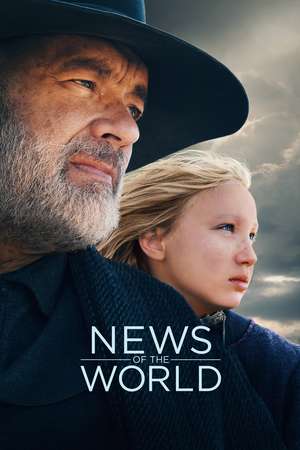
After departing Wichita Falls, Kidd comes across an overturned wagon on the road and finds the driver, a black freedman, had been lynched. He also finds the stray, young white girl who only speaks Kiowa (the language of an American Indian tribe), that the freedman has been transporting.

Kidd learns from the girl’s paperwork that she is Johanna Leonberger, who had been kidnapped and by Kiowa six years earlier. She doesn’t speak English. Doesn’t want to go with Kidd. But Kidd is tasked with getting her to safety. Of course there are all sorts of perils and issues along the way that threaten that goal.

There’s suspense, action, drama, bad guys, and some poignant moments that will move your heart strings. If you like westerns or Tom Hanks, I think you’ll love this movie. It’s the best western I’ve seen in a long time.

***

Those of you enjoyed Downton Abbey will be very happy to hear that Julian Fellowes, who was the executive producer for that series and wrote many of the episodes, is back and has written two more historical dramas with that same type of feel.

The first is Dr. Thorne,a three-episode miniseries based on the novel by Anthony Trollope.
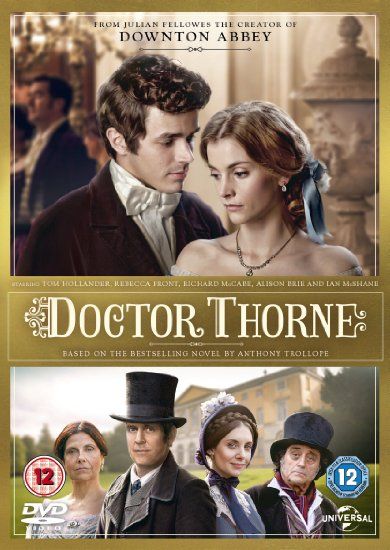
It’s set in the late 1800s. Mary Thorne and Frank Gresham, the only son and heir of the squire of Greshamsbury, fall in love. However, Frank’s parents want him to marry wealth because they have very little to leave their son. Mary is penniless and of suspicious birth. She’s not anything at all that would help Frank in the world. And so the drama begins. You get to enjoy the historical setting, the manners, and romantic suspense.

The second is Belgravia, a six-episode miniseries set in the 1800s and based on the novel by Julian Fellowes himself.
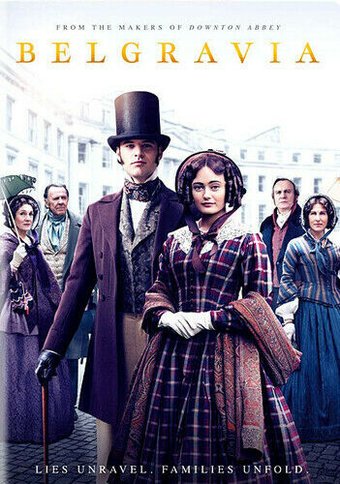
For you geography buffs, Belgravia is an actual place, an affluent district of London. And the story set there is about two couples. The first, the Richmonds, are part of the aristocracy. The other, the Trenchards, are from the business class.

The Richmond’s had one child, a son. The Trenchards had one child, a daughter. The two fell in love. But the son was killed in the battle of Waterloo. And the daughter died in childbirth. However, it was an illegitimate childbirth that the Richmonds don’t know about. The Trenchards thought it best, to retain the reputation of their daughter, to have someone else raise him.

Twenty-five years later, however, both couples still feel the hole those deaths left in their hearts. Mrs. Trenchard feels it’s time to reveal the truth to the Mrs. Richmond. But it does not go as planned. Especially not when the Richmond’s nephew wants the Richmond’s inheritance and is willing to remove all obstacles in his path.

It’s a story full of manners, heartbreak, suspense, hope, and, well, I won’t tell you the ending. But I will say that if you like these types of historical dramas, you’ll probably love this.

Share

Similar Posts

  • Earth: the biography, Planter’s Nuts at Sam’s, “The Professor of War”

    Earth: The Biography is one of the most interesting documentary series I’ve seen in a long time. It’s produced by National Geographic and the BCC. Dr. Ian Stewart, a Scotsman, hosts the program and tells the life story of our planet, how it works, and what makes it so special.

    There are five parts: “Volcano,” “Atmosphere,” “Ice,” “Oceans,” and “Rare Earth.” And while they were all good, the last two blew me away.

    For example, I always thought the polar ice caps were a big waste of water. What do they do besides torment penguins and Eskimos?

    But the program reveals that the ice caps are critical to all life everywhere on the planet because they power the great ocean conveyer. This conveyer is a slow current that carries surface water away from the equator up to the polar caps then down to the sea floor and back—transporting oxygen, nutrients, and warmth all around the globe.

    We can see how critical the ocean conveyer is when it stops. There was a time when this happened. With no replenishment of oxygen, the water turned to poison. The poison was picked up in the clouds and rained down upon the land. And almost every living thing on the planet died a toxic death.

    Sniff, sniff–we love you, Polar Ice Caps.

    “Oceans” was fascinating, but “Rare Earth” was the kicker. How common is our cozy little situation here on earth?

    Well, for life to exist as we know it, we needed to be a certain narrow distance from the center of the galaxy, orbit a certain, less common type of star, be within a certain range of that star, have a big old fat vacuum like Jupiter hanging out in the wings sucking up asteroids and comets so they don’t hit us instead, have an orbiting moon of a certain size, an earth core with just the right amount of iron, a tilt to the earth that would allow polar ice caps, water, an atmosphere to protect us from all sorts of celestial mayhem. Heck, we even had to have that nasty mass extinction caused by the broken ocean conveyer. And there’s more.

    So many rare events had to line up just right, that it’s bound to make the atheists among us celebrate their good fortune with illegal-Wyoming-firework abandon and the believers to rise up from their chairs and shout, “Hallelujah and Amen!”

    Nellie, the girls, and I all loved this show.

    ***

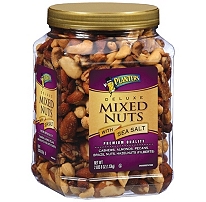
    I’m a nut man. Love nuts. Hazelnuts, walnuts, Brazil nuts, pistachio nuts, cashews, pecans. But nuts are expensive. And while peanuts are lovely, I like some variety and grow weary of the mixes where you get about five thousand peanuts and one burnt almond. So when I saw the forty ounce jars of Planter’s Deluxe Nuts (sea salt, NO peanuts) at Sam’s Club in Logan, Utah selling for a mere $10.98, I just about fainted away and died.

    Eleven bucks?!

    For comparison, please note that a little ten ounce jar of the exact same nuts costs six dollars in the grocery store. Four times the nuts for less than double the price!

    The nuts are good. More importantly, they’re a regular item at Sam’s. So with all the reports coming out about how good nuts are for you, reduce heart disease, reduce diabetes, blah, blah, blah, fight aliens, I can now afford to eat them and hopefully extend my stay as a carbon-based life form.

    ***

    General David Petraeus has revolutionized the way America wages war. It was his strategy that turned the war in Iraq around. It’s his strategy that’s being used in Afghanistan. And it will be his methods that will inform how our soldiers face enemies in years to come.

    The key to his thinking is realizing that there are two different terrains that must be won in the types of war we wage now—the geographic and the human. You know what geography is—take that hill, secure that town, remove the threats from that jungle. The human terrain, on the other hand, is made up of the hearts and minds of the people at the site of the struggle and has proven to be equally important.

    It’s important because the wars we’re most likely to engage in now are not ones where two big armies square off and blast away. Anyone who tries to stand up to the United States using that method is going to very quickly learn what it means to get stomped, shredded, and served to the dogs. So most of the battles are likely to be engagements in unconventional war, where the enemy hides, and where the local populace will make or break the effort.

    In May 2010, Vanity Fair magazine published a fascinating article called “The Professor of War” by Mark Bowden. It summarizes Petraeus’s history, the source of his thinking, and the kind of man he is. With so much at stake, I was grateful to get this well-written glimpse into the general and his approach to war.

    While you’re at the site, you might want to also read another Vanity Fair article titled “General McChrystal’s Three Biggest Strategic Errors in Dealing With Rolling Stone” by Bill Bradley, published June, 2010. McChrystal was Petraeus’s right hand man. The contrast between the two men is enlightening.

    Share
  • | |

    30 books you should read before you die

    An avid reader friend of mine began reading through the books in a list called “100 books you must read before you die.”

    She got to Jack Kerouac’s On The Road and went to Facebook and posted the following: “I don’t get the appeal. It’s about a group of boys/men who are irresponsible, drunks, whoring around taking advantage of others and being enabled by their women. Why is this a classic and why should I have wasted my time on it? Can some of my literary friends explain? I hated a brave new world and the handmaid’s tale too.”

    Is the book a classic?

    Should she read it before she dies?

    Is it really that important?

    Let me share an edited version of my response and then provide my list of 30 books you should read before you die.

    *

    Annette, the unfortunate truth is that these lists of “classics” are a sham because there is no objective criteria for determining literary excellence.

    Or maybe I should say that measuring quality in the arts isn’t like measuring the unambiguous, objective score of a baseball game. After books exhibit a certain level of proficiency, it becomes increasingly difficult to distinguish the quality of one book from another, especially because much of this depends on a reader’s interests and subjective experience of the story.

    When it becomes hard to rank performances, people rely on other measures. One of the most powerful is social networks.

    So if two readers find two different books that blow them away, one of the books might get all the attention because the one book gets picked up by a news service (The New York Times) or a platform (the Oprah Book Club effect) or some other social network of influence. A lot of the so-called literary classics only appear on various lists because they tapped into the academic network, which kept them alive far longer than they would have lasted otherwise.

    On The Road is simply a book that made a stir among some circles in the 1950s. That’s it.

    Was it more important or of higher quality than Exodus? The Chronicles of Narnia? Lord of the Rings? A Town Like Alice? All published in the 1950s as well.

    It depends.

    If you’re wanting to understand the 1950s beat culture, it would be an important book.

    But if you’re wanting to understand fantasy writing of the time, it wouldn’t.

    If you’re wanting to read a book that’s had a huge impact on popular culture, well, LOTR beats On The Road like a dog.

    Some people have the feeling that the so-called classics have some inherent medicinal value because someone put them on a list and called them classics.

    Nope. They’re just stories. Some of which can shed light on the issues and interests of a part of the culture in a given period. But if you’re not interested in that specific sub-culture, who cares?

    And if you’re reading to be entertained, moved, uplifted, or educated—which ones do that best for Annette is for you to decide.

    So all that to say I wouldn’t devalue your reaction to the book ?

    *

    I’m now going to give you my list.

    But it’s not going to be a list of titles. Nor will it focus on a book’s impact on some sub-culture of a given period.

    It’s going to be a real list. One that focuses on what so many of us go to stories for.

    1. The one that makes you weep.
    2. The one that makes you giggle and snort.
    3. The one that reminds you of what it’s like to fall in love.
    4. The one that gives you hope.
    5. The one that you begin to read more and more slowly because you don’t want it to end.
    6. The one that scares the soup out of you.
    7. The one that you can’t put down, even though you need to wake up early in the morning.
    8. The one that makes you wish you lived there.
    9. The one that’s so good that when you close it, you immediately start to read it a second time.
    10. The one that gives you and your child hours of pleasure together.
    11. The one that gives you a sacred, spiritual experience.
    12. The one that makes you reread some of the lines because the turns of phrase are just so delicious.
    13. The one that gives you courage.
    14. The one that takes you on an awesome adventure.
    15. The one that makes you want to be a better person.
    16. The one that bores you to tears (just so know you how good the others are).
    17. The one that introduces you to a different culture that delights you.
    18. The one that makes you think.
    19. The one that lingers with you for days.
    20. The one that gives you lovely insights.
    21. The one that inspires you to love your spouse more.
    22. The one that introduces you to the sorts of people you normally don’t like and makes you actually like them.
    23. The one that delights you with its characters.
    24. The one that whisks you away to a different historical period.
    25. The one that inspires you to give your children a hug.
    26. The one that gets your adrenaline pumping.
    27. The one that sparks all sorts of ideas in your head.
    28. The one that makes you wonder and start imagining what it would be like to be there.
    29. The one that blows your freaking mind.
    30. The one that makes you stand up in your living room and cheer.

    We could do more than 30, couldn’t we?

    Like the one that makes you think people from a different time period are just like us. And the one that makes you think people from that same period are completely alien.

    But I think we’ll stop. That there above is a list.

    Those are 30 books I think everyone will want to read before they die.

    Share
  • Good Stuff! Lindybeige Rocks!

    I’ve been watching Lindybeige videos for a few years now. Lindybeige is the online name for Nikolas Lloyd, a smart, funny geek of the re-enactement, fencing, and RPG line. He’s got a youtube channel that is chock full of videos in which he makes witty and insightful points about ancient and medieval warfare, archaeology, dance, and anything else that takes his fancy.

    For example, have you ever seen folks pushing each other about with swords? Is that realistic?

    Interesting, what about pushing in a shieldwall?

    Food for thought, isn’t it? It makes me want to go read up on shieldwalls. Were they really as he concludes they were? But enough about history and conjecture. What about the truth? What about science? For example, if you believe in science, must you also believe in a certain approved list of theories?

    But surely that doesn’t apply to Global Warming Theory, which is now called Man-made Climate Change because the warming bit never panned out. No?

    Wow, and he even accepts the data on the warming. Okay, enough about the truth. Back to fantasy geekiness and weapons in fantasy worlds that make sense.

    I love this guy. If you’re a fantasy geek and haven’t yet begun to watch Lindybeige, you’ve got a lot of enjoyment ahead of you.

    Share
  • “Somewhere My Love” by Stephen Mark Rainey

    The latest issue of Intergalactic Medicine Show just hit the net. Of course, I don’t have time to read. But how can I help myself when Mark Rainey’s “Somewhere My Love”  starts with this line: “She lived in our town’s one and only haunted house.”
    What a hook!

    And soon I found myself reading a wonderful story about a boy and a teacher, who happens to be a witch.

    But the kind of witch Rainey writes about is not some gal with warts and a black hat. Nor is she some kind of Alice Hoffman Practical Magic type.

    She’s a Rainey witch.

    And this tale is about a boy caught in her class in school. I loved it. It evoked perfectly how some teachers affect us boys. I haven’t read any of the other stories in this issue yet. But I can still say the measley $2.50 subscription for issue 12 is worth it if only so you can read this one story. Besides, even if you don’t have time to read it, scroll down on the TOC and you’ll see you don’t have to–you can listen to Scott Card read the thing to you.

    Share
  • |

    Buffett’s Letter to Berkshire Hathaway Shareholders on 2008

    I got my masters degree in accounting and information systems. While going to school I started an investment club and learned about a man named Warren Buffett.

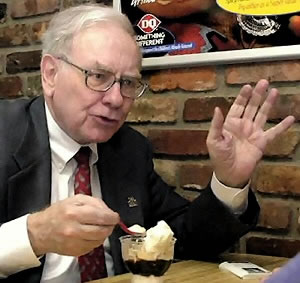
    Warren Buffett is humble, full of folksy humor, and trades places with Bill Gates as the richest man in the world, depending on the year you’re counting. His annual letters to his shareholders are a delight to read. This year’s is full of wisdom about the current financial crisis. Moreover, within a few minutes of reading you will be able to get some key insights that can help as you evaluate the plans being hatched in Washington and how to prevent this particular type of crisis from happening again. 

    If you’re not that into finance, I recommend reading:


    1. The introduction starting on page 2 and ending on page 3
    2. The “Finance and Financial Products” section starting on page 10 and running through page 12

    Once you’ve read those, if you want to laugh and see Buffet’s humor, skip to page 21 where Buffett talks about the annual meeting of shareholders. Tell me you wouldn’t want to attend.

    The Berkshire Hathaway homepage

    This year’s letter to shareholders (you will click on 2008 because he’s discussing the results of that year)

    Share
  • You want your kids to succeed in school? There’s one thing you can do…

    Did you know that there is one thing that kids can do outside of school that’s been proven, over and over, to lead to them doing significantly better in all other subjects?

    And I mean all subjects. Math, history, science, criminology, psychology—you name it.

    There’s one thing, and numerous research studies have proven it, that kids do that leads to them getting better jobs later in life.

    This one thing, proven by research, leads them to grow up to make more money.

    And it doesn’t matter if they start in a rich or poor family. This one thing leads them to greater opportunity. Over and over again.

    It’s a thing that kids actually can learn to love. For some it becomes as delicious as eating ice cream.

    The kids are back in school. Parents want them to do well. They want them to succeed. How wonderful that there’s one thing that parents can focus on that will so dramatically change their child’s life.

    And it doesn’t take long. Even just twenty minutes per day of this activity can change everything.

    Twenty minutes.

    Is there a parent anywhere that can’t find twenty minutes?

    So what is this one thing?

    Reading for pleasure.

    Notice I didn’t say reading for academic purposes. I didn’t say reading to finish homework. I said reading for pleasure. For the enjoyment it brings.

    And it doesn’t matter what the subject matter is. It can be fiction—fantasy, love stories, horror, action. It can be non-fiction—like material on bugs, robots, horses, motocross. It can be fairy stories or funny anecdotes. It can be short or long. The key is that they’re reading for pleasure.

    I know some of you might be saying, “But John, my kid doesn’t like to read.”

    That’s okay. You can change that.

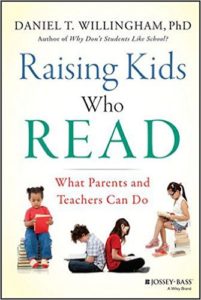
    If you want to find out how to help your child learn to enjoy reading, let me recommend Raising Kids Who Read: What Parents and Teachers Can Do by Daniel T. Willingham, a professor at the University of Virginia whose research has focused on the brain and learning. In the book, Willingham debunks the myths about literary instruction and provides practical, engaging, research-based tips for sharing the joy of reading with kids of all ages.

    You can get a used copy for $13 bucks on Amazon.

    RaisingKidsWhoReadByWillingham

    While you’re waiting for the book to come, here are some things you can do start doing right now to help your child read for pleasure.

    First, start reading something fun or interesting with or to them every day. For little kids, this can be picture books. For older kids, this can be anything–an article from a magazine, funny stories online, or books large and small. If you want to start with a joke book, that’s okay. If you want to start by listening to a book on tape, that’s great too.

    Wait a minute? A book on tape? Isn’t that cheating?

    No.

    There are four keys to helping your child read for pleasure. They need to learn to:

    1. Decode the sounds letters make.
    2. Comprehend what’s meant, which is driven by their general knowledge of the subject they’re reading about.
    3. Enjoy reading.
    4. Identify themselves as a person who likes to read books

    When you listen to a book on tape, you’re doing numbers 2-4.

    Remember: the goal is not to improve the child. It’s not to get them a better job ten years from now. It’s not to make them wealthy. It’s to simply help them enjoy reading. Because once they enjoy reading, once reading for pleasure is something they see as one of the things they do, they will begin to read more and more. And as they read, they become better at reading, which leads to more enjoyment, which leads to more reading. Which leads to all of those other awesome benefits. It’s a virtuous cycle.

    So the first thing you need to do is simply start having a good time reading with them. You can read to them at bedtime, after dinner, on weekends. You can have them read articles to you while you’re making dinner or washing the dishes. You can have them read to your or themselves while you’re on the road driving somewhere.

    You can make a rule that they have to read with you for twenty minutes before they go play with friends or watch TV or play video games.

    And above all, you need to let your child’s interests drive most of the topics you read about. If they want to read about spiders and dinosaurs, then read about spiders and dinosaurs. If they want to read horror stories, then read horror. If they’re into skiing or horses or guns, then help them find interesting stuff on the topics they’re already interested in. And if they don’t like a book, teach them they can abandon it and go find another.

    And if you yourself are not someone who reads for pleasure, well, now’s the time to start. You can make reading for pleasure something your family does, just like families make enjoying boating or hunting or riding horses or eating Mexican food part of what they do.

    It’s never too late to start.

    And seeing that this is the one thing that has such an impact on your child’s success, is there really anything else that would be a better use of those twenty minutes per day?

    Reading for pleasure—who knew that having a great time could have so many wonderful effects? Start today. Don’t wait.

    It might take a little work. You and your child might run into a few unpleasant spots. But that’s true of anything. How many times do kids fall when learning to water ski or snow ski? How many times do they experience something unpleasant when practicing football or basketball or volleyball?

    So start right now. Figure out a time with your child. And begin learning to read for pleasure.

    Share