Zing Generators

Where do you get your ideas? How do you turn them into story?

Those are fabulous questions. The answer is a bit longer than I have time for today. But I have posted my list of idea generation methods, structured ways of performing creative Q&A.

These have been collected over the years from a number of sources and are now passed on to you, faithful reader. Use them, cherish them, and, if you wish, start an order of crazed monks to preserve the fabulous secrets.

John Browns’s Idea Generation Method List

Enjoy!

Share

Similar Posts

  • Generating Story 10: Creative Q&A with Orson Card

    Back when Orson Card first started his online magazine Intergalactic Medicine Show, he wrote an essay in which he detailed how he developed the idea for one of the short stories he told in his Ender universe. Card’s essay is a valuable resource because he exposes his mental thought process, modeling how he approaches story development.  It’s not often that an expert takes the time to expose his mental thought process while working through something, and there’s always a lot to learn when they do.  Interestingly enough, it illustrates a number of the principles in the Story Development Framework.

    Please read How One Story Can Give Birth to Another by Orson Scott Card.

    While you are reading it, watch for:

    1. How often he uses questions as he develops the story.
    2. How story objectives influenced what he wrote.  For example, why didn’t he write from Peter’s point of view, and how did he want to portray the mother?
    3. How story principles guided his development.  For example, what were the three ways to get an audience’s interest and how did that affect the story development?
    4. What he did when his zing suggested he go another way.  Did he end up writing the story he set out to at first? (Card listens to his Spidey-sense, what he cares about and believes in, quite a bit.)
    5. What his first draft provided him.  What does this say about using drafts to help you develop the story? 
    6. How he used the four-scene “plan” he sketched of the story.  How did that outline help him?  When he had that, was he finished developing the story?
    7. How he uses improvising to continue the development as he drafts.  What did he need in order to improvise? And what was he actually doing?

    Did you notice the elements of the story–problem, character, plot, and setting?  Did you notice how his development continued while working on the text (drafting)?

    One thing I don’t think you should take away from this is that you must write exactly like Orson Card.  That you must not include much setting.  Or that your sketches of the plot, the “plan” of the story, needs to be just like his.  You may enjoy more setting than Card.  You may want more or less in your sketch.  That’s fine.  The goal here isn’t to suggest you follow his exact procedure and have his exact same objectives.  It’s to see how authors use creative Q&A to develop a story, to make it come to life.

    As a final side note, I would like to quibble with one thing Card says.  A lot of folks talk about showing and telling in writing.  The eleventh commandment is to “Show, don’t tell.”  But I would like to suggest that writers actually never show anything.  They can’t.  It’s all tell, tell, tell. 

    Showing requires the original sensory input.  So a movie can show.  A stage play can show.  Both can also provide raw auditory input.  But all an author can show are marks on a page.  Those marks guide a reader into imagining events, people, and things, but it’s telling–“imagine this, imagine that, now imagine this.”  The author can tell in scene or summary.  Both have their place.  But it’s important to realize that we’re helping the reader imagine.  I don’t have time to go into the implications of this right now, but try the idea on for a while and ask yourself what type of writing helps you imagine things more vividly.

    For more in this series, see How to Get and Develop Story Ideas

    Share
  • |

    Your single biggest challenge writing novels

    I’m about to put together a brand-new novel writing boot camp, but before I do that I want to know what would be most helpful to YOU.

    So if you want to write novels, my question to you is this…

    When it comes to writing novels, what’s YOUR single biggest challenge, frustration, or concern?

    Please CLICK THE LINK to tell me.

    Click here.

    As a thank you, those that answer the question will get a seat at a virtual, 1-hour training session I’m putting on where you discover 3 key principles of keeping your readers hooked.

    I look forward to the insights.

    You’re awesome ?

    Share
  • Meyer on the Brain

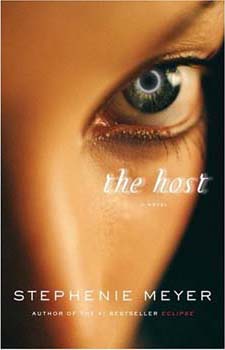
    Watch an interesting Borders interview with Meyer about Host and Twilight. The thing I keep seeing in her interviews is that this woman follows her passion. She follows the story that wows her. It’s nice, of course, that millions of fans want to share that wow with her. But I don’t know that a writer can be successful doing anything else.

    Here’s Orson Card’s blurb about Meyer in Time’s list of the 100 Most Influential People

    Nobody was looking for Twilight. A Mormon housewife writes a young-adult novel about a love affair between a teenage girl and a vampire?

    Is this Anne Rice lite? Not in the eyes of the teenagers—and their mothers—who have embraced the book.

    But Stephenie Meyer’s Twilight does raise some questions, and I’ve asked them. “You really want your teenage daughter to live inside the story of a girl who lies to her parents, invites a boy to sleep in her bed and trusts him not to take advantage of her?”

    These women look at me as if I’m insane. “But she can trust him. He really loves her. He’s…perfect.”

    In an era when much of the romance genre has been given over to soft porn, and dark fantasy is peopled with one-dimensional characters bent on grim violence, many readers have become hungry for pure romantic fantasy—lots of sexual tension, but as decorous as Jane Austen.

    Meyer, 34, did not calculatedly reach for that audience. Instead, she wrote the story she believed in and cared about. She writes with luminous clarity, never standing between the reader and the dream they share. She’s the real thing. Still, who’d have thought it? Today Mr. Darcy is a vampire.

    Card is author of Ender’s Game, Empire and Women of Genesis

    Share
  • Lessons 2-4 on writing now available

    I’ve added 3 more writing lessons to help you learn:

    • The fundamental parts of story
    • Story structure
    • Plots
    • How suspense works
    • What makes characters interesting
    • How to see and sensitize yourself to how a story works its magic
    • The core driver of your story
    • And more

    Find them on the menu or link to them here.

    Lesson 2: How in the world does that work?

    Lesson 3: Learning to see

    Lesson 4: More cause and effect

    Enjoy!

    Share
  • Ebooks set to become largest trade category in 2012

    The folks at Mediabistro.com reported the American Association of Publishers sales for December 2011 and YTD: “The December report represents data provided by 77 publishers and only sales of the participants are reported. NOTE: All numbers have been rounded to one decimal point and may not add up to 100%”

    The key takeaway, I think, is that ebooks will become THE largest book trade category in 2012.

    Sales only need to grow 33% to surpass that of adult hardcovers.  See the chart below. They already dwarf adult mass market, which took a HUGE hit last year. Sales can’t keep growing at more than 100% year after year. They must eventually slow down.  But, given projections, it’s not going to be hard to make 33%. According to the estimates of a Barclays Bank analyst (link below), Amazon will sell an estimated 35 million Kindles and Kindlefires next year. Each owner would only have to purchase $10 worth of books in the year for the segment to grow 33%. And that doesn’t count the sales for the Nook, iphones, ipads, or any other ereaders out there.  

    This year ebooks become king of the heap.

    Media Bistro report of AAP numbers: http://www.mediabistro.com/galleycat/mass-market-paperback-sales-down-nearly-41-in-december_b47625   

    Barclays analyst project sales of 35 million Kindles and Kindlefires in 2012: http://blogs.barrons.com/techtraderdaily/2012/02/23/amazon-barclays-cuts-kindle-kindle-fire-estimates/ 


    Share
  • |

    Why you can’t popularize literary fiction, part 2

    I voiced my opinions on the TC Boyle message board. Needless to say, I’m probably too aggressive in my stance. But a guy over there said: “(easy,chewable,harmless pages) shouldn’t be the goal of any writer with even the tiniest self-respect.”

    Here’s my response.

    —-

    I don’t know any of these successful authors who don’t have self-respect because I don’t know any of them who try to write based on what they think will sell. Everyone of them that I know writes from passion. And I know some NY Times Bestsellers. They might look at 10 projects they have passion for and choose one that might be more marketable. But the passion comes first.

    I don’t know how anyone could spend the amazing number of hours it takes to finish a novel unless they have passion for the project. In fact, I wonder if it’s possible to create something that’s actually sellable without it. Everyone’s always talking about these hacks out there with metal brains writing for money. But after all the writers I’ve met, I’ve yet to find one. In my experience they’re as scarce as the yeti.

    So my intent wasn’t to say you can write for love or money, but not both. My intent was to say that I believe most MFA programs have made themselves irrelevant to the greater stream of literacy in the country. The teachers have passion for fringe genre and teach their students how to entertain that fringe reader. And if they DO have passion for the types of fiction most readers want, such enjoyment is always talked about as some form of slumming. There’s an apology or at least a statement making it clear they know such fiction is not something you bring to the table where serious writers work.

    But this isn’t true. Serious writers, passionate writers work in those genres. And they deliver excellent work. By that I do NOT mean they deliver the tropes of literary fiction in drag. What they deliver doesn’t appeal to the fringe markets. But it’s excellent, nevertheless, because it delivers exactly what the people go to those stories for.

    Share

One Comment

  1. John,

    I like your website and I am very excited for you and this opportunity! Keep me updated on any workshops you have in the future, I would love to attend. I don’t think my valentine will support me scrapping his romantic plans for that day for me to attend this week though. So, it will have to be … next time.

Comments are closed.