Good Stuff! News of the World and two for the Downton Abbey crowd

I recently watched a move and two British TV mini-series that were just terrific.

The movie is News of the World. It’s a Western set in 1870, starring Tom Hanks as Captain Jefferson Kyle Kidd, a former Confederate officer who makes a living traveling from town to town in Texas and reading newspapers to local residents for an admission fee of ten cents.
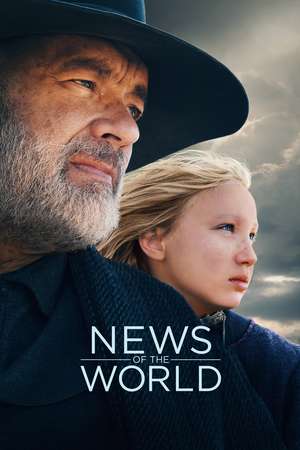
After departing Wichita Falls, Kidd comes across an overturned wagon on the road and finds the driver, a black freedman, had been lynched. He also finds the stray, young white girl who only speaks Kiowa (the language of an American Indian tribe), that the freedman has been transporting.

Kidd learns from the girl’s paperwork that she is Johanna Leonberger, who had been kidnapped and by Kiowa six years earlier. She doesn’t speak English. Doesn’t want to go with Kidd. But Kidd is tasked with getting her to safety. Of course there are all sorts of perils and issues along the way that threaten that goal.

There’s suspense, action, drama, bad guys, and some poignant moments that will move your heart strings. If you like westerns or Tom Hanks, I think you’ll love this movie. It’s the best western I’ve seen in a long time.

***

Those of you enjoyed Downton Abbey will be very happy to hear that Julian Fellowes, who was the executive producer for that series and wrote many of the episodes, is back and has written two more historical dramas with that same type of feel.

The first is Dr. Thorne,a three-episode miniseries based on the novel by Anthony Trollope.
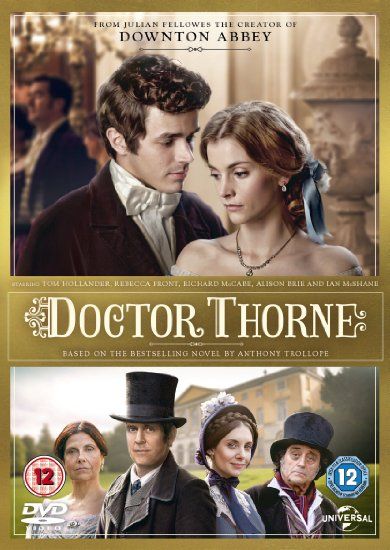
It’s set in the late 1800s. Mary Thorne and Frank Gresham, the only son and heir of the squire of Greshamsbury, fall in love. However, Frank’s parents want him to marry wealth because they have very little to leave their son. Mary is penniless and of suspicious birth. She’s not anything at all that would help Frank in the world. And so the drama begins. You get to enjoy the historical setting, the manners, and romantic suspense.

The second is Belgravia, a six-episode miniseries set in the 1800s and based on the novel by Julian Fellowes himself.
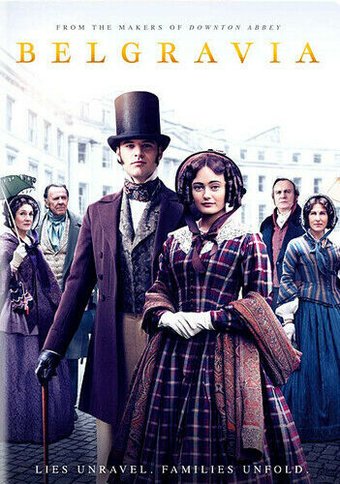
For you geography buffs, Belgravia is an actual place, an affluent district of London. And the story set there is about two couples. The first, the Richmonds, are part of the aristocracy. The other, the Trenchards, are from the business class.

The Richmond’s had one child, a son. The Trenchards had one child, a daughter. The two fell in love. But the son was killed in the battle of Waterloo. And the daughter died in childbirth. However, it was an illegitimate childbirth that the Richmonds don’t know about. The Trenchards thought it best, to retain the reputation of their daughter, to have someone else raise him.

Twenty-five years later, however, both couples still feel the hole those deaths left in their hearts. Mrs. Trenchard feels it’s time to reveal the truth to the Mrs. Richmond. But it does not go as planned. Especially not when the Richmond’s nephew wants the Richmond’s inheritance and is willing to remove all obstacles in his path.

It’s a story full of manners, heartbreak, suspense, hope, and, well, I won’t tell you the ending. But I will say that if you like these types of historical dramas, you’ll probably love this.


Share

Similar Posts

  • Good Stuff! The winning Lady Rebels and Lady Tigers

    RichRebelsBB360x240Cody Lundgren, Jesse Calder, and Louie Stewart led our Lady Rebel basketball team to a 10- 10 record in the regular season and a 2-2 performance at the state tournament that earned our girls second place in our region and sixth at state.

    It’s interesting that the wins and losses were split right down the middle, which means it wasn’t a losing season, but it wasn’t a winning season either.

    Or was it?

    Now, I love it when our kids win. But I’ve never believed that winning should be the ultimate measurement or objective of high school sports. In fact, I will go so far as to say that it’s possible to win every game and become the state champion and utterly fail. Because, for me, high school sports are not about winning games. They are about the lessons that can only be learned by striving for excellence through competition.

    Lessons such as learning to:

    • Work hard
    • Work smart
    • Push yourself over a long period to obtain something you desire
    • Not give up in the face of adversity
    • Not give up even when you’re behind or the odds are against you
    • Play on a team, including supporting other team members in their roles, especially during the bad times
    • See mistakes and losses as feedback and triggers for learning instead of labels
    • Exert control over your future instead of feeling nothing you do makes a difference
    • Deal with both success and defeat
    • Deal with competitors who haven’t quite yet caught the vision

    I could list many more. The opportunities for learning key lessons about winning in life litter the ground in our gyms and on our fields and on our mats.

    The question is: did our coaches help our kids seize those opportunities? Did they help them learn what really matters and have a good time doing it?

    I’m pleased to report from what I and others observed that the three amigos listed above helped our girls do just that.

    They built positive and fun relationships.

    They asked the girls to meet high standards of performance and kept the girls busy in practice with useful drills that built skills.

    They taught them instead of yelled at them, and they praised them when they did well and when they attempted to do well but weren’t yet able to execute the skills right.

    They taught them to play with skill, not with cheap shots, as was displayed by one team at the state tournament that had learned to punch the opposing team’s stomachs when they went up for shots.

    They demonstrated, by example, how to deal with losses and mistakes.

    Coach Lundgren also worked in a demonstration of how tricky the lines on the court can be for old guys, tripping them and causing them to slide across the floor (grin).

    This was a winning season for me. Coaches are really just a certain type of teacher, and I’m sure they have things they want to improve in their curriculum. But this was a fabulous season full of opportunities to learn the things that really matter in life.

    TabionaTigersBB360x240And it wasn’t just the Lady Rebels learning these kinds of lessons. For those of you that didn’t go to the tournament, you should know about the Lady Tigers from Tabiona. They’re one of our region opponents. One that we beat both times we met them in the regular season.
    In our second game of the tournament, one of our girls, one of our top rebounders, a demon under the basket, broke her hand. She knew it hurt like heck, enough to bring tears to her eyes, but didn’t know she’d broken it, and so she played the last quarter and a half with a broken hand. (Is there a lesson there?) Well, Tabiona was our next game.

    Now stop and think about this. We beat Tabiona both times this season. I think we’ve probably beaten them a lot more than they’ve beaten us these last few years. You know what you feel when a team keeps beating you.

    So the Lady Tigers found out that one of our starters, one of the players that was supposed to have played them the next day, had broken her hand. And the girls, not their coaches, decided to get her . . . flowers.

    Flowers. For a player on their region opponent’s team.

    Who does that?

    Well, the Lady Tigers do. I talked to their coach, and he said it was all the girls’ idea.

    They’re learning things down in Tabiona that go far beyond basketball.

    And they’re learning things that go far beyond basketball here, thanks to Lundgren, Calder, and Stuart.

    That’s good stuff, baby. That’s excellent stuff.

    Share
  • Tales From Earthsea

    Tales from Earthsea (The Earthsea Cycle, Book 5) 

    When I was in 7th grade I read Tolkien’s The Lord of the Rings trilogy. Of course, I wasn’t the sharpest literary tack back then, and so great sections of The Two Towers and The Return of the King went over my head and, therefore, bored me. But, with the help of the Hildenbrant calendars, enough came through to thrill. I wept at the events in the mines of Moria with Gandalf, geeked out over the elves, orcs, and Nazgul, was fascinated with the Ents and wizards, and generally wanted to stay in that world forever.

    When I finished the trilogy, I mourned–the dream was over. I read Smith of Wootton Major and Farmer Giles of Ham. Both were delightful, but neither was the same as LOTR. Then I saw The Silmarillion. It had a cool cover, a map.

    Oh, joy! I bought it and took it home.

    Alas, that book was about as much fun as reading a ten-pounder on the history of baroque cornices. I tried mightily to push through, but I don’t think I was able to finish more than 15 pages total from all the sections. So I mourned again, and then, still feeling the loss, went looking for something else that might whisk me away.

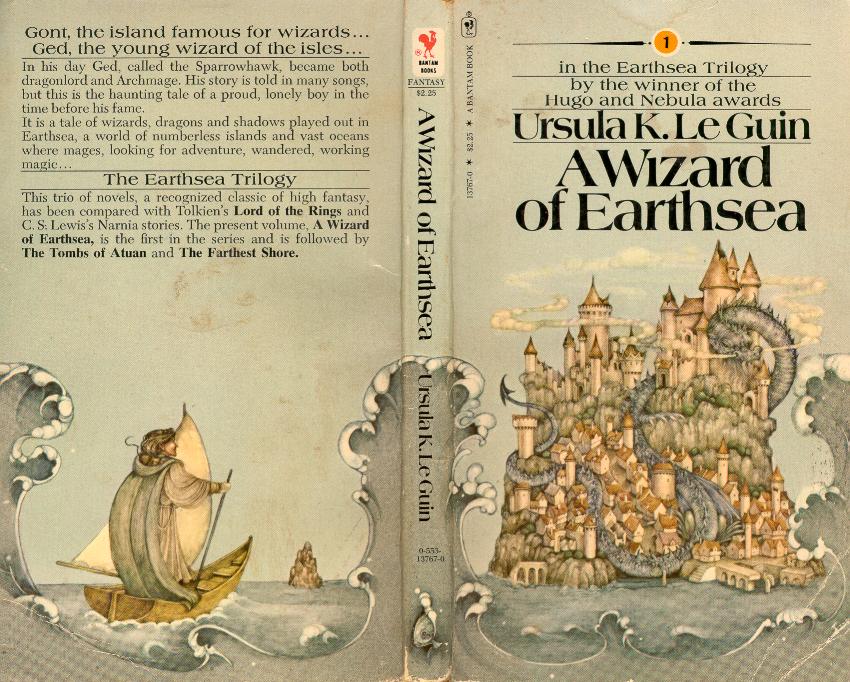
    One of those whisking stories was Ursula LeGuin’s A Wizard of Earthsea. Of course, the fact that there was a wizard in it was important, but as equally delightful to my then puny literary prowess, was that the story was a slim thing. As were its two companions The Tombs of Atuan and The Farthest Shore.

    Here’s the cover the drew me in so long ago.

    I relished all three and moved on to other stories.

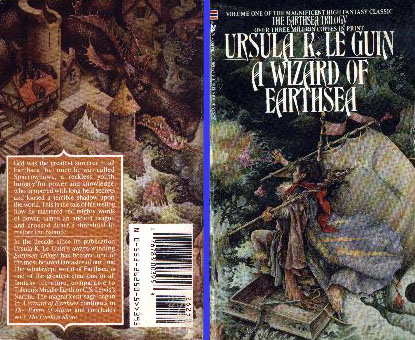
    Time passed and I forgot about LeGuin. Almost 10 years later I was newly married. My wonderful new wife started reading to me as we’d drive. And on one of the three-hour drives to her parents, she pulled out this little book and began to read.

    It was A Wizard of Earthsea! And it was just as marvelous the second time with a bigger brain as it was the first time with a smaller one. In fact, Nellie’s reading to me was so enjoyable I slowed down to 40 mph so I could extend the 3-hour drive. Of course, she quickly caught on to my scheme, shut the book, and told me she wouldn’t read another word unless I drove 65 mph, at the very least.

    What can a guy do? I kept it at 65 (well, 60) and joyed in the wonderfulness of a new wife who would read aloud to me (you mean this model reads, too?!), the night and the stars spread above those lonely Utah and Wyoming roads, and the amazing story unfolding before me.

    And this is the cover of the one my wife read to me.

    We read all three to each other and moved onto other stories.

    More than 15 years passed and I’d mostly forgotten LeGuin (I really never could get into her Hainish stuff). I was in the library looking for some good audio. And there on the shelf stood Tales from Earthsea by Ursual LeGuin.

    Just a little slim container of cassettes. Why not? I thought.

    Holy heroes, Batman—it was gold. LeGuin’s a master of building that feel: the wonder of fantasy, the mystery of things long forgotten or rumored to exist, the pull of learning arcane powers. I loved every minute of it (well, except for the slogging first four pages of backstory, but get through that, which isn’t too bad with Karr’s reading, and you’re into the kingdom). The first story, “The Finder,” read by Amanda Karr was incredible. It takes us back to how Roke became was it was in the first trilogy. But the delights do not end there. Four more stories follow.

    I liked them all so much, I just checked the audiobook out again so I could listen a second time. And, it appears, LeGuin was busy in my absence because she has more Earthsea than this.

    • A Wizard of Earthsea, 1968
    • The Tombs of Atuan, 1971
    • The Farthest Shore, 1972 (Winner of the National Book Award)
    • Tehanu: The Last Book of Earthsea, 1990 (Winner of the Nebula Award)
    • Tales From Eathersea, 2001 (a collection of short stories)
    • The Other Wind, 2001

    I just got the last two from Amazon. I can’t wait to enter into LeGuin’s magic spell yet again.

    More cool Earthsea stuff.

    Share
  • |

    Since when did young adult fiction become the cure for cancer?

    Meghan Cox Gurdon wrote an opinion piece for the Wall Stree Journal called “Darkness Too Visible” in which she complained that it was hard to find young adult fiction these days that isn’t filled with coarse, dark material–profanity, pederasty, mutilation, etc. She claims that “contemporary fiction for teens is rife with explicit abuse, violence and depravity” and wonders “why is this considered a good idea?” She concludes by saying:

    So it may be that the book industry’s ever-more-appalling offerings for adolescent readers spring from a desperate desire to keep books relevant for the young. Still, everyone does not share the same objectives. The book business exists to sell books; parents exist to rear children, and oughtn’t be daunted by cries of censorship. No family is obliged to acquiesce when publishers use the vehicle of fundamental free-expression principles to try to bulldoze coarseness or misery into their children’s lives.

    This, of course, sent hordes of folks into a frenzy of posts sneering at Gurdon’s so-called prissy sensibilities, decrying censorship, and extolling the virtues of young adult literature and dark material in particular. For example, Mary Elizabeth Williams in a Salon piece called “Has young adult fiction become too dark?” rolls her eyes, then deigns to wade into what’s she thinks is an obviously juvenile argument to apparently show Gourdon how “stupid” she really is. Williams concludes:

    One of the terrific side effects of an obviously click-baiting piece of editorial twaddle like Gurdon’s is that it reminds people how many fellow passionate readers there are in the world. That incendiary WSJ piece promptly sparked a tear-jerkingly beautiful twitter #YA saves trend full of heartfelt reactions and links to outstandingly reasoned, article responses from well-read adults and teens on the value within so much of YA literature and its downright lifesaving effects.

    Williams suggests fiction doesn’t have the power to lead people into bad behaviors. After all, she assures us, “an entire generation of women managed to devour the ‘Flowers in the Attic’ series without having sex with their brothers.” No, according to Williams (and all the #YAsaves folks), YA fiction only saves lives. And she provides a link to prove it.

    But Williams misses the mark. Completely. This isn’t about whether fiction has power to influence us in good and bad ways. There’s a huge body of research on media effects which clearly proves fiction’s power for both. Nor is it about the theraputic uses of dark material.

    The heart of the matter revolves around a rather mundane thing–customer service and marketing.

    Gurdon and those parents she describes in her article want a certain type of entertainment. For years, YA fiction has provided that type of entertainment. But things have changed, and the YA label isn’t reliable to them any more. It’s like someone who has purchased steel cut oatmeal for years is now suddenly bringing the bags home to find them filled with sardines or, horrors, Twinkies.

    We can argue the merits of sardines and Twinkies. And a hundred other foods. We can argue the merits of certain types of stories for certain types of readers. And my metaphor above–maybe you think using Twinkies is unfair; maybe you would have wanted me to use something like Triscuts or Wheat Thins. But that’s all beside the point.

    The real problem here is that the publishers have ignored a significant segment of the market who want to buy books but can’t find the types they’re interested in. Either the covers and blurb material don’t help them find what they’re looking for, sometimes misleading them, or the publishers have simply made the mistake of not thinking about this segment of the reading market.

    The fix is easy. (1) Produce more books for these folks. (2) Label your books in a way that makes it easy for the consumer to find what they want. They’re not asking for censorship. They’re asking for a nutrition label that lets them know what they’re getting. Publishers can do what the movie and gaming industries have done with rating systems that prominently display on the cover. Or use some other method. This isn’t a moral issue, it’s simply a matter of helping the right customers find your good or service. It’s a matter of good marketing and branding.

    And I would think, with the upheavals in the book industry today, that publishers and booksellers would want to do whatever they could to boost sales. Surely it doesn’t help to turn customers away because your package is confusing them.

    In the meantime, the battle will rage and this simple practical core of the issue will be lost in the fires and clouds of smoke produced by the arguments extolling and excoriating the virtues and vices of fiction.

    Share
  • Good Stuff! Wonder, Darkest Hour, Sea Wolves

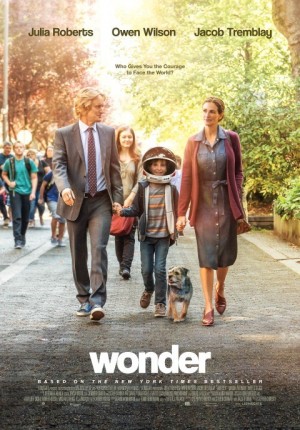
    I had seen a lot of good reviews of Wonder. My wife told me a lot of her students enjoyed the book. But I thought it was going to be a heavy topic, full of sadness and heart-wrenching drama. I’m happy to report that while Wonder does indeed have some difficult moments, it’s also full of humor. And triumph.

    It’s a story about Auggie, a boy with a rare medical deformity that has put him through multiple surgeries. His parents have homeschooled him, but now that he’s at the age where he could go to middle school, they feel it’s time for him to navigate the world. The perfect time, right?

    But it’s not just about Auggie. The film is also about Auggie’s sister, her former best friend, and Jack, Auggie’s classmate. We get to see their stories as well, and they are woven into a wonderful, poignant story.

    You’ll laugh and wince and cry and cheer. You’ll enjoy Julia Roberts and Owen Wilson, who do a wonderful job as Auggie’s parents. And you’ll enjoy the children and teens. Me, my wife, my married daughter, and my teen all loved this film. I will be watching it again. If you want a great movie to watch as a family, I think you’ll love this.

    *

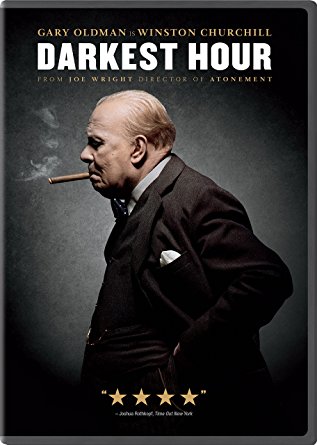
    As soon as I saw the preview for the Darkest Hour, I knew I had to see it. And, boy oh boy, this is yet another movie I can’t wait to watch again.

    The phrase “The Darkest Hour” is used in Britain to refer to the time when the United Kingdom appeared to be under direct threat of invasion from Germany at the beginning of World War 2. Germany had launched its attack on France, Belgium, and the Netherlands and had smashed their armies, sweeping all before them. The bulk of the British army was trapped at Dunkirk and looked like it would be annihilated.

    The British government was split between those who saw no path to victory and wanted to make a peace treaty with Hitler and those who wanted to resist him. The opposition party in parliament forced Neville Chamberlain to resign. And the only man they’d accept in his place is Winston Churchill. But Churchill was not the lion we think of him as today. He had a poor reputation among many of the leaders of his party and was not someone they wanted to elevate.

    So the film starts with the ouster of Chamberlain. We then get to watch how Churchill deals with the catastrophe of what’s happening just across the channel and all the voices pressuring him to make peace.

    There’s humor, suspense, and a number of one-liners that we all began repeating to each other immediately after the film ended. You get a feel for what it must have been like at the time and why so many wanted to sue for some peace treaty with the monster across the channel. You also get to see a slightly different picture of Churchill as a man. I particularly loved the exchanges between him and his wife.

    If you are interested in World War 2 or Britain in even the slightest degree, you simply must see this film.

    *

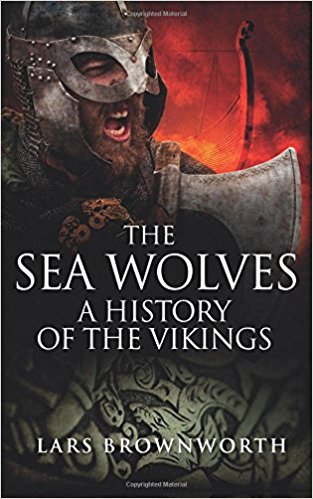
    I have now listed to the audio book of The Sea Wolves by Lars Brownworth twice.

    Yes, it’s that good.

    In this book, Brownworth tells the history of the Vikings. And he tells the history the way history should be told, bringing to life the old Norse world of epic poets, sea kings, and raiders, including Ivar the Boneless, Eric Bloodaxe, Harald Hardrada, Rollo the Walker—all the major figures.

    And Brownworth does it in a way that helps you understand how their dominance was possible and what their effect on the wider world was. Did you know, for example, that Russia comes from the word “Rus”, which was the name for the Swedish Vikings that started that nation?

    What? Russia was started by the Vikings?

    Yes.

    Read or listen to the book. You’ll learn that plus a whole bunch more that will make you look at that time in a different light.

    And if you want to get the other side of the tale, let me recommend reading Bernard Cornwell’s historical fiction series that starts with The Last Kingdom. The series tells the story of the invasion of the Danes during King Alfred’s rule from the point of view of Uhtred of Bebbanburg. It’s a terrific series.

    By the way, I do not recommend the TV series based on the books—too much sex for my tastes. But the books are fabulous. As are the audio versions. I’ve listened to six of them so far, and they have provided hours of enjoyment and interesting insights about the time and the events that took place.

    Share
  • Good Stuff! A clear-eyed view of the Founders

    When it comes to politics, we frequently talk twice as much as we should and listen half as much as is deserved. With our mouths open so much of the time, we fail to get the facts. And this often leads us to paint things in hyperbolic black or white.

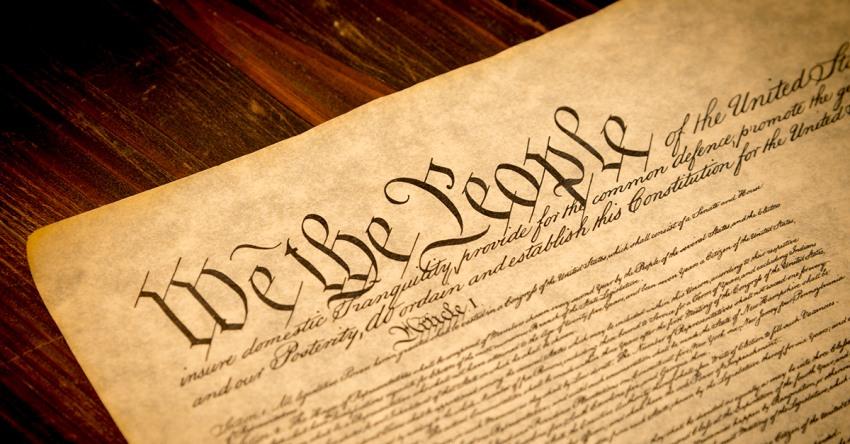
    One area where we seem to do this regularly is with the Founding Fathers. Depending on our side, we label the Founders as devils or demigods and the constitution as a wicked document or holy writ.

    Is it possible both sides are distorting the truth?

    Joseph Ellis, one of the nation’s foremost scholars of American history, suggests that we are. He has written an excellent article for the online Encyclopedia Britannica called “Founding Fathers” that points out both the amazing things the Founders achieved with the birth of this nation and some of their most egregious failures.

    I don’t know about you, but I find clarity a good thing. I think it helps us have more productive conversations. If you agree with me, I think you’ll enjoy the clarity Ellis brings to the Founders and the nation they set up. Read his article here.

    For my part, I think the Founders set up an awesome system. Not because it was perfect at birth, but because it was a system that got enough right to allow us to get where we are today. Look at how far we’ve come on so many fronts! And it got enough right to allow us as a nation to get even better in the future.

    Just consider what the Founders implemented that was in no government at that time. The ideals of individual liberty, the separation of powers, the ability for a huge swath of citizens to elect their leaders, the ability to change the constitution itself, the separation of church and state, and the engine of democratic capitalism that has lifted more people out of poverty than anything else the world has seen.

    The Framers didn’t create the Constitution in a vacuum, but nowhere in the world had anyone set anything up that went so far. There was nothing like it, no real examples to follow. And many thought it would fail, just as France’s attempt in their revolution failed just a few years later.

    As for things they got wrong. Well, they themselves soon recognized the way we elect the president and vice president didn’t work and adjusted it. Their idea that political parties wouldn’t form was wrong. Their idea of a militia for common defense didn’t work (see my writeup here). Their compromise on slavery was a festering sore that came to a head before the Union was 100 years old. Their treatment of the Indians was awful. Their reasons for excluding women and those not owning land was bone-headed.

    So, yes, they got some things wrong. Some of them held some beliefs that we find appalling today. And the nation has not implemented their stated ideals as well as we might have hoped. However, the Founders got so many things right. And what’s more, they did it as men living in the times they lived, having grown up with the beliefs and values of that time, not those of 2019!

    While we as a nation have progressed from some of their failures (thank heavens), in other ways the Founders may be are our betters. There are a great many lessons to learn from them, both from their successes and failures. One is their humility—they knew what they’d created wasn’t perfect. Let’s not imagine that we or our ideas are perfect either.

    If you’re at all interested in politics, I recommend Ellis’s article and its view of the Founders. Read it article here.

    Share
  • Top 200 YA Authors of 2010

    On Thursday I posted the top 200 YA  novels of 2010. Today I’m happy to share the top 200 authors. You might be wondering: if we already have a top 200, why post this? Because yesterday was about individual titles. Today’s post is about authors. Some authors might not have any books that are checked out in huge numbers. But because they have a lot of books available, the numbers of checkouts they do have add up. Yesterday’s list showed you the volume for individual books. Today’s list shows you the volume for each author. You’ll see it does result in a different ranking.

    This list is based on the same dataset as the previous list. And so while I can’t claim it represents the top YA authors for the whole United States, it does show who is being read in this neck of the woods. It’s a great list for those wanting to find YA authors to try.  Please be aware that these are YA books as defined by the library, which takes its cue from places like Booklist and School Library Journal. Other books like the first three Harry Potters, Brandon Mull’s Fablehaven series, and some of Dashner’s stuff are considered Middle Grade and so do not appear on this list. Later, I might do a combined list.

    There were 1,283 authors on the list. “Times Checked Out” is the sum of all the times any of the author’s books were checked out. “Number of Titles” is the number of different titles the author has that were checked out. “Avg Check Outs per Title” is the average number of times each title was checked out. “%” is percentage of total checkouts. Rank is rank. Another way to sort this would be by the Avg Check Outs per Title to see who’s getting the highest number of readers per book. But I’ll let you fiddle with that on your own. Again, I’m very happy to see a number of Utahans on the list. Kudos to the following (ranking in parentheses):

    • Stephenie Meyer (4)
    • Shannon Hale (5)
    • Jessica Day George (10)
    • Chris Heimerdinger (18)
    • Jack Weyland (38)
    • Lisa Mangum (55)
    • Mette Ivie Harrison (56)
    • Aprilynne Pike (71)
    • Brandon Sanderson (73)
    • Ally Condie (82)
    • James Dashner (94)
    • Bree Despain (110)

    EDIT: 1/15/2011 12:57 AM. Okay, okay here’s the list by average checkout: Top 200 YA Authors of 2010, Part 2. A number of people drop off, new names appear, and positions shuffle.

    EDIT: 1/16/2011 9:32 AM: Informed that Bree Despain is also a Utah author.

    The List

    Author Times Checked Out Number of Titles Avg Check Outs per Title % Rank
    Rick Riordan 989 8 124 2.68% 1
    Suzanne Collins 888 3 296 2.98% 2
    Tamora Pierce 634 26 24 1.60% 3
    Stephenie Meyer 529 5 106 1.56% 4
    Shannon Hale 517 6 86 0.96% 5
    John Flanagan 413 9 46 0.93% 6
    Meg Cabot 396 37 11 0.58% 7
    P.C. Cast and Kristin Cast 393 7 56 0.37% 8
    Scott Westerfeld 354 12 30 1.19% 9
    Jessica Day George 328 6 55 0.99% 10
    D.J. MacHale 328 15 22 0.32% 11
    L.J. Smith 326 22 15 0.15% 12
    J.K. Rowling 318 4 80 0.30% 13
    Darren Shan 313 24 13 0.14% 14
    Cassandra Clare 309 4 77 1.25% 15
    Lisi Harrison 304 23 13 0.40% 16
    Eoin Colfer 302 11 27 0.13% 17
    Chris Heimerdinger 280 16 18 0.50% 18
    Cameron Dokey 271 9 30 0.74% 19
    Anthony Horowitz 260 24 11 0.46% 20
    James Patterson 257 8 32 0.23% 21
    Angie Sage 246 6 41 0.11% 22
    Joseph Delaney 240 9 27 0.33% 23
    Richelle Mead 202 6 34 0.21% 24
    Christopher Paolini 191 3 64 0.10% 25
    Alyson Noel 188 9 21 0.10% 26
    Garth Nix 182 11 17 0.21% 27
    Sara Shepard 181 8 23 0.41% 28
    Hilari Bell 178 12 15 0.10% 29
    Michael Scott 165 4 41 0.61% 30
    Gary Paulsen 163 26 6 0.20% 31
    Ellen Schreiber 160 9 18 0.20% 32
    Patricia C. Wrede 158 9 18 0.78% 33
    Frewin Jones 155 8 19 0.19% 34
    Melissa de la Cruz 154 7 22 0.28% 35
    Maggie Stiefvater 153 4 38 0.09% 36
    Ally Carter 152 5 30 0.37% 37
    Jack Weyland 151 11 14 0.09% 38
    Suzanne Weyn 150 8 19 0.09% 39
    Sarah Dessen 150 9 17 0.37% 40
    Margaret Peterson Haddix 144 8 18 0.46% 41
    Libba Bray 136 4 34 0.82% 42
    Rachel Caine 134 9 15 0.09% 43
    R.L. Stine 132 43 3 0.09% 44
    Caroline B. Cooney 132 30 4 1.07% 45
    Kelley Armstrong 131 3 44 0.27% 46
    Gerald Morris 129 10 13 0.09% 47
    Diana Wynne Jones 128 6 21 0.26% 48
    Jean Ferris 127 13 10 0.17% 49
    Anna Godbersen 127 5 25 0.17% 50
    Cecily von Ziegesar 126 24 5 0.17% 51
    Janette Rallison 125 10 13 0.08% 52
    Markus Zusak 124 4 31 0.08% 53
    Lurlene McDaniel 124 47 3 0.17% 54
    Lisa Mangum 124 2 62 0.91% 55
    Mette Ivie Harrison 123 4 31 0.08% 56
    Ann Rinaldi 119 31 4 0.72% 57
    Kate Brian 118 21 6 0.08% 58
    Carolyn Meyer 115 12 10 0.08% 59
    Cinda Williams Chima 113 5 23 0.38% 60
    Amelia Atwater-Rhodes 112 11 10 0.08% 61
    Frank Beddor 110 3 37 0.08% 62
    Heather Brewer 108 5 22 0.08% 63
    Laurie Halse Anderson 108 8 14 0.30% 64
    Herbie Brennan 106 5 21 0.30% 65
    Kristin Cashore 105 2 53 1.91% 66
    Robin McKinley 105 6 18 0.07% 67
    R.D. Henham 104 7 15 0.21% 68
    Donna Jo Napoli 104 15 7 0.14% 69
    Catherine Jinks 101 10 10 0.21% 70
    Aprilynne Pike 101 2 51 0.21% 71
    Louise Rennison 101 10 10 0.55% 72
    Brandon Sanderson 100 4 25 0.34% 73
    Debbie Viguie 100 6 17 0.46% 74
    Melissa Marr 99 4 25 0.07% 75
    Catherine Fisher 98 8 12 0.13% 76
    Jonathan Stroud 97 6 16 0.99% 77
    Lauren Brooke 95 26 4 0.33% 78
    L.A. Meyer 95 8 12 0.13% 79
    Lisa McMann 94 3 31 0.13% 80
    Simone Elkeles 93 7 13 0.39% 81
    Ally Condie 93 6 16 0.32% 82
    Lynne Ewing 91 18 5 0.06% 83
    Donita K. Paul 90 6 15 0.06% 84
    Carrie Jones 88 3 29 0.06% 85
    Lois Lowry 86 3 29 0.06% 86
    Kenneth Oppel 80 4 20 0.19% 87
    Mary Hoffman 79 7 11 0.06% 88
    Philip Reeve 78 9 9 0.57% 89
    Jen Calonita 78 6 13 0.12% 90
    Holly Black 78 5 16 0.12% 91
    Laurie Faria Stolarz 76 7 11 0.06% 92
    Catherine Gilbert Murdock 76 4 19 0.24% 93
    James Dashner 75 2 38 0.06% 94
    Diane Duane 75 9 8 0.06% 95
    Philip Pullman 73 9 8 0.18% 96
    Gordon Korman 72 16 5 0.18% 97
    Neal Shusterman 72 9 8 0.47% 98
    Jerry Spinelli 72 8 9 0.17% 99
    Jane Yolen 71 14 5 0.06% 100
    N.D. Wilson 70 3 23 0.23% 101
    Ellen Hopkins 70 6 12 0.06% 102
    Carrie Ryan 69 2 35 0.45% 103
    Becca Fitzpatrick 68 2 34 0.05% 104
    Lesley Livingston 68 3 23 0.05% 105
    Esther Friesner 68 6 11 0.05% 106
    Megan Whalen Turner 68 4 17 0.43% 107
    Alex Flinn 68 3 23 0.48% 108
    Elizabeth Knox 67 2 34 0.48% 109
    Bree Despain 66 2 33 0.32% 110
    Bryan Davis 66 8 8 0.11% 111
    Patrick Carman 66 5 13 0.84% 112
    Nancy Werlin 65 6 11 0.05% 113
    Ann Brashares 64 4 16 0.05% 114
    K.A. Applegate 64 18 4 0.05% 115
    Rachel Cohn 64 9 7 0.05% 116
    Linda Buckley-Archer 63 3 21 0.05% 117
    Cornelia Funke 63 2 32 0.05% 118
    Ted Dekker 62 7 9 0.05% 119
    Vivian Vande Velde 62 13 5 0.21% 120
    Nancy Springer 62 7 9 0.05% 121
    Carolyn Keene 61 49 1 0.15% 122
    Kieran Scott 60 6 10 0.10% 123
    Robin Palmer 59 3 20 0.45% 124
    Claudia Gray 59 3 20 0.30% 125
    Victoria Hanley 58 4 15 0.55% 126
    Carl Hiaasen 58 3 19 0.15% 127
    Philip Pullman  57 2 29 0.15% 128
    Lauren Kate 57 2 29 0.29% 129
    Marilyn Kaye 57 29 2 0.05% 130
    Lili St. Crow 56 2 28 0.14% 131
    Sharon Shinn 56 5 11 0.05% 132
    T.A. Barron 55 6 9 0.05% 133
    Marissa Doyle 55 2 28 0.05% 134
    Celia Rees 54 6 9 0.05% 135
    Alane Ferguson 54 6 9 0.05% 136
    Ridley Pearson 54 4 14 0.05% 137
    Elizabeth Scott 54 4 14 0.05% 138
    Clare B. Dunkle 53 6 9 0.05% 139
    Jaclyn Moriarty 52 4 13 0.05% 140
    James A. Owen 52 4 13 0.05% 141
    Justin Somper 52 5 10 0.05% 142
    David Klass 52 11 5 0.19% 143
    E. Lockhart 51 6 9 0.24% 144
    Cornelia Funke  51 1 51 0.09% 145
    Rachel Vail 51 3 17 0.28% 146
    Susan Beth Pfeffer 49 4 12 0.09% 147
    Rachel Vincent 49 3 16 0.14% 148
    K.M. Grant 49 7 7 0.27% 149
    Michael Grant 49 3 16 0.14% 150
    Maureen Johnson 48 4 12 0.05% 151
    Terry Pratchett 48 5 10 0.05% 152
    Kay Lynn Mangum 48 3 16 0.05% 153
    Sarah Mlynowski 48 5 10 0.05% 154
    Judy Blundell 48 1 48 0.05% 155
    Wayne Thomas Batson 48 7 7 0.05% 156
    Christopher Pike 47 19 2 0.05% 157
    David Lubar 47 8 6 0.05% 158
    Janet Lee Carey 46 3 15 0.40% 159
    Kami Garcia & Margaret Stohl 46 2 23 0.31% 160
    Lene Kaaberbol 45 4 11 0.54% 161
    Alison Croggon 45 4 11 0.98% 162
    Tera Lynn Childs 45 3 15 0.13% 163
    Lois Duncan 45 13 3 0.13% 164
    Carol Lynch Williams 44 3 15 0.09% 165
    Louis Sachar 44 2 22 0.17% 166
    Laini Taylor 44 3 15 0.13% 167
    Martha Finley 44 14 3 0.08% 168
    Kimberly Pauley 43 2 22 0.04% 169
    John Grisham  43 1 43 0.04% 170
    Beth Fantaskey 43 2 22 0.04% 171
    Guillaume Prevost 43 3 14 0.08% 172
    Margaret Mahy 43 5 9 0.04% 173
    A.J. Butcher 42 5 8 0.04% 174
    Lauren Conrad 42 3 14 0.04% 175
    Justine Larbalestier 42 5 8 0.04% 176
    Deb Caletti 42 4 11 0.13% 177
    Joan Lowery Nixon 42 16 3 0.04% 178
    Aimee Friedman 42 3 14 0.04% 179
    Gloria Whelan 41 10 4 0.04% 180
    Anne Osterlund 41 2 21 0.04% 181
    Philip Caveney 41 3 14 0.04% 182
    Eva Ibbotson 41 2 21 0.04% 183
    Michael Carroll 41 3 14 0.04% 184
    Francine Pascal 40 14 3 0.04% 185
    Walter Dean Myers 40 11 4 0.13% 186
    Gillian Shields 40 3 13 0.08% 187
    Isobelle Carmody 40 7 6 0.46% 188
    Fuyumi Ono  40 4 10 0.12% 189
    Stuart Hill 39 3 13 0.12% 190
    William Sleator 39 14 3 0.08% 191
    Michael Cadnum 38 11 3 0.08% 192
    Timothy Zahn 38 6 6 0.16% 193
    Sharon M. Draper 38 9 4 0.16% 194
    Peter Abrahams 37 5 7 0.33% 195
    Madeline L’Engle 37 11 3 0.12% 196
    Jenny B. Jones 37 3 12 0.28% 197
    Kimberly Derting 37 1 37 0.92% 198
    William Nicholson 37 3 12 0.20% 199
    Susane Colasanti 36 3 12 0.94% 200
    Ben Mikaelsen 36 5 7 0.08% 201
    Jacquelyn Mitchard 36 5 7 0.08% 202
    Richard Peck 36 9 4 0.04% 203
    Tim Green 36 6 6 0.04% 204
    Marilyn Reynolds 36 8 5 0.04% 205
    Sarah Miller 36 3 12 0.04% 206
    Sara Zarr 36 3 12 0.04% 207
    Share