Top 200 YA Authors of 2010

On Thursday I posted the top 200 YA  novels of 2010. Today I’m happy to share the top 200 authors. You might be wondering: if we already have a top 200, why post this? Because yesterday was about individual titles. Today’s post is about authors. Some authors might not have any books that are checked out in huge numbers. But because they have a lot of books available, the numbers of checkouts they do have add up. Yesterday’s list showed you the volume for individual books. Today’s list shows you the volume for each author. You’ll see it does result in a different ranking.

This list is based on the same dataset as the previous list. And so while I can’t claim it represents the top YA authors for the whole United States, it does show who is being read in this neck of the woods. It’s a great list for those wanting to find YA authors to try.  Please be aware that these are YA books as defined by the library, which takes its cue from places like Booklist and School Library Journal. Other books like the first three Harry Potters, Brandon Mull’s Fablehaven series, and some of Dashner’s stuff are considered Middle Grade and so do not appear on this list. Later, I might do a combined list.

There were 1,283 authors on the list. “Times Checked Out” is the sum of all the times any of the author’s books were checked out. “Number of Titles” is the number of different titles the author has that were checked out. “Avg Check Outs per Title” is the average number of times each title was checked out. “%” is percentage of total checkouts. Rank is rank. Another way to sort this would be by the Avg Check Outs per Title to see who’s getting the highest number of readers per book. But I’ll let you fiddle with that on your own. Again, I’m very happy to see a number of Utahans on the list. Kudos to the following (ranking in parentheses):

  • Stephenie Meyer (4)
  • Shannon Hale (5)
  • Jessica Day George (10)
  • Chris Heimerdinger (18)
  • Jack Weyland (38)
  • Lisa Mangum (55)
  • Mette Ivie Harrison (56)
  • Aprilynne Pike (71)
  • Brandon Sanderson (73)
  • Ally Condie (82)
  • James Dashner (94)
  • Bree Despain (110)

EDIT: 1/15/2011 12:57 AM. Okay, okay here’s the list by average checkout: Top 200 YA Authors of 2010, Part 2. A number of people drop off, new names appear, and positions shuffle.

EDIT: 1/16/2011 9:32 AM: Informed that Bree Despain is also a Utah author.

The List

Author Times Checked Out Number of Titles Avg Check Outs per Title % Rank
Rick Riordan 989 8 124 2.68% 1
Suzanne Collins 888 3 296 2.98% 2
Tamora Pierce 634 26 24 1.60% 3
Stephenie Meyer 529 5 106 1.56% 4
Shannon Hale 517 6 86 0.96% 5
John Flanagan 413 9 46 0.93% 6
Meg Cabot 396 37 11 0.58% 7
P.C. Cast and Kristin Cast 393 7 56 0.37% 8
Scott Westerfeld 354 12 30 1.19% 9
Jessica Day George 328 6 55 0.99% 10
D.J. MacHale 328 15 22 0.32% 11
L.J. Smith 326 22 15 0.15% 12
J.K. Rowling 318 4 80 0.30% 13
Darren Shan 313 24 13 0.14% 14
Cassandra Clare 309 4 77 1.25% 15
Lisi Harrison 304 23 13 0.40% 16
Eoin Colfer 302 11 27 0.13% 17
Chris Heimerdinger 280 16 18 0.50% 18
Cameron Dokey 271 9 30 0.74% 19
Anthony Horowitz 260 24 11 0.46% 20
James Patterson 257 8 32 0.23% 21
Angie Sage 246 6 41 0.11% 22
Joseph Delaney 240 9 27 0.33% 23
Richelle Mead 202 6 34 0.21% 24
Christopher Paolini 191 3 64 0.10% 25
Alyson Noel 188 9 21 0.10% 26
Garth Nix 182 11 17 0.21% 27
Sara Shepard 181 8 23 0.41% 28
Hilari Bell 178 12 15 0.10% 29
Michael Scott 165 4 41 0.61% 30
Gary Paulsen 163 26 6 0.20% 31
Ellen Schreiber 160 9 18 0.20% 32
Patricia C. Wrede 158 9 18 0.78% 33
Frewin Jones 155 8 19 0.19% 34
Melissa de la Cruz 154 7 22 0.28% 35
Maggie Stiefvater 153 4 38 0.09% 36
Ally Carter 152 5 30 0.37% 37
Jack Weyland 151 11 14 0.09% 38
Suzanne Weyn 150 8 19 0.09% 39
Sarah Dessen 150 9 17 0.37% 40
Margaret Peterson Haddix 144 8 18 0.46% 41
Libba Bray 136 4 34 0.82% 42
Rachel Caine 134 9 15 0.09% 43
R.L. Stine 132 43 3 0.09% 44
Caroline B. Cooney 132 30 4 1.07% 45
Kelley Armstrong 131 3 44 0.27% 46
Gerald Morris 129 10 13 0.09% 47
Diana Wynne Jones 128 6 21 0.26% 48
Jean Ferris 127 13 10 0.17% 49
Anna Godbersen 127 5 25 0.17% 50
Cecily von Ziegesar 126 24 5 0.17% 51
Janette Rallison 125 10 13 0.08% 52
Markus Zusak 124 4 31 0.08% 53
Lurlene McDaniel 124 47 3 0.17% 54
Lisa Mangum 124 2 62 0.91% 55
Mette Ivie Harrison 123 4 31 0.08% 56
Ann Rinaldi 119 31 4 0.72% 57
Kate Brian 118 21 6 0.08% 58
Carolyn Meyer 115 12 10 0.08% 59
Cinda Williams Chima 113 5 23 0.38% 60
Amelia Atwater-Rhodes 112 11 10 0.08% 61
Frank Beddor 110 3 37 0.08% 62
Heather Brewer 108 5 22 0.08% 63
Laurie Halse Anderson 108 8 14 0.30% 64
Herbie Brennan 106 5 21 0.30% 65
Kristin Cashore 105 2 53 1.91% 66
Robin McKinley 105 6 18 0.07% 67
R.D. Henham 104 7 15 0.21% 68
Donna Jo Napoli 104 15 7 0.14% 69
Catherine Jinks 101 10 10 0.21% 70
Aprilynne Pike 101 2 51 0.21% 71
Louise Rennison 101 10 10 0.55% 72
Brandon Sanderson 100 4 25 0.34% 73
Debbie Viguie 100 6 17 0.46% 74
Melissa Marr 99 4 25 0.07% 75
Catherine Fisher 98 8 12 0.13% 76
Jonathan Stroud 97 6 16 0.99% 77
Lauren Brooke 95 26 4 0.33% 78
L.A. Meyer 95 8 12 0.13% 79
Lisa McMann 94 3 31 0.13% 80
Simone Elkeles 93 7 13 0.39% 81
Ally Condie 93 6 16 0.32% 82
Lynne Ewing 91 18 5 0.06% 83
Donita K. Paul 90 6 15 0.06% 84
Carrie Jones 88 3 29 0.06% 85
Lois Lowry 86 3 29 0.06% 86
Kenneth Oppel 80 4 20 0.19% 87
Mary Hoffman 79 7 11 0.06% 88
Philip Reeve 78 9 9 0.57% 89
Jen Calonita 78 6 13 0.12% 90
Holly Black 78 5 16 0.12% 91
Laurie Faria Stolarz 76 7 11 0.06% 92
Catherine Gilbert Murdock 76 4 19 0.24% 93
James Dashner 75 2 38 0.06% 94
Diane Duane 75 9 8 0.06% 95
Philip Pullman 73 9 8 0.18% 96
Gordon Korman 72 16 5 0.18% 97
Neal Shusterman 72 9 8 0.47% 98
Jerry Spinelli 72 8 9 0.17% 99
Jane Yolen 71 14 5 0.06% 100
N.D. Wilson 70 3 23 0.23% 101
Ellen Hopkins 70 6 12 0.06% 102
Carrie Ryan 69 2 35 0.45% 103
Becca Fitzpatrick 68 2 34 0.05% 104
Lesley Livingston 68 3 23 0.05% 105
Esther Friesner 68 6 11 0.05% 106
Megan Whalen Turner 68 4 17 0.43% 107
Alex Flinn 68 3 23 0.48% 108
Elizabeth Knox 67 2 34 0.48% 109
Bree Despain 66 2 33 0.32% 110
Bryan Davis 66 8 8 0.11% 111
Patrick Carman 66 5 13 0.84% 112
Nancy Werlin 65 6 11 0.05% 113
Ann Brashares 64 4 16 0.05% 114
K.A. Applegate 64 18 4 0.05% 115
Rachel Cohn 64 9 7 0.05% 116
Linda Buckley-Archer 63 3 21 0.05% 117
Cornelia Funke 63 2 32 0.05% 118
Ted Dekker 62 7 9 0.05% 119
Vivian Vande Velde 62 13 5 0.21% 120
Nancy Springer 62 7 9 0.05% 121
Carolyn Keene 61 49 1 0.15% 122
Kieran Scott 60 6 10 0.10% 123
Robin Palmer 59 3 20 0.45% 124
Claudia Gray 59 3 20 0.30% 125
Victoria Hanley 58 4 15 0.55% 126
Carl Hiaasen 58 3 19 0.15% 127
Philip Pullman  57 2 29 0.15% 128
Lauren Kate 57 2 29 0.29% 129
Marilyn Kaye 57 29 2 0.05% 130
Lili St. Crow 56 2 28 0.14% 131
Sharon Shinn 56 5 11 0.05% 132
T.A. Barron 55 6 9 0.05% 133
Marissa Doyle 55 2 28 0.05% 134
Celia Rees 54 6 9 0.05% 135
Alane Ferguson 54 6 9 0.05% 136
Ridley Pearson 54 4 14 0.05% 137
Elizabeth Scott 54 4 14 0.05% 138
Clare B. Dunkle 53 6 9 0.05% 139
Jaclyn Moriarty 52 4 13 0.05% 140
James A. Owen 52 4 13 0.05% 141
Justin Somper 52 5 10 0.05% 142
David Klass 52 11 5 0.19% 143
E. Lockhart 51 6 9 0.24% 144
Cornelia Funke  51 1 51 0.09% 145
Rachel Vail 51 3 17 0.28% 146
Susan Beth Pfeffer 49 4 12 0.09% 147
Rachel Vincent 49 3 16 0.14% 148
K.M. Grant 49 7 7 0.27% 149
Michael Grant 49 3 16 0.14% 150
Maureen Johnson 48 4 12 0.05% 151
Terry Pratchett 48 5 10 0.05% 152
Kay Lynn Mangum 48 3 16 0.05% 153
Sarah Mlynowski 48 5 10 0.05% 154
Judy Blundell 48 1 48 0.05% 155
Wayne Thomas Batson 48 7 7 0.05% 156
Christopher Pike 47 19 2 0.05% 157
David Lubar 47 8 6 0.05% 158
Janet Lee Carey 46 3 15 0.40% 159
Kami Garcia & Margaret Stohl 46 2 23 0.31% 160
Lene Kaaberbol 45 4 11 0.54% 161
Alison Croggon 45 4 11 0.98% 162
Tera Lynn Childs 45 3 15 0.13% 163
Lois Duncan 45 13 3 0.13% 164
Carol Lynch Williams 44 3 15 0.09% 165
Louis Sachar 44 2 22 0.17% 166
Laini Taylor 44 3 15 0.13% 167
Martha Finley 44 14 3 0.08% 168
Kimberly Pauley 43 2 22 0.04% 169
John Grisham  43 1 43 0.04% 170
Beth Fantaskey 43 2 22 0.04% 171
Guillaume Prevost 43 3 14 0.08% 172
Margaret Mahy 43 5 9 0.04% 173
A.J. Butcher 42 5 8 0.04% 174
Lauren Conrad 42 3 14 0.04% 175
Justine Larbalestier 42 5 8 0.04% 176
Deb Caletti 42 4 11 0.13% 177
Joan Lowery Nixon 42 16 3 0.04% 178
Aimee Friedman 42 3 14 0.04% 179
Gloria Whelan 41 10 4 0.04% 180
Anne Osterlund 41 2 21 0.04% 181
Philip Caveney 41 3 14 0.04% 182
Eva Ibbotson 41 2 21 0.04% 183
Michael Carroll 41 3 14 0.04% 184
Francine Pascal 40 14 3 0.04% 185
Walter Dean Myers 40 11 4 0.13% 186
Gillian Shields 40 3 13 0.08% 187
Isobelle Carmody 40 7 6 0.46% 188
Fuyumi Ono  40 4 10 0.12% 189
Stuart Hill 39 3 13 0.12% 190
William Sleator 39 14 3 0.08% 191
Michael Cadnum 38 11 3 0.08% 192
Timothy Zahn 38 6 6 0.16% 193
Sharon M. Draper 38 9 4 0.16% 194
Peter Abrahams 37 5 7 0.33% 195
Madeline L’Engle 37 11 3 0.12% 196
Jenny B. Jones 37 3 12 0.28% 197
Kimberly Derting 37 1 37 0.92% 198
William Nicholson 37 3 12 0.20% 199
Susane Colasanti 36 3 12 0.94% 200
Ben Mikaelsen 36 5 7 0.08% 201
Jacquelyn Mitchard 36 5 7 0.08% 202
Richard Peck 36 9 4 0.04% 203
Tim Green 36 6 6 0.04% 204
Marilyn Reynolds 36 8 5 0.04% 205
Sarah Miller 36 3 12 0.04% 206
Sara Zarr 36 3 12 0.04% 207
Share

Similar Posts

  • The Harry Potter Book of Mormon Hello

    For those who haven’t been tracking the Broadway scene, South Park creators Trey Parker and Matt Stone launched the production of The Book of Mormon musical last year in New York. It won 9 Tony Awards, including best muscial, delighted many critics, and is something I will never see, alas. It’s simply too vulgar for this Mo. However, the show’s cast album did something that hasn’t happened in over 40 years: It hit the top ten on Billboard’s pop charts. While I couldn’t listen to all the songs (yeah, I tried but was almost struck by lightning), “Hello,” the first, is great. But it doesn’t stop there. Oh, no. Tessa Netting, a 20-year-old Broadway actress, recently had the brilliant idea to combine the characters of Harry Potter with the song. I think you’ll be delighted with both.

    “Hello” from the musical

    “Hello – Harry Potter Book of Mormon Parody” which you can get on iTunes.

    You might want to listen to an interesting All Things Considered NRP interview where Stone and Parker talk about the music.

    Share
  • Navy SEALS Buds Class 234, Crackting the ACT, & Running the Green River

     Of the 1.4 million people in the armed forces, only 2,800 of them are Navy SEALS (acronym for “sea, air, and land”). That’s 1/5th of one percent. They are one of the most elite fighting forces in the world. However, less than 20% of those who attempt to become a SEAL ever succeed. To even try you must pass a physical screening test which requires you to swim 500 yards in ten minutes or less, perform seventy-nine push-ups in two minutes or less, and eleven pull-ups. You have to be able to run 1.5 miles in at least 10:20 minutes, and that’s while wearing boots and trousers.

    Some may think: well, that’s not too difficult. I could work up to that. However, the reality is that this level of physical fitness will not be enough. Because once you get into the initial training, you’re going to be doing far more than this every day.

    Can you knock out 500 push-ups in a day, along with a four mile run, hours of paddling out in a six-man raft into a ten foot wave that tumbles you again and again into chilling waters, hefting your share of a 160 pound log over your head until you can barely lift your arms, and running an obstacle course with obstacles three-stories high. You’ll do a lot of this while covered with sand, your thighs and armpits chafing. On some days you’ll have to swim a few miles in a cold sea. And then you’ve got to get up and do it all again the next day. No wimpy hour-long workouts on Monday, Wednesday, and Friday with rest days in between. Heck, on the third week, you’ll get only about four hours of sleep over four days.

    Can you do it?

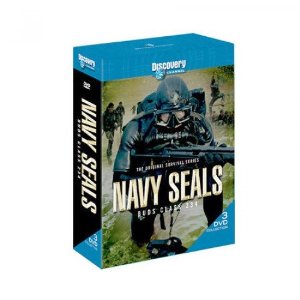
    Maybe you can. But before you try, or assure yourself that you could have if you’d only had the chance, let me suggest you watch Discovery Channel’s Navy SEALS BUDS Class 234 to witness what it takes to become the best of the best. It’s a fascinating three-DVD set, just over five hours of programming, that follows class 234 through the initial six-month SEAL training called BUDS (basic underwater demolition/SEALS). You’ll see 114 men start the six-month course and only 17 finish it. In fact, less than thirty make it past the first three weeks, which include the most grueling and punishing training I’ve ever seen. Those initial weeks are designed specifically to weed out all but the most committed and able.

    The Discovery Channel does a great job with this six-part series. And it’s not just for guys. It only took about three minutes for each of my daughters to get hooked as well. And why wouldn’t they? It’s as fascinating as any American Idol or So You Think You Can Dance. In fact, in many ways it’s far more interesting. Heck, it was so good I think I’m going to watch it again. You can get it on Amazon, rent if from Netflix, or check it out from the Logan library.

    For more info on the SEALS, let me recommend you start with these two sites: http://www.seal.navy.mil/seal/ and http://en.wikipedia.org/wiki/United_States_Navy_SEALs

    *** 

    My high school age daughters took the ACT last year and got good scores. But we wanted to make sure that they had excellent scores. High enough to put them in the upper levels of those applying to their desired universities. But how would we prepare them?

    Back in the olden days when I was preparing to get my Masters of accounting degree, I knew I’d need some help to get a score on the GMAT that would be competitive. I looked at a number of study guides and ended up choosing the Princeton Review guide for the GMAT. I studied hard, got a great score, and became a believer. The guide made everything so easy. More importantly, everything the guide prepared me for was on the test. This is why, when I wanted to get a Masters of fine arts in creative writing, I used the Princeton Review for the GRE. Again, the study guide was easy to follow, and I got an equally good score on that test. Having had two great experiences, it’s no surprise I turned to Princeton Review again to help my two girls with their test. (BTW, some may see an attempt to get more than one graduate degree as smart, others as masochistic, and yet others as simple ivory tower bone-headery—I’ll let you decide which it might be in this case.)

    The Princeton Review guide for the ACT is called Cracking the ACT. A new edition is published every year and includes general ACT test-taking tips, everything you need to know in the specific content areas, and practice tests. It also includes access to the Princeton Review’s online resources which include another practice test. It’s a big guide (this year’s edition was 619 pages), but the size is deceptive. There’s plenty of white space for taking notes, and the text is written so clearly, and everything broken down in such an easy manner to follow, that you’ll start only to suddenly realize you’ve just read thirty pages. Besides, you don’t have to study it all. You can focus on specific content areas, if that’s all you want to do.

    This spring, both daughters worked through the book. We looked at their previous scores, identified areas for improvement, and set up a six-week schedule that required them to study about an hour per day, sometimes with help from Mom or Dad, but mostly on their own. One daughter studied hard, took the test in June, and improved her score by five points. The other daughter studied a little less diligently, took the same test, and improved her score by four points.

    When 36 is the highest possible score, such jumps become significant. However, they’re not the result of special DNA. While I tend to think my girls are everything and a bag of chips (especially when they give me back scratches), the truth is the ACT doesn’t test some mumbo-jumbo innate intelligence. It tests skills. Skills anyone can learn. What my girls supplied was consistent effort. All they needed was expert guidance in how to apply the effort. And Cracking the ACT provides boatloads of that.

    If you’re looking to improve your own score or help your children improve theirs, get this book. I have no doubt that anyone who supplies a bit of effort will be able see some nice results.

    ***

    Imagine emerald pools, steep red canyons, and a gentle breeze. Imagine water so clear you can see the plants and rocks sixteen feet down on the bottom. Imagine trout swimming only feet away. Imagine swimming with those trout and then getting back into your raft to ride some rapids. Imagine picnicking a the water’s edge or atop a flat, shaded rock forty feet up that gives you a grand view of the river. If you’re lucky, maybe you’ll see an osprey dive for a fish or watch a pair of river otters swim by. Imagine doing this with family or friends, all in a short twenty-four hour period.

    This experience is only about three hours away from Laketown, Utah. Well, everything except the swimming with the trout bit. The fish don’t really swim with you. They mostly just flee, but you get the idea. To enjoy it, all you need to do is raft the seven mile stretch of the Green River from the Flaming Gorge dam down to the Little Hole campground.

    My family and I just did this with some friends and had a grand time. Because the river is relatively slow and the rapids are relatively moderate and short, parents don’t have to worry every second that someone is going to fall in and drown in a man-eating surge. In fact, along many of the calm areas we actively helped the children into the sparkling cold water (grin), including one rafter who was only three years old. One of the most enjoyable moments was when we pulled the rafts up into the gentle backwash of a large rock in the middle of the river, climbed the rock, and took turns jumping into the current and letting it carry us downstream.

    The sun was shining, the weather warm. It was a wonderful trip. A total memory-maker. We put in just before noon and hauled the raft out just before 6 PM. But we could have taken much longer to play along the way.

    The experience was fairly cheap. It cost about $70 to rent an eight-man raft. Perfect for six people. But there are other smaller and larger raft sizes. You’ll need to arrange a way to get the raft to the river and back again. We simply tied our raft to the top of our minivan. You can pay the rental people to drive your car to the exit ramp at Little Hole after you put into the river, or bring two cars (or a bike) and drop one at the exit. Or you can pay for a shuttle service where they drive you to the River and pick you up.

    You’ll want to bring a small cooler with drinks, snacks, and sunscreen. You’ll also want to have good footwear. The river bed is rocky, and when you pull into shore, you don’t want to be ouching it the whole way in. I don’t recommend flip flops. They’re no better than bare feet. Old sneakers are fine, but they don’t dry quickly. And they waterlog and get heavy, which makes them less than ideal for swimming. Your best bet is to get real water shoes that are made to be light and drain quickly and yet still have a decent sole–a sandal or mesh covered shoe that uses Velcro to strap up. You can be fancy and spend a lot, or do what I did and get yours at Wal-Mart for less than ten bucks.  

    You could make it a long trip and drive to and from the gorge and run the river all in one day, but why push it? Just find a place to stay overnight. There are some motels in the area, but we elected to camp. The spots at the Firefighters Memorial campground were $27 per night. The campground was beautiful and tidy with restrooms and running water. One of the most surprising things about this particular campground was that I didn’t see one mosquito while I was there.

    I’m one of these types that attracts the villains. If there’s only one mosquito within a mile radius, it will smell me, pass up many other suitable victims (including my wife), and risk its life and limbs to sink its #@!* proboscis into my flesh. I think my blood must be some kind of mosquito crack. There’s probably some mosquito black market out there for it, run by some nasty mosquito cartel, which is led by a murderous, malaria-ridden mosquito boss making piles of evil mosquito money and spending it on opulent mosquito yachts and guns!

    Anyway, not one bite. We watched the sun set and then fell to sleep with the stars overhead and the wind gently soughing through the boughs of the pine trees.

    To make campsite reservations, go to www.utah.com to get a good map view of possible camping sites. Then go to www.recreation,gov to make the reservations online. Make sure your specific camping spot has everything you need. Our campground was very rocky and not all of the sites had tent pads. If you want to scope the lay of the land, the recreation.gov site will give you GPS coordinates of the campground. Enter those into Google maps then switch to satellite view and zoom in. You see exactly what you get. This way you can avoid accidently booking the site right next to the bathrooms or road or the one that features no trees.

    Finally, when you’re done, you might want to top it all off by stopping at the The Flaming Gorge Lodge restaurant, just a few miles south of the dam, and enjoying a monster-sized cup of hot chocolate with whipped cream and one of their fabulous desserts. The blackberry cobbler and ice cream was delicious.

    Share
  • No. I’m Fine by Howard and Sandra Tayler

    Robison_Wells____Green_Hills_Photography_0-201x300Sometimes it’s the small things that make the most difference.

    Like sharing an issue you might be dealing with.

    I was once at a writer’s retreat at a home above the Sundance ski resort. I’d be asked to present to some of the other writers there. Robison Wells, who writes awesome YA,  was also presenting. He talked about marketing and plot, but the presentation that was probably most memorable was the one he gave on the obsessive compulsive disorder he deals with.

    He started off by telling us folks really didn’t know what they were talking about when they talked about obsessive compulsive disorder. He described it this way. He said he and his wife were sitting on the couch watching TV one evening. She said she was craving some ice cream, orangesicles, I think. He replied that he was craving banging his head into the wall. She anticipated some delicious ice cream. He anticipated some delicious head whacking. He then pointed at the wall behind all of us and said that it would feel so good to bang his head on the corner of the wall behind us. Needless to say, he had our attention.

    He went on to explain more about this condition and mental illness in general and urged us, when we wrote about it, to get it right. To be accurate. To not turn such conditions into happy-happy super powers, nor to make them into things to be feared.

    By the way, Robison had a fine little dog with him. Not some yapper to carry about in a purse, but a nice little companion. I keep wanting to call her Abby, but I know that’s not its name. We learned that his dog was trained to watch him and remind him to take his meds. It appeared that Robison would sometimes rationalize away doing that.

    Robison isn’t crazy. We didn’t have a dangerous wild man among us. He’s just a guy who has to deal with some kinks in his hoses.

    HowardTayler2So what happened next? Well, nothing. We had a great retreat and went home. But the story doesn’t end there. See, if an issue is taboo, it becomes very difficult to deal with it. As an individual, a couple, a family, a community. In fact, hiding something like this only creates more problems. For example, if Robison ever says he’s going out to pick up some hammers, we  now know that we probably ought to have someone go with him (grin). So Robison not only wanted to educate us, he also wanted to help bring mental illness out of the dark. And he’s talked about this issue in a number of different places.

    Howard Tayler, the cartoonist, heard him talk about the self-harm once. He saw the good being open did and decided to write a bit about some things he has to deal with. Howard’s got a tricky bit of depression he has to manage. Sandra, Howard’s wife, decided to add to it what it was like being married to someone with such an issue.

    Now, I didn’t know the Taylers had written anything up until last week at Comic Con. During the event a woman talked to me. In our conversation she indicated that she’d been wrangling with some mental crap, but that Howard’s comments about his had helped her. We continued with our discussion, and she left. On Friday evening after the expo for the Salt Lake City Comic Con had closed, I walked around the event floor, chatting with some folks I hadn’t had time to visit during the event. I stopped at Howard’s booth and said hello to him and Sandra. They were busy, and I didn’t stay long, but as I went to walk away, I thought I should pass on what the woman had said. So I did. I didn’t know what comments she was talking about. All I knew was that Howard had helped her. And I wanted to make sure he knew it.

    SandraTaylerWe talked some more as they tried to clean up their booth before Howard had to run off to a panel. Then Howard handed me “No. I’m Fine”.  It’s a little 15-page booklet that contains the title story, written by Howard, plus the essay “Married to Depression” by Sandra, his wife.
    The story is an excellent short that gives you the feeling of what’s it like to be dealing with one form of the bugger. The essay reveals a bit of what it’s like as the spouse and recommends some action. But the thing I found so wonderful about both the story and the essay was the example of tender love in the midst of adversity.

    I’m a writer. I can’t help but be drawn to potential characters and stories. The view we get of these two in this booklet is good stuff to build some characters on. Of course, that’s not the reason to read the booklet. The reason is because what they share is fascinating and tender—it’s good drama—and, if you or someone you know is dealing with these issues, it just might help.

    Go read “No. I’m Fine” and “Married to Depression”. You’ll be glad you did.

    While we’re talking about this, those of you who have been following this blog know that I’ve had a few dust-ups with depression myself. I wrote about it and the tools I used to deal with it then and when it tries to come back to town. After reading the Tayler’s stuff, you’ll want to look at it as well.

    Edit 9/14: Addeded links to “Married to Depression”

    Share
  • 1491, 1493, and Greek Gods

    New Revelations About America

    A common idea taught about the Indians (and, yes, it appears when you can’t simply refer to their tribe, most prefer that term to “American Indian,” especially those in South and Central America) is that they lived in such harmony with the land, that they trod so lightly upon it, that the landscape showed hardly any sign of their passing. This is, after all, what we were shown in Disney’s Pocahontas and James Cameron’s more recent Avatar, isn’t it?  

    Many of us were also brought up to believe that there really weren’t that many Indians around anyway.  They were subsistence societies. There certainly were no cities comparable to those in Europe at the time. And especially not in places like the Amazon or Boliva.

    We were taught that the Indians traveled here by walking to America across the Bering Strait land bridge that stretched from Russia to Alaska during the ice age around 10,000 BC. When they arrived, the proceeded to eat a tremendous amount of meat, killing off all the mega fauna like mammoths.

    We were taught other things. But it appears that many of these things have recently been shown to be false. Sometimes dramatically so.

    For example, the Indians transformed their landscapes, tens of thousands of square miles of it, very often through burning, but also through other ingenious ways.

    There were far more Indians in 1491 than most folks know. Recent research suggests that Central Mexico was the most densely populated place on earth at the time, “with more than twice as many people per square mile than China or India.” The total population of the Americas in 1491, by some estimates, was between 90-112 million people, meaning that MORE people lived in the Americas than in Europe.

    Finally, it appears that the Indians were here twenty to thirty thousand years ago. They were here when Europe north of Paris was still uninhabitable and mostly covered by glaciers!

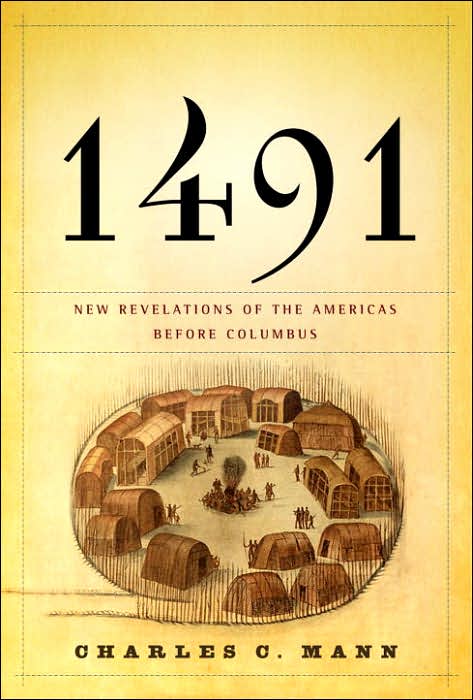
    Charles Mann describes these and a number of other fascinating findings in his book 1491: New Revelations of the Americas Before Columbus. He relays the information in such an engaging style that I found myself picking the book up at every chance. When I was finished, I wanted more.

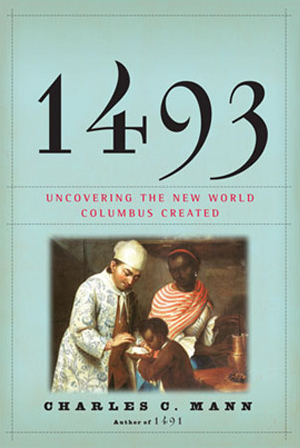
    Luckily, in 1493: Uncovering The New World Columbus Created Mann continues his history lesson. Except instead of focusing on the surprising things we’ve learned about the Indians in the last two decades, he focuses on the surprising impacts, both biological and financial, of linking the Western and Eastern hemispheres together. It’s the biggest event in the world, Mann suggests, since the dinosaurs died. Mann suggests that Columbus didn’t discover a new world–his voyage created one.

    The first part of the book examines the effect of the exchanges across the Atlantic (microbes  and tobacco). The next part focuses on the effect of the exchanges across the Pacific (silk, corn, and pirates). The third part shows the role of the exchange in the Agricultural and Industrial revolutions (potatoes, guano, and rubber).  The final part examines the consequences of the huge shift in populations caused by the Atlantic slave trade (Maroons, mixed-marriages, and freedom). As with 1492, the insights are both surprising and fascinating.

    If you like history, if you liked Guns, Germs, & Steel, then I think you will love these two books.

    EDIT: I just ran across a fabulous Doug Fabrizio Radio West interview with Charles Mann about 1493 called  The World Columbus Created.  Listen and enjoy!

    Divine Yogurt

    For years eating a serving of sweetened yogurt was like eating a box of Milk Duds (20 grams of sugar) or a Milky Way candy bar (35 grams of sugar). Yes, the sweetened yogurts have that much sugar. The only way to avoid eating literally like a kid in a candy store was to purchase plain yogurt and add some fruit or a squirt of honey. And, no, I will not consider eating yogurt sweetened with Splenda or Nutrasweet.  Artificial sweeteners make me gag. As far as I’m concerned, they are abominations that ruin the taste of everything they touch.

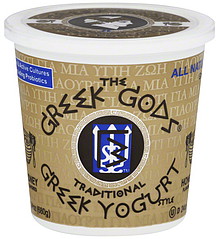
    So for many years I enjoyed my mix of plain yogurt and various add-ins. However, to my joy, I recently discovered a sweetened yogurt with only 15 grams of sugar (about as much as you find in a large banana) that tastes divine. It’s sweetened with real sugar and honey. And the mouth feel is sooooooo smooth. I’m sure this is because, unlike all the other yogurt manufacturers, these guys realized that, duh, fat actually makes things taste good and isn’t the  evil thing we’ve made it out to be. In just two bites it became my favorite sweetened yogurt. It’s called The Greek Gods Traditional Greek Yogurt. I’ve found another version—the vanilla honey—that only has 5 grams of sugar.

    Be aware that despite its name, this yogurt does NOT have the high protein content of other Greek style yogurts such as Brown Cow Greek Yogurt with 23 grams. Furthermore, not all the flavors have the low sugar content. Their blueberry and strawberry flavors, for example, have 35 grams. So check the labels first, and then treat yourself to yogurt that will have you savoring every bite.

    When I eat yogurt, it will still mostly be the plain Greek style with mixers. But when I want a special treat, you know I’ll be getting some from The Greek Gods.

    EDIT: 9/6/12 I now feel like Jerry Seinfeld in the episode when they found out the fat free frozen yogurt really wasn’t fat free. All the other yogurts I was looking at had serving sizes of 1 cup. The Greek Gods folks thought 1/2 a cup was the right size. That means that this super amazing low sugar yogurt had 30 grams of sugar per serving! It’s like eating a Snickers! I’m so disillusioned. Alas.

    Share
  • Author Interview: David Farland

    David Farland has been a big influence on me. It was his workshop back in the 90’s that actually made me think I could write professionally and led directly to my first publication as a Writers of the Future winner. Later Dave gave me comments on my first novel which helped me write a second, much better one that attracted Tor Books. And it was Dave who showed me the ropes on my first ever author tour.

    But long before all that, Dave was a writer whose work I loved. I read ON MY WAY TO PARADISE when it first came out and enjoyed the heck out of it. SERPENT CATCH and PATH OF THE HERO were next. I gobbeled them up too. Then came the THE GOLDEN QUEEN. By the way, SERPENT CATCH and THE GOLDEN QUEEN are two of my favorite novels. Now, all of those were written under Dave’s given name–Dave Wolverton. When he switched over to fantasy he used the Farland pseudonym.  His first Farland book was RUNELORDS. Folks, RUNELORDS is, in my opinion, one of the top 10 epic fantasies ever written. Ever.

    Of course, Dave has written many other novels and was involved with some Hollywood producers. Now he’s doing something new. He’s started his own publishing company–East India Press–and is releasing the first of his enhanced books through it.  Enhanced meaning far more than a book in print or electronic form–there’s also a soundtrack and art. NIGHTINGALE is that book. I asked him to share with my readers a bit more about it. Here’s his reply.

    *

    JOHN:  Tell us about how you came up with the idea for Nightingale?

    DAVE: Years ago, in the late 1980s or early 1990s, I read a book by a doctor who had worked for the CIA, experimenting with drugs that would erase both long- and short-term memories.  It was fascinating work, and he eventually won the Nobel Prize for it.  So I became interested in memory transfer.

    Later on, one Christmas, I got to thinking about the three “Wise Men” from the bible.  Normally, a “wise man” is called a wizard.  A “maji” is called a magician.  Why was it that the writers of the bible were using double-speak when discussing these guys?  Weren’t they astrologers?  Doesn’t the Old Testament condemn these folks to death?

    So I went back to the Hebrew and found out that indeed these three gentlemen were in the same class of magicians that the Old Testament condemned to death, the m’khashepah—which originally referred to a class of magicians that hung around royal courts.  Of them the bible says, “Thou shalt not suffer a m’khashepah to live.”

    So the thought occurred to me, “What if they weren’t just coming to give Jesus gifts?  What if they really had come to be . . . advisors.  What if they wanted to give him wisdom?”

    That started a whole train of thought dealing with memory transfer—transfer of memories, the possibility of training reflexes, transfer of memories on a cellular level, and so on—which led to the creation of my magic system. 

    The questions arose, what would people do with such power? 

    And of course from that a novel was born.

    Nightingale tells the story of a young man named Bron Jones, who is abandoned at birth.  Raised in foster care, he’s shuffled from home to home.  At age 16, he’s kind of the ultimate loner, until he’s sent to a new foster home and meets Olivia, a marvelous teacher, who recognizes that Bron is something special, something that her people call a “Nightingale,” a creature that is not quite human. 

    Suddenly epic forces combine to claim Bron, and he must fight to keep from getting ripped away from the only home, family, and girlfriend that he has ever known.  He must risk his life to learn the answers to the mysteries of his birth: “What am I?  Where did I come from?  Who am I?”

    This is a big project, an enhanced novel with illustrations and animations from half a dozen talented illustrators.  It has a sound track by the head of the National Composer’s Guild, James Guymon, with a dozen professional musicians and vocalists.  We’re releasing the novel in several formats, as an enhanced novel, a normal e-book, an audiobook, and as a hardcover.

    But we did one last cool thing.  The enhanced book was designed for the iPad, though you will also be able to read it on just about any other pad or smartphone.  But we had our programmers create a web app so that you can enjoy the book on your computer—read a few chapters, take it for a test drive, or simply buy it for reading online.  You’re free to go check out the results at www.nightingalenovel.com.  If you like it, remember to “Like” us on Facebook.  Better yet, re-post our site info and tell your friends on Facebook.

    Oh, and while you’re there, check out our short-story contest, where you can win $1000.

    *

    John sez: I’m very excited to see where this goes. I’ve loved Dave’s stories for a long time. And the premise of this book sounds great. Samples are available at: www.nightingalenovel.com

    Share
  • Good Stuff! Woman in Gold

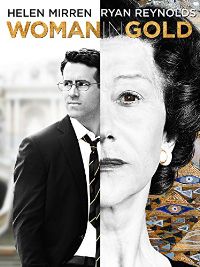
    Woman in GoldI recently watch Woman in Gold with my family, and we loved it. It has delightful characters, a suspenseful plot, and moments of both humor and deep poignancy.

    The movie is based on the true story of Maria Altmann, an elderly Jew living in Los Angeles. When she was a young woman, the Nazis took over Austria. She fled, narrowly escaping. In addition to all the horrors committed against her people and family that couldn’t get out, the Nazis stole artwork and other precious items. The problem is that after the war, many of these items were then appropriated by individuals or the countries of Europe and not returned to their original owners.

    The movie is about Maria and her young lawyer who fight the Austrian government to have a famous painting called Woman in Gold that was legally and rightfully hers returned. It’s a legal battle that went all the way to the Supreme Court of the United States in 2004. But this isn’t about someone wanting a painting. It’s about so much more.

    If you enjoyed Mr. Holmes, Saving Mr. Banks, or Bridge of Spies, I think you will love this movie. You will love the dynamic between the frank-speaking Maria and her lawyer. And you will be moved.

    Share