Similar Posts

  • For the attendees of my killer workshop

    I think the workshop version 2.0 went very well. I had a wonderful time.  Click on the “Writing” menu above AND the category link on the sidebar to see the many blog entries I’ve made about writing principles.

    1. The 3 Things You Must Learn to Write Killer Stories Handout
    2. The Story Cycle Handout
    3. Lesson from writer’s area: Step 1 of The Creative Process: Capture the Zing
    4. Resource: Zing Hunting Methods

    Remember the 10 to 20’s. I would love to hear your experience with them.

    1. STORY EFFECTS. List 10 to 20 Stories you love. Then next to each write what you loved about it and what emotions it triggered in you. Finally, look at your answers to see the patterns. These are the effects you love, the ones YOU will probably find the most joy trying to create for others.
    2. PROBLEMS. List the main problems (threat, lack, mystery) for each of those stories. These are YOUR problem types, the one’s you’ll probably find the most joy writing about.
    3. INTERESTING CHARACTERS. List 10 to 20 characters or people you find interesting. Next to each identify what it is that makes them so interesting to you. Finally, look at your answers and identify the patterns. These are YOUR  draws. Use these when developing characters.  
    4. ROOTING FACTORS. List 10 to 20 characters your root for or against. Next to each identify what it is that makes you root for or against them. Finally, look at your answers and identify the patterns. Again, these are YOUR equity factors. Use them when developing your story.
    5. STORY PATTERNS. For the stories you identified, map out their story cycle (problem, reaction/decision, action, disaster). Your goal here is to see patterns of how the types of problems you love develop.
    6. ZING. For one week gather 10 to 20 zing each day. Try to get zing in all four areas (problem, plot, character, setting) during the week. Look at the lesson on capturing the zing and the zing hunting methods resource in the writer’s section.
    7. POWER QUESTIONS. Start a list of creative questions that are productive for you. You will want to identify power questions for all 5 parts of story. Look at the handout for some of mine. Ultimately, you’ll ask yourself hundreds of questions, but there will be 10 to 20 that you keep coming back to.  
    8. TIME. Identify how you will get 10 to 20 hours to write each week. If you can’t do 10, try to get close.
    9. WRITE. Develop and write a story. Identify the day you will start and do it.
    10. CONTACT ME. I want to hear about your progress.  Please post your findings in the comments of this blog entry 🙂
    Share
  • Generating Story 2: No Clue, No Solution

    I want you to think about Ed Smylie, who helped save the Apollo 13 astronauts with his duct tape contraption. What if the authorities had come to Ed, but instead of saying, “Look, we need to fit the round CO2 scrubbers into the holes for the square ones,” they’d said, “We want you to do something; it involves thinking.”

    Ed would have blinked. Waited.  “Yeah?”

    “That’s it. Something. A lot is riding on this.” And then maybe they urged him on with a significant wave of their hands.

    Can you see Ed at this point?

    “Sure.” He’d say. “I’ll get right on that.” Then he’d wonder who put these guys up to this practical joke.

    Do you see how impossible it is when you frame things that way?

    To come up with solutions, you have to have a clue about what it is you’re trying to do. Even if it’s just a rough idea. It doesn’t matter if you’re trying to fix a space ship, roast hotdogs, or write a story.

    Once we have a rough idea of what we want to accomplish, the mind automatically kicks into gear to perform its wonders. Until we do that, we’re going to be like Ed in the example above—staring at a blank wall, wondering if our superiors aren’t a bit cuckoo.

    So what are we trying to do?

    Think about your reader. Is it a woman? A teen? A crazy dude? Do you remember my book tour with Larry Correia in 2009 and the guy who, during a booksigning / doughnut party at a Phoenix Barnes & Noble, proclaimed my book to be true?  Aliens really were eating our souls and enslaving humanity. They were lizards living in the hollow portion of the earth.

    The point is: what are your readers hoping your story provides them? In fact, since you’re the first audience, what do YOU want from your stories? Why do you read?

    I want you to write down five stories you really like. Movies, TV shows, novels, short stories, plays—I don’t care the genre or type. Just write down five. Do it now. Here are five random stories I like.

    • The Incredibles
    • The Good Guy by Dean Koontz
    • Hunger Games by Suzanne Collins
    • The Sound of Music
    • Runelords by David Farland

    This is going to be a powerful exercise for you. It was for me the first time I did it in a class on interior design.

    A few years ago, Lovely Wife and I were building a house. We wanted to make our living space sing. We wanted our surroundings to make us happy, but we didn’t quite know how to go about doing that. So we took a class on interior design, hoping to learn the principles involved.

    Except when we showed up in the first session and saw the many different design styles, it overwhelmed us. Some styles were ethnic (Southwestern, Asian, French, Gothic, Pygmy), some philosophical or religious (Zen, Feng Shui), many were artistic (Modern, Arts & Craft, Minimalist, Art Deco, College Room Mate ), a lot were mixtures. Some were about making statements and creating moods, some about practicality (here’s a taste of those styles).  How in the world were we going to learn this?

    Luckily, we had a very perceptive teacher. She knew that most of us were there, not to learn all the styles, but to decorate our own houses. So in our second session, she brought dozens of home magazines. She spread them out on the tables we were sitting at and told us we would go through the magazines. When we found a picture or image we liked, we were to rip that page out and put it in our personal stack. So for about 45 minutes we looked and ripped and looked and ripped. Lovely Wife and I each ended up with a pile of a few dozen pictures.

    Then the teacher told us to spread our pictures out in front of us and look for things that the images had in common. Colors, features, design elements.

    I spread my pictures out. Lovely Wife spread out hers. And it was like magic. Boom! Right there in front of us. I loved arches and eyebrow windows. Loved dark blues and purples mixed with creams and whites. Loved the color of blond wheat and a navy blue sky. I loved wood. Loved Arts & Craft with a few tweaks.
    Lovely Wife’s pile was equally revealing.

    The teacher then said, “This is your personal style. This is what’s going to make you happy.” She told us that when designing the rooms in our house, that we should think about their function and merge them with these elements. And if any of us were to work with clients, we’d do something similar with them and find out their wants and likes.

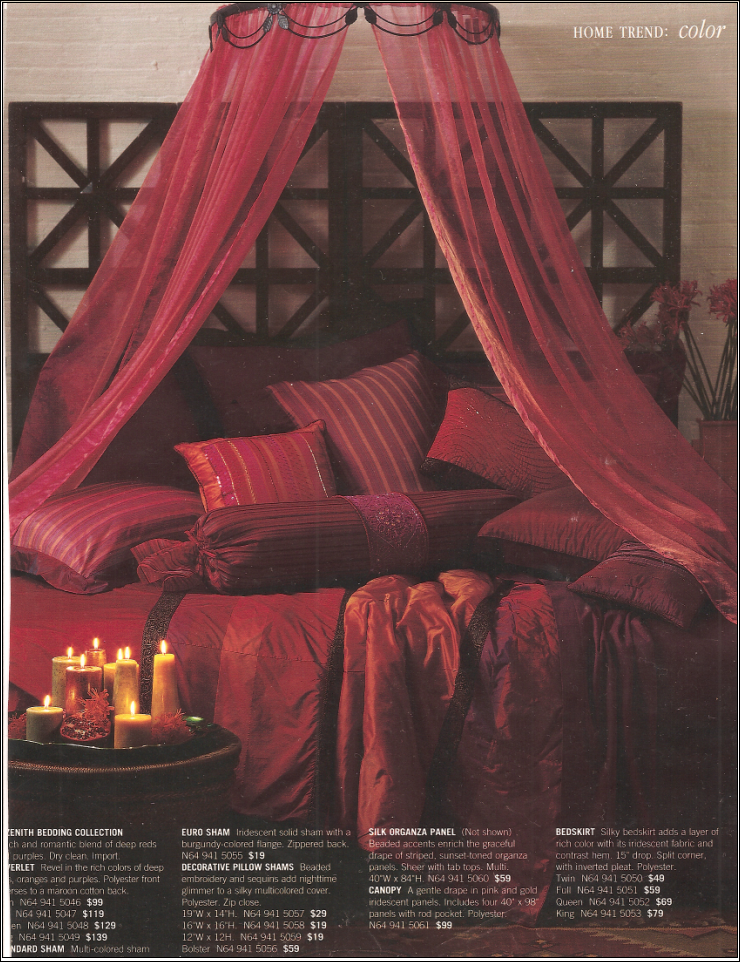
    With our styles now beginning to be fleshed out, Lovely Wife and I went to work. Some of her elements and colors overlapped mine. Some didn’t, like her idea of sleeping bliss: a bed with sheer red drapes hanging from some lamp shade contraption in the middle.
    I told her I didn’t know if I could keep my man card and sleep in that bed. She decided I should keep my man card, but said she couldn’t sleep in a plain-walled zen room. We compromised. She got textured red on the walls. I got a bed without too many frills. We came up with designs for our spaces that did what we wanted them to do.

    But we couldn’t have done this if we hadn’t identified what we were after.

    So I’ve adapted that visual art technique used in the design class for our purposes. It’s just as powerful with literary arts. Which is why I want you to write down five stories.

    I want you to take a moment and identify what you’re after, in a big picture general way.

    I can’t do this for you.

    You and I are different. Just like Lovely Wife and I are different. While our tastes may overlap in some places, they’re going to diverge. You don’t want to write my stories. You want to write YOURS.

    So write down five stories. Then write down what you really enjoyed, over all, about each of those five stories. You might do this on five pieces of paper. What did you enjoy with each of the main story elements—character, setting, problem, plot, and text? What kind of an experience did they give you? What drew you to them in the first place?

    You don’t need to go all crazy detailed on me with this and do a twenty page report. Just hit the highlights. The stuff that will fit on one page without writing in four point font.

    When you finish that, step back and look at all five pieces of paper side by side. What common elements do you see? Circle them.

    This is your style. This is what, in general, you’re going for.

    If you found the exercise insightful, do five more stories. Ten is such a nice number.

    I’m going to predict that 99% of the things you identify have to do with what the story did to you. The stories made you laugh, smile, scream, want to fall in love again. They made you curious or jealous or feel some type of desire (be a Ninja king, strong, beautiful). Maybe they gave you insight. Maybe they affected you so profoundly that it changed, if even in a small way, how you decided to live your life.

    Stories–the ones people pay money for; the ones people stay up until four a.m. reading with a flashlight; the ones people tell their friends about–make people feel things.

    A while back I wrote about this in three parts. I believe the things you’ll read in those short posts, if you don’t know them already, will change how you think about stories. They did for me. And it all begins with lipstick.

    1. Lipstick
    2. Getting specific
    3. My big draws

    Okay, I hope at this point you are getting a general idea of why readers pay money to read the stories we create. Why YOU pay money and spend countless hours reading what others write.

    This is the first step in being able to produce on purpose, not on accident. This is the first step to becoming the Ed Smylie of fiction—understanding what you, as a writer, are trying to do.

    This week, keep your eyes open. Notice what stories do to you. Notice how you feel about different characters and plots. If you feel like taking it farther, notice the effect of different beginnings and ends of novels, chapters, or scenes. Notice the effect of different ways authors describe characters, places, and actions.

    Of course, while knowing these general objectives is critical, it’s not enough. You need to know what you’re reaching for with the current story, the current characters, the current plot. How do you translate all this general stuff to the specifics of the story in front of you? Do you have to define everything up front? And what if you don’t know what you want in the current project anyway? What if you are clueless and have nothing but a handful of random ideas that for some reason are generating electrical sparks? What do you do then?

    In the next post, I’ll talk more about those questions and where the how-to’s fit into all of this, and then we’ll get into the principles of invention.

    For more in this series, see How to Get and Develop Story Ideas

    Share
  • Ebooks set to become largest trade category in 2012

    The folks at Mediabistro.com reported the American Association of Publishers sales for December 2011 and YTD: “The December report represents data provided by 77 publishers and only sales of the participants are reported. NOTE: All numbers have been rounded to one decimal point and may not add up to 100%”

    The key takeaway, I think, is that ebooks will become THE largest book trade category in 2012.

    Sales only need to grow 33% to surpass that of adult hardcovers.  See the chart below. They already dwarf adult mass market, which took a HUGE hit last year. Sales can’t keep growing at more than 100% year after year. They must eventually slow down.  But, given projections, it’s not going to be hard to make 33%. According to the estimates of a Barclays Bank analyst (link below), Amazon will sell an estimated 35 million Kindles and Kindlefires next year. Each owner would only have to purchase $10 worth of books in the year for the segment to grow 33%. And that doesn’t count the sales for the Nook, iphones, ipads, or any other ereaders out there.  

    This year ebooks become king of the heap.

    Media Bistro report of AAP numbers: http://www.mediabistro.com/galleycat/mass-market-paperback-sales-down-nearly-41-in-december_b47625   

    Barclays analyst project sales of 35 million Kindles and Kindlefires in 2012: http://blogs.barrons.com/techtraderdaily/2012/02/23/amazon-barclays-cuts-kindle-kindle-fire-estimates/ 


    Share
  • Generating Story 11: Creative Q&A with Author Janci Patterson

    I was introduced to Janci Patterson at a local convention by author Sandra Tayler (some may know Sandra because of her husband Howard who does the online Schlock Mercenary comic).  Janci told me she’d just signed with a YA publisher. That was exciting. I asked her what her novel was about. She told me, and I immediately hated her because it sounded like such a fun idea, and I wanted to not only read it, but also write the story myself. Luckily I have a few scruples and did not pay the local Klingons to off her and drop her body in the Great Salt Lake for the brine shrimp to feast upon.

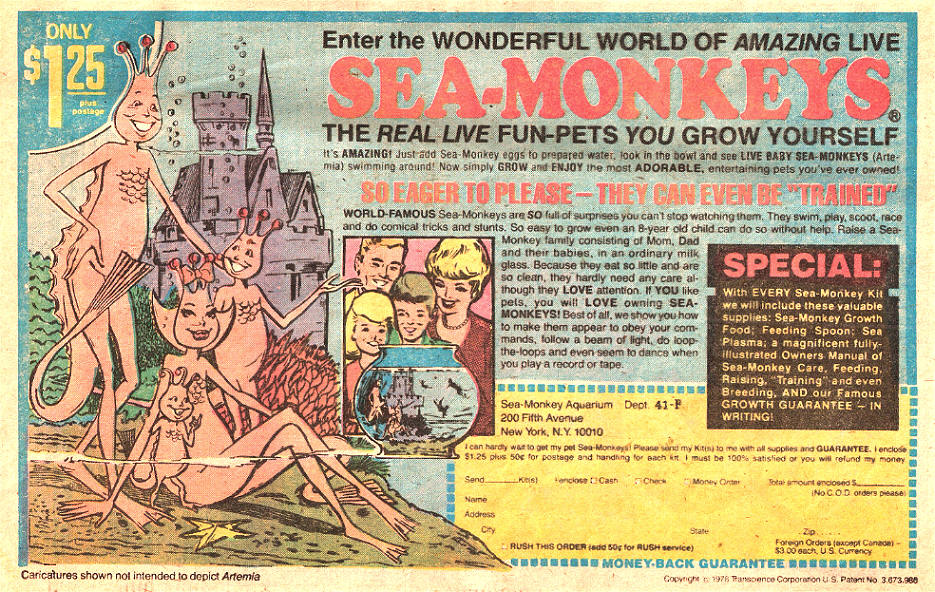
    BTW, did you know that back in the day hucksters placed this ad in Boy’s Life magazine?

    Look at that cute sea-monkey family. Look at the picture of the human family watching the sea-monkey family swim around a castle in a bowl. Click on it. See it large.

    As a young lad, I, as every good Boy Scout should, subscribed to the magazine. I saw that ad over and over.  Who wouldn’t want a sea-monkey? So I saved up my money, earned by watering plants and trees at a nursery in the hot Utah summer sun, and ordered me a family to put on my own shelf.

    The aquarium came. It was not a bowl and did not have a castle. But, hey, there were real live sea-monkey eggs right there in the packet. They weren’t just fantasy creatures! I mixed in the water and salt and dropped the eggs in. I can’t tell you how excited I was. Days later the eggs hatched. And what did I have?

    Brine shrimp.

    BRINE SHRIMP!

    I could have had my mom drive me to the lake where I could have scooped up a million of them. For free. That was, I believe, my first great disillusionment. The first great step from child to adult.

    Alas, sea-monkeys . . .

    Anyway, back to story. Janci was one of those Codex Writers who shared how she used Q&A to develop her killer story idea. She agreed to share it with you. Here’s Janci.

    ***

    The idea for CHASING THE SKIP started with a game of existential questions.  That’s like Twenty Questions, only with no question limit and much more confusing subject matter–like the Pythagorean theorem, or gas prices.  My husband and I like to play the game on long road trips, since a really good round can take two or three hours to play out. 

    On this occasion, I chose a bounty hunter.  It took Drew about five minutes to guess that one–not my finest subject ever.  But after he guessed it, we started talking.  I knew that bounty hunters still existed, but I had no idea how chasing down a fugitive could be a part of our contemporary justice system.  Just what is it that bounty hunters did, anyway?  How did it all work?

    After our road trip, that question stuck with me, so I began to do some research.  What I discovered fascinated me.  A bounty hunter could legally chase down his mark because of the bail bond process.  In order to be released from jail before a pending trial, an arrestee had to put up bail money as collateral, to ensure they returned for their trial.  Since most people can’t afford to post the full bail amount, a bondsman will post it for them, in exchange for a smaller fee.  When the arrestee skips bail, the bondsman is out the money–unless he can get bring the arrestee back.  In fact, he’ll have that person sign away their constitutional rights to privacy in addition to paying the fee.  He’s allowed to go find them if they don’t show up in court.  He can even break and enter to do so–dragging them out against their will.  But the bondsman is a busy man, so he signs those rights over to a bounty hunter, and off the bounty hunter goes, chasing down the skip.  If a person is good at it, bounty hunter can be a legitimate career.

    As I researched, I knew I had the beginnings of a story.  This had all the elements–reality with a touch of danger, crime with a touch of justice.  I wanted to make it work. 

    But I write YA novels, and no bondsman would sign on a teenager to go after his skips.  That would have all kinds of negative legal ramifications, and even if it didn’t, no reader would believe it. Enter my Creative Q&A, the question I always ask when I’m doing idea development for a novel: where can I put a teenager in this?

    Answer: she couldn’t be the bounty hunter, but she could be the bounty hunter’s daughter.

    That posed its own problems, of course.  No dad in his right mind is going to haul his daughter along on the road with him as he tracks down skips.  (Or, in question form, what would make a dad in his right mind bring his daughter into such a dangerous situation?)  I needed a crisis, so he had to bring her along, had to track down the skip, had to keep going with all of it, even when things got rough.  And if I could work in some interpersonal drama, all the better.

    And so it was that Ricki became abandoned by her mother, forced to ride along with her bounty hunter father, a man she barely knows, as he chases down a skip who is more dangerous than his usual mark.  Why would he take this particular job with Ricki along? 

    Ricki would like to know that, too.

    ***

    John Sez: ins’t that a great idea?  I hate Janci.

    While we’re hating her, did you notice that she got some random bit of zing playing 20 questions with her hubby? She followed it up by doing some research.  After doing that, she had a lot more zing. She also knew she had a general topic for a story.  She knew she had the beginnings of a story because her zing meter was going wild. 

    But she didn’t have a story yet.  She had a vocation, which is nothing more than a bit of setting.

    To have a story you need character, problem, plot, AND setting.  So she whipped out her Creative Q&A tool to help her find a character.  And the question she asked was one she’s found is very productive for her. It’s a basic question. But it’s an excellent question. And from that Q&A she started to develop the rest of the story parts.

    The take away isn’t that playing 20 questions on road trips is the key to story ideas.

    It isn’t that one question Janci asked, as fundamental and productive as it is.

    It’s that the principles we’ve been discussing in these posts work. Develop the 6 Core Parts. Think about objectives. Start anywhere. Hunt zing. Generate your own zing. Use Creative Q&A. Work on the various parts using whatever tools you have until you have developed enough that the story comes alive in your mind.

    I hope she sells a million.

    For more in this series, see How to Get and Develop Story Ideas
    Share
  • |

    The book trade is a . . . trade

    James Dawson, YA author, feels it’s somehow wrong to hold back on cussing in his fiction. He wrote an article about this in the UK Guardian called “Why Teens in Books Can’t Swear.” He thinks it’s unrealistic. He thinks it’s about gate-keeper censorship. You know, parents wanting to steer their children towards certain experiences and away from others.  

    People.

    Dawson’s approach to the whole problem is wrong-headed. This isn’t about the virtues and vices of fiction. Or about gatekeepers, especially in today’s ebook world.  Or what experiences parents want to provide their children. And it’s not about art reflecting reality. Reality includes trips to the toilet, and yet we somehow fail to include realistic bum wiping in so many of our tales. Good heavens, have we betrayed our artistic integrity? No. We’ve just naturally chosen to include things that appeal to us and leave out others that don’t. Every book is an exercise in hundreds of such choices.

    The fact is that Dawson’s forgetting that a fundamental aspect of the book trade is the trade.  The buyer trades his or her money for a product (the book) that provides a service (the entertainment, thrills, chills, etc. of the reading experience) he or she values.  A customer preferring one kind of experience over another isn’t censorship (the horror, the horror).  It’s choice.  

    As an author, you make your offer. If folks like it, they buy it. If not, they don’t. Nobody owes you a purchase.

    This means that in any business, and selling fiction is a business, the most sensible way forward is to offer your intended buyers something they are likely to value.  Something they’re going to like.  Something they want.  If your buyer is thirsty and wants water, offer him a cold glass of water, not a waffle iron.  And if you can’t bear to develop anything but waffle irons, then, by all means, develop waffle irons.  Just make sure you offer them to the folks looking for . . . waffle irons. 

    This business of making offers also means that we package our products and services so that customers can easily tell what’s in the box. You don’t want someone to purchase your box thinking it contains breakfast cereal when in reality it’s a bunch of bolts.

    Yeah, writing is an art. But offering it in trade to others is also a basic economic act.

    Share