For the attendees of my killer workshop

I think the workshop version 2.0 went very well. I had a wonderful time.  Click on the “Writing” menu above AND the category link on the sidebar to see the many blog entries I’ve made about writing principles.

  1. The 3 Things You Must Learn to Write Killer Stories Handout
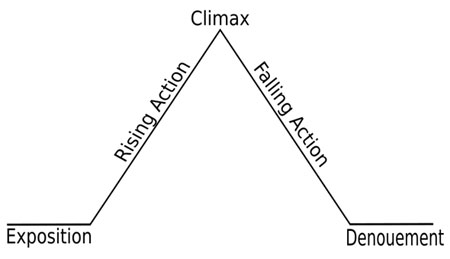
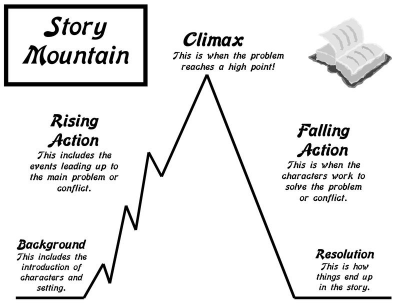
  2. The Story Cycle Handout
  3. Lesson from writer’s area: Step 1 of The Creative Process: Capture the Zing
  4. Resource: Zing Hunting Methods

Remember the 10 to 20’s. I would love to hear your experience with them.

  1. STORY EFFECTS. List 10 to 20 Stories you love. Then next to each write what you loved about it and what emotions it triggered in you. Finally, look at your answers to see the patterns. These are the effects you love, the ones YOU will probably find the most joy trying to create for others.
  2. PROBLEMS. List the main problems (threat, lack, mystery) for each of those stories. These are YOUR problem types, the one’s you’ll probably find the most joy writing about.
  3. INTERESTING CHARACTERS. List 10 to 20 characters or people you find interesting. Next to each identify what it is that makes them so interesting to you. Finally, look at your answers and identify the patterns. These are YOUR  draws. Use these when developing characters.  
  4. ROOTING FACTORS. List 10 to 20 characters your root for or against. Next to each identify what it is that makes you root for or against them. Finally, look at your answers and identify the patterns. Again, these are YOUR equity factors. Use them when developing your story.
  5. STORY PATTERNS. For the stories you identified, map out their story cycle (problem, reaction/decision, action, disaster). Your goal here is to see patterns of how the types of problems you love develop.
  6. ZING. For one week gather 10 to 20 zing each day. Try to get zing in all four areas (problem, plot, character, setting) during the week. Look at the lesson on capturing the zing and the zing hunting methods resource in the writer’s section.
  7. POWER QUESTIONS. Start a list of creative questions that are productive for you. You will want to identify power questions for all 5 parts of story. Look at the handout for some of mine. Ultimately, you’ll ask yourself hundreds of questions, but there will be 10 to 20 that you keep coming back to.  
  8. TIME. Identify how you will get 10 to 20 hours to write each week. If you can’t do 10, try to get close.
  9. WRITE. Develop and write a story. Identify the day you will start and do it.
  10. CONTACT ME. I want to hear about your progress.  Please post your findings in the comments of this blog entry 🙂
Share

Similar Posts

  • Become A Story Idea Machine

    Now’s your chance

    It’s here. I finally figured out how to:

    • Hold the Novel Writers Academy courses
    • Give you one-on-one guidance (not canned videos)
    • And still accommodate my writing schedule and commitments

    The course that’s open for applications is called Create Story Ideas That Beg to Be Written. It’s purpose is to transform you into a story idea machine.

    And you can be there in six weeks. Before the end of the year.

    I will be working with only a small set of people. I can’t accommodate more and give you the one-on-one feedback you need. And so you need to apply to get in.

    The deadline for applications is midnight, October 27th. So contact me now to get the application instructions.


    A cracking good story idea requires five critical elements. Until you have all five, you’ll struggle to plot. You’ll write a few scenes and run out of gas. You’ll feel like the story just isn’t going anywhere. And that’s because it isn’t. It can’t. A story isn’t a story without all five elements.

    However, once you develop these five things, your story will suddenly roar to life. There are a few other elements that are important as well, but these five things form the core of the story setup. 

    In this course you’re not going to merely learn about all of those story elements. You’re going to go deep and learn what can only be learned by actually doing the work and developing story idea after story idea with personal one-on-one feedback from someone who knows what they’re doing.   

    When you finish, you won’t just know story theory. You will be a story idea machine. And you will be that because you have put in the work. The right work.  

    Again, this is not a course full of lectures and videos. This is a course where you’re going to work. And develop the insights and skills that only come from doing the work.

    You’re actually going to:

    • Come up with story setup after story setup after story setup
    • And improve them with one-on-one feedback. 

    It’s going to:

    • Eliminate years of you wandering about in the story wilderness trying to figure things out on your own. 
    • Put you miles ahead of other writers who have no idea what’s really at the core of story. 

    You are going to learn how to develop killer story ideas on purpose instead of on accident. Which means you’ll be able to do again and again. Reliably. Like clockwork. 

    Course details

    Here are the details. 

    • 6-week course 
    • Starts: November 2
    • Ends: December 19
    • One week off right in the middle for the US Thanksgiving holiday 

    The focus of the class is not on learning about story, although you will do that. The majority of your time will be spent on developing stories. 

    You can’t become a carpenter by watching videos and reading books about it. You have to get out on the work site, cut wood, and pound nails. You have to make the mistakes all beginning carpenters make, get feedback, and improve. The same goes for writing. And you’re going to work in this class. You develop 21 story setups. In fact, you develop more because the 21 are just the ones you turn into me. And with each one your skills, insights, and abilities grow.  

    In the beginning, your setups will be bare bones. By the end, they’ll be fully developed setups that beg to be written. Setups you can use to immediately write the first draft  of your novel, whether that’s in outline or chapter form. 

    Here’s what you do each week. 

    Week 1. November 2-7

    • Uncover the secrets of what’s really at the heart of story and how to generate ideas. 
    • Define your genre requirements
    • Create story setups 1-3

    Week 2. November 9-14

    • Uncover the secrets to compelling characters 
    • Create character sketches
    • Create story setups 4-7 

    Week 3. November 16-21

    • Uncover the secrets to formidable obstacles
    • Create story setups 8-11 

    Week 4. November 30-December 5

    • Uncover the secrets to interesting casts
    • Create story setups 12-15

    Week 5. December 7-12

    • Uncover the secrets to managing multiple storylines and series
    • Create story setups 16-19 

    Week 6. December 14-19

    • Create story setups 20-21. These are your capstone projects where you apply everything you’ve learned and take it to the next level

    As you can see, in this class you develop story idea after story idea after story idea. I didn’t detail it above, but each week you will also be lifting the hood on your favorite stories and actually seeing how they work. Story after story after story. In this class, you are marinated in the work of developing characters, THOMs, goals, obstacles, settings, casts, and more. And because of that, each week will not only bring an explosion of insights, but new skills and abilities.

    Every week you get two private, one-on-one, live sessions with me where you get encouragement and feedback on what you’ve developed. And then we’ll work as a group, applying the principles and brainstorming even MORE ideas for each other’s stories. 

    At first you might feel a bit shy and worried about your ideas and abilities. But you’ll soon get over that. By the end of the course you’ll be one of those people that can generate terrific ideas easily. And you’ll be able to do that because you will have put in the work to become a different writer.  

    Apply now!

    The normal cost of the course is $899. But because this is the first time I’ll be running through it, and we’re likely to run into a few kinks that need to be worked out, I’ve dropped the price to $599. I personally guarantee my course. You’ll be totally oh-my-gosh-I’m-so-happy-I-took-that-class satisfied, or I’ll give you your money back. No questions asked.

    Now’s your chance to stop spinning your wheels. I can’t tell you how much I wish I’d had something like this when I’d started:

    • The secrets about the true core of story.
    • The secrets about how to come up with ideas. 
    • Actual work with personal one-on-one feedback. 
    • Laser focused on what actually matters, not a bunch of ridiculous writing rules. 

    When you finish, you will be a story idea machine. 
     
    You won’t know plotting. That’s a different course and set of skills. You won’t know how to write chapters. But you’ll know how to create the engine that powers all the rest of that. You’ll know how to create the core that makes awesome plots and chapters possible. 

    If you want to take this course, click the button below and contact me. I will tell you exactly how to apply.

    I’m not going to be able to accept everyone who wants to take the class. I have a very strict limit on the number of students I can work with. So you need to get your application in before the deadline of midnight, October 27th.

    Don’t wait!

    Share
  • |

    Why you can’t popularize literary fiction

    T.C. Boyle is one of my favorite writers. He saved me in my undergraduate program. I was buying the The Best American Short Story, Pushcart, and O’Henry anthologies. I was reading for my coursework. And so much of it bored me to death. And then one day I began reading “The Ape Lady in Retirement” and my eyes hung out because finally the text was interesting. Finally someone wrote a story I could read start to finish.

    I immediately bought his anthologies–Greasy Lake, If The River Was Whiskey, Descent of Man. I was in heaven. Now, not all of his stories worked magic on me. But when I was having a hard time finding one story in a whole anthology, his books seemed like a treasure trove.

    He didn’t do as well in his novels. Oh, the writing was just as good. The characters and descriptions just as odd and stunning. But he didn’t keep my interest. The problems never built into anything. Nevertheless, I loved him.

    I’ve been having a brief conversation with him and the fan boy in me is delighted to finally talk to this guy. And after reading an interview with him, I realize why he probably spoke to me. While the other literary fiction authors were following the tastes of the fringe group, Boyle at least wanted to entertain.

    In his interview he says.

     Everybody has forgotten that literature, like all art, is, at root, entertainment. It is supposed to entertain you. It’s not supposed to be some conundrum to be resolved by some professors in the university. It’s not a game. It’s not masturbation. It’s art. And I think great art is great on all levels. But the first level on which it must be great is that it must be entertaining.

    Amen, brother Boyle. Amen!

    I’m in a top-20 MFA program in the West.  And I think it’s odd that many in these MFA writing programs, mine included, totally miss the boat on what readers want and bemoan it when nobody comes to buy their stuff. They don’t get it’s about entertainment. About being moved. About much, much more than the language.

    Here the full Boyle AWP interview.

    However, I still think he misses the mark. In it he says about bestsellers:

    But it’s mainly vampire books and Tom Clancy and all the rest of it. I don’t understand why we can’t make our books more available to everybody-not by compromising what we do, but by popularizing them, getting them out to the public.
    He also says about editors and MFA programs:
    I think that now we don’t have great editors. We have editors who are basically trying to hold on to their jobs and who publish good books once in a while. They’re basically cheerleaders for the books. They’re not editors, really. They’re incapable of being editors; they don’t need to be. Because editing is done-self-editing is done-through the apprenticeship in the writing programs. Nearly everyone from my generation on to your generation and beyond will have been through an MFA program. It’s just the way it is now. It’s a different world. It’s essential.

    I’d like to suggest that Boyle, despite his love of entertainment, still misses the mark in his interview because you cannot popularize something that only appeals to a small market. The reason why Stephenie Meyer, Patterson, et al sell exponential circles around folks like Don DeLillo or Louise Erdrich is because Meyer and gang are very good at delivering what the largest portions of the reading public want. They deliver types of entertainment that DeLillo and Erdrich do not. (And I mean “entertainment” in a very broad sense.)

    We could point at the Oprah effect (whether you like it or not, Mr. Cold Mountain) and say that’s not true. It’s all PR and marketing. But that assumes publisers are idiots. And while some of them may be, I think it’s an extreme assumption. Publishers are in it for the love AND money. And you can be sure that the board of directors is looking for smart, money people to lead the companies. You don’t make money, you’re fired.

    Which means that IF the publishers found literary fiction sold like hotcakes they’d promote it like hotcakes. But literary fiction too often fails to entertain anybody but a handful of fringe readers. And so trying to popularize it can only have a limited effect. When people are thirsty, not many are going to pass up tall glasses of ice water for the pickled jalapenos at the end of the line.

    Meyer, Clancy, Grisham, Roberts etc are masters of entertainment. And, like it or not, that’s the main reason the small portion of the public who actually read go to fiction.

    I think it’s fine to cater to the fringe audience if that’s your pleasure. But I think it’s ridiculous to think such fare is better than what most people enjoy. Or that it deserves any special veneration. The MFA programs I’m familiar with seem, by and large, to miss the point. Instead of teaching the meat of fiction (entertainment) they focus on teaching students to serve up the parsley with great pomp. And when the customers go elsewhere to get the meat they crave (or the salad for you vegans), they respond by saying the customers are simply too dumb to get it or have no taste.

    Now, I’m not saying the folks I work with in the MFA program are idiots. Or jerks. Almost everyone I’ve met has been extremely nice and smart. They have great insights. But there is a strong pressure in that culture, amost a moral pressure, to think about fiction this way. And it’s based on their tastes.

    I think we all do this. 90% of what’s out there is crap. But it isn’t, really. The truth is that 90% of what’s out there simply doesn’t appeal to us. And so because it doesn’t deliver the goods, it’s crap to us. The problem is when we don’t realize the difference and begin to think that because we don’t have the taste for something that it’s garbage.

    It’s not.

    And that’s one thing the gentle and smart people in my program have shown me. I’m just as liable to make this mistake as anyone.

    So what MFA programs need to do is teach fiction. The meat. As well as the parsley. They need to teach all the genres, not just one. Alas, for the meat you have to go to communications departments to even talk about it. And then hope you find someone like Dolf Zillman, Bryant Jennings, Jenefer Robinson, or Peter Vorderer.

    Which leads me to the next point. Boyle is wrong about editors and writers. The majority of the authors that actually sell never set foot in an MFA program. MFA’s teach students to write for a small fringe market. And so they’ll dominate that fringe market, but not the big markets. Not what most people actually read.

    Since I haven’t worked with any editors in that so-called golden age of editing, I cannot comment on the difference. But I do know that the editors I and other authors have worked with do many edits on the projects they oversee. They are thorough. They want it to be the best story it can be. It’s true they won’t take something that’s a complete mess and work on it. But why should they? There are so many better manuscripts out there it only makes sense.

    Anyway, I love Boyle. Probably becasue he loves plot and story as much as language. His shorts saved me in my undergrad program. They were one of the few interesting things I read. I just am dismayed that these writing programs are so far off in the weeds.

    Share
  • Generating Story 4: The Story Setup

    Okay, I lied. I was going to get into idea generation techniques, but decided to do one more short post on development objectives. Actually, I suppose this is a technique.

    In the last post, I said one of the main objectives of your initial story development is to have the story to come to life in your mind. I explained that the best method I’ve come across up to this point for making that happen was to focus on developing the 6 core parts. Then I explained in general what I’m shooting for when developing those parts at the outset of a new project.

    You can use a number of different types of documents to capture your thoughts on those 6 core parts. You might end up with a rough two-page sketch of the story. You might write brief character bios of some sort. You might bullet the general steps of the plot. Maybe you create a map. There are a lot of types of documents you can use to capture what you’ve developed. And often the creation of those documents not only captures what you’ve developed, but helps you develop the parts in the first place.

    I want to suggest a “document” that will help you capture and develop the essence of your story setup.

    This is ONE tool.  It is not THE tool. There are many ways to capture the essence of your story. There are many tools that can help you clarify your thinking. But I think this is a good one because it forces you to get right to the core of your story and clarify it in a compact manner.

    An idea that’s core and compact has great power because it focuses the mind.

    There are so many things to juggle when writing a story that it’s easy to get lost in the weeds.  I’ve found I become so much more productive when I know the core situation that’s driving the story.

    There are a lot of things that drive reader and author interest. There might be a thematic question, fascinating characters, genre stuff (chase scenes, romantic scenes, scare the soup out of you scenes), humor. One of the main things that rivet readers to the page are the hopes and fears they have for our characters.

    A reader’s hopes and fears are driven by presenting:

    • An event that causes
    • An interesting and likeable character to
    • Face a compelling and concrete problem—a threat/danger, lack/hardship, opportunity, or mystery.
    • The character decides he must try to solve the problem (which results in the character goal the story revolves around)
    • And struggles against significant opposition.

    That’s the core of the story setup. As David Howard puts it: “there is one basic dramatic circumstance: somebody wants something badly and is having difficulty getting it.”

    Of course, stories provide a lot of delights that require you to do more than define the person and the thing they want. But the setup is at the heart of a lot of what readers go to story for. Part of the initial development of a story should focus on helping you clarify this central dramatic situation.

    So here’s a tool to help you do that. I read about it years ago in Dwight Swain’s Techniques of the Selling Writer, which was written in 1965. Swain calls it the “Starting Line-up.” I read about another version of the same thing more recently in Dan Decker’s Anatomy of a Screenplay written in 1998. He calls it the “Story Line.” The hugely published romance writer Leigh Michaels calls it a “Framework” in her On Writing Romance: how to craft a novel that sells. The agent Donald Maass calls it the “premise of a novel” in an interview published in Agents, Editors, and You by Michelle Howry.  Jim Butcher calls it a “Story Skeleton.” Let’s look at each of these variations.

    Swain’s “Starting Line-up”

    Swain asks you to include five elements:

    1. Focal character
    2. Situation
    3. Objective
    4. Opponent
    5. Threatening Disaster

     These are to be cast into two sentences.

    • Sentence 1 is a statement that establishes character, situation, and objective.
    • Sentence 2 is a question that includes the opponent and disaster and can always be answered in a clear yes or no

     Here are his examples.

     John Storm

    Sentence One

    • When humans suddenly begin to grow to twelve-foot height [situation],
    • John Storm [character]
    • tries to find out why [objective].

    Sentence Two

    • But can he defeat the traitors in high places [opposition]
    • who want to kill him [threatening disaster] in order to make the change appear to be the result of an extraterrestrial plot?

     Irene Boone

    Sentence One

    • Lonely, frustrated, and tired of living in a home where she’s treated as an unpaid servant [situation],
    • widowed Irene Boone [character]
    • wants to marry widower Frank Dawes [objective].

    Sentence Two

    • Will she lose this chance for happiness [threatening disaster]
    • because her selfish sanctimonious daughter, Connie [opponent] accuses her of immorality?

    Dale Boulton

    Sentence One

    • Sick of the conformity and hypocrisy that go with his highpaid job, and with a modest life income assured [situation],
    • Dale Boulton [character]
    • decides to retire ten years early, to go live on a shanty-boat and poke through crumbling river ghost-towns, in fulfillment of a boyhood dream [objective]. 

    Sentence Two

    • Can he make the break successfully, when his hostile wife, Sandra [opponent],
    • fights him all the way and, finally, threatens to have him declared incompetent [threatening disaster]? 

    Decker’s “Story Line”

    Decker requires three components:

    1. The main character described by an adjective
    2. The inciting event or decision that propels the character into the story
    3. The main character’s objective, stated in concrete terms

    You can add other components—other characters described by an adjective or other important events or decisions. He prefers you start with a “when.”

    Here’s an example.

    When a booksmart savings and loan bailout accountant takes over the business he is assigned, he discovers it is a bordello and teams up with the Madame using his business skills to fend off a hostile take over and save the business.

     Another.

    When a blood thirsty killer and his gang are coming to kill him, a strong-willed, decent cop must fight them over the objections of his pacifist bride who will leave him if he does.

     Another.

    When he is given a factory full of doomed Jewish workers, a greedy, opportunistic Nazi deceives his taskmasters to save them.

     Another.

    After a tornado carries her off to a strange land, a spunky teenaged girl must face a series of challenges to get home.

     More.

    When his blundering uncle throws their building and loan company into insolvency, a despairing small town banker with low self-esteem has to find a way to save the bank.

    Leigh Michael’s “Framework”

    Michaels suggests four elements in her framework, although she doesn’t stipulate a specific form.

     This definition summarizes the four crucial basics that make up a romance novel:

    1. A hero and heroine to fall in love
    2. A problem that creates conflict and tension between them and threatens to keep them apart
    3. A developing love that is so special it comes about only once in a lifetime
    4. A resolution in which the problem is solved and the couple is united

     She then lists a number of questions to help an author think about those four elements. The document that could capture this is a summary of the answers to those questions.

    Donald Maass’ “Story Premise”

    Donald Maass was asked what he looks for in a query or pitch. Like Michaels, he doesn’t specify a form, but does include some basic elements.

     I’ll tell you exactly what I need, and I can get this information after just a few questions.

    First of all: What type of novel are we dealing with here? Mystery? Mainstream? Young adult?

    Second thing: Where and when is it set? Contemporary? Historical? Magical place? A real place?

    Third: Who is the main character?

    And lastly: What is the basic problem that the character faces?

    Those things wrapped up together are the premise of a novel, and I know right away if it’s the kind of work I handle, if the idea sounds original, if the main character is sympathetic, and whether I care about the problem. That’s all i need. If all those things are a go, then I want to read the work. It’s as simple as that.

    Most authors might perceive this as additional pressure. It’s exactly the opposite. What is means is that their job is much, much easier than they think.

     If you think about a query, this is something that should be contained in a few short paragraphs.

    Jim Butcher’s “Story Skeleton”

    A reader drew my attention to a short essay Jim Butcher wrote on this subject. I thought it was excellent. Here’s Butcher:

    The story skeleton is a description of the main plot of your book, broken down into its simplest elements. . . The story skeleton (also called a story question) consists of a simple format:

    *WHEN SOMETHING HAPPENS*, *YOUR PROTAGONIST* *PURSUES A GOAL*. But will he succeed when *ANTAGONIST PROVIDES OPPOSITION*?

    For instance, look at Storm Front. (Yes, I’ll use my own books as examples, because I’m just that way. 😉 Also, I’m more familiar with them than I am with almost any other writer.) Storm Front’s story question:

    ****************************
    When a series of grisly supernatural murders tears through Chicago, wizard Harry Dresden sets out to find the killer. But will he succeed when he finds himself pitted against a dark wizard, a Warden of the White Council, a vicious gang war, and the Chicago Police Department?
    ****************************

    See! It’s oh-so-simple! Almost to the point of looking ridiculous–and I have no doubt that some of the people reading this article will think that it *is* ridiculous. They’re wrong. 🙂 This is a fundamental description of the core conflict in your tale–and stories are all about conflict.

    Go read his whole essay.

    My Version: “The Story Setup”

    Did you notice any similarities in the examples above? Character, inciting event, problem, goal, opposition. Let’s go back to the core of story I listed.

    1. An event causes
    2. An interesting and likeable character to
    3. Face a compelling and concrete problem—a threat/danger, lack/hardship, opportunity, or mystery.
    4. The character decides he must solve the problem (which results in the character goal the story revolves around)
    5. And struggles against significant opposition.

     Written even more succinctly:

    1. Character
    2. Inciting event
    3. Problem
    4. Goal
    5. Opposition

    I like the idea from Swain and Butcher of projecting us forward using a question. I like the idea from Decker and Butcher to use “when” to state the inciting incident. I also like adding in the character adjectives. I like Michael’s and Maass’ focus on problem. But I also like flexibility. My version uses key elements of the others as guidelines, keeping it simple and core by limiting the statement to 90 words.

     Here’s one for The Incredibles.

    Bob is a frustrated retired superhero, living a boring life as an insurance claim processor. When he gets an offer to do illegal superhero work on the sly, he decides to take it and pursue a double life, even though he’s forced to lie to his wife about it. But his dream job employer is actually trying to settle and old score and kill him.  Will he lose his family when he’s drawn into a showdown with a super villain that has him outmatched?

    In many longer works there are often more than one story running. Sometimes the main character has an external conflict and an internal one. Or maybe a related subplot. Sometimes other characters have related B, C, D, and E story lines. In Curse of a Dark God, for example, I have at least eight story lines that I have to braid into each other. To keep them all straight, I found it very helpful to list out the five elements for each. The goal isn’t to make these into slick marketing tools: they’re to help me focus my efforts. However, I find that when they include all the elements, they have great power to pique my interest.

     Here’s one of the “inner” conflicts of Curse.

    Talen has escaped the clutches of the Mother, but something is growing inside of him. When he begins to hunger after the Fire and soul of those around him, he realizes he’s not all human. Will he be able to resist the growing and overpowering desires, or will he become the very thing he’s fighting against?

    Here’s one of the related “outer” conflicts.

    The Mother of Mokad wants Talen—to make him into a thrall or devour him. He escapes the first attempt to capture him, but will he be able to shake the Mother’s powerful hunter and his dreadmen now that he and his sister are on their own?

     Here’s a third story line in the book, the big external plot.

    Argoth is trying to build up an army of sleth that can free mankind. But the Mother of Mokad sends her Guardian to exterminate every last one of them. Will Argoth be able to defeat Mokad’s vastly superior army, especially when the Guardian has infiltrated his ranks?

     But Argoth has another plot line for the reader to worry about.

    Argoth damaged his son. Nettle’s condition is growing worse. A foreign Divine offers to heal Nettle in exchange for Argoth’s allegiance. Will Argoth betray those around him and save Nettle? Or will he let his son die and lose him to the perils in the world of the dead?

    Here’s one of Sugar’s.

    When Sugar sneaks behind enemy lines to retrieve some items her mother left for her, she’s given the opportunity to learn a powerful lore and use it to scout for Argoth’s army in the world of the dead. But each time she uses it, she comes closer and closer to death herself. Will she be able to survive as she’s asked to serve in more and more dangerous situations?

    Here’s her inner conflict. I wanted to develop a moment of dilemma for her just as I did Argoth.

    Sugar wants to keep her brother Legs safe. But as Mokad’s army arrives, it becomes apparent Argoth doesn’t have a chance. She and her brother might not survive. Sugar’s been learning the lore with a handsome and battle-hardy loremaster who saves lore users who have become true sleth. When he asks her to sail with him and his crew before it’s too late, Sugar has to decide if she will flee and abandon her friends or stay and fight and risk losing everything in this world and the next.

    Now you see why it’s virtually impossible to write such a book with so many story lines in the normal 100,000 words. And why I question my sanity in trying to write it.

    Anyway, there’s much more to writing a fascinating and compelling story than capturing a story setup, but I’ve found that working on stating the simple core of the story clarifies many things for me and makes me much more productive. I developed a short statement of all my story setups early on in the writing.

    There are a number of ways to capture the story setup. Let me suggest you give one a try. And if you aren’t to the point where you have enough material to capture a story setup yet, that’s fine. That’s what development is for.

    One last note. If you want to read an expanded description of how one writer develops story ideas, read Write Away by New York Times Bestselling author Elizabeth George. I loved the book.

    Bonus: Miss Snark Happy Hooker Examples

    Miss Snark was the pseudonym of an agent who I believe was Janet Reid of the JetReid Literary Agency.  When she was incognito, Snark had a blog. On her blog she’d often invite people to submit their story statements used in queries to hook editors and agents to ask for more.  These entries were called “Happy Hookers.”  Snark would rate them on her crap-o-meter, sometimes giving comments and suggestions.  Let me suggest you read 50 or 100 of those hooks.

    As you’re reading, look at Mrs. Snark’s comments. But more importantly, note the hooks that excite you and the ones that don’t. Because, frankly, Snark is just one person with one person’s tastes. In this exercise, you’re not trying to figure out what she likes. You’re trying to see what story elements work for you. So don’t be dissuaded by her tastes. Identify the hooks that interest you and the ones that don’t. Ask yourself where they were unclear, unbelievable, or boring. After you’ve done a few, you’ll start to see story patterns and ways to capture your own story setup that will be useful to you. 

    For more in this series, see How to Get and Develop Story Ideas

    Share
  • Orson Scott Card’s Literary Boot Camp

    If you want to learn how to write stories that move and entertain, you will do whatever it takes–crawl across broken glass, mortgage your dog, eat brown bananas–to get into Card’s week-long, literary boot camp. 

    This is the workshop that changed everything for me. And while Card will say it had nothing to do with him, he’s just trying to keep his head from bloating and making it so he can’t walk straight. I’ve spent almost the last 20 years in some form of teaching. Card’s workshop employs all the key principles that make it a killer environment for learning complex cognitive skills, i.e. writing fiction. And this  year it’s in San Diego.

    Apply! Do not delay! 

    Share
  • Runts, widows, and orphans

    A typesetting mystery solved–Runts!

    OrphanRuntWindow

    And now for something for your typesetting hearts.

    You know what orphans are–A short line appearing at the bottom of a page. Sometimes the first line of paragraph appearing at the bottom of a page.

    You know what widows are–A short, paragraph-ending line appearing at the top of a page.

    But what’s the last word or part of a word of a paragraph stranded by itself on a line?

    I went to the store, looking for
    Paul.

    I could never find an answer. Some called it an orphan as well.

    But David Blatner revealed the name in the comments of his post What Are Your Favorite Word and Character Space Settings for H&Js?

    He actually coined the term years ago when he couldn’t find a name, and I love what he came up with and am going to use it forever.

    He calls them “runts.”

    Ha!

    Hyphen Control

    BTW, those settings he mentions in that article are awesome. Drastically reduced weird hyphens, which reduced time formatting.

    What do the big boys control for?

    Furthermore, I noticed something in the big time author Stuart Woods volume I happen to be reading. And then I checked it against a James Patterson and a Lee Child.

    1) They don’t care about most runts. As Blatner said, there’s a runt zone, but the zone where they control for runts appears to be less than 5 characters if that includes the end punctuation.

    For example, I just opened a random page of the Woods book and see the following runts:

    a) results.”

    b) entry.”

    I flipped to another page and saw:

    a) said.

    b) trunk.

    c) them.

    And the thing is that I DIDN’T notice them in the least while I was reading. Only when I started looking for them.

    Of course, there were no runts that were smaller than those. Nothing like “tie.” or “do.” or “for.”

    2) They don’t control for orphans either.

    3) They DO control for widows. However, when you’re not controlling for orphans and most runts, controlling for widows is easy. And sometimes the control is just to increase the tracking just a tiny bit to make it span the whole line.

    I spent a number of hours on Saturday formatting my book only to find when I finished that I had set the leading at 18pt instead of 16pt. That meant I had to reformat the whole bleeping thing.

    But I adopted the Big Boy rule, allowing all runts that end at or beyond the first line indent of the paragraph. I ignored orphans. And I controlled for widows. And it took me a fraction of the time and still looks great.

    Here’s to runts and orphans!

    Share
  • Why stories follow patterns

    There is a lively discussion on The Passive Voice about Kris Rusch’s recent blog post which challenges the use of the term “churn out” to describe writers who write quickly. In the comments, someone said that folks also use “formula” or “formulaic” as a pejorative. Another commenter said that in computer design, they use design patterns, and suggested that’s probably a better word. Here’s my response.

    Design pattern is right.

    The people who decry familiar patterns are those that completely misunderstand one of the main purposes of fiction.

    Readers go to fiction to have an emotional experience–thrill, horror, dread, falling in love, mirth, wonder, wish-fulfillment, etc.

    Those emotions are not created out of nothing.

    They’re not created haphazardly.

    They are generated by a specific . . . pattern.

    1. You receive some stimulus–from your environment or your own thoughts or something you’re lead to think, such as via a book.

    2. You make an assessment about what’s going on and what might happen in the future and how that impacts you or someone else. There are two assessment systems. One is incredibly quick. Almost subconscious. The other is a bit slower. You can read about them in Daniel Kahneman’s Thinking, Fast and Slow and Jenefer Robinson’s Deeper Than Reason. Robinson even relates the science to fiction.

    3. If the assessment says it’s something that will affect you or someone you can sympathize with, you feel an emotion. The emotion focuses your attention. For example, if there’s a mountain lion stalking you, you don’t want to forget she’s there. It also prepares you to act–to pursue something desirable, avoid something that’s not, etc. It also writes that emotion on the face to communicate it to others to solicit help or warn (we are social animals).

    Okay, so certain cues or assessments are required to produce certain emotions. If the cues aren’t there, the emotion doesn’t arise.

    Certain stimuli lead to an assessment that there’s a threat. Other stimuli lead to assessments that there’s an opportunity, for love, money, sex, security, etc.

    Suspense, surprise, and curiosity have all been studied in experiments. There’s a certain structure required for each. If you take the same story, but simply change the structure, you end up with different reader effects. See more here.

    This means that a reader who wants to feel the experience of falling in love is going to have to be guided through the pattern of cues that produce the assessments that lead to the emotion.

    There are lots of variations in the pattern that will work. But we can’t give a reader the pattern for horror and expect them to feel romance.

    Duh.

    You can’t give a reader a downer ending and expect her to feel joy.

    Again, there are certain delights readers are going to certain genres for. Folks read romance after romance precisely because those romances do specific things to them. And they want to experience them again and again.

    For example, one thing romance readers love is the joy of a happily-ever-after (HEA) ending. So if that’s what they’re looking for, then that’s what the product must provide for them to be satisfied. We follow patterns, but change them enough so that the reader doesn’t get bored.

    So, yeah. Patterns. It’s like the very essence of what we’re doing.

    We are all working with patterns, whether we know it or know. And the sooner we learn what the general patterns are for the type of story we’re trying to tell, which could also be called the type of experience we’re trying to provide, the quicker we gain control over our writing.

    Share

3 Comments

  1. Thanks a lot John! The workshop was awesome and these handouts, awesome as well! They really clear the way for making strong stories and for fixing problems if they arise. I’ve heard some of this stuff said before, but never in a format as clear, concise and simple to use as this. You’ve cut to the heart of story form.

Comments are closed.