Servant of a Dark God is a Whitney Award finalist

Yea! Thanks to those of you who nominated. The judges have chosen Servant of a Dark God as a Whitney Award finalist. Of course, the four other books in the category are great. Here’s the list of finalists in my category:

  • Servant of a Dark God by John Brown
  • The Maze Runner by James Dashner
  • Wings by Aprilynne Pike
  • Warbreaker by Brandon Sanderson
  • I Am Not A Serial Killer by Dan Wells
  • Check out all finalists in all categories here. If you click on the Whitney Academy link on the top of that site, you’ll see all the folks who will be voting on the finalists.

    Share

    Similar Posts

    • Behold, the Opening Chapters of CURSE OF A DARK GOD

      For your reading pleasure, I have posted the current version of the first 12 chapters of Curse of a Dark God below. (And there was much rejoicing, yea.)

      Read and enjoy!

      CURSE OF A DARK GOD draft 3 chapters 1-12 reader 

      Note: these are draft chapters and may change in the final version.

      If you would like to be part of a test audience, please open the document and begin reading just as you would any book that you picked up because it looked interesting. Stop where you normally would. Then email me by clicking on the Contact John link under my photo up on the left. I’ll send you a couple of questions. Please make sure you don’t ask for the questions before you’ve given the bit above a go (I don’t want the questions to affect your reading). Also, don’t put any critique hat on. Just read as you normally would. 🙂 The deadline for test audience responses is January 15th.

      Share
    • Awful Intent: sheep block busted

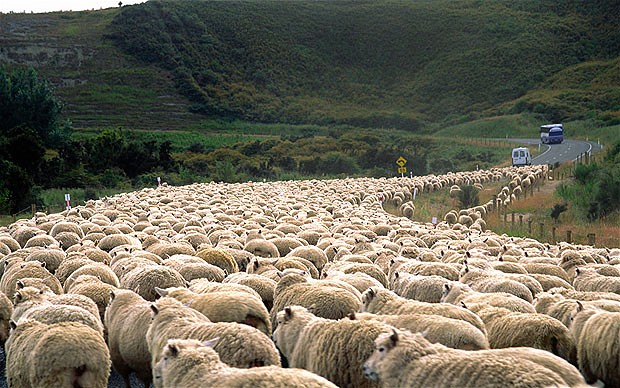
      SheepOnTheRoadSometimes the writing flows. And sometimes you get to the chapter you’ve sketched and realize you’re stuck until you get the sheep off the road.

      You had no idea they were going to be there, but there they are, bringing you to a halt.

      For me, this means I have got to do a lot more thinking to make the scene work realistically. Or work at all.

      That was chapter 13.

      It stopped me dead in my tracks. Some folks say to write on, get the first draft done, but that isn’t how my brain works.

      Besides, I tried that strategy with my first draft of Curse. I ignored the little Spideysense warnings I had about a fundamental situation and wrote on. I ended up with a big old honking manuscript that had to be rewritten from almost the beginning because everything from about 1/3rd the way through had taken the wrong trajectory. So instead of taking 10 hours to figure it out and fix it, I spent 300-400 rewriting.

      That’s called stupid writing.

      So for the last ten writing sessions I was researching and thinking and researching. And when I finally had a sketch based on how things actually work, I went back into flow and wrote the chapter without much trouble at all.

      Huzzah.

      Chapter 14 looks like it will be quick and easy. Some sneaking, some fighting, and a big discovery of a plot turn.

      Share
    • NEWS: Book Updates

      I finished draft three of BAD PENNY last week and have updated the progress bars.

      I’ve given the book to my agent, but because there are some contract terms that I’m unwilling to sign going forward, I need to make sure she’s comfortable representing me on it. I don’t want her doing a lot of work and bringing back what she thinks is a good deal only to have me refuse it. I’d rather discuss these up front and make sure we’re both on the same page. I hope to have her response back this week.

      I am now turning my focus to SERVANT and CURSE. I need to re-read both of them and then write up an outline of what I need to revise. I hope to finish SERVANT in June and CURSE in July. I’ll post my progress on the side bars as I go.

      The cover artist I’d hoped to use for both of these is unavailable at this time, dang it! So I’m currently reviewing candidates. If you know of an up-and-coming artist who you think would be good, click on the Contact Me link under my photo in the sidebar or post it in the comments.

      Share
    • Free audio version of “Bright Waters” available April 7th!

      Mark your calendars. Just got word from the folks at PodCastle. The audio version of “Bright Waters” is set for release on April 7th! You’ll be able to get it then. Remember: Everything on PodCastle is free.

      Again, this is my story about a fearsome Dutch trapper, a spunky Irish woman stolen as a girl in an Abenaki raid, and a small Iroquois tattoo…

      Just go to the PodCastle site. Enjoy!

      Share
    • |

      The Pareto Principle, Form Follows Function, and Story

      There are a thousand things to “remember” when writing story. New writers who make lists of these things soon begin to drown in them. But I’ve come to realize that many of these “rules” don’t matter.

      They don’t matter because many ignore the function of story. And so you can’t know how and when to apply them, or if they’re even something you should apply in the first place. Furthermore, a good number that do tie back to function often have little impact.

      The more I develop and write, the more I begin to see that the key is to focus on a liminted number of fundamentals. To focus on the things that matter most.

      So what really matters when you’re writing a story?

      I’m going to be speaking for an hour at the Book Academy tomorrow. It’s at Utah Valley University. The week after I’ll be presenting all day at the American Fork Arts Council’s autumn writer’s conference. I will probably write up all my thoughts and post them to my site at some time.  But for right now this is where you can hear them.  

      I truly believe the Pareto Principle applies to writing. But you can’t go searching for those vital few factors until you know the effects they’re supposed to produce. Form follows function. And the function is something that happens in the reader.

      Here’s a nibble. This quote from David Howard is an example of what I’m talking about.

      “As we’ve seen, what the audience hopes for and what the characters hope for need not be the same thing. The same is true of our fears versus their fears. But how do hope and fear fit into the scheme of storytelling? Hope and fear are about the future. They derive from uncertaintly about future events in the story, future decisions the characters might make, future discoveries or revelations that might be unearthed, future outside forces and how they will influence the journey of the characters. When we discuss hope verusus fear in dramaturgical terms, this uncertainty is a function solely of the audience and its experience [my emphasis]. This is dramatic tension. We hope the man with the cobra in the shoe box won’t open the box; we fear he might and get himself or someone else bitten. We don’t know what will happen, but we know what might happen and therefore feel tension about those possibilities” (How to Build a Great Screenplay, 52).

      Readers buy novels because novels provide a service. They provide something to the reader. They DO something to the reader.  That’s why readers pay good money for them, and stay up late at night (well past smart bedtimes) with them, and spend hours of their lives reading them.  

      What do stories do? What are the key factors that have to be present in the stories for them to be able to do these things? How do you help readers hope and fear for what might happen?

      I’m no story guru, but I do hope to share some of the vital few factors I see in the presentations I’ll be giving this week and next.

      Share
    • CONduit report & some interesting numbers

      CONduit is a conference for speculative fiction writers. This year’s conference was great. I was able to see and talk to a bunch of writer friends (Dave Wolverton, Dan Wells, Brandon Sanderson, Howard & Sandra Tayler, Eric James Stone, Ami Chopine, Darren Egget, Skipper Ritchotte, Mette Harrison), make some new ones (Lee Modesitt, James Dashner, Julie Wright, Aprilynne Pike, Larry Correia), plus chat with a multitude of others who are trying to break in. I also got to record with the Dragon Crawlers Radio guys. Nothing better than spending a weekend with a swarm of friendly and talented folks.

      I’m amazed at the success some of these people are having:

      • Aprilynne Pike had an initial print run of 200,000 hardback copies and was #1 on the NY Times Best Seller list.
      • James Dashner is going to be one of the main events from Random House this fall. I’m expecting an equally large print of his Maze Runner.
      • Brandon Sanderson just signed a contract that was announced on Publisher’s Lunch for somewhere around 2.5 million for four books. Folks, this is amazingly large for our genre.

      Of course, we already know Dave Wolverton and Lee Modesitt are some of the biggest sellers for Tor. Dan Wells is going to be big as well. And the Taylers have already got tens of thousands who read them regularly. They threw a great release party at this con.

      Larry Correia has had some interesting success as well and came at it from a side alley. He self-published Monster Hunters International. He sold a few thousand copies (no mean feat, especially for a self-published book), with many of the readers coming from the armed forces in Afganistan and Iraq. The book was so good the owner of a large independent store in Minnesota, Uncle Hugo’s, called the editor of Baen Books up and told her that she was an idiot if she didn’t buy Larry’s book because he could sell the heck out of it. So she took a look, agreed, and Larry’s now under contract with a real publisher. It’s coming out in July.

      In one conversation I learned the following about the Science Fiction & Fantasy genre.

      • 4,000 hardback copies for a title in a year is the rough break even point for Tor. You sell more than that, you’re okay. You sell less and Tor might have to drop you.
      • 10,000 hardback copies would be considered a very good seller.
      • 15,000 – 30,000 hardback copies and you are hitting the top of the midlist
      • Robert Jordan sold around 600,000 of each of his titles in hardback.
      • Depending on the time of year, 4,000 – 5,000 hardbacks sold in a week will put you in the top ten, even the top three, on the NY Times bestseller list.

      As for me, I printed up some posters and book marks using Swanland’s art. The cover got a great reaction there. And that’s huge for me because, looking at that Gallup Poll blog I wrote, the cover is going to drive a lot of sales for a new author. I had a wonderful time giving my workshop. And I think I finally figured out which part of my novel I can use for readers. Oh, and if you get a chance to hear Eric James Stone read any of his short stories, take it. I’ve listened to him twice now and both have been well worth the 20 minutes.

      Share