“The Art of Suspense” by Ken Follett

I heard this a few years ago and LOVED it. Ken Follett is a master of suspense. Notice how he starts by talking about the emotion produced in the reader and getting readers emotionally involved in a story. He knows exactly what effect he’s trying to product. He also talks about how to determine whether an idea is good enough for a novel. And all this as he describes the interesting form and history of the thriller.

Here are the parts of his speech.

1 Introduction 10 Agatha Christie
2 Erskine Childers 11 Dashiell Hammet
3 John Buchan 12 Dennis Wheatley
4 E Phillips Oppenheim 13 Mickey Spillane
5 Zane Grey 14 Ian Fleming
6 William Tufnell Le Queux 15 After Bond
7 Joseph Conrad 16 Thomas Harris
8 The standard thriller 17 Q&A
9 The psychological thriller

“The Art of Suspense” by Ken Follett–enjoy!

Share

Similar Posts

  • The Key Conditions for Reader Suspense Part 2: Character

    In the last part in this series we discussed the idea that readers don’t want your characters to be happy. They want them to hunted, stressed, threatened, freaked, and nigh unto some horrible fate for 90% of the novel. At that point, after all that trouble, readers want the characters to pull victory out of the jaws of defeat, exhale a big sigh of relief, and enjoy a Slurpee . . . until the next book in the series.

    All through the big worry, readers don’t want to know what WILL happen. They want to know or suspect what MIGHT happen and HOPE and FEAR about those possibilities. And then they want a cathartic resolution of all that hope and fear, all that dramatic tension they have felt.

    But our readers won’t hope and fear for just anyone. They will only hope and fear for those characters who evoke sympathy and interest. And so the second set of Pareto factors focus on the things, the conditions, that do this. 

    Pareto Factor 1: Troubles

    Sympathy starts when we see someone in trouble. That’s not the only thing that’s required. Some people who are in terrible trouble only evoke pity or even antipathy. So there’s more to this than trouble, but trouble is where sympathy starts. So what kind of trouble are we talking about? I like the categories James Scott Bell uses. We feel sympathy for people who are:

    • In jeopardy or experiencing hardship
    • Are underdogs
    • Are vulnerable

    When someone is in jeopardy, it means some significant aspect of their happiness is being threatened. Hum, sounds suspiciously like the first type of story problem I discussed in the last post, doesn’t it? That’s because it is. We have sympathy for people who are being threatened with death, slavery, drudgery, etc. We’re just wired for it. Likewise, we feel for someone experiencing a hardship. And a “hardship” is simply someone having to deal with a lack, the second type of problem we discussed. So we begin to evoke reader sympathy by just giving our characters significant problems to deal with.

    And you can pile the problems on so that not only does our hero have to deal with the central problem of the story, but maybe he’s also broke and has nothing but one box of macaroni and cheese in the cupboard, or his car just got repossessed, or he’s just been dumped by his girlfriend, or he and his daughter are estranged because his ex-wife is pouring poison in her ear, or he breaks his arm, or he works in an awful job.

    Do you remember Peter Parker in Spiderman 2? He gets fired from his pizza job, has no money, is losing his girl. Lots of hardship. And lots of reader sympathy.

    But giving characters problems is not quite enough. Because if you recall, the readers want to fear for our characters. Nobody fears too much for someone else if we know that they can easily resolve any threat or hardship that comes their way. And so we need to stack the odds against the character. They need to be underdogs.

    This means that the opposition starts off two steps ahead. It means they have more power, more resources, or more information. This is why strong antagonists make strong stories—they help the reader to fear for our protagonists.

    Who worries about a Superman who is a hunk of burning love? Nobody. Unless he’s actually Clark Kent in other matters and stands to lose something like Lois. Or, when he is Superman, someone hangs kryptonite around his neck and turns him into a dweeb.

    In this same vein, our characters need to be vulnerable. This means they can be squashed at any time. They can be shot, killed, ruined. Until the very end, the reader must know the characters can lose big. In the previous post, I said that problems have to be hard to solve, otherwise readers don’t worry. The things that make problems hard to solve are character limitations, ongoing and increasing troubles, conflicts, and surprises. All of those factors make characters vulnerable as well.

    So, threaten your characters will all sorts of things, give them hardships, make them vulnerable underdogs, and we’ll feel sympathy for them.

    Or will we?

    There are some characters with problems who we don’t want to root for. Instead, we hope they fail. Villains, for example, have problems, but we root against them with vigor. In our minds, these folks deserve to fail. So you can’t rely on problem alone. There’s another quality that your characters must evoke if we’re going to hope and fear for them.

    That other quality is deservingness.

    Pareto Factor 2: Deservingness (likeability)

    All of us have an automatic scale of justice inside of us. We can’t turn it off. Nor can we ignore it. It’s very simple. If someone’s bad outweighs their good, then we think they don’t deserve good things. Conversely, if someone’s good outweighs their bad, we think they should be happy.

    Don’t believe me? Fine, let’s test it.

    A boy breaks his arm and he whines, whines, whines about it all day long. Tells his teachers he can’t do his school work because of it. Mopes at home in front of the TV. Steals his sister’s money to buy candy because he has this awful injury and he deserves it. Maybe he makes all his friends listen to him talk about how hard it is, and he just goes on and on and on.

    You know exactly what you’re thinking. You know exactly how much sympathy you have for him, which is none.

    Another boy has a broken arm. But this one doesn’t whine. In fact, when his dad falls ill, he goes out and with the one good arm, and in pain, mucks out the horse stalls. He does this because his dad was going to lose his job if he didn’t. Then the boy comes back in and cleans himself up and doesn’t say a thing.

    You like that second boy? You want good things for him?

    Of course, you do.

    Problems aren’t enough. They’re only half the equation. For us to root for someone, we have to feel they’re deserving. Or if you like the term better, you can say they need to be “likeable.”

    So what makes someone deserving or likeable?

    That’s going to be slightly different for each person because our moral codes are all slightly different. If you feel it’s a sin to kill animals, you might feel conflicted reading a story about a rancher who needs to get his cattle to slaughter. If you feel unions do nothing but harm, you might throw down a book that’s about a union boss trying to force a corporation into compliance. Nevertheless, there are many virtues and vices that people hold in common. Usually, we feel people are deserving if they weigh more on the one side of the table below than they do the other. 

    Deserving / Likeable Not Deserving / Unlikeable
    • Unselfish, do nice things for others
    • Stand up for little guy
    • Funny
    • Sacrifice for someone else
    • Good-humored, don’t take themselves too seriously
    • Courageous
    • Hard-working
    • Actively trying to fix their own problems
    • Hopeful
    • Etc.
    • Selfish
    • Bully others
    • Dull
    • Whining
    • Cowardly
    • Take themselves too seriously
    • Sanctimonious and self-righteous
    • Lazy, only want to snivel or groan about their problems
    • Sad sacks
    • Etc.

    We tend to like people more who show the characteristics on the left side. We tend to dislike people who show the characteristics on the right side.

    Notice, a lot of this has to do with motive. In many instances it isn’t just the act that decides us for or against someone. It’s the act + the reason why they did it. Let’s go back to that example of the kid with the broken arm that mucked out the horse stall. We’ll love him if he made that sacrifice out of selflessness. We’ll feel something different if he does it only because it allows him to hide his and his father’s crime (maybe they killed someone and have temporarily stashed the body in the barn under the muck in a stall).

    Furthermore, while we need to make the characters we want our readers to root for deserving, this doesn’t mean they have to be paragons of virtue. Remember that deservingness is weighed on a scale. Just as long as the characters tip the scales one way, we will feel they’re deserving. On the other hand, if they cross the line the other way, we’ll turn against them.

    For example, let’s say your lead character is a thief who steals money from retired folks. But in your story she’s trying to save a kid from being kidnapped and sold into the sex slave trade. Yeah, our character may be a thief, but what she’s doing outweighs the bad, and we’re going to root for her.

    Now let’s make our lead a child molester. He’s trying to capture a brutal drug cartel murderer who has just escaped prison. Along the way he has his way with a few children.

    Who are you rooting for this time?

    Yeah, me too. I hope the murderer finds the child molester and offs him. Or at least alerts the authorities to his crime and ties him up in a neat package for them to pick up.

    So you don’t have to have perfect people as your leads. In fact, it’s sometimes more interesting to have someone with foibles just like the rest of us. But when those foibles turn into things we find despicable, we’ll turn against those characters.

    And vice versa. For those of you who have read or watched Pride & Prejudice, did you notice how you rooted against Mr. Darcy when we interpreted his actions as smug condescension? The moment he changed, and we learned of it, we cheered for him. It was all a matter of deservingness.  

    If we want to hope and fear for our characters, they need troubles. But they also need to weigh in on the deserving side of our scale of justice. When they do, they become admirable, likeable, heroic.

    In fact, heroes, the ones that make us stand up and cheer, are those people that put their own happiness at risk to do the “right” thing. They’re the very embodiment of deservingness.

    So make your characters admirable in some way, if only just a little bit.

    For more on the topic of deservingness, read How Inequity and Deservingness Propel Readers Through Story.

    Still, we’re not done yet. We might have characters who are completely deserving, but they are so boring we can’t muster any interest in them. And that brings us to the third Pareto factor.

    Pareto Factor 3: Interest

    We want to hope and fear for a character for 90% of the novel. But will you stick around if the characters are utterly boring? Probably not. So you want to make your characters interesting. Heck, sometimes we don’t need much of a problem, but will read about someone just because they’re so dang interesting. Character interest is a key factor in a reader’s enjoyment of your story. It one of the things that produces the biggest bang for the buck.

    The question is: what makes a character interesting? The answer: the same things that make real people interesting.

    You’ll want to make your own list of things that make people interestings because what rocks you might not rock me, but I’ll share the types of things that spark my interest in other people below.

    Your characters don’t have to exhibit all of the traits listed, but you might want to think of giving them at least one or three of them.

    Power

    People who have power draw our interest. That power may be one of many varieties:

    • Wealth. They might be super rich like Bill Gates or Warren Buffett or the Queen. They may drive the coolest cars and have the most luxurious houses or clothing.
    • Position. Someone in a powerful position like the CEO of a big company, the general of an army, or the leader of some gang. But it doesn’t have to be huge. A single cop draws attention. As does an IRS agent on your doorstep. The foreman of a crew has some power. The character might not even be the one to hold the reins of power but be a spouse or counselor of someone else who does.
    • Physical strength. They may be fast or strong or just huge individuals. Maybe they have been trained to be deadly weapons or at least use them.

    Ability

    People with extraordinary skills or talents draw our interest. It’s why, in fantasies, we’re so interested in those that can actually practice magic. In fact, ability is a type of power. And just like those with the other types of power, these folks evoke wonder, respect, and sometimes awe.

    The skills and abilities you’re interested in may differ from mine, but we are fascinated by those who can do things well or have some gift. Maybe they are expert at selling, or making money, or framing a house, or painting, or doing gymnastics, or reading, or hacking into computers, or skydiving, or firing weapons, or riding horses, or hunting, or getting people to like them, or making pancakes, or a thousand other things. Maybe, like Edna Mode in The Incredibles, they have the ability to design amazing super-hero outfits.

    Even though your characters have limitations that prevent them from immediately solving the problem they face, you can still give them some kind of an ability that makes them admirable to us. Some gift or talent. And maybe it helps them solve the problem in the end.

    Extraordinariness

    People who are uncommon in some way draw our interest. In fact, if you think about those with power and ability, you see that they possess this quality as well. However, you don’t always need power and ability to be extraordinary.

    Maybe you’re a normal guy in an extraordinary job. You’re a CIA officer, a smuggler, or a spy. Maybe you raise wolves or are a bounty hunter. Or you hunt bears with a pack of dogs and a horse. Or maybe you have some other uncommon hobby.

    You might argue that these are special skills. They are. But who says my categories can’t overlap? Still they don’t have to be extraordinary in that way. Maybe you simply have extraordinary experience. You fought in a war, escaped prison, were a bank robber at one time. Or maybe you’re just outrageous, bizarre, eccentric, odd, or have some exaggerated quirk.

    Maybe you’re a loud-talker, a mumbler, a guy who takes his three parrots with him where ever he goes, a farmer who loves pies. Maybe you’re super thin. Or a cab driver with glasses so thick his passengers immediately wonder if they’ll arrive alive. Maybe you have squeaky shoes. Or are always dressed to the nines and smell of lemons. Maybe you’re one of these people that walk around in their sleep or hold loud conversations with ghosts. Or you’re a coffee freak and drink a pint of black mud each day. Maybe you just have an uncommon name like the folks in the Netherlands who surname is, no lie, Born Naked.

    Sometimes these extraordinary things affect the plot. Sometimes they don’t. The point is that the extraordinary captures our attention. When you’re inventing your characters, add something extraordinary. You’ll be surprised at how much more interesting they are to you.  

    Beauty

    People who are beautiful capture our attention. In movies we see a million bits of information at once. We can see the beauty and respond. But we can’t do that in text. And so we have to evoke the image of beauty in the reader’s mind. A few key details and the way others react to them should be enough.

    Now you might think beauty is a superficial method for generating interest, but I think it’s a manifestation of something else more fundamental. If you think about a lot of the interest factors we’ve discussed so far–having special power, wealth, ability, or beauty–they all have a common element running through them. That element is wish-fulfillment.

    Wish-fulfillment

    We cannot help but be interested in characters who are, do, or have things we want. In fact, this is one of the main draws of fiction–experiencing something wonderful or cool, even if it’s vicariously. Phyllis Pianka states this so well in How to Write Romances: 

    “You cannot write an engrossing romance novel until you create a heroine the reader wants to identify with and a hero the reader can fall in love with . . . they are idealized; the heroine is someone women would like to emulate: nicer, prettier, thinner, more intelligent, though not necessarily all of those things. She will have a flaw but it will be a minor one . . . the hero is the ideal lover and husband and father . . . Above all, he must be the man with whom every woman would like to fall in love [bold font added for emphasis]” (30).

    A lead you’d like to be like in some way. A hero you could fall in love with. Or at least feel attracted to. Remember, readers are hoping and fearing for the characters. How can readers hope for a woman to enter a committed relationship if the readers feel the man is completely unattractive, physically or emotionally? How can we males root for the man if we feel the same about the female character? It doesn’t mean they have to be perfect. Wish-fulfillment, like many things in writing, slides along a scale. But we’ll be more interested as readers the more we can participate in the same attraction and desire.

    Someone might be thinking this is just for love stories, but that couldn’t be farther from the truth. What’s one of the reasons why James Bond and all the other action heroes are so popular? Among other things, it’s because so many of us would love to live the adventures those heroes do. We would love to be the types of guys who know how to fight like Jack Reacher and get to use all the high-tech the gizmos and drive the deluxe cars. How many YA stories are about characters finding fairies or dragons or aliens? How much of fantasy is about having the powers magic grants? Wouldn’t it be cool! Of course. That’s wish-fulfillment.

    So when developing a character, we can think of things we’d like to be, do, or have and give those things, or the opportunity for them, to our characters. Make them admirable or desireable in some way. Of course, this doesn’t mean you can’t give your characters flaws, or that you can’t write about someone we wouldn’t want to be like. Our readers don’t have to want to be like our characters in every way, but a little bit of wish-fulfillment helps. It’s something to consider.

    Also, as with anything, what’s desireable to you might not be what’s desireable to me. Maybe I’m interested in anyone who has served in the armed forces or lives with some kind of risk and adventure. Maybe you can’t stand that and are enthralled instead with horses. Maybe you’d like to fly airplanes, but I’d love to fly dragons. One guy is drawn to those with happy marriages full of laughter. Another is drawn to the freedom of single life. You write your stories, and I’ll write mine. But we can both make our characters more interesting by adding, when it fits, some element of wish-fulfillment.

    Humor

    We love humor. Love to laugh. And so anytime you can create a character that does this to the audience, they will be interested in them. It might be our characters have witty lines or comments. Maybe they’re humorous types or find themselves in humorous situations. 

    One note. Don’t make the mistake of thinking that making a character interesting will make them deserving or admirable. Humor, just like beauty, can be given to characters we root against. Maybe the character is funny, but it’s a cruel funny. Maybe the character is mind-stealing beautiful, but they use their beauty for terrible purposes. Sympathy and interest are different things.

    Danger

    Anyone who poses a threat demands our interest. This is one of the reasons why Darth Vader is so interesting. Criminals present threats of all sorts, which is why we’re always interested in them. Recall, however, that many aspects of happiness can be threatened. It doesn’t have to be a threat to life, limb, or property. For example, someone may threaten my relationship to my wife or my belonging to a group or community.

    We’re also interested in those who are in danger. This ties back to the first story element of problem. In fact, the problem might be so interesting and threatening that we could cast anyone in the role and readers would go along with them. Do you really remember the leads in Jurassic Park, for instance? There’s nothing fundamentally wrong with a plain vanilla character. In fact, that might be exactly what your story needs. However, I would still see if it doesn’t improve things to make your character interesting outside the context of the story problem. If you do, you just might end up with an Indiana Jones.

    Secrets

    We love mysteries. And so sometimes it’s wonderful to give characters secrets. It might be they present a bit of danger or have something to hide as Aragorn does when we first meet him in The Lord of the Rings. Or maybe they have a past they don’t like to talk about. Either way, we love to wonder about them and then have our questions answered in surprising ways. We like it even better when these secrets affect the deservingness of the character or our understanding of the situation the character faces.

    Surprise

    We are intrigued by characters who play against type, if only a little. So maybe you have a plumber who quotes Shakespeare or William Blake to his customers. Maybe you have a mixed martial arts fighter who is a woman with three kids. Maybe the hero has a fear of spiders. Or the villain is a magnificent artist or tends lovingly to his bees or his daughter. Maybe the super rich businessman secretly goes to poor neighborhoods to find folks to help. Maybe the bearded and tattooed biker carries around a Book of Mormon and reads it during quiet moments. Maybe, like Michael in the series Burn Notice, the super spy loves yogurt. Anything that runs against, or just doesn’t fit, our expectations of the type. This includes motives  as well as external character tags.

    Cast Variety

    Finally, because we almost always deal with a cast of people in our stories, we need to make sure they’re interesting as a group. You will increase reader interest if you give each character some memorable and interesting trait, but you’ll get the most bang for the buck if you make those traits different.

    For example, let’s say you have a team of characters who need to go behind enemy lines to find and dismantle a radar station. If every one of those team members is exactly the same–all wise-cracking blond farm boys from Oklahoma–we might find it funny and odd at first, but it will soon lose its appeal as they all say and do the same things. Compare this to a group where one is a silent-but-deadly farmer, another is a metaphysical mechanic, a third is a short woman’s man, the fourth is a wise-cracking American Indian. Maybe one joined the ARMY because he’s got first person shooter games dancing in his eyes, another because his father was a military man, another is there to conduct some kind of criminal heist, the fourth because he’s poor and needed help getting through college and supporting his wife and kid.

    I know, I know, you women are probably saying the tall blond farm boys might not be all that bad. But after you finish oogling them, think of this: your readers might not all be into farm boys. Did you ever wonder why boy bands have a variety of types–the serious one, the good one, the bad one, the cutie? It’s because it broadens the appeal to a wider audience.

    But it goes beyond that. Variety also avoids the problem of diminishing marginal utility. This is simply the idea that the more you experience something, the less power each experience provides. For example, the first time you hear a great joke it may be gut-busting funny. By the time you’ve heard it ten times the joke has probably lost its appeal. Imagine eating a meal that’s nothing but salmon or broccoli or fried okra or ice cream. Eventually, after twenty dishes of cheese, you will go blind. The same thing occurs with characters. This is why it’s always more powerful to have one villain instead of a hundred of them. One wise-cracking American Indian is awesome. Fifteen of them only water down the effect so that none of them are as powerful as the one could be all by herself.

    And it doesn’t end there. There’s an even more important reason for giving your cast variety: it opens up possiblity for more conflict, surprise, and story. Maybe one of the lead’s team members turns traitor. Maybe one of the bad guys is thinking about doing his boss in. With some variety, you can not only write about the main problem, but you also add in subplots–a love story or a redemption plot. And both can complicate the central problem.

    Vareity adds interest. Develop your characters–the major, minor, and bit roles, folks that help our lead and others who hinder or oppose them–but also develop them with an eye towards the effect of the cast as a whole.

    Characters you want to hope and fear for

    Our readers want to hope and fear for our characters. They want to feel sympathy. But they also want to be delighted and awed by them. They want to feel admiration for them. They want to laugh at and with them. These are some of the key joys of the experience they come to us for.

    The way we deliver this is by giving our characters troubles, letting them demonstrate they deserve to be rooted for, and making them interesting.

    But we’re not done yet. Right now we’ve only talked about the problem and the character. That’s just the beginning. Remember, readers want to hope and fear and then feel a cathartic release. But you can’t feel catharsis if your worries don’t build up to a certain point, if they aren’t extended.

    Form follows function.

    Think about the itch deep down in your cast that builds and builds and builds over days. It’s amazing when you finally scratch it. Think about the time you couldn’t drink or eat for a day or two and how hungry or thirsty you were. Think about how good it felt to finally satisfy that tension. The experience of eating after a fast is so different from the one when you eat when you’re still mostly full.

    You need to make your readers hungry for a release. They want to be hungry. And that takes time. So while a six-hundred word piece of flash fiction can evoke some emotion, it’s nothing compared to the emotion and experience a 100,000 word novel can deliver. Because 100,000 word novels allow you to build the reader’s hunger, their tension, their hope and fear, to a sharp point.

    You build this tension with plot. And that will be the next post in the series.

    In the meantime, if you think of other things that make characters interesting or sympathetic, specific examples of the factors I’ve talked about, or have questions, please post them in the comments.

    More great reading

    A lot of the factors listed above that make characters interesting have to do with them being larger than life. If you want to read more on this, Orson Scott Card devotes a whole chapter to it in his wonderful book Characters & Viewpoint.

    For those interested in exploring the factors that lead to sympathy, let me recommend Adam Smith’s The Theory of Moral Sentiments. That link will take you the wiki about the book. At the bottom of that wiki are links to the actual text.

    Parts in the The Key Conditions for Reader Suspense Series

    1. Scene  (coming soon)
    2. Development Tips
    Share
  • Generating Story 14: Freewriting from Inquiry to Outline to Scene to Draft with Author Maya Lassiter

    Maya Lassiter is an unschooling mom, a yogini, a goat keeper, a yurt dweller, and a pantsy fantasy writer. Or should I say very likely soon to be less pantsy and more of a juggernaut? We shall see.  The initial results of her attempt to go from writing by the seat-of-your-pants to doing more pre-draft development seems to be paying off big time in less stress and higher word counts in each writing session.  I asked Maya to share her method with us. Here’s what she had to say.

    Maya

    At one hundred pages in on my eighth novel, I ran aground and could not seem to move forward an inch.  This was totally normal.  As a pantser, I pretty much always ran aground at some point, usually many times per novel, and then had to go back and rewrite, revise, redraft, finding the point I had gone off the rails and fixing things until finally I could get the train drafting moving once again.  Of course, even after all that, I would still go back to the beginning again, once I had hit then end, for revisions were where I found the book out of the mass of stuff I had gotten down by the seat of my writerly pants.  It was usually for four or five more drafts.  Grueling, exhausting work. 

    This time, however, staring at the choked up, broken manuscript before me, I had had enough.  I decided I wanted to be one of those people who planned their book: to heck with this pantsing crap. I wanted to write a draft that hung together the first time through.  I wanted this whole novel writing thing to be easier.

    In deciding this, however, I realized I had no idea how to proceed.  It’s one thing to say, “I want an entirely new way to do this,” and quite another to actually know what that new way is.  So, I did what any avid reader does when trying to figure anything out: I went to the library.  I checked out a giant stack of books–anything about writing fiction, or writers talking about their work, or editors talking about their writers.  I read it all. 

    In the process, I might have figured out how those outliners do it.

    Pantsing, for me anyway, involves figuring everything out in the draft.  Following your nose, your characters, your muse, your whim, and learning about your story as you go, often right along with your protagonist.  I had previously given up on outlining (multiple times) because, how can you outline what you don’t know, and how can you know if you haven’t written it yet?

    I found one solution to this in Alan Watts’s The 90 Day Novel.  In a word, free-writing.  In fact, 30 days of his 90 are spent just making stuff up, fooling around, free-writing without intending to keep a word of it, all using Watt’s copious question prompts about your story, your protagonist, or your antagonist, whenever you need to, to prime the pump.

    So I tried it.  And after 30 days, I knew a ton about my story I hadn’t already figured out—even though I had already written 100 pages of a draft.  (A draft that was riddled with problems, and now I could see what the pieces were.)  Basically, inquiring into the story and characters, and fooling around in longhand to find answers, brought many insights, including flashes of scenes, scraps of dialogue, the voices of the characters coming to life, new ideas….

    At some point I started listing these flashes out.  That is, any time I actually saw a scene-let from my novel spring to life in my head, I wrote it down.  I got an out-of-order laundry list this way of bits and pieces of the book-to-be, and I kept adding to it as the 30 days progressed.  Until one day I realized that two or three of those scene-lets could come together and become a true scene.  And that this bit ought to go in front of that bit–the beginnings of a plot!  Basically, the list started organizing itself as I figured out more about the story through those free-writes.  Magic.

    Watts also makes use of a three-act structure and slotting my proto-scenes and full scenes (as I found them) into his structure helped me see where there were holes…which brought more questions and more inquiry, which brought more free-writing, free-wheeling, answers.  I think any structure could work for this step: a romance structure, a puzzle structure, a plot-coupon epic, a coming of age story, whatever you know and love and want to use. 

    So, the laundry list, the scene list sequence, and then playing with that scene list within a structure template, these were the three steps that took me from a mass of free-written, stream of consciousness stuff, to a pretty clear idea of the arc of the story, beginning, middle, and end.  With lots of information along the way.

    At this point, I was at the end of Watts’s 30 days, the point at which he starts to draft in earnest….but I still wanted more than a laundry list of scenes, even an organized one.  I wanted a tighter sense of the thing.  I wanted less WORK and flailing about as I wrote.  So I took a page from Holly Lisle’s technique–a very similar one, I have learned, to a technique in Victoria Schmidt’s book, Book in a Month, that she supposedly got from Nora Roberts, and on it goes.  What you do is you take an index card for each scene and write a single sentence on it that sums up that scene.  The sentence includes five parts: [A protagonist with a need][in conflict with][an antagonist with a need][in an interesting setting][with a twist].  If you’ve got all five of those parts for each and every scene, you’re going to have tight scenes that move the story along, with no dangling bits or wandering (re: getting lost). 

    I took the “twist” part of that formula and read it to be similar to a central idea in Robert McKee’s book, Story, something he calls the Turn.  Basically, your character walks into a scene expecting X and the general energy charge of the scene is either postive + ish, or negative – ish.  Then something happens, or something is revealed, that changes all that, turns those expectations upside down.  That’s the Turn.  Whatever the charge was to begin with, it is now very different, either much further than it was (really + or really -) or the opposite charge altogether.  If a scene doesn’t have a Turn, it isn’t a scene.  If the charge doesn’t change, you get a monotony in your manuscript.

    All right.  I took my scene list and converted it into Sentence-per-Scenes on index cards, making sure each sentence had all 5 components, more or less, especially including the Turn.  Surprise, there were 28 scenes in this novel.  How about that?

    If I wrote 28 cards-worth of material, I’d have a complete novel draft.  It seems so doable, when it’s put like that.

    But I wasn’t done yet.  I remembered a blog post I had read a while back about increase productivity–and remember, this whole experiment was to see if I could make novel writing an easier, more streamlined process.  Maybe I would fail, maybe writing novels for me was always going to be guts and angst, but I wanted to see what was possible.  I mean, why not, right?  So I went and found that post, a post on Rachel Aaron’s blog, called How I Went from Writing 2000 Words a Day to 10000 Words a Day.  (http://thisblogisaploy.blogspot.ca/2011/06/how-i-went-from-writing-2000-words-day.html  )  One of her primary tricks was to figure out what you were going to write for five or ten minutes–just fool around long hand on a page or two, before you start drafting until the scene is clear in your mind before you start drafting.  It was sort of like Alan Watts’s 30 days of free-writing, in miniature. 

    I also remembered another writer, Laurel Amberdine, talking about her trick of priming the pump for a scene with a sort of cheat sheet she had invented, a list of things she wanted to be sure to hit in each scene–not as a checklist, but as more writing prompts to help her find the details of the scene before drafting.  I went looking for that in our writer’s group threads, merged it with John Brown’s take on that same list, and then added on some questions from McKee’s Story, and I came up with my own prompt-sheet, designed for 10-15 minutes of pre-writing before starting each of my 28 scene cards.  Here it is:

    One Sentence Description:

    Problem:  What does the main character want in this scene?

    What persons or forces stand in the way?  What do they want?

    Value:  What is the value at stake?

    Describe the charge, positive or negative, for the main character as the scene opens.
    Described the value charge as the scene closes.

    Turning Point:  When does a gap open between expectation and result?  Describe it.

    Beat Pattern:  Comment on any of the action/reaction exchanges that may occur.

    WHERE ARE WE?
    – Fun, cool, weird, odd, particular details, surprises for reader
    – Time, weather, etc.
    – Background or world building details?

    WHO IS HERE?
    – What’s the situation for each character?
    – Who is driving this scene?
    – What is his/her concrete objective?
    – What does each of the others want (motive)?
    – Fun & cool stuff?  Surprises for reader?

    WHAT STORY LINES WILL HAVE BEATS HERE?
    – Progress or trouble?
    – Points of conflict?
    – Obstacles?
    -TURN

    Opening/transition:
    Current Situation:
    Setting, and significant details:
    Next big crisis:
    Turn:
    Background/worldbuilding details:
    Desired effect in reader:
    Events:
    Emotions:
    Character’s unique reactions:
    Ending hook:

    Print one of these out, read my scene card, and start fooling around with the prompts.  By the time the page was filled up, the scene was clear in my mind, often with dialogue written, emotional beats I wanted to hit, and most importantly, the Point of it all, that Turn.  Not to mention foreshadowing, setting goodies, backstory bits I needed to get in, all of it on a single, handy page.

    Of course, at this point I had about a half-dozen different writer’s processes rolled together into a giant mash-up that was sure to do me in with sheer weight and complexity.  But so what–this was in the name of Science!  Throw everything against the wall and see what sticks!

    With card #1, built off the bones of my 30 days of free-writing, and my filled up, front and back, worksheet (took about fifteen minutes), I banged out the first scene chapter, 6000 words, in about 3 hours.  That’s double my usual top speed of 1000 words an hour, but who’s counting?  The main thing: it was perfectly painless.

    My scene card #2 was written similarly in record time, the words flowing easily, no staring into space or getting lost, just smooth, lovely writing.

    Plus, I wasn’t at all having the feared, “why write it if you know what’s going to happen?” thing that so many pantsers cite as their reason for not outlining.  On the contrary, I was very excited about each scene because I knew just what was so cool about it, where the juice was coming and why, and I was psyched to get in there and make it as awesome as I knew it could be. 

    In other words, I could focus on the HOW because the WHAT had already been determined.

    I won’t know, of course, until I finish card #28 whether the process will really work. And I REALLY won’t know until I do a revision pass on the complete draft to see if what I’ve got is any good.  So think of this post as a progress report from the trenches.  I’m up to scene card 6 so far, 16,000 words in, and its still going well, easy writing sessions at double my usual speed and no flailing. 

    Too soon to tell, but tentative conclusion…maybe a pantser really can become a plotter?

    John Sez

    Isn’t that absolutely fantastic?

    By simply taking some time to freewrite, which is just another term for sketching, she has been able (so far) to take out a ton of pain AND increase her word count. And increase it dramatically. So let’s see again how she does it.

    Step 1: Sketch the story using questions as prompts

    1. Sketched using inquiry and freewriting a la Alan Watt’s The 90-Day Novel. Among many other things, that pre-draft development generated a number of scenes and scene snippets. (Hum, “inquiry” and “freewriting”; why, they’re just another form of creative Q&A. That dang creative Q&A is popping up everywhere!)
    2. Kept a list of the scenes she saw.
    3. Sequenced the list in a this-before-that order.

    Step 2: Create a working outline

    1. Maya compared what she had to a structure pattern that and tried to fill in any gaps using more inquiry and freewrite.
    2. (I’m a big believer in patterns, not formulas.)

    Step 3: Sketch the scenes

    1. Next, she sketched out each scene on her list using her own version of the Holly Lisle/Victoria Schmidt/Nora Roberts technique. 
    2. Her sketches had 5 parts: [A protagonist with a need][in conflict with][an antagonist with a need][in an interesting setting][with a twist]

    Step 4: Draft

    1. She was now ready to begin drafting, but does one more sketch before she writes each scene.  She uses her own version of the Amberdine “Template,” which I call the “Scene Primer” and Maya calls a “prompt-sheet,” which helps her (a la Rachel Aaron) to envision the scene more clearly.  So does this for about 15 minutes at the beginning of her drafting session.  
    2. She starts to draft, full of excitement, and feeling free to focus on the how instead of so much on the what.

    Note all of the sketching. Note the creative Q&A. Note the developing in iterations. Did you also see her comments on the helpfulness of using a plot pattern?

    I remember when I first started doing this and feeling the same way–I can focus on the how! It’s so liberating! The writing became more of a pleasure. And I never stopped inventing. Because even though I’ve sketched a lot out, things change when you do the next take. It always does.

    I cannot wait to see how this experiment of hers turns out. I think she’ll run into a few snags but find it’s a much more productive method. We shall see.

    We shall also see if I can’t improve my productivity and pleasure because while this is generally how I work, I haven’t used the Lisle card prompts. Nor have I read Watt’s book. Which means it looks like I’m going to be performing an expirement of my own. And it couldn’t come at a better time. I’ll be done with BAD PENNY here in just a few weeks. And it will be time to start another novel. I can’t wait to try these new tools.

    For more in this series, see How to Get and Develop Story Ideas

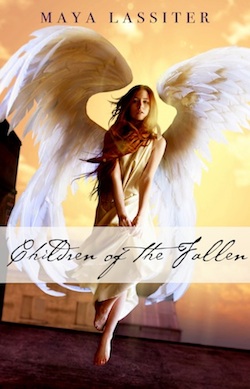
    P.S. Look at the cover of Maya’s latest novel. I think it’s gorgeous.

    Share
  • |

    Jolie, Salt, & trading suspsense for surprise

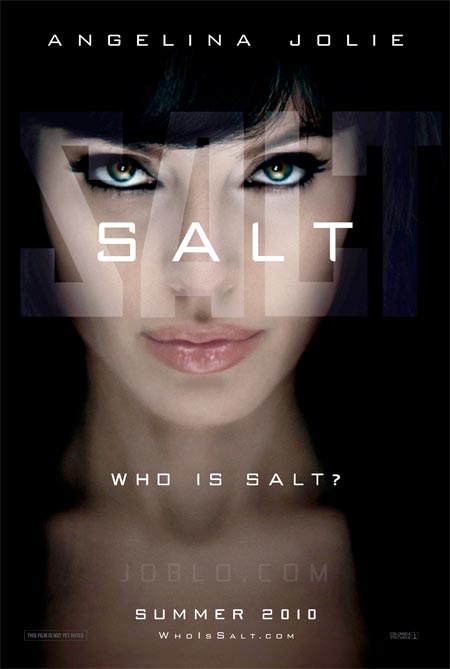
    Last week I went and saw Salt. Wow. The movie started with a bang and was off to the races with lots of great action. Unlike many action films where the characters perform stunts which are simply too hokey for me to buy into, I found myself believing in all but two of Salt’s. So I was wowed most of the time instead of thinking about whether they were using wires or what or that it was all so wrong and geeze don’t these guys have consultants? They weren’t as stunning as the opening of Casino Royale, but what is? 

    But it wasn’t just action. The premise and acting were all great as well (yes, I recant, I slammed Jolie a while back as an actress cast only for her face value; and while you know that’s one of the reasons why she was here, she still was convincing in her role). Furthermore, the story had a lot of great reversals and reveals. But this was also its ultimate downfall.

    When I got to the ending, I did not feel a climax release. No catharsis. No afterglow. It just ended and left me feeling empty. It’s an awful feeling. Totally unsatisfactory. Such a maddening cut off. 

    But why? It was all so good up to that point.

    *** SPOILERS ***

    As I was talking it over with Nellie I believe I indentified the answer: in their effort to be surprising, the director and writers removed everything that would have built suspense. So instead of getting a Sixth Sense ending where the surprise adds to the climax and gives it a wonderful texture, we got a slap of surpise and then nothing.

    For me to feel relief, triumph, and the desire to stand up and cheer–all those great climax emotions–I have to be worried about a character. Stressed, thinking they’re going to fail. They need to fight courageously against insurmountable odds and actually come to a point where it appears all is lost. Where I groan inside. All this creates massive pent up worry and anxiety for them. And at that point, the character snatches victory from the jaws of defeat.

    Boom! The climax floods me and it’s delight, relief, cheer, joy.

    It’s just like a football game where we bite our nails until the very end. Where our non-ranked team is playing the #3 team in the nation. Maybe we jump ahead in the second quarter, but in the third we fall behind. We make some great plays but can’t catch up. And when we do put points on the board, the other team immediately responds. There are three seconds left. We’ve stalled at the twenty yard line. We have one more play. From the moment it starts it appears to be broken, our QB is going down, and then . . . he passes to a running back who has made some space. Who is standing open in the end zone! Yeeeeeaaaaaaahhhhhh!

    In order to feel a release a climax, something has to build up. The thing that builds is worry, fret, desperate hope. This is what we mean when we talk about suspense. We know the team’s goal, see their predicament, see the overwhelming odds. See them about to lose it all. The dread of defeat and what will be lost rises.

    But in Salt the director and writers went for the effect of surprise instead of suspense and triumph. The moment Salt starts in on the Russian president I thought she was the bad guy. Yes, there was the bit about the spider that had me wondering. Yes, I knew she felt anguish about her husband being killed (that smart little reveal in her expression). I knew all of that. But the movie kept me busy thinking she was the bad guy up until almost the very end. Everything in the film lead me to believe this. Not because I didn’t get it. I got it precisely. It’s exactly what the director wanted. It was the setup for the big surprise/reversal at the end.

    But when they went for surprise by not letting the audience know what Salt was really up to, the immediately removed the possibility of suspense. So I didn’t feel any suspense at her infiltrating the old group of spies. No relief at her killing them–that was just her revenge. No suspsense when she went to the White House. Nothing when she chased the president down the elevator shaft. The whole time I was thinking, crap, they really did indoctrinate her. She’s bad.

    More importantly, there was no rooting, no worry building to release proportions.

    Not until the very end do we realize what she’s been trying to do. Oh, the role reversal with her and Ted Winter (btw, like Liev Schreiber who plays the part) was all a big surprise, as it was designed to be. But the surprise faded and there was . . . nothing to replace it. That’s how surprise works. It’s a relatively short effect. 

    Yes, she kills Winter. Yes, he was a threat at the end with his scissors, but I didn’t care that much. I hadn’t been whipped into a fever pitch. Not like I was in Gladiator with the emperor and the lead in the coliseum. There was no pressurized worry ready to burst. There wasn’t any because we hadn’t had any time for it to build and because by that time nothing for Salt was really at stake. The one meaningful thing she stood to loose–her relationship with her husband–was taken away from us in an earlier scene when he was shot dead. So what was at stake? A big old nuclear war. Well, who cares about that? Nobody. It’s too generalized. We cared about Salt and her husband.

    The result was that the director and writers traded climax for surprise. Alas.

    So here’s my conclusion. Surprise is a relatively easy effect to create. You simply have something unexpected but logical occur. Relief, triumph, climax needs something much different. And surprise can be a part of it. But in our effort to build surprise we must not remove the conditions necessary for please-dear-mother suspense. Suspense requires we root for and worry about a character for a significant period, our unease growing until it’s drawn taut, straining. All the time something significant has to be at stake. Something we can sympathize with. Something personal to the person we care about. Only then can we feel the climactic release. Only then will we stand up and cheer in holy-crap-no-way relief and delight.

    Share
  • My working process

    Because I get questions about how I work, whether I outline, etc., and to satisfy the curiosity of those waiting for Curse about what I’m doing right now, I’ve decided to share my working process.

    I use five types of documents in Word to write my books.

    1. Pre-draft documents
    2. Working outline
    3. Chapter development docs
    4. Manuscript drafts
    5. Book

    I then import the book into InDesign to create the ebook and POD versions.

    THE PROCESS

    1. PRE-DRAFT

    I start developing and collecting ideas for character, setting, problem, plot, and sometimes even text. This includes brainstorms, zings, setting sketches, character sketches, scene or dialog snippets, plot sketches, photos, maps, story setup statements or problem statements, etc.  I’ll often have separate pre-draft documents for character, setting, problem, and plot. Or it might be one big document. At some point all of that electricity has built to the point where the story starts to buck and kick in my hands. When I start to see scenes rolling out in front of me, I know it’s time to create the outline.

    2. WORKING OUTLINE

    Looking at my pre-draft material, I create a sequenced list of the events or scenes in the story. Sometimes I’ll describe an event with just one line, sometimes I’ll describe it with more. These events or scenes often match up to individual chapters, but they often change as I go because the outline changes as I work. This outline is usually 4-12 pages long.

    I usually have more detail about the first parts of the book when I start than I do the last parts. But even if some parts are sketchy, I usually have at least a line for each of the big events all the way to the end. When I start drafting (steps 3 and 4) and moving through the book, the details for those later parts begin to fill in. Again, it’s a “working” outline so things change.

    3. CHAPTER DEV DOCS

    When I finish the working outline to my satisfaction and start chomping at the bit to write, it’s time to start drafting. I open a new chapter development doc for the first event on the outline and copy/paste the event’s material from the outline into it.

    I do some sketching if necessary (see my posts on scene primers) in the new document. Then I begin to write with the outline material and scene sketch as a guide.

    If I run out of steam, or the take of the scene doesn’t work, I do another take. I just stop, create a new heading titled “Take 2” or 3 or 4 (whatever the take is), and start again. I may brainstorm as well in this document and do other pre-draft work that has finally presented itself to me to be done. There have been a couple of times that I’ve had to do 20+ takes to get a take that works. Most of the time I need 1-3 takes. Using Word navigation view I can see in the sidebar all the takes etc.

    The nice thing about these chapter development documents is that they’re working documents. I can be messy.

    4. MANUSCRIPT

    When I’ve gotten a good take of the scene, I paste that take into my manuscript document which contains all the final takes from the chapter development documents. This is “draft 1” of the manuscript. Usually each scene/event becomes a chapter, although I might split it if it goes long, or combine it with others if it’s short.

    5. REPEAT UNTIL DONE

    I repeat steps 3 and 4 until I’m done with the book. Using Word navigation I can see all the chapters in the sidebar.

    6. CHAPTER REVIEW

    Before I print the manuscript for the cold read, I will review the chapter breaks one more time based on what I feel is right for the length, the right effect, especially at the ending and beginning of the chapter, and what I think goes together.

    7. DRAFT VERSIONS

    After cold reading and marking up the printed form of draft 1, I copy the manuscript file and replace the suffix “draft 1” with “draft 2”, then make the edits for the cold read in draft 2.

    Then I send draft 2 out to my beta readers. When the manuscripts and comments come back, I copy draft 2 and change the suffix to “draft 3” and make the beta reader edits in draft 3.

    I do this for as many drafts as I go through, including those for the copy edits.

    8. BOOK

    When I’m done with drafting, I copy the final draft and replace the draft suffix with “book”. Then I add front matter and back matter (title page, copyright page, teaser, map, author’s note, table of contents, etc.) in preparation for importing into InDesign to create the ebook and POD (print-on-demand) versions.

    9. POD

    I create an InDesign document, import the Word book, then save it with the suffix “POD”. Next I finalize the interior formatting for printing. There’s quite a bit that goes into this with chapter breaks, widows, and orphans, breaks, etc. When that’s done, I upload it to CreateSpace and then print off the proof they provide.  By now the cover is finished as well.

    10. PROOF READ

    I read the POD proof to catch any last errors and make the appropriate updates to both the Word book and the InDesign POD document.

    11. EBOOK

    I copy the POD InDesign document and replace “POD” with “EBOOK”. I then add the appropriate changes (links etc.) to the front and back matter for the ebook. Next I export the InDesign document as an EPUB. I have to use Calibre Book Editor to edit a number of things in the EPUB. When that’s done I open the EPUB with the Kindle Previewer to create the MOBI version (Kindle file).

    12. PUBLISH

    The next step is the easiest–click a few buttons to upload the final version of the POD and ebooks to the various online retail venues. I go direct with Amazon, CreateSpace, NookPress, and Kobo. I use Draft2Digital for iTunes and Smashwords for all the rest. 

    Share
  • Writing a tie-in

    I read this article today, laughed, and then thought a while. Don’t know if tie-ins will ever be in my future. I would hope to do it just once for a series or film I love. In the meantime, it’s great fun reading about someone else’s experience.

    ‘Burn Notice’: The Novel
    Does a real writer accept a gig doing books spun off from films or TV shows? A real writer found the answer to his own question.
    By Tod Goldberg, Special to The Times
    August 24, 2008

    http://www.latimes.com/features/books/la-ca-tie-ins24-2008aug24,0,1463672.story 

    Share
  • How many copies do average authors sell?

    I posted earlier about the sales number for best-selling authors. What about the average author?

    Here’s Patrick Nielsen Hayden, an editor at Tor Books, in an interview on io9.com about the future effects of e-text on publishing:

    io9: Does it make a difference to you if an author has an online reputation? Does that go into your decisions to acquire books?

    PNH: Obviously it makes a difference if an author has a public online profile of some sort, even just down to the level of having a moderately popular blog. Most books sell 5, 10, or 15 thousand copies. Most are midlist books. With those people, even a modest online presence can make a difference in sales.

    The whole interview is interesting. In fact, he says something that I think is important to note about what today’s novelists and, to a lesser degree, short story writers are actually providing:

    One thing I’m sure of is that we’re [Tor Books] going to be in linear immersive narratives that produce the reading trance. We won’t be moving towards a “choose your own adventure” thing. People will do those things, but those are different art forms. There’s something about immersive text that you can read in order – it’s persisted through many technological changes. This fiction stuff works pretty well. It’s been around a long time

    I think he’s right. The EXPERIENCE you get in the reader’s trance, similar to the one you get in a movie, is a strong experience. The media used to convey that experience doesn’t really matter as long as it makes it easy to get into the trance.

    Check out the whole interview.

    Share