



Similar Posts
The Good Guy by Dean Koontz
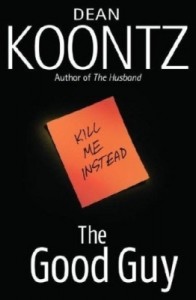 So let’s say you’re in a bar and a guy shows up, mistakes you for someone he was meeting, and you play along. Just for fun. You’ll let him know his mistake sooner or later. But then he slides a manila envelope to you and says, “Half of it is there. Ten thousand. You’ll get the rest when she’s gone.”
Would you say, “Sorry, dude. I’m not your hit man”? A woman’s life is on the line.
In Dean Koontz’s The Good Guy, Tim Carrier is too astonished to react. The man leaves. Carrier opens the envelope. There’s ten thousand in cash and a 5×7 of the woman. She’s Linda Paquette who lives in Laguna Beach.
A few minutes later the actual killer shows up. Makes the same mistake. What do you do?
Carrier plays along, tells the man that he’s decided not to go through with it and to take the ten thousand as a “kill fee.” The man leaves. Carrier goes to alert the woman. But very soon the killer and those who hired him realize the mistake. And now they’re after both Carrier and the original target.
The Good Guy was a wonderful story of action and suspense. It’s also a love story. Koontz portrays a deadly and frightening killer. But he also includes lots of banter between Carrier and Paquette. Both have secrets which are interesting to learn. And then at the end of the book, when you think it’s all about a kill, Koontz twists it. Then he twists it again. I loved this story and enjoyed the characters immensely. But the book went beyond mere entertainment. It’s a book that also makes you think about how you live.
I should be working hard on draft 3 of Curse of a Dark God. But every now and again I need a break. I’m glad I took this one with Koontz.
Miss Potter, Downton Abbey, Human Planet
Miss Potter, a true romance
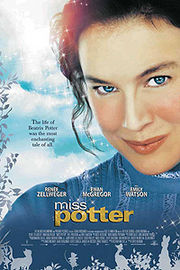 How many shows are good enough that you can walk into them partway through and within a minute become completely engrossed? I found two this week. The first is the 2006 film Miss Potter, which tells the story of Beatrix Potter (1866-1943), who is the best selling children’s author of all time. You might know her by the most famous of her 23 illustrated children’s stories: The Tale of Peter Rabbit.
As a side note, Potter spent a lot of time at her family’s country home in the Lake District. I was lucky enough to be able to vacation there once, but never knew until I saw this film that the gorgeous landscapes that had been preserved were partially due to her donation of 4,000 acres.
The movie opens with the fact that Potter, who is played so well by Renée Zellweger, has missed her early chances of marriage. She’s a young spinster, and, having a number of her illustrations purchased, is determined to make some money publishing her own illustrated stories. The movie follows her journey to publication, which met with opposition from both publishers and her family, but the real heart of the film is the story of her meeting and falling in love with Norman Warne, whom her parents, especially her mother, don’t approve of because he’s a tradesman. The film is full of wonderful drama, humor, tragedy, and solace. I can’t recommend it highly enough. In fact, I found myself watching it a second time two days later with my girls with just as much enjoyment.
Downton Abbey, a period drama
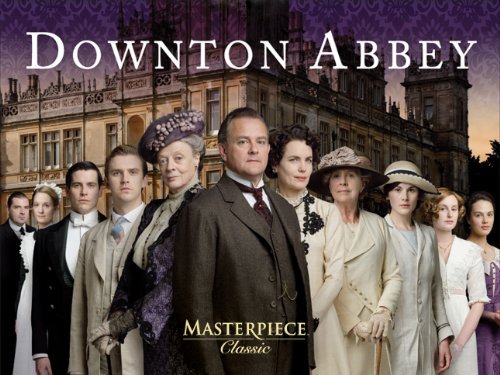
 The second show is the BBC miniseries Downton Abbey. Its first season of seven episodes aired last year in the USA on PBS’s Masterpiece Theater. The second season will air at the beginning of 2012.
 The series is set in the fictional Downton Abbey and follows the lives of the aristocratic Crawley family and their servants. The stories take place over the time period that starts with the sinking of the Titanic in April 1912 to the outbreak of the First World War on 4 August 1914.
The main story line running through the episodes is the fact that the Crawley family must give up the estate to a distant relation because they have no male heir. But what I find so refreshing is that the stories of various servants are included. Some are funny. Some pull at your heart strings.
So far I’ve met and enjoyed some truly delightful characters as well as a couple of villains. If you enjoyed the BBC’s Pride & Prejudice or the Cranford series, I think you’ll enjoy this.
Human Planet, an amazing documentary
 These last two weeks I’ve watched with fascination the eight episodes of the BBC and Discovery documentary series Human Planet. One species on our planet has adapted to every environment on earth—that’s us. The series looks at a number of remarkable ways humans have adapted to the various habitats.
You’ll see people from all over the globe who do things you never would imagine. Here’s just a small sample:
- -Folks in Churchill, Manitoba Canada who trick or treat on Halloween with hungry polar bears stalking the streets
- -A man in Papua New Guinea practicing the ancient art of shark calling in a small canoe
- -Dolphins that help humans fish in Brazil
- -A wild honeyguide bird working with Maasai boys to steal honey from wild African bees
- -Mongolians using tamed golden eagles to hunt fox
- -People in the eastern Amazon who love their pet monkeys so much they breastfeed them
- -Inuit Canadians who risk death going under the arctic ice during low tide to gather mussels
- -Three Dorobo in Kenya stealing food from a lion pride of more than twenty lions
Oh, and how could I not mention the three children who hunt tarantulas in Venezuela, roasting them up as tasty treats that taste a little like crab. I could go on and on. There are sixty-three of these stories in all, grouped into eight episodes that each focus on a certain habitat, including deserts, the Arctic, jungles, mountains, grasslands, rivers, and cities. Each episode also includes a behind-the-scenes story about the filming of one of the episodes. And some of these are as thrilling as the stories themselves.
In fact, that’s one of the things I love about this series. In addition to showing me fascinating things I’ve never seen, a number of the stories also raise the adrenaline just a bit. And yet, that’s not all. Because while presenting “strange” cultures, the stories humanize these folks so that instead of presenting aliens, these people feel more like fascinating distant relations. This is storytelling at its finest. If you like nature shows at all, you’ll be totally delighted with Human Planet.
You thought Bad Penny was fiction?
How about former CIA operatives and Navy Seals forming a private group to rescue child slaves?
Last January, Ballard made a bold move and left his job to form his own team of former CIA operatives and Navy Seals who operate undercover to bust child slavery rings
. . . . .
Ballard’s organization is called Operation Underground Railroad, and members call themselves abolitionists. The references to 19th-century slave liberation are deliberate.
There are currently 25 million people living in slavery, according to the 2014 Global Slavery Index research released by anti-trafficking organization Walk Free Foundation. The U.S. State Department puts the figure closer to 21 million, and about two million of those slaves are children.
Ballard’s line of work has opened his eyes to a problem most people are blind to — the fact that there are more people living in slavery now than at the height of the trans-Atlantic slave trade.
. . . . .
Ballard knows better than anyone just how easy it is to buy a child. In an operation in Haiti earlier this year, he posed as a trafficker and visited an orphanage where two children — a brother and sister ages 2 and 3 — were sold to him for $15,000 apiece.
That’s the going rate for a child, says Ballard, and over time, the owner can make millions of dollars by selling the child for sex or forced labor.
Read the rest at Heroes of 2014. Become an abolitionist here.
Then go on to read about another hero–the Iron Angel–who is helping folks out of another kind of slavery.
Then a third called the Vicar of Bagdad, who has had over 1,000 of his flock killed for their beliefs.
Here’s the full list of the six featured heroes.
Check out Dave Farland’s new cover
Isaac Stewart pointed this out to me. Wow. And what a change. Farland’s got a whole new look and feel. I don’t know much about cover art/marketing and how well various colors and styles do in the book store (will buyers gloss over this because of its dark color?–I hope not). But however this performs on the shelf, it’s a great illustration.

See more images on Irene Gallo’s blog about it. Compare with the old style.
Good Stuff: Books Worth Multiple Readings Part 1
Would you like to improve your relationship with your spouse or children?
Would you like to improve your experience with teachers, coaches, and administrators this coming year at school as you try to influence them and work with them for the benefit of your children?
Would you like to simply have a better time with the people in your community?
There are some books so full of practical wisdom about relationships that they deserve to be read every year or three. I want to recommend two such books to you. The first is How to Win Friends and Influence People by Dale Carnegie.
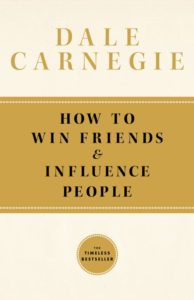
This book has been in print for eighty years. And not only that, it has been, year after year, one of the bestselling books out there for almost each of those eighty years. For example, Amazon right now ranks it the #9 most read book. You’ll see other books come and go on that list. But books like this and Stephen R. Covey’s The Seven Habits of Highly Successful People stay.
There are thousands of how-to books published each year on relationships in business and personal settings. Most are never seen again. But this one has stayed because people find it so useful they recommend it over and over again.
And I wish to heck I’d not waited ten years to pick my copy up again.
As I re-read the book this last month, I saw that if I’d been thinking about the practical guidelines Carnegie shares, I could have avoided a number of public and private arguments I’ve had over the last few years.
I could have avoided subjecting those relationships to attack, coming to my senses, and then trying to clean up the mess, large or small.
But even more important, I could have added a little more sweetness to my life and the life of others I encounter on my way. There are only so many days we have here on earth, and how much better it is to add additional drops of honey to them instead of vinegar.
One of the wonderful things about his book is that Carnegie shares the wisdom in a down-to-earth way with lots of examples and stories. He shares wisdom on building relationships, being liked, winning people to your way of thinking, and how to make your requests for change known without giving offense or rousing resentment. And he does it simply and in a way that you feel like you’re sitting down with a good-humored grandfather. There are no dry, abstract parts. Just look at a sampling of the chapter titles.
- “If You Want to Gather Honey, Don’t Kick Over the Beehive”
- “He Who Can Do This Has the Whole World with Him. He Who Cannot Walks a Lonely Way”
- “An Easy Way to Become a Good Conversationalist”
- “If You Must Find Fault, This Is the Way to Begin”
- “Give a Dog a Good Name”
I can tell you that every time I try to approach things the way he proposes, they almost always seem to go better.
If you have an issue you want to discuss with a school teacher, coach, or administrator this year, let me suggest you first listen to what Carnegie has to say. I can promise you you’ll get much farther. And you will probably end up enjoying the interaction.
If you want to improve your time with your wife and kids, open this book and look for insights.
If you want to have a better time with your co-workers or boss, I suggest reviewing the wisdom you’ll find here.
Carnegie doesn’t possess all the wisdom there is to be had about relationships. There are many people out there with great insights. But, gee whiz, he provides a great start. If you want to add some sweetness to your life, I think you’ll find this book a great help.
Let me illustrate this Carnegie stuff with an experience I had with one of our high school coaches two years ago. I have a vast background in basketball that includes, well, nothing. I basically know how to dribble a ball. Oh, yeah, I also played church ball two or three years in a row back in the 1980s. So, as you can see, my knowledge is vast.
And not to toot my own horn, but this wasn’t just any church ball team. This was a team that improved the sport.
How? You ask.
Well, during one of those church ball years, me and the guys from my ward (“congregation” for those not familiar with the Mormon faith) thought it would be capital to make jeans and concert tee-shirts our uniforms. Back in those days concert tee-shirts looked like this.

This meant we ran up and down the church courts with drugs, sex, and rock and roll on our chests (I’m sure that’s precisely what the brethren had in mind for the program).
As you can see, we were way up there on the basketball ladder.
So back to this coach. My daughter was playing on the high school team, and the team was having a consistently hard time with one type of defense. And I thought, “Self, there’s got to be a way to break that defense.” These are the big thoughts that basketball gurus like myself have.
And so I researched and watched and talked to folks who had actually played basketball competitively (unfortunately, without concert tee shirts) and identified an offensive counter that looked like it might work.
And I sent an email to the coach sharing my idea.
Now, the coach could have reacted in many ways. Especially given the fact that (1) he had already thought of the idea I was proposing, (2) had already tried it in games that, yes, I had attended, and (3) probably knew just a teensy bit more about basketball and his team than I did even though my church ball team had vastly superior uniforms.
But this coach, whether he knew it or not, was following a number of the principles found in Carnegie’s book, including the chapter titled “Let the Other Person Save Face”. This meant that instead of rolling his eyes or ridiculing or saying something like, “Brown, are you blind?”, he explained what he was doing and then expressed his appreciation. He was happy I was so invested. He thanked me.
And here’s the thing: he meant it.
I replied that if he ever wanted someone to suggest an idea he was already trying, to just call. I’d be happy to help.
We laughed, but the important thing is that what could have been a wedge became a good experience for all. And, more than ever, I wanted to work with him to help my daughter in the program.
I will give you one more example. There’s a mother who had four of her children go through my wife’s seventh and eighth grade language arts classes. Now, Nellie is a worker. She expects her students to work. She wants to have a good time, loves having great interactions with the kids, but she also wants them to improve and learn, and knows that’s going to take some work. Sometimes the assignments, despite her best efforts, aren’t clearly understood. Sometimes they’re a bit challenging. And this sometimes creates frustration.
There are a lot of ways that parents deal with this. But this one mother took an approach that, whether she knew it or not, followed many of the principles in the book including those shared in “You Can’t Win an Argument” and “A Formula That Will Work Wonders For You”. This resulted in a fabulous working relationship. It helped the mother have less stress. Helped her kids. And helped Nellie improve her program.
The issues the mother encountered could have become wedges, but instead, because of how she handled them, they became stepping stones. And this didn’t happen with this one individual. There are many mothers and fathers who have taken a similar approach with similar results. The principles work every time.
I could go on with many more examples in other situations, but why listen to mine? Carnegie has a book full of them. If you want to improve your relationships or persuade others to your way of thinking, you’ll want to start by reading this book.
The second book I want to recommend is I Don’t Have to Make Everything All Better by Gary and Joy Lundberg. But this post is full, so stay tuned, and next time I’ll explain what awaits you in its fabulous pages.
Good Stuff! The Addiction Recovery Program
 Part of my research for Bad Penny led me to the Utah state prison. I was able to attend a session with five of the convicts. Let me tell you: walking through those high fences and electric doors and hearing them close behind you was something.
The five men all had interesting and unfortunate tales to tell. But they were all hopeful. I was there with a couple of kids in a troubled youth program and their leader. And of course there were a couple of guards.
We got to ask questions and chat. It was an upbeat session despite the topic. One thing I asked about was the food, and one fellow said that the worst thing was this “crack wheat” they served for breakfast.
“Cracked wheat?” I asked with a smile. “That’s good old Mormon food.”
He said, “It’s awful.” We laughed. There were many times we laughed.
And there were a lot of things asked and shared. One of the key things that stood out to me was that all of them were there because of drug addictions. And as they shared their goals of staying clean, they revealed that this wasn’t their first time inside. For one it was his third, another his fifth, another his ninth.
And it was with those comments I realized just what a hold addiction had on these guys.
Fortunately, most folks with addictions don’t have to go to prison. But a lot fail to break out of them and miss many opportunities for joy, sometimes wrecking the ones they have. The 12-step program has one of the best success rates of any program.
My church has meetings and programs all over the country. They’re free and open to anyone. If you or someone you know is struggling with an addiction to alcohol, drugs, tobacco, porn, or eating disorders, you might want to go here to see what to expect from a 12-step meeting and how to participate.
Even with all the vicissitues, life is meant to be enjoyed.