Earth: the biography, Planter’s Nuts at Sam’s, “The Professor of War”
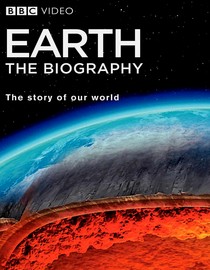
Earth: The Biography is one of the most interesting documentary series I’ve seen in a long time. It’s produced by National Geographic and the BCC. Dr. Ian Stewart, a Scotsman, hosts the program and tells the life story of our planet, how it works, and what makes it so special.

There are five parts: “Volcano,” “Atmosphere,” “Ice,” “Oceans,” and “Rare Earth.” And while they were all good, the last two blew me away.

For example, I always thought the polar ice caps were a big waste of water. What do they do besides torment penguins and Eskimos?

But the program reveals that the ice caps are critical to all life everywhere on the planet because they power the great ocean conveyer. This conveyer is a slow current that carries surface water away from the equator up to the polar caps then down to the sea floor and back—transporting oxygen, nutrients, and warmth all around the globe.

We can see how critical the ocean conveyer is when it stops. There was a time when this happened. With no replenishment of oxygen, the water turned to poison. The poison was picked up in the clouds and rained down upon the land. And almost every living thing on the planet died a toxic death.

Sniff, sniff–we love you, Polar Ice Caps.

“Oceans” was fascinating, but “Rare Earth” was the kicker. How common is our cozy little situation here on earth?

Well, for life to exist as we know it, we needed to be a certain narrow distance from the center of the galaxy, orbit a certain, less common type of star, be within a certain range of that star, have a big old fat vacuum like Jupiter hanging out in the wings sucking up asteroids and comets so they don’t hit us instead, have an orbiting moon of a certain size, an earth core with just the right amount of iron, a tilt to the earth that would allow polar ice caps, water, an atmosphere to protect us from all sorts of celestial mayhem. Heck, we even had to have that nasty mass extinction caused by the broken ocean conveyer. And there’s more.

So many rare events had to line up just right, that it’s bound to make the atheists among us celebrate their good fortune with illegal-Wyoming-firework abandon and the believers to rise up from their chairs and shout, “Hallelujah and Amen!”

Nellie, the girls, and I all loved this show.

***
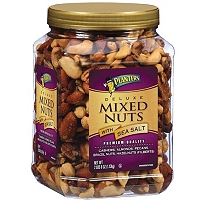
I’m a nut man. Love nuts. Hazelnuts, walnuts, Brazil nuts, pistachio nuts, cashews, pecans. But nuts are expensive. And while peanuts are lovely, I like some variety and grow weary of the mixes where you get about five thousand peanuts and one burnt almond. So when I saw the forty ounce jars of Planter’s Deluxe Nuts (sea salt, NO peanuts) at Sam’s Club in Logan, Utah selling for a mere $10.98, I just about fainted away and died.

Eleven bucks?!

For comparison, please note that a little ten ounce jar of the exact same nuts costs six dollars in the grocery store. Four times the nuts for less than double the price!

The nuts are good. More importantly, they’re a regular item at Sam’s. So with all the reports coming out about how good nuts are for you, reduce heart disease, reduce diabetes, blah, blah, blah, fight aliens, I can now afford to eat them and hopefully extend my stay as a carbon-based life form.

***

General David Petraeus has revolutionized the way America wages war. It was his strategy that turned the war in Iraq around. It’s his strategy that’s being used in Afghanistan. And it will be his methods that will inform how our soldiers face enemies in years to come.

The key to his thinking is realizing that there are two different terrains that must be won in the types of war we wage now—the geographic and the human. You know what geography is—take that hill, secure that town, remove the threats from that jungle. The human terrain, on the other hand, is made up of the hearts and minds of the people at the site of the struggle and has proven to be equally important.

It’s important because the wars we’re most likely to engage in now are not ones where two big armies square off and blast away. Anyone who tries to stand up to the United States using that method is going to very quickly learn what it means to get stomped, shredded, and served to the dogs. So most of the battles are likely to be engagements in unconventional war, where the enemy hides, and where the local populace will make or break the effort.

In May 2010, Vanity Fair magazine published a fascinating article called “The Professor of War” by Mark Bowden. It summarizes Petraeus’s history, the source of his thinking, and the kind of man he is. With so much at stake, I was grateful to get this well-written glimpse into the general and his approach to war.

While you’re at the site, you might want to also read another Vanity Fair article titled “General McChrystal’s Three Biggest Strategic Errors in Dealing With Rolling Stone” by Bill Bradley, published June, 2010. McChrystal was Petraeus’s right hand man. The contrast between the two men is enlightening.

Share

Similar Posts

  • |

    Good Stuff! The actual Christmas story

    It’s interesting how many things we’ve added to the accounts we have in the Bible.

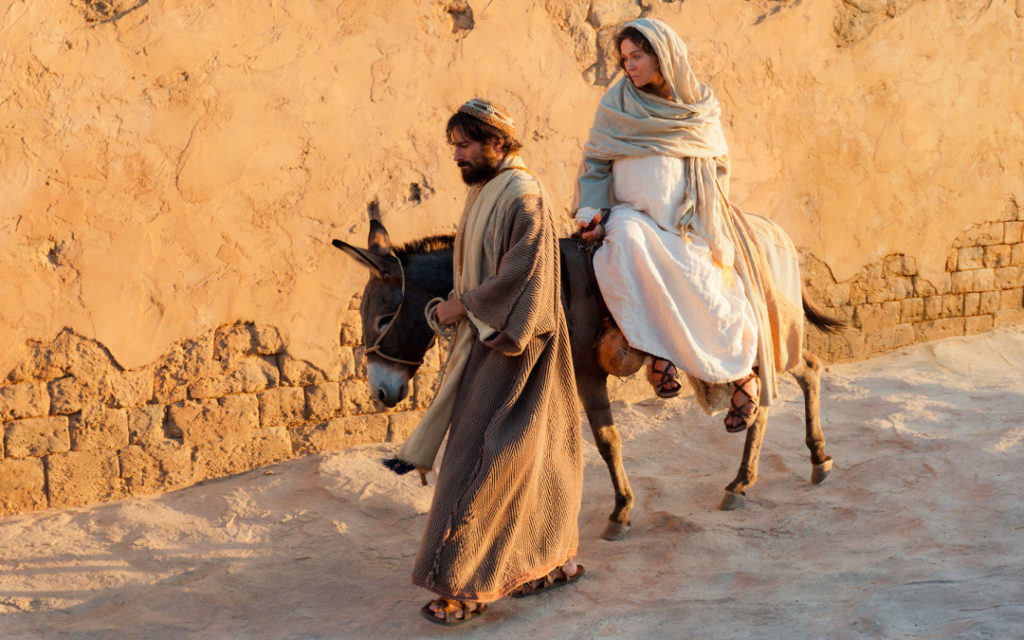
    For example, nowhere does the Bible say that Mary rode a donkey. Mary might have walked. Or rode in a cart. Or gotten piggy back rides. We don’t know. We do know that there is no donkey mentioned in the record.

    It also doesn’t say she had the child the night they arrived.

    It only says she was “great with child” when they made the roughly 80-mile journey from Nazareth to Bethlehem. And that “while they were there” in Bethlehem “the days were accomplished that she should be delivered.”

    So she had the baby sometime while they were there. That could have been during the first hour. But it could have also been a week or month later. We just don’t know.

    It doesn’t mention anywhere the word stable.

    Christ might have been born in a stable, or he might have been born in a cave, or inside the house, or out on the porch, or on the roof (lots of those places had flat roofs where they hung out). We just don’t know. What we do know is that he wasn’t born in a palace. And that they laid him in a manger because there wasn’t any room in the inn. An odd circumstance for a king.  

    Notice as well that there weren’t multiple inns.

    It just says “the inn.” And if you look up that word in the Greek, it’s translated as “guest chamber” in the other spots where it’s used in Luke. So they could have been talking about the one guest room in the house where they were staying. Either way, we don’t have anything that says there was a mean innkeeper who later regretted turning the couple away or that Joseph went door-to-door looking for a place.

    We have no record in the account of three wisemen.

    It just says “wisemen.” So there might have been two of them. Or twelve. We don’t know. And it appears they came sometime after Jesus had been born because they first saw the star of his birth in the east and only then set out to find him. They might have been coming from Persia, hundreds of miles away. Or they could have been living in Bethphage, a mile to the east of Jerusalem. Either way, they didn’t know they should travel to Bethlehem because it says they went and talked to Herod first, in Jerusalem, and asked “where is he that is born King of the Jews?”

    The question freaked Herod out (if you’re the current king, you kind of want to know who else is claiming your throne), and so he gathered all the chief priests and scribes to discuss it, and those guys said the prophecies said it would be Bethlehem. And so Herod met with the wisemen again and told them to go there. And only then did they go down to Bethlehem. So it doesn’t appear the wisemen were there the night of the birth.  

    There’s no record of camels hanging out with the baby either. Or sheep. Or goats. There’s not a lot there. But what is there is interesting.

    Now, I want to go on record stating I have no problem speculating about the event and imagining what it might have been like. I love to do it. Good grief, I write fiction.

    In fact, for many years I figured I needed to get in on the Christmas noun gig. You know what I mean. Every year we get heart-warming books about new Christmas nouns. We’ve had Christmas sweaters, Christmas jars, Christmas boxes, Christmas candles, Christmas carols. This year I see there’s one about Christmas fudge and other about a Christmas train. So I figured I’d do one. Mine would be about the Christmas rat. A little fellow who decided to snuggle up with the babe instead of giving him a nibble. One of these days I will get that hungry rat story written.  

    In the meantime, while there’s a lot of good stuff we’ve added to make the event special, it’s also nice to know what the record actually does say. Whether you’re Christian or not, it’s helpful when dealing with others to know what was recorded about this event that is so significant to the largest religion in the world.

    And so the last bit of good stuff I recommend this month are the two brief accounts we have. The first one is in Matthew 2:1-16 and tells the story of the wisemen. The other is in Luke 2:1-20 and features some shepherds.

    Merry Christmas!

    Share
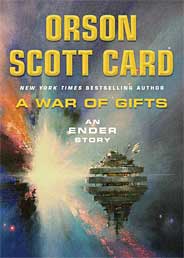
  • A War of Gifts by Orson Scott Card

    orson-card-war-of-giftsI think this has just become one of my favorite Card stories (note: like Stonefather, this is NOT a novel, but another novella). I’m sure part of the interest stemmed from the religious angle. Many people of many differing faiths will see their religion in it, but there were so many of my own beliefs twisted and made into frights that I felt Card was speaking directly to me. I’m sure another part was that I served my LDS mission in the Netherlands and the story revolves around a Dutch tradition. And it didn’t hurt that I listened to the audio version read by Scott Brick and Stefan Rudnicki. But there was more to it than that.  In the end, it was the saving of the main character, Zeck Morgan, that made me care.

    Because I should be working on my novel now, I’m going to simply quote the summary from Publisher’s Weekly review so you get an idea of what it’s about: “When Zeck Morgan, the young son of a puritanical minister, qualifies for admission into the International Fleet’s Battle School, he is brought to the school against his will. Citing his pacifist religious beliefs, Zeck refuses to participate in any simulated war games, but when he sees a Dutch student give a friend a small present in celebration of Sinterklaas Day, he [thinks he sees a way to be sent home].”

    Okay, so I shortened the PW summary. I did so because this isn’t about religious holidays, as their summary leads you to believe. It’s about something far more important, and Card does a great job writing about it.

    Share
  • Good Stuff! The Highwayman by Alfred Noyes

    Alfred Noyes (1880-1958) wrote poetry that thundered and sang. It’s the kind of stuff that begs to be read aloud. And I want to share with you one of my favorites–“The Highwayman.” I love it for the sound, the story, and the awesome images (note all the color).

    All you need to know is that back in the 1600s and 1700s, a highwayman was a robber, often on horseback, who held up travelers. And that when it mentions “priming,” it’s talking about the charge of powder used to ignite a musket.

    For maximum pleasure, let me suggest you start Loreena McKennitt’s killer ballad version I’ve embedded at the end, then scroll back up and read along as she sings.

    THE HIGHWAYMAN
    By Alfred Noyes

    The wind was a torrent of darkness among the gusty trees.
    The moon was a ghostly galleon tossed upon cloudy seas.
    The road was a ribbon of moonlight over the purple moor,
    And the highwayman came riding—
    Riding—riding—
    The highwayman came riding, up to the old inn-door.

    He’d a French cocked-hat on his forehead, a bunch of lace at his chin,
    A coat of the claret velvet, and breeches of brown doe-skin.
    They fitted with never a wrinkle. His boots were up to the thigh.
    And he rode with a jewelled twinkle,
    His pistol butts a-twinkle,
    His rapier hilt a-twinkle, under the jewelled sky.

    Over the cobbles he clattered and clashed in the dark inn-yard.
    He tapped with his whip on the shutters, but all was locked and barred.
    He whistled a tune to the window, and who should be waiting there
    But the landlord’s black-eyed daughter,
    Bess, the landlord’s daughter,
    Plaiting a dark red love-knot into her long black hair.

    And dark in the dark old inn-yard a stable-wicket creaked
    Where Tim the ostler listened. His face was white and peaked.
    His eyes were hollows of madness, his hair like mouldy hay,
    But he loved the landlord’s daughter,
    The landlord’s red-lipped daughter.
    Dumb as a dog he listened, and he heard the robber say—

    “One kiss, my bonny sweetheart, I’m after a prize to-night,
    But I shall be back with the yellow gold before the morning light;
    Yet, if they press me sharply, and harry me through the day,
    Then look for me by moonlight,
    Watch for me by moonlight,
    I’ll come to thee by moonlight, though hell should bar the way.”

    He rose upright in the stirrups. He scarce could reach her hand,
    But she loosened her hair in the casement. His face burnt like a brand
    As the black cascade of perfume came tumbling over his breast;
    And he kissed its waves in the moonlight,
    (O, sweet black waves in the moonlight!)
    Then he tugged at his rein in the moonlight, and galloped away to the west.

    He did not come in the dawning. He did not come at noon;
    And out of the tawny sunset, before the rise of the moon,
    When the road was a gypsy’s ribbon, looping the purple moor,
    A red-coat troop came marching—
    Marching—marching—
    King George’s men came marching, up to the old inn-door.

    They said no word to the landlord. They drank his ale instead.
    But they gagged his daughter, and bound her, to the foot of her narrow bed.
    Two of them knelt at her casement, with muskets at their side!
    There was death at every window;
    And hell at one dark window;
    For Bess could see, through her casement, the road that he would ride.

    They had tied her up to attention, with many a sniggering jest.
    They had bound a musket beside her, with the muzzle beneath her breast!
    “Now, keep good watch!” and they kissed her. She heard the doomed man say—
    Look for me by moonlight;
    Watch for me by moonlight;
    I’ll come to thee by moonlight, though hell should bar the way!

    She twisted her hands behind her; but all the knots held good!
    She writhed her hands till her fingers were wet with sweat or blood!
    They stretched and strained in the darkness, and the hours crawled by like years
    Till, now, on the stroke of midnight,
    Cold, on the stroke of midnight,
    The tip of one finger touched it! The trigger at least was hers!

    The tip of one finger touched it. She strove no more for the rest.
    Up, she stood up to attention, with the muzzle beneath her breast.
    She would not risk their hearing; she would not strive again;
    For the road lay bare in the moonlight;
    Blank and bare in the moonlight;
    And the blood of her veins, in the moonlight, throbbed to her love’s refrain.

    Tlot-tlot; tlot-tlot! Had they heard it? The horsehoofs ringing clear;
    Tlot-tlot; tlot-tlot, in the distance? Were they deaf that they did not hear?
    Down the ribbon of moonlight, over the brow of the hill,
    The highwayman came riding—
    Riding—riding—
    The red coats looked to their priming! She stood up, straight and still.

    Tlot-tlot, in the frosty silence! Tlot-tlot, in the echoing night!
    Nearer he came and nearer. Her face was like a light.
    Her eyes grew wide for a moment; she drew one last deep breath,
    Then her finger moved in the moonlight,
    Her musket shattered the moonlight,
    Shattered her breast in the moonlight and warned him—with her death.

    He turned. He spurred to the west; he did not know who stood
    Bowed, with her head o’er the musket, drenched with her own blood!
    Not till the dawn he heard it, and his face grew grey to hear
    How Bess, the landlord’s daughter,
    The landlord’s black-eyed daughter,
    Had watched for her love in the moonlight, and died in the darkness there.

    Back, he spurred like a madman, shouting a curse to the sky,
    With the white road smoking behind him and his rapier brandished high.
    Blood red were his spurs in the golden noon; wine-red was his velvet coat;
    When they shot him down on the highway,
    Down like a dog on the highway,
    And he lay in his blood on the highway, with a bunch of lace at his throat.

    . . .

    And still of a winter’s night, they say, when the wind is in the trees,
    When the moon is a ghostly galleon tossed upon cloudy seas,
    When the road is a ribbon of moonlight over the purple moor,
    A highwayman comes riding—
    Riding—riding—
    A highwayman comes riding, up to the old inn-door.

    Over the cobbles he clatters and clangs in the dark inn-yard.
    He taps with his whip on the shutters, but all is locked and barred.
    He whistles a tune to the window, and who should be waiting there
    But the landlord’s black-eyed daughter,
    Bess, the landlord’s daughter,
    Plaiting a dark red love-knot into her long black hair.


    Share
  • Witchbreaker by Author James Maxey

    I’m supposed to do this tag thing where one author tells about his or her latest project and then tags other authors to tell about theirs and so on and so on until we turn into some weird internet author borg and eat your brains out. 
    Heck with that.

    I want to simply share something cool with you instead. James Maxey (who tagged me in the borg fest) writes stories with lots of action, fun, and character that also make you think. They always start with a bang and never let up. For example, look at how GREATSHADOW, his last book, starts.

    When Infidel grabbed me by the seat of my pants and charged toward the window, I didn’t protest. Partly this was due to the speed of her action, but mostly due to my inebriation from the sacramental wine we’d stolen.

    If an opening like that isn’t going to make you want to read more, I don’t know what will. Especially when the wine was stolen from a lava-pygmy temple carved into the sheer cliff face of a volcano.  I’m not alone in my appreciation of Maxey’s writing. Orson Card wrote this glowing review of GREATSHADOW earlier this year.

    Here is the opening to Maxey’s “To The East, A Bright Star” which was published in Asimov’s.  It has one of my favorite beginnings.

    There was a shark in the kitchen. The shark wasn’t huge, maybe four feet long, gliding across the linoleum toward the refrigerator. Tony stood motionless in the knee-deep water of the dining room. The Wolfman said that the only sharks that came in this far were bull sharks, which were highly aggressive. Tony leaned forward cautiously and shut the door to the kitchen. He’d known the exact time and date of his death for most of his adult life. With only hours to go, he wasn’t about to let the shark do something ironic.  

    Which brings us to the fact that Maxey has another book out called WITCHBREAKER. That’s such a cool title I wish I could off Maxey and steal it for myself. The book has, as you have seen to the right, a fabulous cover as well. About 5000% better than the horrid thing Solaris put on GREATSHADOW.

    Maxey talks about what inspired WITCHBREAKER in this blog post, which I recommend you read in full. But just in case you’re a lazy son-of-a-gun like me, here’s the meat of the thing. WITCHBREAKER is about a woman named Sorrow. Says Maxey:

    Her father was a judge who hung his own mother after she was accused of being a witch. Sorrow rebelled by becoming a witch herself, but her hatred isn’t directed directly at her father, it’s directed at the religious and political institutions that empowered him. So, Sorrow’s life mission is to overthrow that system. She’s one woman against the world, fighting to make it a better place even though everyone she meets keeps insisting that the world isn’t so bad. I’ve got a soft spot in my heart for characters locked into a lifelong battle against forces more powerful than they will ever be.

    Blast that dang Maxey and his character genius. I’m not envious at all. No, sir. Which is why I suggest you give Maxey a go. Maybe you’ll appreciate him as much as thousands of other readers do. Read the first few pages of WITCHBREAKER here with Amazon’s look inside.

    Share
  • La Brea Bakery Breads Cookbook, Very Young Girls

    Divine Nature

    I became a fan of bread when I lived in Europe. But not just any bread. I’m talking about the kind of bread with a crust that crackles and is chewy. With an inside that’s soft. Bread that doesn’t need anything on it, but makes you sing when you eat it with soup or a thin smear of butter. Alas, I came home and could not find such bread. It was all Wonder Bread nonsense and its many sandwich bread relatives.

    Luckily, I married a gal who had lived in Europe as well. And who, for a few years, actually had some time to bake. It took some time to find a cookbook with recipes that worked. It took some practice. But she was finally able to recreate that crackle, chewy, soft (not the shattering, roof-of-mouth cutting stuff either). And we enjoyed great bread for a few years. Then she took a job outside the home and we’ve been relegated to American sandwich bread again.

    Enter four daughters. Three of whom are working through a church program like the Boy Scouts that’s meant to help them develop key virtues. Each of the virtues requires they complete a number of tasks to educate them about that virtue. When they’ve completed the tasks for a virtue, they are to devise and undertake a ten hour project to help them practice what they’ve learned.

    Recently, I sat down with my oldest to see where she was and found to my surprise that she still had a number of things to complete. As I reviewed the requirements with her, I pointed out that she’d fulfilled the requirements for all of these virtues many times over. But she refused to count her activities that might apply because she didn’t perform them at the time with the intent to fulfill the requirements. She wanted her accomplishment to be purposeful. She’s focused on the intent of the program, not the award for the award’s sake. (Where do such children come from?) I saw her point, applauded it, and went back to work trying to help her brainstorm what she could do.

    We came to the virtue called Divine Nature, which states: “Be partakers of the divine nature. Giving all diligence, add to your faith virtue; and to virtue knowledge; and to knowledge temperance; and to temperance patience; and to patience godliness; and to godliness brotherly kindness; and to brotherly kindness charity.” Many of the activities revolve around womanhood and family. But it was the big project she needed to complete, one that “will help you practice what you have learned. This should be a significant effort that will take at least ten hours to complete.”

    Some of the suggested projects had to do with service in the community, others with talents. Then I read: “Develop a skill you could use in your future home, such as cooking, sewing, making repairs, organizing, or designing.”

    Cooking?

    My bread soul stirred.

    Cooking?! Baking is cooking.

    Memories of crackling crust and soft centers filled the mind of my bread beast. “Bread!” I declared.

    Luckily, Daughter Number 1 had also eaten her mother’s bread and missed it. “Bread,” she agreed. And we pulled the book out that my wife had found so useful, and began.

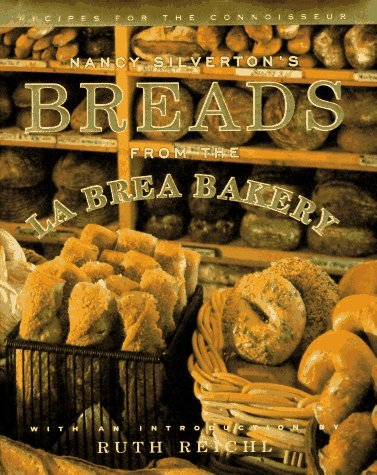
    The book is Nancy Silverton’s Breads From The La Brea Bakery. Silverton is a master chef.  She owns and operates the Campanile restaurant and the La Brea Bakery in Los Angeles. Her bread is sought for all over the nation. Her breads and the breads she shares in this book are all made with a sourdough starter that she teaches you to make from scratch with grapes. Actually, you don’t make it, but feed it. Because it’s a living thing. And after a while it becomes almost like a strange family pet growing on the counter and in the fridge.

    Some might hear “sour” and turn away, but Silverton explains how to keep the starter from becoming too sour. The result is a crackling, chewy, soft bread with a light tang that’s delicious. In fact, Daughter Number 1 just made bagels from the recipe in the book. There’s no tang at all. They’re the best bagels I’ve had. She’s also made the regular loaf, pancakes, and waffles from this same starter. They’re all delicious.

    The book starts off with a lesson in bread making then shares about 60 recipes, everything from baguettes to whole-wheat sandwich bread to sourdough onion rings. The only downside to the book is that I wish it had more pictures. An illustration, for example, in the section on rolling bagels would have been helpful. But we found one on youtube, and it sufficed. And I will confess that I didn’t think once about pictures when eating the bread.

    BTW, we’ve stopped calling this bread. Now, when it’s time, one of us will say, “I think it’s time to make some divine nature.”

    Our Young Girls

    I was recently reading about organized crime and their main activities.  In the section about what ties such groups have to prostitution, the authors reported that it’s estimated that 20% of all prostitutes are street walkers. Another 15% are call girls or escort service workers, and the remaining number, 65%, work in an establishment of some kind—massage parlors, brothers, bars, and hotels.  

    The authors reported that most street walkers have a lover or companion relationship with their pimp. This didn’t make sense to me at the time. But after watching Showtime’s Very Young Girls, I now understand what they’re talking about.

    This film is a documentary about teenage girl prostitutes in New York City and the GEMS (Girls Education and Mentoring Services) that helps them to find a new direction, which is not always easy.

    One of the awful statistics the film reveals is that the average age of entry into street walker prostitution in the United States is just thirteen.

    No, that’s not a typo. It’s thirteen. THIR-TEEN.

    The film introduces us to Rachel Lloyd who dropped out of school and became a teenage stripper and hooker. But she got out. She changed her life and then started the GEMS program to help young girls who found themselves in situations like the one from which she escaped. Lloyd began the program in her apartment and eventually got funding to open a recovery center where girls can seek shelter while they’re trying to redirect their lives.

    The film profiles a number of the girls working through the program. Some of these kids are kidnapped off the street and forced into the “life” as they call it. Some are lured away by pimps who initially act as if they want them to be their girlfriends, flattering them and showing them a good time, and only after they’ve been sleeping together for a while do the pimps then explain that they need to make some money.

    Many of these girls come from broken homes. Many have grown up believing the sexual messages portrayed by the media. The girls are beaten and given drugs.

    Some have been so psychologically manipulated by their pimps that they feel compelled to return. Others have successfully broken with their pasts.

    And all of them are just kids. KIDS!

    This is a movie that’s hard to watch. It’s not graphic in any way. It’s simply the subject matter. It’s also eye-opening and, while the problem is huge, does provide some hope. Thank the Lord for people like Rachel Lloyd. And for people everywhere who live upstanding lives and by kindness and good teaching save their children and others in their communities from this terrible waste. Rent this movie on Netflix. I think you’ll find it’s well worth the time.

    Share
  • My Most Favorite Movies of the Decade: 2000 – 2009

    I was bummed after seeing Clash of the Titans because the movie just didn’t work for me (although Medusa was cool). It was a total thumbs down. After expressing my disappointment, my wife said it seemed I never liked any movie we saw in a theater. To defend myself against this heinous accusation I shall list all my favorite movies of the last decade.  My only question is: where are all the love stories? I haven’t seen a great love story since Sabrina and Far and Away.

    Of course, I haven’t had time to see all the movies made in the last ten years. So if you have some favorites not listed here, post them.

    Top 10 Movies: 2000 – 2009

    10. A Beautiful Mind (2001, PG-13)

    John Forbes Nash, a mathematician, thinks he’s broken the code for a terrible Soviet conspiracy plot, but the real truth turns his world upside down. It’s full of mystery, suspense, and love.  Russell Crowe gives a brilliant performance as Nash. Furthermore, the film is based on the the true story of John Forbes Nash, Jr., a Nobel Laureate in Economics.

    9. Pirates of the Caribbean: The Curse of the Black Pearl (2003, PG-13)

    Swashbuckling adventure, a curse, and lots of humor. Probably the best pirate movie ever made. The next two movies fell flat for me, but this one was simply amazing.

    8. Gladiator (2000, R)

    Another Russell Crowe film. A corrupt prince betrays a Roman general and murders his family. They general is captured and made a slave to fight as a Gladiator. I was so drawn into the story that at one point in the movie theater I had to restrain myself from shouting out at a suspenseful moment.

    7. The Last Samurai (2003, R)

    Nathan Algren, a former US soldier in America’s west, drowns his regrets in alcohol. He becomes a military advisor in Japan, but is captured by the enemy. He learns from the enemy samurai, but does he become a new, better man? This one has Tom Cruise in it. I enjoyed it immensely.

    6. We Were Soldiers (2002, R)

    From the IMDB: “In a place soon to be known as The Valley of Death, in a small clearing called landing zone X-Ray, Lt. Colonel Hal Moore and 400 young fathers, husbands, brothers, and sons, all troopers from an elite American combat division, were surrounded by 2,000 North Vietnamese soldiers. The ensuing battle was one of the most savage in U.S. history. We Were Soldiers Once And Young is a tribute to the nobility of those men under fire, their common acts of uncommon valor, and their loyalty to and love for one another. The story of the first major battle of the American phase of the Vietnam War and the soldiers on both sides that fought it.” This is an incredible story. Mel Gibson and the others give an outstanding performance. I wept at their courage.

    5. Spiderman-2 (2004, PG-13)

    The first Spiderman stank. Sorry. It stank because the villain was too cartoonish. The third one stank as well. This one, however, oh baby. Peter Parker’s personal life is falling apart, he’s losing the one thing in life that would make him happy (yes, a girl). Furthermore, he begins to lose his powers just as he has to battle a brilliant scientist named Doctor Otto Octavius, who becomes Doctor Octopus (aka Doc Ock), after an accident causes him to bond psychically with mechanical tentacles that do his bidding. Loved this. Drama, gosh wow super-heroism, and a heart.

    4. Ice Age (2002, G)

    Another hilarious animated tale with heart. Set during the Ice Age, a saber tooth tiger, a sloth, and a wooly mammoth find a lost human infant and try to return him to his tribe. Of course, the saber tooth tiger was sent to lead the others into a trap. Sid the sloth is one of the best characters to come along in a long time. You’ll love this show. Again, another show I can watch over and over again.

    3. The Emperor’s New Groove (2000, G)

    I saw the previews to this and thought D-U-M-B. But it is one of the best films ever. Animated. Hilarious. Emperor Kuzco’s ex-administrator Yzma wants to kill him and rule. She turns him into a llama instead, and her not too bright side-kick doesn’t quite finish him off. Now the selfish emperor is on the run and needs to regain his throne. But the only person who can help him is the guy whose home he’s going to bulldoze. But that doesn’t capture the half of it. The characters are wonderful. Me and the kids watch this three or four times a year and still don’t tire of it.

    2. The Incredibles (2004, PG)

    A family of undercover superheroes tries to live a normal suburban life but is forced into action to save the world. This is Pixar’s best film. Every one of these characters is interesting. The family dynamics are real and often hilarious. There’s suspense, drama, and gosh-wow. Imagine James Bond as a family man. I LOVE this movie.

    1. The Lord of the Rings trilogy: Lord of the Rings (2001, PG-13), The Two Towers (2002, PG-13), The Return of the King (2003, PG-13)

    For those readers who aren’t familiar with this, J.R.R. Tolkien’s Lord of the Rings is one of the most popular series written in the last 50 years. His three books spawned a whole new genre. It is, in fact, the genre I currently write in. Peter Jackson and Fran Walsh did an amazing job bringing the beloved epic fantasy to the screen. There’s heroism, suspense, and wonder galore. These movies transport you to another world, immerse you in it, and leave you wanting more.

    Runners Up

    Casino Royale (2006, PG-13)

    I gave up on James Bond years ago. This is Bond like you’ve never seen him. Loved this. The next Bond, The Quantum of Solace, fell totally on its face. But Casino Royale is the real deal–action, spy, and poignant love story all wrapped up in one.

    Luther (2003, PG-13)

    The story of the early 16th century German monk Martin Luther who, sick of Church materialism, begins the Protestant Reformation. I knew very little about Luther. This movie was an eye-opener.

    Matchstick Men (2003, PG-13)

    Nicolas Cage is a phobic con man who learns he has a teenage daughter. He plans another con, but things start to fall apart. In the end, well, let’s just say it was a heart-breaking, then absolutely satisfying.

    Seabiscuit (2003, PG-13)

    Based on the true story of the undersized Depression-era racehorse whose victories lifted the spirits of the nation. This story is full of heartbreak and redemption. About not giving up on broken things. Loved it.

    Slumdog Millionaire (2008, R)

    A Mumbai teen who grew up in the slums, becomes a contestant on the Indian version of “Who Wants To Be A Millionaire?” He is arrested under suspicion of cheating, and while being interrogated, events from his life history are shown which explain why he knows the answers.

    Walk the Line (2005, PG-13)

    This tells the story of country music legend Johnny Cash. It starts from his early days on an Arkansas cotton farm to his rise to fame with Sun Records in Memphis. It shows how he fell to drugs, and how he climbed back out again. Marvelous performances and story.

    A Better Way to Rate Movies

    Life is too short to waste it on movies that offend instead of uplift.

    I have found over the years that the MPAA movie ratings are lousy at helping me avoid dreck. They’re okay as a rough guide, but they don’t give me enough information to make a good choice. Furthermore, the MPAA often rates a movie mature for elements I don’t find offensive and not for others I do. Luckily, there are other places that rate movies. The one that I’ve found most helpful is KidsInMind.com.

    The folks there give movies separate ratings on three things: sex/nudity, violence/gore, and profanity. But they don’t just present some mysterious number. They also list exactly what’s in the movie. What this does is give you the information you need to make a wise decision. By looking at movies that made me uncomfortable in each of those three areas and comparing scores, I soon pegged my acceptable KidsInMind levels.

    KidsInMind doesn’t tell me anything about the quality of the story or movie-making. But I can look at other reviews for that kind of stuff. What it does well is help me avoid movies with content I know I will find objectionable. Of course, I still look at the MPAA rating, but before I go see a movie or order it on Netflix, I check the KidsInMind ratings. It’s not perfect, but in almost every case it works like a charm. The only downside to the site is its five gazillion popup ads. But it’s a small price to pay for good information.

    Share